Court rules CRST team drivers must be paid for some hours in sleeper berth
Truck drivers working in teams must be compensated under federal minimum wage laws for time spent in the sleeper cab even if they’re not actually sleeping, according to an appellate court decision from the 1st Circuit recently handed down.
The case involves carrier CRST, which lost the lower court case in the U.S. District Court for Massachusetts. The lawsuit was filed in 2016 by several CRST drivers with a driver named Juan Carlos Montoya as the lead plaintiff. CRST appealed the case to the 1st Circuit.
The decision potentially is precedent setting in that the appeals court suggests no court has ever ruled on the question of whether a team driver should be compensated for time back in the sleeper berth that isn’t part of the eight hours of sleep time required under federal law.
“We note that the parties have not identified, nor have we found, any published circuit court decisions addressing whether sleeper berth time constitutes compensable work for the purposes of the Fair Labor Standards Act,” the three-judge panel wrote in a footnote.
Litigation over sleeper berth time and compensation is not new; Walmart was involved in a significant case several years ago that brought in several key industry players. But that involved solo drivers, not team drivers who are put together for the purpose of keeping equipment on the road and limiting the amount of time it needs to be sidelined because of federal hours-of-service mandates.
The question posed in the lower court and on appeal was whether “the time these long-haul drivers spend in the sleeper berth is ‘on-duty’ time within the meaning of Department of Labor regulations and if so whether CRST must compensate a driver who is on duty for 24 hours or ore for time that driver spends in the sleeper berth is in excess of eight hours within a full 24-hour period.”
CRST did not count that time in the sleeper berth as work hours to be compensated, and the plaintiffs did not argue that they should be compensated for the eight hours of mandated daily sleep time. At issue would be the difference between the time spent driving or working — up to 14 hours under HOS rules — and the 16 hours after the eight hour sleep time is deducted from the day’s 24 hours.
A footnote in the appellate court decision spells out what would be a stake. The initial pay period of Montoya, on a training program and getting paid just 25 cents per mile, was $233.38 plus a $100 signing bonus.
Montoya’s hourly wage for actual hours worked exceeded $10 per hour in that initial trip. But the court noted that if the “excess sleeper berth time” was viewed as compensable, the amount he was paid would have dropped his hourly wage below the federal minimum of $7.25 per hour.
The appeals court decision held that time spent in the sleeper berth by the second driver who was not behind the wheel was not true free time. It cited a Supreme Court interpretation of the Fair Labor Standards Act defining work as “physical or mental exertion, whether burdensome or not, controlled or required by the employer and pursued necessarily and primarily for the benefit of the employer and his business.” It has become known as the “predominant benefit test,” with the time spent accruing mostly to the benefit of the employer.
An example was cited: Firefighters sitting in a firehouse playing cards are doing so because they are waiting to respond to an emergency and should be compensated for that. Police officers on call but free to do whatever they want to do as long as they can respond to an emergency do not need to be equally compensated.
CRST argued that the sleeper berth driver is “waiting to be engaged” and should not be paid.
“In urging us to reach this conclusion, CRST observes that drivers can sleep, fix meals, watch television and access the internet while in the sleeper berth,” the court said in summing up the carrier’s arguments. “But the argument of the plaintiffs was that the drivers’ confinement to the restrictive environment of the sleeper berth means that such time predominantly benefits the employer and this is compensable work.”
The appellate court was blunt in its conclusion. “CRST’s argument turns a blind eye to the limitations inherent in the drivers’ physical location,” the court wrote. “Though drivers may
be able to engage in some leisure activities, the nature of these activities is restricted by the drivers’ presence in the sleeper berth of a moving truck — a small space, containing only some basic living essentials, that drivers cannot leave until the truck stops moving.”
Citing a Supreme Court precedent known as Armour that goes back to 1944, the 1st Circuit appeals judges said CRST’s “argument overlooks the Supreme Court’s jurisprudence establishing that the ability to engage in some leisure activities does not, in and of itself, render an employee’s time for the employee’s own benefit.”
The January 2024 “State of the Industry Report” — presented in affiliation with Ryder — shares an in-depth overview across the trucking, maritime and intermodal markets, as well as what to expect in the coming weeks. The data contained within the report provides breakdowns of capacity, volumes and rates as we enter into the first quarter.
In this report, you will find:
Truckload volumes start December better than many expect, but have begun to fade due to seasonal pressure.
Intermodal pricing pressures remain in place despite relatively strong volumes.
The conflict in the Red Sea could cause disruptions to the global maritime market, causing increases in transit times, spot rates and creating delays for goods arriving to East Coast ports.
The possibility for a soft landing is becoming increasingly possible as the Federal Reserve held interest rates steady for the third consecutive time.
Retail sales recovered in November, but will that continue in the coming months as the holidays pass?
Download the complimentary report today to access the full insights.
Early Nikola fuel cell truck buyer confident about hydrogen fuel
Bill Hall left his job as a senior marine engineer at age 59, earned his CDL and started Coyote Container with two trucks and one trailer in Northern California.
Now he is among the first retail purchasers of a zero-emissions Nikola fuel cell electric truck.
Pragmatist or pioneer?
Hall sees himself as more of a pragmatist than a pioneer. He paid cash for a hydrogen fuel cell-powered Class 8 Tre after a $360,000 spiff from the California Hybrid and Zero-Emission Truck and Bus Voucher Incentive Project (HVIP). Hall did not disclose how much he paid for his truck.
“It [cost] me less than buying a [new] diesel drayage truck,” Hall told me in an interview this week. “It depends what you’re looking at. But different brands that would work for my use were in the $225,000 to $250,000 [range].”
Hall expects to put 40,000 to 50,000 miles a year on the Nikola Tre, driving it with loads anywhere in California that he would be able to refuel with hydrogen. So far, there are just a few stations capable of transferring 50 kilograms of super-chilled hydrogen gas into his truck.
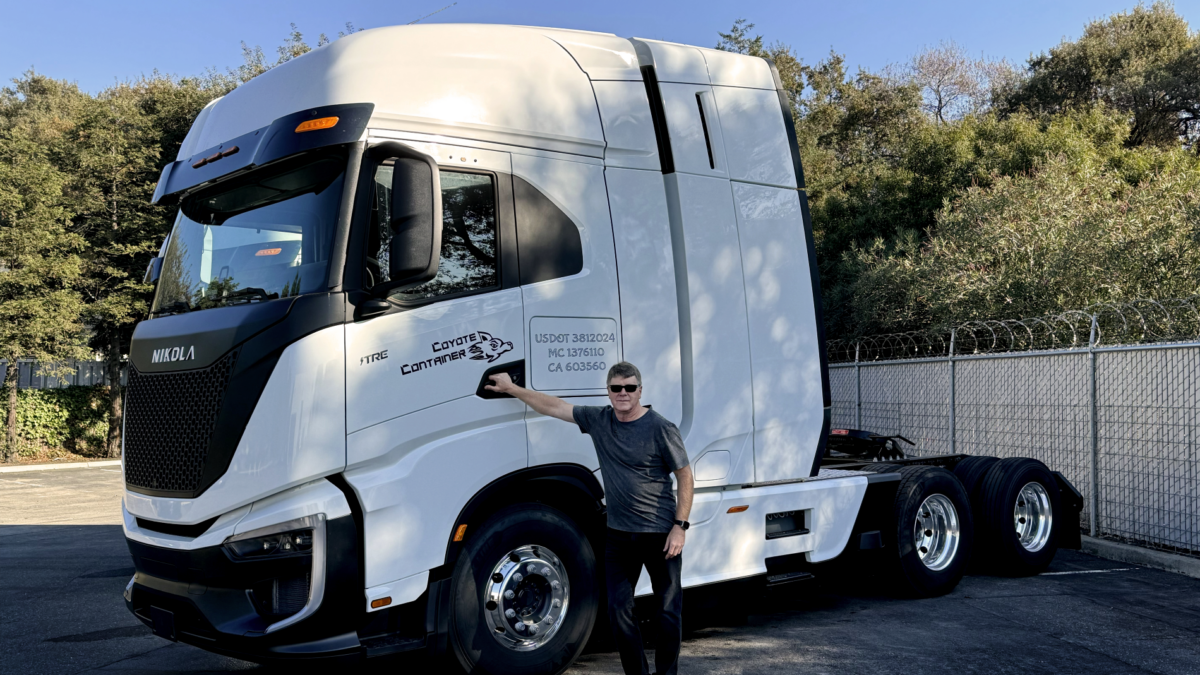
Bill Hall of Coyote Container is among the first retail customers for the Nikola Tre hydrogen-powered fuel cell electric truck. (Photo: Nikola)
Hunting for hydrogen
Once a week — sometimes more often — Hall travels from the Port of Oakland to Southern California, about 400 miles. A fuel cell Tre can make the trip on a single fill, which takes as little as 22 minutes. Hall is required to take a 30-minute break as part of a maximum 11-hour day under federal hours-of-service regulations.
“Wherever I know there’s [hydrogen] supply and range, I’m going to use it,” Hall said.
According to the Hydrogen Fuel Cell Partnership, California has 55 hydrogen fueling stations. Most target fuel cell passenger vehicles.
“Those stations are designed to deliver to a small car that’s taking 3 to 5 kilograms,” Hall said. “Our needs are much greater. It’s a growing pain.”
But he is optimistic for a build-out of hydrogen infrastructure by established businesses like FirstElement Fuel and stations planned under Nikola’s Hyla brand with partners Voltera and BP-owned TravelCenters of America.
“There is a Hyla station down in Southern California, so that’s the one I plan to use for now,” Hall said. “They’re working on a second mobile fueler that’s actually closer to the port. So it’ll be great when that comes online.
“The hydrogen supply industry is an interesting study. The prices are projected to come to parity [with diesel] in the near term and less than half in the longer term. I have pricing that I think will work in my use model.”
Bill Hall changed careers at 59 to become a truck driver. His is among the first to purchase a zero-emissions fuel cell electric vehicle. (Photo: Nikola)
Nikola built 42 FCEVs in Q4 and sold 35 at wholesale
Hall received his Tre FCEV on Dec. 13, his 61st birthday.
“I went to the [Advanced Clean Transportation Expo] in 2019. That’s where I became aware of Nikola,” Hall said. “I began calling Nikola because I knew they were developing this hydrogen truck, and I never stopped bugging them. I had to get their corporate phone number to call them because there really wasn’t any sales [team].”
Fast forward five years. Nikola is building a sales team in Southern California to press its first-mover advantage and capitalize on HVIP incentives like Hall’s that can dramatically cut the $450,000 base price of the Tre FCEV.
“I see this whole evolution in a broader sense,” Hall said. This technology is going to blossom and spread to other industries. The trucking industry’s way, way, way ahead, and Nikola is the only one that has a truck you can use.”
Aurora freezes designs for autonomous hardware scaling
Aurora Innovations’ announcement Friday that it has frozen the design for autonomous hardware that Continental will build isn’t sexy. But that doesn’t mean it’s unimportant.
As Aurora prepares for commercial launch of a few driverless trucks on a Houston-to-Dallas route later this year, plans continue for hardware scaling covering thousands of future trucks.
Finalizing the hardware architecture, specs and requirements is a big deal because it is foundational for eventually making Aurora profitable.
“From day one, we knew we’d need to build a strong ecosystem of partners to bring this technology to market safely and at a commercial scale,” said Chris Urmson, Aurora co-founder and CEO. “Finalizing the design of our future hardware is a meaningful step toward making the unit economics of the Aurora Driver compelling and building a business for the long term.”
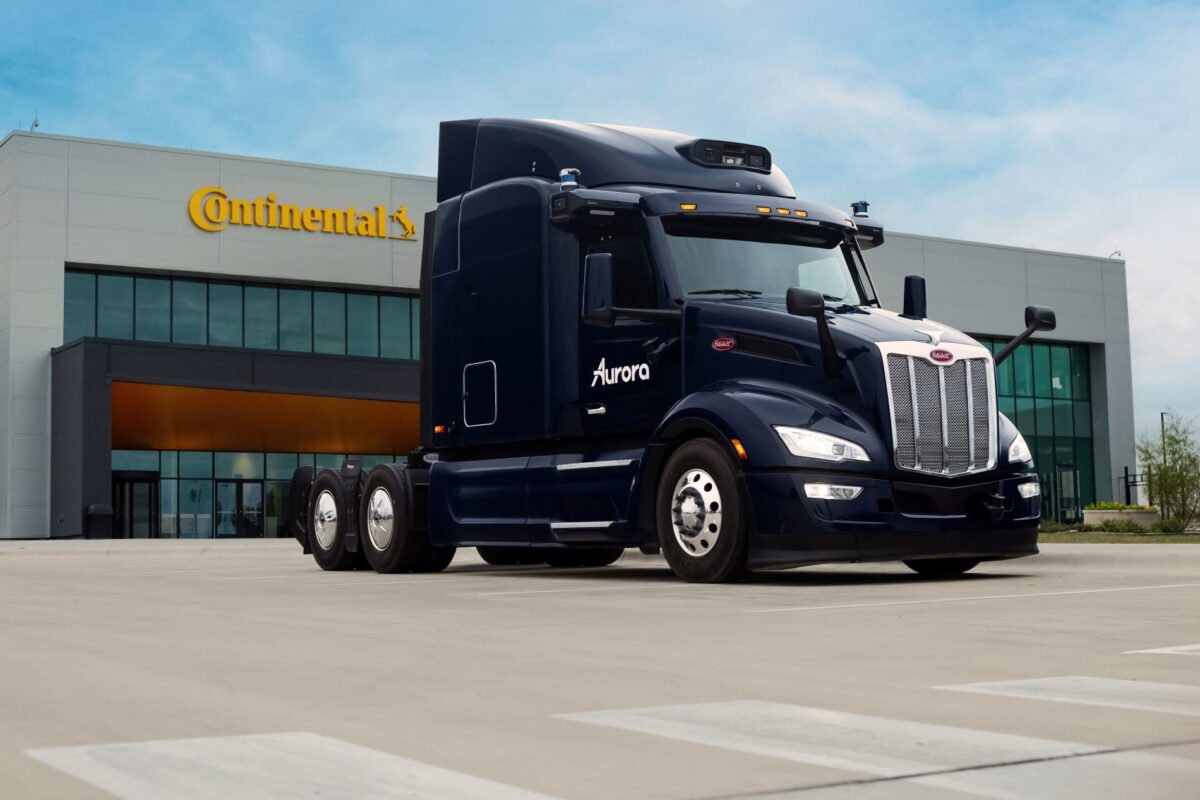
German auto supplier Continental will build automotive-grade autonomous hardware for Aurora Innovation. (Photo: Aurora Innovation)
Emergency fallback upgrade also in the works
Aurora is also working with Continental’s engineers on an updated industrialized fallback system — a specialized secondary computer that can take over operation if a failure occurs in the primary system. It is expected to go into production in 2027.
Continental is investing more than $300 million and will directly ship the Aurora Driver hardware to Volvo Truck and Paccar Inc. plants for integration on assembly lines. Continental will build initial versions of the hardware for testing at its new facility in New Braunfels, Texas, and at other global manufacturing sites.
“Being the industry’s only Tier 1 supplier with a commitment to industrialize autonomous hardware at scale allows us to be at the forefront of and capitalize on this groundbreaking technology,” said Philipp von Hirschheydt, Continental executive board member for the Automotive Group sector.
Trevor Milton bets the ranch
Convicted Nikola Corp. founder Trevor Milton may be going to prison for four years. But he is still fighting.
Milton’s attorneys wrote to U.S. District Judge Edgardo Ramos on Dec. 28 opposing the government’s plan requiring Milton to forfeit a Utah ranch that he purchased with cash and Nikola stock options in 2020. The stock options and land sale formed one of three wire and securities fraud convictions in October 2022.
Ramos said during Milton’s Dec. 18 sentencing that he generally agreed with prosecutors seeking forfeiture.
The letter said Milton paid $8.5 million in cash plus the stock options to purchase the Wasatch Creeks Ranch, $1.6 million more than seller Peter Hicks paid for the property in March 2020. The letter also said Hicks could have sold the options for $1 million but declined to do so. Milton later exchanged the options for $1.6 million in discounted Nikola stock.
The defense’s bottom line is that making Milton give up the ranch is too severe a penalty for the conviction in part because no criminal proceeds resulted.
Trevor Milton outside court following his Dec. 18 sentencing. (Photo: Matthew Lee/Inner City Press)
The city of Tucson, Arizona, wants to claw back about $110,000 from autonomous truck developer TuSimple Holdings after the startup shut down operations.
Volvo Trucks North America will reveal its next-generation VNL sleeper truck on Jan. 23.
Finalizing the hardware architecture, specs and requirements is a big deal because it is foundational for eventually making Aurora profitable.
“From day one, we knew we’d need to build a strong ecosystem of partners to bring this technology to market safely and at a commercial scale,” said Chris Urmson, Aurora co-founder and CEO. “Finalizing the design of our future hardware is a meaningful step toward making the unit economics of the Aurora Driver compelling and building a business for the long term.”
German auto supplier Continental will build automotive-grade autonomous hardware for Aurora Innovation. (Photo: Aurora Innovation)
Aurora Driver emergency fallback upgrade also in the works
Aurora is also working with Continental’s engineers on an updated industrialized fallback system. That is a specialized secondary computer that can take over operation if a failure occurs in the primary system. It is expected to go into production in 2027.
Continental is investing more than $300 million. It will ship the Aurora Driver hardware to Volvo Truck and Paccar Inc. plants. Continental will build initial versions of the hardware for testing at its new facility in New Braunfels, Texas. Other global manufacturing sites also will build the hardware.
“Being the industry’s only Tier 1 supplier with a commitment to industrialize autonomous hardware at scale allows us to be at the forefront of and capitalize on this groundbreaking technology,” said Philipp von Hirschheydt, Continental executive board member for the Automotive Group sector.
Editor’s Note: This story also appeared in the Jan. 5 Truck Tech newsletter.
Early Nikola fuel cell truck buyer confident about hydrogen fuel
Bill Hall left his job as a senior marine engineer at age 59, earned his CDL and started Coyote Container with two trucks and one trailer in Northern California.
Now he is among the first retail purchasers of a zero-emissions Nikola fuel cell electric truck.
Was this newsletter forwarded to you? Click here to get Truck Tech via email on Fridays. And catch the latest in major events and hear from the top players on Truck Tech at 3 p.m. Wednesdays on the FreightWaves YouTube channel.
Pragmatist or pioneer?
Hall sees himself as more of a pragmatist than a pioneer. He paid cash for a hydrogen fuel cell-powered Class 8 Tre after a $360,000 spiff from the California Hybrid and Zero-Emission Truck and Bus Voucher Incentive Project (HVIP). Hall did not disclose how much he paid for his truck.
“It [cost] me less than buying a [new] diesel drayage truck,” Hall told me in an interview this week. “It depends what you’re looking at. But different brands that would work for my use were in the $225,000 to $250,000 [range].”
Hall expects to put 40,000 to 50,000 miles a year on the Nikola Tre, driving it with loads anywhere in California that he would be able to refuel with hydrogen. So far, there are just a few stations capable of transferring 50 kilograms of super-chilled hydrogen gas into his truck.
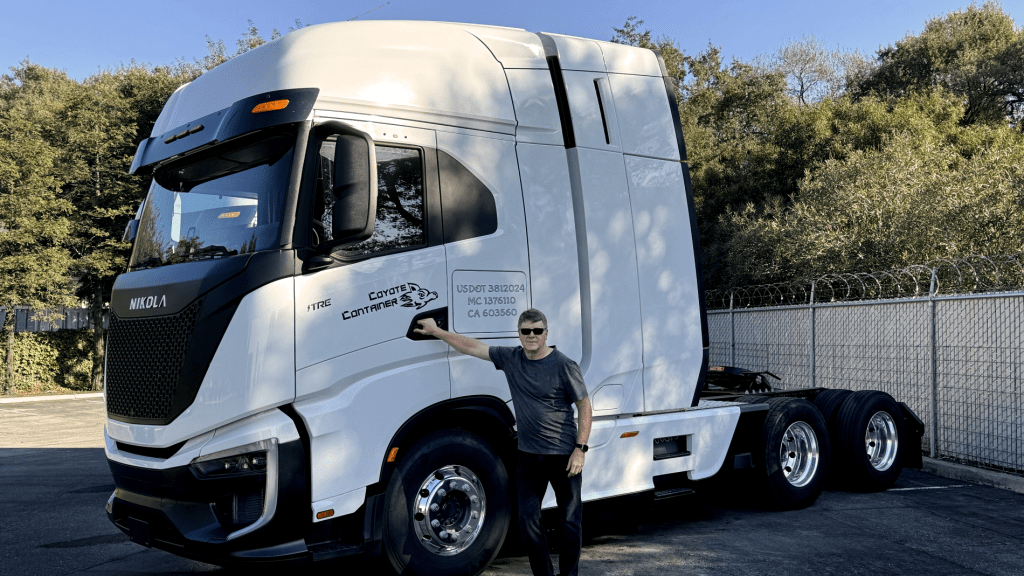
Bill Hall of Coyote Container is among the first retail customers for the Nikola Tre hydrogen-powered fuel cell electric truck. (Photo: Nikola)
Hunting for hydrogen
Once a week — sometimes more often — Hall travels from the Port of Oakland to Southern California, about 400 miles. A fuel cell Tre can make the trip on a single fill, which takes as little as 22 minutes. Hall is required to take a 30-minute break as part of a maximum 11-hour day under federal hours-of-service regulations.
“Wherever I know there’s [hydrogen] supply and range, I’m going to use it,” Hall said.
According to the Hydrogen Fuel Cell Partnership, California has 55 hydrogen fueling stations. Most target fuel cell passenger vehicles.
“Those stations are designed to deliver to a small car that’s taking 3 to 5 kilograms,” Hall said. “Our needs are much greater. It’s a growing pain.”
But he is optimistic for a build-out of hydrogen infrastructure by established businesses like FirstElement Fuel and stations planned under Nikola’s Hyla brand with partners Voltera and BP-owned TravelCenters of America.
“There is a Hyla station down in Southern California, so that’s the one I plan to use for now,” Hall said. “They’re working on a second mobile fueler that’s actually closer to the port. So it’ll be great when that comes online.
“The hydrogen supply industry is an interesting study. The prices are projected to come to parity [with diesel] in the near term and less than half in the longer term. I have pricing that I think will work in my use model.”
Bill Hall changed careers at 59 to become a truck driver. His is among the first to purchase a zero-emissions fuel cell electric vehicle. (Photo: Nikola)
Bill Hall changed careers at 59 to become a truck driver. His is among the first to purchase a zero-emissions fuel cell electric vehicle. (Photo: Nikola)
Nikola built 42 FCEVs in Q4 and sold 35 at wholesale
Hall received his Tre FCEV on Dec. 13, his 61st birthday.
“I went to the [Advanced Clean Transportation Expo] in 2019. That’s where I became aware of Nikola,” Hall said. “I began calling Nikola because I knew they were developing this hydrogen truck, and I never stopped bugging them. I had to get their corporate phone number to call them because there really wasn’t any sales [team].”
Fast forward five years. Nikola is building a sales team in Southern California to press its first-mover advantage and capitalize on HVIP incentives like Hall’s that can dramatically cut the $450,000 base price of the Tre FCEV.
“I see this whole evolution in a broader sense,” Hall said. This technology is going to blossom and spread to other industries. The trucking industry’s way, way, way ahead, and Nikola is the only one that has a truck you can use.”
Editor’s note: This story also appeared in the Jan. 5 edition of Truck Tech.
Truck transportation jobs trend higher while warehouses shed workers
Truck transportation jobs continued a slow recovery from the depths of the freight recession and the job losses created when Yellow Corp. went out of business in 2023.
The December figures released by the Bureau of Labor Statistics on Friday showed that seasonally adjusted truck transportation jobs rose 3,300 last month, rising to 1,586,300 jobs. That increase also was fueled by upward adjustments in the earlier-reported figures for November and October. As a result, the December figure was 5,700 jobs more than the “final” figure for October of 1,580,600 jobs.
That October number is considered final because after its initial reporting in November, it is subject to revisions the next two months. It then holds that number until the February report, when the BLS releases revised figures for the entire prior year following adjustments to its statistical model. The BLS said earlier its model for 2023 was likely overstating the number of truck transportation jobs last year.
The revision for 2022 went in the opposite direction, revising jobs upward after concluding it had underestimated jobs during that year.
The increase in seasonally adjusted jobs came on the back of a decrease in not seasonally adjusted jobs. That figure dropped to 1,588,400 jobs from 1,592,900 jobs. While economists generally look to seasonally adjusted data, many of them caution that not seasonally adjusted data should not be ignored in observing larger trends. While the seasonally adjusted number has risen from October, not seasonally adjusted jobs are down 3,500 since October.
David Spencer, the vice president of market intelligence at Arrive Logistics, noted the difference between the seasonal and not seasonal numbers by saying that the divergence “indicates that jobs were down, but less than what is typical in December.”
“The data continues to support the trend we have seen in other trucking indicators, that despite a greatly reduced rate environment, capacity and overall employment is reducing at a slower pace than in prior market cycles,” Spencer said in an email to FreightWaves. “Whether the Q4 numbers indicate this trend or simply optimism from carriers that a market turn is around the corner will likely be revealed in Q1, as demand fades from peak season.”
Although the job number has now increased two consecutive months, there’s a long road to gain the high level of January 2023. The BLS reported that month there were 1,611,400 seasonally adjusted jobs in truck transportation, 28,400 jobs more than the December figure. But the all-time January high may not hold at that level after the annual revision is published next month.
Since then, a combination of the weak freight market and the Yellow closure has sent job totals sliding, highlighted by the 30,700 jobs reported lost in August, the same month Yellow went out of business. However, three monthly increases in the last four months sandwiched around a relatively small loss in October means that the December total of 1,586,300 was 16,100 jobs more than the August low.
Mazen Danaf, Uber Freight’s economist, noted some data in the specific sector numbers that lag the broad report by a month. “A closer look at the data indicates that the BLS report carried some signs of tightening in the freight market,” he said in an email to FreightWaves.
According to Danaf, the job growth in November came from more localized trucking and not from long-distance truckload employment, which he said fell to its lowest level since September 2022. That result, he said, is “more correlated with OTR rates.”
That data also showed no change in LTL employment data. “This indicates that the then-oversupplied LTL sector did not absorb Yellow’s former employees,” he said.
The other significant trend this year has been the continued loss of jobs in the warehouse sector. Seasonally adjusted employment in the warehouse sector has declined in 16 of the last 17 months. In the one month it didn’t drop, it was unchanged.
Figures in the latest report showed a relatively restrained decline. Jobs in the warehouse sector were down 4,900 jobs. That’s the fourth smallest monthly decline in 2023, but the end result is stark: Warehouse sector jobs in December 2022 stood at 1,933,400 jobs. A year later, they were 1,851,200 jobs, a drop of 82,200 jobs.
The peak was in June 2022 at 1,960,300 jobs. Since then, the sector is down 109,100 jobs.
In other highlights from the report:
Seasonally adjusted rail employment rose 500 jobs. Rail jobs rose sharply at the end of 2022, climbing 2,600 jobs over the last five months of the year after years of decline or stagnation. But that trend did not continue into 2023, with either little or no movement in rail employment. But the increase to 150,500 jobs takes employment in that sector to the highest level it’s been since the pandemic. But it’s a long way from the 209,800 jobs in April 2015, a recent peak.
Average hourly earnings in truck transportation dropped 20 cents an hour to $30.51. Danaf looked at the sector data for November and noted that wages in the long-distance truckload sector fell 0.5%. “The below-inflation wage increase reflects carriers’ lower appetite to hire and retain drivers,” he said.
In Scottsdale, Arizona, Reed Loustalot, a former freight broker, is also posting the Zyn memes. (Loustalot does confess he pops two Zyns a week when he needs “a kick in the rear.”)
Me meeting ppl irl: "you're the please advise guy who posts pics of zyn and parliaments on Linkedin right?"
For the uninitiated: Zyn is a “nicotine pouch.” Picture a thin sac slightly larger than a fingernail stuffed with white powder. The flavors include spearmint, cool mint, peppermint and so on. To enjoy, you “park” the Zyn between your cheek and upper gum. The tin says you can keep it parked for up to an hour. (Do not do this.)
Reader, I must confess here that I have parked a Zyn. It was like drinking three Monster energy drinks then immediately getting on a roller coaster in the middle of a Skrillex concert. After 30 seconds, my gums were tingly and my saliva tasted like acid. After a few minutes, I felt my stomach acids gurgling up my trachea and my heart pounding. I unparked. My discarded Zyn, once a proud pouch, looked like chewed-up gum. As David Foster Wallace once wrote, “My chest bumps like a dryer with shoes in it.”
This burst of energy is seemingly why Zyn has become so popular in America’s freight brokerage offices. There, 13-hour days are the norm. A 22-year-old can pull six figures — if they’re willing to work for it. That means never-ending emails, calls, texts. Coffee alone probably won’t get them that big commission check.
Tschirgi doesn’t mind joking about the ceaseless culture of the typical freight brokerage, but believes it’s ripe for some overhauling. (He currently leads a team of about 100 employees at Cowan Logistics, a nationwide brokerage.)
“The way a lot of brokerages function and succeed is just pressuring kids right out of college to do everything and do it all themselves — and be locked in literally 24/7,” Tschirgi said.
“You have to be really good at your response time and things like always being in front of your screen,” he added. “How quickly can you respond to an email? How many calls can you make in a day?”
That’s all made possible by the power of Zyn (or whatever the stimulant du jour may be).
Zyn – or a Zyn equivalent – is a must for the humble freight broker
America’s $875 billion trucking industry runs on, essentially, three parties. There are truck drivers, who are the folks who spend weeks away from their families pulling freight. There are the retailers and manufacturers who need to send or receive that freight. And then, lurking in the shadows, we have freight brokers who connect carriers and shippers.
Freight brokers didn’t really exist until the trucking industry was deregulated in 1980. That decade the industry morphed from a staid operation with a few hundred unionized carriers into a Wild West. Trucking today consists of hundreds of thousands of fleets, and most are very small. That’s created a need for freight brokerages, which are intermediaries that match empty trucks with freight, among other tasks. As of 2019, there were about 15,000 freight broker companies in the U.S., though only about 80 of them post annual revenues of more than $100 million.
The five current and former brokers I spoke to agreed there’s certainly a vibe of what a freight brokerage office looks like. There’s the open floor plan, ping-pong tables, gongs to celebrate wins, headsets and monitors galore. “Hustle culture” is alive and well; one major brokerage has the words NO EXCUSES shouting from the walls. They’re loud too, with brokers shouting about their latest load gone awry or big enterprise shipper win.
A look inside a typical freight brokerage office. (Jim Allen/FreightWaves)
Former freight broker Austin Stine (and several others) compared the freight brokerage office environments to the capitalistic bacchanalia portrayed in the 2013 film “The Wolf of Wall Street.”
“We had a ticker that went around our office that showed rates per mile and how much it would cost for certain lanes,” Stine said. “We would have boards where people would write their numbers. People were always yelling.”
Camaraderie is key, but that alone isn’t going to cut it for a job that starts around 6 or 7 a.m. and goes till, well, whenever. There’s another key part of a freight brokerage: stimulants on end.
There’s free-flowing coffee at the minimum. Some brokerages offer vending machines stocked with energy drinks. Stine recalled he would down two or three sugar-free white Monsters a day, which equates to almost seven espresso shots. Another broker recalled a time when a colleague was carted away to the emergency room because he had downed five Monsters before noon.
Nicotine is another boost. Grace Sharkey, a former freight broker and now my colleague at FreightWaves, said she picked up smoking as a college student, but working in freight upped it. “You get stressed out and you’re trying to find ways to alleviate it,” she said.
That could mean a good ol’ fashioned cigarette, but something smokeless might be best to keeping you tied at your desk: a vape, chewing tobacco or, now, Zyn. No freight brokerage is complete, I was told, without puffs of vape clouds wafting above the cubicles. Sharkey said her company had to instill a rule for brokers who left their plastic water bottles full of chewing tobacco spittle on their desks for too many days.
There are more substances we could mention, but we’ll stop there.
Let’s get back to Zyn. Swedish Match, a tobacco company based in (you guessed it) Sweden, makes the delightful pouches. Tobacco giant Philip Morris acquired Swedish Match in December 2022. Since then, we Americans have been lucky enough to have the same access to Zyn as the Swedes.
Zyn’s website states, “This product contains nicotine. Nicotine is an addictive chemical.” The brand did not respond to a FreightWaves request for comment.
“They think that this is cleaner and safer, because there’s no tobacco and it’s just nicotine,” a former freight brokerage executive told me about products like Zyn. (They asked to not have their name included as they still work in trucking.) “But then, they get extremely addicted to it. I guess if you’re pumping nicotine in your system the whole time, that keeps you alert.”
One becomes a freight broker because, well, they need a job. Not everyone stays in it.
A freight broker should typically be at his or her desk around 7 a.m. or earlier, my sources told me.
From there, brokers are calling carriers and shippers all day. They’re constantly problem-solving. A driver might run out of hours miles from the warehouse where he or she needs to unload a timely shipment, or carriers might refuse to service a load that’s at a loading dock that’s unfriendly to drivers. On the open road, anything can go wrong at any time, and brokers need to triangulate what they’re hearing from multiple sides.
Much of a broker’s day consists of getting yelled at.
“There were certainly days where I was driving to work where I was like, ‘I don’t know if I’m gonna make it. I don’t know if I’m gonna make it through this day,’” Loustalot said. “I knew I was driving into just a world of issues, which is a big part of the job. We always say don’t shoot the messenger, but basically you drive in knowing you’re gonna be shot as the messenger — every single day because you gave information that was not good news to somebody, even if it wasn’t your fault and you had no control over it.”
Brokers do not really sign out of work. A driver or shipper might call (and probably will call) during the evening or in the middle of the night with an issue. Freight brokers tend to blow off steam at the end of the day at a local watering hole with their co-workers, who all happen to also be ready to complain about freight and share Zyn memes.
“I started with a bunch of other people that were also just out of college,” Tschirgi said. “You have that camaraderie and all that fun stuff. But then, after a couple of years you kind of realize, ‘Oh, wow, I can’t do this forever.’”
Tschirgi wasn’t a freight guru before he became a freight broker. He studied film in college. But in his first few weeks on the job, he found he loved the madness of supply chain.
“There’s a new, just absolutely crazy story that you’re trying to tell your friends and family about and they don’t believe half the stuff that you’re dealing with on a day to day is real,” Tschirgi said. “It’s this whole world that I did not know existed — was like this massive, massive industry.”
A freight broker who probably needs at least one more monitor. (Photo: Jim Allen/FreightWaves)
For how involved the job is, few freight brokers had childhood aspirations to work in logistics. Loustalot admitted he became a freight broker because he graduated college — with a philosophy degree — and needed a job. (He also enjoys maps, which is a useful interest in the freight world.)
The camaraderie and craziness of freight kept him in. So did the cash.
“You can make good money,” Loustalot said. “The job is not rocket science, you know what I mean? It is very, very, very simple. You could get complex about strategies and stuff like that. But at the end of the day, it’s a very simple job. If you can do it well and treat people well and get a good reputation and do a good job, then you can make good money. That’s what kept me in it.”
OK, the Zyn memes might be a bad thing
There’s no such thing as a work-life balance for a freight broker. Stine said, while he was a freight broker, his date nights with his significant other were constantly interrupted by calls. “I would constantly have to get up and check my phone or talk to a driver and try to book the load,” Stine said.
Those calls aren’t exactly fun, either. Brokers, as middlemen tend to be, get blamed for things gone wrong, even if it’s not their fault.
“When you’re constantly blamed for stuff you can’t control, that’s just not conducive to mental health,” Loustalot said. “That’s probably a huge part of it. That contributes a lot to the stress and turnover and attrition.”
The ex-freight brokers I spoke with, like Loustalot, still regularly pull 60-hour workweeks. It’s a hard habit to shake. Stine is the same way.
“I still have co-workers say, ‘You know, this isn’t really that important,’ but I struggle with not doing something instantly because I worry about the repercussions on the back end,” Stine said. “I still typically work 11- to 12-hour days and I don’t have to do that. But in my mind, it’s what I’ve been basically wired to do. I’m always stressed about not meeting numbers.”
— Man, I Love Freight 🚛 (@freightcaviar) June 5, 2023
That never-ending stress, for many brokers, gets mollified by substances and the camaraderie around the stress of the job. (Such stress is apparent in the health risks seen by truck drivers, too. One study found that about a third of truck drivers smoke cigarettes, compared to 11.5% of all American adults.)
“I feel like it’s joked about because it feels better to make fun of it than to realize the toxicity of it,” Sharkey said. “I love the memes and all that stuff, but then if you really look at them, it’s like, yeah, that’s pretty damn toxic for that to be how these places work.”
The Zyn memes bring the freight brokerage camaraderie online. The former freight broker executive finds them particularly distasteful.
“These memes are coping and they’re meant to help make light of something, so that you don’t feel so shitty about the fact that you’re doing it,” the anonymous executive told me.
Memes won’t save freight brokerage. Probably better management will.
The pressure to hit certain metrics isn’t exclusive to freight brokering. It’s pretty much endemic to most of the American economy. Doctors, warehouse workers, human resources staffers and practically every other kind of employee have experience with demanding, numbers-focused environments.
Demanding workdays are also pretty common among the typical entry-level worker with a fresh college degree. I can certainly vouch that most journalists who graduated college, say, after the Great Recession probably had a job in their early 20s that involved writing three to five blog posts a day. Most of our workdays eventually simmered down after a few years, though. (And some of us are lucky enough to now write lengthy features on Zyn.)
In freight brokerage, working really hard means you make that much more money. But some think there might be a better way to succeed in the freight brokerage world that also allows you to, say, go on a date or sleep for eight uninterrupted hours. The answer is just slightly better organization from the top down — and technology.
“That’s why I’m excited honestly around the tech side,” Sharkey said. “I think technology can help with a lot of the bull—-, really actually improve what some of us are doing on a daily basis and stop us from working until midnight some nights.”
That’s the kind of management Tschirgi (jokes about Zyn and energy drinks aside) advocates.
“Between nearshoring, technology and AI, [you’re telling me] that we can’t figure out a solution,” Tshigri said. “It’s just the lazy way to do it, and the way it was done in the early 2000s and the way brokerages have been successful. They don’t want to go away from that.
“We know we can hire people right out of college, give them all-you-can-drink energy drinks and coffee and beer at the end of the day and rooftop happy hours,” Tschigri said. “There was something fun about that for a couple of years and then you realize that’s not sustainable at all.”
Don’t forget to subscribe to MODES for more transportation insights. Usually we are a little more serious than this.
After 2023 price declines, diesel focus turns to its relationship to crude oil
Just when oil and diesel prices seemed like they were going to be an endless headwind for the trucking and transportation industry, the oil sectors of a few countries rose to the rescue.
The end result: When the average retail price of diesel posted by the Department of Energy every week hit $4.633 per gallon on Sept. 18, few could have guessed that by the end of the year, that price would be almost 72 cents per gallon lower. For the full year, the price drop was about 61 cents per gallon.
And when crude benchmark Brent moved to almost $95 per barrel in September, the broad consensus was that the magical $100/b mark was inevitable. Instead, Brent closed the year at about $77/b — and settled less than $75/b a few times in December.
The oil industry doesn’t always agree on a lot of things, but on this one, there wasn’t a lot of disagreement to a consensus view that the biggest reason for that decline was the utterly unexpected surge in output from the U.S. oil sector. Crude production in the U.S. was about 12.2 million barrels per day when 2023 started; it was 13.3 million b/d by the end of the year, according to the DOE’s Energy Information Administration. If there were any forecasters who saw that coming, they kept themselves pretty quiet.
Big gains in output from Brazil and Guyana, among others, also helped to offset the OPEC+ decision in April to cut production by 500,000 b/d, an action that was followed by Saudi Arabia saying it would cut its output by an additional 1 million b/d.
But the impact of those reductions ultimately was balanced out — and then surpassed — by the surprise increases from those key non-OPEC producers, as well as several OPEC nations doing what the group long has been burdened by: members that sign on to a quota or a cutback and then promptly ignore it. Iran was the largest producer that fell into that category in the second half of 2023.
The crude to diesel spread
But for diesel consumers, 2023 marked a year when yes, the price went up and down with the direction of the crude market. But more importantly, the spread between diesel and crude remained elevated well beyond pre-pandemic norms, raising the question whether that gap is now the new normal. That spread is not just some analytical tool. It ultimately adds a few or many cents to the retail price of diesel compared to where it would have been pre-pandemic. And in 2023, by any measure, it was many cents.
A straight spread between the front month price of Brent and ultra low sulfur diesel on CME shows that the spread actually narrowed in 2023 compared to 2022. But the 2022 figures were inflated in part by the surge in the spread following the Russian invasion of Ukraine in February 2022. The full-year average in 2022 was about $1.18/g. For 2023, it narrowed to about 85 cents per gallon. In 2019, the last relatively “normal” year, that spread was about 41 cents per gallon.
Matt Smith, lead oil analyst for the Americas at the research firm of Kpler, said he sees that diesel spread moving back toward historic norms rather than to a more permanent higher level.
“It’s just been such a tumultuous couple of years with everything that has happened with Russia,” Smith said, noting that various sanctions against Russia were levied against a major diesel exporter. “And so you will have the market recalibrate, essentially to make sure that the barrels get where they need to be or get produced where they need to be. And eventually we believe we will see that crack come down. It is just going to take a fair bit of time.”
A big new refinery in Nigeria
Any discussion of oil products going into 2024, whether they be diesel, gasoline, jet fuel or anything else, eventually gets back to the white whale on the horizon: the Dangote refinery in Nigeria, which as 2024 starts is taking in crude to begin its operations after years of delays.
The giant 650,000 b/d refinery, one of the world’s largest, is expected to start operations at less than 400,000 b/d of crude throughput. Robert Auers, a refined fuels market analyst with RBN Energy, noted that Dangote is engineered to produce a gasoline-heavy output, not surprising given the light sweet crude that is predominant in Nigeria’s daily production of 1.5 million b/d, a figure that is well below previous output in the always inefficient Nigerian industry.
While the new refinery will produce diesel, Auers said the prevalence of gasoline output will impact diesel markets. “If they’re going to make a lot of gasoline, that would push diesel cracks even wider.”
He said RBN’s estimates are that global demand for middle distillates like diesel will rise 300,000 b/d in 2024, and given that gasoline supply is going to get a bigger boost out of Dangote than diesel, a $30/barrel spread of diesel over gasoline is not likely to drop below $20 in 2024.
Smith said Kpler sees total refinery capacity additions this year totaling 1.4 million b/d, including Dangote.
The outlook for renewable diesel
A growing source of diesel supplies in recent years has been renewable diesel (RD), especially on the West Coast. RD, unlike biodiesel, is a drop-in fuel that is heavily processed in a refinery and can be substituted on a one-for-one basis for petroleum diesel. A truck filling up with diesel in California is increasingly likely to be consuming RD without even knowing it.
David Hackett, president of Stillwater Associates, a West Coast-based transportation fuels analysis firm, said RD has been “the real success story of the low-carbon fuel effort.” Not only is its carbon footprint less than petroleum diesel, because its source are things like animal fats, restaurant grease and soybean oil, but “it’s really clean-burning stuff,” Hackett said. “It’s got great performance. Users like it.”
But the tremendous growth of RD production led by several refiners building new facilities, particularly on the West Coast, may be facing a shift in the plants’ economics that will deter future investment.
Megan Boutwell, the president of Stillwater, noted that credits for the production of low-carbon fuels under California’s Low Carbon Fuel Standard (LCFS) have dropped to about $70 per ton, a long slide that began at the beginning of 2021 near the price cap for the LCFS of $200/ton.
The LCFS is a system of carrots and sticks to incentivize the production of low-carbon fuels, like RD, that includes the ability to generate sellable credits if a company produces a low-carbon transportation fuel, like RD.
Boutwell said the decline in LCFS credit prices is impacting capital flows into some projects to produce RD, because those plans were drawn up when LCFS credits were more than current levels. The price of those credits is a key part of the economics of a plant.
(Source: Neste)
She added that the number of LCFS credits being generated is adding to the “credit bank,” a sign of success in reducing the carbon intensity of California’s transportation fuels, but also pushing down the price to a level that may discourage future investments. The state in response, according to Boutwell, has recently announced several changes that will “drastically increase the deficit.” The goal is to boost the price of LCFS credits and support future investment.
Boutwell also downplayed concerns about an adequate supply of feedstocks to grow RD supplies in the future. “There’s enough demand for this product that the market will figure itself out,” she said. “There are innovative feedstocks out there.”
Looking at the macroeconomic picture for the supply and demand balance, Kpler’s Smith said most projections are for crude to be in surplus for at least the first third of the year.
“That’s why you had Saudi Arabia come out and extend its [1 million b/d] cut,” Smith said, adding that Kpler expects the Saudi reduction to ultimately be in place for all of 2024.
In its most recent monthly production survey of OPEC+ output, S&P Global Commodity Insights estimated Saudi output at 9 million b/d. In January 2023, SPGCI estimated Saudi output at 10.42 million b/d.
Smith said Kpler’s estimate is that global demand growth in 2024 will be 1.2 million b/d; the International Energy Agency sees it at 1.1 million b/d. But that comes after a year in which the IEA said demand rose by 2.3 million b/d.
That level of growth is “pretty good,” Smith said. But given that supply imbalance fueled by countries where output keeps rising, “we’re expecting prices to remain fairly soft through the first half of next year and start picking up in the second half of the year.”
One addendum: while the war between Hamas and Israel has not had any impact on oil production in the Middle East, the rerouting of tankers around the Cape of Good Hope and away from the Red Sea and Suez Canal locks oil into lengthier inventory while it is being shipped. That’s a bullish factor. As always, geopolitical remains an oil market wild card.
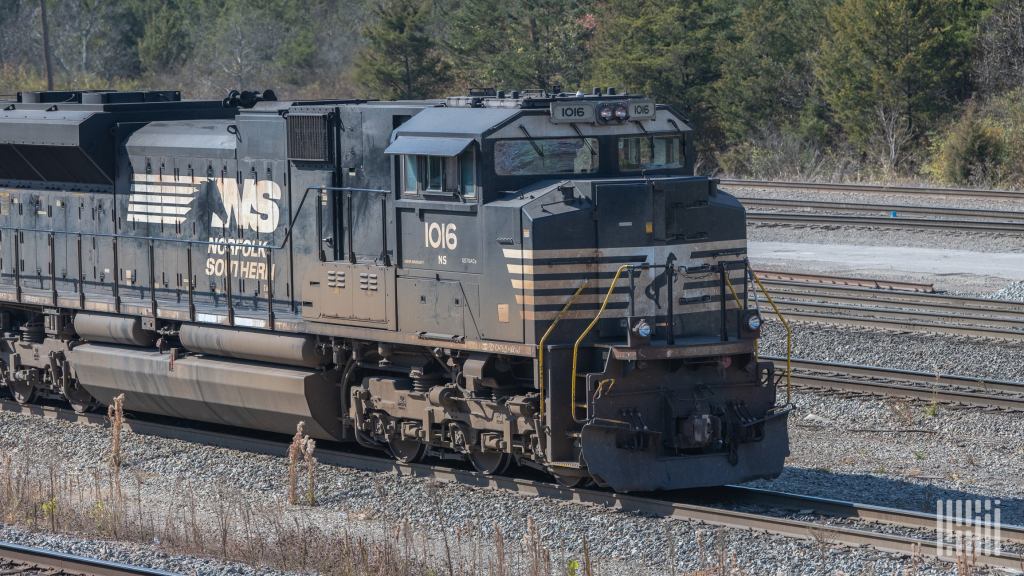
Norfolk Southern aims to slash emissions with greater use of biofuels
Fuel management and consumption will be a key means to reduce GHG emissions, as fuel accounts for over 90% of NS’ scope 1 and 2 GHG emissions, NS (NYSE: NSC) said when releasing its inaugural Climate Transition Plan (CTP) Thursday. Scope 1 emissions pertain to emissions directly from company operations while scope 2 emissions generally originate from sources not controlled by the company.
The CTP reflects NS’ plan to align its business strategy with the goals of the Paris Agreement as well as the broader push toward a low-carbon economy, according to a Thursday release. The Paris Agreement is a legally binding international treaty on climate change signed in December 2015 and implemented in November 2016, according to the United Nations.
The plan identified three performance indicators to reach NS’ objective:
Improve locomotive fuel efficiency by 13% by 2027, using a 2023 baseline.
Increase the use of renewable energy to 30% by 2030.
Increase the blend of biofuels in fuel to 7% in 2027 and 20% in 2034. To achieve this goal, NS will be piloting locomotive runs using higher biofuel blends and renewable diesel.
“Reducing the environmental impact of our operations is driven by our commitment to a cleaner and better planet for our employees, our customers, and our communities for generations to come,” Josh Raglin, NS chief sustainability officer, said in a release. “We recognize the significant role of greenhouse gas emissions in global climate change, and we are determined to do our part in mitigating these emissions.”
While NS focuses much of its attention on the fuel economy of locomotives, the rail carrier said it will be taking additional steps to reduce GHG emissions by:
Identifying physical risks to the network using machine vision-enabled inspection programs and AI-powered technology in safety inspection processes.
Diversifying its supply chain for assets such as wheels and steel mill gondolas.
Offsetting a portion of its electricity consumption with renewable energy sources.
Supporting partners’ sustainability efforts.
Investing in sustainability-related technologies such as carbon calculators and customer rail emission reports.
Continuing to assess ways to address climate risks and opportunities.