PLP Logistics, FreightSnap launch affordable dimensioner technology

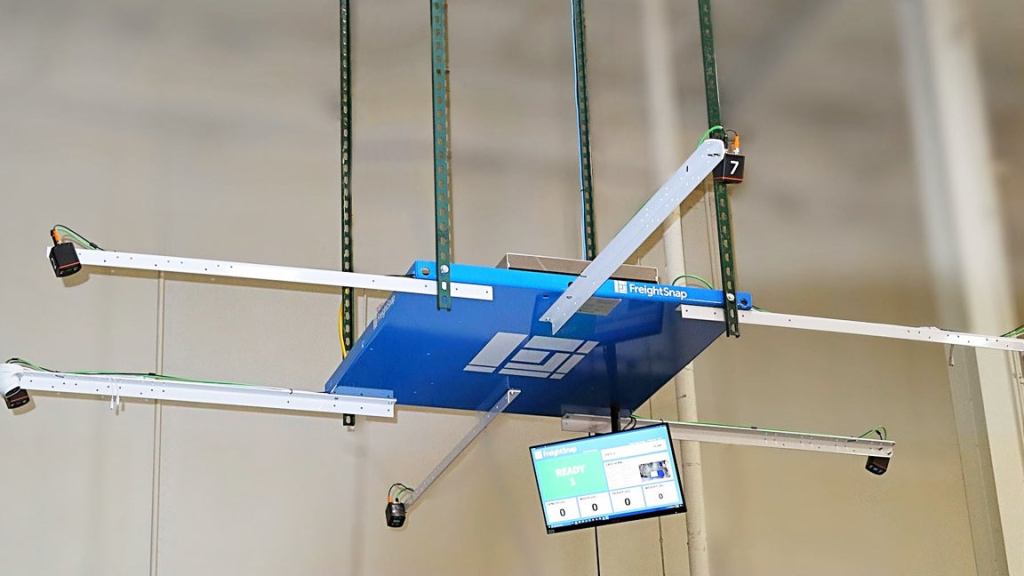
A FreightSnap dimensioner

PLP Logistics announced Thursday it has partnered with FreightSnap to offer less-than-truckload shippers an all-in-one dimensioner technology.

The Johns Creek, Georgia-based 3PL said the combined dimensioner-floor scale technology quickly captures accurate pallet weights and dimensions. The equipment and software created by Lenexa, Kansas-based FreightSnap uploads the data to PLP’s TMS, helping shippers avoid invoicing exceptions and freight reclassifications.

“As a former CFO, I advocate for technology that is cost-effective, alleviates time-consuming tasks, and demonstrates bottom-line results,” said Doug Russ, PLP’s co-founder and CEO.

Russ said the use of the technology has allowed customers to reduce billing exceptions and disputes by half.

The enhanced dimensioner data better aligns shipper and carrier operations through full API integration. It also facilitates the claims process as shipment photos are automatically captured and part of the data document.

“Positive ROI for our new FreightSnap solution is generated in as little as three months,” Russ continued.

In additional to LTL, PLP provides full truckload services. It works to minimize freight spend for the shippers on its platform, touting a 21% historical savings rate for customers.

“We are eager to partner with PLP in this service innovation,” said Mike Eichenberg, FreightSnap’s co-founder and CEO. “Our goal is to make dimensioning a cost-saving game-changer for all customers.”

Click here to learn more about dimensioning with PLP.

More FreightWaves articles by Todd Maiden

California asks EPA for waiver to implement Advanced Clean Fleets rule

With less than three weeks before California’s Advanced Clean Fleets (ACF) rule is set to take effect, the state is seeking a waiver from the Environmental Protection Agency that would end any questions about whether the state can implement it. 

A waiver request for California-specific environmental regulations is generally required under the federal Clean Air Act (CAA). The CAA allows the state and its unique status under the act to impose environmental restrictions and mandates that go beyond federal law as long as a waiver is granted by EPA. No other state has that ability. 

The EPA in March granted a waiver for the Advanced Clean Trucks rule (ACT), the companion legislation to ACF that is a mandate on truck manufacturers; the ACF is a mandate on the purchasers of what the manufacturers produce. There is no corresponding federal rule as restrictive and mandate-heavy as the ACT.  

The California Air Resources Board submitted the waiver request for ACF in November, but did not make a public announcement of its action. 

The first wave of significant regulations under ACF take effect January 1. The steps that go into effect that day are not particularly onerous and outside of impacts on drayage there is little in the ACF on day one that would require significant steps to be taken while the waiver approval process plays out. 

Whether the California Air Resources Board needed a waiver has long been a subject of hot debate. CARB reportedly has told trucking industry representatives it did not need a waiver, based on its reading of the Clean Air Act; trucking companies disagreed. In its October lawsuit against the ACF, the California Trucking Association said “while CARB may claim otherwise, ACT cannot be enforced until such waiver is granted.”

Elsewhere in the lawsuit, CTA made a similar statement: “CARB is prohibited from enforcing its own emissions standards in the absence of an EPA waiver.”

Whatever feelings CARB may have had on the issue at the time, the waiver request has been filed.

The overarching mandate in the ACF is that no Internal Combustion Engine (ICE) can be sold in the state after 2035, with their ongonig usage phased out over several years beyond that.

Two-minute warning

“Whether the waiver request was as a result of the [CTA] lawsuit, or just a realization of the law, I can’t say either way,” Matt Schrap, executive director of the Harbor Trucking Association, told FreightWaves. 

The HTA represents the drayage community in the ports of Long Beach and Los Angeles, and rules impacting new drayage vehicles that go into effect Jan. 1 are generally seen as the most impactful of the ACF regulations that will be implemented in the new year.

“But now all of a sudden, it’s the fourth quarter, two-minute warning, and the view is, oh, hey, we actually need a waiver,” Schrap added.

In an email to FreightWaves, a spokeswoman for CARB, when asked about the relatively late date of the filing, said only that “CARB submitted the waiver request after the Office of Administrative Law approved the regulation on September 29.”

The battle over the waiver was being conducted with the full knowledge by both sides that the EPA virtually never denies a California request for a waiver to impose stricter mandates than those found in federal law. There appears to be little expectation that the ACF request will meet a different fate.

In his cover letter to the EPA requesting the waiver, Steven Cliff, CARB’s executive director, told EPA Administrator Michael Regan that “the ACF regulation constitutes the latest development in California’s decades-long history of promulgating increasingly stringent emission standards for mobile sources needed to protect the public health and welfare of Californians by improving air quality and mitigating the harms posed by greenhouse gases.”

But the waiver request throws some uncertainty in the law’s implementation, which will see its first big impact at the state’s ports and their drayage fleets.

Drayage is the first part of the trucking ecosystem with a major impact from the ACF because of the rule that trucks that only ZEVs can be added to the state’s drayage registry after Jan. 1. The database is the Truck Regulation Upload, Compliance, and Reporting System (TRUCRS).

What the data says on the drayage transition

The drayage registry, as of early October, had approximately 218,440 trucks in the registry. That information came from a CARB spokesman; the data cannot be accessed directly. “We expect to see influxes of new registrations, each time we hold (training sessions),” the spokesman said in an October email to FreightWaves. He added that an updated report on the size of the drayage fleet can be provided after the end of the year.

Getting information on what sort of activity is occurring as a result of that mandate is difficult to come by. One piece of data: In July, the first month that the Port of Long Beach reported such data in its monthly truck move analysis, there were 111 ZEVs reported active in the port. In October, the most recent month for which data is available, that number was 160. The July data shows that 0.5% of all drayage truck moves were completed with ZEVs. In October, that percentage rose to 0.86%.

That data in coming months may yield indications whether the change in regulation led to a surge in registrations of diesel-fueled vehicles, trying to get in under the Dec. 31 deadline. 

In that email from October, the CARB spokesman said when the up-to-date data is released, it will include trucks that began drayage service this year. “These could include companies replacing older diesel trucks that are on their last legs with newer diesel trucks, out of necessity,” he said.

The data that is available could be interpreted as signaling a buildup of ICE vehicles getting access to the market before the deadline. 

For example, in the May truck activity report for the Southern California ports, the number of trucks with access to the port of Long Beach or Los Angeles was 21,510. The figure for July was 21,585. In October, the most recent month for which data is available, it was 21,874. 

Data on ZEVs is not available before July. But the July number for ZEVs was 111 and was 160 in October. That is a gain of 49 vehicles. But between July and October, the number of vehicles with access to the ports rose 289, a far greater number than the ZEV growth.

However, those figures are for access to the port and are not necessarily reflective of what is in the state’s drayage registry. 

Schrap said if a vehicle is registered in the statewide system, to maintain that registration, a truck needs to make only one drayage trip per year. The rest of the year, “you can use them as yard ornaments.”

Although the biggest regulation coming down at 12:01 a.m. Jan. 1 is the ZEV requirement for new vehicles, there also is a phase-out period for all ICE trucks under ACF.

There already have been requirements on phasing out trucks with a model year prior to 2010.  All Class 7 and 8 diesel drayage trucks were supposed to be out of the market by Jan. 1 of this year, though the Port of Long Beach data still reports some moves by trucks of that vintage. 

Under the rules of the ACF, a drayage vehicle must be removed from the system under one of two scenarios: it reaches 18 years or 800,000 miles, or it runs 13 years if the 800,000 miles is reached. The truck must be retired under the earlier of those two scenarios in the vehicle’s history.

More articles by John Kingston

Battle ranks over California waiver for Clean Trucks rule swell

Advanced Clean Fleets rule: Like it or not, it’s time to get ready

California OKs Advanced Clean Fleet rule; here’s a summary of it

FourKites confirms 15% cut in global workforce, dismisses key exec

Supply chain visibility platform FourKites confirmed it has reduced its workforce across offices in the United States and Europe by 15% this week. 

“With these changes in place, along with the recent realignment of our leadership team, we are accelerating our timeline to profitability, taking our burn rate to zero — now — and reducing our reliance on capital markets,” a FourKites spokesperson told FreightWaves.

The move included the departure of another key executive, Glenn Koepke, vice president of strategy. Koepke played a crucial role in leading industry strategy and go-to-market execution, particularly in sectors like food and beverage, consumer packaged goods, and logistics solutions. Koepke told FreightWaves he is excited about what is next for his career in logistics.

“It is painful to say goodbye to so many talented, passionate and committed employees who will be impacted by these decisions. … We are committed to ensuring that every person impacted by this action is taken care of, and we are working closely with those team members on financial and career assistance,” said FourKites.

Past leadership shake-up

This move follows FourKites’ reshuffling in November of its leadership team, with President Rocky Subramanian’s departure and Priya Rajagopalan assuming the role of chief customer officer. Sean Fallon also rejoined the team as chief strategy officer. The company labeled these moves “routine internal organizational changes” at the time.

FourKites, valued at $1 billion last year, has experienced challenges amid a tough market for supply chain visibility platforms. Industrywide factors, including a depressed freight market and reduced investment deals, have impacted venture-backed startups. The workforce reduction and leadership changes align with the company’s strategy to navigate these challenges and position itself for success.

“We have continued to lead the market in innovation, and we have the most impressive customer roster in the business. We are 100% confident that we are positioned for sustainable growth and long-term success that will enable us to deliver consistent value to our customers,” said FourKites.


FourKites reshuffles leadership team

Solera lays off staff via Teams, video goes viral on TikTok

Some Convoy carriers say collapsed startup owes them thousands of dollars

Republicans pan truck speed limiter proposal at House hearing

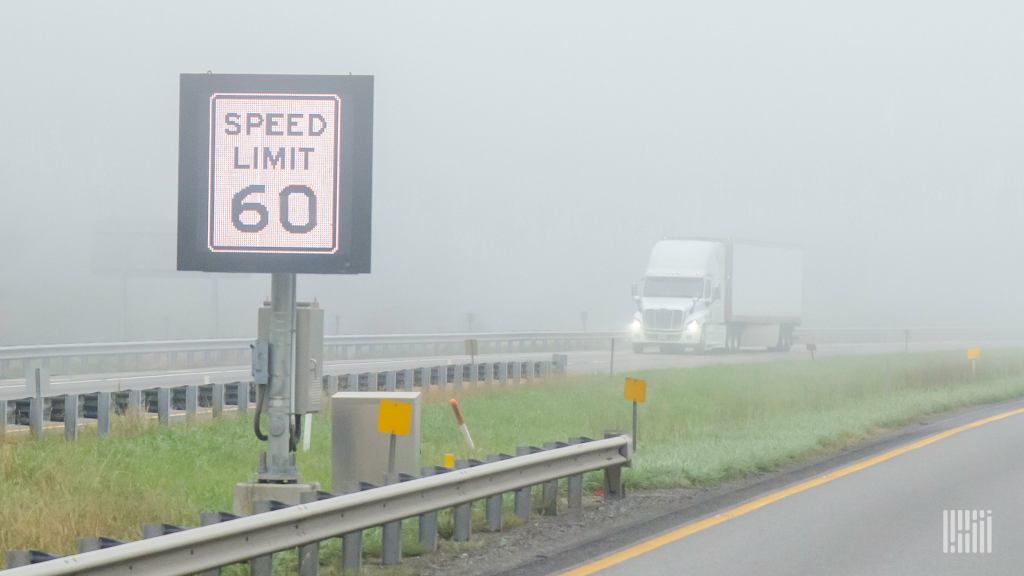
60 mph speed limit sign

WASHINGTON — House Republicans used a hearing meant to discuss implementation of President Joe Biden’s infrastructure law to push back against an upcoming proposed regulation to mandate speed limiters on trucks.

One of the biggest concerns surfacing in the three-and-a-half-hour House Transportation and Infrastructure highway subcommittee hearing on Wednesday related to the ethics of the speed limiter rulemaking process.

U.S. Rep. Troy Nehls, R-Texas, questioned Federal Motor Carrier Safety Administration chief Robin Hutcheson about a potential connection between FMCSA rescinding in September a 68 mph limit on electronic speed governors in trucks — which had initially been included in an agenda summary of the upcoming proposed rule — and a fundraiser she attended the same week.

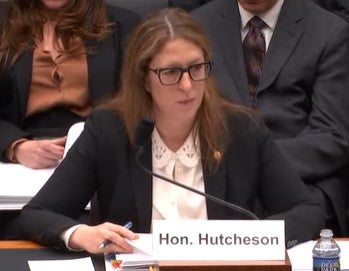
FMCSA’s Hutcheson testifying on Wednesday.
(Photo: House T&I Committee)

The fundraiser was “sponsored by labor unions, trial attorneys, large trucking companies,” Nehls said, all of which “had been pressuring your agency to select a speed limiter rule at 60 mph, well below what the agency had indicated it was prepared to select.”

Nehls asked Hutcheson if the credibility of the rulemaking is damaged by attending events sponsored by supporters of a regulation that her agency is still crafting.

“We take very seriously the fidelity of the process of rulemaking, and we don’t discuss the contents of the rule even as we’re engaging with our stakeholders,” Hutcheson affirmed.

“I’ll trust you on this,” Nehls responded. “But I hope you equally consider the 15,000 comments from America’s truckers who have provided input on this rulemaking. They’re not going to be able to host a big fundraiser for you.”

Five other Republican lawmakers also took issue with the rule and made it the focus of their questioning: Mike Bost of Illinois, Doug LaMalfa of California, Eric Burlison of Missouri, Jefferson Van Drew of New Jersey and Mike Collins of Georgia.

Bost, a former truck driver, said that when his home state instituted different speeds for cars and trucks it led to more accidents.

“The other problem is that you have changed the vehicle’s dynamics and are therefore endangering people rather than saving them, because a speed limiter doesn’t allow a driver to make decisions to either speed up to get out of the way or to go around a situation occurring in front of them,” he said.

Burlison questioned the wisdom of a speed limiter mandate “at a time truckers are already heavily regulated” by hours-of-service rules and are under the gun to get loads delivered.

“Many will be in a situation where they have to make up time, and because they have a speed limiter, the only place for them to make up time is probably on city streets, suburbs, through construction zones. Are you concerned about the motivation you’re creating?”

“We share your commitment to drivers and their safety,” Hutcheson responded, noting that she recently spent time with the Owner-Operator Independent Drivers Association, which opposes speed limiters, to listen to their concerns firsthand.

“I would encourage you not to implement the rule,” Burlison said, because “I think you would have an outcry from that community.”

Collins, who started his own trucking company, agreed that truck drivers are overregulated. “We have speed limiters out there now,” he said. “They’re called speed limit signs.”

In addition, he said, FMCSA indirectly monitors speeds through safety scores that show when drivers get ticketed for speeding and which are also used by insurance companies when assessing risk. “The free market works, and when a driver is not insurable due to speeding, then he or she is let go.”

FMCSA is expected to issue a notice of proposed rulemaking on speed limiters by the end of the month, according to the latest update from the Office of Management and Budget. Hutcheson was not questioned on whether the agency was on track to meet the schedule.

Click for more FreightWaves articles by John Gallagher.

Prologis president highlights communities’ ‘anti-warehouse sentiment’

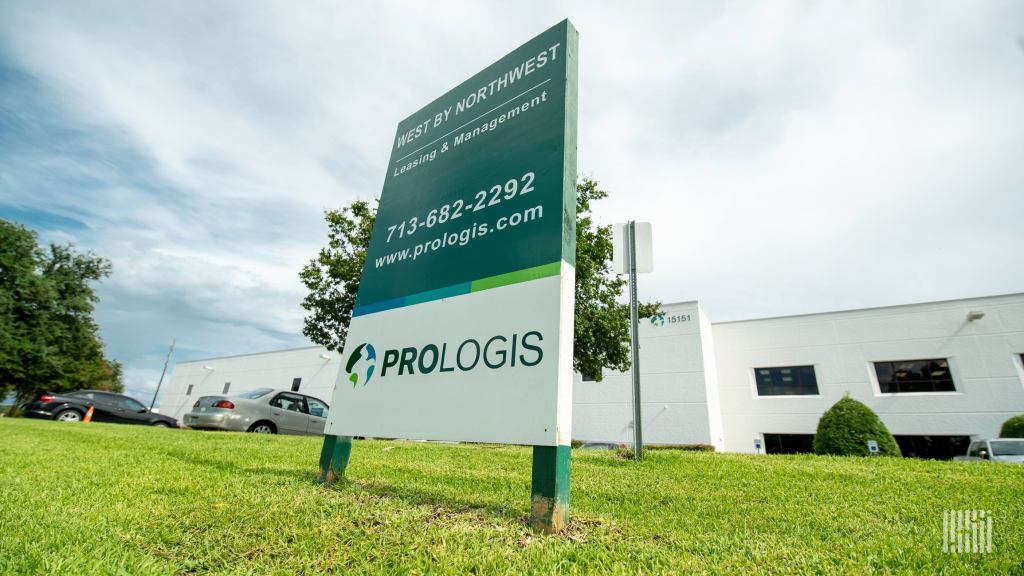
The president of logistics real estate giant Prologis, Inc. (NYSE: PLD) said Wednesday that community opposition to warehouse development is complicating his company’s efforts to respond to the nation’s burgeoning supply chain needs, acknowledging that “it’s just getting harder to build warehouses.”

Speaking at the San Francisco-based company’s first investor day in approximately four years, Dan Letter said that “anti-warehouse sentiment,” which gathered momentum in the post-pandemic period when warehouse demand and corresponding activity spiked, has made it challenging to add supply at an optimal pace. Communities want their goods delivered in a sustainable manner, but they don’t necessarily want the mechanisms to deliver their products — warehouses — in their backyard, Letter said.

Letter suggested to the attendees that rather than embark on another property tour, they should tune in to meetings of local planning commissions, where arguments over the pros and cons of warehouse expansion and the official decisions that come from them are made, to understand the true nature of the industry’s challenges. Letter singled out Southern California, South Florida and New Jersey — all huge growth markets with strong community activism and powerful planning and zoning commissions.

Commercial developers in the logistics segment will need to possess “more resources, patience and know-how” to navigate through the often-stormy terrain, Letter said.

The tug of war between industry and communities will likely only intensify in the years ahead. Warehouse projects that are underway will be delivered through the first half of 2024. After a sharp but expectedly brief slowdown in construction starts due to the pressure of higher interest rates, development will likely resume in 2025, especially if e-commerce demand remains strong and businesses build buffer stock to guard against future supply chain disruptions.

Hamid R. Moghadam, Prologis’ co-founder, chairman and CEO, said he expects a slowing economy and additional capacity to bump nationwide vacancy rates to the high-5% range before the capacity is absorbed and vacancies drop into the 4% range or slightly higher. Throughout much of his 40-year career, Moghadam said, vacancy rates oscillated in the 7% to 8% range.

At this point, the market is tighter than at any time other than 2021 and 2022, Moghadam said. Part of that is due to the impact of tighter money, which made projects that were viable in an era of near-free money no longer cost-effective.

The executive said the wind remains very much at developers’ backs over the long haul. “The fundamentals,” he said, “are in excellent shape.”

Heavy haulers Reinsfelder, Brownlee join forces

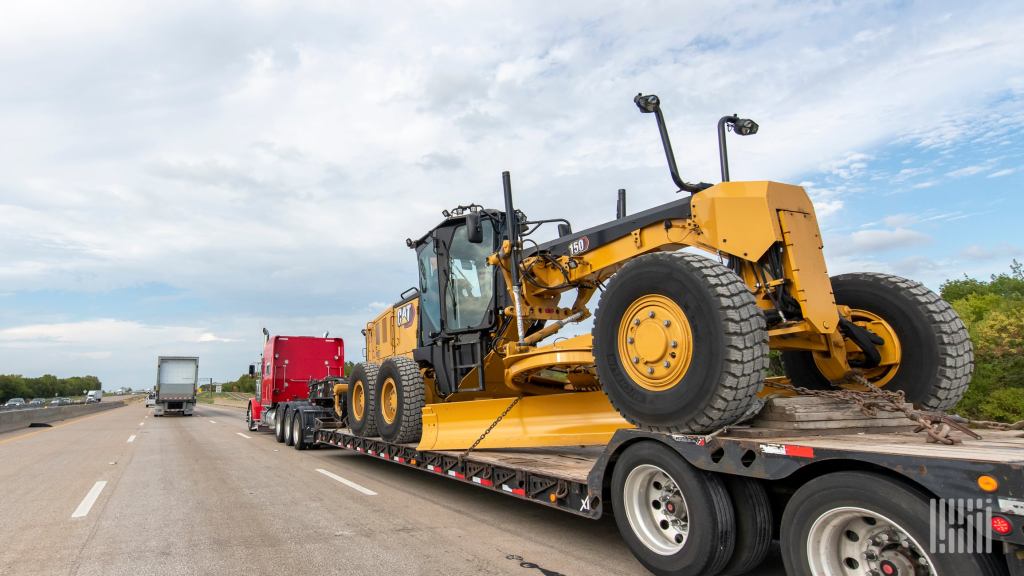
A red tractor pulling a motor grader on a flatbed trailer

Heavy-haul trucking companies Reinsfelder and Brownlee Trucking announced Wednesday a strategic partnership to better leverage the assets of the respective fleets.

The combination of the Western Pennsylvania-based carriers will include the integration of the two fleets. Reinsfelder is listed with 100 power units while Brownlee has 27, according to Federal Motor Carrier Safety Administration data.

The integration expands the combined entity’s warehouse and yard space to more than 1 million square feet and provides national scale to the trucking and freight forwarding operation that serves the oil and gas, power generation, and energy markets.

Financial terms were not provided.

“As Reinsfelder Inc. and Brownlee Trucking embark on this exciting journey, their unwavering focus remains on delivering exceptional service, fostering innovation, and building enduring relationships within the industries they serve,” a news release stated.

More FreightWaves articles by Todd Maiden

The evolution of e-commerce, outsourced fulfillment

This fireside chat recap is from FreightWaves’ Domestic Supply Chain Summit on Wednesday.

FIRESIDE CHAT TOPIC: Navigating Black Friday trends in e-commerce and the evolution of outsourced fulfillment.

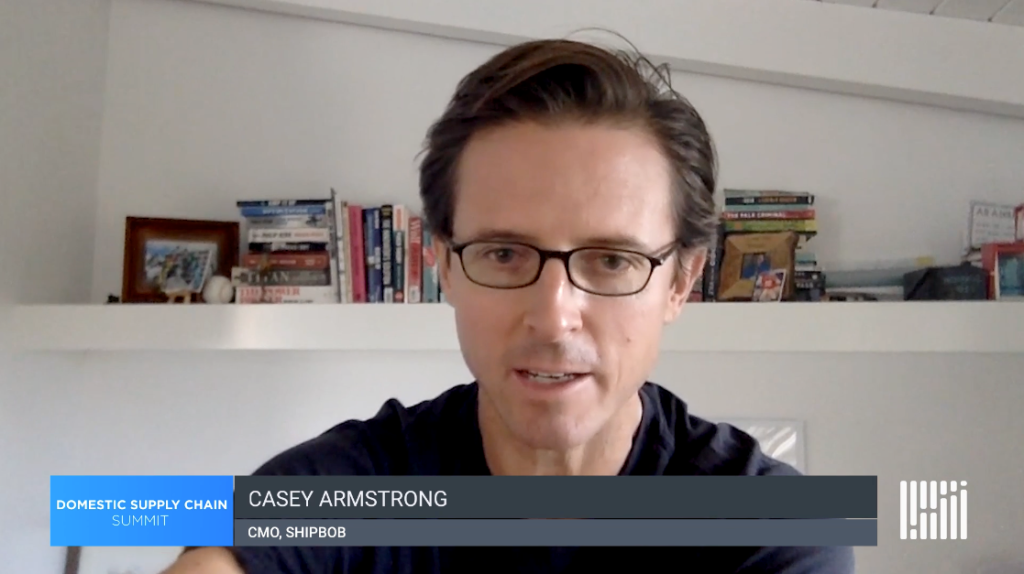
DETAILS: Casey Armstrong, chief marketing officer at ShipBob, and FreightWaves’ Tony Mulvey dive into the recent Black Friday shopping holiday and how e-commerce shopping has evolved over recent years. The discussion looks into the future of outsourced fulfillment, allowing for brands to focus on product development and sales and marketing of their core business, while eliminating choke points in the fulfillment process.

KEY QUOTES FROM CASEY ARMSTRONG:

“One way that companies can plan is how can you reduce all the variables that you need to fully control. You still need to figure out how much you need to order, which SKUs to order, what’s the lead time with our manufacturer to get things to our fulfillment center, whether you’re manufacturing overseas or in the United States.” 

“Something that we hear from a lot of brands is, ‘I want to get bigger, but I’m scared. … And I know that if I sell X number of orders today, I either need to pick and pack and ship those today and I’m going to fall asleep and then I’m going to get more orders, so I’m going to have to pick and pack those. I never have time to actually grow the business.’ … So how can you remove that from your plate so you can focus on the core business?”

“Customer acquisition costs are up. Competition continues to increase. So it gets more and more difficult. So when you think of ways you can really differentiate from your competition, of course you want to provide this amazing post-purchase experience.”

Panama Canal transits plunge as larger ships are turned away

photo of Panama Canal

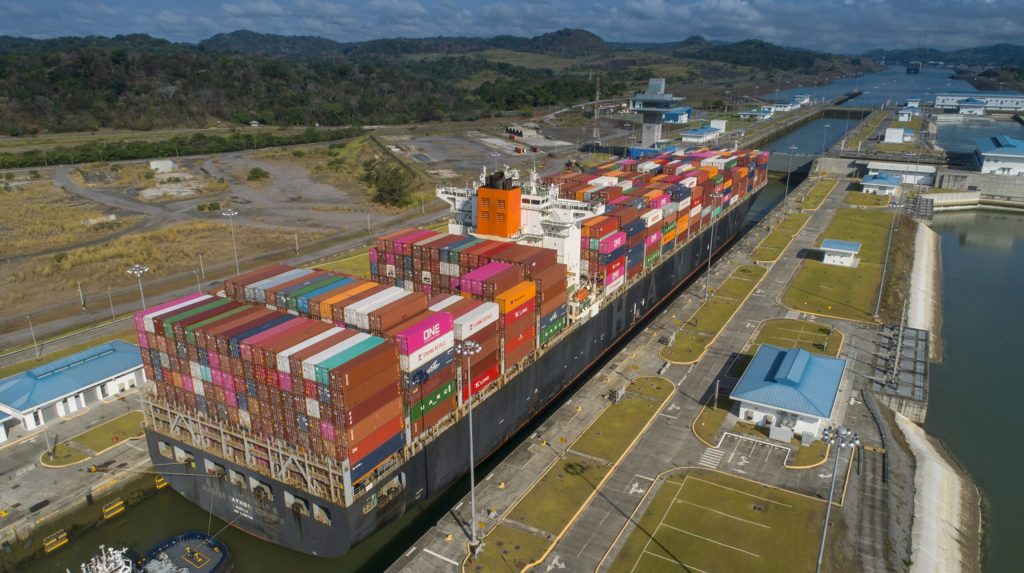
The official Panama Canal transit numbers for November are out — and they’re ugly. November could be the tip of the iceberg. Reservation slots are being slashed further this month and in January.

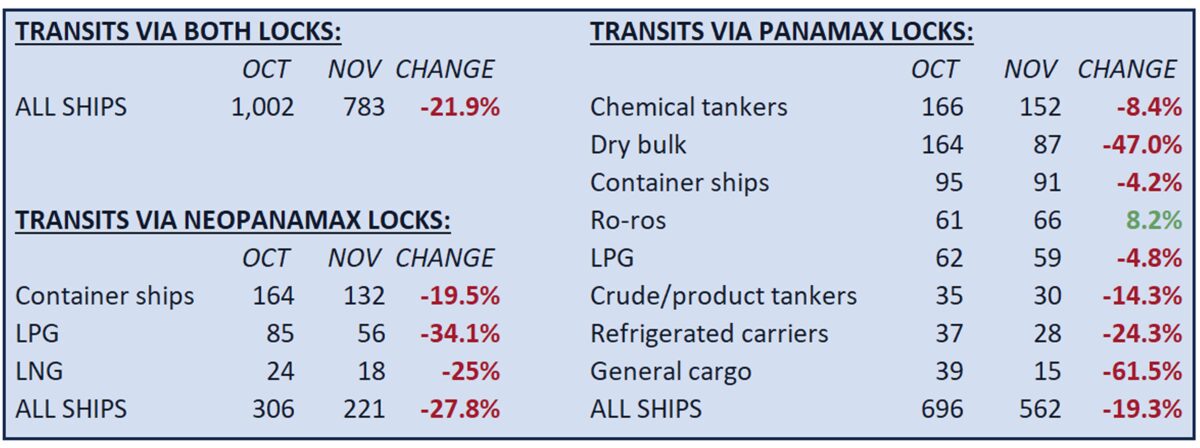
The total number of transits declined 22% in November versus October, according to just-released data from the Panama Canal Authority (ACP). And for the first time since the drought began, the numbers are not just falling at the older, smaller Panamax locks. They’re also declining sharply at the larger Neopanamax locks, which debuted in 2016.

The Neopanamax locks are a crucial conduit for high-capacity container vessels bringing goods from Asia to U.S. East and Gulf Coast ports, and for liquefied petroleum gas (LPG) and liquefied natural gas (LNG) carriers transporting exports from the U.S. Gulf to Asia.

Transits through the Neopanamax locks fell 28% in November versus October, while transits through the Panamax locks dropped by 19%.

Container ships, LPG ships and LNG ships were all hard-hit on the Neopanamax side. At the Panamax locks, dry bulk shipping was the biggest decliner, by far.

This time of year is the height of the export season for American farmers, when grain cargoes traditionally move via the Panama Canal from the U.S. Gulf to Asia.

These transits have gone off a cliff as grain-laden bulkers have shifted to the Suez Canal: 164 Panamax bulkers transited in October and just 87 in November — a 47% month-on-month collapse.

(Chart: FreightWaves based on data from ACP)

November was turning point for Neopanamax locks

The ACP also publishes monthly data on average daily transits by lock type. This data shows just how extreme the November drop-off was compared to prior months.

The shipping impact of Panama’s low water levels has been highly publicized since this summer. However, the drought’s effect on Neopanamax transits — and thus, on Asia-U.S. container shipping — only began last month.

Average daily transits through the Neopanamax locks were actually 4% higher during the first 10 months of 2023 versus the same period in 2022, prior to the drought. In October, average daily transits were up 7% year on year.

Then came November. There was an average of 7.37 transits per day through the Neopanamax locks, down 25% from 9.83 per day in November 2022.

chart of Panama Canal transits
(Chart: FreightWaves based on data from ACP)

In contrast, year-on-year declines at the Panamax locks began back in May. Between May and October, average daily transits through the Panamax locks fell 11% versus the same period in 2022.

But here too, November marked a major downturn. There were an average of 18.74 transits per day through the Panamax locks last month, a 29% plunge compared to November 2022.

chart of Panama Canal transits
(Chart: FreightWaves based on data from ACP)

Average wait time eases as ships divert from Panama

The ACP instituted severe restrictions on scheduled transits starting in early November. There were 10 daily reservation slots for Neopanamax transits at the beginning of last month. By Dec. 1, there were just six. On Jan. 1, the number of slots falls to five.

At the beginning of November, there were 22 daily reservation slots at the Panamax locks. By Dec. 1, there were 16. That will fall to 15 on Jan. 1 and 13 on Feb. 1.

The initial effect of the ACP cutting reservation slots was a surge in waiting time for vessels that arrived without reservations.

That effect is now changing. Ship operators appear to have learned their lesson. Rather than heading to the Panama Canal without a reservation, they’re choosing alternate routes and avoiding the risk, reducing both the queue and wait time.

There were only 23 ships in the queue without reservations on Wednesday. The total number of ships in the queue, including those with reservations, is down to 76, compared to a high of 163 on Aug. 9 and an average during normal periods of around 90.

Average wait time for ships without reservations surged throughout last month. On the southbound Atlantic-to-Pacific route, wait time has fallen back in December. On the northbound Pacific-to-Atlantic route, waiting time continued to escalate until Dec. 6, then retreated as well.

(Chart: FreightWaves based on data from ACP)

Average southbound wait time for ships without reservations peaked at 11.4 days on Nov. 29 — 5.4 times higher than on Nov. 2. Wait time was down to eight days on Wednesday, 30% off the high.

Average wait time for northbound ships without reservations peaked at 15.2 days on Dec. 6, also 5.4 times higher than at the beginning of November. It has since fallen 53% to seven days on Wednesday.

Click for more articles by Greg Miller 

Railroads can collaborate with truck carriers to serve customers

This fireside chat recap is from FreightWaves’ Domestic Supply Chain Summit on Wednesday.

FIRESIDE CHAT TOPIC: How shippers can/should use the railroads in their supply chain strategies in 2024 and beyond.

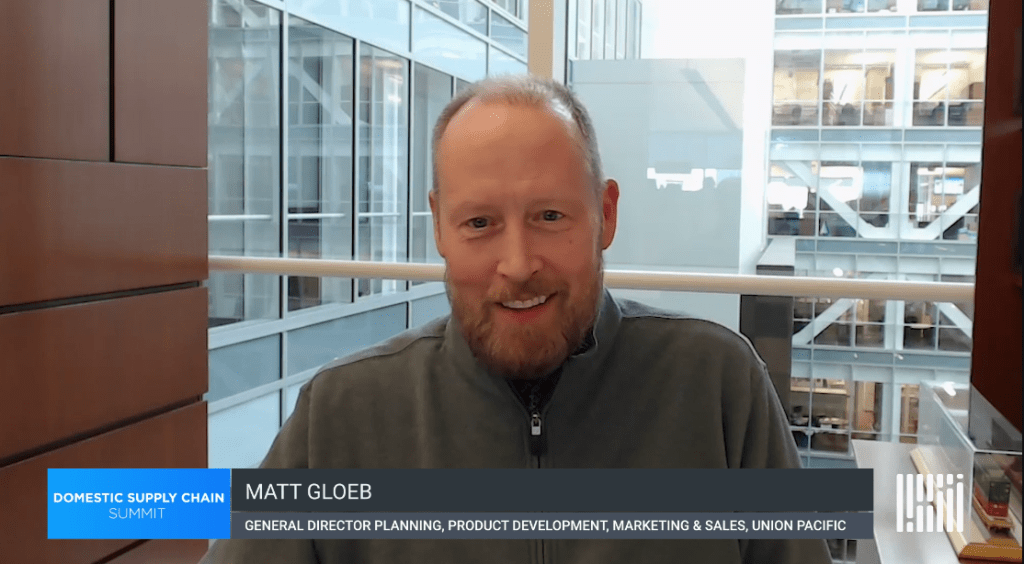
DETAILS: Matt Gloeb, general manager of planning and product development for the marketing and sales division of Union Pacific, chats with FreightWaves’ chief economist Anthony Smith about how collaboration between the rail and trucking industries can aid in the successful implementation of sustainability strategies along the supply chain. 

KEY QUOTES FROM GLOEB:

“When you think about intermodal, you think about international intermodal and you think about domestic intermodal. But what we don’t think about — but is integral to that — is trucking. Trucking is very much a part of intermodal, and it’s at the front end and it’s at the back end. So, collaborating with our wholesale customers, who are also motor carriers … is really important to us. And one of the things we just announced here last week is our Phoenix intermodal terminal. … In 2024, we’ll be introducing our brand new Phoenix intermodal terminal, and it’s really out of collaboration with a motor carrier who’s been trucking from the San Pedro ports into the Phoenix market, which is one of the fastest growing markets in the United States.”

“We talk a lot about taking trucks off the road as a railroad. But again, at the same time, it’s necessary to reinforce that we’re really partners in this supply chain initiative. Intermodal doesn’t exist without motor carriers. … So, I think there’s an opportunity there for motor carriers and for railroads to work collaboratively together on sustainability initiatives and drive further growth in partnership.”

“You don’t think naturally as a railroad that we’re high tech, but you would be so shocked by how high tech we really are, and we continue to evolve and grow. We’ve got applications on our iPhones, and those applications, like UPGo, go out to our motor carrier friends that are draying onto our intermodal terminals [and] draying off from our intermodal terminals. And we do that to help create efficiency in that whole supply chain.”  

Trailers as a service offers peace of mind for shippers 

This fireside chat recap is from FreightWaves’ Domestic Supply Chain Summit on Wednesday.

FIRESIDE CHAT TOPIC: Wabash’s trailer-as-a-service offering addresses needs of asset-light shippers.

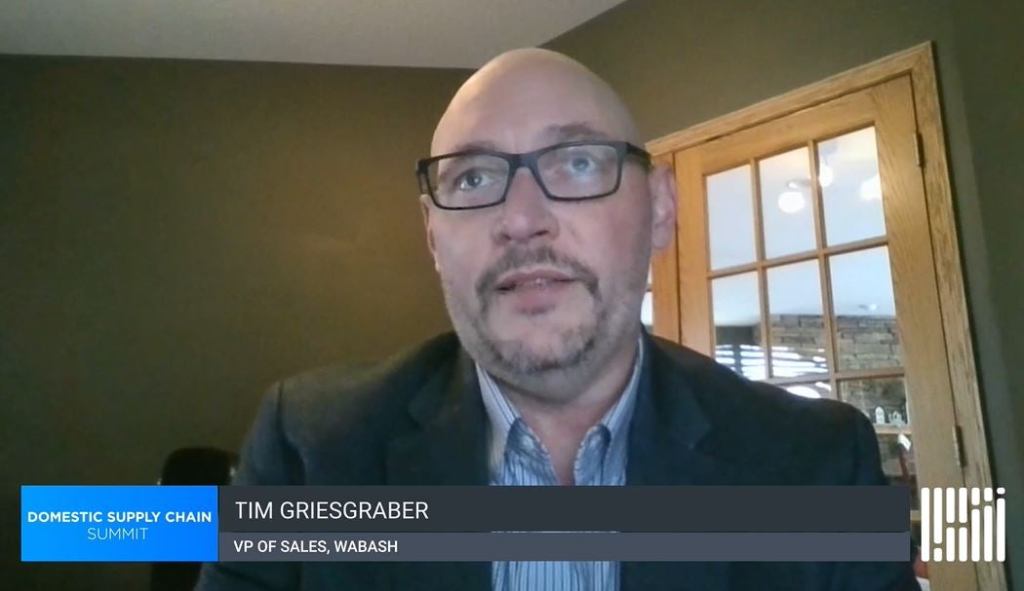
DETAILS: As the equipment business normalizes following a boom cycle of equipment ordering, Wabash is building out a trailer-as-a-service offering that offers peace of mind to shippers. Tim Griesgraber explains how this new model addresses the worry of losing time to breakdowns.  

KEY QUOTES FROM TIM GRIESGRABER:

“Demand will likely return to normal as many fleets still need replacement [equipment], but they’ve scaled back some of the growth aspects.”

“The reality in the way we see the macro trends, e-commerce is creating a ton of inefficiency in the network. Talk about driver wait times, detention, difficulty getting appointments, parking — all that stuff is going to have an impact on the trailer.” 

“The traditional idea of buying and selling a trailer, that’s not going to be enough. We have to think of different ways we can insert that capacity into the marketplace just like our customers have to think of more dynamic ways of winning business. We might have to think of more nimble ways to provide capacity to those customers as they are trying to meet demand.”