FMCSA issues policy on sexual assault among truck drivers

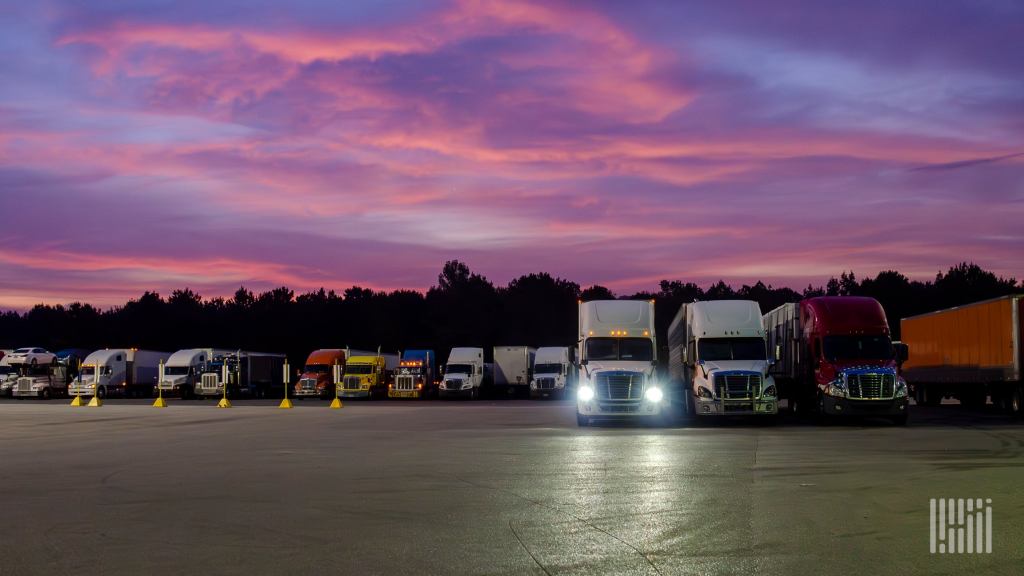
Trucks at rest stop at night.

WASHINGTON — The Federal Motor Carrier Safety Administration has issued a new policy statement aimed at addressing sexual assault within the trucking industry.

In addition to increasing awareness of the problem, the statement, issued on Thursday by FMCSA Administrator Robin Hutcheson, also aims to remind state courts and state driver licensing agencies (SDLAs) that federal regulations require states to disqualify drivers from operating a commercial truck if they are convicted of using it to commit felony sexual assault.

“I’m absolutely thrilled to see this, it’s been something I’ve been writing about for some time,” Desiree Wood, who heads the advocacy group REAL Women in Trucking and is a commercial driver herself, told FreightWaves.

“Before Robin was at FMCSA, people were saying this issue was not under the agency’s authority. There have been agency announcements about wanting drivers to be the eyes and ears on the road when it comes to truckers against the human trafficking that’s been occurring, but what about cleaning up our own house?”

The policy statement acknowledges sexual assaults that occur at truck stops and fueling stations and while drivers undergo CDL license training.

“Truck drivers whose personal safety is at risk cannot devote their complete attention to the safe operation of a CMV [commercial motor vehicle] and the performance of other safety sensitive functions,” the notice states. “State courts and state driver licensing agencies [SDLAs] play a key role in addressing this problem.

FMCSA states in the notice that it is also aware that state criminal codes use varying terms to describe sexual assault, including rape, and that the term “sexual assault” means “any nonconsensual sexual act proscribed by state law, including when the victim lacks capacity to consent.”

It notes that examples of “using a CMV” in an assault could include:

  • Felony sexual assault occurring in or upon a CMV or towed unit.
  • Use of a CMV to transport a victim to a site where felony sexual assault is committed.
  • Use of a CMV to conceal a felony sexual assault whe, for example, the CMV serves as a shield from public view while the assault is taking place.

“There may be other circumstances in which a CMV is used in the commission of felony sexual assault as determined by state prosecutors based on the facts of the case and applicable state law,” according to the notice. “FMCSA urges state courts to be diligent in forwarding these convictions to the SDLA so the perpetrator will be disqualified from operating a CMV.”

The notice comes as Hutcheson reviews final recommendations made in a report from FMCSA’s Women in Trucking Advisory Board.

The board recommended, among other things, that trainers and trainees never share the same sleeping quarters during CDL training periods, including hotel rooms and sleeping berths. It also recommended removing drivers with proven and documented cases of sexual harassment and assault by setting up complaint-reporting mechanisms outside the company structure.

Wood urged women to make criminal complaints “since this guidance would require this for enforcement,” she said. “We also need further education for law enforcement so they understand the nature of over-the-road truck driver training practices and jurisdiction issues that may cause them to not take criminal complaints seriously.”

She added, “I strongly feel that sexual predators — even though they may not have yet been identified as such — still thrive in this industry because we have not addressed the issue. We need to grow up and understand that until you can be transparent about it, you can’t begin to fix the problem.”

Click for more FreightWaves articles by John Gallagher.

CN acquiring Iowa Northern Railway

Canadian railway CN plans to acquire Iowa Northern Railway (IANR) a short-line railroad that operates on 275 miles of track in Iowa.

IANR, which connects with CN’s (NYSE: CNI) network and is based in Waterloo, is privately owned by the Sabin family. Acquisition costs weren’t disclosed, but the transaction is subject to the Surface Transportation Board’s regulatory approval, which could be granted in 2024.

IANR serves agricultural and industrial markets in the Upper Midwest, and customers include those transporting grain and biofuels. According to IANR’s website, the company also provides car storage and transloading services. The railway also interchanges with two other Class I railroads — Union Pacific (NYSE: UNP) and Canadian Pacific Kansas City (NYSE: CP) — and one short line, the Iowa Interstate Railroad via short line and UP subsidiary Cedar Rapids & Iowa City Railway.

“We are delighted to have reached an agreement with Iowa Northern Railway. We look forward to the opportunities our combined network will provide customers, farmers, and our partners to respond to the needs of their existing and new markets,” CN President and CEO Tracy Robinson said in a Wednesday afternoon news release. “By enabling all of us to play an even more important role in this critical supply chain and densifying our southern network, we are accelerating sustainable, profitable growth.”

Said IANR Chairman Daniel Sabin: “We are very pleased to have reached a deal with CN. We believe CN shares IANR’s commitment to local stakeholders and that this transaction will be beneficial for customers, employees and the local Iowa economy. We are confident that, as part of CN, IANR will be able to continue to provide reliable first and last mile service to our local customers while providing them access to a much broader network and market.”

Subscribe to FreightWaves’ e-newsletters and get the latest insights on freight right in your inbox.

Click here for more FreightWaves articles by Joanna Marsh.

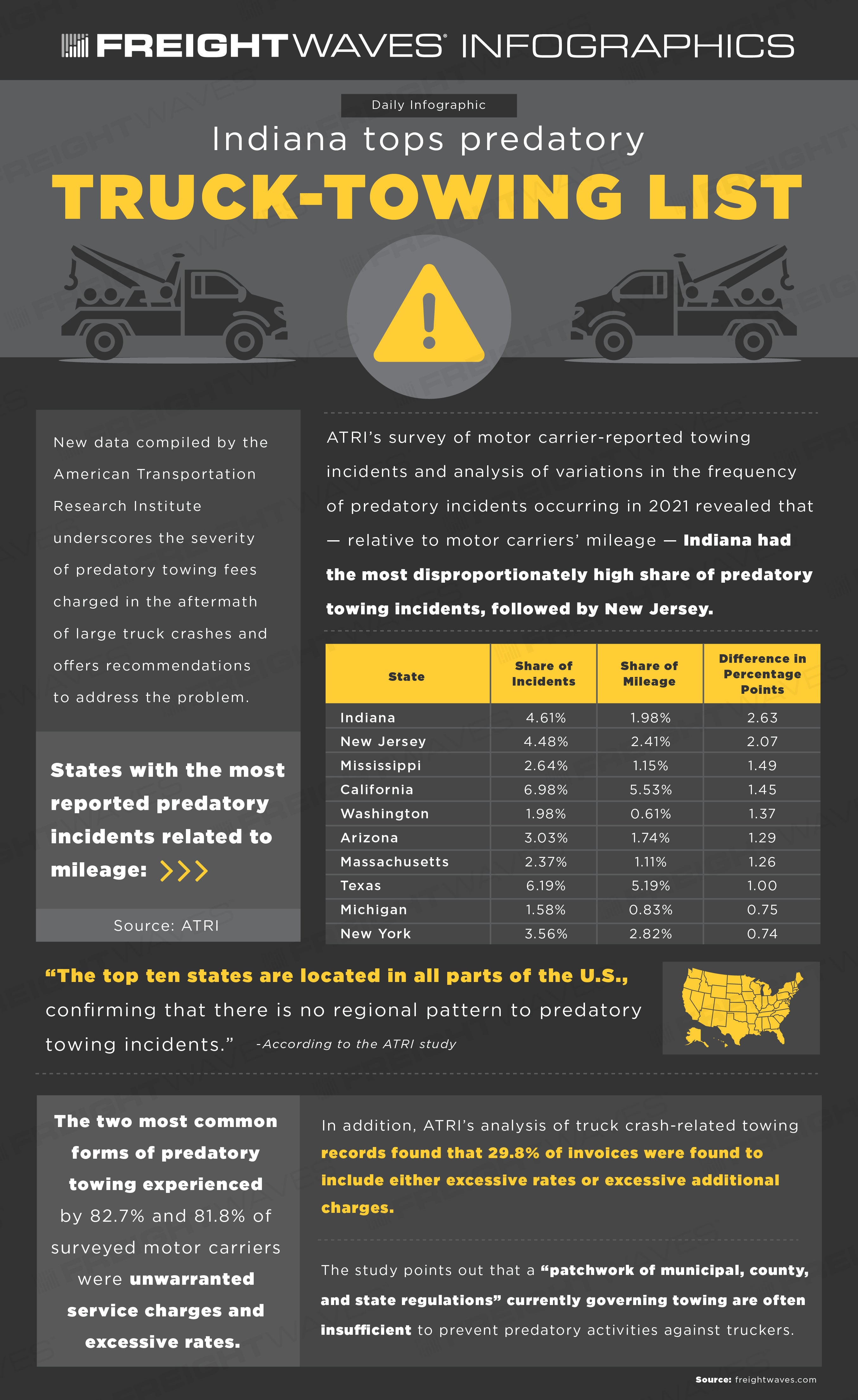
Daily Infographic: Indiana tops predatory truck-towing list


To view more FreightWaves infographics, click here

US imports dragged down by seasonality, Panama Canal crisis

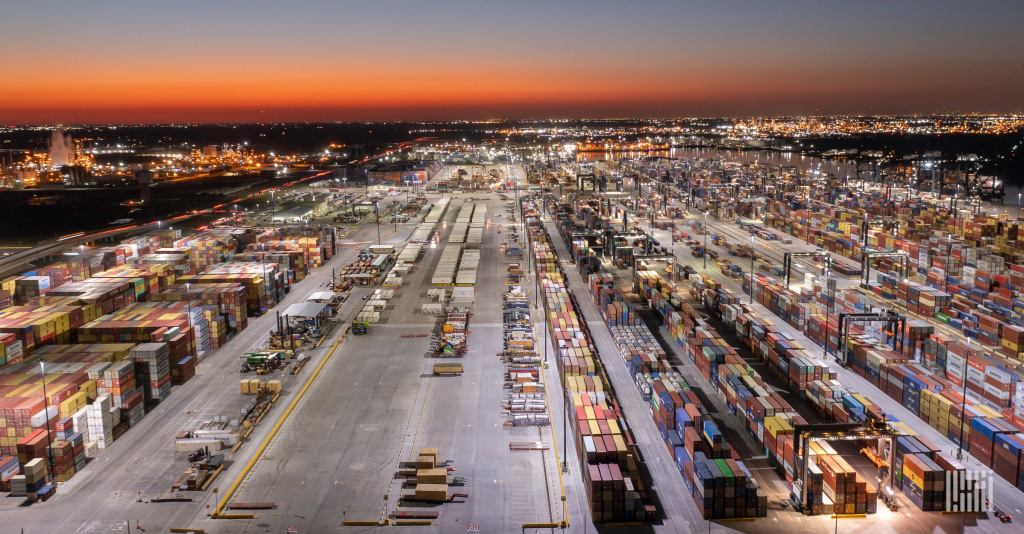
photo of import port Houston

The good news for container lines: U.S. imports are still higher than they were before the pandemic. The bad news: This year’s string of month-on-month gains is over. Seasonality, combined with worsening conditions at the Panama Canal, pulled down imports in November — a negative for freight rates.

According to data from Descartes (NASDAQ: DSGX) released Thursday, U.S. ports handled 2,099,408 twenty-foot equivalent units of imports last month, 9% less than in October.

chart showing imports
(Chart: Descartes Datamyne)

Volumes were up 7.4% versus last November, but this was a case of easy “comps.” In November 2022, volumes were in mid-crash due to bloated inventories amassed at the tail end of the supply chain crisis.

China has been the main volume driver this year, both on the way up and down. The American and Chinese economies remain intimately intertwined, regardless of geopolitical tensions and rhetoric on diversifying supply chains.

U.S. imports from China totaled 783,467 TEUs in November, down 11.7% from October, according to Descartes. The reduction in imports from China accounted for half of last month’s countrywide month-on-month decline, but even so, Chinese cargo accounted for 37.3% of total volumes.

chart showing Chinese imports
(Chart: FreightWaves based on data from Descartes Datamyne)

Imports continue to outpace pre-COVID levels

Import volumes, while declining sequentially, are still outpacing pre-COVID levels.

Imports from January-November were up 4% versus the same period in 2019, 4.4% versus 2018 and 11.4% versus 2017, according to Descartes’ data.

This November’s imports were up 10.4% from the same month in 2019, 4.7% from November 2018 and 8.4% from November 2017.

(Chart: FreightWaves based on data from Descartes Datamyne)

West Coast regains more market share

Meanwhile, the positive reversal of fortunes for West Coast ports continues.

West Coast ports lost market share to East and Gulf Coast ports earlier this year due to concerns over a labor dispute between the West Coast dockworkers’ union and terminal employers.

A new six-year labor contract was agreed to in June, removing the West Coast labor threat, while concerns on East and Gulf Coast services have escalated due to low water levels in the Panama Canal — all of which is helping West Coast ports regain market share.

The top five West Coast ports accounted for 43.1% of total imports last month, while the top five East and Gulf Coast ports accounted for 42%. (Smaller ports accounted for the remaining 14.9%.)

In contrast, the October ratio was 45.1% for top East and Gulf Coast ports versus 39.6% for the top West Coast ports.

The shift in market share was due to a drop in volumes to East and Gulf Coast ports in November.

Descartes’ data, which is based on customs filings, showed sizable month-on-month declines in New York/New Jersey (down 62,062 TEUs or 16.1% versus October), Houston (down 46,857 TEUs or 26.7%) and Charleston, South Carolina (down 22,632 TEUs or 18.7%).

According to Chris Jones, Descartes’ executive vice president of industry and services, “The Panama drought finally appears to be impacting U.S. container import volume at East and Gulf Coast ports, which could worsen with the Panama Canal Authority’s plans to further reduce the number of daily transit slots in coming months.”

As evidence of Panama Canal fallout, Jones pointed to the steep decline in Gulf Coast port volumes in November. It was the largest sequential drop for these ports this year, by far, at over double the pace of the countrywide decline.

More pressure on spot rates

Ocean carriers have struggled to bring up freight rates in the face of overcapacity as new ships are delivered. The end-of-year import pullback in the U.S. implies further pressure on spot rates.

The Freightos Baltic Daily Index (FBX) assessed China-West Coast spot rates at $1,620 per forty-foot equivalent unit on Tuesday, down 21% from the peak-season high in August.

The FBX China-East Coast spot rate assessment was $2,501 per FEU, down 18% from the high in August.

Spot rate in USD per FEU. Blue line: China-West Coast. Purple line: China-East Coast. (Chart: FreightWaves SONAR)

Click for more articles by Greg Miller 

Forward Air’s tonnage inflects further upward in Q4

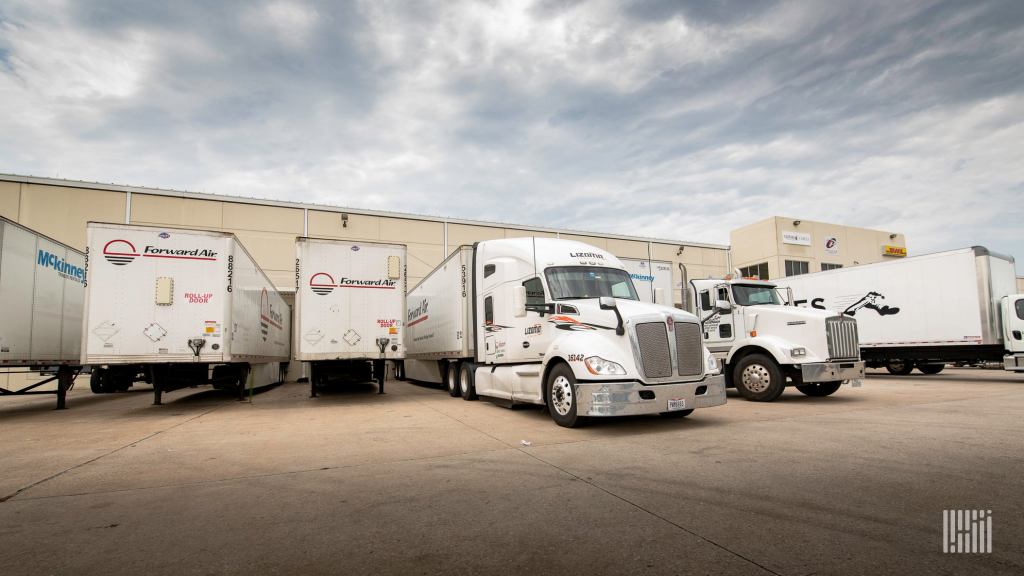
Forward Air trailers loading at a warehouse

Forward Air says tonnage has moved further into positive territory during the fourth quarter.

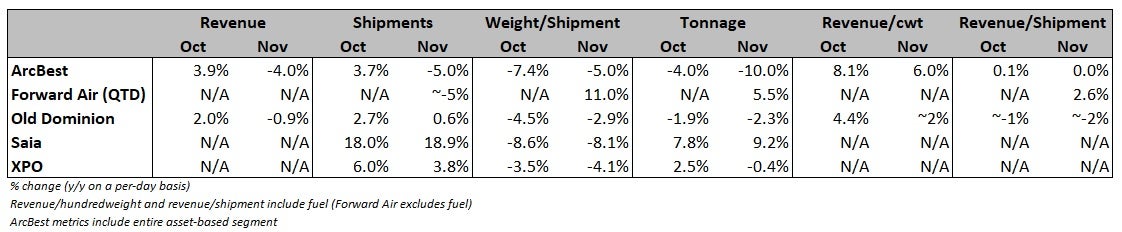
The company’s expedited segment, which includes less-than-truckload operations, saw a 5.5% year-over-year (y/y) increase in tons per day during the first two months of the fourth quarter, Forward Air said in an update issued Wednesday after the market closed. The result follows a slight decline in the third quarter.

Weight per shipment jumped 11% y/y and revenue per shipment was 2.6% higher in the October-November period. The company did face an easy tonnage comparison to the same period last year (down 11.9%).

On its third-quarter call at the end of October, Forward said tonnage first turned positive in September and was up roughly 6% y/y in October.

“We continue to grow our LTL tonnage, and focus on high quality freight, as reflected in the increased weight per shipment,” said Forward Chairman, President and CEO Tom Schmitt. “At the same time, we are making sure we are getting paid more per shipment. This all reflects our Grow Forward strategy of focusing our best-in-class service on high value freight, operating in a cleansed network, and pricing appropriately.”

Schmitt said revenue per ton mile was up 1.8% y/y excluding fuel surcharges so far in the quarter.

Table: Company reports

Forward (NASDAQ: FWRD) previously said it had seen a small benefit from Yellow’s closure. Forward primarily serves customers with time-definite shipment needs unlike Yellow did. However, it has seen an increase in long-haul demand and events-related shipments through 3PLs since Yellow’s exit.

Forward remains in a legal dispute over a controversial merger attempt with freight forwarder Omni Logistics.

Forward alleges Omni has failed to meet certain pre-closing conditions and that Omni’s inaccurate financial projections have resulted in an inadequate financing structure for the transaction. Omni maintains it hasn’t misrepresented anything and that it has complied with all pre-closing requirements. A Delaware court is expected to hold a hearing on the matter on Jan. 19.

Shares of FWRD were up 1.7% in after-hours trading on Wednesday. The stock is off more than 40% since the merger was announced in August.

More FreightWaves articles by Todd Maiden

Reliable Robotics achieves milestone for uncrewed cargo flight

A small Caravan turboprop in blue Azul lettering flying against blue sky.

Reliable Robotics, a developer of autonomous flight control systems retrofitted in fixed-wing aircraft, said Wednesday it has successfully completed a remotely piloted flight of a Cessna 208B Caravan commanded from a control center 50 miles away.

The flight, which had no human safety pilot onboard, took place last month. The aircraft took off from Hollister Municipal Airport in California, just south of San Francisco Bay, and was controlled from Reliable’s Mountain View, California, headquarters. The flight took about 12 minutes from autotaxi to parking.

Aviation experts expect that advanced automation will be first adopted at scale in the cargo sector, starting with small freighter aircraft and eventually transitioning to larger aircraft. 

Companies such as Reliable Robotics, Xwing and Merlin are building independent software stacks that can be integrated into Cessna flight control systems to allow regional cargo aircraft to take off, maneuver and land without human involvement. Remote piloting, which is a step toward autonomous flight systems, will allow more communities to benefit from air service, especially with pilots in short supply, they say.

Reliable’s autopilot system automates all phases of flight, from taxi to takeoff and landing. It uses redundant hardware and software to automate flight control surfaces and engine controls, as well as redundant voice and data networks for secure air-to-ground connectivity, which enables remote aircraft command and radio management.

The primary hurdle at this point is getting aviation authorities to validate that autopilot systems are safe and can be safely integrated into the national airspace system. 

The Federal Aviation Administration in June formally accepted Reliable’s certification plan for its autonomous flight system, essentially signing off on the company’s roadmap for complying with safety standards. That was followed by a series of flight tests and simulations that demonstrated Reliable’s ability to reroute the aircraft, immediately change speeds and fly under simulated weather conditions by updating flight plan routing. An onboard test pilot observed each flight. The system was also tested in simulated Class B airspace, typically defined as airspace surrounding the nation’s “busiest” airports.

Proponents of semi-autonomous flight systems say they can prevent controlled flight into terrain and loss of control in flight, making them safer than aircraft with crews.

ASL Aviation Holdings, a provider of outsourced cargo transport outside North America for global express carriers such as Amazon, FedEx and DHL, has been working with Reliable Robotics since last year to explore bringing advanced aircraft automation into its operations. 

“ASL is always innovating to better serve customers, and our partnership with Reliable Robotics is aimed at enabling us to provide reliable, flexible and cost-efficient time-sensitive cargo delivery to smaller unserved areas,” said CEO Dave Andrew in a news release.

In June, Reliable Robotics announced an agreement with Azul Airlines to determine how to deploy Reliable’s advanced automation system into Caravan operations in Brazil.

Reliable Robotics is also collaborating with the U.S. Air Force to explore how remote piloting can be applied to large cargo aircraft. 

Click here for more FreightWaves/American Shipper stories by Eric Kulisch.

Merlin to deliver Alaska cargo with self-flying aircraft

‘Potentially unreliable’ shipping worries online shoppers 

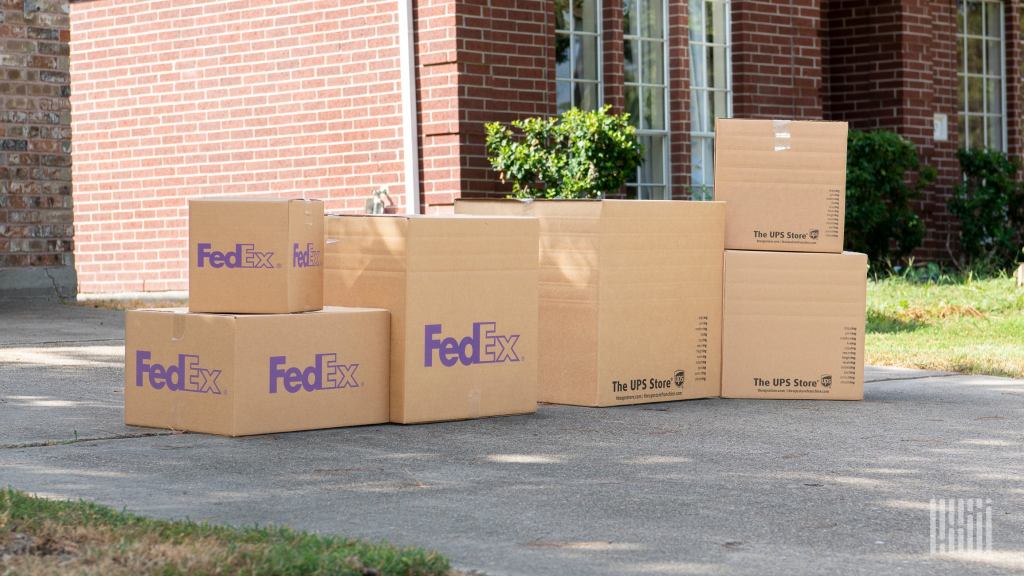
Despite concerns over the reliability of parcel delivery performance, most holiday shoppers will order online for the majority of their holiday purchases, according to a survey published Wednesday by technology company Blue Yonder.

The survey of approximately 1,300 U.S. consumers found that 48% believe delivery estimates to be “potentially unreliable.” About 38% said they worry their packages will be damaged en route. 

About half said that placing orders by Dec. 15 will ensure their orders arrive by Christmas. Slightly more than half expected their orders to arrive two to four days after placing them. Nearly 40% expected the arrival window to be five to seven days after placing an order.

Still, 59% said they planned to complete most of their holiday transactions using some form of online commerce.

About 38% said they favored in-store shopping over online shopping this holiday due to more flexible in-store return options. About 35% said that returns were an important consideration in choosing to shop in stores.

Slightly less than half said they would not pay for expedited shipping to rush parcels to their destinations, preferring instead to order and ship well ahead of parcel carriers’ peak delivery deadlines, the survey found. The reluctance to wait and then pay for fast shipping was most pronounced among baby boomers.

Only 13% were willing to pay between $11 and $20 for rush shipping, while 37% said they would consider paying between $5 and $10, according to the survey.

As usual, consumers don’t want to be inconvenienced over the holidays. About 45% said they would select a buy online, pick up in store (BOPIS) option only if the pickup location was convenient for them.

Shannon Wu-Lebron, corporate vice president of global retail industry strategy at Blue Yonder, said consumers appear to be less enamored with online shopping and deliveries during the holiday season when reliable shipping is critical.

“The survey results suggest that online shopping may be waning in popularity for higher-stakes purchases,” said Wu-Lebron. “Whether through delays or damaged goods, consumers’ negative experiences with home shopping are powerful enough to drive them back into stores, which unlocks valuable opportunities for retailers.”

US, Canada to form task force to get locomotive emissions to net zero

The U.S. and Canadian governments plan to work together to reduce the railway sector’s greenhouse gas emissions via a task force that will explore accelerating the use of zero-emissions locomotive technologies, leaders from both countries announced at the COP28 United Nations climate change conference in Dubai.

The Rail Decarbonization Task Force will have three goals, according to a Wednesday joint statement from U.S. Energy Secretary Jennifer M. Granholm, U.S. Transportation Secretary Pete Buttigieg and Canadian Minister of Transport Pablo Rodriguez:

  • Establish a joint research agenda looking at integrating technologies such as battery-electric locomotives and hydrogen-powered locomotives.
  • Determine strategies to accelerate the use of zero-emission technologies so that the rail sector can achieve net-zero carbon emissions by 2050.
  • Collaborate on developing a U.S.-Canada rail sector net-zero climate model by 2025.

“The United States and Canada recognize we need to work together to fight climate change and decarbonize our integrated rail networks. This joint announcement demonstrates our shared dedication to working together to build a more sustainable and equitable future for all,” the statement said. “We intend to engage national partners, international organizations and other countries to promote safe and sustainable rail transportation. The decarbonization of the rail sector is a crucial component of our global efforts to reduce emissions and meet the goals of the Paris Agreement.”

This task force will build on previous joint efforts by the two governments to address climate change in the transportation sector, according to the release. Those include 2021’s joint statement by the U.S. Department of Transportation and Transport Canada on transportation and climate change, and the countries’ Roadmap for a Renewed Canada-U.S. Partnership, which describes a future of zero-emission vehicles. The Federal Railroad Administration also hosted a conference in May on reducing emissions from the rail sector. 

The California Air Resources Board approved in April a regulation that calls for locomotives operating in California to have zero-emissions configurations. By 2030, locomotives operating in the state must be 23 years old or younger, according to a CARB fact sheet. Switch, industrial and passenger locomotives built in 2030 or after will need to operate in zero-emissions configurations, while locomotives built in 2035 for freight linehaul operations will need to comply with the zero-emissions configurations.

That regulation faces a lawsuit from the Association of American Railroads and the American Short Line and Regional Railroad Association. Both groups say the timeline for deployment of zero-emissions locomotives is too ambitious because of its costs for short lines and because the technology might not be ready for widespread deployment by the regulation’s deadline.

Subscribe to FreightWaves’ e-newsletters and get the latest insights on freight right in your inbox.

Click here for more FreightWaves articles by Joanna Marsh.

California trucking regulation flies under radar as first deadline looms

California is getting ready to implement another environmentally focused truck regulation, but the biggest problem with it at this point may be that plenty of affected truckers don’t appear to know about it. 

The rule is called the Clean Truck Check (CTC), and according to a fact sheet from the California Air Resources Board (CARB), it is the rechristening of what had been known as the Heavy-Duty Inspection and Maintenance regulation. One significant difference, however, is that it applies to all trucks that ever operate in California, not just those based in the state. 

CTC was first approved in 2021. 

The most pressing deadline in the program is that trucks must be signed up with a state registry for CTC by Dec. 31.

Corinna Peterson of the transportation segment of compliance consultancy J. J. Keller & Associates said when her team talks to clients about California issues, “people are more concerned about the zero-emission vehicle program that’s rolling out,” a reference to the Advanced Clean Fleets (ACF) rule that is taking several significant steps forward in 2024.

“But they don’t realize that is down that road, that it’s not imminent,” Peterson said, referring to the fact that few actions have to be taken in 2024 for compliance with the ACF rule. “They don’t realize that these January 1 CTC deadlines are coming up in a few weeks and that it applies to them as well. And this is something they need to worry about right now.”

Michael Tunnell, a senior director of energy and environmental affairs at the American Trucking Associations who has a particular focus on California, echoed that view on preparedness.

“I am hearing of people just learning about this program,” he said. CARB has taken several steps to alert the industry about CTC, he said: “They’ve done a lot of outreach on this.” (CARB recently announced another informational webinar on the regulation).

But he conceded that “the industry is so broad and diverse. It’s just hard to get the word out.”

Under the CTC, registration must be completed by Dec. 31, along with payment of a $30 fee.

Vehicles that fall under the rule’s mandates are those with a gross vehicle weight rating of more than 14,000 pounds.

CARB, in its fact sheet about the program, said the CTC was “analogous” to the state’s Smog Check program for light-duty vehicles.

“These testing requirements help ensure that heavy-duty vehicles operating in California remain equipped with properly functioning emissions controls, and when malfunctioning, that these systems get repaired in a timely manner,” CARB said.

Tunnell said the test will reveal one key metric: whether a truck’s malfunction indicator light is on, signaling issues with the vehicle’s emissions.

Some of the program already is in place, beyond the registration mandate. CARB said that at the start of 2023 it implemented “roadside emissions monitoring equipment” that could detect vehicles with particularly high emissions. If a vehicle is identified through that system, it gets a Notice to Submit to Testing, which comes with a 30-day window to get fully inspected and come into compliance.

Tunnell said the CTC is “not as onerous” as other CARB regulations that have become the industry focus through much of 2023, likely ramping up in 2024. “It depends on what you compare it to, like going out and buying an electric truck,” he said.

Tunnell said all trucks from the 2013 model year onward will have the necessary onboard diagnostics. Trucks without it prior to that model year will probably need to continue the so-called “smoke testing” under the earlier regulation.

But “if you’re running long haul, you’re probably not running an old beat-up truck,” Tunnell said. Only a “fairly small percentage” operating in California might find themselves running into continued smoke testing to meet the mandates rather than the download from the onboard diagnostics.

For most trucks, the process needed for compliance will amount to a simple twice-a-year download of data from onboard diagnostics. “Over-the-road fleets will be able to just have their telematics provider pull the data from the truck and transmit it to CARB,” Tunnell said. “So it really doesn’t matter where that truck is. [Data] can just be sent to CARB when it’s due, and that’s great.”

Peterson said that while all vehicles that travel in California would need to be registered with the state’s system and begin reporting next July, a larger fleet might choose not to register older models that don’t have the onboard diagnostics that make reporting easy. They could register vehicles that are technologically advanced and “use only those vehicles when they have operations in California,” she said.

More articles by John Kingston

California Trucking Association sues to block Advanced Clean Fleets rule

Battle ranks over California waiver for Clean Trucks rule swell

CARB clear on lack of changes in California Clean Fleets rule

The launch of the shipping container

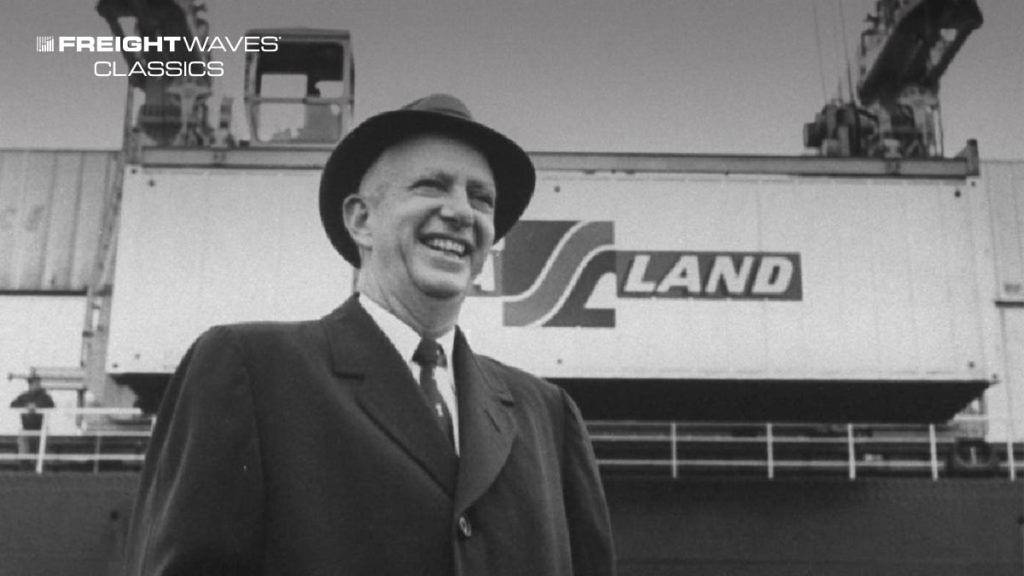
Malcom McLean in the foreground with a Sea-Land container behind him. (Photo: Maersk)

FreightWaves Classics is sponsored by Old Dominion Freight Line — Helping the World Keep Promises. Learn more here.

The shipping container is one of the most influential inventions in the shipping industry. For better or for worse, it arguably paved the way for globalization and a new take on the supply chain and logistics industry simply by streamlining the loading and unloading process. 

But where did the shipping container come from? 

A man named Malcom McLean started a small trucking company focused on farming supplies in the 1930s to support his family during the Great Depression, according to PBS’ “Who Made America?” He was known for his resourcefulness and ability to tackle problems from a different angle than most people. Because of this, by the 1950s McLean Trucking grew to 1,700 trucks and was worth $12 million when McLean sold it. 

One day while watching dockworkers loading and unloading shipments from truck to ship, McLean thought that there must be a more efficient way. At the time, it would take eight days on each end of a ship’s trip to load and unload cargo, according to American Business History

McLean gained inspiration from railcars on ships to Cuba in 1929 and World War II experimentation with early ideas of small containers. He believed there was a new strategy waiting to be uncovered that would streamline operations, using a large container that would easily transfer from truck to ship. But others only saw government regulations, unions and workers who feared job loss, logistical issues and expense. 

“His colleagues report that he could not see problems like others saw them — he took big issues and broke them down into components, which he attacked one at a time,” says American Business History. 

The determined businessman realized that oil tankers traveled with empty top decks, added American Business History, which meant room for containers on top. So McLean bought an oil tanker, the Ideal X, added a steel deck to support the extra load and on April 25, 1956, sailed from Newark, New Jersey, to Houston. The ship transported 58 containers. 

The Ideal-X gets its first container loaded onto its deck. (Photo: Maersk)

One anecdote says that while McLean marveled at the feat, a longshoreman had another opinion, remarking, “I think they ought to sink the sonofabitch.” 

Officially, this is the first recorded successful container ship transport. And despite the naysayers, it paid off. McLean invested further in the idea of the containers and named a new company Sea-Land. 

The Port Authority of New York opted to put in a new container port in Elizabeth, New Jersey, the first of many to come, according to PBS. Shipping became much faster due to the decrease in loading and unloading time. But it also became much more secure. The containers offered more security due to their concealed nature. There were many less opportunities for theft. 

Eventually, the Vietnam War pushed container ports into Asia and imported consumer goods prices lowered thanks to the more efficient way of shipping. In 1969, McLean sold Sea-Land for $160 million. He continued to create more inventions, including a new way of transporting patients from a stretcher to a hospital bed and other shipping ideas, until he passed away in 2001 at age 87.

FreightWaves Classics articles look at various aspects of the transportation industry’s history. Subscribe to our newsletter!

Have a topic you want us to cover? Email bjaekel@www.freightwaves.com.