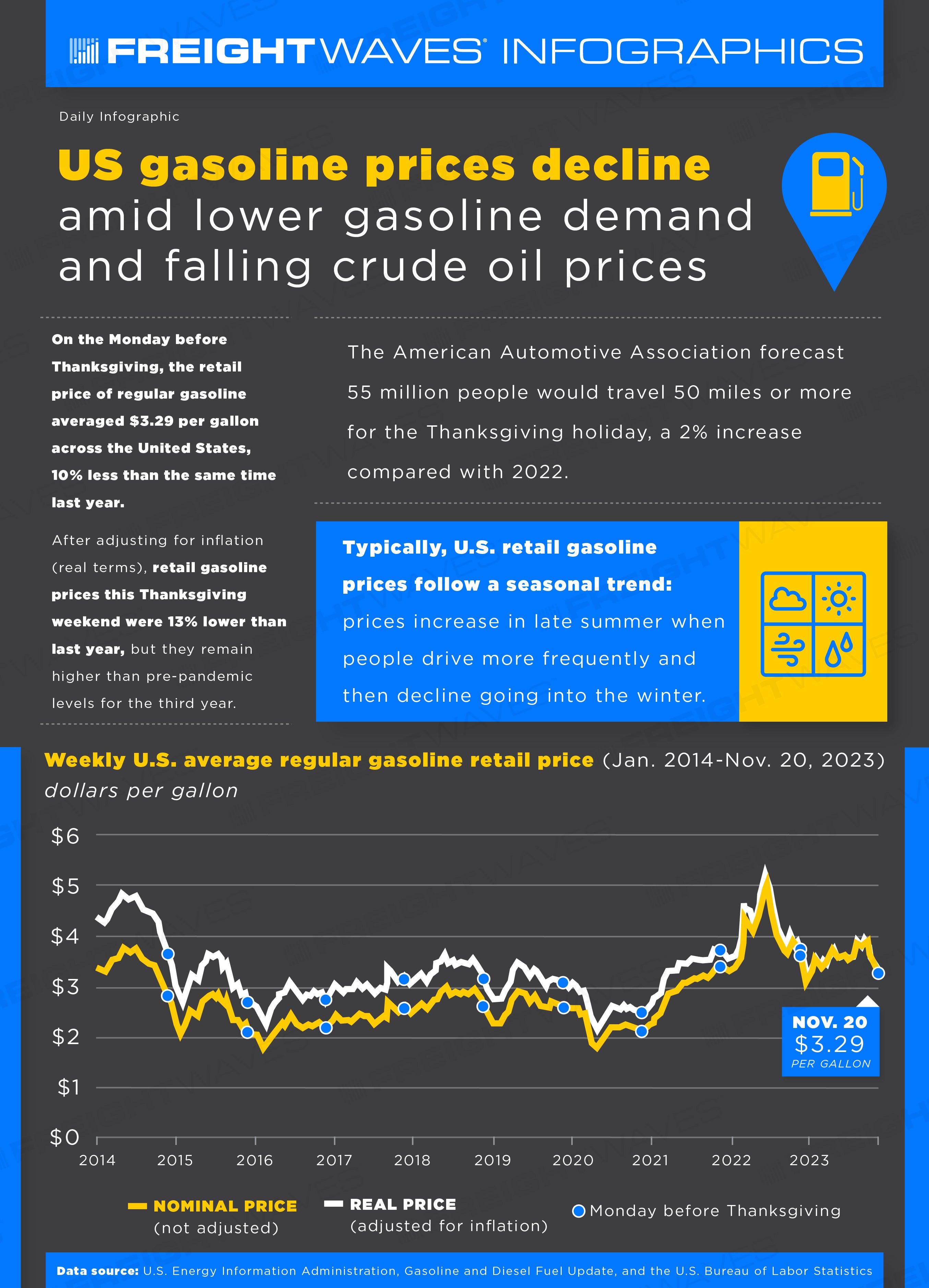
Daily Infographic: US gasoline prices decline amid lower gasoline demand and falling crude oil prices

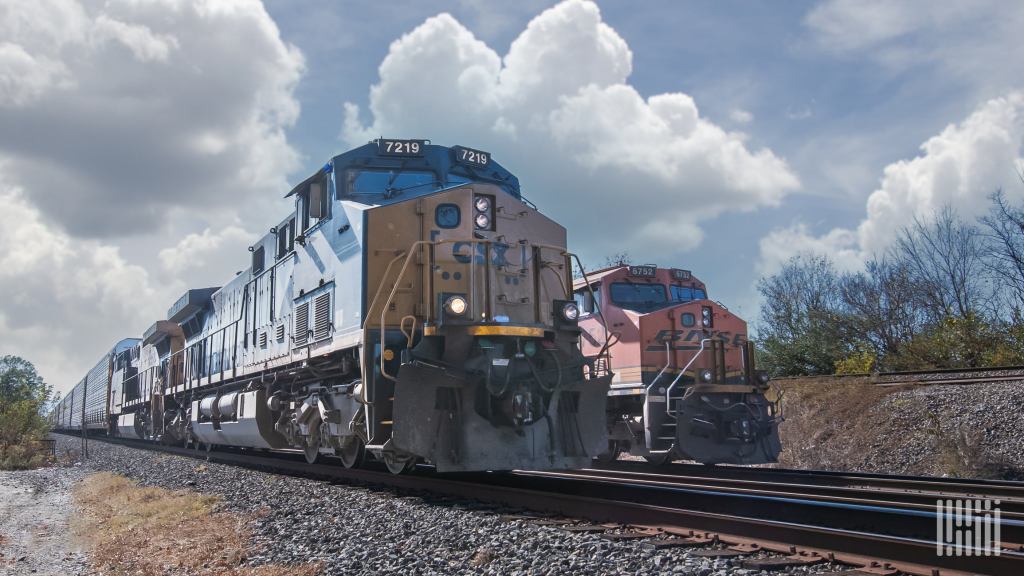
Prospects for rail safety legislation in Congress to move forward in the waning weeks of 2023 appear dim, given other pressing national issues and even “mental exhaustion” among politicians, according to a former U.S. Department of Transportation official who now heads a consulting firm.
“I think the bottom line is that it’s probably unlikely at this point that we’re gonna see any legislation this year. And next year — being an election year — is also looking pretty grim as far as prospects for the bill,” said Loren A. Smith Jr., president of Skyline Policy Risk Group, a research and consulting firm focused on the supply chain. Smith previously served as deputy assistant secretary for policy at DOT.
Following the Feb. 3 derailment of a Norfolk Southern train in East Palestine, Ohio, members of Congress rallied to produce legislation that could prevent similar derailments.
While no injuries occurred as a result of that derailment, about 20 cars involved in the derailment contained hazardous materials. Several days after the incident, public officials and NS decided to vent five tank cars containing vinyl chloride out of concern that the cars could explode because of chemical reactions happening inside the rail cars. The large plume of smoke from the venting rattled the community and raised concerns about local air quality.
Among the bills in Congress that appeared to have some momentum initially was the Railway Safety Act, which was introduced by the Senate delegation representing Ohio and Pennsylvania as well as senators from several other states. That bill passed a Senate committee vote in May, although mostly along party lines, with Republican senators expressing reservations about the potential costs of regulatory compliance, as well as the inclusion of a provision in the bill that would require a minimum train crew size.
However, since then, the bill has seen neither debate nor a vote on the Senate floor. Besides requiring a minimum train crew size, which may have been one of the more controversial elements of the bill, other provisions included protecting and better equipping local emergency responders; requiring increased deployment of wayside defect detectors; expanding the types of chemicals that would trigger specific safety requirements; restricting speeds of trains that are carrying large amounts of flammable liquids and passing through urban areas; notifying states about the types and frequency of trains transporting hazardous materials through the state; prohibiting the railroads from imposing time restrictions on those inspecting trains; and raising fines for violating rail safety regulations from $100,000 to $10 million.
Senate Majority Leader Chuck Schumer decides when the bill will get a floor vote, according to Senate Commerce Committee spokesperson Maurie Mueller.
Schumer’s office didn’t return a request for comment, but the chances that a vote will occur in the last three weeks that Congress is in session appear slim, according to Smith. Congress is in session from after the week after Thanksgiving to Dec. 15, and then it will be in recess until January.
A full Senate vote in December is unlikely for several reasons, Smith said. For starters, Congress tends to move forward with legislation when there’s a deadline attached, like a fiscal cliff or a government shutdown that “forces the two sides to evaluate the risk of nothing happening,” he told FreightWaves.
“When you have one or both of the sides decide the risk of inaction is too high to tolerate, a deal ends up getting cut,” Smith said.
“Because you don’t have a deadline for action, there’s not really sort of a lever there — a third force that [compels action from] the two sides. And I think that’s a real challenge here.”
Also, “there are a couple of things that have forced the two sides back to the standard corners: The [Biden] administration is moving ahead with regulatory changes on their own side, on things like the minimum crew size rule. So, that lowers the urgency from the administration side on getting a bill though,” Smith said. Labor-aligned provisions in the bill might also potentially be affecting the number of Senate votes the bill could receive, he added.
Ensuring that the bill can receive 60 votes in the Senate is important so that the bill can get past a possible filibuster. While bill co-sponsor and Republican Sen. J.D. Vance of Ohio has argued that his bill is within striking distance of 60 votes, Smith says support appears to have been “stuck at 58” votes for some time.
Another challenge is that any rail safety bill moving forward in the Republican-majority House of Representatives is likely to look a lot different from the Senate bill, so “there’s a question of what’s left in the Venn diagram between the two legislative proposals that would be worth moving forward” in the House and the Senate, Smith said.
“It doesn’t seem right now like there’s any real appetite to dial back to some sort of least common denominator between the two bills. So I think that’s probably where things stand,” Smith said.
Other issues are also affecting the rail safety bill’s ability to move forward.
The National Transportation Safety Board’s final investigation report on the train derailment in East Palestine has not yet been released, and some House members have indicated they are waiting to move on rail safety legislation until that report and its recommendations to the industry come out, Smith said.
Another is that Congress has been busy with other matters, including passing a continuing resolution in November to keep the federal government open, fighting over who should be the next speaker of the House, debating how to respond to the conflicts in Israel and Ukraine and working on passing the National Defense Authorization Act, according to Smith.
“The floor of the House and the floor of the Senate can only handle one thing at a time,” he said.
Indeed, in light of all that’s happened in Congress since this summer, “there’s probably a little bit of mental exhaustion too on all sides in terms of what you do next. That’s definitely pushing the rail issue down the radar screen,” Smith said.
Despite these hindrances, the Senate should still consider putting the rail safety bill to a vote as a means to pressure lawmakers to move forward with the issue, Greg Regan, president of the Transportation Trades Department (TTD), told FreightWaves. TTD is affiliated with the AFL-CIO.
“Our contention is, put it on the floor. Make people vote against it. I think there’s a lot of stuff in there — there’s not everything we would like to see in terms of reforms in the industry — but there’s a lot of commonsense stuff in here, and I’d love to make somebody vote no on some of the basic safety reforms in there. At the very least, to show where people [stand] on this stuff. So that’s what we’re really pushing for at the moment,” Regan said.
He continued, “I think that if and once the Senate acts and if they pass something, it will put a lot more pressure on the House to follow suit. It’s going to be tough in this environment right now to get across the finish line. But that doesn’t mean we’re going to stop trying.”
Subscribe to FreightWaves’ e-newsletters and get the latest insights on freight right in your inbox.
Click here for more FreightWaves articles by Joanna Marsh.
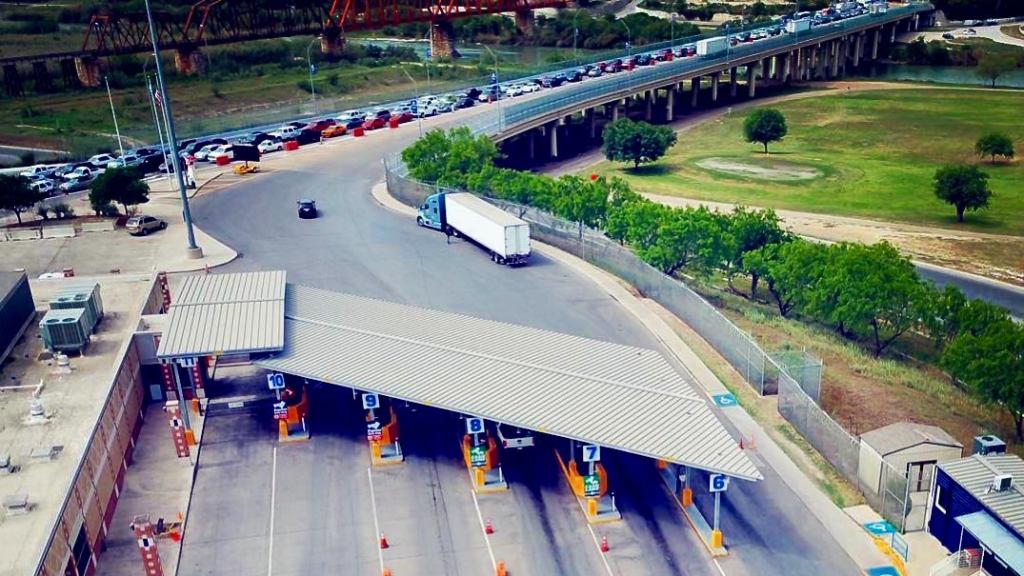
Amid a new increase in migrant crossings, federal officials announced the partial closure of International Bridge I in Eagle Pass, Texas, to traffic entering the country from Mexico.
The closure was effective at 3 p.m. Monday and will continue indefinitely, according to U.S. Customs and Border Protection. Northbound crossings have been suspended, while vehicles traveling from the U.S. to Mexico will not be affected.
Bridge I in Eagle Pass services passenger vehicles, while the city’s Bridge II, also known as the Camino Real Bridge, remains open for cargo trucks.
“CBP’s Office of Field Operations will temporarily suspend vehicle processing operations at Eagle Pass International Bridge 1 … [and] reduce vehicle processing in Lukeville, Arizona, in order to redirect personnel to assist the U.S. Border Patrol with taking migrants into custody,” CBP officials said in a statement. “In response to this influx in encounters, we will continue to surge all available resources to expeditiously and safely process migrants.”
In September, migrant surges forced bridge closures in Eagle Pass and El Paso, Texas, affecting cargo operations at both ports of entry as border agents shifted to immigration duties.
On Tuesday, the Texas Department of Public Safety (DPS) announced it would begin safety inspections for all trucks coming from Mexico at the commercial border crossings in Eagle Pass and Del Rio, Texas.
“CBP Laredo Field Office has been advised Texas DPS will begin safety vehicle inspections on all tractor-trailers … this afternoon and do not have an end date,” Armando Taboada, assistant director of field operations at CBP’s Laredo Field Office, said in an email to the trade community on Tuesday. “We anticipate impact to the north bound flow of trade.”
Taboada said six nearby ports of entry will be able to process shipments that may be diverted due to long border crossing times as a result of DPS safety checks. The other ports of entry in the vicinity include Brownsville, Roma, Progreso, Rio Grande, Hidalgo and Laredo.
The safety checkpoints launched by the Texas DPS are in addition to commercial truck inspections conducted by customs inspectors in Mexico and with CBP and the U.S. Department of Transportation, further slowing truck crossings because each truck has to stop for an additional examination.
The DPS inspections that began Tuesday are at least the fifth time since April 2022 that the agency has implemented the state-run commercial checkpoints.
From Sept. 20 to Oct. 19, the Texas DPS instituted cargo truck safety inspections at commercial crossings in Laredo, El Paso, Del Rio, Eagle Pass and Tornillo, Texas. The inspections caused hourslong wait times for truckers crossing from Mexico to the U.S.
DPS officials said the renewed inspections were aimed at disrupting cartel activity at the border.
“We hope that frequent enhanced commercial vehicle safety inspections will help deter cartel smuggling activity along our southern border while increasing the safety of our roadways,” DPS Director Steven McCraw said in a statement to the El Paso Times.
Trucking officials in Mexico said the safety inspections by the Texas DPS stranded 19,000 trucks carrying about $1.9 billion in goods destined for the U.S. at the Mexican border.
Click for more FreightWaves articles by Noi Mahoney.
More articles by Noi Mahoney
Eternity Group Mexico unveils tools for shippers to monitor carbon footprints
Mexico orders railroads to prioritize passenger service over freight operations
Houston may restrict cargo truck movements inside city limits
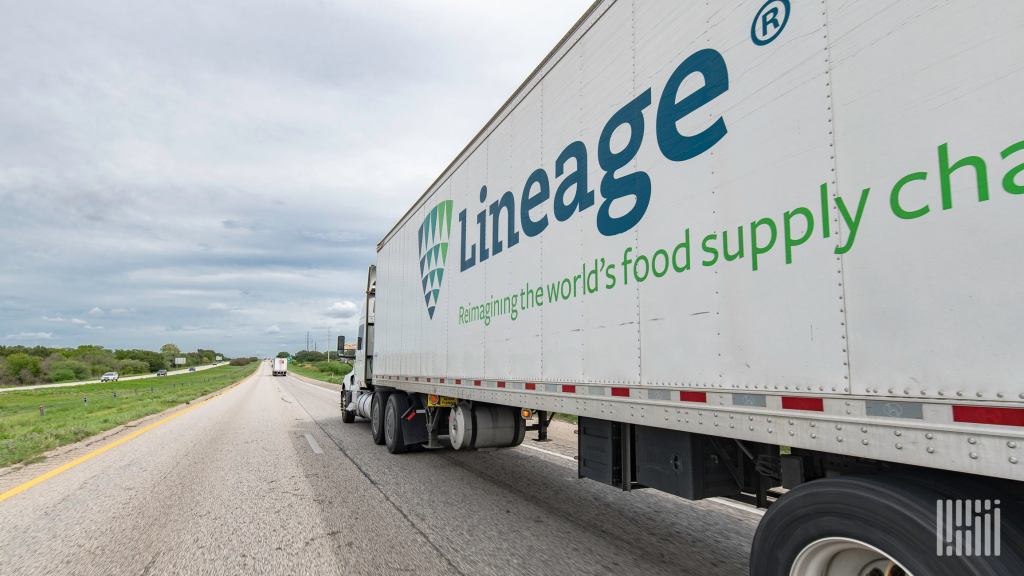
Temperature-controlled storage and logistics provider Lineage Logistics has been reported to be pursuing a more than $30 billion initial public offering for next year.
Backed by private equity firm Bay Grove, Novi, Michigan-based Lineage is the largest cold storage real estate investment trust in the world. The company has amassed a portfolio of more than 400 facilities and 2.5 billion cubic feet of space across North America, Europe and the Asia-Pacific since 2008.
Lineage provides end-to-end logistics services like freight forwarding, customs brokerage, drayage and truck transportation to and from its warehouses.
Lineage has raised more than $13 billion of capital to date, according to PitchBook. Two rounds totaled more than $2.4 billion last year. The company has raised $6.7 billion in equity since the beginning of 2020 to go along with a couple of smaller debt issuances over that period.
The Tuesday report from Bloomberg said Lineage has tapped Morgan Stanley (NYSE: MS) and Goldman Sachs (NYSE: GS) as lead underwriters on the deal.
The largest public comp for Lineage is Americold Realty Trust (NYSE: COLD), which carries a market cap of $8 billion. That company went public in early 2018.
A spokesperson from Lineage didn’t immediately respond to a request for comment.
More FreightWaves articles by Todd Maiden

Welcome to the WHAT THE TRUCK?!? Newsletter presented by Trauxit. In this issue, the White House takes credit for the state of supply chains; Operation Santa needs you; and more.
I did that?
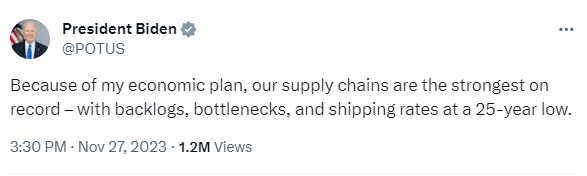
Market deflation — President Joe Biden tweeted on Monday that his economic plan has brought shipping rates to a 25-year low. That same day the new White House Council on Supply Chain Resilience met and released this facts sheet.
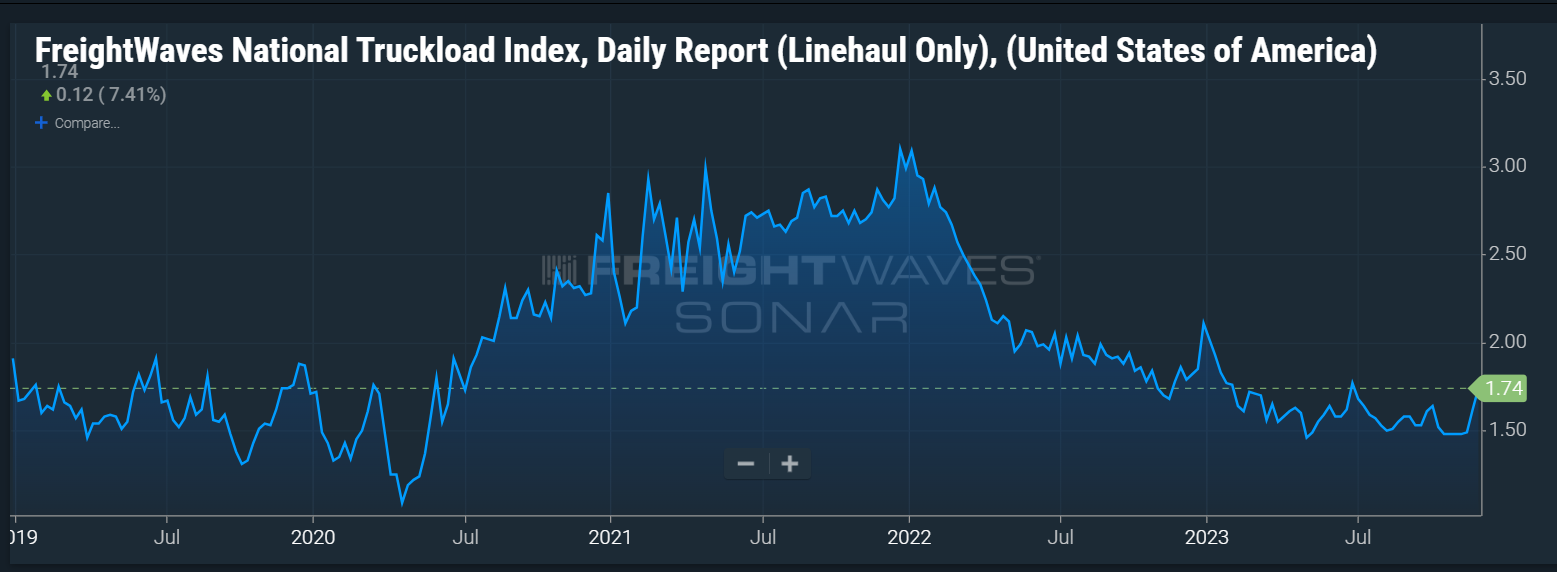
As many of you readers are aware, we’ve been in an extended freight recession since the spring of ’22. But was it Biden who got us here?
SONAR
If you look at freight as the lifeblood of the economy, a massive drop-off certainly isn’t a great sign. What caused it and what relieved it, though, is not a mystery. During the pandemic, a massive surge of capacity went online to serve the spending spree Americans went on during a stimulus and revenge spending-fueled period of lockdowns.
Now in a period in which inflation is up 17.6% since the Biden admin began, that tidal wave of volume has receded back off the shoreline.
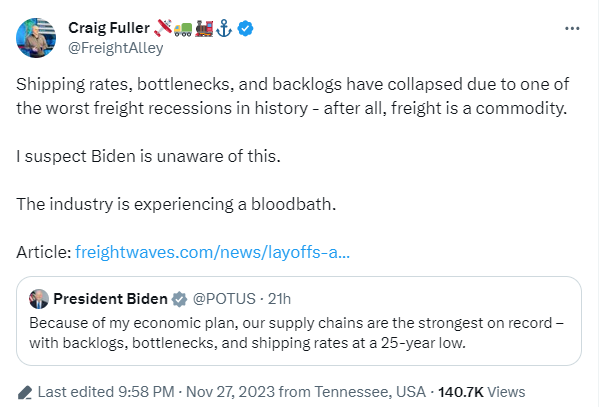
FreightWaves CEO and founder Craig Fuller recently wrote, “The impact has gone beyond U.S. trucking fleets and freight brokerages. The problems are not confined to the United States or just trucking. Ocean carriers, railroads, air cargo carriers and freight forwarders around the world have been impacted as well.”
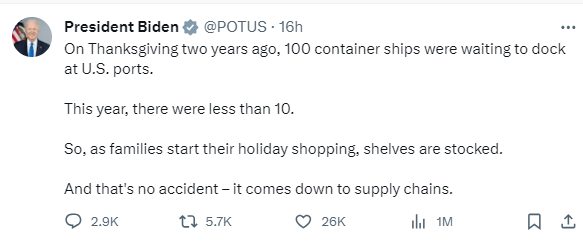
Out to sea — Biden isn’t wrong, the massive backlog of container ships is a thing of the distant past (unless you’re looking at the Panama Canal) and Biden isn’t wrong that his measures may have helped play into the downturn. Escalating inflation, high interest rates and depressed venture capital markets in this space have all played a factor in the freight recession.
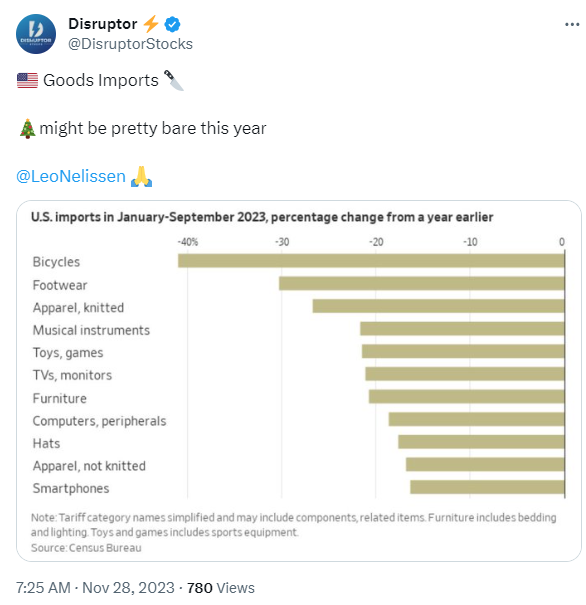
As you can see above, there’s also been a significant reduction in imported consumer goods. We can call the consumer resilient, but something has got to give when buy now, pay later options were up 72% for online purchases during Black Friday.
Let me play the world’s tiniest violin for the steamship lines. After a couple of years of experiencing a windfall in rates, they’ve lost all of their pricing power — not just from the pandemic era, but also from that start of the quarter.
“If Q4 is not delivering some type of improvement, I think we’re looking at a pretty dire situation in 2024.” — Maersk CEO Vincent Clerc
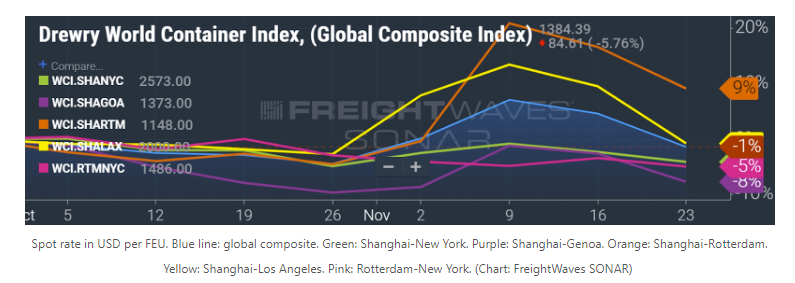
FreightWaves’ Greg Miller reported, “The global composite of Drewry’s World Container Index (WCI) fell 6% in the week ending Thursday versus the prior week, to $1,384 per forty-foot equivalent unit. The global composite has given back all of its gains since the beginning of Q4 and is now down 1% versus Oct. 1.”
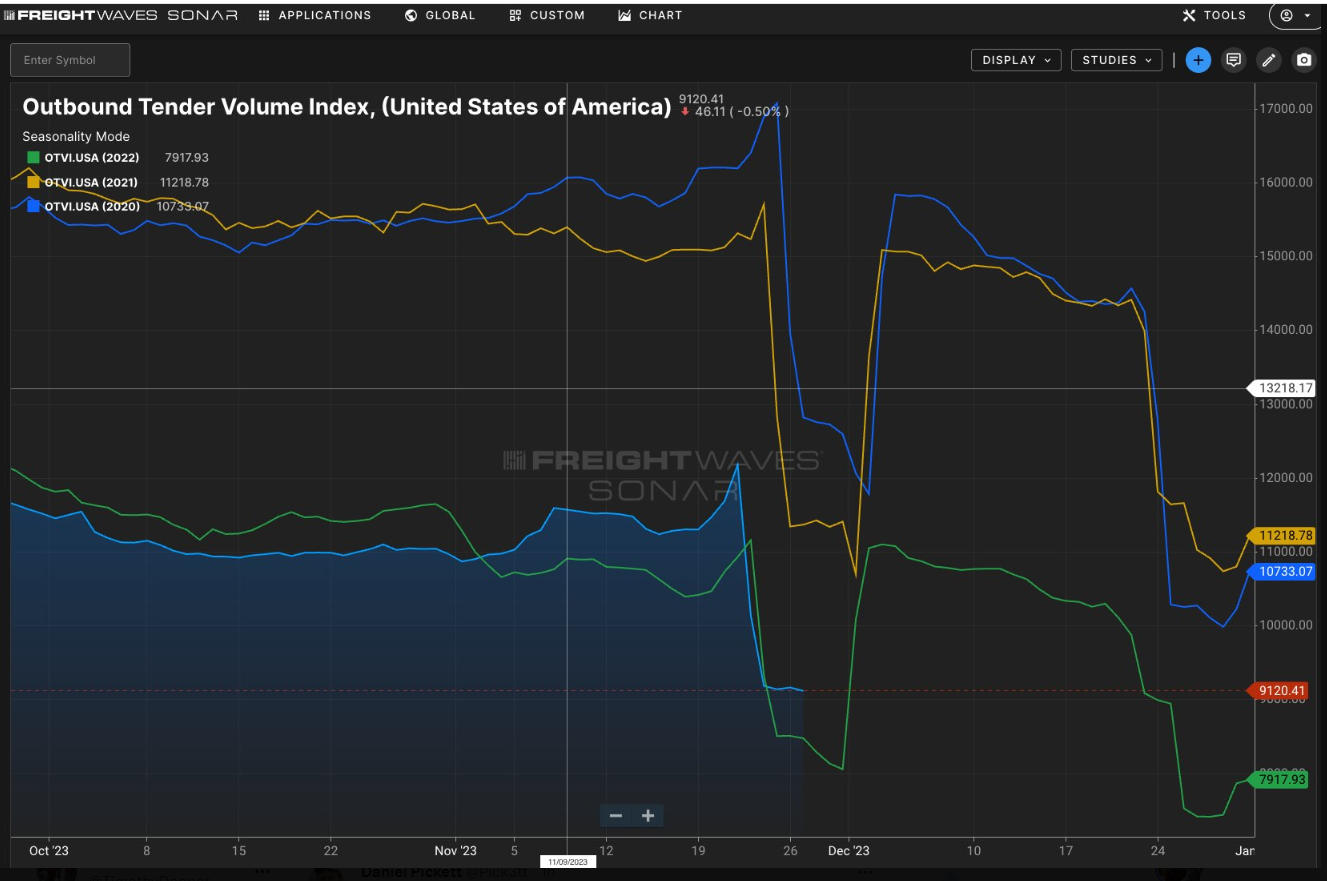
Green shoots? — FreightWaves’ Daniel Pickett tweeted, “We are far from declaring the hard times OVER…. BUT…. the week leading to Turkey Day (and the weekend after) are seeing Y/Y growth in total volumes. Total power units continue to decline.”
While many experts are predicting that 2024 will be another hard year in freight, there is some optimism that declines in capacity and an increase in volume can carry some forward momentum into the new year.
Unfortunately, the reality of this has been some huge bankruptcies in our industry, including the largest carrier failure in history with Yellow and the collapse of Convoy. Here’s a list of many of the fallen.
What do you think? Has the Biden admin helped or hurt the current state of the market? Email me.
Chart of the week
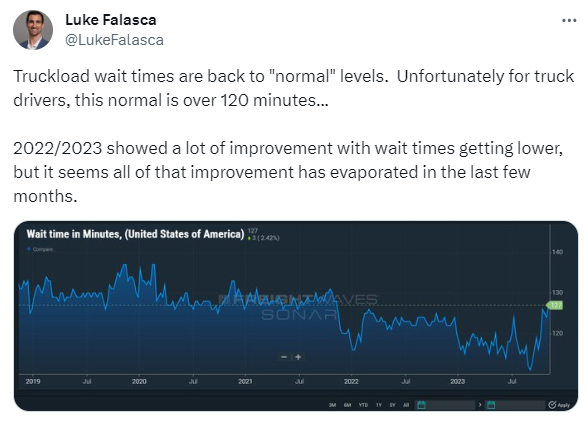
When capacity is this loose, not enough shippers care about being a Shipper of Choice or respecting drivers’ time.
Where do letters to Santa really go?
Justin Martin
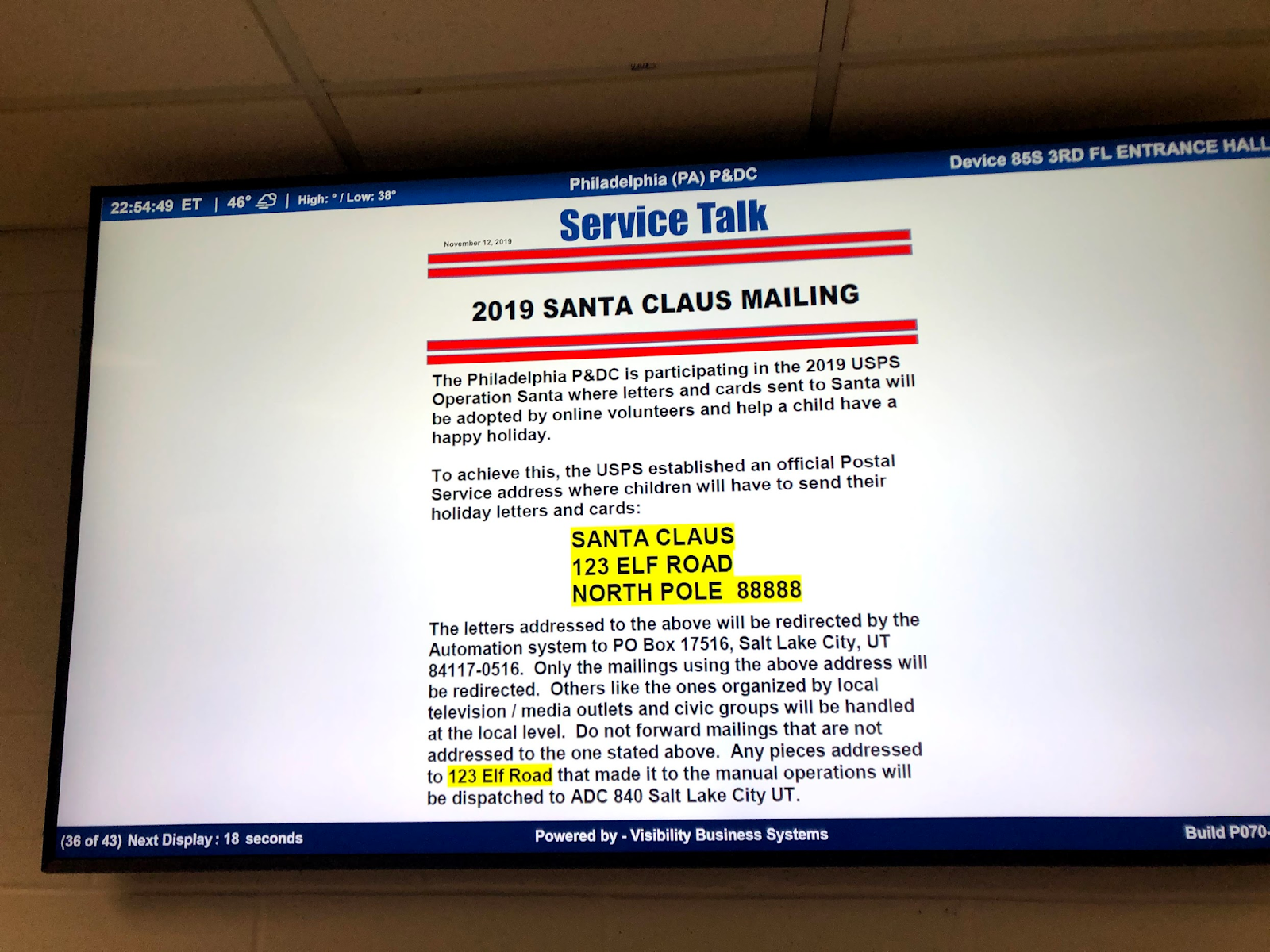
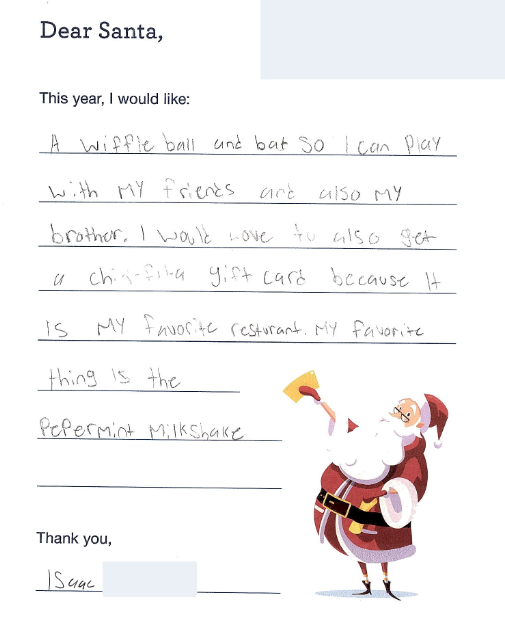
Just about 2,900 miles south of the North Pole — How does Santa’s letter supply chain work? Turns out that the U.S. Postal Service has a Dead Letter Office known as Operation Santa to help deal with that. It’s not in the North Pole though, it’s in Utah!
This year, the 111-year-old operation is looking for volunteers. FreightWaves’ Clarissa Hawes reported, “The program allows volunteers to give back by ‘adopting’ deserving children and families in the United States, Puerto Rico and the U.S. Virgin Islands online.”
The deadline for adopting letters is Dec. 18. You can choose which ones you’d like right here.
The ‘Home Alone’ mystery
WTT Wednesday
Did Bidenomics fix supply chains, higher education and slaying your demons — On Wednesday’s episode of WHAT THE TRUCK?!? Dooner is joined by FreightWaves’ Rachel Premack to talk about the role Biden played in the current freight market.
The National Motor Freight Traffic Association has recently appointed Lesley Veldstra Killingsworth as its first-ever female chairwoman of the board of directors. We’ll find out how she achieved the honor and what lessons she has for other female leaders and leaders to be in logistics.
Stride Motivation’s Nick Klingensmith talks about self-sabotage and mental health issues in brokerage sales. He’ll share his stories about his four-time battle with cancer, becoming a bestselling author and advice for reps feeling down during the holidays.
FreightWaves’ Justin Martin divulges the secrets behind Operation Santa and discusses Amazon’s rise to dominance in freight, protecting Christmas trees from cats and more.
Plus, the latest news and trends.
Catch new shows live at noon EST Mondays, Wednesdays and Fridays on FreightWaves LinkedIn, Facebook, X or YouTube or on demand by looking up WHAT THE TRUCK?!? on your favorite podcast player.
Now on demand
Logistics behind holiday stocking stuffers and mapping Rand McNally’s road
How truckers handle Thanksgiving; shippers’ holiday handbook; trucking turnover
Subscribe to the show
Or simply look up WHAT THE TRUCK?!? on your favorite podcast player.
All FreightWaves podcasts can also be found on one feed by looking up FreightCasts wherever you get your podcasts.
Don’t be a stranger
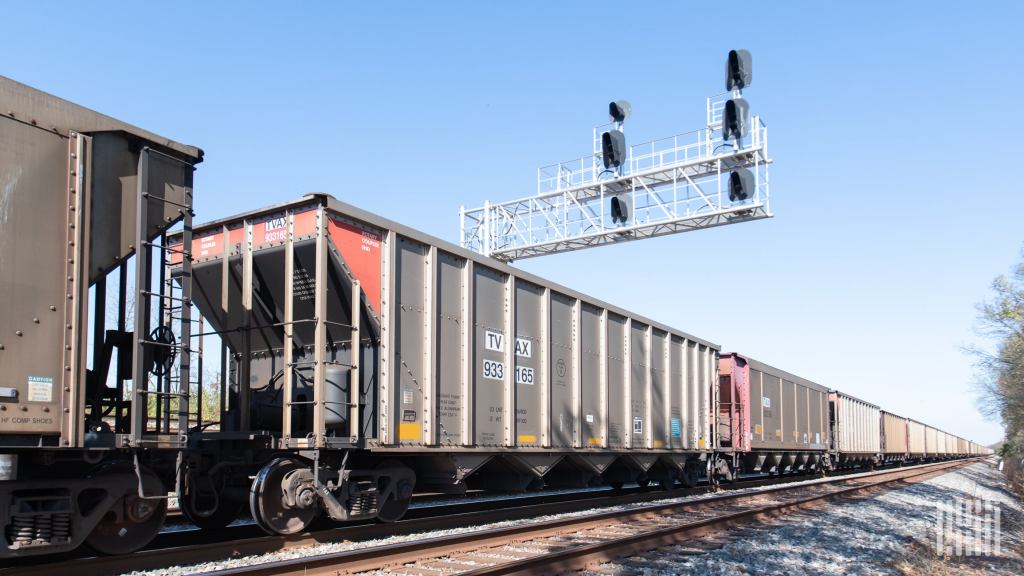
Jacksonville, Florida-headquartered Rail Link, a rail car switching subsidiary of short-line operator Genesee & Wyoming (G&W), has been party to five new contracts in the U.S. since September.
Parent company G&W announced the contracts for Rail Link, which was founded in 1996, call for the company to handle rail car switching of renewable biofuels and liquid petroleum gases for a facility in Southern California; wood chips, chemicals and containerboard for two large paper manufacturers, in Savannah, Georgia, and South Carolina; automobiles for a Texas port; and aggregates for a construction materials company’s Texas plant.
Rail Link will also provide rail car loading and unloading, cleaning and repairs, and track inspection for these customers.
“Rail Link’s value proposition and longstanding experience with a variety of commodities are clearly resonating with customers in multiple industries and geographies who are looking for safe, efficient and competitive transportation services,” Jason Bradt, vice president of Rail Link operations, said in a Monday news release. “We can tailor our service based on individual customers’ needs, which also adds flexibility to our overall package.”
According to G&W’s website, Rail Link’s services include rail car switching, loading and unloading, inspections, and repair and cleaning; track, locomotive and facility maintenance; and Class I railroad interchange services.
Short-line operator G&W owns or leases 116 freight railroads in North America, including 111 short-line and regional railroads in 43 U.S. states and five Canadian provinces, and the company also provides rail services to major ports, transloading options and industrial rail car switching and repair. G&W is owned by Brookfield Infrastructure Partners and GIC.
Subscribe to FreightWaves’ e-newsletters and get the latest insights on freight right in your inbox.
Click here for more FreightWaves articles by Joanna Marsh.

Used truck prices fell about 4% a month in the first 10 months of the year. But the rapid rate of depreciation might be coming to an end.
“The past three months’ less-than-expected declines present mounting evidence of pricing stability,” said Steve Tam, ACT Research vice president. “We expect lower prices through the end of 2023, with a return to month-over-month growth toward the end of 2024.”
J.D. Power Valuation Services found month-over-month auction prices for the typical Class 8 sleeper truck fell in four of five model years. Trucks from the 2020 model year bucked the trend.
Four-to-6-year-old trucks sold for 4.6% less than in September. They priced out at 37.5% below capacity-constrained values in October 2022, Power reported in its November Guidelines newsletter. In the first 10 months of 2023, late-model sleepers sold for 41.7% below the historically inflated gavel prices in the same period of 2022.
Monthly depreciation in 2023 is averaging 4.4%. Values for the newest used model years available are just below the strong pre-pandemic period of 2018 or just over 20% lower when adjusted for inflation.
“The universal average was dragged down this month by weak selling prices of trucks older than four years of age,” said Chris Visser, Power director of specialty vehicles.
In October, the average sleeper tractor sold at retail was 71 months old, had 437,227 miles and sold for $67,441. A month earlier, the average sleeper was four months older, had 20,547, or 4.9%, more miles and sold for $4,240, or 5.9%, less.
Retail selling prices for individual makes and models showed newer truck prices were essentially flat month over month. Older trucks with high mileage for their age exhibited stronger depreciation.
“One month is not a trend, but any relaxation of depreciation would logically show up first in newer trucks, so cautious optimism is not out of the question,” Visser said.
Used truck prices soared as lingering effects of supply chain disruptions slowed production of new trucks. Fleets held on to their equipment longer, starving the secondary market of all but the most heavily driven, older trucks.
Newer used equipment sold for historically high prices as the number of Department of Transportation trucking authorities swelled to match record spot and contract per-mile rates. The freight slowdown has reversed both situations. Used trucks are in ample supply. Many newer or returning drivers gave up their authorities and signed on with for-hire carriers or took other jobs.
“There are still too many trucks chasing too little freight,” ACT’s Tam said. “Until the economy can strike a balance between those two factors, downward pressure on pricing will continue. Once the excess capacity is absorbed, the freight rate environment and trucker profits will correct, restarting the cycle that is the commercial vehicle industry.”
Power reported slow pre-holiday demand, but firmer prices for newer sleeper tractors provides some optimism going into December.
“We’re still looking at the second quarter of 2024 for the post-pandemic correction to finish playing out, although we could be mostly there by February or March 2024,” Visser said.
Yellow’s equipment may be sold off by auction houses
High-mileage, late-model used trucks fetching lower prices


Transportation companies across the globe have increased their focus on sustainability in recent years. This eco-friendly push can largely be attributed to emerging government regulations and growing consumer concerns.
In an effort to clean up their acts, many fleet owners have become laser focused on moving away from diesel fuel, which accounts for the majority of greenhouse gas emissions in the sector. Heavy-duty electric trucks are poised to be one of the primary solutions to this issue.
Fleet owners working toward electrification do continue to face barriers — including vehicle cost, infrastructure deficits and power requirements. At the same time, the ongoing freight recession has made fleet owners wary of expensive experimentation, instead focusing their efforts on cutting costs.
While these headwinds make electrification challenging, solutions exist to help fleet owners overcome obstacles and take advantage of opportunities.
Currently, electric Class 8 trucks are prohibitively expensive without the help of grants and tax incentives. While electric vehicles offer savings over time — as well as a plethora of other benefits — the upfront cost of a new diesel truck pales in comparison to even the most basic electric trucks on the market. While a brand new diesel truck may cost around $150,000, electric heavy-duty trucks typically exceed $400,000.
The price of heavy-duty electric trucks is expected to shrink significantly in the near-term future, however. The International Council on Clean Transportation recently commissioned a study by Ricardo Strategic Consulting to examine this trend further.
The battery pack and the electric propulsion system account for the majority of the cost disparity between electric trucks and diesel trucks. Both of these components are expected to experience serious cost reductions, according to the study — leading to estimated heavy-duty electric truck price reductions of 23% in 2025 and 40% in 2030.
Even as the cost to own electric trucks shrinks, a lack of accessible charging infrastructure across the U.S. has also made some fleet owners delay their electrification efforts.
California has been leading the pack when it comes to fleet electrification — but even there, experts say the state will need 160,000 charging stations to power all heavy-duty vehicles.
Some fleets, like Schneider’s or PepsiCo’s, have started building charging infrastructure themselves.
These behind the fence infrastructure solutions complement the work of third-party infrastructure providers, which can build flexible solutions for fleets that don’t want to invest large amounts of capex into finding land and power or dealing with permitting, development and operations.
TeraWatt Infrastructure, for example, provides convenient, reliable charging infrastructure that keeps fleets running safely and at the right cost. They own, develop, operate and maintain charging sites and software solutions that form the backbone of commercial EV transport in the U.S.
“Fleets need to accelerate their transition to ZEVs — yet building a network of large-scale EV charging infrastructure is complex, expensive, time-consuming and often unreliable,” according to the TearWatt website. “TeraWatt provides modular solutions that enable you to pick and choose what fits with your needs — both now and into the future.”
TeraWatt partners with fleets to help them build reliable charging infrastructure behind their fences, helping them accelerate EV adoption without having to risk large amounts of capex.
“By handling the permitting, development, construction, as well as live operations and maintenance, TeraWatt enables fleets to enjoy reliable EV charging in their own backyards and only pay a fixed monthly fee.”
TeraWatt also offers a shared, multi-tenant charging infrastructure option for fleets that cannot go all-in on building their own stations. This offering helps fleets gain access to the power they need without having to rely on spotty — or nonexistent — public offerings.
“Fleets may not always have the space, power or capital to erect their own infrastructure. That’s where we come in,” according to the TeraWatt website. “We own, build and operate megawatt-scale sites that are shared across multiple fleet customers and equipped with high-speed DC Fast Chargers.”
As fleets begin to take delivery of their first EV trucks, TeraWatt is ready to support.
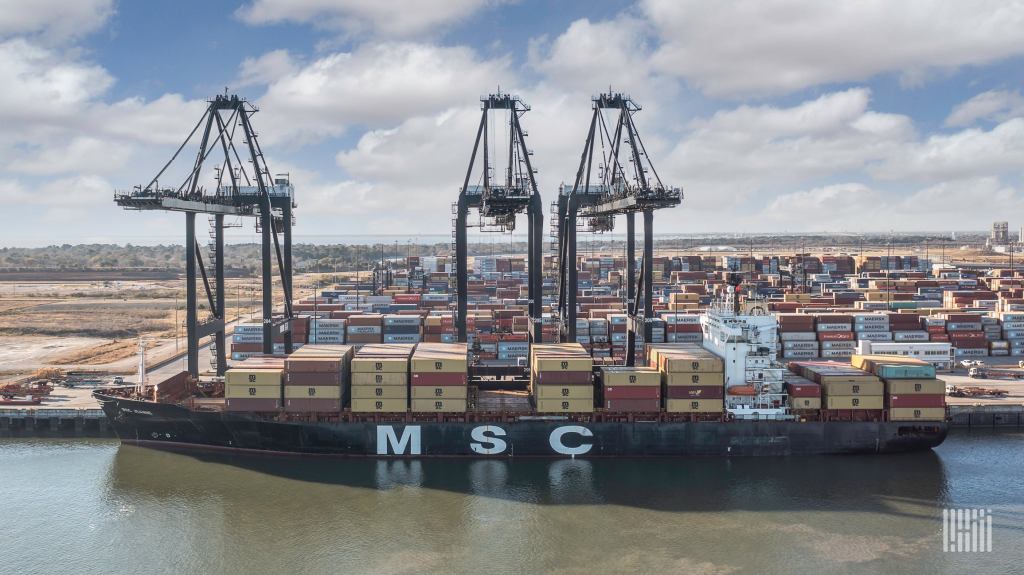
The bankruptcy estate of former retail giant Bed Bath & Beyond (BBBY) continues its relentless pursuit of shipping lines for alleged damages suffered during the supply chain crisis. It has already filed $31.7 million in claims against Hong Kong shipping line OOCL and $7.7 million in claims against Taiwan’s Yang Ming.
But those were just the appetizers.
The main course, filed Tuesday, is a mammoth claim against the world’s largest ocean carrier, Switzerland’s Mediterranean Shipping Co. (MSC). The various damages (link to complaint here) add up to over $50 million, plus there’s a request that all reparations be doubled due to “MSC’s willful retaliatory conduct.”
That brings the tally to over $100 million, the largest shipper damage claim against an ocean carrier since the supply chain crisis. And when the case goes to trial, the total claim will be higher still.
As in the earlier cases filed with the Federal Maritime Commission (FMC) against OOCL and Yang Ming, BBBY’s estate is seeking reparations for the added cost of shipping cargo due to volume shortfalls under service contracts, alleged excess amounts paid through peak season surcharges (PSSs) and other charges, and alleged unfair detention and demurrage charges.
The new twist in the MSC case is that BBBY’s estate is seeking compensation for lost profits and is asking for double reparations.
The lost profits the estate will claim at trial — which have yet to be confirmed and would be doubled — will significantly increase the final amount of the claim, potentially to far in excess of $100 million.
BBBY’s estate said that MSC carried 1,686.5 forty-foot equivalent units fewer than its Minimum Quantity Commitment (MQC) in the 2021-2022 service contract.
“The additional incremental cost of replacing [the] shortfall … was at least $7,290,314 more than what [BBBY] would have paid had MSC honored its service contract.”
“The lost profits sustained by [BBBY] on a per-container basis substantially exceed the excess costs incurred by … purchase of alternative carriage,” said the BBBY estate.
BBBY cited the case of OJ Commerce vs. Hamburg Sud, decided by the FMC in June, in which lost profits were equated with the average profits per container carried in the period, multiplied by the shortfall the carrier failed to carry.
It said the goods it sold in the 2020-2021 and 2021-2022 contract periods equated to an average profit of $66,924 per FEU for BBBY.
“As will be proven at trial, in many instances, [BBBY] was unable to mitigate MSC’s failure to honor its service commitments by securing higher-priced freight on the open market and sustained lost profits as a result of the reduction of imported cargo.”
BBBY did not provide an estimate of how much profit it actually lost, and only stated that it was substantially higher than the $7.29 million it paid incremental cargo costs. If, for example, it claimed at trial that its imports were unfairly reduced by 16 FEUs per week over the two annual contract periods, the size of its claim would balloon to over $300 million.
(Correction: A previous version of this story erroneously equated BBBY’s example of how much it would have lost in profits had it not paid more for replacement cargo — listed as $112.8 million — with BBBY’s estimation of how much it claimed it lost in profits from reduced imports due to MSC’s alleged failure to honor its service commitments.)
“MSC also engaged in a practice of coercing [BBBY], and, upon information and belief, other shippers, to pay extracontractual prices and surcharges, including PSSs, as a precondition to MSC meeting even a portion of its service commitments under the … service contracts,” alleged the BBBY estate.
It claimed BBBY paid $5,523,788 above the rates it agreed to in its 2020-2021 service contract and $9,005,149 above the rates it agreed to in its 2021-2022 service contract.
The BBBY estate said detention and demurrage charges were assessed “for a period of time in which [BBBY’s] ability to pick up containers at ports or return empty containers promptly was constrained due to circumstances outside [its] control, such as congestion at the ports and shortage of equipment.”
It said it paid a total of $23,220,491 in detention and demurrage charges to MSC in the 2020-2021 and 2021-2022 contract periods and argued that “a substantial majority of the charges … were unjustly and unreasonably assessed.”
On top of the base amount of its claims, BBBY argued that “in light of MSC’s willful retaliatory conduct alleged herein, complainant also requests that any award of reparations … be doubled pursuant to 46 U.S.C. Section 41305(c.)” of the Shipping Act.
The BBBY estate argued that “MSC took advantage of price inflation in the container shipping sector and unfairly exploited its customers.”
It said the ocean carrier’s “enormous windfall profits” allowed it to go on “a multi-billion-dollar ship-buying spree that has led to it becoming the world’s largest ocean carrier.”
It cited an unconfirmed report published in the Italian newspaper “Il Messaggero” that MSC had net profit of $38.4 billion in 2022 and cash reserves of $68.7 billion at the end of that year.
While the scale of the alleged damages was not revealed until Tuesday, the filing of the BBBY claim against MSC was expected.
As previously reported by FreightWaves, MSC said in an Aug. 31 filing in the BBBY bankruptcy case that it received an initial demand letter from law firm Huth Reynolds on April 28, five days after the retailer’s Chapter 11 filing.
BBBY, through Huth Reynolds, “accused MSC of certain violations of the Shipping Act … arising from MSC’s purported failure to fulfill its service commitments and its assessment of demurrage and detention charges — allegations that MSC disputes in their entirety,” said the ocean carrier.
BBBY’s bankruptcy plan specifically calls out container shipping cases and sets a formula for distribution of any future court winnings. The company hired Huth Reynolds on March 23 to handle claims against shipping lines — a month prior to its Chapter 11 filing.
In a section entitled “Shipping and Price Gouging Claims,” the bankruptcy plan refers to money obtained by litigating ocean carriers’ alleged failure to comply with shipping regulations and laws, “including pricing practices.”
Under the bankruptcy plan, 80% of any shipping and “price-gouging” judgments would go to first-lien and debtor-in-possession lenders, both administered by Sixth Street Specialty Lending, and 20% would go to the debtor or the successor entity.
Click for more articles by Greg Miller

Holiday inventories remain in good shape and show no signs of being depleted even as U.S. consumers broke shopping records for the five-day Thanksgiving period, the National Retail Federation said Tuesday.
For the most part, inventory levels are balanced, NRF President and CEO Matthew Shay told reporters. Shay’s comments seemed to rule out widespread overstocked conditions, as well as concerns over product stockouts that might trigger a late-cycle inventory replenishment push.
NRF said that 200.4 million consumers shopped over the holiday cycle, which began on Thanksgiving, included Black Friday and ended with Cyber Monday. That broke last year’s record of 196.7 million shoppers and surpassed NRF’s 2023 expectations by 18 million.
Shay said that despite concerns that many Americans have drawn down pandemic-related savings, there is “substantial savings still sitting on the sidelines.”
On average, each shopper spent about $321 on holiday-related items during the cycle, said NRF, which conducted a survey along with Prosper Insights & Analytics. About 121.4 million people visited physical retail locations to browse and buy. That was down from 122.7 million in 2022. Online shoppers totaled 134.2 million, up from 130.2 million last year.
Nearly half of consumers surveyed were about halfway through their holiday shopping at the time the five-day cycle ended, NRF said.
About 76.2 million shoppers visited stores on Black Friday, up from 72.9 million in 2022. About 90.6 million consumers shopped online that day, compared with 87.2 million last year. About 4 million fewer consumers shopped online on Cyber Monday than in 2022, NRF said.
NRF said the data is consistent with what it expects to be a 3% to 4% year-over-year rise in holiday spending to between $957.3 billion and $966.6 billion.
None of the numbers used in the survey are adjusted for inflation. NRF has said it would be too complicated to adjust every data point in its survey for inflation.
NRF defines the holiday season as between Nov. 1 and Dec. 31, although an increasing number of consumers begin their shopping as early as October, incentivized by retailer promotions that get pulled forward on the calendar.
Shay said that access to free shipping appears to be the key factor in pushing undecided online shoppers to loosen their purse strings.