Is GOT Act good for drivers; the 411 on docks; shake-up at FourKites – WTT

On today’s episode of WHAT THE TRUCK?!? Rachel Premack joins Dooner to co-host the show. They’ll talk about the GOT Act and if it’s good for trucking; a shake-up at FourKites; freight meme wars; and how not to drive a truck simulator.

DeGroot Logistics’ Adam DeGroot just got back from Chattanooga. We’ll find out what deals he was making at F3, why DeGroot acquired Dock411 and what they’re learning about the state of shipper facilities.

ZuumApp’s Mustafa Azizi talks about hang gliding over Chattanooga at F3, how to cook a mystery box and what innovation means for a TMS.

SRS Distribution Inc.’s Ben Richey takes us into world of roofing materials and building supplies. We’ll find out how a distribution network works for this type of freight.

FreightWaves’ Justin Martin joins us with a Tesla Semi review, driver overtime pay, what not to do during a Level 1 inspection, how soon is too soon to put up Christmas lights and tips for memelords looking to win the $100K Freight Creator Contest.

Watch on YouTube

Visit our sponsor

Subscribe to the WTT newsletter

Apple Podcasts

Spotify

More FreightWaves Podcasts

FMCSA tightens regulations to prevent fraud by brokers

Trucks on the highway

WASHINGTON — Trucking companies should be better protected against unpaid claims that are due them from brokers under a new rule issued by the Federal Motor Carrier Safety Administration.

The rule, proposed earlier this year and made final on Wednesday, amends regulations addressing broker and freight forwarder responsibility.

“This final rule will result in benefits to motor carriers resulting from a decrease in the claims against brokers that go unpaid,” FMCSA stated.

“FMCSA will immediately suspend brokers that do not respond following a drawdown on their financial security. Such brokers will no longer be able to accrue liabilities that they do not plan, or lack the ability, to pay.”

The rule becomes effective Jan. 16, 2024.

The agency is tightening oversight in five areas of broker financial responsibility as well as consequences for noncompliance: assets readily available, immediate suspension of broker/freight forwarder operating authority, surety or trust responsibilities in cases of broker/freight forwarder financial failure or insolvency, enforcement authority, and entities eligible to provide trust funds for broker trust fund filings known as form BMC-85.

Assets readily available

The final rule says that cash, irrevocable letters of credit issued by a federally insured depository institution and Treasury bonds are acceptable categories of assets readily available in broker/freight forwarder trust funds from which to pay claims to carriers.

“FMCSA has determined that these asset types are readily available because they are stable in value and can be easily liquidated within 7 calendar days of an event that triggers a payment from the trust,” according to the agency.

“Other asset classes such as real estate are not sufficiently liquid, while stocks, non-Treasury bonds, and other securities involve significant risk to the investor, and therefore none of these asset classes can be considered readily available.”

Compliance date for this provision: Jan. 16, 2026.

Immediate suspension of broker operating authority

When a broker or freight forwarder’s available financial security falls below $75,000, FMCSA may suspend its operating authority registration.

The agency explained that a broker or freight forwarder’s available financial security may fall below $75,000 because it consents to a drawdown, or if it does not respond to a valid notice of claim from a surety or trust provider, or if a claim against the broker or freight forwarder is converted to a judgment.

“If the available financial security falls below $75,000 and the broker or freight forwarder does not replenish funds within 7 calendar days after notice from FMCSA, the agency will issue a notification of suspension of operating authority to the broker or freight forwarder.”

In response to comments filed in the proposed rule, FMCSA added provisions detailing the process for surety providers or financial institutions to notify the agency of changes to a broker’s or freight forwarder’s financial security status.

“Such notification must be made in writing, by electronic means, within two business days of either a payment from the bond or trust that causes the available financial security to fall below $75,000 or a determination by the surety provider or financial institution that such payment will be inevitable once the 60-day period for submission of claims has elapsed.”

Compliance date for this provision: Jan. 16, 2025.

Surety/trust responsibilities in broker failure or insolvency

Surety providers or financial institutions may cite financial failure or insolvency of the broker or freight forwarder as grounds for canceling a surety bond or BMC-85 trust agreement when the provider or institution either makes a payment against the bond or trust fund or expects to make a payment after aggregating multiple claims.

In the new rule, FMCSA defines financial failure or insolvency as “any payment made or other default pursuant to … the regulatory provision that addresses the situations under which a broker or freight forwarder’s operating authority may be immediately suspended, which the broker or freight forwarder does not cure” in accordance with the rules.

If the surety/trustee becomes aware that a broker or freight forwarder is experiencing financial failure or insolvency, it must notify FMCSA and initiate cancellation of the financial responsibility, and FMCSA will publish a notice of failure.

Compliance date for this provision: Jan. 16, 2025.

Enforcement authority

In suspension circumstances identified by FMCSA, the agency will first provide notice of the suspension to the surety/trust fund provider followed by 30 calendar days for the surety or trust fund provider to respond before a final agency decision is issued. The agency also adds monetary penalties of $12,882 for each violation, and the surety/trust fund provider will be ineligible to provide broker financial security for three years.

Compliance date for this provision: Jan. 16, 2025.

Entities eligible to provide trust funds for BMC-85 filings

FMCSA is removing loan and finance companies from the list of providers eligible to serve as BMC-85 trustees.

“This type of institution is not subject to the rigorous federal regulations applicable to chartered depository institutions or to the state regulations applicable to insurance companies,” according to FMCSA. “Loan and finance companies will now be prohibited from offering BMC-85 trusts unless they obtain certification to operate as another type of financial institution that remains on the list of eligible providers.”

Compliance date for this provision: Jan. 16, 2026.

The Transportation Intermediaries Association, which represents truck brokers, pointed out in comments filed earlier this year that adjustments to broker financial backing requirements were required following a law passed in 2012, and that getting new oversight in place is “long overdue” and continues to be necessary.

“TIA petitioned the FMCSA in 2014 to move forward with rulemaking on the key provisions of the law as they related to broker and freight forwarder financial instruments and implementation provisions,” TIA told FreightWaves in a statement commenting on the final rule.

“This is a huge step towards addressing potential financial fraud and making sure that funding is available to protect motor carriers and brokers.”

The Owner-Operator Independent Drivers Association, which pushed for stronger oversight within several of the provisions when the rule was proposed, called the final rule “a step in the right direction to enhance oversight of broker financial responsibilities as we continue to work with partners to fight for increased broker transparency and the elimination of broker fraud,” the group wrote in a statement to FreightWaves.

“We encourage FMCSA to continue to move in the right direction by expediting their rulemaking on OOIDA’s 2020 petition to enhance broker transparency. Truckers shouldn’t have to wait an additional year for the agency to ensure brokers are following federal regulations.”

Click for more FreightWaves articles by John Gallagher.

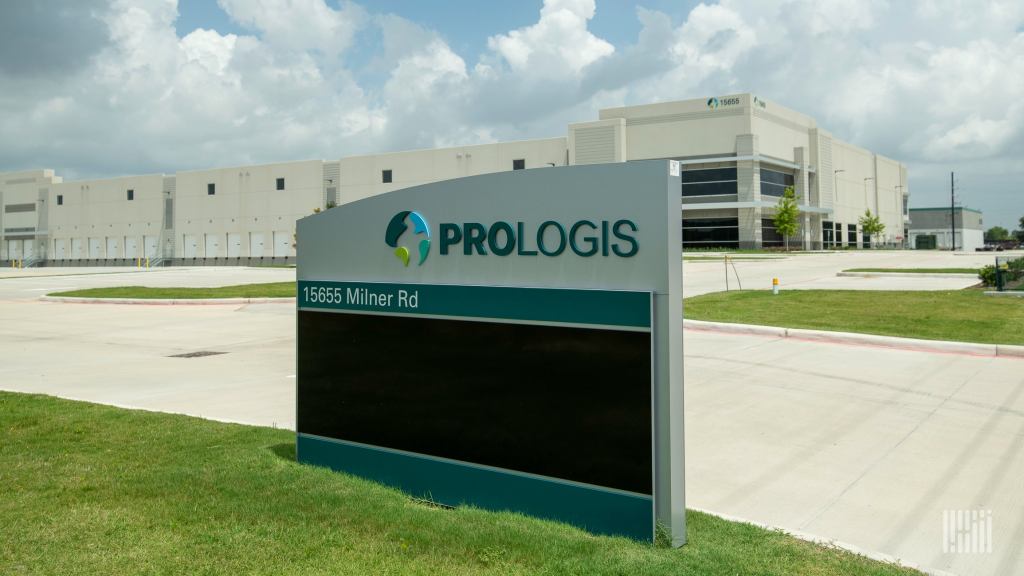
Prologis announces high-level appointments

Logistics warehouse giant Prologis Inc. (NYSE: PLD) said Wednesday that it has named Carter Andrus, currently global head of operations, as the company’s COO, effective Jan. 1.

Andrus will succeed Gary Anderson, who will become senior adviser on Jan. 1 and retire from the company on June 30.

In addition, Prologis named Joseph Ghazal as chief investment officer (CIO) and Susan Uthayakumar as chief energy and sustainability officer. Both appointments take effect Jan. 1.

Ghazal will lead all of Prologis’ global capital deployment strategy and execution as well as the company’s investment committee. Ghazal is already overseeing global capital deployment, though he didn’t hold the CIO role. Dan Letter, the company’s global president, has filled the CIO role through 2023.

Uthayakumar joined Prologis in January 2022 and led the development of the company’s net-zero strategy, extending its leadership position in sustainability while accelerating Prologis’ growing renewable energy business. Previously, she was president of Schneider Electric’s Sustainability Business Division. All three will report to Dan Letter, Prologis’ global president.

Anderson served as Prologis’ COO since 2019, where he led the company’s key business initiatives.

Prologis is the world’s largest developer and operator of logistics warehouses, managing more than 1 billion square feet of space globally.

Massive impairment charge drags shipping line Zim to $2.3B loss

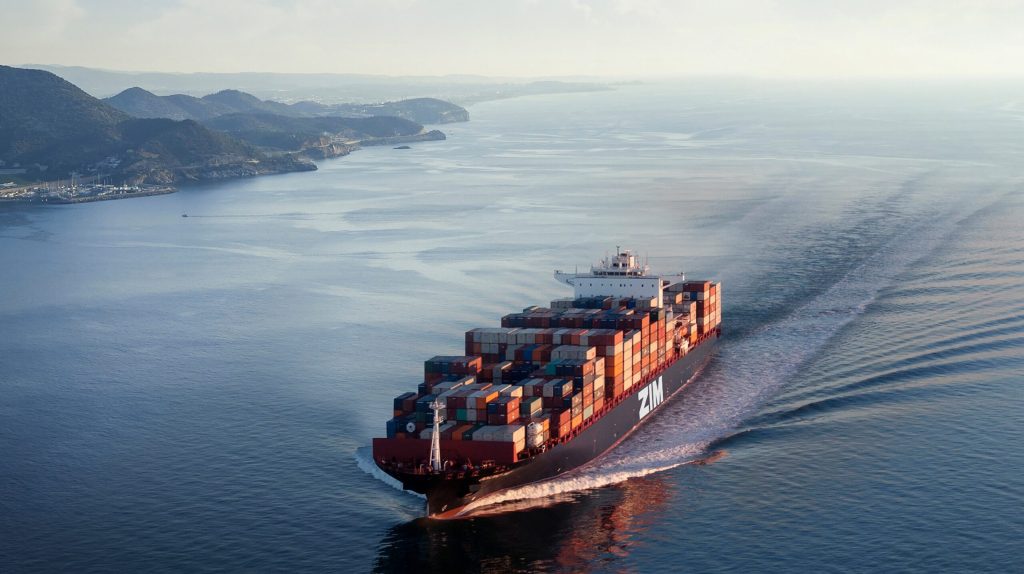
a photo of a Zim container ship

There was no good news on container shipping’s near-term future during Zim’s quarterly call on Wednesday. The company booked a massive, one-off impairment charge and recovery timing was pushed back to 2025.

“We expect the industry will be under severe pressure for the foreseeable future,” said Xavier Destriau, CFO of Israel-based Zim (NYSE: ZIM), the world’s 10th-largest ocean carrier. “We have little hope for a meaningful recovery in 2024.”

According to Zim CEO Eli Glickman, “Rate increases we saw in August in the trans-Pacific were short-lived.” He predicted that “2025 will mark a turning point and a return to profitability.”

According to Destriau, “There are no clear data points showing that the [inventory] restocking schedule will begin anytime soon, so it does not seem that a recovery will result from near-term growth in demand.

“At the same time, carrier capacity management has not been sufficient. Scrapping is negligible. Idling remains low. Excess supply seems to be here to stay for a while, reducing optimism that rates will recover.”

Zim adjusted EPS better than expected

After throwing in the towel on near-term recovery hopes, Zim conducted an impairment test on the discounted future cash flow of its leased fleet and other assets. The test determined that an impairment charge was indeed required — and it was a big one.

Zim booked a $2.06 billion non-cash impairment in its third quarter, including $1.6 billion for its container vessels and $392 million for its container equipment.

The company reported a net loss of $2.27 billion for Q3 2023 compared to net income of $1.17 billion the year before. However, the adjusted net loss excluding the non-cash impairment charge was $207 million — a slight improvement compared to a net loss of $213 million in the second quarter of this year.

The adjusted loss of $1.76 per share was better than expected. Analysts’ consensus was for a loss of $1.95 per share.

chart of Zim KPIs

Zim lowered its guidance for full-year 2023 on Wednesday. Adjusted earnings before interest and taxes (operating profit) is expected to be between minus $400 million and minus $600 million, compared to prior guidance of minus $100 million to minus $500 million.

This implies Q4 2023 EBIT of minus $27 million to minus $227 million, compared to EBIT in the latest quarter of minus $213 million. The range midpoint implies a quarter-on-quarter improvement. 

Zim’s average rates (including spot and contract rates) were $2,278 per forty-foot equivalent unit in the third quarter, down 4.5% sequentially from the second quarter but still up 13% versus Q3 2019, pre-COVID.

chart of Zim average rates
(Chart: FreightWaves based on Zim financial filings)

‘Worrisome situation’ at Panama Canal

Zim is heavily exposed to drought conditions in the Panama Canal. Its main trans-Pacific focus is on the Asia-U.S. East Coast trade. Most of its newbuildings are being deployed on this route. In addition, it launched a new service from the west coast of South America to Baltimore, Maryland, in July.

The Panama Canal is sharply reducing the number of transits through February, which will cap the number of container ships able to use the larger Neopanamax locks next year.

“The Panama Canal is a worrisome situation that is evolving day after day, with the draft limitations being imposed on the industry,” said Destriau.

“We are trying to optimize the utilization of the ships given the draft limitations, [which are] mainly on the weight of the cargo we are carrying. We are taking actions to utilize our feedering [feeder vessel] service in Latin America so vessels can run full across the Pacific and discharge some of their cargo before reaching the Panama Canal.

“Obviously, we are evaluating the situation day after day and we will evaluate if decisions need to be made in terms of rerouting.”

Destriau said that Zim’s recent decision to restart its South China-Los Angeles express service is “linked” to the Panama Canal water crisis. That service was suspended in late March and will resume on Nov. 22.

“One of the reasons we are reopening the service is that we see some of the cargo now being redirected from the East Coast back to the West Coast. We see an opportunity to resume the service, which has been quite successful for the company in the past.”

Zim still has $3.1B in cash

The impairment-driven net loss of $2.27 billion did not go over well with stock traders. Shares sank to a new all-time low of $6.77 in early trading Monday before partially rebounding.

But as shipping banker Michael Parker once said: Shipping companies don’t go bankrupt from being unprofitable, they go bankrupt when they run out of cash.

And Zim still has plenty of cash: $3.1 billion at the end of the latest quarter, compared to $3.2 billion at the end of the second quarter.

The impairment is a non-cash accounting measure to adjust for the expected future value of Zim’s leased fleet. The company appears to be letting almost all of its existing leases for non-newbuilding vessels expire, replacing that tonnage with newly built leased tonnage as it is delivered by the shipyards. The newer, more fuel-efficient vessels boast a lower unit cost than the older ships Zim is letting go.

Zim has redelivered 20 leased ships so far this year. It has an additional five leases expiring by year-end and another 34 expiring next year. “It is very likely that the vast majority of these will be redelivered,” said Destriau, who added that close to 40 additional ship leases come up for renewal in 2025.

The impairment charge allows Zim to take non-cash accounting pain in one fell swoop, effectively accelerating non-cash depreciation charges, which will have a positive effect on future net income accounting.

Destriau noted that as a result of the one-off impairment, depreciation charges in the fourth quarter will decline by around $150 million and full-year 2024 depreciation will decline by slightly more than $600 million.

Click for more articles by Greg Miller 

Hyzon slows cash burn, closes in on larger fuel cell stack

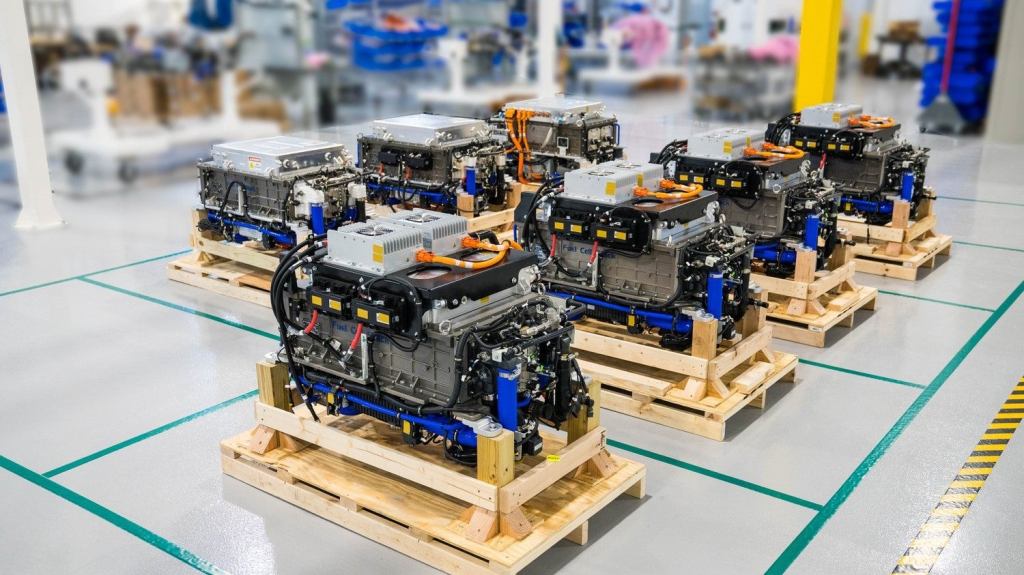
Fuel cell stacks on pallets at Hyzon

Hyzon Motors is closing in on production of its 200-kilowatt fuel cell stack, a single zero-emissions unit for heavy-duty trucks. It is lighter and more efficient than the industry-standard twin stacks.

The Rochester, New York-based Hyzon shucked off two years of federal investigations in recent months. It agreed to pay $25 million to the Securities and Exchange Commission over phantom orders for its powertrain technology.

Now free to focus on producing hydrogen-powered fuel cells, the company has generated $3.6 million in revenue as it begins delivering the powertrains — 14 units year to date. One makes drayage runs in the ports of Long Beach and Los Angeles. European customers purchased three. Another 10 power coach buses in Australia.

Hyzon raises production estimate

Hyzon forecasts that it will produce 15-20 fuel cell stacks under commercial agreements this year. The previous estimate was 10-20 fuel cell systems. The company’s facility in Bolingbrook, Illinois, is on track to start producing the company’s 200-kilowatt single stack fuel cell in 2024. Hyzon estimates it has about $5 million of capital expense remaining to get there.

The Bolingbrook facility is projected to have initial annual capacity for more than 700 200kW fuel cell systems on three shifts. That should meet demand through 2025. After that, Hyzon anticipates expanding capacity through lean production methods.

Hyzon signed a commercial agreement with New Zealand’s largest heavy-duty truck fleet owner, TR Group, for up to 20 vehicles powered by the 200kW fuel cell system. Purchases depend on the outcome of a trial planned for March 2024.

Cash burn continues to decline

“This was a remarkable quarter as Hyzon continues to accelerate the global transition to clean energy by developing and commercializing our proprietary, leading zero-emission fuel cell technology,” Parker Meeks, Hyzon CEO, said in a news release.

Hyzon continues to reduce its cash burn. Counting unrestricted cash, cash equivalents and short-term investments, Hyzon had about $137.8 million on its books at the end of Q3, down $34.6 million from $172.4 million on June 30. Its liquidity stood at $129 million as of Oct. 31. 

“Hyzon is at an inflection point,” Meeks said, referring to financial support for hydrogen from federal programs like the Inflation Reduction Act. “In addition to our cash burn reduction momentum, we remain focused on opportunistically raising capital, including a possible strategic raise which we continue to explore.” 

The company did not change its Q2 position of considering a merger or being acquired.

Hyzon Motors agrees to $25M SEC fine to settle fraud case

Hyzon considers sale of fuel cell business to raise capital 

Refocused Hyzon Motors catches up on delinquent financial filings

Click for more FreightWaves articles by Alan Adler.

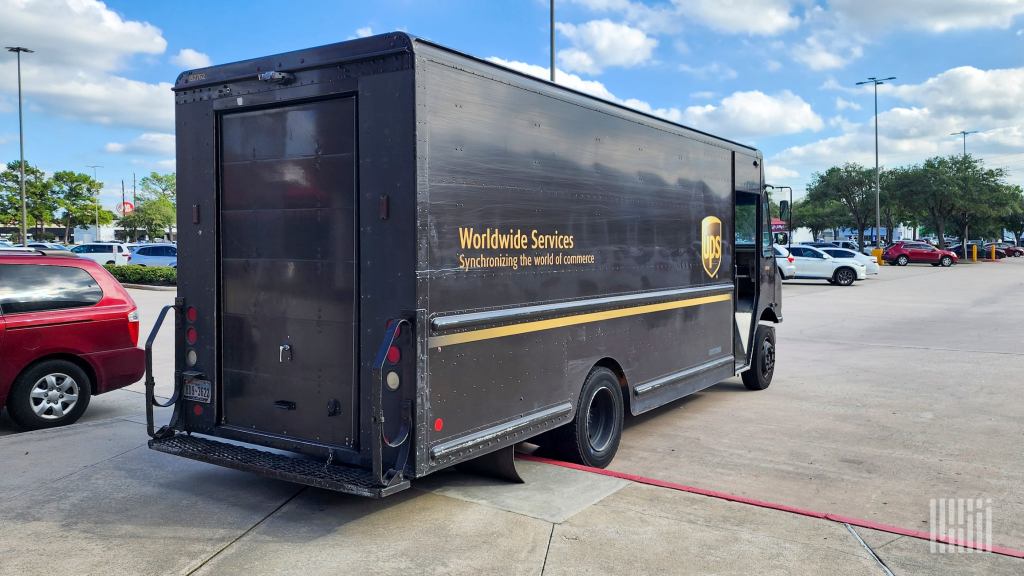
UPS unveils integrated supply chain platform

UPS Inc. (NYSE: UPS) on Wednesday unveiled its Supply Chain Symphony platform, which it said will integrate into one platform the visibility of multiple services that had previously been siloed.

The new tool will enable customers to monitor simultaneously and in real time every aspect of their global supply chains, UPS said. In the past, visibility could not be obtained without shifting to different platforms, according to a company spokesperson. The tool will also enable customers to generate real-time reports on service performance.

Many companies have trouble connecting their separate spreadsheets or databases, and most shippers find it difficult and time-consuming to turn supply chain data into useful information, UPS said in a statement. “An integrated logistics system can give companies a competitive advantage,” UPS said. Customers using the cloud-based software-as-a-service solution will benefit from improved customer service, collaboration, asset utilization and forecasting accuracy, according to the company.

The integrated tool supplants previously stand-alone UPS tools that cover shipping services, global logistics and distribution, global freight forwarding, customs brokerage, and supplier management. It also includes the company’s Express Critical urgent-delivery service, its Mail Innovations service for high-volume mailers, and its Coyote Logistics brokerage service.

FourKites reshuffles leadership team

There’s been a leadership shake-up at FourKites.

The visibility platform, which was reportedly valued at $1 billion last year, announced new leadership positions in a Wednesday news release

Sean Fallon, FourKites’ former president, has rejoined the company as chief strategy officer, according to the news release. In this role, Fallon will “drive strategy and support continued growth.”

President Rocky Subramanian confirmed to FreightWaves he is no longer with FourKites. He joined in April. FourKites would not comment and its release did not name a replacement.

Priya Rajagopalan, who is currently the chief product officer, will take over the responsibilities of chief customer officer, FourKites CEO and founder Matt Elenjickal wrote in an email on Tuesday to FreightWaves. She will oversee customer operations, product and R&D, according to the Wednesday release. 

The chief customer officer role was previously held by Bob Slaby. Fabrizio Brasca previously held the chief strategy officer title. Neither returned requests for comment on whether they remain at the company, and Elenjickal declined to comment on their status at FourKites. 

Brasca’s name had been removed from the FourKites’ leadership team page as of Wednesday morning, while Subramanian’s and Slaby’s remained. 

Elenjickal told FreightWaves on Tuesday that these were “routine internal organizational changes.”

FourKites has had a total of eight funding rounds, the most recent in September 2022. Elenjickal told The Wall Street Journal last year that FourKites was valued at $1 billion. FourKites counts Best Buy, Dow, Coca-Cola and other top brands among its customers.

Supply chain visibility platforms have struggled in the past year and a half. A depressed freight market and a downturn in investment deals have slammed venture-backed startups across FreightTech. According to Pitchbook data, the first half of 2023 saw 404 supply chain tech venture deals with a total value of $5.7 billion. That’s considerably lower than the same period last year: 567 venture deals with a total value of $23 billion.

FourKites laid off an undisclosed number of employees in August 2022, FreightWaves reported. However, according to LinkedIn data, FourKites has not seen an overall slump in its employment numbers. The company has nearly 660 employees, up 10% from two years ago.

“We are excited to announce these appointments at a time when customers are looking for more opportunities for digitization than ever before,” Elenjickal said in the Wednesday news release. “These additions bring a tight connection between the voice of the customer and our high-velocity R&D team, which will yield accelerated opportunities for innovation and customer value.”

Have a story to share about FreightTech? Email rpremack@www.freightwaves.com

White Paper: Q4 2023 Carrier Rate Report

FreightWaves’ Carrier Rate Report — presented in partnership with DDC FPO and Trimble — provides a review of the previous quarter and a forecast for the coming months. Featuring insights from a survey of carriers alongside data from SONAR, the report is designed to provide intelligence that carriers can use to inform their strategies in the months ahead.

Key areas of exploration include:

  • Key survey findings
  • Review of recent carrier exits
  • Increase in freight brokers in the market
  • Carrier earnings reports
  • Outlook for the holiday season

Complete the form below to download your complimentary copy.

How the Port of Portland saved itself from Mount St. Helens eruption

FreightWaves Classics is sponsored by Old Dominion Freight Line — Helping the World Keep Promises. Learn more here.

FreightWaves explores the archives of American Shipper’s nearly 70-year-old collection of shipping and maritime publications to showcase interesting freight stories of long ago.

In this week’s edition from the October 1980 issue, FreightWaves looks at how the Port of Portland had a unique advantage to a quick reopening after the Mount St. Helens volcanic eruption earlier that year. 

Port of Portland practices ‘do-it-yourself’ dredging

Most ports rely on the U.S. Army Corps of Engineers or private contractors to keep their navigation channels open. The Port of Portland, Ore., does that, too, but also has its own dredge, the “Oregon,” for maintenance and development work. It saved time when Mount St. Helens blew her top.

When Mount St. Helens volcano blew its top on May 18, it meant a lot of extra work for government and private dredges that were rushed in by the Army Corps of Engineers to reopen the 40-foot navigation channel in the Columbia River between the sea and the Oregon ports of Kalama, Vancouver, and Portland.

For one of the dredges that was engaged in dredging on the shoal that temporarily closed the river to deep-draft navigation, the job was old hat. The Port of Portland dredge Oregon spends about six months a year doing routine maintenance dredging work in the Columbia, keeping the channel open.

Long line of dredges

The Oregon is the latest in a long line of dredges operated by the Port of Portland in something of a unique situation. Other ports have owned and operated their own dredges in the past (New Orleans once had a “fleet” of dredges), but the Port of Portland is now one of the few in the nation that still operates its own.

“We are required by federal statute to assume responsibility for maintaining the channel,” explained Port of Portland spokeswoman Christine Kammer. “We lease the Oregon to the Corps about six months of the year and use the other six months for development work.”

Actually, the history of Portland’s dredging efforts is as old as the port itself. An Oregon statute of 1891 describes the purpose of the Port of Portland as to “improve the Willamette … and Columbia rivers … as that there shall be made and permanently maintained … a ship channel … of not less than 25 feet.

Channel restored

The channel is now 40 feet deep and 600 feet wide, or will be once again by the end of October, when the debris and mud from the Mount St. Helens eruption is completely removed. Portland is still engaged in maintaining the waterway at the greater depth with the Oregon.

The Oregon is a 30-inch pipeline dredge, one of the largest on the West Coast. She follows a long succession of similar pipeline dredges, which are favored in river dredging work.

The first dredge to go to work in the river was in service between 1864 — when Portland merchants joined with the city government to form a corporation for dredging — until 1902, and was never named.

Since 1902, the dredges in service of the Port of Portland have included the Columbia, the Columbia II, the Clackamas, the Willamette, the Tualatin, and, finally, the Oregon.

The Port of Portland bore all the costs of maintenance dredging until 1930, when, with the onset of the 35-foot channel project, the Corps of Engineers began reimbursing the port for dredging costs, a practice that continues today.

Back to normal

Sara Walter, speaking for the Corps in Portland, said Phase 3 of the cleanup project was completed on schedule July 29 with a channel 38 feet deep and 300 feet wide opened on the Oregon side of the river. Phase 4 — a 40-foot-deep, 300-foot-wide channel on the Washington side — is targeted for completion September 30, she said. By October 31, the channel is expected to be restored to its full 600-foot width.

The eruption sent millions of tons of mud, boulders, timber, and other debris coursing down the Toutle River watershed and into the Cowlitz River, which empties into the Columbia at Longview, Wash. The debris piled up in a shoal nine miles long, blocking navigation to Portland and Vancouver by oceangoing vessels. The port at Longview, however, escaped closure.

Walter said 6.8 million cubic yards of debris were removed on the Oregon side of the Columbia. Eventually, a total of 22 million cubic yards will be taken from the river.

The Port of Portland said the financial impact of the eruption on its operation is much less severe than originally estimated. Executive director Lloyd Anderson said the loss of revenues through August 31 would be about $1.4 million because of the slowdown in river traffic. Original predictions by the port had set the figure as high as $7 million.

Anderson praised the Army Corps of Engineers for moving quickly to restore navigation on the Columbia.

FreightWaves Classics articles look at various aspects of the transportation industry’s history. Click here to subscribe to our newsletter!

Have a topic you want us to cover? Email bjaekel@www.freightwaves.com.

2023 Shipper of Choice profile: Shorr Packaging

Shorr Packaging Corp. cracked the Top 25 list as a 2023 Shipper of Choice. The award recognizes retailers and distributors that value their carrier relationships.

The Shipper of Choice award, presented by FreightWaves and sponsored by TriumphPay, recognizes the manufacturers, distributors and retailers that do the best job of keeping the American economy moving by fighting driver detention, providing accessible facilities and understanding what it takes to remove inefficiencies from the supply chain.

Shorr is among the top 25 Shippers of Choice.

About Shorr

U.S. headquartersAurora, Illinois
Shipper of ChoiceFirst appearance
Private100% employee-owned

Why Shorr made the cut 

Shorr is a full-service packaging solutions provider with a national footprint and expertise serving eight industries: manufacturing, third-party logistics, distribution, e-commerce, food, medical, pharmaceutical and printing.

“Whatever the industry, we begin each engagement with a deep curiosity about the customer’s unique packaging challenges and needs,” the company says on its website. “First we listen, then we deliver the innovative solutions your business requires to move forward.”

Arrive Logistics nominated Shorr. Arrive books 50-60 loads a week for Shorr.

“They’re really communicative and constantly looking out for us,” Zac Conforti, strategic solutions manager at Arrive, said. “They appreciate the service and they make sure it’s rewarded. Shorr’s just one of those really good partners that everyone would be really fortunate to work with.

“This job is hard. The deadlines are constant. They’re one of those customers appreciative of high levels of execution.”

Shorr grew through several significant expansions since its founding in 1922 as the Northern Illinois Candy Co., which sold paper bags, janitorial supplies, candy, chewing gum and notions. It became 100% employee-owned in 2012.

“We are grateful to our dedicated employee-owners who have demonstrated outstanding dedication and professionalism in building strong relationships with our carrier partners,” said Nick Matuck, Shorr senior director of global logistics. “Their hard work, combined with our shared values of communication and mutual respect, have made this achievement possible.”

About Shipper of Choice sponsor TriumphPay

TriumphPay is the transportation industry’s premier payment network trusted by leading shippers, brokers, factors and carriers. Its innovative and highly automated fintech payment solution brings cost savings and efficiencies to antiquated transportation payment processes for network participants. Integrated financing options leverage the strength of TriumphPay’s parent bank and can provide liquidity and cash flow visibility.

TriumphPay is a division of Triumph Financial Inc. (NASDAQ: TFIN).