DriverReach rolls out driver qualification checklist – Taking the Hire Road

On this week’s episode of Taking the Hire Road, Jeremy Reymer, founder of DriverReach, is joined by Sam Bloomquist, the organization’s chief operating officer and CPO.

After decades in software development across multiple industries, Bloomquist came to both DriverReach and the trucking sector nearly seven years ago, attracted to the meaningful potential of technology adoption in the field.

In Bloomquist’s early days at DriverReach, the company focused primarily on the pressing issues of driver recruitment and retention. When the goods economy was booming, sourcing reliable drivers was a major obstacle for many carriers.

And while the issues of recruitment and retention have not vanished, they have been joined by another key concern: regulatory compliance.

In a spot market environment with compressing margins, carriers must avoid costly failures to comply with a tangled web of federal regulations. 

One such regulation is that carriers need to maintain a qualification file for each of their drivers. This single file includes a driver’s history of employment, background check, health record and collection of relevant certificates.

Unfortunately, putting together this file can be deceptively complex for carriers, often leading to legal headaches and mounting fees.

“The thing about regulations,” Bloomquist said, “is that they change, and not every employee in the company is constantly talking to a lawyer.” 

In fact, the industry is rife with oral traditions that transmit out-of-date information and inaccurate interpretations of the law from veterans to new hires. In the words of Mark Twain: “It’s not what you don’t know that gets you into trouble — it’s what you know that just ain’t so.”

To guard against legal vulnerabilities, DriverReach has rolled out a feature that simplifies the building and maintenance of driver qualification (DQ) files.

“There’s really nothing quite like it on the market today,” Bloomquist said. “It takes something that’s painful, confusing and difficult and it makes it easier and more organized, helping people who are struggling to get things in order and grow their company.”

The announcement of DriverReach’s new DQ checklist feature is timely because, as Reymer noted, “the industry faces considerable pressure from plaintiffs’ attorneys seeking ever-increasing verdicts and settlements.”

Despite the convoluted nature of regulatory compliance, it is unlike many other challenges faced by carriers insofar as compliance is wholly within a company’s control.

“It’s an unfortunate reality,” Bloomquist said, “that accidents can always happen, and sometimes those accidents are going to involve tragic outcomes.” But if you ensure that your compliance is up to standard, “you improve your odds for avoiding those bad situations that are out of your control.”

Control is a growing concern for carriers, at least regarding their data security. At a recent TCA Profitability Program session, one of the participating carriers asked if DriverReach shares carrier data with anyone outside the customer’s organization.

Bloomquist’s reply was an emphatic no. “We do not share our customers’ data with any other companies. Our customers are in control of which other companies can be integrated with their accounts, and what kind of data will flow in and out.”

But Bloomquist also saw a deeper concern underlying the question: whether this data would be used to profit off driver churn, a practice that harms the industry by incentivizing drivers to hop from fleet to fleet.

Again, his answer was a resounding no. “Our obsession with customer success is the first and foremost value behind every decision we make.”

The new DQ checklist feature received positive feedback in its testing phases and DriverReach is excited for the reception from its broader customer base.

Looking ahead to 2024, Bloomquist is eager for DriverReach to deliver reporting insights to its customers. “We’re going to build intuitive reports and tools that create actionable, ‘aha!’ moments for our customers and help them be more successful.”

Click here to learn more about DriverReach.

More from Taking The Hire Road:

How PSPs lead to better data-driven decisions

Who’s the happiest driver on the road?

For better retention, focus on what’s controllable

Daily Infographic: US holiday spending to climb 3%-4% over 2022, NRF predicts


To view more FreightWaves infographics, click here

Bipartisan bill introduced to guarantee truck drivers overtime pay

truck driver

Bipartisan lawmakers have introduced a bill that would give America’s 2.19 million truck drivers the right to overtime pay. 

A 1938 law guaranteed most American workers minimum wage and time-and-a-half pay if they worked more than 40 hours in one week. However, that law excluded truck drivers.

The bill introduced Thursday in both the House and Senate would nix the clause in the 1938 law that exempts motor carriers from providing overtime pay. 

In a larger study of the American freight industry, the Biden administration urged Congress to enshrine drivers with overtime pay, according to the February 2022 document. A Democratic lawmaker introduced a bill to guarantee overtime pay for truck drivers in April 2022 but the legislation did not move forward. 

In the most recent effort, two Democratic senators and a bipartisan team of two House representatives are pushing for the bill. It still faces a long road ahead, which includes committee review before potential votes in front of the full House and Senate. Control of Congress is currently split, with Republicans holding the House majority while Democrats run the Senate.

Bill would furnish truck drivers with more pay but squeeze employers

A group of academics wrote for Overdrive magazine last year that passing this bill would likely benefit truck drivers and challenge employers. Truck drivers, under current federal regulations, operate under strict hours-of-service requirements; they are not allowed to drive more than 11 hours in a 14-hour window and are capped at 70 hours of work in an eight-day period. They’re typically paid per mile. 

Meanwhile, large trucking employers see massive turnover rates, which they typically attribute to larger lifestyle problems in the trucking industry. Others believe that this turnover rate, which averaged 94% at large truckload carriers from 1995 to 2017, is because drivers aren’t paid enough.

“There’s a retention problem,” Michael Belzer, Wayne State University professor, told FreightWaves last year. “It’s simply because you don’t pay these people. After you’re paid for working 40 hours when you really worked 65, you get to be unhappy. And that’s why they quit.”

Studies suggest that increasing pay for truck drivers reduces crash count. Reducing uncompensated work, like the hours that drivers often spend unpaid waiting at warehouses to get loaded or unloaded, also is a boon for safety and overall supply chain efficiency, studies suggest.

Trucker, safety advocacy groups embrace the bill, while American Trucking Associations slams it

Groups such as the Owner-Operator Independent Drivers Association, Teamsters union, Truck Safety Coalition and the Institute for Safer Trucking supported the bill in statements Thursday. 

“Unbelievably, trucking is one of the only professions in America that is denied guaranteed overtime pay,” OOIDA President Todd Spencer said in a Thursday statement. “We are way past due as a nation in valuing the sacrifices that truckers make every single day. This starts with simply paying truckers for all of the time they work. With this discount on a trucker’s time, ‘big trucking’ has led a race to the bottom for wages that treats truckers as expendable components rather than the professionals they are.”

Meanwhile, the American Trucking Associations believes that the law, if enacted, would bring about “supply chain chaos and the inflationary consequences for consumers.”

“This proposal is nothing more than a thinly-veiled attempt to boost trial attorneys’ fees,” ATA CEO Chris Spear said in a Thursday statement. “It would reduce drivers’ paychecks and decimate trucking jobs by upending the pay models that for 85 years have provided family-sustaining wages while growing the U.S. supply chain.”

According to Bureau of Labor Statistics data, heavy and tractor-trailer truck drivers earned a median annual salary of $49,920 in 2022. Data from the ATA, a lobbying group made up predominantly of large trucking companies, found that average pay for truckload drivers was about $70,000, before benefits, in 2021.

Email rpremack@www.freightwaves.com with your thoughts. Subscribe to MODES for weekly trucking insights.

Killdeer, North Dakota Post Office 58640

Killdeer North Dakota Post Office

The Killdeer, North Dakota Post Office serves ZIP Code 58640. Photo by Jimmy Emerson, some rights reserved. Photo shared under the Creative Commons License.

Killdeer Post Office
48 Central Ave S
Killdeer, ND 58640

Location at Google Maps

Diminished inventories may boost holiday expediting

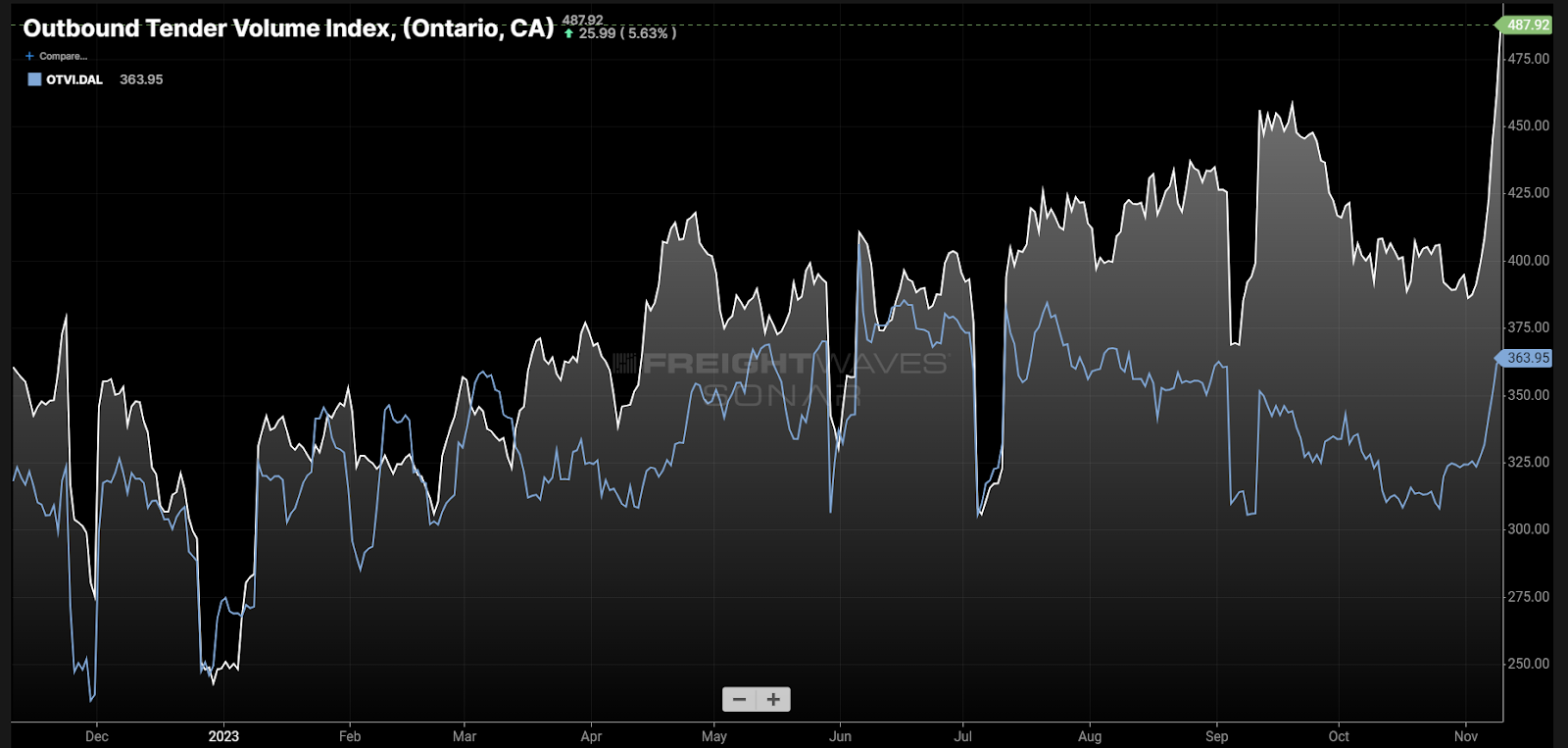
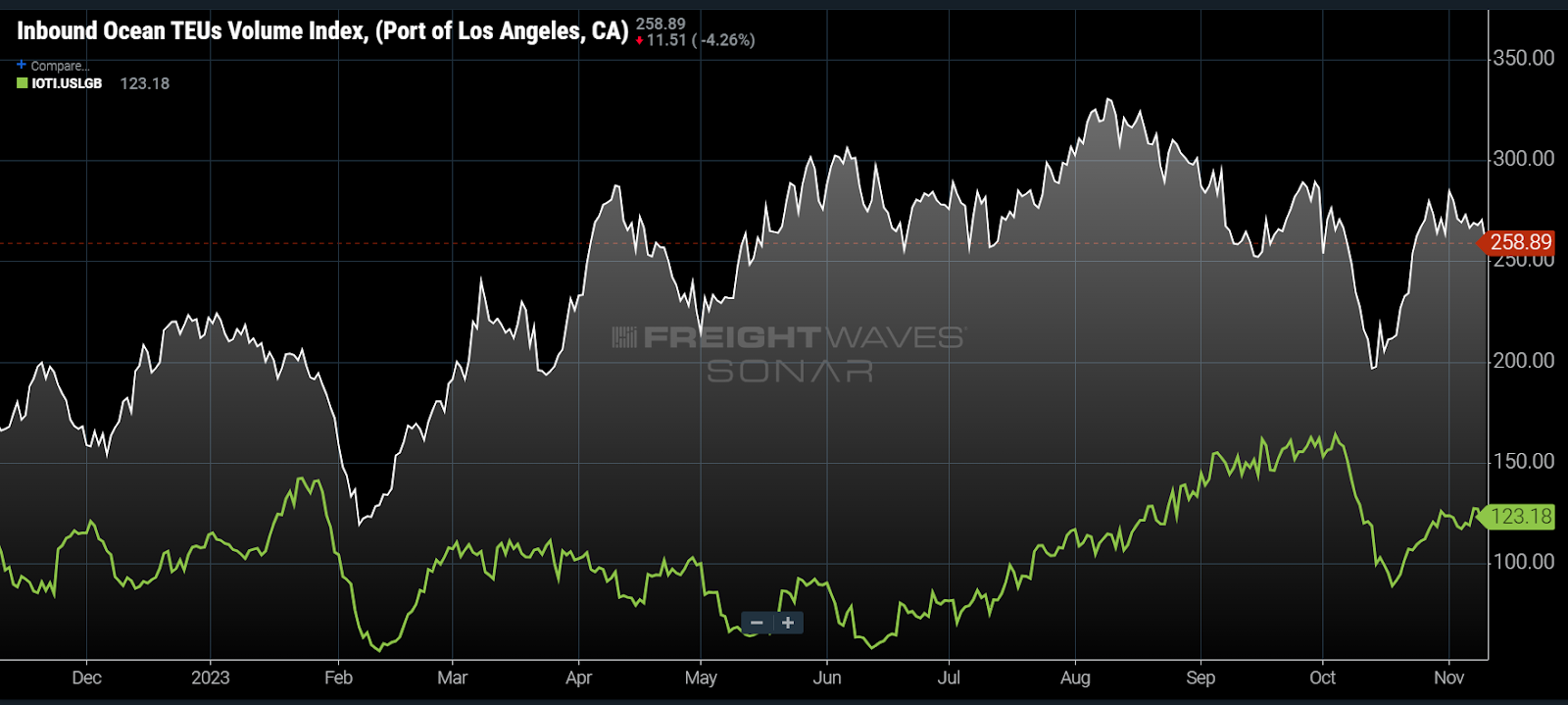
Chart of the Week: Outbound Tender Volume Index – Ontario, Dallas  SONAR: OTVI.ONT, OTVI.DAL

Outbound tender volumes spiked out of two of the nation’s largest origins last week after a relatively subdued October. This unseasonal spike in demand may be a sign of things to come this holiday season after a year of shippers having a relatively easy time getting transportation capacity. 

The Ontario, California, market is home to one of the U.S.’ largest warehousing districts known as the Inland Empire. Several Fortune 500 retailers have a presence here due to the proximity to the ports of Los Angeles and Long Beach. Demand spiked 26% to kick off November out of this market. 

The Dallas market has grown in prominence over the past few years, becoming a top 5 market in terms of overall share of freight demand origination, and is in a state that has become a focal point of growth as supply chains diversify. Outbound tender volumes jumped 12% last week. 

Both of these markets originate a large amount of freight that moves multiple days’ journey to the final destination — well upstream of the consumer. 

While it is not terribly unusual to get demand spikes leading up to the holidays, they normally do not occur at this scale. 

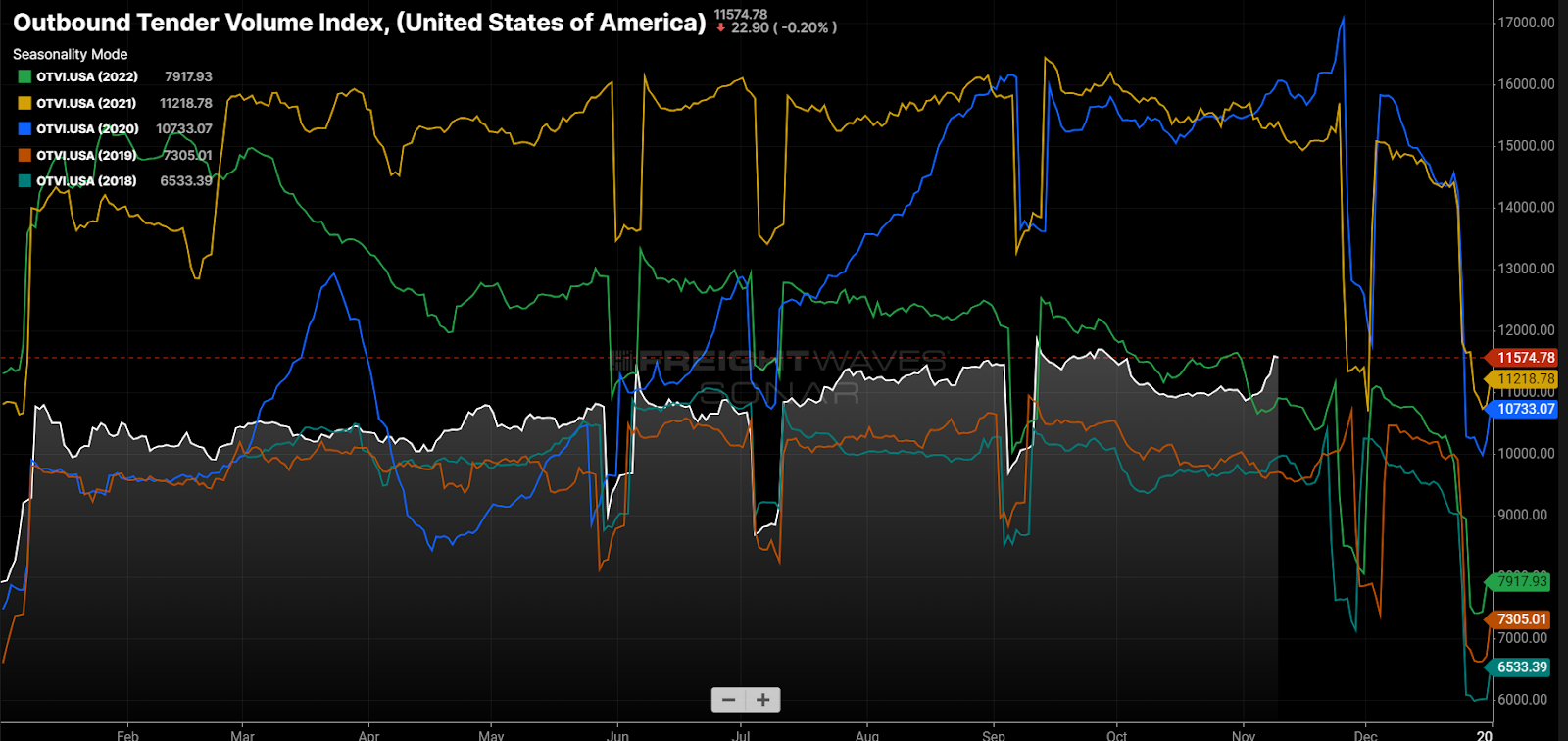
Looking at this historical national Outbound Tender Volume Index (OTVI), there are instances of demand growth at the start of November in three of the past five years. This jump in demand is generally 2-4%. The recent increase from a national perspective was 6.4%. 

Traditionally, this level of increase would have led to a deterioration in capacity, but nearly all of these loads were accepted by carriers. And potentially more impressively, lead times between tender and requested pickup were reduced to near annual lows for both markets. Shorter lead times give carriers less time to position their trucks and are generally more difficult to cover. 

Import booking volumes (IOTI), though subdued compared to the pandemic period, were unexpectedly strong in the third quarter, leading many to believe we were experiencing an early maritime peak season — generally occurring in August. While this may have been true, demand remained strong leading into early October, especially for the Port of Long Beach. 

During the pandemic years, imports immediately were transferred to the rails or trucks and made their journey toward the consumers with downstream inventory levels consistently low. Now that inventories are mostly rightsized, shippers appear to be holding goods in upstream warehouses until signs of demand spark shipping activity instead of just moving it right away. 

Basically, shippers are keeping inventory on a more just-in-time basis versus just-in-case with goods and transportation more consistently available. 

As we approach the holiday season, this practice will get more expensive as capacity is less available and the sense of urgency for many retailers increases. While it may not mean a historic rise of rates or anything sustainable, it will lead to increasing instances of demand spikes and expedited or guaranteed service shipments. 

Shippers are probably prepared to pay in these instances as the increases are nominal compared to the 2020-21 years. There still may be some instances of sticker shock after an extremely easy year for sourcing capacity. 

All of this hinges on consumer resilience, but they have given no signs of slowing thus far. 

Be sure to thank a veteran for their service this week as we celebrate Veterans Day.

About the Chart of the Week

The FreightWaves Chart of the Week is a chart selection from SONAR that provides an interesting data point to describe the state of the freight markets. A chart is chosen from thousands of potential charts on SONAR to help participants visualize the freight market in real time. Each week a Market Expert will post a chart, along with commentary, live on the front page. After that, the Chart of the Week will be archived on FreightWaves.com for future reference.

SONAR aggregates data from hundreds of sources, presenting the data in charts and maps and providing commentary on what freight market experts want to know about the industry in real time.

The FreightWaves data science and product teams are releasing new datasets each week and enhancing the client experience.

To request a SONAR demo, click here.

Photo collection depicts logistics operations during wartime

FreightWaves Classics is sponsored by Old Dominion Freight Line — Helping the World Keep Promises. Learn more here.

In honor of Veterans Day on Saturday, we’ve compiled a collection of photographs from the National Archives and the U.S. Army Center of Military History. While logistics jobs may not be the first thought of in times of war, they are vital to any war campaign.

Check out some of the most interesting photos of wartime logistics below and thank our veterans for their service.

World War I

World War I Christmas mail delivery Bruvans, France
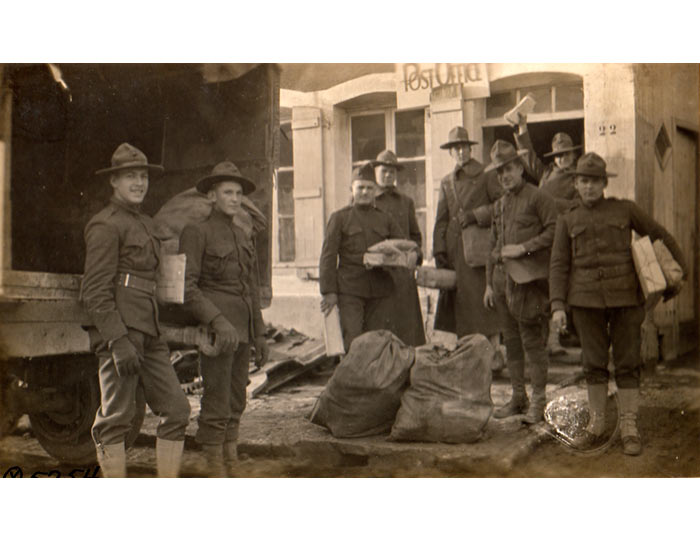
A shipment of Christmas mail arrives in Bruvans, France, during World War I in 1917. (Photo: Signal Corps/National Archives)
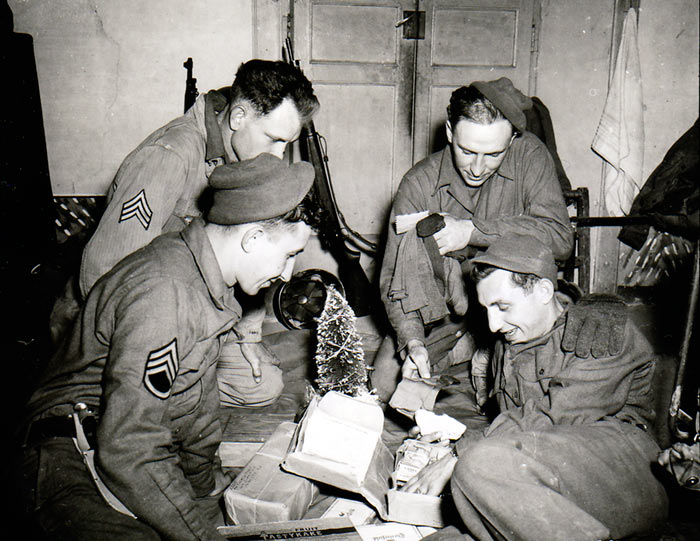
Soldiers opening Christmas gifts shipment by tree
Soldiers in World War II open a shipment of holiday packages around a small Christmas tree. (Photo: Signal Corps/National Archives)

World War II

Jeep assembly line WWII World War II
On Sept. 8, 1943, a jeep assembly line works to finish the making of military jeeps for World War II in just three minutes. (Photo: Signal Corps/National Archives)

Normandy

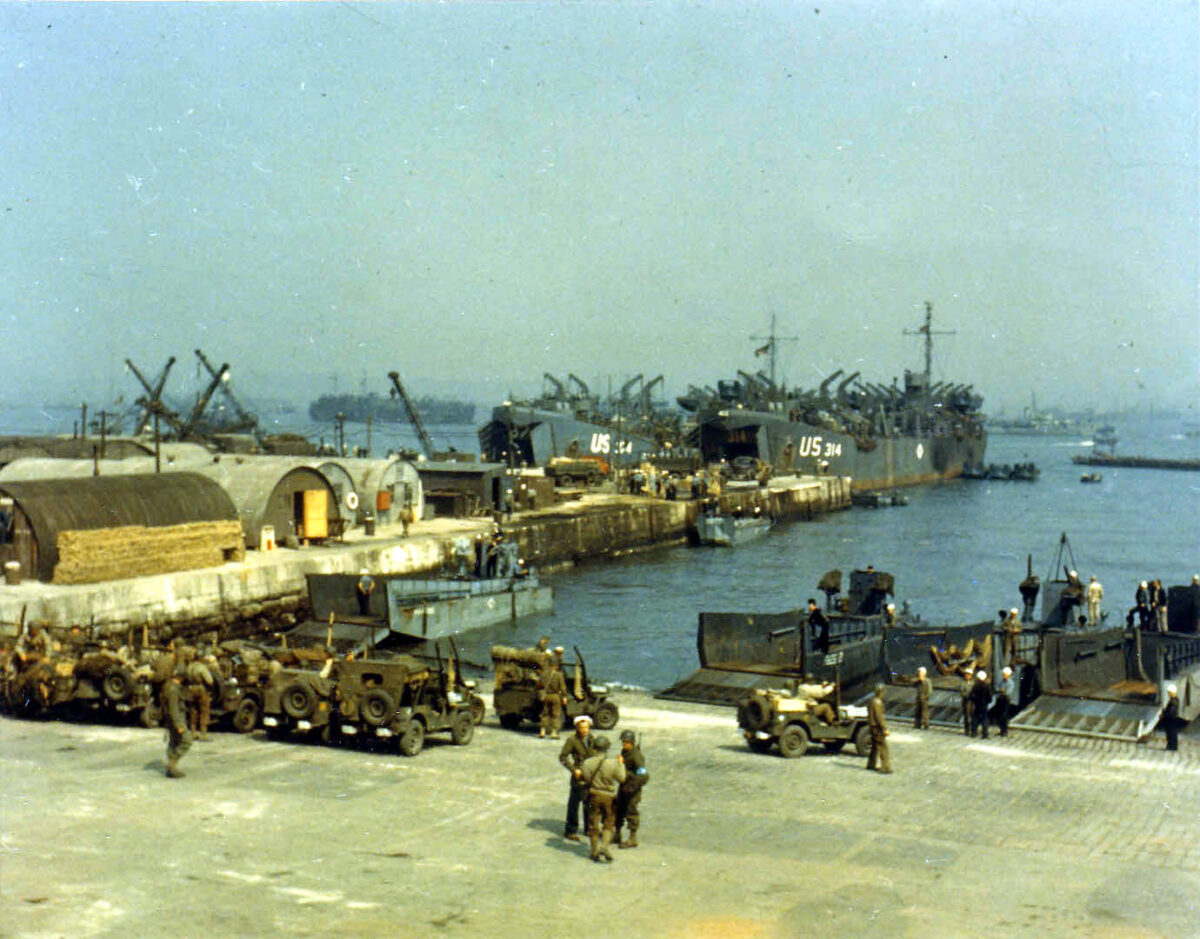
Tanks loaded with artillery equipment for storming of Normandy, France
Artillery equipment is loaded onto landing craft tanks (LCTs) at an English port to prepare for the invasion of Normandy, France, in June 1944 during World War II. (Photo: Signal Corps/National Archives)
Tanks loaded with artillery equipment for storming of Normandy, France
A port in England prepares for Normandy and transports jeeps onto LCTs while larger trucks and ducks enter landing ship tanks (LSTs) in June 1944. (Photo: Signal Corps/National Archives)
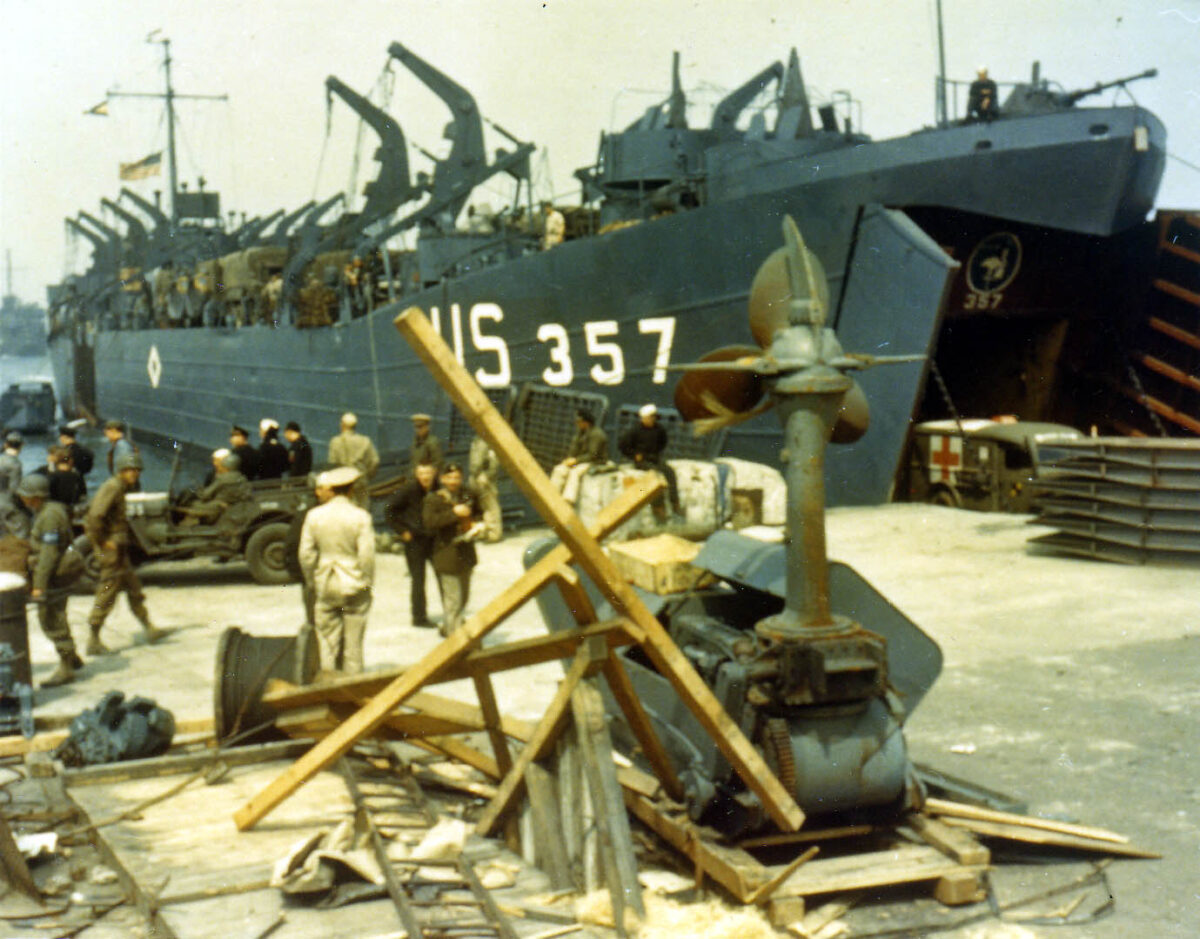
Tanks loaded with artillery equipment for storming of Normandy, France
An ambulance is loaded onto an LST. (Photo: Signal Corps/National Archives)
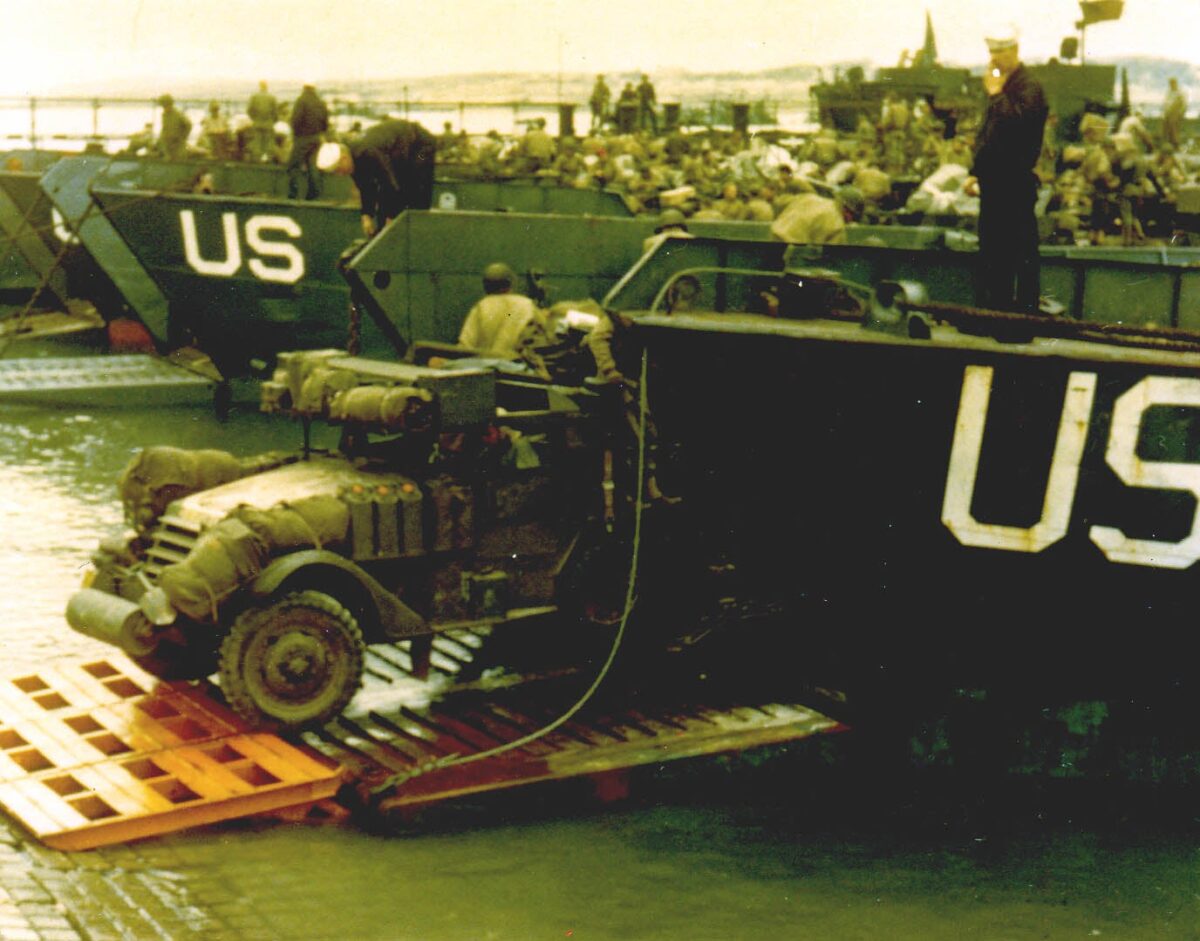
Tanks loaded with artillery equipment for storming of Normandy, France
These antiaircraft halftracks are loaded onto an LCT in preparation for the attack, specifically for the first wave of assault from the German military on Normandy Beach. (Photo: Signal Corps/National Archives)
Tanks loaded with artillery equipment for storming of Normandy, France
On June 6, 1944, Normandy Beach was loaded with supplies. (Photo: Signal Corps/National Archives)

The Korean War

Korean war convoy
On Sept. 16, 1950, two trucks cross a river by an underwater bridge, eight miles northwest of Taegu, Korea, on their way to the front line. (Photo: Fort Leonard Wood/Engineer History Office)
Cranes loading ships during Korean War at Inchon inner harbor.
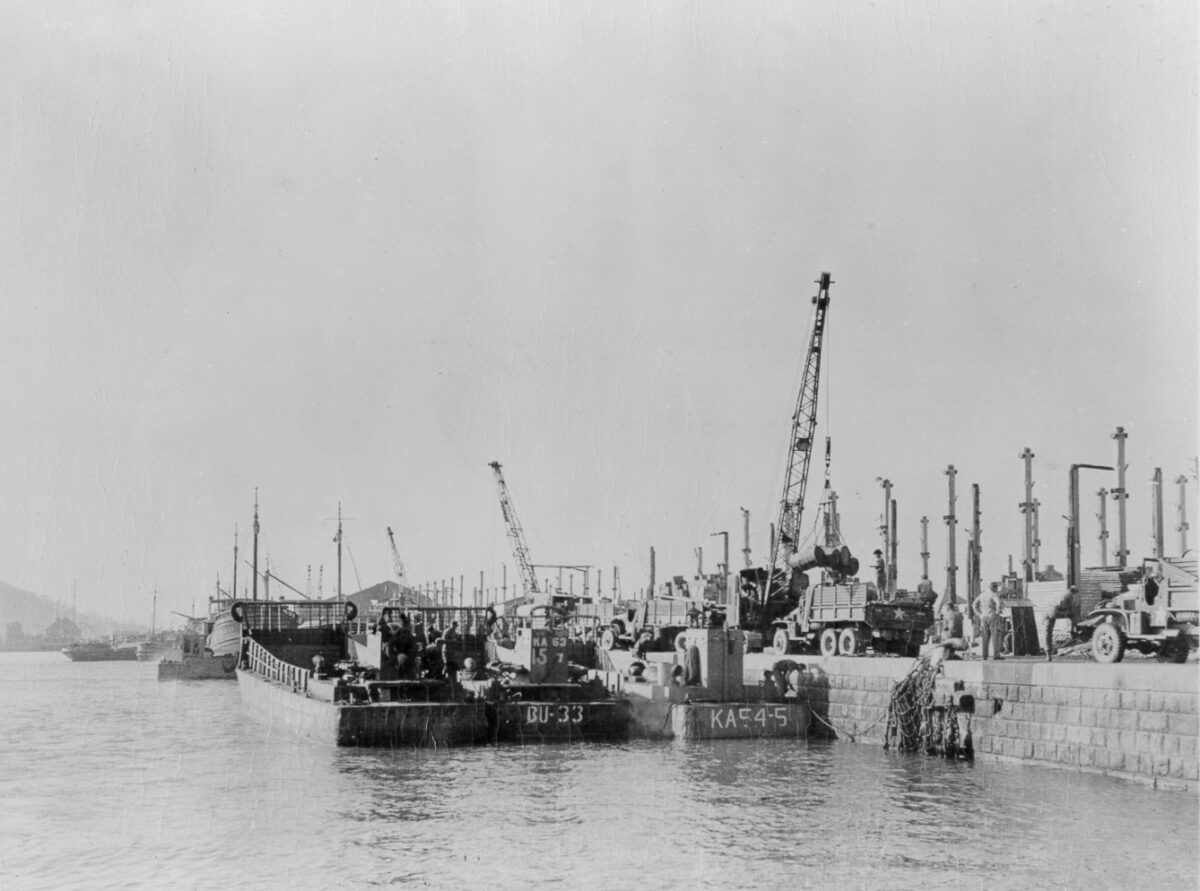
Cranes load landing craft mechanized with gas during the Korean War at the Inchon inner harbor. (Photo: Fort Leonard Wood/Engineer History Office)
Unloading ship during Korean War
On June 12,1951, troops of the 532nd Engineer Boat and Shore Regiment unload supplies at the harbor in Inchon. (Photo: Fort Leonard Wood/Engineer History Office)
Helicopter dropping off supplies during Korean War
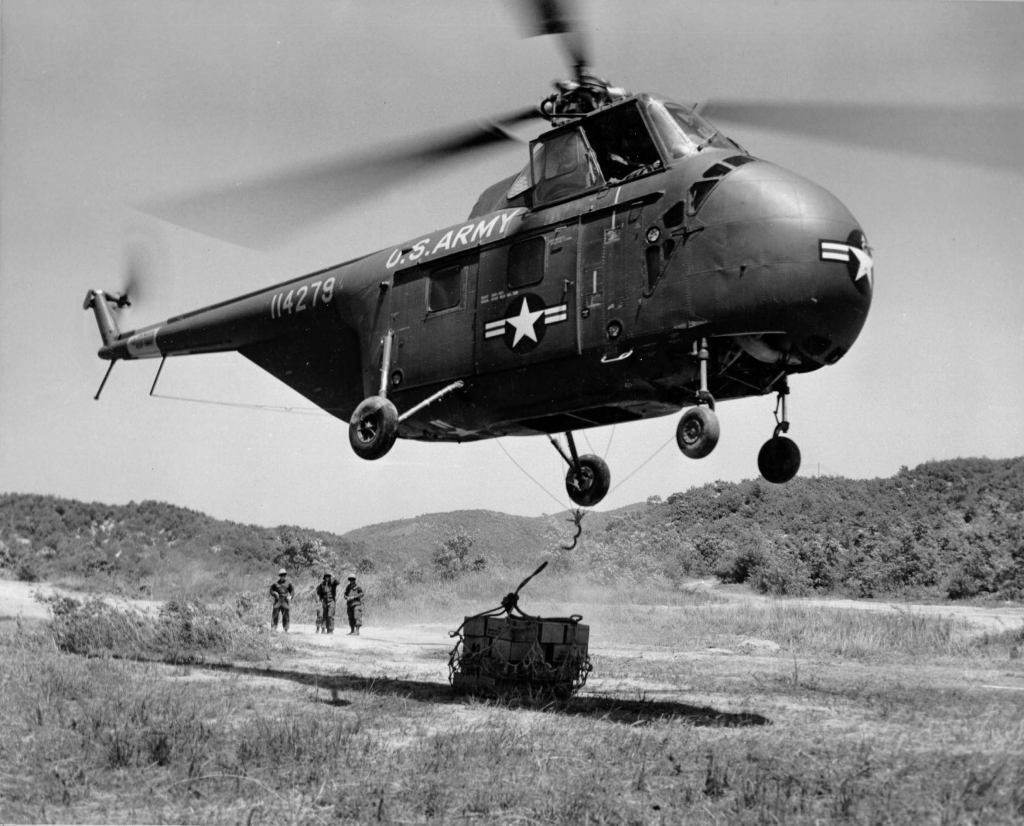
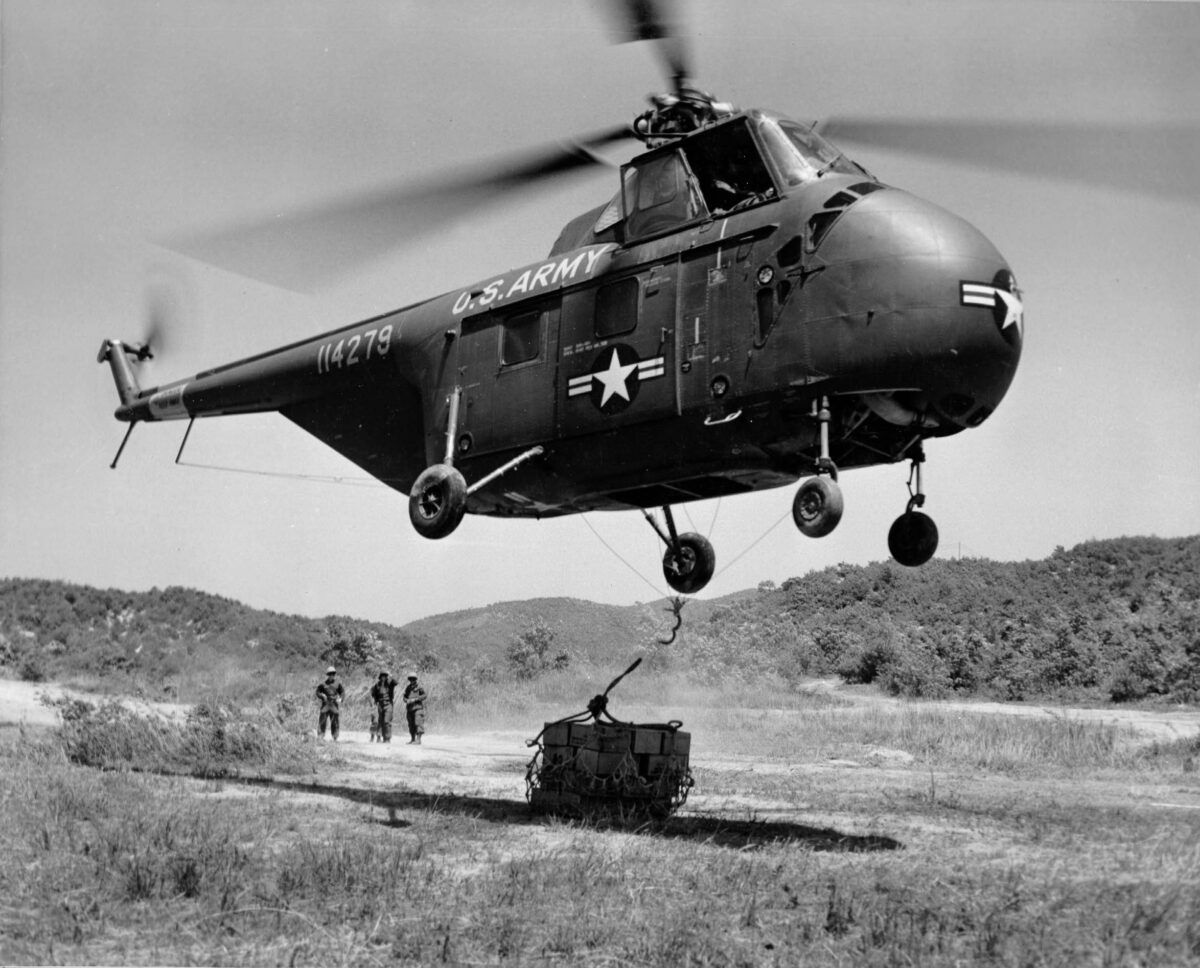
On May 23, 1953, a helicopter of the 6th Transportation Helicopter Company, U.S. Eighth Army, delivers C rations to the 35th Infantry Regiment, 25th U.S. Infantry Division, near the former village of Panmunjom. (Photo: Fort Leonard Wood/Engineer History Office)
lumber transportation in Korean War
In November 1953, the 13th Engineer Combat Battalion loads a truck for lumber transportation. (Photo: Fort Leonard Wood/Engineer History Office)
On March 4, 1952, an aerial tramway transports supplies and wounded during the Korean War. (Photo: Fort Leonard Wood/Engineer History Office)

Vietnam

helicopter vietnam
A helicopter prepares for a resupply mission during the Vietnam War in December 1967. (Photo: National Archives)
Vietnam War bunker
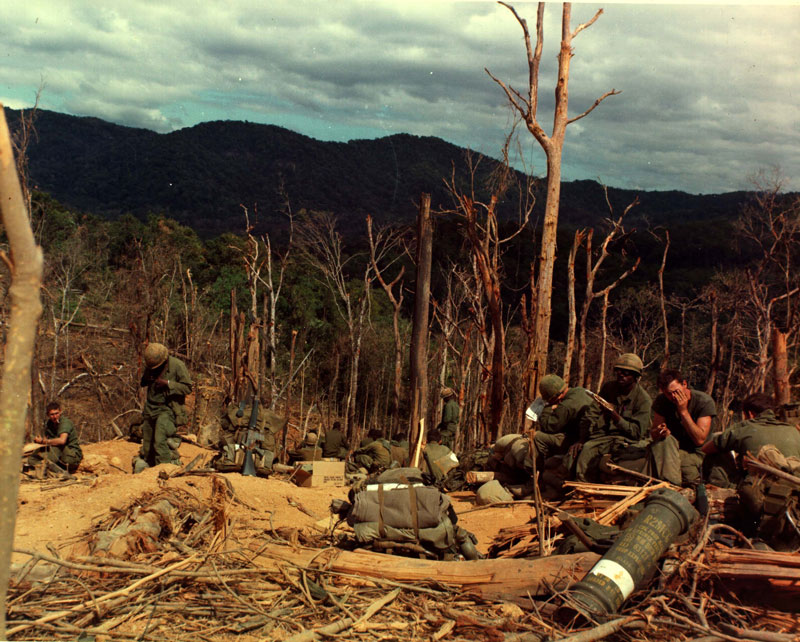
On Nov. 25, 1967, a group of men from the 3rd Battalion, 1st Marines take a break while they construct a bunker during the Vietnam War. (Photo: National Archives)

The Gulf War

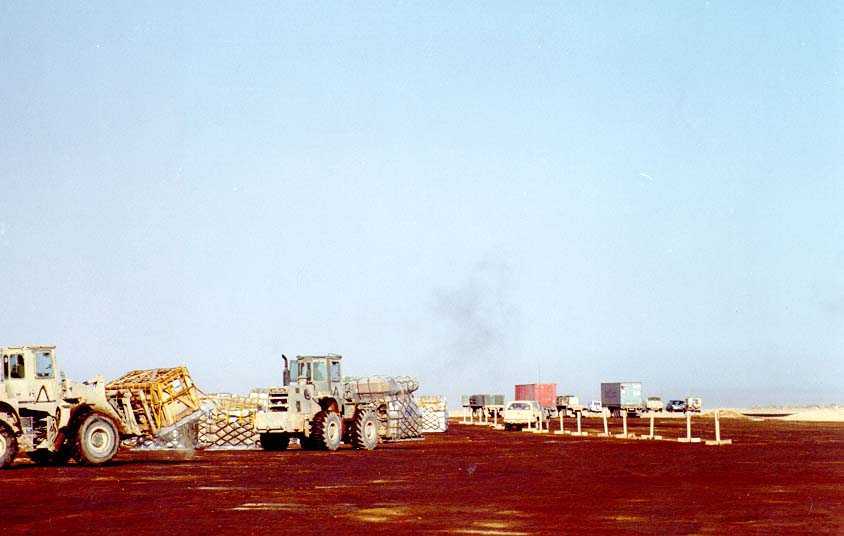
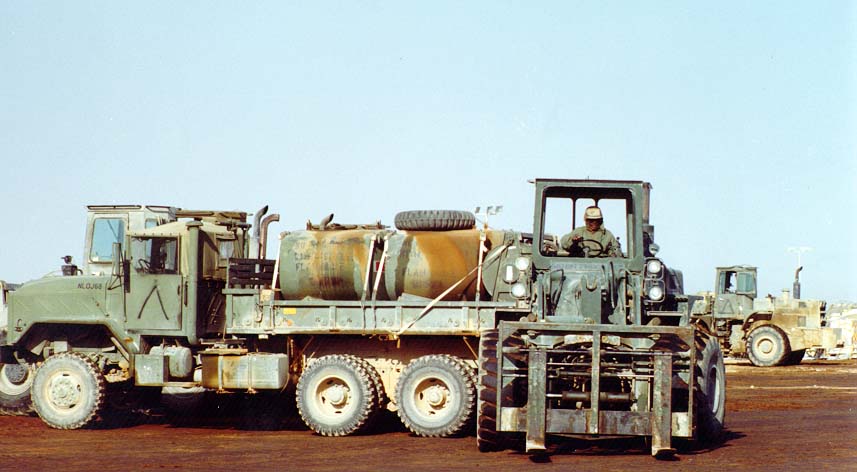
On Feb. 8, 1991, a 6,000-pound rough terrain forklift moves supplies at a logistical base in northern Saudi Arabia during the Gulf War. (Photo: PFC John F. Freund/XVIII Airborne Corps History Office)
the gulf war
More rough terrain forklifts operate at the forward landing strip at Logistical Base Charlie. (Photo: PFC John F. Freund/XVIII Airborne Corps History Office)
the gulf war
(Photo: PFC John F. Freund/XVIII Airborne Corps History Office)
the gulf war
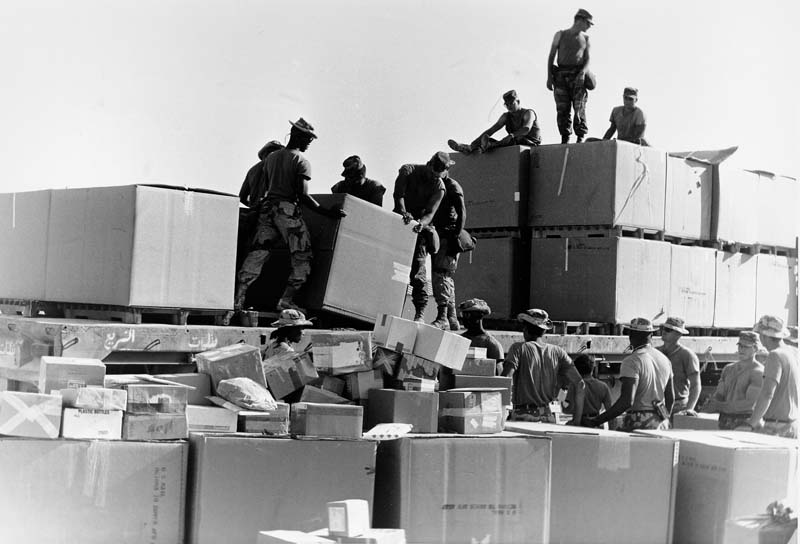
On Nov. 8, 1990, the 129th Postal Company unloads mail at the “Dragon City” compound near Dhahran, Saudi Arabia. (Photo: PFC John F. Freund/XVIII Airborne Corps History Office)

FreightWaves Classics articles look at various aspects of the transportation industry’s history. Click here to subscribe to our newsletter!

Have a topic you want us to cover? Email bjaekel@www.freightwaves.com.

Investment in logistics technology still relevant

By Bart De Muynck

The views expressed here are solely those of the author and do not necessarily represent the views of FreightWaves or its affiliates.

Having attended FreightWaves’ F3: Future of Freight Festival in Chattanooga, Tennessee, this week, it is abundantly clear that logistics technology and the investment in startups is far from dead. On the contrary, I encountered more tech startups across the entire logistics ecosystem at this year’s event than ever before. It shows how supply chain companies are digitizing their processes from procurement to payment.

The hallway discussions were both interesting and exhilarating, showing that the logistics industry as a whole continues to advance on its path of digitization. But there is a “back to basics” movement in which companies are investing in newer technologies that focus on core parts of the business. That can be seen in logistics procurement technologies, new warehouse models, last-mile solutions, compliance platforms and many more. The energy was palpable as the attendees were both eager to network with each other as well as to learn what else is possible. 

On Thursday, the last day of the event, the FreightTech Top 25 was announced. The results were quite surprising, with 70% being new entrants in the top 25 and most companies in the top 10 from last year being absent from this year’s top 25. It showed a move away in focus from the larger PE-backed companies to the smaller, often bootstrapped and VC-backed, startups. It showed a type of “new light through old windows” of the FreightTech world and proved that new technologies do have a chance to gain in importance even in difficult economic times.

As an adviser to Venture 53, a venture company focused on supply chain technology companies, it was cool to see four Venture 53 portfolio companies make it into the top 25: Better Trucks, MyCarrier, Highway and Fillogic. Only MyCarrier had appeared in the top 25 previously. Venture 53 is one of many investors that are continuing to invest in FreightTech. Venture 53 just kicked off a new fund, its third, demonstrating it is not slowing down investment but rather doubling down on FreightTech. 

There are great opportunities out there for investment and end users are hungry for solutions that can bring true value to their businesses. Continued investment in freight technology is essential for the modernization and optimization of the logistics and supply chain industry. It not only addresses current challenges but also prepares the industry for future advancements and opportunities, ensuring its resilience and competitiveness in a rapidly evolving global market.

It was a great week, not because of the many parties and the live bands, but because the industry came together to discuss the past year and to focus on what can be possible for 2024. Logistics remains a people business after all, but technology helps people to work better and more efficiently. I am optimistic that, within all the turbulence created by geopolitical and socioeconomic impacts, there is plenty of opportunity for logistics technology to make a difference.

Look for more articles from me every Friday on FreightWaves.com.

Bart

About the author

Bart De Muynck is an industry thought leader with over 30 years of supply chain and logistics experience. He has worked for major international companies, including EY, GE Capital, Penske Logistics and PepsiCo, as well as several tech companies. He also spent eight years as a vice president of research at Gartner and, most recently, served as chief industry officer at project44. He is a member of the Forbes Technology Council and CSCMP’s Executive Inner Circle.

Running on Ice: When cold is slightly less cold

Blue Truck on a sheet of ice over a blue background and Running on Ice Logo

Hello, and welcome to the coolest community in freight! Here you’ll find the latest information on warehouse news, tech developments and all things reefer madness-related. I’m your controller of the thermostat, Mary O’Connell. Thanks for having me!

All thawed out 

(Photo: Conestoga)

What’s that in the sky? A bird, a plane, a cold storage facility? In Halton Hills, Ontario, there is a towering collection of blue racks being set up that will someday serve as a cold storage facility. Across Lake Ontario from the U.S., Conestoga’s new Canadian facility is set to become one of the largest cold storage facilities in the world. The anticipated capacity is 60 million cubic feet and the facility should be up and running by the end of 2024.

A Daily Commercial News article says, “The structure is slab-on-grade and will have a unique frost protection system underneath the concrete foundation. The heat produced from the refrigeration system will be captured and used for frost protection.”

Building up instead of out has allowed Conestoga to build a stronger and more sustainable structure that makes the building more energy efficient. The new building will be a “lights off” facility, meaning the lights are automatically turned off in areas where they are not in use. 

Temperature checks

(Photo: Jim Allen/FreightWaves)

Unilever really said better cold chain for all. The company has made patents available to other ice cream manufacturers for freezers that go to minus 12 degrees Celsius, compared to the industry standard of minus 18 C. The goal for making these patents freely available is to have more energy-efficient freezer cabinets used. By reducing temperatures to minus 12 C, there is a 25% reduction in energy consumption, meaning it’s cheaper to run the freezers.

Andy Sztehlo, chief R&D officer for ice cream at Unilever, said in a news release, “By granting a free non-exclusive license to these 12 reformulation patents, we hope our peers and partners from across the ice cream sector will benefit and work to tackle emissions across the industry. We believe through collaboration, we can reduce the cold chain’s impact on the environment, whilst continuing to deliver the great quality ice cream products our consumers love.”

Food and drugs

(Photo: Daring)

Vegan options in the freezer section are getting bigger and better. Daring, a plant-based chicken company, is jumping into the frozen food scene with its new frozen entrees. Daring specializes in meals that have simple and few ingredients when it comes to chicken substitutes. The new meals are fully plant-based and gluten-free, and each meal contains about 16 grams of protein. The different types of meals are a fried rice plant chicken bowl, a fajita plant chicken bowl, teriyaki plant chicken bowl, harvest plant chicken bowl and penne primavera bowl.

Daring’s news release states, “Daring’s revolutionary approach incorporates a short list of simple ingredients (only 6 in their Original Plant Chicken Pieces to be exact), providing a  better-for-you alternative.”

Daring’s plant chicken pieces and wings and its newest frozen entree bowls can be found nationwide in stores, including Sprouts Farmers Market, Publix and Target. 

Cold chain lanes

(SONAR Tickers: ROTVI.SEA, ROTRI.USA)

This week’s SONAR market is Seattle. Capacity is tightening in Seattle as reefer outbound tender volumes and reefer outbound tender rejections are on the rise. Reefer outbound volumes are up 12.64% week over week (w/w), whereas reefer outbound tender volumes are up 2,040 basis points w/w. With reefer outbound tender reject rates at 28.31%, spot rates are highly inflated and are continuing to rise. 

Is SONAR for you? Check it out with a demo!

Shelf life

Frozen or Fresh: Which Turkey Should You Buy?

Revolutionizing Thermal Management: Exploring Passive Cooling Materials & Technologies in a Growing Market

No Longer Schwan’s, Yelloh Eliminates Trademark Truck Delivery In Wyoming, West

Lineage Expands its European Footprint with New State-Of-The-Art Facility in France

China will dominate solar supply chain for years

Wanna chat in the cooler? Shoot me an email with comments, questions or story ideas at moconnell@www.freightwaves.com.

See you on the internet.

Mary

If this newsletter was forwarded to you, you must be pretty chill. Join the coolest community in freight and subscribe for more at www.freightwaves.com/subscribe.

Expert explains how he uses FBI negotiator skills in business deals

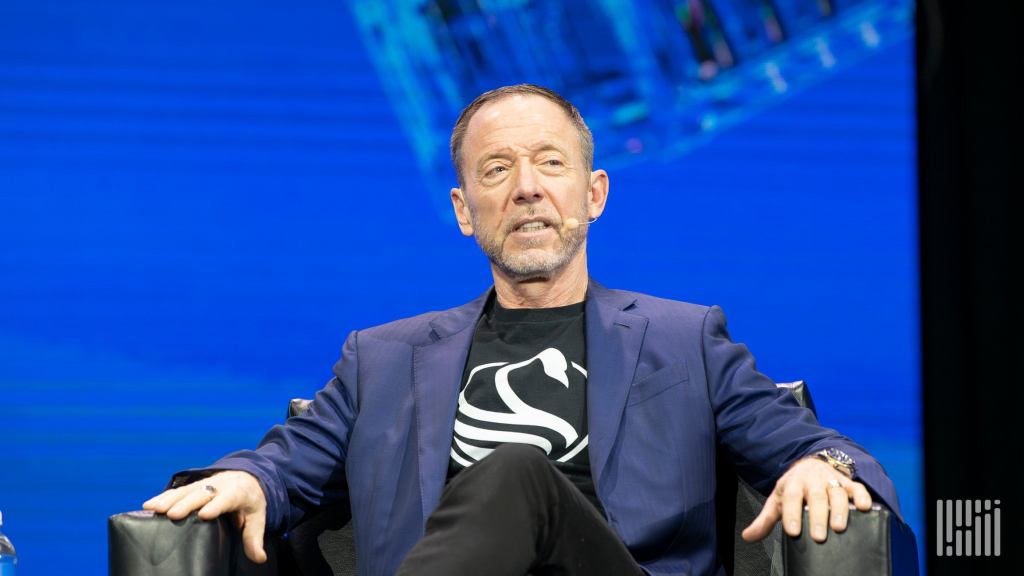
CHATTANOOGA, Tenn. — When it comes to a negotiation, Chris Voss said he never focuses on goals but instead on the process of getting the best outcome possible.

“Never be so sure of what you want that you wouldn’t take something better. The more focused you are on a prize, the more likely it is you’re going to miss a better opportunity,” said Voss, a former FBI lead hostage negotiator and authority on high-stakes negotiation, at FreightWaves’ F3: Future of Freight Festival. “That’s why I’m much more process-focused than I am goal-focused. Goals are limiting. Goals give you tunnel vision. Goals put blinders on you.”

Voss was joined on stage Thursday by FreightWaves CEO and founder Craig Fuller, who hosted the keynote discussion, titled, “Success in business (particularly in freight) is dependent upon negotiation.”

Voss is the CEO and founder of The Black Swan Group, as well as the author of “Never Split the Difference: Negotiating As If Your Life Depended On It” and “The Full Fee Agent: How to Stack the Odds in Your Favor as a Real Estate Professional.”

Voss said an example of how focusing too much on a single goal could limit negotiations was a bank robbery situation with hostages in Brooklyn where he almost missed a crucial opportunity.

“My goal is to get the bad guy to release hostages,” Voss said. “But one of my negotiators on my team, who had been listening to my conversation with the [robber], hands me a note that says, ‘Ask him if he wants to come out.’”

Voss said he asked the robber if he wanted to come out, to which he instantly replied, “I don’t know how to do it.”

“His answer was a great big giant ‘Yes, get me away from here. I want out of here now,’” Voss said. “I was so focused on getting hostages out, a member of my team heard something else in the conversation that I had completely missed. That taught me early on, the more focused you are on what you want, the more likely it is you’re going to miss a better deal.”

Voss said they eventually found a way to get the robber to surrender and release the hostages.

“There’s always a better deal: always, always, always,” Voss said. “You don’t know what it is, and it might just be in how we pay for something, how we implement something.”

Voss said negotiators have to be honest, which applies to deals people try to make in business.

“Hostage negotiation is just about establishing a working relationship as quickly as possible, that somebody will do what they say, and then not resent having done it,” Voss said. “Everybody wants to feel good about the deal that they made instead of resenting it.”

Fuller asked Voss how to deal with a situation in which someone is emotionally charged up. Get the person to come “into a place where they can have a logical or reasonable sort of conversation?” Fuller asked.

“You have to show empathy. Just making sure people feel heard, 75% of the friction in the deal is going to immediately go away,” Voss said. “Everybody that I coach, we get deals faster than anybody else does, because we make people feel heard, and they’re less annoyed, and then consequently, everything that follows goes much more quickly.”

Voss said a good way to start any negotiation is by listening to someone’s tone of voice.

“I’m actually going to start off by noting your tone of voice: Do you sound like you’re in a good mood? Do you sound like you have a lot on your mind? Tell them, ‘Sounds like your boss is probably annoying you,’” Voss said. “If I’m willing to listen and hear what you have to say, even if I miss the exact meaning of your tone, you’re gonna appreciate the fact that I was trying.”

Click for more FreightWaves articles by Noi Mahoney.

More articles by Noi Mahoney

5 takeaways from XPO’s Brad Jacobs at Future of Freight Festival

Convoy’s collapse, legacy tied to ushering tech into volatile freight markets

Trimble’s transportation revenue jumps 35% in Q3

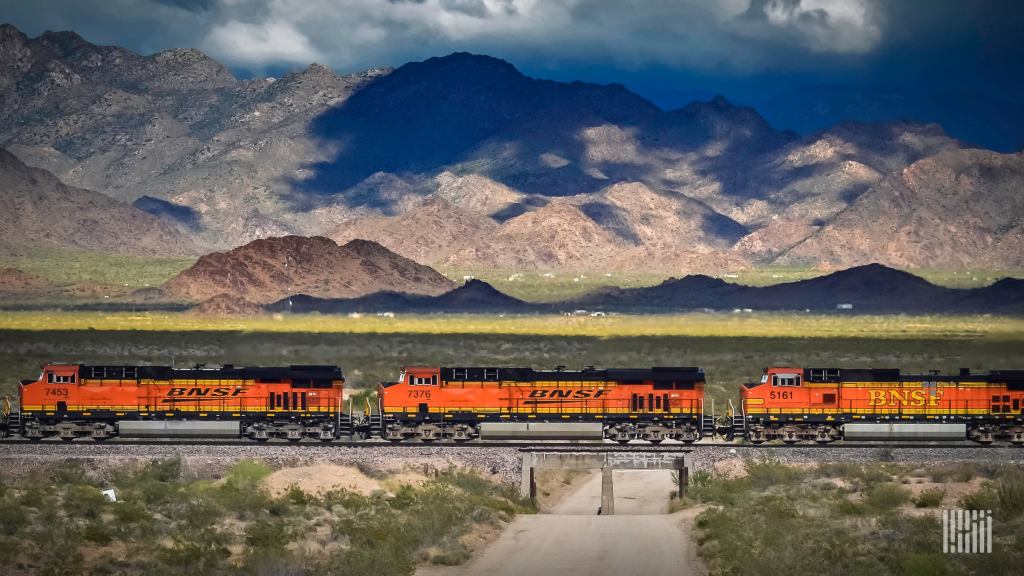
BNSF and coal exporter reach settlement

Western U.S. Class I railroad BNSF and coal producer Navajo Transitional Energy Co. (NTEC) have reached a settlement on NTEC’s claims it needs more service from BNSF to export coal.

They told the Surface Transportation Board in a Thursday filing to postpone further action on the dispute until Jan. 8, 2024, which is when they expect the settlement to be concluded.

NTEC and BNSF (NYSE: BRK-B) “have recently reached a settlement agreement to resolve the matter,” the two said in the filing. They didn’t specify what the settlement terms were.

NTEC had asked STB in April to enact an emergency service order against the railroad because the company claimed that BNSF is not meeting its end of the bargain to ship the volumes of coal that NTEC wants shipped.

NTEC was seeking to transport coal from its Spring Creek mine in Big Horn County, Montana, to Westshore Terminal at Roberts Bank in British Columbia. The company said then that it needed  BNSF to guarantee that it would provide service so that NTEC’s customers can have sufficient time to arrange for the ocean transport of the coal once it reached Westshore.

The company, which has offices in Broomfield, Colorado, and Farmington, New Mexico, and is also an electric utility, asked STB to rule that BNSF breached its obligation to provide adequate common carrier service and that it failed to establish and provide safe and adequate service, according to its April 14 filing. The coal producer also asked STB to define the scope of BNSF’s common carrier obligation as well as provide relief.

Indeed, a larger question that arose from the proceeding was how a Class I rail carrier as well as STB should define adequate service under the common carrier obligation. Per federal regulations, the common carrier obligation binds railroads to carry freight, provided that the tendered agreement has reasonable terms and conditions.

Subscribe to FreightWaves’ e-newsletters and get the latest insights on freight right in your inbox.

Click here for more FreightWaves articles by Joanna Marsh.