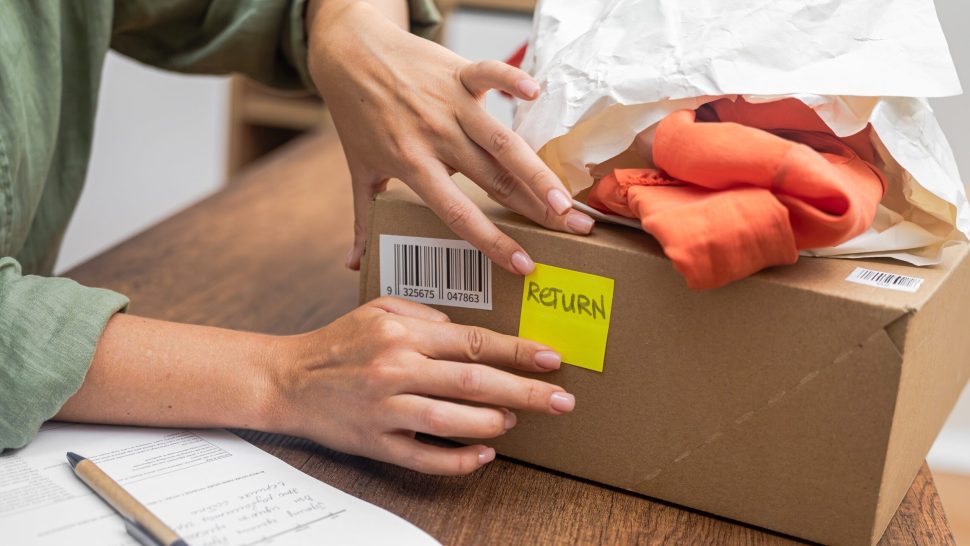
Return fraud was supposed to be a cost of doing business. Instead, it’s becoming one of retail’s biggest margin threats.
For years, retailers treated returns as a customer experience issue, an unavoidable side effect of e-commerce growth and the Amazon-fueled promise that anything could be sent back, anytime. But as return rates quietly climbed and abuse tactics grew more sophisticated, that mindset began to crack. What once looked like a service expense now resembles a structural risk hiding in plain sight.
Arthi Rajan Makhija, Co-Founder of PinchAI, saw the shift early. prevent abusive behavior before the item ever makes it back. The company positions itself as the industry’s first post-purchase risk operating system. Rather than treating returns as a disconnected workflow, Pinch connects signals across checkout, return initiation and warehouse operations to form a single view of buyer intent.
“Returns are here to stay,” Rajan said. “Amazon made returns part of the shopping journey, not the exception. And now returns are actively driving how people shop.”
That behavior isn’t going away. What is changing is the type of risk retailers face. Across Pinch AI’s retail network, roughly 25% of all e-commerce purchases are returned, with apparel and footwear running even higher. While most of those returns are legitimate, a small fraction is quietly eroding margins. About 5% of returns are complete write-offs, while another 10% come back used or damaged, making them impossible to restock as new.
The biggest culprit is wardrobing, shoppers buying items for special occasions and returning them after use, which Pinch sees accounting for the majority of abusive returns in categories like apparel. SKU swapping is another common tactic: customers purchase a new item, a few months later purchase it again, start a return and send back an older version instead. In both cases, the warehouse associate inspecting the return becomes the last line of defense.
“That’s the wrong place to catch the problem,” Rajan said. “By the time it hits the warehouse, the damage is already done.”
One of the clearest insights to emerge from that approach is how concentrated the problem really is. Pinch data shows that roughly 7% of customers account for 70% of all returns, while just 0.5% are responsible for nearly all egregious abuse. Yet most return policies still treat every shopper the same.
“That’s how you end up punishing your best customers,” Rajan said. “If you make broad policy changes, you hurt the top 20% of loyal customers far more than the bottom 5% of abusers.”
Instead, Pinch enables retailers to personalize the return experience. Low-risk, high-value customers move through faster, frictionless workflows, often receiving instant refunds. High-risk shoppers encounter graduated interventions, such as, additional review, delayed refunds, or signals that their behavior is being monitored. In many cases, that awareness alone is enough to deter abuse before it happens.
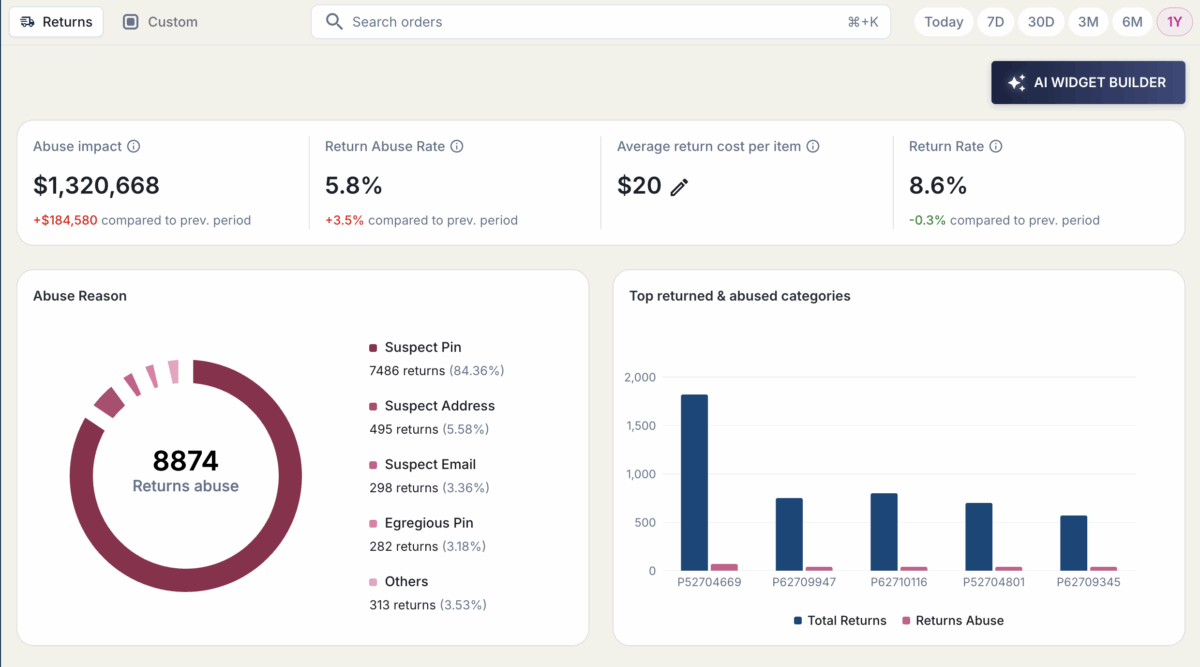
The platform works by linking buyer identity with buyer journey data. Customers with bad intent often behave differently at checkout, gravitating immediately to high-value items and completing purchases quickly.
Others browse, read reviews and shop across categories. Pinch tracks not just how an item was purchased, but how it moved through logistics and how it returned, creating a 360-degree view that traditional tools miss.
That visibility is paying off. Pinch customers have reduced return rates by about 8% by proactively denying only abusive returns or applying targeted friction. At the same time, they’ve seen VIP retention increase by roughly 20% by improving the return experience for their most loyal customers. The system has also automated about 80% of return reviews end-to-end, freeing operational teams from manual investigations.
The environmental impact is another piece retailers are increasingly forced to confront. Pinch estimates that roughly 30% of returned items ultimately end up in landfills, while many others are heavily discounted and sold at a loss.
Investors took notice early. Pinch recently raised a $5 million seed round co-led by Dynamo Ventures and Infinity Ventures, with participation from Defined Capital and PayPal Ventures. For backers like Dynamo’s Jon Bradford, the appeal was less about returns as an operational headache and more about the blind spots created by fragmented post-purchase data.
“This team understands how disconnected systems quietly erode margins,” Bradford said. “Pinch unifies those signals into a full-stack intelligence layer.”
As return rates continue to climb and abuse tactics evolve, Rajan believes retailers face a narrowing window to modernize. Those that continue to rely on blunt policies and manual review will be forced to choose between margin protection and customer loyalty, a tradeoff she argues is no longer necessary.
“The future is about balance,” she said. “You can protect yourself from the abusive 1% without alienating the loyal 99%. But only if you actually know who’s who.”
Brokerage Compliance Symposium
The day before F3. Every compliance issue you face - fraud exposure, carrier liability, FMCSA rules, cargo theft, insurance gaps - navigated by attorneys and operators defining best practices in a changing industry.
F3 Awards Dinner
The night before F3. FreightTech100 companies honored. FreightTech 25 and Shipper of Choice winners revealed live. Cocktail reception into dinner and live music - 300 industry leaders in one purpose-built room.
F3: Future of Freight Festival
Industry-defining keynotes, rapid-fire technology demos, and industry leaders networking in experiences across Chattanooga - plus the inaugural F3 Awards Dinner featuring the FreightTech and Shipper of Choice reveals.
The day before F3. Every compliance issue you face - fraud exposure, carrier liability, FMCSA rules, cargo theft, insurance gaps - navigated by attorneys and operators defining best practices in a changing industry.
The Signal at Chattanooga Choo Choo • Chattanooga, TN Register NowThe night before F3. FreightTech100 companies honored. FreightTech 25 and Shipper of Choice winners revealed live. Cocktail reception into dinner and live music - 300 industry leaders in one purpose-built room.
The Signal at Chattanooga Choo Choo • Chattanooga, TN Register NowIndustry-defining keynotes, rapid-fire technology demos, and industry leaders networking in experiences across Chattanooga - plus the inaugural F3 Awards Dinner featuring the FreightTech and Shipper of Choice reveals.
The Signal at Chattanooga Choo Choo • Chattanooga, TN Register Now