




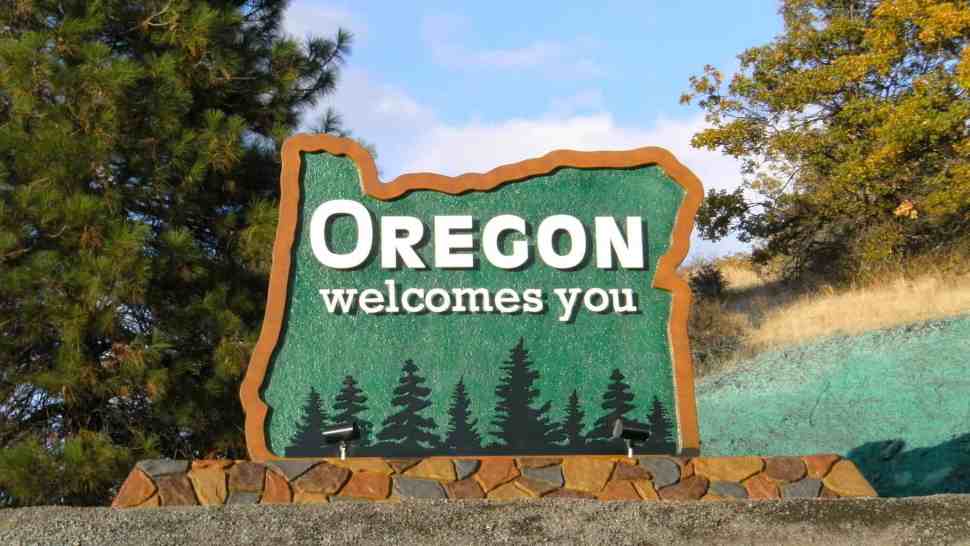

Oregon truckers and fuel interests are lobbying against a carbon pricing bill that they contend unfairly targets the transportation sector, the largest source of greenhouse gas emissions in the state.
The “cap-and-trade” proposal, which is expected to pass in some form during this legislative session, would impose a 52-million metric ton cap on greenhouse gas emissions from polluting industries, including manufacturers, transportation fuels and utilities. Companies emitting 25,000 metric tons per year starting in 2021 would have to purchase pollution allowances auctioned off by the state.
The emissions limit would get tighter over time, reaching 11 million metric tons in 2050. Polluters would have to either transition to a cleaner energy source or find greener ways of manufacturing products. Companies that reduce emissions could sell their unused allowances.
“We certainly understand the need to address carbon,” said Jana Jarvis, chief of the Oregon Trucking Association (OTA). But diesel is the primary fuel source for trucks, and since the industry doesn’t have a ready substitute fuel source, “this plan would involve increased costs for consumers,” she said.
Carbon pricing bills have stalled out in previous legislative sessions. But the latest bill has a much better chance of passing now that there are Democrat majorities in the Oregon House and Senate. Plus, Governor Kate Brown is a strong supporter of the proposal, which if adopted would make Oregon the second West Coast state (along with California) to implement a cap-and-trade program.
Against this backdrop, truckers and fuel groups – whose interests are not always aligned – are hoping to cut deals favorable to their members.
The political horse-trading gets complicated, quickly.
For example, the OTA is tying support of cap-and-trade to repeal of another carbon pricing scheme – Oregon’s clean fuels standard, which was approved in 2015 and requires a 10 percent reduction in average carbon intensity for diesel and gas from 2015 levels by 2025.
The OTA views the standard – modeled after a California program – and the cap-and-trade bill as “duplicative,” Jarvis said, as the carbon in transportation fuels will essentially be taxed twice if the cap-and-trade bill is approved.
The clean fuels program offers fuel distributors an incentive to blend and sell lower-carbon fuels using biodiesel, ethanol or other alternatives. For that reason, Oregon fuel companies – unlike the OTA – are generally supportive of the fuel standard, while opposing the current iteration of the cap-and-trade bill.
“The clean fuels program allows for innovation and transition in the fuels sector,” said Danelle Romain and Mike Freese, lobbyists for the Romain Group in Portland, a public affairs firm that represents local fuel interests. “On the other hand, cap-and-trade is specifically designed to reduce and eventually remove all fossil fuels from the transportation sector by making them prohibitively expensive.”
In January, the American Trucking Associations and the American Fuel & Petrochemical Manufacturers asked the U.S. Supreme Court to reject an appeals court ruling that upheld Oregon’s clean fuels program. The groups argue that the program favors the local transportation fuel industry at the expense of out-of-state fuel companies.
Another thorn in the side of transportation businesses is the way allowances are being distributed under the cap-and-trade program. Under the current proposal, companies that might move out of state if carbon regulations put them at a competitive disadvantage are exempt from having to buy allowances until 2030.
About 30 manufacturers fall under this category. Transportation businesses do not.
This doesn’t sit well with trucking companies. “My initial review of HB 2020 indicates that it is primarily a cap-and-trade for the transportation sector as most other sectors are either exempt, qualify for a state-mandated pass-through, or are provided free allowances,” said Mike Card, president and CEO of the Combined Transport Logistics Group, in testimony delivered to the Oregon Joint Committee on Carbon Reduction last week.
Freese and Romain echo that assessment. Residents and businesses in rural communities that depend on cars or trucks will be disproportionately affected by the program, which is expected to raise gas prices by 16 cents per gallon and climb steadily after that. “It’s important that, like the utility and manufacturing sectors, cost impacts in the transportation sector be recognized and mitigated,” they said.
Supporters of the cap-and-trade bill note that Oregon transportation emissions are growing at an alarming rate. In 2017, state transportation emissions clocked in at almost 26 million metric tons of carbon dioxide equivalent, up more than 20 percent from 2013 and 2014. “The economics literature is quite clear on this point,” said a spokesperson for Governor Brown. “A price on carbon provides an economic incentive to transition from high-emitting vehicles to lower-emitting alternatives.”
Other items topping the OTA’s bargaining list include a repeal of the state’s weight-mile tax, which the trucking industry has long opposed, and replacing it with a diesel tax. Jarvis said the repeal would give the industry an incentive to transition to more sustainable fuels, an incentive that doesn’t exist under the current system. “With a weight-mile tax, it costs the same to run a diesel truck as an electric Freightliner Cascadia,” Jarvis said.
The association is drafting a bill that would repeal the tax – whether it gets folded in to the cap-and-trade bill remains to be seen, Jarvis said.
Over the next month, Oregon legislators are holding a series of “listening sessions” around the state aimed at gathering additional feedback from people and businesses, especially those in remote areas of Oregon, about the carbon pricing proposal.
Plenty of issues still need to be resolved. Opponents claim the bill is a revenue-raising measure, which would require three-fifths support in the House and Senate to pass. There are also questions about how money raised from vehicle fuel can be spent. Supporters want the money to go into programs that reduce emissions.
“We want to make sure the revenue gets dedicated to the Highway Trust Fund,” Jarvis said.
Brokerage Compliance Symposium
The day before F3. Every compliance issue you face - fraud exposure, carrier liability, FMCSA rules, cargo theft, insurance gaps - navigated by attorneys and operators defining best practices in a changing industry.
F3 Awards Dinner
The night before F3. FreightTech100 companies honored. FreightTech 25 and Shipper of Choice winners revealed live. Cocktail reception into dinner and live music - 300 industry leaders in one purpose-built room.
F3: Future of Freight Festival
Industry-defining keynotes, rapid-fire technology demos, and industry leaders networking in experiences across Chattanooga - plus the inaugural F3 Awards Dinner featuring the FreightTech and Shipper of Choice reveals.
The day before F3. Every compliance issue you face - fraud exposure, carrier liability, FMCSA rules, cargo theft, insurance gaps - navigated by attorneys and operators defining best practices in a changing industry.
The Signal at Chattanooga Choo Choo • Chattanooga, TN Register NowThe night before F3. FreightTech100 companies honored. FreightTech 25 and Shipper of Choice winners revealed live. Cocktail reception into dinner and live music - 300 industry leaders in one purpose-built room.
The Signal at Chattanooga Choo Choo • Chattanooga, TN Register NowIndustry-defining keynotes, rapid-fire technology demos, and industry leaders networking in experiences across Chattanooga - plus the inaugural F3 Awards Dinner featuring the FreightTech and Shipper of Choice reveals.
The Signal at Chattanooga Choo Choo • Chattanooga, TN Register Now