




By Eric Johnson
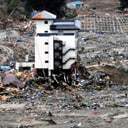
There are two ways to look, from a supply chain perspective, at the cataclysmic disasters that struck Japan in mid-March.
One can examine the tangible effects that the disasters have, and will continue to have, on goods movement involving Japan. Or one could see Japan as the latest and most severe example of how vital contingency planning and resiliency is when structuring global supply chains.
Of course, resiliency isn't a new topic. American Shipper has covered it numerous times, often in relation to preparedness for how a terrorist act might affect supply chains or U.S. port infrastructure ('Homegrown terror,' January 2007 American Shipper, pages 38-39, or online at www.AmericanShipper.com/links).
'Our industry is placing the biggest bet in history, and the bet is that nothing will happen,' said Jeff Karrenbauer, president and founding director of the supply chain consulting company Insight. 'The more just-in-time and the more lean supply chains are, the more vulnerable they are. The longer we make supply chains, the more vulnerable we are. A 12,000-mile supply chain is inherently vulnerable.'
Paul Bingham, economics practice leader for the consultant Wilbur Smith Associates, said much the same thing.
'The evolution of lean supply chains in simple form leads to great potential for serious disruption,' Bingham said. 'I suspect many companies are more vulnerable than they may realize, especially when manufactured products with complicated layers of component suppliers are involved, such as we see now in the auto industry.'
The irony is the nation that spawned much of lexicon of the modern supply chain is only the latest example of why lean and just-in-time create more vulnerability. Just in recent years, there's been Hurricane Katrina, the South Asia tsunami, the Iceland volcano, and political disruptions in the Middle East. And before that were the non-natural disasters ' the 2002 ports lockout in Southern California, and 9/11.
'A lot of companies learned big lessons out of Katrina,' said Rich Wilson, chief executive officer of sourcing technology company CombineNet. 'They were scrambling for other ports besides New Orleans. The lesson that was learned is not to put all your eggs in one basket.'
Wilson, no surprise, is an advocate of advance sourcing technology to help supply chain practitioners plan for and react to the unexpected.
'It basically comes down to broadening your supply chain to a greater number of suppliers,' he said. 'You can then very rapidly simulate the offer from those suppliers and how they can be taken advantage of. You can apply a set of business rules, and model capacity on different routes. You can quickly assess the cost impacts on different supply routes.
'You can do this in a rational, deliberate way that reflects the costs. When disaster strikes, you need a tool to go back into offers that carriers have made in the past, remove those that are no longer available to you, model those that remain, and see what alternate routes and capacities are available in the disaster. Our customers have been doing this for years,' Wilson said.
This can happen after disaster strikes, or better yet, before.
'There are in fact ways to approach this analytically and rigorously,' Karrenbauer said. 'There are ways to more objectively identify where we are vulnerable and what it will cost us. You can do this with analytical tools and not just guesswork. But you have to be willing to put time and money into this.'
Companies differ greatly in their sophistication when it comes to risk modeling, or resiliency levels, Bingham said.
'In more sophisticated practice, managers incorporate risk modeling around their supply chains, and with more advanced supply chain management, have contingency plans in place for supply,' he said. 'This has led some shippers to employ use of multiple ports, carriers and even suppliers in attempts to reduce single-point-of-failure risks to production or sales. This approach has practical limits, and the risk modeling likely does a reasonable job only for disasters of somewhat recurring magnitudes, like hurricanes or snow storms.
'For disruptions whose magnitudes can't be well modeled from history or probability approaches, the test then becomes what are the economic consequences of an interruption or break in the supply chain on the business. For companies where the option of insuring business interruption risk is available that could be the best approach, at least where insurance carriers who will write policies covering interruptions under certain conditions are available.'
Bingham said a traditional example of that type of insurance for producers in the United States has been crop insurance sold to farmers.
'I'm not sure of the limits or costs of available industry insurance coverage in terms of completely unforeseen disasters ' like nuclear disasters ' so in some cases the practical planning may be for assuring that a company's finances are resilient enough to endure a sustained period of reduced or interrupted production and sales in the unlikely event of such a disruption,' he said.
Karrenbauer bemoaned the fact that shippers are often answerable to share price analysts, compelling them to become so lean that their vulnerability increases.
'To me the problem is Wall Street,' he said. 'I might decide that I'm going to stockpile a little bit of critical inventory, and engage a secondary supplier. But that adversely affects the balance sheet. The people who should be pushing for companies to build in resiliency are instead making them more vulnerable.'
He then compared building resiliency into supply chains to green initiatives, in that companies often uncover cost savings when they really examine their vulnerabilities.
'It's like reducing carbon emissions,' he said. 'You sometimes stumble onto things that make you money, or reduce your costs. What scares me is we have reduced costs at all costs. We've worshipped at the altar of lean so much that contingency has disappeared.'
Professionals in this arena tend to divide risk into two categories: random acts of nature and intentional acts by an intelligent adversary.
Events that fall into the second category don't necessarily have to be as sinister as a terrorist attack. It could be an unplanned work stoppage that cripples a foreign port. It could be a power play made by a transportation provider on a certain lane that disrupts a shipper's flow of goods.
But whatever the event, the problem is that it puts a huge strain on supply chains. And the bigger the event, the more supply chains it strains. Think back to spring 2010, when the volcanic eruption in Iceland all but suspended air freight movement in and out of Europe for a week.
Shippers with time-critical air freight goods faced an immense hurdle, not just while swathes of European airspace were closed but in the weeks that followed. A backlog of cargo drove air freight rates through the roof.
Japan's crises immediately impacted supply chains related to automobiles and certain electronics, but have the power to reach much deeper.
'So many companies have suspended activities because of a resin that goes on circuit boards,' Karrenbauer said. 'Ninety percent of the resin is made in Japan, which is on a major tectonic plate.'
The disasters are so severe they'll likely push a percentage of the production that remains in Japan to other Asian economies with lower labor costs, and less risk of natural disaster.
'The search for alternate suppliers to Japanese producers is already advanced and it is going to primarily be other Asian producers who will benefit,' Bingham said. 'I suspect the lingering and slowly developing impacts of the production and infrastructure disruption within Japan will continue to reveal impacts on into the second quarter of the year for shippers, carriers, ports and even overseas consumers.'
Another analyst, Hackett Associates Founder Ben Hackett, agreed.
'The impact is greatest for the high-tech goods and parts going into other high-tech products such as televisions, XBoxes and iPads, and of course the automotive industry. Spare parts is an issue, as are the kits for the Japanese plants in Europe, particularly those in Turkey and in the U.S.
'Those companies that can, will shift production to their offshore factories. But in reality it will not be easy to replace the Japanese plants in this way,' Hackett continued. 'Japan's main trades are with China and other Asian companies. Their share of U.S. and European trade has already eroded. We can expect a sharp reduction in shipments probably to the end of May assuming that Japan gets to grips with its electricity production. That is effectively what is hindering the factories.'
The disasters have no doubt placed Japan's lumbering economy in a bind. According to a paper by Bank of Japan researchers released before the earthquake, Japan will need gross domestic product expansion of 4 percent to 6 percent a year over the next decade to grow its way out of debt by 2030, but few economists envision 4 percent growth in Japan's future.
The disasters might stimulate a somewhat counterintuitive economic surge in the short term, as domestic companies benefit from the nation's need to rebuild infrastructure in severely damaged areas. Other developed economies that experience natural disasters have seen such bumps.
But Hackett said Japan is facing a crisis quite different from other recent Asian economic phenomena, like the late 1990s Asian economic crisis, or the SARS outbreak.
'I'm not sure that you can compare it to either one, as the reasons and factors are so different,' he said. 'It's more like a punch in the stomach. The big unknown is when will the nuclear power station crisis come to an end, assuming they do overcome it. If there is a Chernobyl type of outcome, then the Japanese economy will be in the pits for some time.'
Brokerage Compliance Symposium
The day before F3. Every compliance issue you face - fraud exposure, carrier liability, FMCSA rules, cargo theft, insurance gaps - navigated by attorneys and operators defining best practices in a changing industry.
F3 Awards Dinner
The night before F3. FreightTech100 companies honored. FreightTech 25 and Shipper of Choice winners revealed live. Cocktail reception into dinner and live music - 300 industry leaders in one purpose-built room.
F3: Future of Freight Festival
Industry-defining keynotes, rapid-fire technology demos, and industry leaders networking in experiences across Chattanooga - plus the inaugural F3 Awards Dinner featuring the FreightTech and Shipper of Choice reveals.
The day before F3. Every compliance issue you face - fraud exposure, carrier liability, FMCSA rules, cargo theft, insurance gaps - navigated by attorneys and operators defining best practices in a changing industry.
The Signal at Chattanooga Choo Choo • Chattanooga, TN Register NowThe night before F3. FreightTech100 companies honored. FreightTech 25 and Shipper of Choice winners revealed live. Cocktail reception into dinner and live music - 300 industry leaders in one purpose-built room.
The Signal at Chattanooga Choo Choo • Chattanooga, TN Register NowIndustry-defining keynotes, rapid-fire technology demos, and industry leaders networking in experiences across Chattanooga - plus the inaugural F3 Awards Dinner featuring the FreightTech and Shipper of Choice reveals.
The Signal at Chattanooga Choo Choo • Chattanooga, TN Register Now