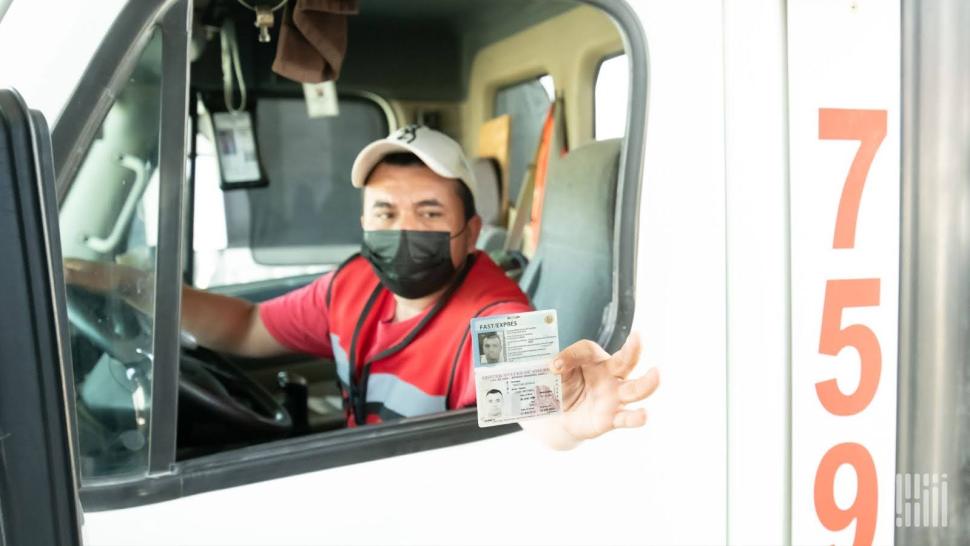
A fatal crash in Florida involving a non–English-speaking CDL holder set off a political firestorm—and it didn’t take long for Washington to respond. With headlines stacking up and safety advocates calling for accountability, newly appointed Transportation Secretary Sean P. Duffy issued a hardline directive: states must begin strict enforcement of English proficiency rules for commercial drivers, or face consequences. According to Duffy, the crackdown targets California, Washington, and New Mexico for their “pattern of non-enforcement.”
But here’s the question nobody seems to be asking:
If Florida was the site of the crash that triggered this policy shift, why is nobody talking about Florida’s role in enforcement?
First, a Quick Primer on the ELP Rule
The English Language Proficiency (ELP) requirement isn’t new. It’s part of the FMCSA’s existing regulations (49 CFR § 391.11), which require CDL holders to be able to speak and read English sufficiently to converse with the public, understand highway traffic signs, respond to official inquiries, and fill out reports and records.
That regulation has lived in the fine print of the CDL manual for years, but like a lot of federal rules, enforcement has been inconsistent. Some states enforce it aggressively. Others—well, they look the other way.
Until recently, it’s been treated as a soft rule. But in the wake of several deadly high-profile crashes, that’s changing.
What Duffy Said — and What It Meant
On August 21, Transportation Secretary Sean Duffy issued a statement announcing that three states—California, Washington, and New Mexico—had been flagged for failing to uphold ELP rules. According to Duffy, those states would be subject to funding freezes, DOT audits, and further legal scrutiny if they didn’t comply within 60 days.
The tone was direct:
“When states allow individuals who cannot communicate effectively in English to operate 80,000-pound vehicles on our highways, they are complicit in putting American families at risk.” — Secretary Duffy
The announcement was framed as a safety-first response to rising concerns over non-domiciled CDL holders operating in the U.S. without full command of English. And for many in the trucking community, it struck a chord. Safety is safety. Lives are at stake.
But here’s the thing—while the spotlight was placed squarely on the three named states, other states with questionable enforcement histories have been left out of the conversation.

Florida’s Enforcement Numbers Raise Questions
Let’s rewind. The crash that sparked this entire debate happened in Florida.
According to the AP report, a truck driver who lacked sufficient English proficiency made an illegal U-turn, causing a multi-fatality accident. That tragedy—rightfully—drew national attention and raised tough questions about how CDL holders are vetted and monitored. The narrative quickly turned toward immigration, state accountability, and driver training gaps.
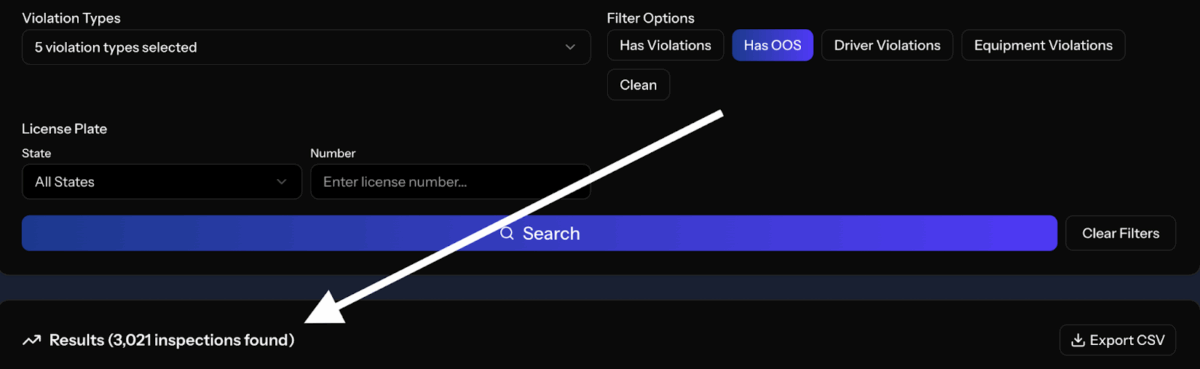
So, we decided to look at actual enforcement in Florida over the past three months.
Pulling inspection data from multiple Florida weigh stations, we reviewed Level 1 and Level 2 inspections conducted from late June through late August. The inspections included clear Out-of-Service (OOS) violations, with many tied to equipment and driver compliance issues.
But one thing stood out: only 4 of these recent OOS violations referenced ELP.
This isn’t a comprehensive audit of the whole state, but it’s enough to raise a fair question: If Florida is the flashpoint for this debate, why isn’t Florida facing the same federal scrutiny?
Why This Matters to Small Carriers
Let’s be honest—this issue is politically loaded. But for small carriers and owner-operators trying to survive in a down market, it’s not about politics. It’s about clarity, compliance, and consistency.
If certain states are being targeted for failing to enforce the rules, but others with similar practices are ignored, then we’re not dealing with an actual safety campaign. We’re dealing with optics.
That’s dangerous for small carriers who already face outsized consequences from inspections, audits, and roadside enforcement. If the rules shift based on headlines and headlines shift based on geography, how can you run a compliant operation?
Here’s the deeper issue:
When ELP enforcement becomes a political weapon rather than a safety tool, small carriers end up paying the price.
What ELP Enforcement Actually Looks Like
According to FMCSA guidelines, failure to meet English proficiency can lead to a driver being placed out of service under Part 391.11(b)(2). But it’s a subjective determination.
In most cases, officers assess English proficiency during basic interaction:
- Can the driver answer questions?
- Can they produce documents when asked?
- Can they understand instructions?
The issue is—this opens the door to inconsistencies. A driver might pass an inspection in Georgia but get flagged in New Mexico. Another might get waved through in Florida and detained in California. It becomes a matter of who’s doing the check, not whether the driver meets the federal standard.
Now imagine how that plays out for fleets trying to hire non-domiciled drivers legally, or for small carriers hauling cross-country. One state might clear your driver—another might sideline them.
Who Supports the ELP Push?
Despite the controversy, there’s a growing number of drivers and carriers who support tighter enforcement of ELP rules.
And frankly, they’ve got a point.
Drivers operating in an environment where communication is critical—at docks, with dispatch, on CB, or during emergencies—need to be able to understand and be understood. It’s not about heritage or background. It’s about safety and shared responsibility on the road.
But supporting enforcement doesn’t mean supporting uneven enforcement.
If Florida can be the setting for a catastrophic ELP-related crash but avoid inclusion in the list of “non-compliant states,” then we need to ask: Is this really about safety, or is it about politics?
What’s Next — And What Carriers Should Watch
So far, Duffy has given the named states 60 days to respond and correct their enforcement practices. Whether they will comply—or challenge the federal directive—remains to be seen.
But this won’t be the end of the ELP conversation. Here’s what small carriers should be watching:
1. State-Level Inspection Trends
Stay current on inspection data in the states you run. Look for patterns in OOS citations. Are they increasing? Are new categories, like ELP, showing up more?
2. Driver Vetting and Training
For the midsized fleets, make sure your driver recruiting and onboarding includes English communication evaluation. That doesn’t mean native fluency—but it does mean functional command of verbal and written English, especially around safety.
3. Policy Changes at the FMCSA
If ELP enforcement gains traction, expect updates to DataQ procedures, appeals processes, and enforcement training. Stay plugged in.
4. Watch for Legal Challenges
There’s a chance this policy shift will face legal backlash—either from state DOTs or civil rights groups. The implications could reshape how ELP enforcement is handled going forward.
Final Word
Nobody wants unsafe drivers on the road. But safety doesn’t get stronger when it’s selective.
The conversation around English proficiency isn’t going away, and in many ways, it’s overdue. Communication matters. The lives lost in Florida prove that. But if we’re going to enforce the ELP rule in the name of safety, then let’s do it fairly—across all states, with clear standards and transparent enforcement.
Because if this becomes another political wedge, small carriers will pay the price in audits, delays, and enforcement gray zones.
This isn’t about where a driver is from. It’s about whether they’re trained, legal, safe—and able to operate in a system built on communication.
Let’s not lose the plot. Let’s fix what’s broken.
Brokerage Compliance Symposium
The day before F3. Every compliance issue you face - fraud exposure, carrier liability, FMCSA rules, cargo theft, insurance gaps - navigated by attorneys and operators defining best practices in a changing industry.
F3 Awards Dinner
The night before F3. FreightTech100 companies honored. FreightTech 25 and Shipper of Choice winners revealed live. Cocktail reception into dinner and live music - 300 industry leaders in one purpose-built room.
F3: Future of Freight Festival
Industry-defining keynotes, rapid-fire technology demos, and industry leaders networking in experiences across Chattanooga - plus the inaugural F3 Awards Dinner featuring the FreightTech and Shipper of Choice reveals.
The day before F3. Every compliance issue you face - fraud exposure, carrier liability, FMCSA rules, cargo theft, insurance gaps - navigated by attorneys and operators defining best practices in a changing industry.
The Signal at Chattanooga Choo Choo • Chattanooga, TN Register NowThe night before F3. FreightTech100 companies honored. FreightTech 25 and Shipper of Choice winners revealed live. Cocktail reception into dinner and live music - 300 industry leaders in one purpose-built room.
The Signal at Chattanooga Choo Choo • Chattanooga, TN Register NowIndustry-defining keynotes, rapid-fire technology demos, and industry leaders networking in experiences across Chattanooga - plus the inaugural F3 Awards Dinner featuring the FreightTech and Shipper of Choice reveals.
The Signal at Chattanooga Choo Choo • Chattanooga, TN Register Now