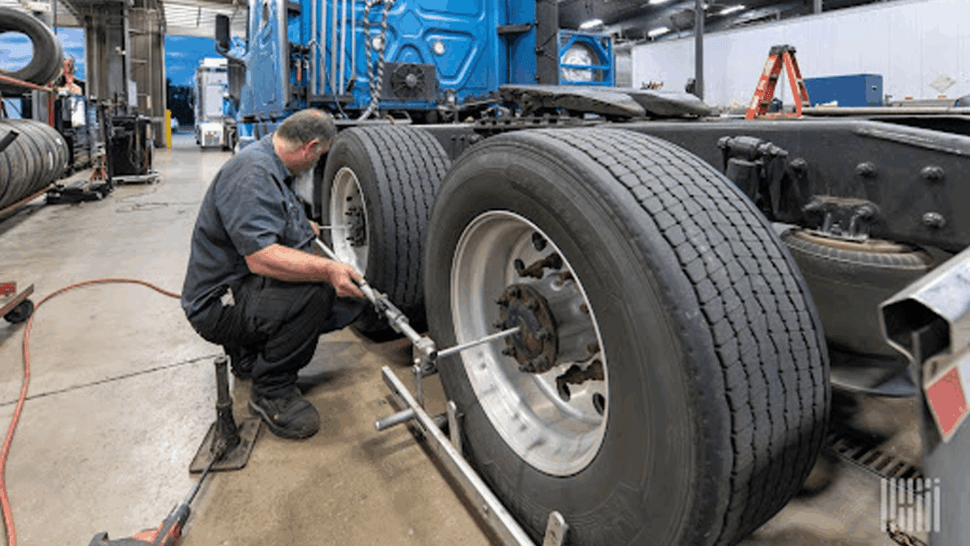
They say you can’t cut some corners in trucking, but a lot of folks sure try when it comes to tires. Wide base singles—better known as super singles—promise lighter weight, better fuel economy, and a smoother ride. But are they worth it? Or are you trading redundancy for risk just to shave a few hundred pounds? In this article, we’re breaking down the real-world pros and cons of super single tires from the perspective of small fleet owners, long-haul carriers, and local operators alike. Whether you’re eyeing that fuel savings or concerned about a blowout 200 miles from nowhere, here’s what you need to know before you spec your next truck or trailer.
The Weight Debate: Pounds = Profit
One of the biggest reasons carriers switch to super singles is simple: weight. Traditional dual tires weigh more and take up more space. By switching to super singles, you can cut around 300-400 pounds per axle, giving you more room to haul freight—especially if you’re in a weight-sensitive niche like bulk, fuel, or reefer.
That weight reduction might not sound like much, but in tight-margin operations, every pound matters. More payload per load means more revenue per trip. If you’re constantly brushing up against your gross vehicle weight rating (GVWR), that saved weight can turn into real dollars.
Fuel Efficiency: The MPG Tease
Fleets and manufacturers alike claim super singles reduce rolling resistance, which translates to better fuel efficiency. In ideal conditions, yes—you might see a small bump, maybe 1-2% MPG improvement. Over the course of a year, that can add up.
But here’s the kicker: those savings only show up if your alignment is perfect, your inflation is spot on, and your driving conditions are consistent. That’s not the real world. Potholes, debris, heavy grades, and variable loads all chip away at those gains.
The Blowout Problem: One Tire, No Backup
With duals, if you lose one tire, you can usually limp to a shop or pull off the highway without major damage. Super singles don’t give you that cushion. A blowout on a super single can be catastrophic—not just for the tire but for the rim, the fender, and anything nearby. You’re not moving anywhere without a tow or roadside assistance.
For small carriers, that’s not just a safety issue—it’s a financial one. Downtime kills profit, and one missed load can put you in the red for the week.
Cost to Replace: You’ll Feel It
Super singles aren’t cheap. They cost more per tire than traditional duals, and because you’re only using one per side, the wear isn’t distributed the same. If a tire gets uneven wear, you’re looking at full replacement, not a rotation fix.
And don’t forget: availability matters. Not every truck stop stocks super singles. If you blow one out in a remote area, you could be waiting hours—or paying a premium—for a replacement.
Ride Quality and Handling
Here’s where things get subjective. Some drivers love the feel of super singles. They say it makes the truck feel more responsive, and the smoother ride reduces fatigue. Others complain about road feel and vibration, especially if the tires wear unevenly or inflation is off.
The key is consistent maintenance. Super singles don’t tolerate neglect. If you’re not checking pressure regularly and doing frequent inspections, ride quality and safety degrade quickly.
Trailer Applications: Where It Can Make Sense
Some fleets first test super singles on trailers, not tractors. It’s less risky and gives you a chance to evaluate performance without jeopardizing uptime. If you’re running drop-and-hook or dedicated freight with consistent loads and routes, trailer-mounted super singles might be worth it.
Plus, the weight savings on a trailer can open up more capacity, especially if you’re loading heavy on the back end.
Tire Pressure Monitoring Systems (TPMS): A Must, Not a Maybe
If you run super singles without TPMS, you’re playing with fire. One underinflated tire can destroy your bottom line. TPMS gives you real-time data and alerts before things go south. It’s an upfront cost that pays off fast.
Also consider investing in automatic inflation systems if you’re running trailers. They maintain consistent pressure and extend tire life.
Resale Value and Equipment Decisions
Super singles can be a turn-off for used buyers. If you’re planning to sell your equipment after a few years, know that some buyers will walk away from trucks or trailers with super singles, especially if their operation isn’t set up to maintain them.
That means you could take a hit on resale, or be forced to convert them back to duals—an expensive job in itself.
So, Should You Switch?
Here’s a no-fluff answer:
- Yes, if you run consistent lanes, maintain your gear religiously, and need every pound of payload you can get.
- No, if you run variable freight, cover long distances in remote areas, or can’t absorb the cost of downtime.
There’s no universal answer. This decision comes down to how disciplined your operation is. Super singles reward structure. They punish laziness.
FAQs
Q: Do super singles reduce blowout risk?
A: No. If anything, they increase the impact of a blowout because you lose both support and stability. They’re not inherently weaker, but the consequences are bigger.
Q: Can I convert from duals to super singles?
A: Yes, but you’ll need to change wheels, possibly adjust suspension specs, and ensure axle ratings are compatible.
Q: Is there a hybrid setup that gives you the best of both worlds?
A: Some fleets run wide based on either trailer or tractor.
Q: Are fuel savings from super singles guaranteed?
A: Not necessarily. They depend on load consistency, proper inflation, alignment, and terrain. They’re more about potential than guarantee.
Q: Can I use super singles in winter conditions?
A: Tread patterns and traction can be limiting. Some carriers don’t run them due to traction concerns in snow or ice.
Final Word
Super singles are a gamble—one that can pay off big or blow up in your face. If you’re the kind of fleet that tracks tire pressure like fuel cost, sticks to routine, and knows exactly what your routes demand, you might squeeze every benefit they offer.
But if you’re just looking for a shortcut to better margins without changing your maintenance culture, you’re setting yourself up for failure.
In trucking, no part of the truck is “set it and forget it,” especially not your tires. Make the decision like a business owner, not a brochure reader. Because on the side of the road, it won’t be the ad that helps you—it’ll be the discipline you had before the problem started.
Brokerage Compliance Symposium
The day before F3. Every compliance issue you face - fraud exposure, carrier liability, FMCSA rules, cargo theft, insurance gaps - navigated by attorneys and operators defining best practices in a changing industry.
F3 Awards Dinner
The night before F3. FreightTech100 companies honored. FreightTech 25 and Shipper of Choice winners revealed live. Cocktail reception into dinner and live music - 300 industry leaders in one purpose-built room.
F3: Future of Freight Festival
Industry-defining keynotes, rapid-fire technology demos, and industry leaders networking in experiences across Chattanooga - plus the inaugural F3 Awards Dinner featuring the FreightTech and Shipper of Choice reveals.
The day before F3. Every compliance issue you face - fraud exposure, carrier liability, FMCSA rules, cargo theft, insurance gaps - navigated by attorneys and operators defining best practices in a changing industry.
The Signal at Chattanooga Choo Choo • Chattanooga, TN Register NowThe night before F3. FreightTech100 companies honored. FreightTech 25 and Shipper of Choice winners revealed live. Cocktail reception into dinner and live music - 300 industry leaders in one purpose-built room.
The Signal at Chattanooga Choo Choo • Chattanooga, TN Register NowIndustry-defining keynotes, rapid-fire technology demos, and industry leaders networking in experiences across Chattanooga - plus the inaugural F3 Awards Dinner featuring the FreightTech and Shipper of Choice reveals.
The Signal at Chattanooga Choo Choo • Chattanooga, TN Register Now