Supply chain congestion weighs on US rail intermodal volumes
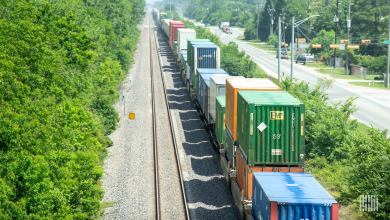
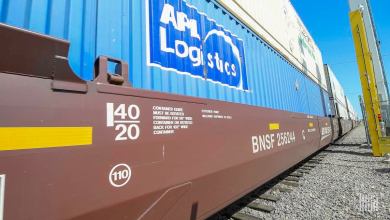
Labor and chassis shortages, as well as congestion in the wider supply chain, have contributed to lower U.S. intermodal traffic compared with a year ago.

Canadian Pacific, Norfolk Southern and the broader freight rail industry describe how they plan to reduce greenhouse gas emissions.
Railcar manufacturer Greenbrier’s Q4 orders total over $530 million, plus U.S. weekly rail volumes dip on an intermodal traffic decline.
The Association of American Railroads responds to regulator’s inquiry about supply chain congestion, while GoRail advocates for regulation supporting freight rail industry growth.
The pace of U.S. rail volume growth slowed in July, according to Association of American Railroad data. But still expect intermodal growth through 2021 in North America, the Intermodal Association of North America said.
U.S. rail traffic was flat year-over-year as the July Fourth weekend impacted volume comparisons. Also, Northwestern University released a report describing how freight rail handled supply chain challenges over the past year.
Railroads are a responsible way to mitigate the transportation-related causes of climate change
U.S. rail carloads showed strength in 19 of 20 commodity categories in June. Second-quarter intermodal traffic climbed 22% even with network congestion and equipment shortages as the backdrop.
Ocean carriers and Class I railroads both agree that chassis shortages are contributing to volume congestion. But solutions to relieve the congestion rely on multiple supply chain stakeholders, say the railroads.
U.S. rail volumes climbed nearly 30% in May from last year’s pandemic-induced troughs. Intermodal traffic has boosted rail volumes this year and could continue to do so in spite of capacity constraints at U.S. ports.
he U.S. Department of Agriculture is forecasting lower export volumes for corn, wheat and soybeans for the 2021-2022 crop year. The agency also expects record overall U.S. farm exports for fiscal year 2021. Also, U.S. rail volumes on a weekly basis were flat to lower from the prior week.
News briefs outline U.S. rail volumes, expanded service offerings by TNW Corporation and The Andersons, OmniTRAX rail-ready sites in northeast Ohio and milestones at the Transportation Technology Center complex in Pueblo, Colorado.
U.S. rail traffic slipped last week from the prior week, although they’re still up by double-digit percentage points year-over-year, according to data from the Association of American Railroads.
Steel and chemicals were among the commodities that showed volume strength in April, according to the Association of American Railroads. North American intermodal volumes grew 10.5% in the first quarter, said the Intermodal Association of North America.
Union Pacific is constructing a grain transload facility at its intermodal terminal near Chicago, while two U.S. senators introduce bipartisan legislation to form a grant program that aims to reduce highway-rail grade crossings.
The costs to electrify freight rail in the U.S., albeit expensive, extend beyond strictly capital costs to questions about electric grid reliability and how best to address decarbonization.
A portal to provide agricultural shippers with visibility for their covered hopper cars will help them conform to food safety transportation standards and prevent cross-contact with food allergens.
U.S. weekly rail volumes were 24.5% higher last week, although last year’s figures reflect the volume downturn that occurred at the start of the COVID-19 pandemic.
U.S. rail traffic rose 14% in March amid higher grain and intermodal volumes. But some commodities are also reflecting uneven year-over-year comparisons because of the pandemic-induced volume downturn that began in late March 2020.
The pandemic-induced volume downturn from last year is making year-over-year comparisons inflated. However, strength in the consumer economy could support rail volumes.