




Joanna Marsh
Wednesday, July 8, 2020
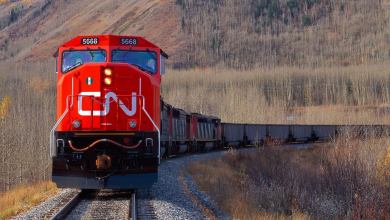
Canadian Class I railroads boast record grain volumes for June
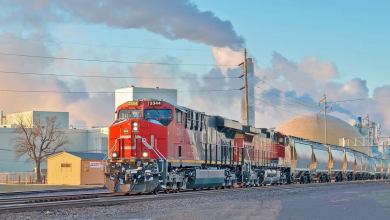
June grain volumes and second-quarter movements were records for both CN and CP.
June grain volumes and second-quarter movements were records for both CN and CP.

Rail traffic continued to build through June. U.S. intermodal traffic was only off 5% year-over-year in week 26.

With the second half of the year just weeks away, Class I rail executives are eyeing at least some recovery in rail volumes as shelter-in-place restrictions ease.
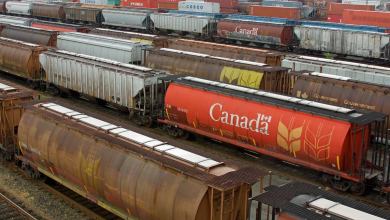
Investments in recent years to expand capacity along their western Canadian grain networks have paid off for Canadian Pacific and CN.
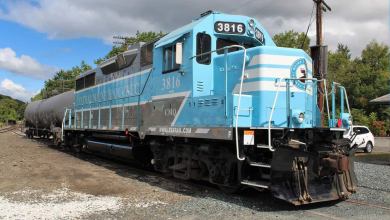
CP has said the acquisition of the U.S. and Canadian operations of the short line railroad would boost CP’s reach into eastern Canada, as well as grow CP’s network into about 13,000 miles coast-to-coast over six Canadian provinces and 11 U.S. states.

The coronavirus pandemic didn’t slow grain movement.
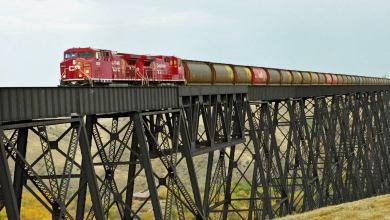
Precision scheduled railroading and its workforce will help CP get through anticipated challenges in the second quarter, company executives said.
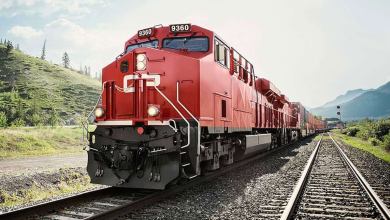
The railway’s first-quarter net income slipped on higher income tax expenses. But total revenue rose nearly 16% in the first quarter of 2020 while operating expenses were roughly flat-to-higher.

Investigators with the Transportation Safety Board are urging Transport Canada to consider revising track maintenance regulations since broken rail is appearing as a possible cause for two recent crude train derailments.
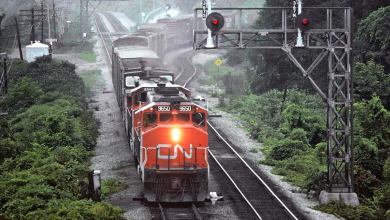
The new orders require “higher-risk key trains” to slow down their speed in the wintertime.
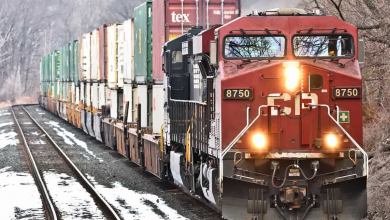
The Canadian railways will have the network capacity to accommodate any sudden surges in demand once the coronavirus pandemic subsides, their executives said.

Union Pacific and Canadian Pacific each have employees who have contracted the virus, and they and those around them are in self-quarantine.

Industry group estimates farmers will face rail blockade-related costs of over C$300 million.
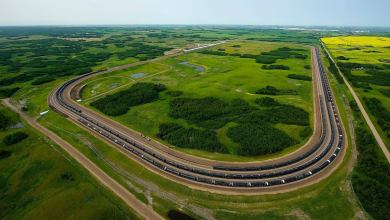
USD Partners and Gibson Energy will begin construction of a unit in April that will produce a nonhazardous heavy crude product.
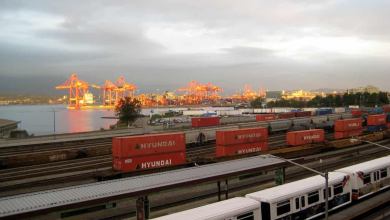
The tentative agreement could help bring an end to protests on the country’s freight transportation network.

Law enforcement may have broken up protesters’ rail blockade near Belleville, Ontario, but it’s uncertain when freight rail operations will return to normal. Stakeholders along Canada’s supply chain are also still jittery over the potential for additional blockades.
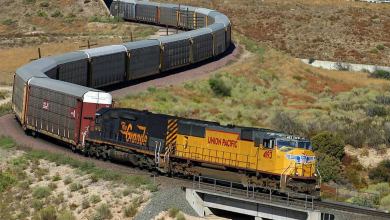
Uncertainty is still an underlying theme facing North American freight railroads.
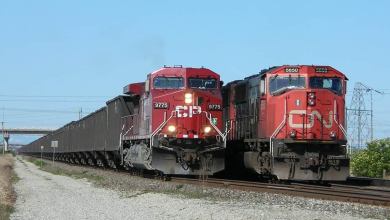
Reported deal to let Canadian National quietly route some freight around protests gets high marks from director of trucking company hit hard by the disruptions.
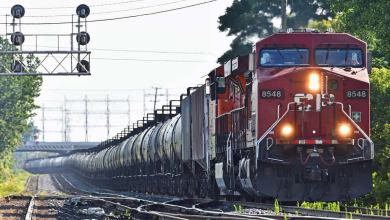
Freight trains carrying dangerous goods in Canada can now travel at faster speeds, according to a revised government order. Transport Canada had restricted how fast those trains could go following a fiery Feb. 6 derailment of a crude train.
Canadian National warns protesters they’re jeopardizing their safety, while passenger rail service on VIA Rail remains cancelled.