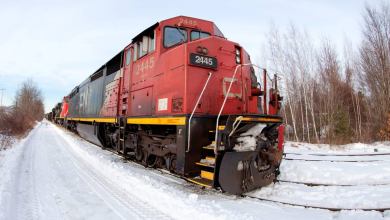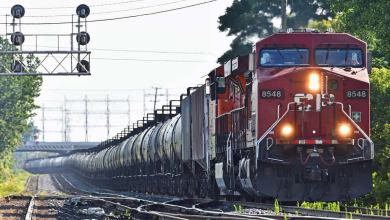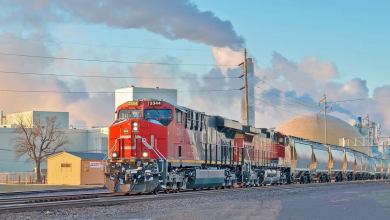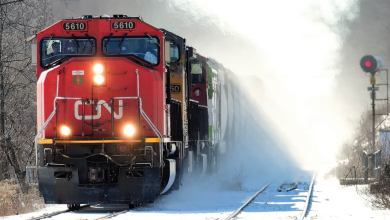
Canadian National calls back eastern operations employees
With the possibility of rail blockades fading, the railway is seeking to ramp up its eastern operations again after it had shut them down for roughly two weeks because of protests.

Law enforcement may have broken up protesters’ rail blockade near Belleville, Ontario, but it’s uncertain when freight rail operations will return to normal. Stakeholders along Canada’s supply chain are also still jittery over the potential for additional blockades.
Reported deal to let Canadian National quietly route some freight around protests gets high marks from director of trucking company hit hard by the disruptions.
Canadian National lays off employees, industry groups warn of significant supply chain disruptions and government and First Nations leaders continue to discuss the multi-day protests that have blocked portions of Canada’s rail network.
The Canadian Trucking Alliance calls for an end to disruptions to Canadian National’s network as it warns of effect on intermodal carriers and the broader industry.
Freight trains carrying dangerous goods in Canada can now travel at faster speeds, according to a revised government order. Transport Canada had restricted how fast those trains could go following a fiery Feb. 6 derailment of a crude train.
Canadian National warns protesters they’re jeopardizing their safety, while passenger rail service on VIA Rail remains cancelled.
Canadian National begins “disciplined and progressive” shutdown of eastern network and plans to halt all transcontinental service in response to anti-pipeline protests as impact hits intermodal carriers.
Protestors’ actions to block rail routes are causing major supply chain disruptions, they say.
A temporary order in Canada restricting the speed of freight trains carrying dangerous goods could potentially affect the broader economy.
The federal agency issues the order following a fiery derailment of a Canadian Pacific crude train.
January was a record month for grain volumes for CP.
Members overwhelmingly ratified the agreement with Canadian National. The collective agreement will last through July 2022.
Recent trade developments should help rail volumes improve, particularly in the second half of 2020, executives said.
Revenue gains for grain, energy, chemicals and plastics provide boost.
Drop in imports and exports in November occurred as Canadian National network’s capacity declined by 90% amid an eight-day rail worker strike.
Lower rail volumes, an active Surface Transportation Board and a strike were among the key events that the U.S. and Canadian freight rail industry experienced this year.
Teck Resources opts not to renew 10-year deal for the transport of metallurgical coal.
Unionized Canadian drivers for CNTL approve four-year agreement that increases rates for wait times and mileage.
Grain shippers wonder if the Canadian railways will keep up with demand in the 2019-20 crop year.