




Michael Rudolph
Friday, July 14, 2023
Bottom’s up!
Demand from retail shippers is historically quiet in the period from now until August, after which retailers restock their shelves for the back-to-school season.
Demand from retail shippers is historically quiet in the period from now until August, after which retailers restock their shelves for the back-to-school season.
Demand from retail shippers is historically quiet in the period from now until August, after which retailers restock their shelves for the back-to-school season.
Maritime’s peak season — which typically ramps up in August and lasts throughout October — is expected by retailers and supply chain professionals to be weaker than it has been in previous years.

Consulting firm Kearney recently released its 34th annual Council of Supply Chain Management Professionals (CSCMP) report, “State of Logistics 2023: The Great Reset.” A major theme of the report is the great rebalancing from the carrier-dominated market of the past two years to a shipper-focused one as freight volumes fell against a backdrop of higher truckload capacity. The report notes that total U.S. logistics costs rose 19.6% in 2022 to a record $2.3 trillion or 9.1% of U.S. gross domestic product.
Tender rejections have yet to return to mid-May’s all-time low, but their softness could persist in a trough for the next two quarters.
One last round of bad news to cap this week: China and the U.S. both posted dismal data from their respective industrial economies.
Volumes did see some growth ahead of the upcoming Memorial Day holiday, though not nearly enough to bust out the champagne and sparklers.

On Wednesday, FreightWaves founder and CEO Craig Fuller sat down with Zach Strickland, FreightWaves’ head of freight market intelligence, to discuss freight market conditions and expectations.
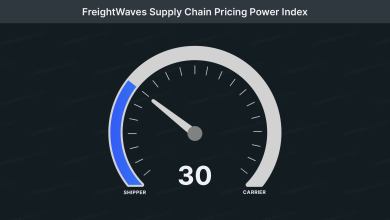
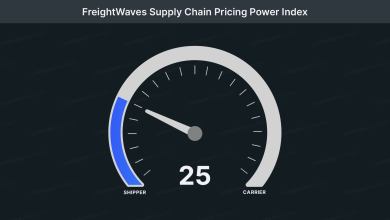
So as not to bury the lede, this week’s lack of change in the PPI might ultimately prove to be the most exciting stability in quite some time.
Despite expectations for seasonal growth in the second quarter, the health of the American consumer has continued to become more precarious, stirring headwinds for even once-reliable sources of freight.
Volumes are just beginning to tick up at the tail end of April, but freight demand in the quarter has been mostly flat and thus grossly unseasonable.
While ocean carriers are not facing the same risks as their domestic trucking counterparts, given their consolidation and enormous war chests, ocean’s weakness in demand will continue to trickle down into truckload markets.
Despite seeing slight seasonal growth, truckload markets are showing a continued soft patch.
The gap between current levels of freight demand and those of 2019 is narrowing, casting doubt on the market’s ability to sustain growth.
The consumer will be key to resolving the present tension in freight demand’s future, but consumers continue to be predictably unpredictable.
Market conditions will likely become a bit more favorable before they get much worse.
A plan to allow 18-to-20-year-old truck drivers to haul interstate cargo got a sharp rebuttal at the Truckload Carriers Association (TCA) conference by Knight-Swift President and CEO David Jackson. The plan was conceived as a way to address the driver shortage and is strongly supported by the Biden administration and the American Trucking Associations (ATA).
Strangely enough, tender volumes are abiding by seasonal trends.

On Tuesday, FreightWaves Research released survey data suggesting declining freight conditions are impacting owner-operators especially hard. An important takeaway is the potential for many more owner-operators to leave the industry if conditions do not improve.

Two container shipping experts give their take on how the hangover after the pandemic boom could play out.