Canada issues orders to prevent parked rolling stock from rolling
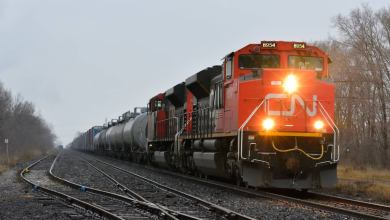
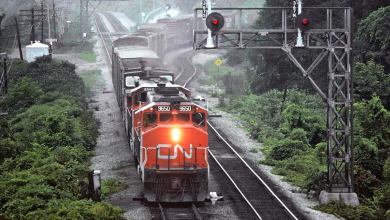
A February incident involving an Ontario train derailment led Canada’s Ministry of Transport to issue two orders aimed at preventing the uncontrolled movement of rail equipment.
The Canadian government won’t say when enforcement of its ELD mandate will begin. But it won’t happen on day one. And it’s unclear when the first devices will get approval.
The revised rules under the Railway Safety Act address winter operations of higher-risk key trains.
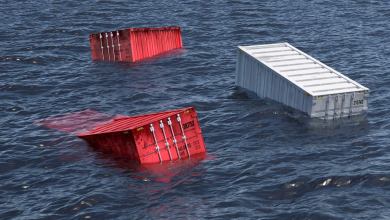
The discharging of damaged containers continues nearly two months after the storm-battered ONE Apus arrived in Japan.
Expanding what service and performance data Transport Canada collects could help demystify the freight rail operations, the agency said.
The rules reflect the latest science on fatigue management, Transport Canada says.
Canadian Pacific, CN, and the Canadian government are taking steps to ease the social and reputational risks, according to a Monday report by Moody’s Investors Service.
Research on dangerous goods transportation is still ongoing, the agency said. The announcement follows an audit published last month that suggested that Transport Canada failed to fully implement several safety recommendations.
The Canadian government will invest C$33.4 million in the inland Quebec port.
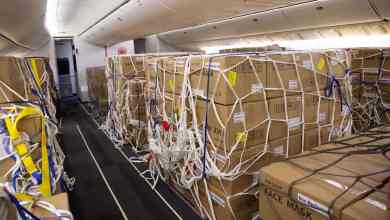
There was a marked difference in how Canada and the U.S. reacted to the opportunity of transforming passenger aircraft into twin-deck freighters by removing the seats. One country moved very fast. The other was slow to the party.
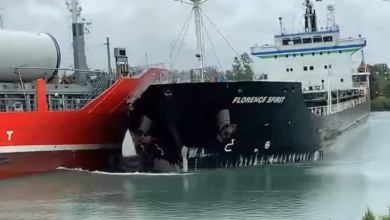
Canadian Transportation Safety Board examining ‘rare occurrence’ in Welland Canal.
The 1920 Merchant Marine Act authorizes the U.S. Federal Maritime Commission to investigate and penalize foreign governments with ocean shipping regulations that discriminate against U.S. trade.
Actions by the Surface Transportation Board and the Transportation Safety Board of Canada show both agencies exploring whether there is a need to modify existing regulations.
Short-sea shipper says economic impact of COVID-19 has forced service disruption and employee layoffs.
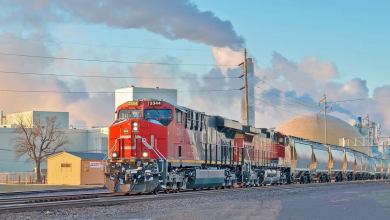
The new orders require “higher-risk key trains” to slow down their speed in the wintertime.
Directive from Transport Canada has similarities to the U.S. HOS waiver — but with more rules, including a requirement for carriers to provide notice in advance.
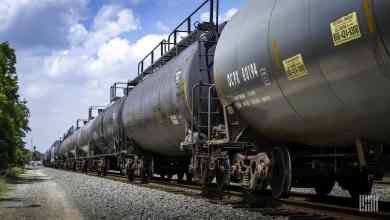
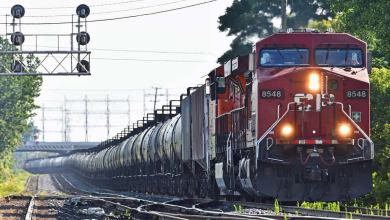
Freight trains carrying dangerous goods in Canada can now travel at faster speeds, according to a revised government order. Transport Canada had restricted how fast those trains could go following a fiery Feb. 6 derailment of a crude train.
Canadian National warns protesters they’re jeopardizing their safety, while passenger rail service on VIA Rail remains cancelled.
The C$15 million federal investment aims to reduce bottlenecks and facilitate export capabilities in a region of Alberta known for its chemical, petrochemical, and oil and gas output.
A temporary order in Canada restricting the speed of freight trains carrying dangerous goods could potentially affect the broader economy.