




Commentary. The views expressed here are those of the author and do not necessarily represent the views of FreightWaves. For on video-based safety programs, visit smartdrive.net.
It’s no question autonomous technology is the future of transportation. It has the ability to eliminate human error, which accounts for 93 percent of vehicle crashes each year. However, a fully autonomous vehicle doesn’t happen overnight—there are different levels of autonomy that slowly take on more driving functions, and in turn introduce more opportunity for drivers to become complacent and distracted. It’s important for fleets to understand the different levels of autonomy, and ensure drivers don’t become inattentive behind the wheel as more and more of the driving process becomes automated.
As demonstrated by recent collisions involving autonomous vehicles, drivers must remain vigilant and ready to take control of the vehicle at any moment. “Driver readiness”—the state of drivers being aware of surroundings and able to respond if needed—is paramount to successfully operating an autonomous or semi-autonomous vehicle, and video-based safety plays a pivotal role in ensuring driver readiness.
There are six levels of autonomy, each with distinct roles for the driver. At level zero, the driver has full control of the vehicle; performing all steering, braking, accelerating, etc. Level 1 means the vehicle can assist with some functions like adaptive cruise control, though the driver still handles steering and monitoring the surrounding environment, ready to step in when the vehicle’s assistance system fails to respond correctly. At level 2, the vehicle can handle two or more driving functions, for example adaptive cruise control (acceleration) and steering, in only certain driving environments, like just certain interstates or freeways, but the driver still needs to be able to respond to traffics signals, maneuver lane changes and always scan for potential hazards.
The biggest jump happens from level 2 to 3. At level 3, the vehicle starts monitoring the environment using multiple advanced sensors like LiDAR—a remote sensing method that uses light in the form of a pulsed laser to measure ranges. The driver’s role is diminished at this point, but should a system fail to respond appropriately, the driver needs to be able to step in and take over—immediately. Between levels 3 and 5, autonomous vehicles become more equipped to handle lane changes, turns, turn signal usage and most other driving functions. But even at these levels, it’s imperative drivers remain alert and responsive to any change in circumstance or unexpected event—such as a pedestrian darting into traffic or a tree falling into the road due to stormy weather.
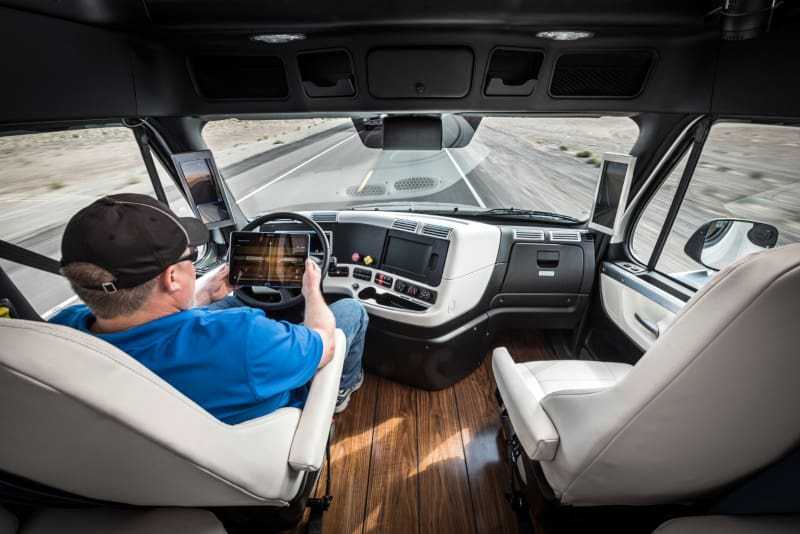
Distracted driving is already a huge problem in the transportation industry, but coupled with autonomous technology that seemingly gives drivers the freedom to make phone calls, check emails or even watch videos on long hauls, it can become even more deadly. To ensure safety and protect against liability claims, fleets must require their human drivers to stay ready and alert behind the wheel as autonomous technology continues to develop.
As new advanced safety technologies are introduced, video provides the necessary context to ensure systems are working as intended. If a vehicle has blind spot monitoring and is involved in a sideswipe collision, fleet managers can rely on video to tell them where the blame falls—was the driver ignoring the blind spot monitoring warning, did the blind spot monitoring system fail altogether, or was it another driver’s fault? Video evidence provides the complete picture.
Similarly, video can monitor for driver attentiveness as more and more functions become automated. Measuring driver readiness will prove difficult, and represents an entirely new aspect of safety fleet managers will need to account for. Video can be combined with other technologies such as head and eye movement sensors, like SmartDrive SmartSense, and provide real-time driver alerts if fatigue or distraction is detected. Video also allows fleet managers to understand how automated functions are working and if all systems are operating correctly. Similarly, video can help evaluate the differences in various advanced safety technologies by measuring how they perform in the real world.
The benefits of autonomous vehicles cannot be understated—according to the University of Michigan’s Center of Sustainability, autonomous vehicles are predicted to reduce crashes by 90 percent. However, in order to effectively implement an autonomous fleet, managers must ensure their drivers are prepared and ready for every situation behind the wheel. Video-based safety is the tool that will give fleet managers peace of mind that they have complete visibility into how these advanced technologies are actually performing and working together.
Brokerage Compliance Symposium
The day before F3. Every compliance issue you face - fraud exposure, carrier liability, FMCSA rules, cargo theft, insurance gaps - navigated by attorneys and operators defining best practices in a changing industry.
F3 Awards Dinner
The night before F3. FreightTech100 companies honored. FreightTech 25 and Shipper of Choice winners revealed live. Cocktail reception into dinner and live music - 300 industry leaders in one purpose-built room.
F3: Future of Freight Festival
Industry-defining keynotes, rapid-fire technology demos, and industry leaders networking in experiences across Chattanooga - plus the inaugural F3 Awards Dinner featuring the FreightTech and Shipper of Choice reveals.
The day before F3. Every compliance issue you face - fraud exposure, carrier liability, FMCSA rules, cargo theft, insurance gaps - navigated by attorneys and operators defining best practices in a changing industry.
The Signal at Chattanooga Choo Choo • Chattanooga, TN Register NowThe night before F3. FreightTech100 companies honored. FreightTech 25 and Shipper of Choice winners revealed live. Cocktail reception into dinner and live music - 300 industry leaders in one purpose-built room.
The Signal at Chattanooga Choo Choo • Chattanooga, TN Register NowIndustry-defining keynotes, rapid-fire technology demos, and industry leaders networking in experiences across Chattanooga - plus the inaugural F3 Awards Dinner featuring the FreightTech and Shipper of Choice reveals.
The Signal at Chattanooga Choo Choo • Chattanooga, TN Register Now