




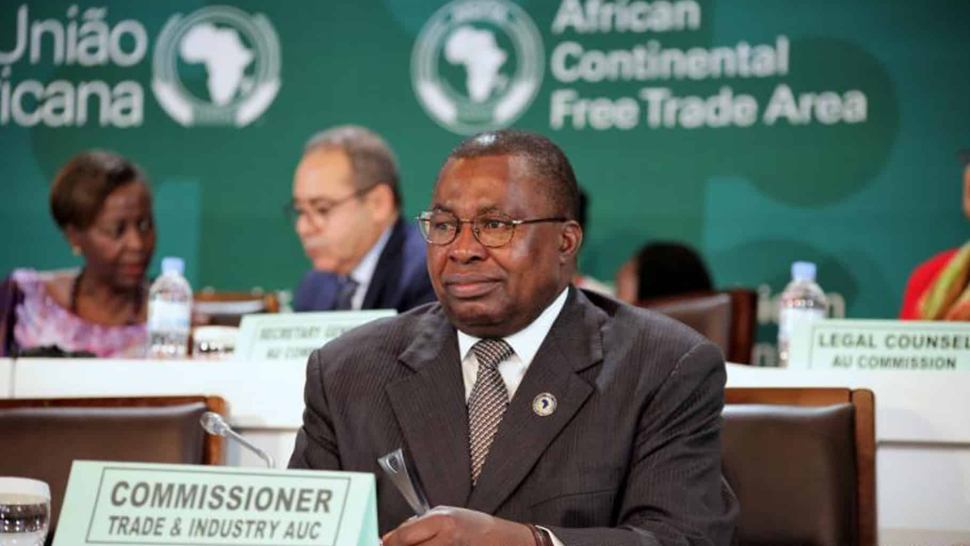
As ratification of the new U.S.-Mexico-Canada trade agreement (USMCA) moves forward slowly, a landmark free trade agreement has been signed several thousand miles away on the continent of Africa. While 52 African nations signed the African Continental Free Trade Area (AfCFTA), to date 24 have ratified the agreement (22 were needed to actually bring the agreement into force). The AfCFTA breaks new ground and ushers the continent towards being a more seamless and frictionless trade region.
Though it could be argued that these African nations are largely underdeveloped, the collective GDP of all the 55 states in Africa accounts for a staggering $3 trillion, making it the fifth-largest trade front in the world.
This is excellent news for the U.S., as the African nations coalescing into a single trade region will greatly help in expediting unified trade deals, rather than developing tailor-made trade agreements with individual countries across the continent. The timing of this development also suits U.S. interests, coming at a time when there is an escalation of trade tariff exchanges between the U.S. and China.
Over the last decade, Africa has become the hotspot for investment, with superpowers like Russia and China channeling billions of dollars to gain a strategic foothold on the continent. Beijing has been especially aggressive, investing heavily in Africa to widen its Belt and Road Initiative (BRI) that aims at reviving the ancient Silk Route and also extend much further to account for all major trading partners of China.
The U.S. has accused China of using bribes and strategically opening its purse to hold African countries captive in the long run, when the states cannot repay their debt in time. For instance, China took over Zambia’s airport, state-owned power plant ZESCO, and its national broadcasting corporation as the country was reeling under several billion dollars in debt that it could not pay in time.
Similarly, China has taken over the port of Mombasa in Kenya, after the state defaulted on a $2.3 billion loan that it borrowed from China to build a standard gauge railway line between Mombasa and its capital Nairobi. China has also used similar means to force Djibouti to let Beijing establish a military base in the country, very close to the existing U.S. base, Camp Lemonnier.
In December 2018, the U.S. government made it clear that the Trump administration’s new African strategy will not be about “indiscriminate assistance across the entire continent.” The focus will be on ensuring that the U.S. taxpayer money is used efficiently and in furthering U.S. interests on African soil, while also making sure the African countries maintain their autonomy and stay economically independent.
The AfCFTA, which was signed in 2018 and officially began on May 30, will remove tariffs on at least 90 percent of the goods traded among the member countries. This is expected to proliferate intra-African trade, which accounts roughly for 17 percent of all the continent’s exports. The UN Economic Commission for Africa (UNECA) has estimated that intra-African trade would likely increase by 52.3 percent by 2020 due to AfCFTA.
For the U.S., AfCFTA reduces its headache with creating separate frameworks for different African countries, which the Office of the U.S. Trade Representative pointed out in a 2016 report, would likely not be effective if it does not “include strategies to improve the conditions for trade.” The report spoke of creating building blocks on improving policy areas like trade facilitation, intellectual property, labor measures, market access and transparency – a direct consequence through a free trade region like AfCFTA.
Brokerage Compliance Symposium
The day before F3. Every compliance issue you face - fraud exposure, carrier liability, FMCSA rules, cargo theft, insurance gaps - navigated by attorneys and operators defining best practices in a changing industry.
F3 Awards Dinner
The night before F3. FreightTech100 companies honored. FreightTech 25 and Shipper of Choice winners revealed live. Cocktail reception into dinner and live music - 300 industry leaders in one purpose-built room.
F3: Future of Freight Festival
Industry-defining keynotes, rapid-fire technology demos, and industry leaders networking in experiences across Chattanooga - plus the inaugural F3 Awards Dinner featuring the FreightTech and Shipper of Choice reveals.
The day before F3. Every compliance issue you face - fraud exposure, carrier liability, FMCSA rules, cargo theft, insurance gaps - navigated by attorneys and operators defining best practices in a changing industry.
The Signal at Chattanooga Choo Choo • Chattanooga, TN Register NowThe night before F3. FreightTech100 companies honored. FreightTech 25 and Shipper of Choice winners revealed live. Cocktail reception into dinner and live music - 300 industry leaders in one purpose-built room.
The Signal at Chattanooga Choo Choo • Chattanooga, TN Register NowIndustry-defining keynotes, rapid-fire technology demos, and industry leaders networking in experiences across Chattanooga - plus the inaugural F3 Awards Dinner featuring the FreightTech and Shipper of Choice reveals.
The Signal at Chattanooga Choo Choo • Chattanooga, TN Register Now