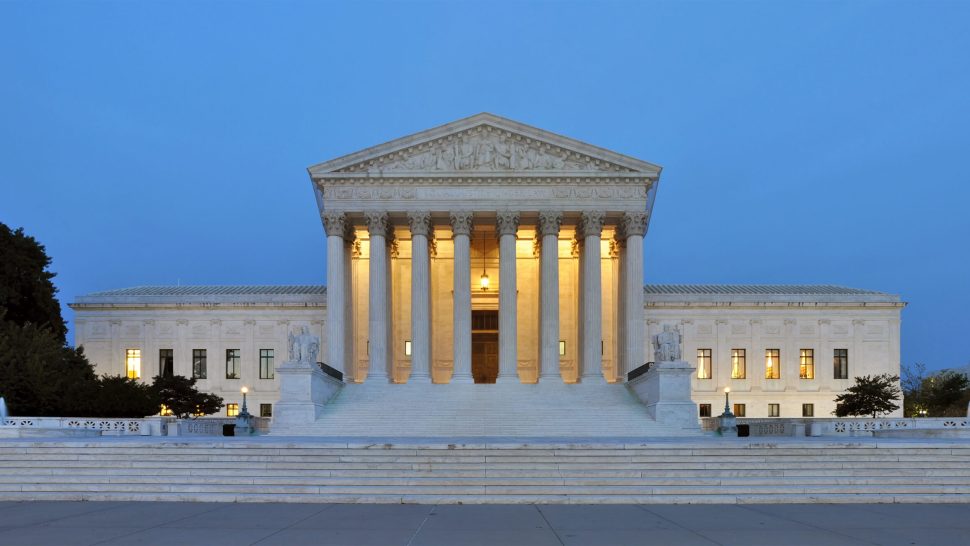
Well, January 21, 2026 was certainly a busy day in transportation news! While Echo Global Logistics acquiring ITS Logistics is significant, I’d argue two recent filings in the Supreme Court of the United States is bigger news still. With briefs now filed in the Supreme Court case of Shawn Montgomery v. Caribe Transport II, LLC, et al. (No. 24-1238), the stage is set for a potentially game-changing ruling on whether federal law preempts state negligence claims against freight brokers. Drawing from the recently submitted amicus briefs by the United States and the Transportation Intermediaries Association (TIA), let’s explore the key arguments, historical context, and what it could mean for the $343 billion a year third-party transportation logistics industry.
The Case at a Glance: Negligent Broker Selection Under the Microscope
At the heart of Montgomery v. Caribe Transport is a tragic accident involving a motor carrier selected by a freight broker. Shawn Montgomery alleges that the broker negligently chose an unsafe carrier, leading to his injuries. The Seventh Circuit ruled that such state common-law claims are preempted by the Federal Aviation Administration Authorization Act of 1994 (FAAAA), specifically 49 U.S.C. § 14501(c). Montgomery appealed, and the Supreme Court granted certiorari to resolve a circuit split, joining decisions from the Sixth, Ninth, and Eleventh Circuits that have grappled with similar issues.
The question presented is straightforward yet profound: Does § 14501(c) preempt state common-law negligence claims against brokers for failing to vet motor carriers properly? The FAAAA’s preemption clause broadly bars states from enacting or enforcing laws “related to a price, route, or service of any motor carrier… or broker… with respect to the transportation of property.” But there’s a safety exception in § 14501(c)(2)(A), which preserves states’ “safety regulatory authority… with respect to motor vehicles.”
The U.S. government, filing as amicus curiae in support of the respondents (the broker and related parties), argues for preemption. The TIA, representing over 1,500 freight brokers and intermediaries, echoes this in its own brief, emphasizing historical and practical reasons why such claims shouldn’t survive.
The Government’s Stance: Broad Preemption Without a Safety Lifeline
In its brief, the Department of Justice (DOJ) lays out a three-part argument for why Montgomery’s claim falls under the FAAAA’s preemption umbrella.
First, the DOJ contends that common-law negligence rules qualify as a “law, regulation, or other provision having the force and effect of law” under § 14501(c)(1). Citing precedents like Northwest, Inc. v. Ginsberg (2014) and Rowe v. New Hampshire Motor Transport Ass’n (2008), the government notes that courts have consistently treated common-law duties as preemptable when they impact prices, routes, or services. A negligence claim against a broker for carrier selection isn’t just a private remedy, it’s a state-imposed standard that effectively regulates broker conduct.
Second, such claims are “related to” a broker’s “service.” Brokers, defined under 49 U.S.C. § 13102(2) as entities that arrange transportation for compensation, provide core services like matching shippers with carriers. Imposing liability for “negligent selection” directly affects how brokers operate, potentially raising costs and altering service offerings. The brief draws parallels to airline deregulation cases, like Morales v. Trans World Airlines (1992), where even indirect economic impacts triggered preemption.
Third, the DOJ addresses the “transportation of property” nexus, arguing that broker selection is integral to the interstate movement of goods. But here’s the crux: The safety exception in § 14501(c)(2)(A) doesn’t save these claims. While states retain authority over motor vehicle safety (e.g., vehicle inspections or driver qualifications), the exception is narrowly tailored to rules “with respect to motor vehicles”, not brokers’ business decisions. The brief cites Dan’s City Used Cars, Inc. v. Pelkey (2013) to underscore that the FAAAA’s safety carve-out focuses on vehicles, not upstream entities like brokers. Allowing state negligence suits would create a patchwork of liability standards, undermining Congress’s goal of uniform deregulation.
The government also pushes back on fears of a “safety gap.” Federal regulations under the Federal Motor Carrier Safety Administration (FMCSA) already mandate broker registration, financial security (e.g., $75,000 bonds), and carrier vetting via tools like the Safety Measurement System (SMS). Brokers aren’t off the hook, they face federal penalties for using unfit carriers under 49 U.S.C. § 14916, but states can’t layer on their own tort regimes.
TIA’s Perspective: Historical Roots and Practical Nightmares
The TIA’s amicus brief provides a deeper dive into the industry’s evolution, arguing that personal injury claims against brokers are a modern invention, not a preserved common-law tradition.
Tracing back to the early 20th century, the TIA notes that motor carriers emerged post-World War I, with federal oversight kicking in via the Motor Carrier Act of 1935. Initially, states regulated intrastate trucking, but the Supreme Court struck down barriers to interstate commerce in cases like Buck v. Kuykendall (1925). By the 1980s, deregulation via the Motor Carrier Act of 1980 and the FAAAA aimed to foster competition, reducing entry barriers and eliminating rate controls.
Brokers, as non-asset-based intermediaries, have been federally regulated since 1978. They must register with the FMCSA, post bonds to protect shippers from non-payment, and ensure carriers are authorized. But crucially, the TIA argues, there’s no historical precedent for holding brokers liable in personal injury suits. Pre-FAAAA, brokers weren’t seen as guarantors of carrier safety, that was the federal government’s domain via fitness certifications.
The brief highlights a “practical dilemma” for brokers: How do you vet carriers without running afoul of conflicting state standards? FMCSA data like Compliance, Safety, Accountability (CSA) scores guide decisions, but they’re not foolproof. If states impose negligence liability, brokers might over-vet, excluding safe carriers and driving up costs, or under-vet to avoid claims, risking safety. Cases like Ye v. GlobalTranz Enterprises (7th Cir. 2023) illustrate the chaos: Juries could second-guess broker choices based on hindsight, leading to inconsistent verdicts.
The TIA also parses the safety exception’s text: It applies to “motor vehicles,” not brokers. Citing City of Columbus v. Ours Garage (2002), they argue Congress knew how to exempt brokers if it wanted to, it didn’t. Preserving these claims would re-regulate an industry Congress sought to free from state interference.
Industry Implications: A Win for Uniformity or a Blow to Accountability?
If the Supreme Court affirms preemption, brokers could breathe easier, focusing on federal compliance without fearing 50-state litigation roulette. This aligns with the FAAAA’s pro-competition ethos, potentially lowering freight rates and boosting efficiency. Critics, however, worry it shields brokers from accountability, leaving accident victims with fewer recourse options, though carriers and drivers remain liable. 29 states as well as the District of Columbia have argued as much.
Conversely, a ruling for Montgomery could unleash a torrent of lawsuits, as seen in lower courts like Miller v. C.H. Robinson Worldwide (9th Cir. 2020). Brokers might hike fees to cover insurance, or exit high-risk markets, exacerbating driver shortages.
As oral arguments approach, the freight world watches closely. With trucking hauling 70% of U.S. goods, this isn’t just legalese, it’s about safety, commerce, and who bears the cost when things go wrong. My bet? The Court leans toward preemption, honoring congressional intent in a deregulated era.
Matthew Leffler is a transportation attorney, adjunct professor of law at Michigan State University College of Law, and the host of the Armchair Attorney® Podcast. He can be reached at matthew@armchairattorney.com.
Brokerage Compliance Symposium
The day before F3. Every compliance issue you face - fraud exposure, carrier liability, FMCSA rules, cargo theft, insurance gaps - navigated by attorneys and operators defining best practices in a changing industry.
F3 Awards Dinner
The night before F3. FreightTech100 companies honored. FreightTech 25 and Shipper of Choice winners revealed live. Cocktail reception into dinner and live music - 300 industry leaders in one purpose-built room.
F3: Future of Freight Festival
Industry-defining keynotes, rapid-fire technology demos, and industry leaders networking in experiences across Chattanooga - plus the inaugural F3 Awards Dinner featuring the FreightTech and Shipper of Choice reveals.
The day before F3. Every compliance issue you face - fraud exposure, carrier liability, FMCSA rules, cargo theft, insurance gaps - navigated by attorneys and operators defining best practices in a changing industry.
The Signal at Chattanooga Choo Choo • Chattanooga, TN Register NowThe night before F3. FreightTech100 companies honored. FreightTech 25 and Shipper of Choice winners revealed live. Cocktail reception into dinner and live music - 300 industry leaders in one purpose-built room.
The Signal at Chattanooga Choo Choo • Chattanooga, TN Register NowIndustry-defining keynotes, rapid-fire technology demos, and industry leaders networking in experiences across Chattanooga - plus the inaugural F3 Awards Dinner featuring the FreightTech and Shipper of Choice reveals.
The Signal at Chattanooga Choo Choo • Chattanooga, TN Register Now