




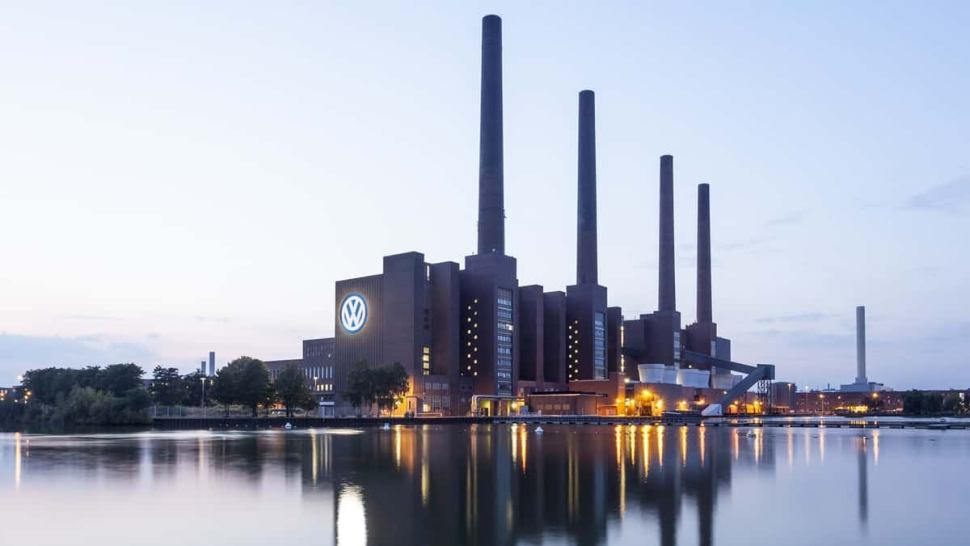
The continuous exchange of trade tariffs between the U.S. and China has sparked a global economic downturn that is now threatening to become a full-fledged recession across most of the major economies in the world. Germany, a powerhouse of manufacturing, has been one of the worst-hit within the European Union (EU), with its economic output sputtering due to falling demand across factories in the country.
That said, the slowdown in Germany cannot be squarely blamed on the U.S.-China trade war alone. The divorce of the U.K. from the EU, auto sales cascading in China, and the possibility of the U.S. levying added tariffs on various EU goods are other reasons for the bleak economic forecasts.
The auto industry, a key to the German economy, accounts for over 800,000 jobs in the country but is now in distress, as concerned consumers are not pushing to buy vehicles. Automotive production has dropped by 12 percent over the first half of 2019.
In many ways, the fate of the auto industry is tightly tied to the prosperity of an economy. Auto sales roughly correlate to the cash flow within a country, as people are only interested in buying vehicles when they are positive of the economy’s health. If auto sales are down, it signifies that people are not willing to part with their money, reducing overall consumption and thereby cutting liquidity in the market.
A look at Germany’s purchasing managers’ index (PMI) paints these concerns legibly on a graph. As on August 22, the PMI registered a value of 43.6, higher than the forecast which stood at 43. The PMI measures the activity level of purchasing managers in the manufacturing sector and thus can indicate the direction where an economy moves. A value above 50 would mean an expansion in the segment, and a value below 50 signifies a contraction.

The German PMI value fell below 50 as early as January of this year, and has steadily declined ever since, save for a few weeks when the value nudged up a little month-over-month. It is interesting to note that the PMI forecasts had roughly remained more optimistic, considering the reality that ensued – all the way from January 2018, when the PMI value achieved a historic high of 63.3.
The German GDP figures mirror the lackluster manufacturing performance, contracting by 0.1 percent in the second quarter of 2019, after a 0.4 percent increase in the first quarter of the year. The economic forecast for the year’s third quarter by Bundesbank, Germany’s central bank, shows that it expects the GDP to fall further by another 0.1 percent. However, the Bundesbank does not believe that the situation is dire enough at the moment for a fiscal stimulus.

German Finance Minister Olaf Scholz is considering to remedy the situation by injecting €50 billion into the economy and steer clear of a potential recession – a figure he derived based on the impact of the 2008 financial crisis. “We have to be able to muster that and we can muster that,” he said when addressing the public in Berlin. “The biggest problem is uncertainty, including that caused by the Chinese-U.S. trade war.”
But behind the struggling economy is a systemic negligence within German infrastructure, with its famed autobahn, bridges, ports and airports suffering different levels of disregard. Der Spiegel, a German weekly, detailed the crippling concerns behind bolstering bridges across the country, pointing out that 12.4 percent of Germany’s bridges needed immediate attention.
The situation is so bad that heatwaves – an annual occurrence in parts of Europe – have caused mortar on certain sections of the autobahn to crumble, causing inconvenience to commuters. The Deutsche Bahn, Germany’s railway system, is a pale shadow of its former self, severely hit by a lack of punctuality and quality standards.
German Chancellor Angela Merkel acknowledged the fears of a recession, stating that her government will look to be proactive on the face of a severe downturn. Industry leaders and opposition parties are calling on the government to abandon its zero-deficit policy and look to borrow if the situation gets worse – an argument that Merkel’s government will consider if push comes to shove.
Brokerage Compliance Symposium
The day before F3. Every compliance issue you face - fraud exposure, carrier liability, FMCSA rules, cargo theft, insurance gaps - navigated by attorneys and operators defining best practices in a changing industry.
F3 Awards Dinner
The night before F3. FreightTech100 companies honored. FreightTech 25 and Shipper of Choice winners revealed live. Cocktail reception into dinner and live music - 300 industry leaders in one purpose-built room.
F3: Future of Freight Festival
Industry-defining keynotes, rapid-fire technology demos, and industry leaders networking in experiences across Chattanooga - plus the inaugural F3 Awards Dinner featuring the FreightTech and Shipper of Choice reveals.
The day before F3. Every compliance issue you face - fraud exposure, carrier liability, FMCSA rules, cargo theft, insurance gaps - navigated by attorneys and operators defining best practices in a changing industry.
The Signal at Chattanooga Choo Choo • Chattanooga, TN Register NowThe night before F3. FreightTech100 companies honored. FreightTech 25 and Shipper of Choice winners revealed live. Cocktail reception into dinner and live music - 300 industry leaders in one purpose-built room.
The Signal at Chattanooga Choo Choo • Chattanooga, TN Register NowIndustry-defining keynotes, rapid-fire technology demos, and industry leaders networking in experiences across Chattanooga - plus the inaugural F3 Awards Dinner featuring the FreightTech and Shipper of Choice reveals.
The Signal at Chattanooga Choo Choo • Chattanooga, TN Register Now