The conversion of vacant retail real estate space to industrial capacity is unlikely to be more than a healthy niche market, according to a report released today by real estate services firm CBRE Group, Inc. (NYSE: CBRE) However, activity since 2016 indicates the trend is a bit stronger than originally thought, the firm said.
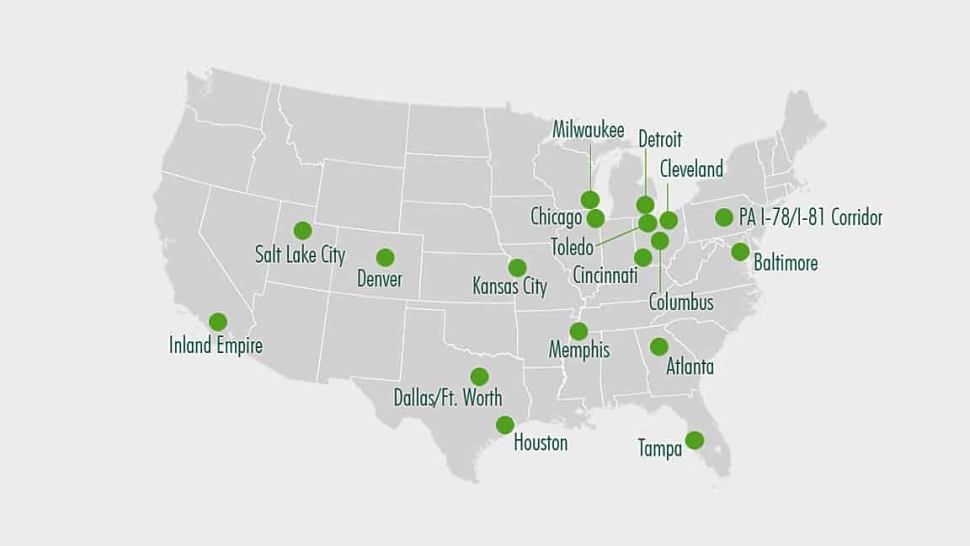
CBRE identified 24 projects nationwide over the past two to three years in which conversions have recently been completed, or are in the proposal or development stages. All told, 7.9 million square feet of retail space has been converted into 10.9 million square feet of industrial space either by repurposing the existing structure or replacing it with industrial construction, CBRE said. The report did not examine any activity that took place before 2016.
The number of projects identified is a drop in the ocean of the nation’s industrial network, which totals 14 billion square feet when manufacturing and warehousing space are combined. Still, the number of conversion projects more than doubled the original estimate of 10 that the company had anticipated.
In addition, as industrial vacancy rates in most major markets remain at historical lows, firms in the e-commerce and omnichannel fulfillment world will need to get their hands on any viable space they can find to support the nation’s voracious appetite for online ordering and fast-cycle deliveries. In a presentation at the SMC3 winter meeting in Atlanta, Walter Kemmsies, a top ports and airports executive at real estate services firm JLL Inc., (NYSE:JLL) predicted that e-commerce will account for 25 percent of total U.S. retail sales, excluding auto and motor fuel transactions, within five to six years. That would be about double the current level, and represents a massive shift in the nation’s retail landscape.
The locations identified for conversion ran the gamut from urban space to the suburban areas where warehouse space has historically been erected. They were spread out geographically, although the largest cluster was in a four-state area in the Midwest/Great Lakes region that includes Illinois, Michigan, Ohio and Wisconsin.
Though conversions could work in almost any demographic climate, they are most likely to succeed in markets with dense populations, where industrial vacancies are below 5 percent, and where household income is at or below the national average, according to the report.
David Egan, CBRE’s global head of industrial and logistics research, said the conversion trend will grow as the balance between brick-and-mortar retail and e-commerce shifts to necessitate more logistics space and less physical retail space. However, he cautioned against thinking that such transactions are slam-dunks.
“In nearly every market in the U.S., there are sites where this kind of repurposing could work, at least on paper,” Egan said. “But many conversions are more challenging to execute than it might seem, given that the developer-owner of each site often needs to get a wide group of stakeholders to agree on a fairly dramatic change.”
The primary impediment to conversions is that, by economics and by covenant, retail centers are specifically designated for retail uses, CBRE said. Many have mortgages based on cash flows from retail lease rates rather than industrial lease rates, which are typically lower. A landlord looking to convert a center would need approval of lenders, city officials, neighbors and, in many cases, the center’s other retailers. Some cities and towns might not welcome increased truck traffic and decreased shopper traffic. There may also be competition from other forms of uses, such as retail, office, residential, or mixed-use, CBRE said.
Brokerage Compliance Symposium
The day before F3. Every compliance issue you face - fraud exposure, carrier liability, FMCSA rules, cargo theft, insurance gaps - navigated by attorneys and operators defining best practices in a changing industry.
F3 Awards Dinner
The night before F3. FreightTech100 companies honored. FreightTech 25 and Shipper of Choice winners revealed live. Cocktail reception into dinner and live music - 300 industry leaders in one purpose-built room.
F3: Future of Freight Festival
Industry-defining keynotes, rapid-fire technology demos, and industry leaders networking in experiences across Chattanooga - plus the inaugural F3 Awards Dinner featuring the FreightTech and Shipper of Choice reveals.
The day before F3. Every compliance issue you face - fraud exposure, carrier liability, FMCSA rules, cargo theft, insurance gaps - navigated by attorneys and operators defining best practices in a changing industry.
The Signal at Chattanooga Choo Choo • Chattanooga, TN Register NowThe night before F3. FreightTech100 companies honored. FreightTech 25 and Shipper of Choice winners revealed live. Cocktail reception into dinner and live music - 300 industry leaders in one purpose-built room.
The Signal at Chattanooga Choo Choo • Chattanooga, TN Register NowIndustry-defining keynotes, rapid-fire technology demos, and industry leaders networking in experiences across Chattanooga - plus the inaugural F3 Awards Dinner featuring the FreightTech and Shipper of Choice reveals.
The Signal at Chattanooga Choo Choo • Chattanooga, TN Register Now