




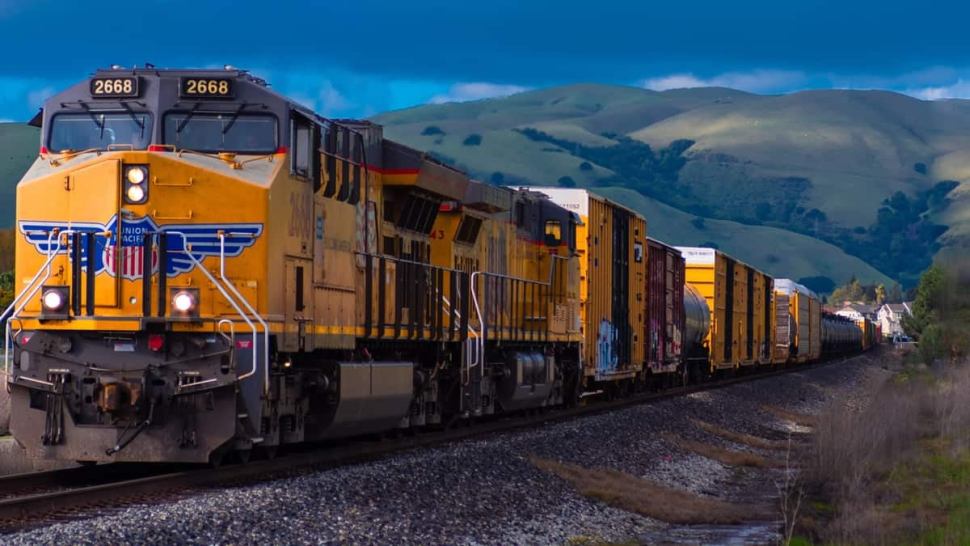
Year-to-date U.S. rail traffic fell 4.9% last week, marking another consecutive week of year-over-year declines.
U.S. rail volumes totaled 26.3 million carloads and intermodal units for the week ending Dec. 21, a 4.9% drop compared with the same period in 2018, according to the Association of American Railroads. Of that, U.S. carloads fell 4.8% to 12.8 million carloads, while U.S. intermodal units slipped 5.1% to almost 13.6 million intermodal containers and trailers.
North American rail volumes were also lower year-to-date, falling 3.9% to nearly 36 million carloads and intermodal units.
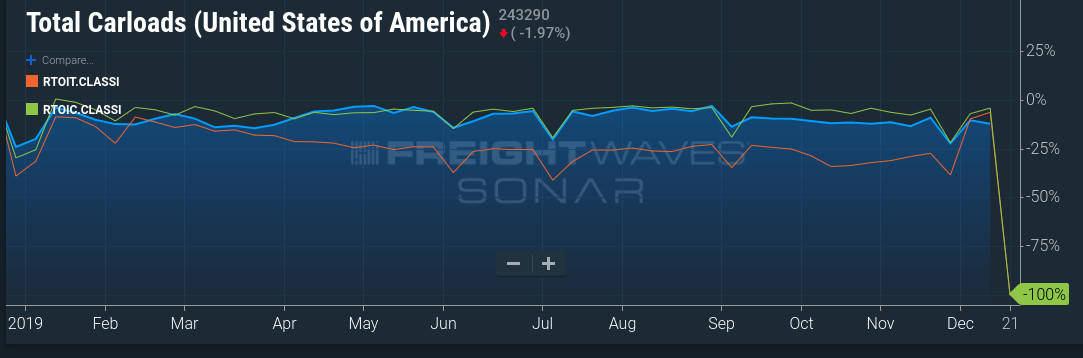
The slump in rail volumes in 2019 hasn’t affected only the railroads and rail lessors but also the banks that lease rail assets. Banks such as Citigroup, CIT Group, PNC Financial Services Group and Wells Fargo also lease railcars, but the banks are seeing fewer leases amid the downturn in rail volumes, The Wall Street Journal reported Dec. 26. The systemic decline in U.S. coal volumes is also resulting in lower leasing activity for the banks.
“The industry is suffering, there’s no two ways about it,” David Nahass, president of Railroad Financial Corp., was quoted as saying in the article. Nahass advises railroads and lessors. “Lease rates are down and there’s not a source of hope about when it will start to improve.”
FreightWaves Market Expert Mike Baudendistel said in a Dec. 27 note exclusive to SONAR subscribers that railcar leasing rates can vary according to demand for certain types of cars. Looking at two data series in SONAR for railcar lease rates (SONAR chart RCL) and railcar storage rates (RCSP), Baudendistel found that tank cars lease rates have been holding up “relatively well” at $500 a month, while rates for other types of railcars, such as large-cube covered hoppers, are “depressed.”
Tank car leasing rates have held up because of “the commodities they haul, rising safety standards which have taken some of the older cars out of the market and chemicals and petroleum volume outperforming other categories of rail traffic this year,” Baudendistel said.
Brokerage Compliance Symposium
The day before F3. Every compliance issue you face - fraud exposure, carrier liability, FMCSA rules, cargo theft, insurance gaps - navigated by attorneys and operators defining best practices in a changing industry.
F3 Awards Dinner
The night before F3. FreightTech100 companies honored. FreightTech 25 and Shipper of Choice winners revealed live. Cocktail reception into dinner and live music - 300 industry leaders in one purpose-built room.
F3: Future of Freight Festival
Industry-defining keynotes, rapid-fire technology demos, and industry leaders networking in experiences across Chattanooga - plus the inaugural F3 Awards Dinner featuring the FreightTech and Shipper of Choice reveals.
The day before F3. Every compliance issue you face - fraud exposure, carrier liability, FMCSA rules, cargo theft, insurance gaps - navigated by attorneys and operators defining best practices in a changing industry.
The Signal at Chattanooga Choo Choo • Chattanooga, TN Register NowThe night before F3. FreightTech100 companies honored. FreightTech 25 and Shipper of Choice winners revealed live. Cocktail reception into dinner and live music - 300 industry leaders in one purpose-built room.
The Signal at Chattanooga Choo Choo • Chattanooga, TN Register NowIndustry-defining keynotes, rapid-fire technology demos, and industry leaders networking in experiences across Chattanooga - plus the inaugural F3 Awards Dinner featuring the FreightTech and Shipper of Choice reveals.
The Signal at Chattanooga Choo Choo • Chattanooga, TN Register Now