Ask any fleet manager or consultant, and they’ll tell you that when the Federal Motor Carrier Safety Administration initiates a compliance review, it’s a full-body scan of your operation that starts long before the auditor walks through your door.
In most cases, you’ll get a notice via email or mail that your company has been selected for a compliance review (CR). This could stem from a poor Inspection Selection System score, a recent crash, BASIC alerts in the Safety Measurement System (SMS), a failed new entrant audit, or even a complaint from the public or law enforcement. Once that notice hits your inbox, the countdown begins.
Understanding the FMCSA Ratings
Every compliance review results in one of three possible safety ratings:
- Satisfactory: You’ve met the minimum FMCSR requirements. You can keep operating without restrictions.
- Conditional: You have compliance problems that must be addressed. Your rating is a red flag for brokers, insurers and shippers.
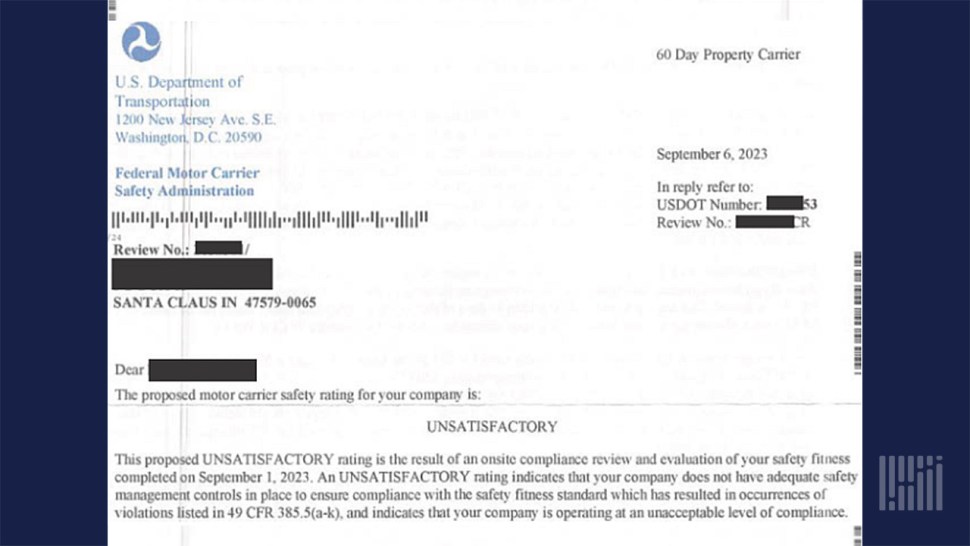
- Unsatisfactory: You’re shut down. Operations must cease until you file a corrective action and successfully upgrade your rating.
What causes a carrier to drop from satisfactory to conditional or unsatisfactory? It often depends on how you perform in each of the seven BASIC categories, and whether you’ve fixed repeat violations or shown a pattern of neglect.
A Deep Dive Into The BASICs of Safety
Here’s where it gets real. FMCSA evaluates your safety posture based on your scores across seven Behavior Analysis and Safety Improvement Categories (BASICs). Each one has thresholds that vary based on carrier type and fleet size. Violations here can cause enforcement action, audit prioritization and score inflation.
- Unsafe Driving: Think speeding, texting and improper lane changes. One egregious moving violation can tank your scores, especially for small fleets. The threshold varies by vehicle type but generally sits around the 65th percentile for most motor carriers and the 50th percentile for passenger carriers.
- Hours-of-Service Compliance Violations include falsified logs, exceeding drive time or failing to use a registered ELD. This BASIC is double-weighted, meaning it counts more toward your overall safety score. ELD data and logbooks are scrutinized heavily during audits.
- Driver Fitness: This isn’t about gym memberships. It’s about proper licensing, expired medical cards or operating without the appropriate endorsement. FMCSA and auditors want to know if this driver qualifies for that seat.
- Controlled Substances/Alcohol: Violations here can come from DOT tests, missed randoms or post-accident results. The Motor Carrier Management Information System (MCMIS) and Drug & Alcohol Clearinghouse are both sources FMCSA checks during reviews.
- Vehicle Maintenance: Inspection reports, driver vehicle inspection reports (DVIRs) and maintenance files matter. Repeated out-of-service violations for brakes, tires or lighting are audit red flags. If your trucks are falling apart on the road, expect scrutiny here.
- Hazardous Materials Compliance. This category is loaded with regulatory land mines for those who haul placardable loads. Training records, shipping papers and vehicle placarding are all examined during a CR.
- Crash Indicator: This is based on police-reported crashes involving your vehicles. While not directly linked to fault, patterns of crash involvement signal risk to regulators and insurers.
FMCSA’s Proposed Changes to BASICs
FMCSA has proposed a long-overdue overhaul to the BASICs scoring system under its Compliance, Safety, Accountability (CSA) program, something that’s been criticized for years as inconsistent and out of touch. The new plan doesn’t eliminate safety categories; it reshuffles and refocuses them.
What’s shifting:
1. Drug & Alcohol BASIC Merged into Driver Fitness
Under the current CSA system, drug and alcohol violations live in their category. In the proposed changes, those violations, including failed drug tests, refusals or 49 CFR Part 382 violations, will be rolled into Driver Fitness. Why? Because FMCSA sees substance-related issues as directly tied to whether a driver is “fit” to operate a CMV.
Why it matters: Driver Fitness will no longer be just about medical cards and CDL status; it’ll now reflect the driver’s complete qualification picture, including sobriety. That means one positive drug test could not only hit your Clearinghouse and DACH reports, but it could also tank your Driver Fitness BASIC and potentially ripple across your entire safety profile.
2. Maintenance BASIC Split: Vehicle vs. Driver Responsibility
Another major update: the Vehicle Maintenance BASIC will be divided into two categories:
- Vehicle Maintenance: Driver-Observed. Think lighting, flat tires, cracked windshields, which drivers must catch during pre-trip inspections and log via DVIRs.
- Vehicle Maintenance: Carrier-Observed. This includes brake adjustments, steering components and frame integrity, which require a shop or a qualified mechanic to detect and repair.
Why it matters: For years, fleets have been held accountable for everything, even if it was something a driver ignored or failed to report. By splitting this BASIC, FMCSA finally distinguishes between what the driver missed and what the fleet failed to maintain. That means your maintenance record won’t get torched if your driver skips a pre-trip and rolls out with a busted taillight.
What Happens During a Compliance Review?
Here’s the basic flow of an FMCSA compliance review:
- Notice and Scheduling: FMCSA or a state partner notifies you. You may be offered an off-site, on-site or focused review.
- Initial Interview: The investigator interviews the safety director (or owner, for small fleets) and reviews procedures, policies and organizational structure.
- Document Review: Auditors will ask for:
- Driver list with CDLs, medical cards and DQ files.
- Vehicle list with registration and inspection records.
- HOS records and electronic logging device logs.
- DVIRs and maintenance records.
- Proof of insurance (Form MCS-90).
- Accident register.
- Drug and alcohol testing records and MIS data.
- Driver list with CDLs, medical cards and DQ files.
- Violation Analysis: They compare your records to MCMIS, SMS and other systems. Discrepancies, like unreported positive drug tests or unqualified drivers, trigger enforcement.
- Final Interview and Outcome: FMCSA issues a written report and safety rating. If your rating is “conditional” or “unsatisfactory,” the agency may also issue civil penalties or require a Safety Management Plan (SMP).
How FMCSA Scores Can Hurt (or Help) Your Business
The ripple effects of a bad rating are brutal:
- Higher Insurance Premiums. Many insurers will not touch carriers with conditional ratings, or they will raise rates significantly.
- Lost Freight Opportunities. Brokers and shippers, check your SMS profile. If your scores are high or show alerts, they may avoid working with you.
- Recruiting Struggles. Good drivers want to work for safe, stable fleets. If your rating drops, so does your appeal.
- Audit Frequency. Carriers in alert status are targeted more often for audits and roadside inspections.
How to Stay Prepared
The best way to survive an audit is to treat every day like you’re already being audited. Here’s what that means:
- Track Everything: Use fleet management systems like Motive, Fleetio or Tenstreet to track DQ files, ELD logs and DVIRs in one place.
- Review Weekly: Don’t wait for the end of the quarter. Check logs, driver credentials and maintenance files every week.
- File Cleanly: Organize DQ files with digital checklists. Missing a single document, like a CDL copy or motor vehicle record, can trigger citations.
- Self-Audit: Run mock audits quarterly. Motive, Tenstreet, Trucksafe and independent consultants can all help.
Data Qs, SMPs and Rating Upgrades
Got hit with a bad violation that you can prove was incorrect? Use the Data Q system to challenge it.
Are you stuck with a conditional or unsatisfactory rating? You’ll need an SMP and a formal request for a rating upgrade. These require detailed corrective actions, implementation dates and supporting documentation.
Don’t go it alone. A bad SMP will be denied. Compliance attorneys (like Childress Law) or consultants familiar with the FMCSA process (like Trucksafe) can guide you step by step.
Proactive Compliance is the Only Insurance
Compliance is about building and maintaining defensible programs that lead to operational and financial survival. Understanding how the FMCSA views your fleet, staying on top of documentation and using tech tools to manage your records can mean the difference between growth and shutdown.
An audit is just a snapshot. The real story is how you operate day in and day out.
Brokerage Compliance Symposium
The day before F3. Every compliance issue you face - fraud exposure, carrier liability, FMCSA rules, cargo theft, insurance gaps - navigated by attorneys and operators defining best practices in a changing industry.
F3 Awards Dinner
The night before F3. FreightTech100 companies honored. FreightTech 25 and Shipper of Choice winners revealed live. Cocktail reception into dinner and live music - 300 industry leaders in one purpose-built room.
F3: Future of Freight Festival
Industry-defining keynotes, rapid-fire technology demos, and industry leaders networking in experiences across Chattanooga - plus the inaugural F3 Awards Dinner featuring the FreightTech and Shipper of Choice reveals.
The day before F3. Every compliance issue you face - fraud exposure, carrier liability, FMCSA rules, cargo theft, insurance gaps - navigated by attorneys and operators defining best practices in a changing industry.
The Signal at Chattanooga Choo Choo • Chattanooga, TN Register NowThe night before F3. FreightTech100 companies honored. FreightTech 25 and Shipper of Choice winners revealed live. Cocktail reception into dinner and live music - 300 industry leaders in one purpose-built room.
The Signal at Chattanooga Choo Choo • Chattanooga, TN Register NowIndustry-defining keynotes, rapid-fire technology demos, and industry leaders networking in experiences across Chattanooga - plus the inaugural F3 Awards Dinner featuring the FreightTech and Shipper of Choice reveals.
The Signal at Chattanooga Choo Choo • Chattanooga, TN Register Now