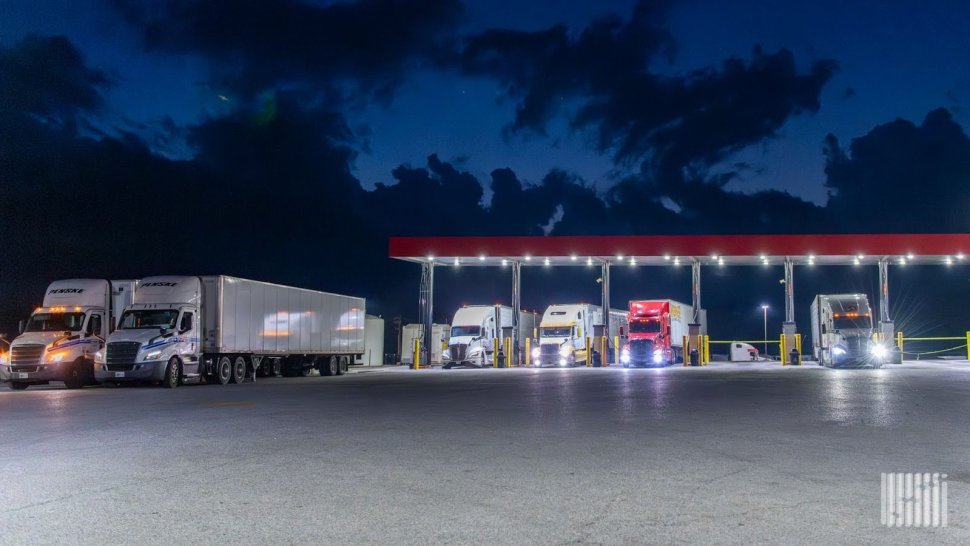
Commercial truck leasing through companies like Penske or Ryder is built for business flexibility—but that flexibility comes at a price if you exit early. Whether you’re downsizing your fleet, facing a cash crunch, or pivoting your business model, turning in a leased tractor before the end of the agreement doesn’t mean you just hand over the keys and walk away.
In reality, early lease termination comes with real costs: financial penalties, lost leverage, and disruptions to your operations. This article breaks down what actually happens when you terminate a commercial lease early, what your options are, and how to protect your business if you find yourself in that situation.
The Business Case for Leasing—and Where It Gets Complicated
There’s a good reason some small fleets and midsize carriers choose to lease from companies like Penske. According to Penske Truck Leasing’s own website, their full-service lease agreements offer benefits like predictable monthly costs, reduced maintenance burdens, and access to late-model, fuel-efficient equipment without the upfront capital outlay.
But what happens when those business needs change mid-contract?
If the market looks like it does today, your load volume shrinks, your contracts get canceled, or your expansion plan stalls, that truck lease that made sense last year might become a liability today. That’s where the conversation shifts from “benefits of leasing” to “consequences of breaking the lease.”
What Early Termination Really Means
Most full-service commercial leases are fixed-term, with built-in penalties for early return. These aren’t rental trucks you can return at will. They are legally binding financial agreements, and the lease provider—whether it’s Penske, Ryder, or another provider—is not looking to absorb your losses.
Here’s what typically happens if you return a leased truck early:
- Early Termination Fees: These fees are contract-specific but are usually based on either a flat penalty or a percentage of the remaining contract value. Some providers will require the full remaining lease balance to be paid.
- Accelerated Depreciation Recovery: Leasing companies structure pricing based on expected use over the full lease term. If you return a unit early, they may assess depreciation recovery fees to offset residual value loss.
- Maintenance Cost Reconciliation: If you’re on a full-service lease and have underutilized scheduled maintenance or inspections, you may be required to pay back the unused service credits.
- Excess Wear and Damage Charges: Any body damage, missing equipment, tire wear, or mechanical neglect will be assessed and billed at the time of return.
- Loss of Upfront Deposits or Credits: Depending on your lease, you may forfeit any capitalized cost reductions or deposits made at signing.
Don’t Confuse Leasing with Renting
One of the biggest misconceptions is that commercial leasing is similar to a rental agreement. It’s not.
A rental is day-to-day or month-to-month with flexibility built in. A commercial lease, especially from providers like Penske, is a fixed asset strategy with built-in depreciation, utilization, and resale assumptions. These companies plan around your contractual obligations—and when you exit early, they make sure their business doesn’t absorb the impact. You do.
What to Do Before You Even Consider Early Termination
If you’re thinking about turning in a leased tractor early, stop and assess these three areas:
- Check the Lease Terms in Detail
- Look for early termination clauses, penalties, and the process for notification.
- Some providers offer early return windows or buyout options—know exactly what your contract allows.
- Look for early termination clauses, penalties, and the process for notification.
- Run a Cost Comparison
- Compare the cost of keeping the lease (even parked) vs. returning early.
- Sometimes, paying out the lease is cheaper than the fees triggered by early return.
- Compare the cost of keeping the lease (even parked) vs. returning early.
- Ask About Transfer or Reassignment
- In some cases, the lease company may allow you to transfer the lease to another business—especially if your payment history is strong and the unit is in good condition.
Your Exit Options
If keeping the truck isn’t feasible, and you’ve decided to initiate early termination, you still have choices:
1. Negotiate a Settlement
Many commercial leasing companies are open to negotiation—especially if you’re not walking away from a payment but restructuring your needs. Offer a lump sum, propose partial payment terms, or ask for termination fee reductions in exchange for continued business elsewhere in their network.
2. Use Lease Buyout as Leverage
If your lease allows for a buyout (where you purchase the truck outright), that figure may be lower than the penalties tied to early return. You could then resell the truck on the open market to recover some of the value.
3. Explore Fleet Restructuring
If you’re turning in one truck but expanding in another region or segment, the lease provider may be more flexible. Use your broader fleet relationship as leverage.
How It Impacts Your Credit
Commercial lease defaults don’t just go away. If you abandon the lease or fail to settle, here’s what can happen:
- Collection Activity: Unpaid lease balances will be sent to collections and reported against your business credit file (and sometimes your personal credit if you provided a guarantee).
- Financing Blacklist: Equipment financing companies often communicate through shared databases. A default on one lease can disqualify you from getting another truck financed.
- Impact on Partner Programs: If you work with OEM maintenance programs or fuel card networks through your lessor, you may lose access or face increased fees after a default.
When It Makes Sense to Exit Anyway
Despite the risks, sometimes exiting early is still the smarter business move:
- Cash flow crisis: If the monthly payment is crippling your business and you can’t restructure revenue fast enough, cutting the loss may be necessary.
- Contract cancellations: If you lost the freight that justified the truck, and there’s no pipeline to replace it, holding onto the asset may just burn more money.
- Operational shift: If you’re moving from OTR to dedicated, or downsizing to owner-operator-only, that extra lease unit may become a liability.
In those cases, early termination becomes a controlled risk rather than a blind jump.
Setting Yourself Up Smarter Next Time
If you’re walking away from a lease, treat it like a business lesson—not a failure. Here’s how to set up better for the future:
- Revisit your utilization: Make sure your lease matches the type of freight and miles you’re actually running.
- Work with providers who offer flexible terms: Some companies offer shorter lease terms or seasonal options. Penske, for example, has both full-service leases and short-term truck rental solutions depending on operational needs.
- Don’t over-fleet based on emotion: Adding a truck should be tied to confirmed freight, not a hunch. If that contract isn’t inked, don’t lock yourself into another fixed expense.
- Always build an exit strategy into your financial model: Assume you may need to exit. Budget for it. Structure your cash flow to protect against it.
Final Word
Terminating a commercial truck lease early isn’t impossible—but it’s not painless either. If you’re not strategic, you can rack up thousands in fees, hurt your business credit, and lose credibility with future equipment providers.
But if you face it head-on—with your numbers in front of you, your lease terms in hand, and a plan to exit smart—you can survive it. More importantly, you’ll walk away with a clearer understanding of how to structure future leases for long-term success.
Truck leasing, like trucking itself, is a business strategy. And just like any strategy, it only works when it’s aligned with the numbers, the freight, and the future you’re trying to build.
Brokerage Compliance Symposium
The day before F3. Every compliance issue you face - fraud exposure, carrier liability, FMCSA rules, cargo theft, insurance gaps - navigated by attorneys and operators defining best practices in a changing industry.
F3 Awards Dinner
The night before F3. FreightTech100 companies honored. FreightTech 25 and Shipper of Choice winners revealed live. Cocktail reception into dinner and live music - 300 industry leaders in one purpose-built room.
F3: Future of Freight Festival
Industry-defining keynotes, rapid-fire technology demos, and industry leaders networking in experiences across Chattanooga - plus the inaugural F3 Awards Dinner featuring the FreightTech and Shipper of Choice reveals.
The day before F3. Every compliance issue you face - fraud exposure, carrier liability, FMCSA rules, cargo theft, insurance gaps - navigated by attorneys and operators defining best practices in a changing industry.
The Signal at Chattanooga Choo Choo • Chattanooga, TN Register NowThe night before F3. FreightTech100 companies honored. FreightTech 25 and Shipper of Choice winners revealed live. Cocktail reception into dinner and live music - 300 industry leaders in one purpose-built room.
The Signal at Chattanooga Choo Choo • Chattanooga, TN Register NowIndustry-defining keynotes, rapid-fire technology demos, and industry leaders networking in experiences across Chattanooga - plus the inaugural F3 Awards Dinner featuring the FreightTech and Shipper of Choice reveals.
The Signal at Chattanooga Choo Choo • Chattanooga, TN Register Now