




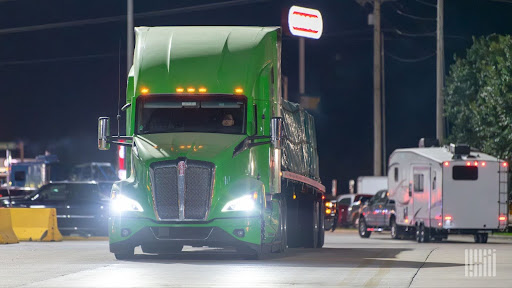
When you’re out running loads in the dead of night, your dash cam doesn’t get to sleep. It’s still working. Still recording. Still protecting your business. And if you’re relying on a camera that can’t see clearly after sunset, you’ve got a weak link in your operation.
Accidents don’t check the clock. Most incidents—whether it’s a sideswipe on a dim backroad or a rear-end in a dark parking lot—happen outside of perfect lighting. That’s where night vision becomes non-negotiable. And if you’re serious about running your business like a business, a dual dash cam with true low-light clarity isn’t optional—it’s essential.
Why Night Vision Isn’t Just a Nice-to-Have
Let’s talk real-world. Truckers drive more nighttime miles than just about anyone else on the road. Early-morning pickups. Late-night deliveries. Cross-country hauls with windows full of stars instead of sunlight.
You need a dash cam setup that doesn’t just work in the daytime. You need one that captures plate numbers under streetlights, picks up movement in dark lots, and shows enough detail to prove what happened—clearly.
Because let’s be honest: grainy footage won’t hold up in court. And “I think that’s the car” isn’t enough when it’s your CDL or insurance on the line.
Top Features to Look For in a Front and Rear Night Vision Dash Cam
Ignore the marketing. Focus on specs that actually translate to performance:
- Infrared (IR) Night Vision or STARVIS Sensors: These technologies capture more light and detail in low-light conditions without blowing out the image.
- 1080p or Higher Resolution (Front and Rear): Clarity matters, front and back.
- Wide Dynamic Range (WDR): Balances bright headlights and dark shadows in the same frame.
- Wide-Angle Lenses (140°+): You need full-lane coverage to catch sideswipes and blind spot moves.
- G-Sensor & Emergency Lock: Automatically saves footage if a collision is detected.
- Loop Recording: Keeps the memory card cycling so you don’t lose new footage.
- GPS Integration (Optional): Adds location and speed data to your recordings.
In trucking, every detail counts. That means your camera’s low-light performance could be the deciding factor in whether you win or lose a claim.
Top Picks: Best Front and Rear Dash Cams with Night Vision for Truckers
We filtered out the toys. These are workhorse models that hold up under pressure—and in the dark.
1. Vantrue N4 Pro Triple Channel Dash Cam
- 4K front camera + 1080p rear and interior
- Sony STARVIS 2 sensor for top-tier night vision
- Infrared night mode on interior cam
- Supercapacitor (not battery) for heat resistance
- GPS and motion detection
Why it works: This one’s built for pros. You get three angles of protection—front, rear, and inside. Ideal for team drivers or anyone who sleeps in their cab. Footage is crisp even in pitch-black conditions.
2. Thinkware U1000 + Rear Cam Bundle
- 4K UHD front + 2K QHD rear
- Super night vision 2.0 with Sony sensors
- Built-in Wi-Fi, GPS, and cloud connectivity
- Parking surveillance mode
- Optional radar module for motion alerts
Why it works: If you’re running high-value freight or want the highest video quality possible, this setup is tough to beat. Great for fleet trucks with overnight downtime in yards or rest stops.
3. Blueskysea B4K Dual Dash Cam
- 4K front + 1080p rear
- Sony IMX415 STARVIS sensor
- Super night vision with WDR
- Touchscreen display
- Compact, easy install
Why it works: Mid-range price, pro-level night footage. If you’re an owner-op building out your truck with gear that performs without draining your pockets, this is a smart choice.
Hardwire or Plug-and-Play? Let’s Clear That Up
Most cameras come with a 12V plug, but if you want full parking mode protection or a cleaner install, hardwiring is the way to go. That setup ensures your cam runs even when the truck is off (without draining the battery if wired correctly).
If you’re a fleet owner, this also prevents tampering or accidental unplugging. Install it once, lock it in, and forget it. Your cam will be working while the truck rests.
Storage Tip: Don’t Trust Cheap SD Cards
Use a name-brand, high-endurance microSD card (128GB or higher). Night footage takes up more space due to higher contrast and exposure. The last thing you want is for your proof to be sitting on a corrupted card.
Final Word
There’s no such thing as “off the clock” when you’re a trucking business owner. The dash cam you choose needs to work when visibility is low, stress is high, and no one else is watching.
A good front and rear dash cam with night vision is more than just a gadget—it’s your insurance policy. It keeps your version of the story intact when things go sideways. It protects your license, your truck, and your name.
Don’t wait for a close call to invest in visibility. Choose a system that sees what you see—even in the dark—and let the footage do the talking when it matters most.
FAQS
1. What key features should I look for in a dash cam for trucking, especially for night vision? When choosing a dash cam for trucking, prioritize models with high video resolution (1080p or 4K), a wide dynamic range (WDR) or high dynamic range (HDR) for improved low-light performance, and infrared (IR) LEDs for enhanced night vision in the cabin. A wide-angle lens for both front and rear cameras is also crucial for comprehensive coverage.
2. Why is a front and rear dash cam setup important for truckers? A dual front and rear dash cam setup provides comprehensive coverage of the road ahead and behind your truck. This is vital for capturing evidence in various scenarios, from rear-end collisions to incidents involving trailers, and can also help deter theft or vandalism when parked.
3. Are there any specific considerations for installing dash cams in a truck compared to a regular car? Trucks often have larger cabins and different power supply configurations. Consider longer cable lengths for routing to the rear camera, robust mounting solutions to withstand vibrations, and ensure the dash cam can handle the potentially wider temperature fluctuations experienced in a truck’s interior. Some truckers also prefer models with GPS logging to track routes and speeds.
Brokerage Compliance Symposium
The day before F3. Every compliance issue you face - fraud exposure, carrier liability, FMCSA rules, cargo theft, insurance gaps - navigated by attorneys and operators defining best practices in a changing industry.
F3 Awards Dinner
The night before F3. FreightTech100 companies honored. FreightTech 25 and Shipper of Choice winners revealed live. Cocktail reception into dinner and live music - 300 industry leaders in one purpose-built room.
F3: Future of Freight Festival
Industry-defining keynotes, rapid-fire technology demos, and industry leaders networking in experiences across Chattanooga - plus the inaugural F3 Awards Dinner featuring the FreightTech and Shipper of Choice reveals.
The day before F3. Every compliance issue you face - fraud exposure, carrier liability, FMCSA rules, cargo theft, insurance gaps - navigated by attorneys and operators defining best practices in a changing industry.
The Signal at Chattanooga Choo Choo • Chattanooga, TN Register NowThe night before F3. FreightTech100 companies honored. FreightTech 25 and Shipper of Choice winners revealed live. Cocktail reception into dinner and live music - 300 industry leaders in one purpose-built room.
The Signal at Chattanooga Choo Choo • Chattanooga, TN Register NowIndustry-defining keynotes, rapid-fire technology demos, and industry leaders networking in experiences across Chattanooga - plus the inaugural F3 Awards Dinner featuring the FreightTech and Shipper of Choice reveals.
The Signal at Chattanooga Choo Choo • Chattanooga, TN Register Now