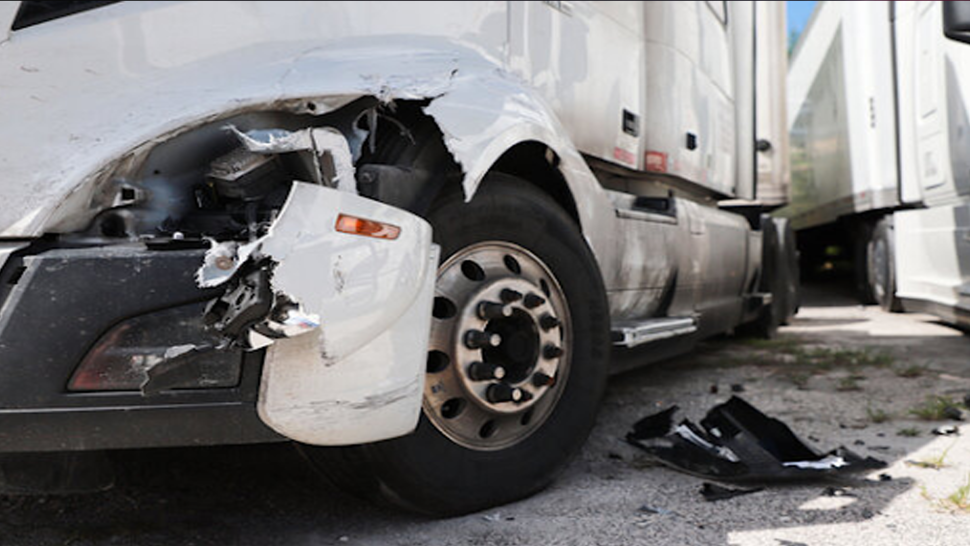
There’s no gut punch quite like the phone call that starts with: “Hey, I’ve been in an accident.” Whether it’s a minor fender bender or a major wreck, your role as a small fleet owner instantly shifts from dispatcher to damage control.
And the first few hours after that call will determine how expensive, disruptive, and recoverable that accident really is.
This article breaks it all down in plain terms — what you’re required to do, what smart operators do in addition, and how to prepare now so you’re not scrambling when it happens to you.
Step 1: Secure the Scene and Start Documentation Immediately
Your driver’s safety comes first, always. Instruct your driver to:
- Call 911 if there’s any injury, fire, or hazardous material leak.
- Remain at the scene and wait for law enforcement.
- Take photos of everything — the vehicle, the other party’s vehicle, the location, skid marks, license plates, damage, and road conditions.
- If they’re physically able, get contact info from witnesses.
Once safe, have your driver call you. Not to check in — to start your internal clock. That’s when your job begins.
Step 2: Order a Post-Accident Drug and Alcohol Test
FMCSA regulations require post-accident drug and alcohol testing under specific circumstances:
- Alcohol test required if:
- There was a fatality, or
- Your driver received a citation and there was bodily injury or vehicle towing.
- There was a fatality, or
- Drug test required if:
- There was a fatality, or
- A citation plus injury or towing.
- There was a fatality, or
Timing Matters:
- Alcohol tests must be done within 8 hours. (If cited)
- Drug test must be done within 32 hours.
If you don’t do it — or can’t document why you didn’t — you’re opening yourself up to FMCSA violations and liability. It can also open you up to legal liability if injuries are involved by the opposite party.
Step 3: Secure ELD Logs, Dash Cam Footage, and Driver Statements
In the world of post-crash investigation, evidence matters.
Here’s what to lock down:
- ELD Data: Pull the last 7 days of logs for that driver, including hours of service, location history, and any edits or violations.
- Dash Cam Footage: Download before it loops. Some cams overwrite data within 24–48 hours.
- Driver Written Statement: While it’s fresh, get the driver to write out what happened — in their own words. This helps both legally and for insurance defense.
- Driver Condition: Document fatigue, illness, emotional state — anything that could be raised in court later.
Step 4: File the Insurance Claim – But Stick To The Facts
Call your commercial auto insurance company immediately, but be careful with what your driver says. Stick to facts:
- Time, location, weather
- Description of events, photos
- Police report number (once available)
You are not required to admit fault — and your driver shouldn’t either.
Expect the following from insurance:
- Damage assessment (they’ll want photos or may dispatch an adjuster)
- Statements from both drivers
- Request for dash cam video, police report, repair estimates
If your truck is down for repairs, you may qualify for downtime reimbursement — but only if your policy includes it. Know your coverages ahead of time.
Step 5: Handle the Driver’s Status and Return-to-Duty Timeline
If your driver required post-accident testing and:
- Passed the alcohol test: They can return to duty.
- Failed or refused: They are immediately disqualified and must complete the FMCSA SAP (Substance Abuse Professional) process to ever drive again.
If the driver was injured, you’re entering workers’ comp territory — which means more paperwork, timelines, and possible time off.
And if the driver wasn’t at fault but the truck is totaled? You’ve got to move fast to recover, replace, and reassign.
Step 6: Prepare for a Lawsuit (Even If You Weren’t at Fault)
Welcome to America. Any accident is a lawsuit waiting to happen.
Here’s how to limit your exposure:
- Keep all driver qualification files current.
- Ensure ELD data has no HOS violations.
- Show preventive maintenance records.
- Prove regular safety training.
- Have your dash cam footage secured and ready.
If you end up in litigation, your paperwork will be your protection.
FAQ
Q: Can my driver continue to run while we wait for police reports or insurance?
A: Yes, as long as no disqualifying test was triggered, and the truck is safe to operate.
Q: What if the other driver sues months later?
A: You’ll be glad you documented everything. Keep incident records for a minimum of three years.
Q: What if the ELD was unplugged during the crash?
A: You’ll need backup data: GPS tracker, dash cam timestamp, or any telematics logs to prove location and HOS.
Q: Does my insurance rate go up after an accident?
A: Not always — depends on fault, claim cost, and your loss history. But yes, more claims generally increase your premium.
Final Word
Accidents are one of the few unspoken truths in trucking. You don’t get to choose if they happen, but you absolutely control how you respond.
Be the kind of fleet that’s always five steps ahead — the one with a protocol, a checklist, and a team that doesn’t panic when things go sideways. Your business survival may depend on it.
Brokerage Compliance Symposium
The day before F3. Every compliance issue you face - fraud exposure, carrier liability, FMCSA rules, cargo theft, insurance gaps - navigated by attorneys and operators defining best practices in a changing industry.
F3 Awards Dinner
The night before F3. FreightTech100 companies honored. FreightTech 25 and Shipper of Choice winners revealed live. Cocktail reception into dinner and live music - 300 industry leaders in one purpose-built room.
F3: Future of Freight Festival
Industry-defining keynotes, rapid-fire technology demos, and industry leaders networking in experiences across Chattanooga - plus the inaugural F3 Awards Dinner featuring the FreightTech and Shipper of Choice reveals.
The day before F3. Every compliance issue you face - fraud exposure, carrier liability, FMCSA rules, cargo theft, insurance gaps - navigated by attorneys and operators defining best practices in a changing industry.
The Signal at Chattanooga Choo Choo • Chattanooga, TN Register NowThe night before F3. FreightTech100 companies honored. FreightTech 25 and Shipper of Choice winners revealed live. Cocktail reception into dinner and live music - 300 industry leaders in one purpose-built room.
The Signal at Chattanooga Choo Choo • Chattanooga, TN Register NowIndustry-defining keynotes, rapid-fire technology demos, and industry leaders networking in experiences across Chattanooga - plus the inaugural F3 Awards Dinner featuring the FreightTech and Shipper of Choice reveals.
The Signal at Chattanooga Choo Choo • Chattanooga, TN Register Now