




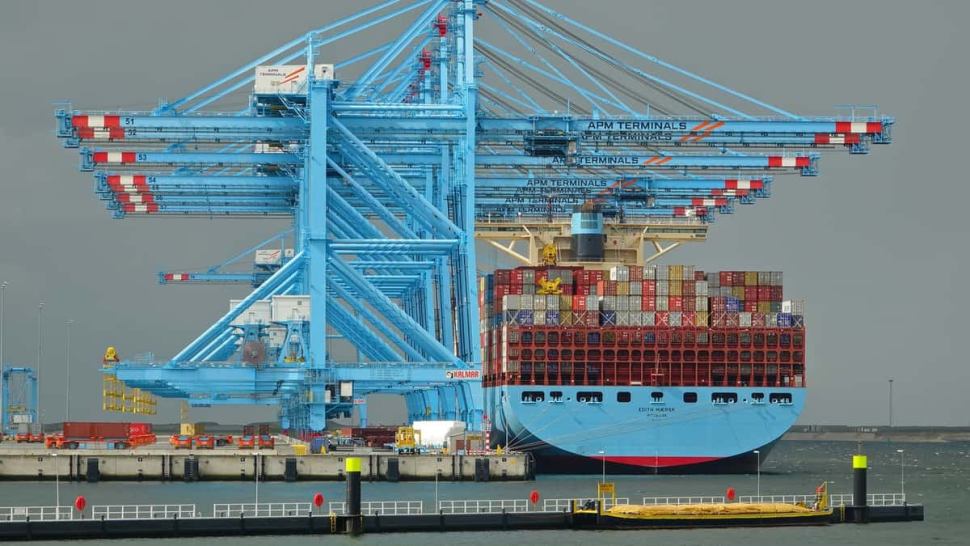
Maersk said its goal of carbon-free shipping will be best reached with new types of marine fuels based on alcohol, renewable natural gas and ammonia. It is urging refiners and fuel producers to start research into how these fuels can be produced at scale to reduce the shipping industry’s contribution to greenhouse gas emissions.
The world’s largest shipping fleet by size, Maersk is also the largest producer of greenhouse gases in container shipping. The company’s total carbon dioxide emissions reached 39.165 million tonnes last year, up 9% from a year earlier, according to Maersk’s 2018 corporate social responsibility report.
Total fuel use rose 16% from a year earlier due to having a larger fleet and more operating days for its vessels.
But the Copenhagen-based company has reduced carbon emissions 41% relative to its 2008 baseline and is “10% ahead of the industry average” in reducing greenhouse gas emissions. By 2030, it plans to cut carbon emissions by 60% relative to 2008 levels.
Maersk has also set the goal of zero carbon dioxide emissions by 2050. The International Maritime Organization is tasking container shipping overall with cutting emissions by half relative to 2008. Shipping is responsible for up to 3% of the world’s greenhouse gas emissions, Maersk said.
Carbon emissions are becoming a more important issue across ocean freight’s customer base. Kuehne + Nagel, the largest ocean freight forwarder in the world, said it will offer a less-than-container load service in 2020 that will be carbon neutral. By 2030, Kuehne + Nagel expects that its asset-based partners in ocean, air, and land transportation will also be carbon neutral.

In a study done with ship registry Lloyd’s Register, Maersk said the “best-positioned fuels for research and development into net-zero fuels for shipping are alcohol, biomethane and ammonia.”
Maersk Chief Operating Officer Soren Toft said, “These three are the right places to start. Consequently, we will spend 80% of our focus on this working hypothesis and will keep the remaining 20% to look at other options.”
Each of the fuels presents different opportunities and challenges. Alcohols, both ethanol and methanol, are easily handled and can be created from renewable resources such as biomass or renewable hydrogen.
Methanol is already being used by some ships as a fuel. Yet it also requires retrofitting ships with larger fuel tanks since alcohol fuels are less energy-dense than regular marine fuel.
Natural gas from renewable resources such as biomass also offers an additional pathway to carbon-free shipping. But the marine fuel industry needs to ensure against “methane slip,” the emission of unburned methane, which is a major source of greenhouse gas emissions.
Ammonia can be produced from renewable electricity and its energy conversion rate is higher than that of other renewable fuels. But ammonia is highly toxic, making it more difficult for crews to handle.
As current marine engine technology can handle these fuels, Toft said “the main challenge is not at sea but on land” as the marine fuel industry must “produce and distribute sustainable energy sources on a global scale.”
“We need to have a commercially viable carbon neutral vessel in service 11 years from now,” Toft said.
Brokerage Compliance Symposium
The day before F3. Every compliance issue you face - fraud exposure, carrier liability, FMCSA rules, cargo theft, insurance gaps - navigated by attorneys and operators defining best practices in a changing industry.
F3 Awards Dinner
The night before F3. FreightTech100 companies honored. FreightTech 25 and Shipper of Choice winners revealed live. Cocktail reception into dinner and live music - 300 industry leaders in one purpose-built room.
F3: Future of Freight Festival
Industry-defining keynotes, rapid-fire technology demos, and industry leaders networking in experiences across Chattanooga - plus the inaugural F3 Awards Dinner featuring the FreightTech and Shipper of Choice reveals.
The day before F3. Every compliance issue you face - fraud exposure, carrier liability, FMCSA rules, cargo theft, insurance gaps - navigated by attorneys and operators defining best practices in a changing industry.
The Signal at Chattanooga Choo Choo • Chattanooga, TN Register NowThe night before F3. FreightTech100 companies honored. FreightTech 25 and Shipper of Choice winners revealed live. Cocktail reception into dinner and live music - 300 industry leaders in one purpose-built room.
The Signal at Chattanooga Choo Choo • Chattanooga, TN Register NowIndustry-defining keynotes, rapid-fire technology demos, and industry leaders networking in experiences across Chattanooga - plus the inaugural F3 Awards Dinner featuring the FreightTech and Shipper of Choice reveals.
The Signal at Chattanooga Choo Choo • Chattanooga, TN Register Now