




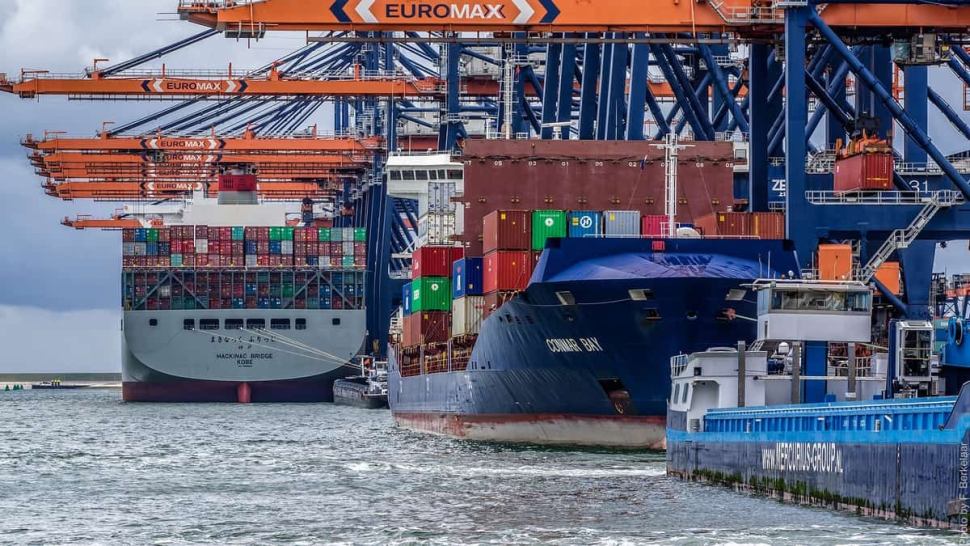
Container shipping rates between Asia and Europe saw one the biggest drops in 10 months as ports and shipping companies impose more restrictions to limit the spread of the coronavirus.
As of Tuesday, the number of new cases of the flu-like disease reported globally rose 18% overnight to 20,630, with two-thirds of those in the Chinese province of Hubei, the disease’s epicenter, the World Health Organization said. Total deaths from the illness rose at the same rate, reaching 425, all but one inside China.
Along with a rapid quarantine of 50 million people in and around the afflicted city of Wuhan, China is limiting the spread by keeping much of the nation’s population home for another week after the end of its Lunar New Year celebration.
The near-closure of the biggest importer of coal, iron ore, grains and oil is reverberating through shipping markets, with rates for dry bulk and tanker shipping all having fallen sharply in recent days.
Now container rates are following their lead. The Freightos Baltic Index assessment for spot tariffs on the China-North Europe (SONAR: FBXD.CNER) front haul fell $155.83 to $1919.26 per forty-foot equivalent unit (FEU) on Monday, the largest absolute drop since a $252-per-FEU drop on April 2, 2019.

Trade between China and the European Union amounted to $437 billion in 2018, according to the European Commission, making the continent China’s second-largest trading partner.
Ocean carriers have only canceled five sailings so far due to expectations of lower demand, and major ports along China’s coast remain open. Even barging in Wuhan is “gradually [starting] to resume operation,” Maersk said in a customer advisory.
But vessels coming from China face increased screening due to the virus threat, slowing goods movement across the shipping industry. Australia, Indonesia, South Korea and Thailand plan enhanced screening measures for vessels coming from China in the past 10 to 14 days. Singapore will start requiring that China-origin ships file a health certification before coming into port. Canada will also require ships to inform local authorities of any crew members who exhibit coronavirus symptoms.
The U.S. Coast Guard will also require crews from China-origin ships will be required to remain on board for the duration of the vessel call. Passenger ships coming from China will be denied entry into U.S. ports.
Brokerage Compliance Symposium
The day before F3. Every compliance issue you face - fraud exposure, carrier liability, FMCSA rules, cargo theft, insurance gaps - navigated by attorneys and operators defining best practices in a changing industry.
F3 Awards Dinner
The night before F3. FreightTech100 companies honored. FreightTech 25 and Shipper of Choice winners revealed live. Cocktail reception into dinner and live music - 300 industry leaders in one purpose-built room.
F3: Future of Freight Festival
Industry-defining keynotes, rapid-fire technology demos, and industry leaders networking in experiences across Chattanooga - plus the inaugural F3 Awards Dinner featuring the FreightTech and Shipper of Choice reveals.
The day before F3. Every compliance issue you face - fraud exposure, carrier liability, FMCSA rules, cargo theft, insurance gaps - navigated by attorneys and operators defining best practices in a changing industry.
The Signal at Chattanooga Choo Choo • Chattanooga, TN Register NowThe night before F3. FreightTech100 companies honored. FreightTech 25 and Shipper of Choice winners revealed live. Cocktail reception into dinner and live music - 300 industry leaders in one purpose-built room.
The Signal at Chattanooga Choo Choo • Chattanooga, TN Register NowIndustry-defining keynotes, rapid-fire technology demos, and industry leaders networking in experiences across Chattanooga - plus the inaugural F3 Awards Dinner featuring the FreightTech and Shipper of Choice reveals.
The Signal at Chattanooga Choo Choo • Chattanooga, TN Register Now