




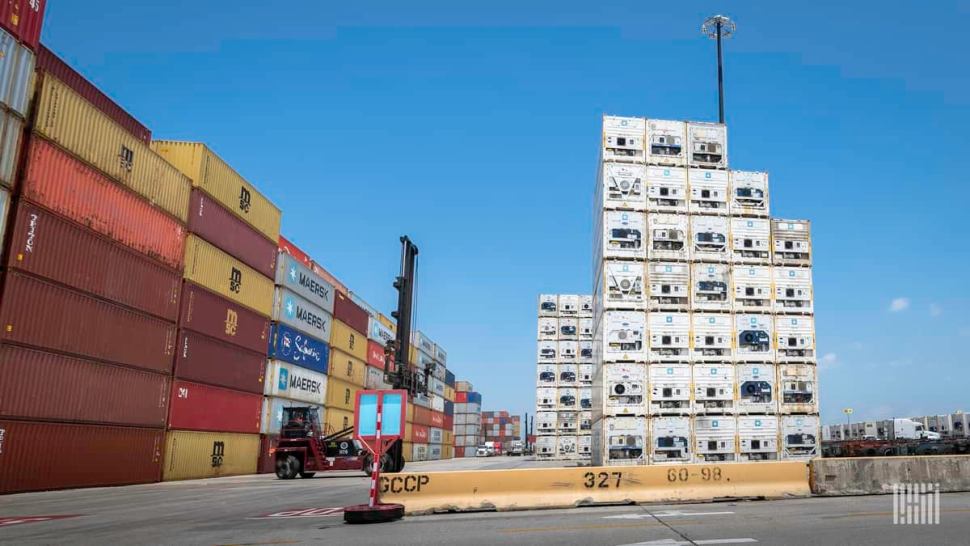
North Dakota specialty soybean exporter Robert Sinner has lost his patience with ocean carriers that without sufficient notice change the earliest delivery return dates for containers arriving at the nation’s seaports and he wants something done about it.
Sinner, whose company SB&B Foods has shipped container loads of soybeans to high-end food processors in Asia for the past two decades, said the problem has gone from bad to worse during the past five years.
“It drives us crazy,” he told American Shipper in a telephone interview. “These constant disruptions are costly for us.”
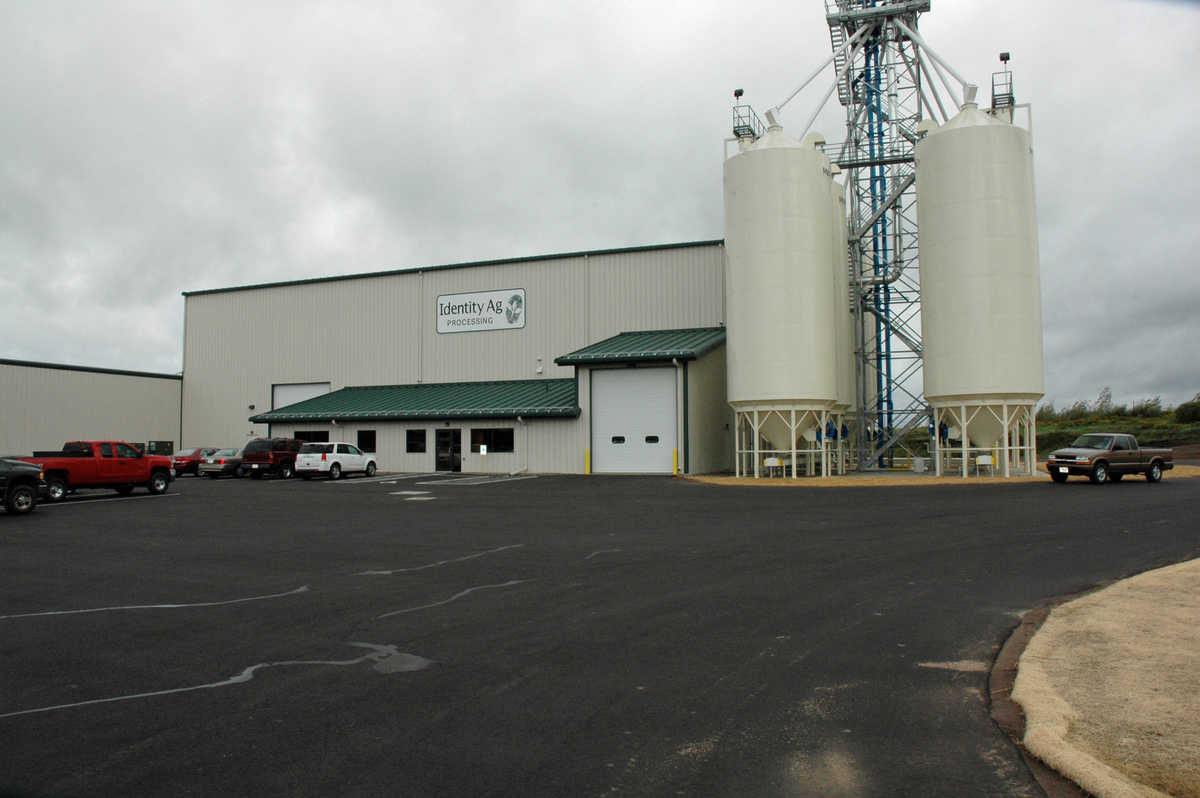
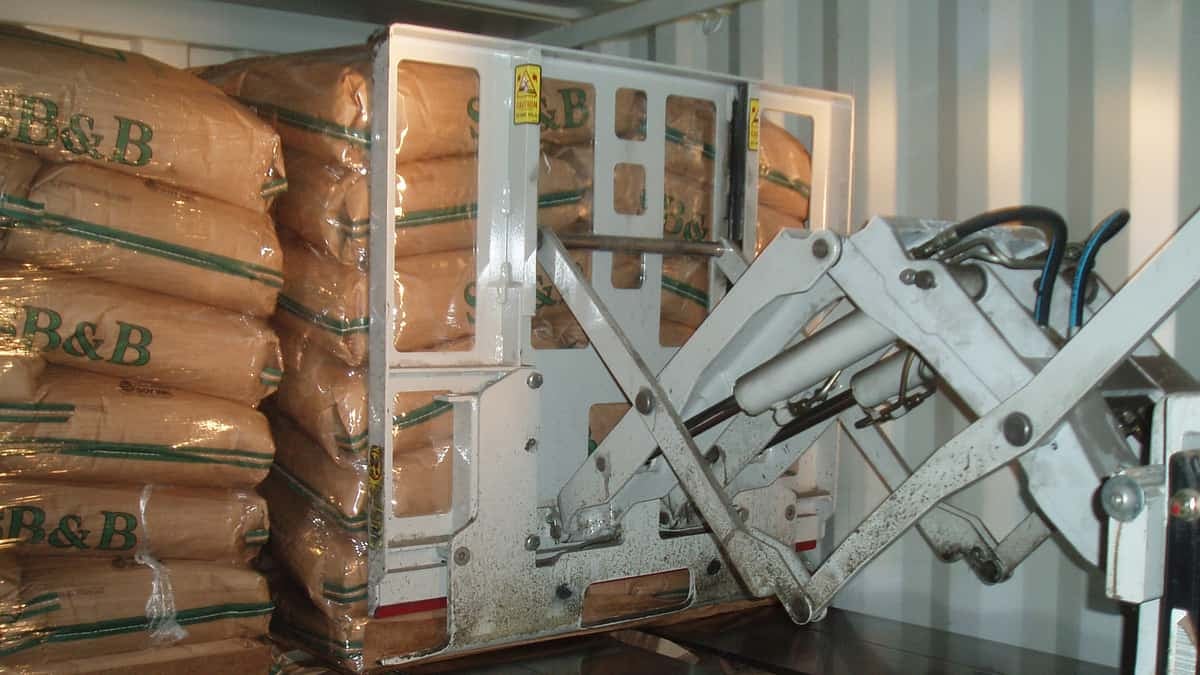
Planning and preparing containerized soybean shipments from the Casselton, North Dakota, soybean processing facility starts six to eight weeks before the sailing date. The container handoffs between truckers, the closest rail ramp in Minneapolis, to the West Coast seaports requires precision on behalf of the company’s logistics team for the product to arrive on time to the customer in Asia.
A key component in this process for SB&B Foods is that its containers arrive at the marine terminal gate by the earliest return date (ERD) set by the ocean carriers based on their ship schedules. Due to the general lack of terminal space, containers must arrive a day or two before the ship reaches the dock.
Sinner understands that unforeseen circumstances on the high seas, such as storms, can cause ocean carriers to readjust their sailing schedules and thus their availability to receive containers at the marine terminals booked for specific sailings.
What angers Sinner, however, as well as severely disrupts his supply chain, is the ocean carriers’ failure to promptly notify him that the earliest return dates for his containers have changed. “Once our containers are on the rail, there’s nothing we can do to delay or stop them,” he said.
When containers are unable to enter the marine terminal due to a sailing schedule delay, container shippers like Sinner must scramble to find safe and secure sites nearby to hold their shipments. The longer the box sits, the hundreds of dollars in storage fees rack up and Sinner watches his profit on the shipment dwindle.
Costly, ongoing problem for all shippers
The coronavirus pandemic severely upset the ocean carriers’ schedules during the spring and summer, as they “blanked” sailings to recover costs from diminished container volumes from Asia. However, Sinner said the problem with earliest return dates has been going on for years.
That is why SB&B Foods, as well as scores of other American exporters of agricultural goods, forest products and lumber, have turned to the Washington-based Agriculture Transportation Coalition (AgTC) to right this situation with the ocean carrier industry.
The problem is happening to all American exporters, “no matter if they ship five or 200,000 containers a year,” AgTC Executive Director Peter Friedmann told American Shipper.
He said the inability of ocean carriers to keep shippers immediately informed about changes to sailing schedules and earliest return dates for containers leads to demurrage charges, additional truck and storage charges, rolled cargo and missed sailings.
This is happening “all at a time when trucking and storage costs are going through the roof,” he said.
Friedmann said shippers understand that ocean carriers run into problems and unforeseen events, such as weather and congestion, and must change their sailing schedules.
“Emergencies happen, but they’re supposed to be the exception and not the rule,” he said. “It appears instead that we’re in a state of constant emergency.”
Since the ocean carriers have contractual relationships with the shippers, either through service contracts or bills of lading at the individual shipment level, Friedmann said they should communicate directly and immediately with those customers and not depend on marine terminals and others to let the exporters know of ERD changes.
Finding an answer
AgTC, with assistance from TradeLanes, recently completed a detailed survey of its membership regarding the impacts that ERD disruptions have on their supply chains. More than 100 shippers answered the 25-question survey, which encouraged written responses.
The association has sorted through the survey results and will share them during an AgTC members-only virtual workshop Monday. “What I can tell you is that this is a huge and costly problem for shippers, forwarders and truckers all over the country,” Friedmann said.
American shippers point out that the airline industry has the technical capability to notify passengers via instant texts and emails whenever a flight is delayed and why, allowing them to adjust their travel schedules. “Is there some reason ocean carriers don’t or can’t do this? What will it take to get this information directly and timely from the carriers?” Friedmann asked.
Friedmann said the AgTC is weighing its options on how to correct this problem in the ocean container shipping industry. The association is even considering technology that can provide exporters and forwarders accurate, real-time guidance on ERD changes and when the terminals are able to accept containers.
The association urges key service providers in the ocean container supply chain to join its initiative.
“We believe port authorities, marine terminals and railroads should join us in pressing ocean carriers to provide timely schedule change notices,” Friedmann said. “Failure to receive this information is a cause of much of the congestion and disruption throughout the supply chain — from the marine terminals to cold storage facilities to rail ramps and thousands of miles inland.”
Sinner hopes that collective industry pressure will push the ocean carrier industry to fix the problem with earliest return date notifications for containers and allow his company to benefit from a more predictable export system.
Friedmann said for many shippers, if this communication breakdown from the ocean carriers continues to disrupt the flow of export and add costs, then foreign importers of American products will simply turn to other markets.
Related News
American shippers, draymen want ocean carriers out of chassis pools
Blank sailings threaten to sink heartland ag exports
Ag shippers want more container ‘free time’ during coronavirus outbreak
Click for more FreightWaves/American Shipper articles by Chris Gillis.
Brokerage Compliance Symposium
The day before F3. Every compliance issue you face - fraud exposure, carrier liability, FMCSA rules, cargo theft, insurance gaps - navigated by attorneys and operators defining best practices in a changing industry.
F3 Awards Dinner
The night before F3. FreightTech100 companies honored. FreightTech 25 and Shipper of Choice winners revealed live. Cocktail reception into dinner and live music - 300 industry leaders in one purpose-built room.
F3: Future of Freight Festival
Industry-defining keynotes, rapid-fire technology demos, and industry leaders networking in experiences across Chattanooga - plus the inaugural F3 Awards Dinner featuring the FreightTech and Shipper of Choice reveals.
The day before F3. Every compliance issue you face - fraud exposure, carrier liability, FMCSA rules, cargo theft, insurance gaps - navigated by attorneys and operators defining best practices in a changing industry.
The Signal at Chattanooga Choo Choo • Chattanooga, TN Register NowThe night before F3. FreightTech100 companies honored. FreightTech 25 and Shipper of Choice winners revealed live. Cocktail reception into dinner and live music - 300 industry leaders in one purpose-built room.
The Signal at Chattanooga Choo Choo • Chattanooga, TN Register NowIndustry-defining keynotes, rapid-fire technology demos, and industry leaders networking in experiences across Chattanooga - plus the inaugural F3 Awards Dinner featuring the FreightTech and Shipper of Choice reveals.
The Signal at Chattanooga Choo Choo • Chattanooga, TN Register Now