The Strait of Hormuz deserves attention, but it is only one part of a wider network whose disruptions can expose economies and companies to abrupt trade, cost and supply-chain shocks, a new study finds.
The key risk is not simply that a waterway closes permanently, argues Oxford Economics. More commonly, threats to trade routes produce delays, diversions, reduced vessel capacity, higher insurance and freight costs, and prolonged uncertainty.
In the current environment, Oxford sees any progress toward reopening disrupted routes as likely to be uneven, describing a “one step forward, two steps back” pattern through the rest of the year.
For example, continuing violence by Yemen-based Houthi rebels in the Red Sea and the short-lived nature of June’s memorandum of understanding between the United States and Iran emphasize that assessment.
More than Hormuz
The Strait of Hormuz is strategically important, particularly in the context of the Iran conflict, but Oxford says that maritime risk is dispersed. Different bottlenecks matter for different reasons: some are central to global trade, while others are disproportionately important to regional supply chains or individual economies.
Nearly one-quarter of global trade passes through Asia’s Malacca and Taiwan straits, according to the report. That concentration means a disruption at either passage could affect far more than the immediate region, with consequences for vessel routing, manufacturing inputs, energy flows and the availability of imported consumer goods.
Currently, significant disruptions at key China ports are forcing ocean carriers to adjust vessel rotations, which has a follow-on effect on connecting services on land and sea, increasing costs and helping to keep container rates.
The geography of maritime trade, the report states, has created numerous points where a localized crisis can have systemwide effects. A canal restriction, a conflict near a strait or a weather-related port shutdown may all create consequences well beyond the affected waterway.
Chokepoints as leverage
Oxford identifies geopolitics as one of two principal drivers of chokepoint disruption, but the character of the threat is changing. The Iran conflict has demonstrated that chokepoints are increasingly viewed not merely as geographic constraints but as assets that can be controlled, taxed or threatened for strategic leverage.
That shift broadens the range of possible disruptions. Instead of a single, clear-cut closure, shipping interests may face elevated security risks, operational restrictions, new costs or volatile rules governing transit. Such conditions can undermine route reliability even when vessels are technically able to pass, the study finds.
In the Red Sea, the report notes that ongoing Houthi actions remain an impediment to a durable reopening. That leaves carriers, cargo interests and insurers managing not only the physical voyage but also an uncertain political and security environment, and one that may last for years.
Climate compounds the risk
Natural disasters and climate conditions are the second major source of vulnerability identified in the report. These risks can constrain maritime trade without armed conflict or deliberate interference.
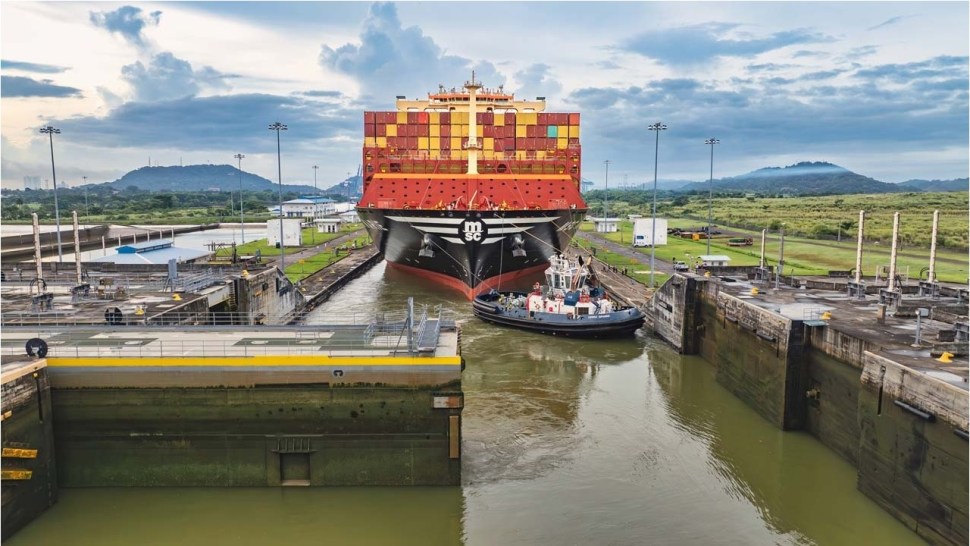
The Panama Canal, for example, cut vessel drafts five times during the year as weather phenomenon, El Niño, threatened the water supply of Lake Gatun, which feeds the locks. Reduced draft limits can force ships to carry less cargo, increase the number of voyages required, or prompt carriers to seek alternative routings – all of which can raise supply-chain costs and reduce efficiency.
Weather risks also extend to ports; typhoons recently shut the world’s busiest Asia container ports twice within one month. Port closures can quickly ripple through liner schedules, terminal operations, equipment positioning and inland transport networks, particularly where carriers run tightly sequenced port rotations.
A supply-chain planning gap
For companies, the report argues that supplier diversification alone does not resolve transport exposure. A business may source from several manufacturers or countries, but still remain vulnerable if its goods move through the same maritime passage or depend on the same regional port complex.
Transport-route risk, Oxford says, should be assessed alongside supplier concentration. Practical questions include:
- Which chokepoints and ports are embedded in each major sourcing lane?
- Are alternate routes operationally and economically viable?
- How much additional transit time, capacity loss and cost would a diversion create?
- Are multiple suppliers dependent on the same shipping corridor?
- How would draft restrictions, weather disruptions or security incidents affect inventory coverage?
For trade planners, the oft-mentioned but hard-to-implement resilience requires visibility not only into where products are made, but also into the narrow waterways, ports and transport corridors through which they must travel.
Why it matters: Global trade depends on a reliable supply chain vulnerable to disruptions at dozens of chokepoints.
Read more articles by Stuart Chirls here.
Read more:
Key Asia-U.S. liner earnings sets up volatile H2
Maersk raises 2026 outlook again as earnings surge
U.S. container imports surge on China peak season momentum
New harbor commission president backs Long Beach port plans
Trump extends Jones Act waiver; direct effect “pennies per gallon,” say analysts
Brokerage Compliance Symposium
The day before F3. Every compliance issue you face - fraud exposure, carrier liability, FMCSA rules, cargo theft, insurance gaps - navigated by attorneys and operators defining best practices in a changing industry.
F3 Awards Dinner
The night before F3. FreightTech100 companies honored. FreightTech 25 and Shipper of Choice winners revealed live. Cocktail reception into dinner and live music - 300 industry leaders in one purpose-built room.
F3: Future of Freight Festival
Industry-defining keynotes, rapid-fire technology demos, and industry leaders networking in experiences across Chattanooga - plus the inaugural F3 Awards Dinner featuring the FreightTech and Shipper of Choice reveals.
The day before F3. Every compliance issue you face - fraud exposure, carrier liability, FMCSA rules, cargo theft, insurance gaps - navigated by attorneys and operators defining best practices in a changing industry.
The Signal at Chattanooga Choo Choo • Chattanooga, TN Register NowThe night before F3. FreightTech100 companies honored. FreightTech 25 and Shipper of Choice winners revealed live. Cocktail reception into dinner and live music - 300 industry leaders in one purpose-built room.
The Signal at Chattanooga Choo Choo • Chattanooga, TN Register NowIndustry-defining keynotes, rapid-fire technology demos, and industry leaders networking in experiences across Chattanooga - plus the inaugural F3 Awards Dinner featuring the FreightTech and Shipper of Choice reveals.
The Signal at Chattanooga Choo Choo • Chattanooga, TN Register Now