





J.B. Hunt forging new customer links
Over the last decade, J.B. Hunt has not only tripled in size, but has evolved from a big truckload and intermodal operator to offering dedicated services and what has turned into a billion-dollar brokerage and third-party logistics provider (3PL). The next stage, according to Shelley Simpson, the company’s chief commercial officer, executive vice president and […]

U.S. Xpress defends against California meal and rest break claims
A California federal court dismissed part of a class-action lawsuit against U.S. Xpress (NYSE: USX) that claimed the Chattanooga, Tennessee-based truckload carrier violated the state’s meal and rest break laws. The May 3 order by the Central District Court of California dismissed claims by plaintiff Anthony Ayala and approximately 1,000 California truck drivers in a […]

Lawmakers pressure White House on IMO 2020 implementation
“Any attempt by the United States to reverse course on IMO 2020 could…potentially backfire on consumers.”

HOS changes set for unveiling in June
Relief sought after ELD mandate expected to ease compliance with work rule requirements.

Trump vows not to act on Jones Act
Ten-year waiver to move U.S. LNG to Puerto Rico is off the table – for now.

Breaking the lock on carrier payments
TriumphPay is shifting the power over invoice control back into the hands of carriers.

Breaking the lock on carrier payments
Cash flow – the life blood of a trucking operation – is under more pressure than ever as shippers continue to push out pay dates to their brokers, giving brokers limited options other than to do the same to their carrier partners.

U.S. regulators see container trade overcapacity posing no dangers
Shippers benefit as transportation rates expected to stay low.

Trump Administration sides with gig company on contractor status
Uber stands to gain by avoiding wage and benefit costs that accompany workers classified as employees.
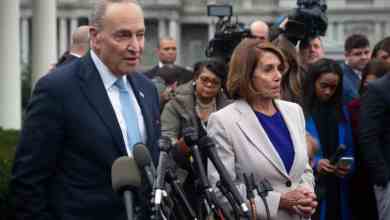
Democrats – Trump all-in on $2 trillion for infrastructure
No signs yet on agreement on how to pay for it.
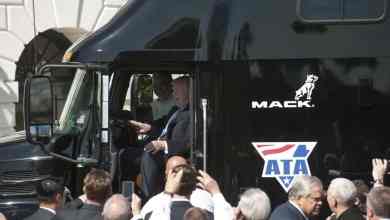
Trucking, labor optimistic ahead of White House infrastructure meeting
Getting Trump to support raising the gas tax would be a major step toward passing an infrastructure bill.
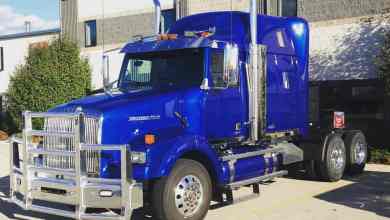
EPA glider truck probes delayed until late summer
Results of two audits could affect current quotas of glider truck kits.

Celadon to pay investors $42.2 million restitution for securities fraud
CEO Paul Svindland calls settlement “milestone” in path to stability after hit from financial scandal.

Safety trends revealed in new U.S. domestic ship data
Forty ships detained in 2018 as federal inspectors begin exposing U.S.-flag safety data.

Tech group calls for national road-user fee
ATA points out that the proposal, to be officially unveiled on Capitol Hill this week, makes several wrong assumptions.

U.S. regulator wants more influence over Arctic shipping
U.S. unveils new strategy in response to increasing investments by Russia and China.

Google drones may soon fly commercially over Virginia
Feds have exempted Wing Aviation from a block of regulations clearing way for an operating permit.

Higher training levels sought by Mexican driver facility
Simulators to benefit training standards in Mexico and the U.S.

Musk’s DC-Baltimore loop tunnel clears regulatory hurdle
D.C. to Baltimore in 15 minutes could help advance hyperloop technology for cargo.
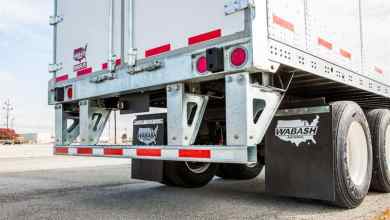
Government watchdogs urge review of underride guard requirements
GAO also recommends more research that could lead to side guard requirements.

OOIDA responds to “drug loopholes” article
Independent owner-operator group details how government clearinghouse will handle drug test results.
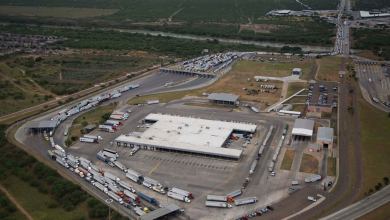
Delays build at U.S.-Mexico Border after CBP redeployment
Delays could extend to U.S.-Canada as customs personnel are relocated to deal with immigration on the southern border.

LNG by rail could help protect U.S. maritime law
President Trump’s executive order would create new transportation option for capacity-constrained LNG markets.

Closing drug-test loopholes could hit driver availability
Hair follicle testing – once cleared for use in the federal database – could have the biggest effect on driver availability.

Trucking and rail industries to advise regulators on national security
Chemical hazmat shipments figure prominently on newly created committee within U.S. Transportation Security Administration.

States taking the lead in “policy disruption” for AV and EV
Washington Auto Show policy discussion reveals states moving on electric and automated vehicles as feds struggle to keep up.

U.S. rail interests see China as major security risk
Lobbying group considering more legislation and White House action to stop threat to U.S. rail system.
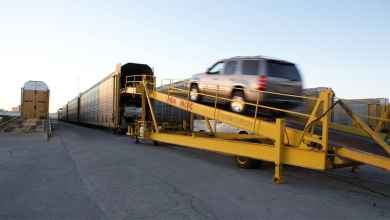
Freight coalition warns White House on border shutdown
Trump now threatening tariffs against Mexico while trade groups claim cross-border supply chains still at risk.

ATA: Trump holds key to passing infrastructure package
Association’s new ad campaign highlights dangers to consumers of not getting a highway bill funded this year.

Government rollout of truck crash preventability program could be quick
FedEx Freight, J.B. Hunt, Schneider National among companies with the most non-preventable accidents identified so far by FMCSA.

Rhode Island, West Virginia and Iowa stay atop ARTBA “worst bridge” list
ARTBA estimates cost to repair or replace 235,000 bridges across the country at $171 billion.

IMO 2020 “cheating” still a wildcard for bunker fuel prices
EIA still sees no uniform international policy on how the IMO 2020 regulation will be enforced.

U.S. strengthens shipping sanctions policy on North Korea and Syria
Shipowners and marine insurers are asked to look at vessel locator data to avoid sanctions fines.

Congress seen as failing to prioritize maritime cyber risks
Washington insiders say maritime cyber attacks in the U.S. and around the world lack attention and funding.

China trade war top concern for U.S. seaports
U.S. maritime’s economic contributions may be at risk if Chinese tariffs remain in place.

Lawmaker wants US-China trade deal to include LNG shipping requirement
John Garamendi (D-CA) asserted energy exports are tied to US shipbuilding and national security.

Ocean carrier group optimistic on IMO 2020 plans
World Shipping Council reigns in predictions of severe price spikes resulting from low-sulfur fuel regulation.

ATA asserts government driver shortage study gets it wrong
Authors controversial study miss key factors contributing to truck driver turnover and wages.

Court dismisses carrier lawsuit against Rhode Island truck tolling
ATA considering next steps in fight against “discriminatory” toll plan after judge rules that his court lacks jurisdiction.

BLS cites lack of pay – not drivers – as cause for driver shortage
Study finds lagging response to demand surges makes managing driver recruitment and retention more difficult.

Support lacking for U.S. plan to self-declare parcel rates
The U.S. may move ahead with its plan to withdraw from an international rate setting forum if a compromise allowing countries to self declare rates falls through.

Contractors claim “great victory” in $100 million Knight-Swift settlement
10-year old lawsuit is win for contractors but driver classification issue remains largely unsettled.

East Coast port deepening gets Trump budget priority
Funding plan keeps Charleston and Savannah on course to handle larger container ships.

U.S. airlines, Boeing ground all 737 MAX aircraft after FAA reversal
The entire Boeing 737-MAX fleet is now grounded following an FAA decision that followed similar decisions by China, the U.K. and others.

Trump budget plan boosts funding for major freight projects
Trump’s budget bodes well for certain freight grants but Democrats take issue with reliance on the private sector.

LNG market ignites Jones Act debate on Capitol Hill
Infrastructure hearings and a controversial waiver have lawmakers taking sides on the Jones Act debate.

Feds found lacking in P3 project oversight
Highway expansion projects that receive private and public funds could be exposed to added risk.

Lawmaker predicts 2019 “the year of blockchain”
Minnesota’s Tom Emmer sees blockchain hype giving way to reality and more widespread use of the technology taking hold – as long as Congress helps clear a path.

Regulatory hurdles threaten to slow blockchain development in the U.S.
Blockchain experts laid the groundwork for a regulatory roadmap at the 4th annual Blockchain Summit in Washington, DC.

Regulators make it easier to upgrade commercial drivers licenses
FMCSA estimates over 11,000 Class B truck drivers will save time and money using the new process.

Release of crash data from Amazon cargo plane expected within days
NTSB will look at the potential for hazmats such as lithium-ion batteries as a contributing factor in last week’s Atlas Air crash.

DOE giving $50 million research jolt to heavy-duty trucking
Funding announced as investment heats up for low-carbon fuel technology.

Fight over truck size is a fight over profits
Protecting market share is part of the battle over longer trucks.

Coalition pushes for young driver training to expand workforce
Sentiment could be growing for lowering the driver age, but questions linger over safety and wages.
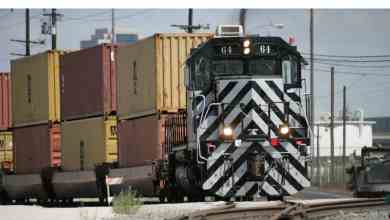
Ag shippers seek funding action for stressed out transportation system
Lawmakers heard how costly fees and equipment shortages along the supply chain are hurting exports.

FERC decision could help break U.S. LNG bunkering stalemate
If IMO 2020 boosts demand for LNG bunkering, the U.S. isn’t ready to take advantage.
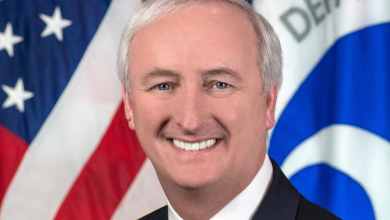
Trump nominee Rosen considered key player in emissions rollbacks
If confirmed, the new DOJ deputy could bring with him from DOT potential deregulatory influence.

Volvo: Infrastructure remains biggest roadblock for electric trucks
Wireless charging could be key to making electric trucks viable for the long-haul sector.
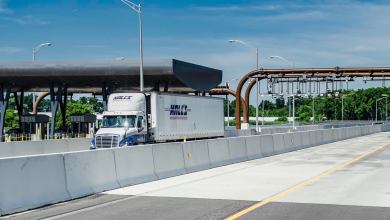
Trucks ready to fight Connecticut’s new tolling plan
Connecticut truckers say tolling proposal unveiled by new governor would hurt business.
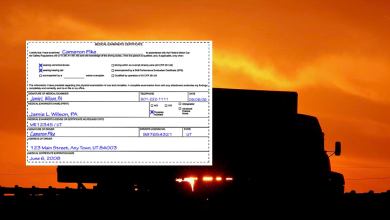
DOT to audit FMCSA’s medical certifications
Fraudulent medical certifications that can put carriers and drivers at risk of more accidents.are under scrutiny.

Container ports singled out in federal spending bill
Congress is handing out $93 million in federal grants for improvements at the nation’s top 15 container ports.

Railroads look to PTC to shake out more capacity
Positive Train Control isn’t just about safety anymore as the railroads revisit how the technology can generate capacity and save money.

U.S. raises safety bar for crude oil transported by rail
Rails may need to raise rates to comply with new rules from Washington.

China tariff uncertainty clouds container supply chain outlook
A 25 percent tariff on $200 billion worth of Chinese goods destined for the U.S. may get delayed again, but supply chain uncertainty persists.

How truck stops could drive the electric revolution
The nation’s top electricity regulator gives exclusive insight into how the infrastructure behind electric trucks could fuel the coming transportation transformation.

Biodiesel tax credit could be saved by border wall deal
Tax incentives that make for cheaper diesel fuel ran out in 2018, and the trucking industry is looking for a vehicle on which to extend it. Could it be the border wall?

Fuel startup Gas Pos seeking headway into truck stop market
Little Rock, Ark.-based company trying to make fuel card processing less costly for truck stop operators.

Truck stop owners feeling the high-tech heat
Message from NATSO: Technology trends will force truck stop owners to reevaluate how they serve their customers.

Can railroads win at the Green New Deal game?
Railroads – like trucking – will be focusing on solving the Highway Trust Fund problem this year. But could a Green New Deal become a competitive selling point?
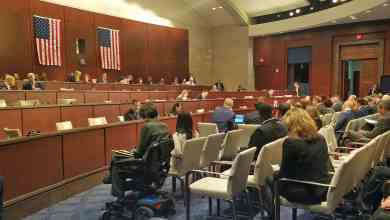
House T&I’s DeFazio: Raising the gas tax more likely in new Congress
Lots of ideas for federal funding of infrastructure at Capitol Hill hearing, but the “pay-for” question still looms.

What a Green New Deal could mean for freight
Green New Deals are the rage in Washington, with benefits – and costs – for trucking.

Lawmakers oppose Puerto Rico’s Jones Act waiver request
LNG shipments to Puerto Rico caught in the middle of latest battle over the Jones Act maritime regulation.
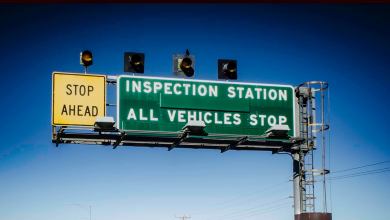
Cross-border trucks risk stepped-up CBP penalties
Drivers – not brokers – facing penalties of $5,000-$10,000 for violating new e-manifest filing requirements at the border.
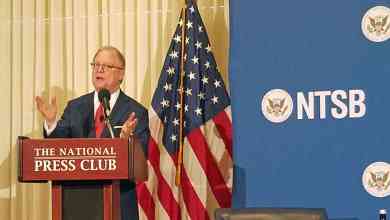
NTSB rails against PTC implementation delays
The railroads have delayed installing life-saving automatic braking technology for another two years, and the NTSB is running out of patience.

Legislation giving Trump more tariff authority on shaky ground
Upheaval caused by the U.S.-China trade war has some freight interests uneasy about giving Trump more tariff power.

Research reveals mixed ELD safety effects
ELD’s were supposed to make headway into reducing crashes, but that may not be the case so far, according to academic research from supply chain experts.

Truck safety groups push Congress for speed limiter mandate
Speed limiter regulations sat idling under Bush and Obama, so truck safety groups now look to Congress – and Trump – to put it in gear.

Highway Trust Fund deficits continue to pile up
The Congressional Budget Office revealed the latest deficits it tracks for the Highway Trust Fund as Congress plans to debate new ways to pay for infrastructure.

Federal agency bolsters argument against organizing contract drivers
The NLRB overruled an Obama-era litmus test defining independent contractors, giving trucking companies’ defense against unions a boost along the way.

Highway Trust Fund deficits continue to pile up
The Congressional Budget Office reveals latest stats on the diminishing Highway Trust Fund as Congress plans to consider new ways to pay for highway infrastructure.

Government shutdown takes toll on safety
A former NTSB executive tells FreightWaves that “perishable information” critical to freight accident investigations is at risk of disappearing.

User fee plan enters 2019 highway funding debate
The biggest hurdle to making an infrastructure plan work is figuring out how to pay for it. A Washington D.C. think tank says Congress is ready to consider mileage-based user fees.

Unpaid Coast Guard workforce slows maritime business
Financial transactions within the U.S. maritime sector – including vessel loans and project eligibility – are on hold waiting for an end to the government shutdown.

Hours of Service rule victim of government shutdown
FMCSA Administrator Raymond Martinez wanted to “fast track” the HOS rules changes – but the government shutdown is in the way.

Driver training rule phase-in on course despite technical concerns
Regulators say a database designed to standardize and simplify training certification for new drivers will be ready on time next year.

Government shutdown sidetracks US shipping agency’s new mandates
New power given to the Federal Maritime Commission to scrutinize the effects of ocean carrier competition has been put on hold by the government shutdown.

ELD enforcement in New York could take months
Truck drivers hauling in the state of New York will not see ELD enforcement until state regulators finish getting the rule on the books.
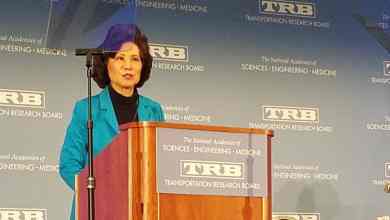
Chao unveils new USDOT drone and AV initiatives at TRB
DOT chief Elaine Chao today called on manufacturers and Silicon Valley to help instill public confidence in the safety of autonomous vehicle technology.

Rapid-fire pitch: TruckHub automates dispatch and delivery
Modules added within the last year to TruckHub’s cloud-based TMS is helping customers automate dispatch and delivery, as well as boosting driver recruitment and improving service.

US maritime taking a hit as shutdown drags on
The government shutdown is forcing the U.S. Coast Guard to work without pay which could begin affecting freight operations.

Big business wants major infrastructure package in 2019
U.S. Chamber of Commerce president Tom Donohue threw down $25,000 for ideas on how to pay for infrastructure. And told Washington to open back up.
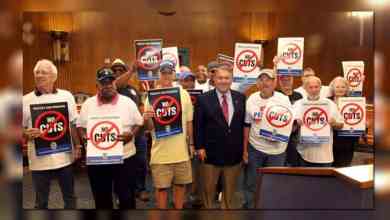
Teamsters see new Congress favoring pension reform
The Teamsters Union is relying on the new Congress to help stave off insolvency of its Central States Pension Fund.

Trucking companies exposed to new liability risk after FMCSA preemption
Trucking companies could be exposed to increased liability while a challenge to FMCSA’s hours-of-service preemption in California is pending.

Positions filled at top rail regulatory agency
Senate confirmation of Patrick Fuchs and Martin Oberman could be catalyst for STB Chairman Ann Begeman to take action on pending shipper proposals.
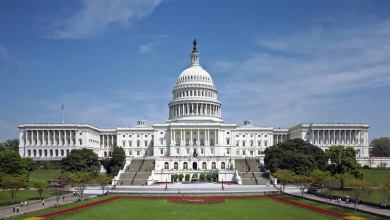
New Capitol Hill leadership ready to push freight infrastructure agenda
Freight lobbyists are banking on leadership changes in the 116th Congress to pave the way for infrastructure financing that stalled during the first half of Trump’s administration.
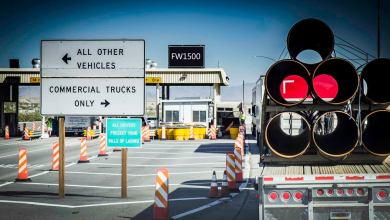
Freight delays loom if government shutdown goes long-term
Freight clearance at border crossing at ports could be susceptible to backups and delays if Washington lawmakers are unable to resolve the funding crisis sooner rather than later.
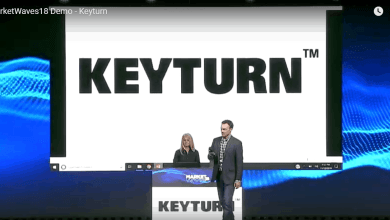
Rapid-fire pitch: Keyturn
David Bryan and Kari Dwyer of Keyturn demonstrated at MarketWaves 18 how their product can solve the data verification challenge prevalent along the construction supply chain.

New learner’s permit rule eases path to CDL
States will soon be able to give would-be drivers more time to get their CDLs at the same time potentially lowering knowledge exam costs.

FMCSA drug testing program in DOT crosshairs
DOT auditors are conducting a “series of reviews” of agency drug and alcohol testing programs, and FMCSA could be next.

Stalled budget prompts new approach to ELD exemption status
Livestock haulers are relying on the fate of the federal budget to determine how long their ELD exemptions will last.