Transport Canada approves updates on freight rail switching rules
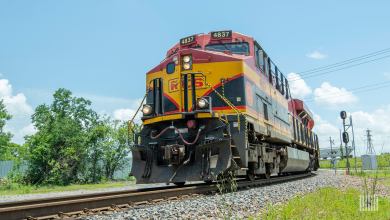
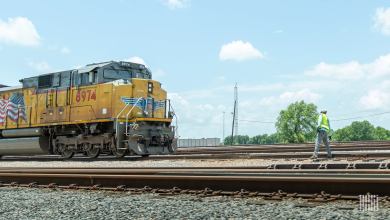
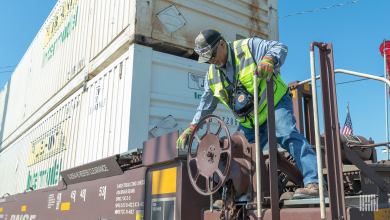
Transport Canada has approved updates to the rules, regulations and standards regarding switching operations as part of a broader effort to make operations safer.
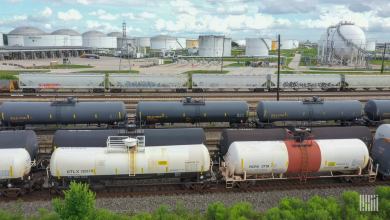
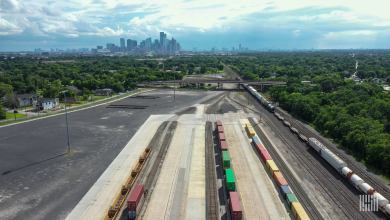
Railroads continue to play a significant role in North America’s economic infrastructure. According to the U.S. Department of Transportation Federal Railroad Administration, the U.S. rail freight network covers almost 140,000 route miles and is generally considered the largest, safest, and most cost-efficient freight system in the world. In addition, says the FRA, the almost $80 billion rail freight industry creates more than 167,000 jobs across the country.
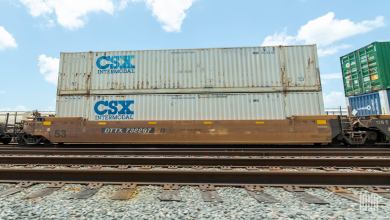
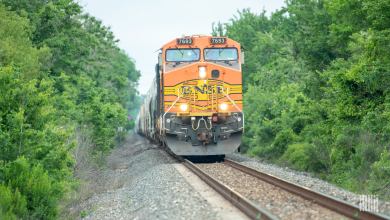
In essence, rail freight companies charge businesses to carry cargo across their network of rails. Their rates are overseen by the Surface Transportation Board, a federal agency that regulates financial aspects of surface transportation. Major railroads in North America include Union Pacific Railroad, BNSF Railway, CSX, Norfolk Southern, Canadian Pacific Kansas City and Canadian National Railway.
Keep up with the latest news, trends and reports concerning rail freight transport here!
Transport Canada has approved updates to the rules, regulations and standards regarding switching operations as part of a broader effort to make operations safer.
Four shipper associations have asked the Surface Transportation Board to see if demurrage charges can be applied to privately owned railcars to improve the flow of railcars through the network.
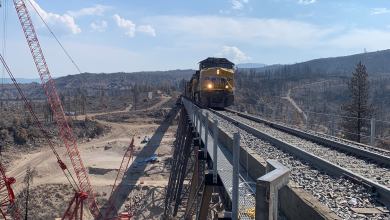
The railroad reopened the Dry Canyon Bridge in Northern California weeks ahead of schedule.
Kansas City Southern told its shareholders to focus on the proposed CN-KCS merger transaction and not on Canadian Pacific’s attempts to cast doubt on the merger’s chances of being approved by federal regulators.
The Surface Transportation Board has accepted CSX’s revised application to acquire Pan Am Railways, allowing the acquisition proceedings to continue.
The “significant” damage has caused BNSF to reroute trains, and the railroad is uncertain when service in the area might be restored.
SMART-TD must negotiate with Class I railroads on train crew size; Rail Customer Coalition calls on STB to take up reciprocal switching; ASLRRA praises progress on infrastructure bill; and Canadian Pacific urges KCS shareholders to vote against the proposed CN-KCS merger.
The past week in images features train cars used to fight fires, a wreck caused by a dust storm, a trucker who flipped in floodwaters and more.
The trucking industry’s issues with driver availability along with customers’ commitment to sustainability are factors that could support growth for intermodal beyond 2021 and 2022, executives said during Hub Group’s earnings call on Thursday.
Market alliances that seek to convert truck traffic east and west of the Mississippi River could be a way for Canadian Pacific to grow its network, executives said during the second-quarter 2021 earnings call Wednesday.
Supply chain congestion is more about issues with throughput among various stakeholders and less about Norfolk Southern’s ability to handle volumes, executives said during NS’ second-quarter 2021 earnings call Wednesday.
CP’s second-quarter 2021 revenue totaled $1.64 billion in U.S. dollars.
A 24% increase in operating revenue contributed to record second-quarter net income of $819 million for Norfolk Southern.
Both Union Pacific and BNSF have taken to rerouting trains because large wildfires have temporarily closed portions of their networks in Northern California.
Rep. Peter DeFazio, D-Ore., doesn’t want federal regulators to approve a voting trust that Canadian railway CN would establish as part of the process to acquire Kansas City Southern.
Employment levels in June for the U.S. operations of the Class I railroads held steady from May, although U.S. rail volumes grew by one-fifth over the same period.
JAXPORT saw a 15% increase in container volume and a 20% growth in vehicle volumes for the first three quarters of its 2021 fiscal year, the Florida port said Monday.
APM Terminals on the U.S. Gulf Coast wants potential importing customers to know it has access to the Midwest via five Class I railroads.
Two groups announced this month their separate efforts to increase supply chain visibility. One technology tool focuses on locating railcars and another aims to forecast volumes at the Port of Los Angeles.
STB Chairman Marty Oberman has sent letters to all the Class I railroads asking them how the railroads are applying storage fees at key container terminals while the supply chain is congested.