China-U.S. ocean freight rates have fallen for the 32nd straight week: Freightos Report
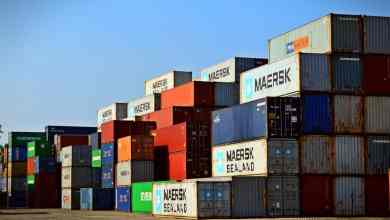
China-U.S. ocean freight rates have been falling continuously for the record 32nd week, in the wake of the Chinese New Year and a continous surge in capacity.
Positive news from both manufacturing and construction sectors, as gain in each help drive up freight demand in the economy
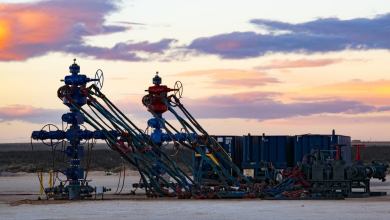
Daseke has purchased Aveda Transportation and Energy Services, one of North America’s largest oil rig movers. This acquisition increases Daseke’s exposure to the oil and gas industries, which have a bullish outlook for 2018 and beyond.
Retail sales rebounded in March after declining in each of the previous three months. This rebound is a return to normal for the retail sector after some volatility in spending following the hurricane season.
Job growth has improved since the start of the year in the trucking industry. While this is strong step in address the driver shortage, the industry will soon find itself having to compete long-term with other industries desperately searching for skilled labor.
Flatbed freight remains red-hot with 111 loads for every truck, but what is causing the surge in demand?
We explain how the yield curve works, how it affects the cost of debt, and what that means for trucking.
Data from the Producers Price Index showed that prices for trucking services remain high, and a spillover in demand may be causing a surge in intermodal rates.
Stifel returns to trucking with an array of notes on individual carriers and a comprehensive industry update. Analysts expect 12% increase in truckload rates y/y, spillover into LTL and intermodal, and no relief in sight for the driver shortage.
Job growth fell well short of expectations in March, but trucking hires continued to accelerate as the industry tries to address the current capacity crunch.
Turndowns inbound and outbound of Charleston are gradually rising in tandem, indicating a healthy market. Spot rate movements will depend on where capacity is positioned once port traffic ramps up.
After strong fourth-quarter earnings results, weather and other external forces are expected to weigh on earnings reports in the first quarter, resulting in a mixed bag for public companies.
Trade war fears have caused increased volatility in stock markets over the past month. However, worries over a deep recession caused by protectionism appear overblown for now. The challenge for transportation companies will be less about a collapse in activity and more about adjusting to the new reality.
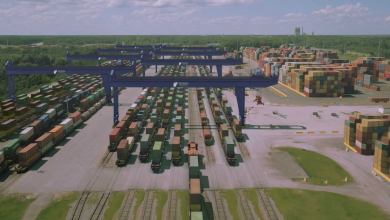
Once the Mason Mega Rail terminal is complete, the Port of Savannah will have a state-of-the-art facility, unique to the U.S. East Coast.
Truck sales, indices, stock price projections: all are looking bullish
Soybean exports to China have been levied 25% additional tariffs as China hits back with tariffs on U.S. exports worth $50 billion annually.
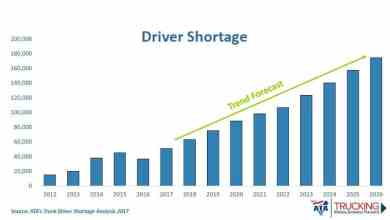
The number is 175,000 out several years, against a base of a half-million.
Construction spending in the economy remains essentially unchanged since the start of the year, as the sector continues to disappoint after a solid 4th quarter. This has implications for flatbed carriers and dry vans, as weakness in construction and home building affects freight demand.
China has increased tariffs by up to 25% on 128 U.S. products, in retaliation for the tariffs added by the U.S. last week. The Chinese tariffs target farm products, with the severely hit being pork exporters.
BNSF hauls more coal than any other railroad, but the future of American coal production and consumption is an open question. Is BNSF heavily exposed to downside risk or will it be the last coal carrier standing?