The most expensive thing is an ego
It is a well-worn axiom in the investing world that “the most expensive thing on Wall Street is an ego.” It’s true in the world of investing money, but it’s true for the rest of the world as well.


According to a survey of participants on a recent FTR webinar, only 11% of the people believe the ELD impact has been severe. A full 52% say the impact has been moderate while 34% say it is minimal. Three percent don’t believe it’s had any effect.”
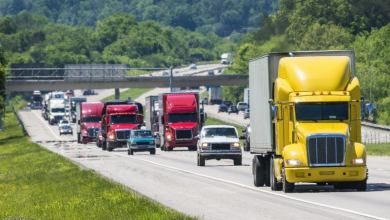
ATRI research identified trucking industry costs of $63.4 billion as a result of congestion on the nation’s highways. That cost generates from 996 million lost hours of industry productivity, the equivalent of 362,000 truck drivers sitting still for an entire year.
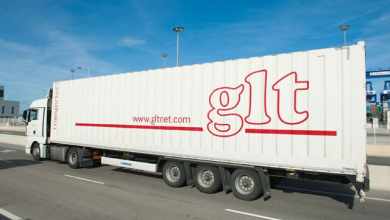
Paris-based global logistics group Gefco has confirmed its acquisition of Spanish transport logistics company GLT, the Handy Shipping Guide reports.
Call it the Internet of Things, the Sharing Economy, a result of the ELD mandate, or the emergence of blockchain-style applications, but we are witnessing a digital gold rush when it comes to developing technologies bent on improving supply chains.
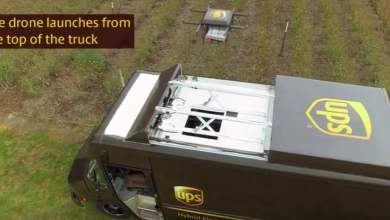
The Teamsters have opened negotiations with UPS on a new contract and they have a significant request: no drones or driverless vehicles.
In what will come as little surprise to anyone who has recently renewed their commercial insurance policies, rates are going up. The bad news is that there doesn’t appear to be an immediate end in sight, according to a new report from A.B. Best.
Industry-wide ELD adoption is forging a yellow brick road for blockchain and other technological marvels.
With the ELD mandate enforcement date behind us, owners of trucking companies can now focus on the next sweeping change to impact their business; implementation of the Tax Cuts and Jobs Act that was signed into law by President Trump on Dec. 22, 2017.
At least for one week, seasonality has impacted rates, according to the latest data from DAT Solutions. Spot rates for dry vans and flatbeds fell for the week ending Jan. 20.
The “leaked” plan calls for liberalizing tolling policy and allowing states to commercialize interstate rest areas, among other things, as a means of funding infrastructure.
The infrastructure bill outline leaked yesterday provides clues to how Trump wants to incentivize $800B in state, local, and private spending: tolls on interstates, removing constraints on private activity bonds, and value capturing financing for transit projects.
Manual processes may appear cheaper at first, but studies have shown that switching to automated accounting programs for account payables and receivables saves money in the long run, even for small operations.
The compliance rate for ELDs among fleets sits at 86%, according to the latest rolling survey of 318 fleets by CarrierLists.
U.S. Chamber of Congress president, Thomas J. Donohue, is preparing for an uphill battle to push for a raise of the federal gas tax by 25 cents per gallon to help shape the debate about upgrading U.S. roads, bridges, airports and other infrastructure.
Back in November, KeepTruckin launched a petition drive asking FMCSA to provide a 2-hour exemption for long-haul drivers delayed at a shipper.
The movement of goods is booming in Latin America (LATAM) and it is resulting in a significant rise in the number of commercial vehicles being sold in the region.
Fiat Chrysler Automobiles (FCA) has confirmed its plan to move its truck-making arm from Saltillo, Mexico, to Detroit, MI, the Chicago Tribune reports.
Chad Boblett has built not just a successful Facebook group, but also the largest professional online forum in the U.S. on rates and logistics in the freight industry
Outbound rates from the Great Lakes have held steady at the high prices reached during last September’s nationwide spike, but over the past 7 days, they’re trending upward again.