Lag effect: Why liner profits stay high much longer than spot rates
The reversion in spot rates is pulling down contract rates, with a significantly delayed effect on ocean carrier earnings.
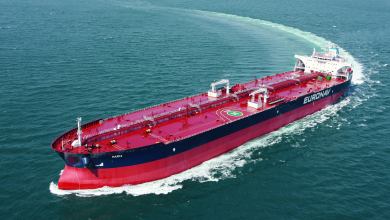

The tanker industry has a storied history of corporate showdowns. The latest, a three-way tussle involving Euronav, looks far from over.
The day after C.H. Robinson announced disappointing fourth-quarter earnings, the analyst community showed little optimism for the 3PL leader’s near-term future.
GoFreight, a startup freight shipping platform for small and midsized freight forwarders, recently raised $23 million in a Series A round.
Interim CEO Anderson says cost savings target is $150 million by the end of the year; Global Forwarding drags down Q4 earnings.
The 2M partnership between MSC and Maersk — which is breaking up — is the smallest of the three alliances. The Ocean Alliance is much larger.
ONE’s profit dropped by 50% quarter over quarter to $2.76 billion.
German ocean shipping company Hapag-Lloyd said its earnings before interest, taxes, depreciation and amortization jumped by $7.6 billion year over year.
Container shipping rates from Europe to the U.S. are finally falling, but they’re still exceptionally high.
Russian crude restrictions are having the predicted effect on tanker trades, soaking up more vessel capacity as sailing distance lengthens.
Speculation is swirling on how the end of a global container shipping alliance will affect ocean carriers and cargo shippers.
“Terminal and infrastructure investments are a crucial element of our strategic agenda and India is one of our key growth markets,” Hapag-Lloyd CEO Rolf Habben Jansen said.
1994: Those involved in response to the 600,000-gallon spill reflect on their efforts.
Shipping services around the globe will be reconfigured after the top two carriers end their vessel-sharing agreement.
“We are proud to be part of this first-in-history interoperability launch between eBOL platforms,” said CargoX founder and CEO Stefan Kukman.
Steel, crude oil and refrigerated shipments rose as ports in Texas, Louisiana and Alabama recorded increased freight volumes in 2022.
Are falling commodity shipping spot rates the result of normal seasonality or a symptom of global economic malaise?
White House economic adviser Brian Deese points to supply chain improvements while new pressures loom overseas.
American imports remain a tale of two coasts, with continued strength in container volumes headed to Atlantic ports.
The 9,133,657 twenty-foot equivalent units the Port of Long Beach handled in 2022 were only 2.7% off the record-setting 2021.