




John Gallagher
Saturday, February 16, 2019
U.S. raises safety bar for crude oil transported by rail
Rails may need to raise rates to comply with new rules from Washington.
Railroads continue to play a significant role in North America’s economic infrastructure. According to the U.S. Department of Transportation Federal Railroad Administration, the U.S. rail freight network covers almost 140,000 route miles and is generally considered the largest, safest, and most cost-efficient freight system in the world. In addition, says the FRA, the almost $80 billion rail freight industry creates more than 167,000 jobs across the country.
In essence, rail freight companies charge businesses to carry cargo across their network of rails. Their rates are overseen by the Surface Transportation Board, a federal agency that regulates financial aspects of surface transportation. Major railroads in North America include Union Pacific Railroad, BNSF Railway, CSX, Norfolk Southern, Canadian Pacific Kansas City and Canadian National Railway.
Keep up with the latest news, trends and reports concerning rail freight transport here!
Rails may need to raise rates to comply with new rules from Washington.
Rise in expansion and efficiency projects comes after strong year of growth in company’s intermodal business.
Never-ending peak season may finally be peaking as shippers rush in goods; shipowners tallying up the cost of scrubbers.

NS invokes precision scheduled railroading as its seeks to match peer performance and lower its operating ratio.

Australian Stock Exchange listed bulk rail freight operator Aurizon reported decreases in top-line revenue, earnings before interest, tax and depreciation, and a big decline in net profit after tax on February 11, 2019.
Railroads – like trucking – will be focusing on solving the Highway Trust Fund problem this year. But could a Green New Deal become a competitive selling point?
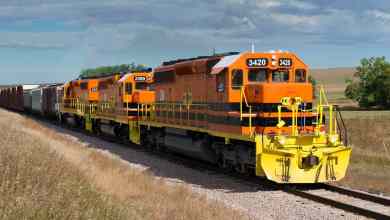
Genesee & Wyoming, Inc. (NYSE: GWR) beat fourth quarter revenue consensus estimates by $4.89 million. Revenue was expected to decrease by 0.2 percent year-over-year (Y/Y), but it increased 0.7 percent Y/Y from $571.6 million to $575.6 million, according to Seeking Alpha. GWR also beat fourth quarter consensus earnings per share (EPS) estimates of $0.89 by $0.11 to $1.00.
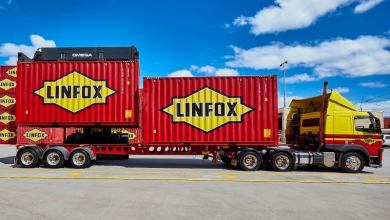
Rail operator Aurizon has completed the sale of its Queensland Intermodal Business to privately owned Australian logistics company Linfox. The Queensland Intermodal Business delivers general cargo for more than 300 customers across the state and includes a wide variety of freight including groceries, white goods and general goods.
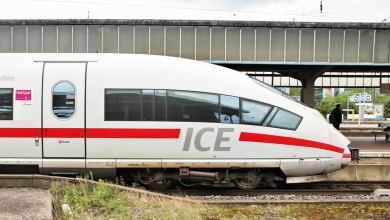
The European Competition Commissioner rejected the proposed merger of Alstom and Siemens’ rail businesses on the grounds that it would damage the market. But the German Government wants to change European competition law in a bid to create companies that are European champions.
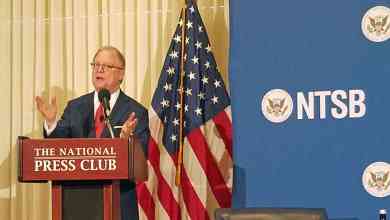
The railroads have delayed installing life-saving automatic braking technology for another two years, and the NTSB is running out of patience.
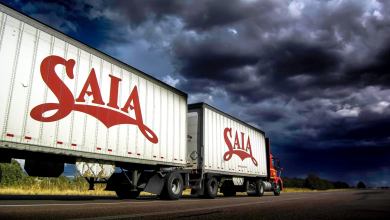
Not a gangbusters quarter for Saia or Schneider. But the numbers were strong for both and Merrill Lynch thinks the Schneider stock is undervalued.
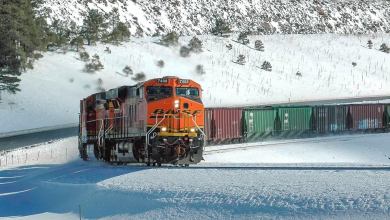
The Grain Transport Report, a weekly publication by the Agricultural Marketing Service (a division of the U.S. Department of Agriculture) released information showing that total export inspections for grain (corn, wheat and soybeans) declined 22 percent from the previous week.

Small, yet powerful satellites can now be deployed for just a fraction of the cost of more traditional satellites, potentially changing the way logistics companies access location and other data for assets.

Upheaval caused by the U.S.-China trade war has some freight interests uneasy about giving Trump more tariff power.
Five-year high in growth seen last year thanks to tariff front-loading and tight truck supply, but shippers likely to put brakes on growth this year.

Class 1 railroad warns of slowdown in shipments through major intermodal hubs as tracks crack under severe cold.
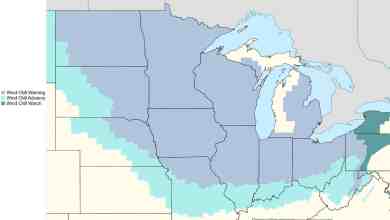
Class 1 railroads may have to shorten train lengths and reduce speeds to cope with cold, while drayage supply will also be tight.
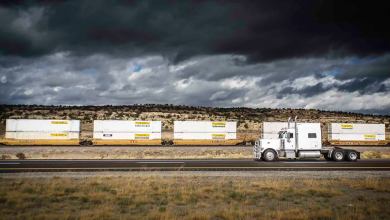
ELD impact substantive but short-lived, Hunt, NS executives say.
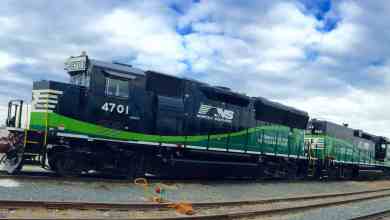
The still-high operating ratio came in for criticism while management says it will reveal all on February 11.
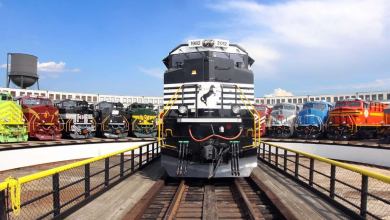
Hard commodity volumes were mixed, but intermodal and coal are better; pricing is the best in seven years.