Ending the confusion over per diem
In the last few weeks, there has been a lot of confusion in the driver community regarding the per diem, which has been eliminated for company drivers under the new Republican tax plan.


A lot has been spoken about how the freight industry is sluggish on the uptake with regard to adopting technology, but the truth is, the industry needs a better understanding of demographics than it does technology.
With third-quarter GDP coming in at 3.2% growth and fourth-quarter GDP also expected to best the 3% mark, which would be the third consecutive quarter of 3%-plus growth, and a newly minted tax plan promising to start moving the economy forward, times would appear to be ripe for trucking.
For business owners, one of the main questions surrounding the new tax law is the corporate tax rate. At 21%, it is lower than the pass-through rate for businesses, which is capped at 25%. That has some asking the obvious question: Should I change my company’s status from a pass-through corporation to a corporate structure?
It is estimated that truck driver vacancies have reached nearly 50,000 this year and if the trend continues, it could explode to six figures in the next decade. Could immigrants fill those gaps?
The days of drivers carrying around multiple credit cards to handle life on the road are quickly disappearing. Once, drivers might have a company credit card for expenses, a fuel card to pay for fuel, and even their own card for non-job-related expenses, but that is all changing as innovations in fuel cards might be making the company credit card obsolete.
The increasing use of mobile technology has spawned a new industry that many in trucking – from drivers to fleets – can take advantage of: peer-to-peer (P2P) payments.
When you run a trucking business that has weekly and daily bills such as salaries and fuel, but shippers pay at 30, 60 or even 90 days, ensuring you have the proper cash flow to maintain operations can be tricky. That’s why many owner-operators and smaller fleets have turned to invoice factoring.
Fuel surcharges have a long history in the transportation industry, dating back to the Arab oil embargo in 1973 by most accounts. While the early days of surcharges were straightforward to calculate, that is no longer true, and they may not even be the best way to manage costs anymore.
If your small trucking company seems like it is operating on a week-to-week basis, you are not alone. According to a new survey from Mercator Advisory Group, 75% of small businesses in the U.S. routinely delay purchases at least once or twice a year because of cash flow issues. You can minimize this impact, though, through proper planning.
There are times in every business owner’s life when you need cash. The business has hit a rough patch, an unexpected expense has arrived, or a new business opportunity has presented itself, but you don’t have the money to take advantage. So how do you get the money?
Filing your taxes can be confusing enough, try writing tax law. The complications in writing a tax law is one of the reasons the nation has not seen a major revamp of current law since the 1980s. Here are some of the key provisions in the draft bills.
As 2017 winds down, many carriers are taking a hard look at their tax situation. Is there anything they can do now that can reduce their tax liability? There is, and it comes in the form of equipment purchases.
Chances are pretty good you got into trucking to make money. Some carriers, though, continue to suffer through lean year. They are always running short of money, and can never seem to get ahead. Their problem may be their hauling rate.
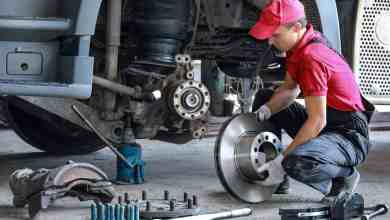
Whether you own a car, pickup or tractor-trailer, it’s a decision that we all face at some point: Should I just buy a new vehicle or continue to repair my current one?
Managing any small business can be stressful. The fact is many small businesses fail. The number one reason for small business failure is the lack of proper cash flow management, according to U.S. Bank. That’s why it’s so important to learn how to manage your cash when times are good.
Rates are going up, but how can your carrier grab the largest increase possible? There are many things to consider when it comes to rates, but it all starts with knowing your own costs.
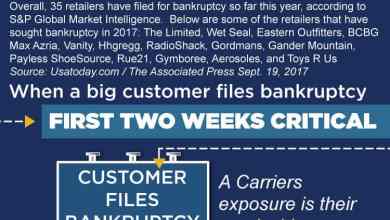
When one of your customers files for bankruptcy, do you know what to do? Taking the right the steps immediately can help ensure you will receive the money you are owed.
The first two weeks in after a bankruptcy filing of a customer are critical to ensuring you get paid. Trucking companies, especially smaller carriers and owner-operators, are often at the end of that line – the so-called unsecured creditors. But it doesn’t have to be that way.
When a major retailer such as Toys “R” Us files for bankruptcy, a long line of creditors comes knocking. Trucking companies, especially smaller carriers and owner-operators, are often at the end of that line – the so-called unsecured creditors. But it doesn’t have to be that way.