Regulations could slow down hyperloop
Hyperloop companies have raised hundreds of millions of dollars to develop a new, high-speed form of transportation, but regulatory frameworks haven’t yet caught up with their technology.
The supply chain stands at the crossroads of innovation, with the impact of technology felt in different micro-niches. Here is a look at some of the technologies that are showing considerable potential and looking to change the facade of freight hauling forever.
The concept of driverless trucks has recently jostled the transportation industry. However, truck drivers everywhere may be relieved to discover that world-renowned business tycoon, Warren Buffett, is betting a fortune on their livelihoods, and sees no need to worry about an impending AI driver revolution.
General Motors has advanced its next-generation fuel cell system, which is part of its concept SURUS (Silent Utility Rover Universal Superstructure) platform that was shown last week at the fall meeting of the Association of the United States Army. Whether commercial transportation is willing to adopt fuel cell technology, though, remains a question.
C.H. Robinson will implement Omnitracs’ Virtual Load View (VLV) application as it seeks ways to improve visibility into load tracking. The system will run alongside C.H. Robinson’s own Navisphere system.
Paper Transport, Inc. has been accepted as a member of the Blockchain in Transportation Alliance. Paper Transport, Inc. choose BiTA because of the alliance’s commitment to building a standard communication framework for the next generation of logistics providers.
Hyperloop has been touted as a way to move passengers long distances quickly, but it is most likely going to find its footing first in the freight world, according to those working to develop the technology.
While not new to the supply chain, technology is lowering barriers and offering new opportunities for 4PLs to move in and control entire supply chains, creating greater efficiency for all involved.
Sandeep Kar, one of the commercial vehicles industry’s most respected names has joined the TransRisk Board of Advisors. He brings decades of research and insights on the commercial vehicle market, along with a perspective on the impact of autonomous, electric, telematics, and blockchain technologies will have on the trucking industry.
The original celebrity billionaire strikes once again. Once calling himself “The Rebel Billionaire,” Richard Branson has officially joined the Board of Directors in charge of Hyperloop One, The Verge reports.
A lot of facts and figures get thrown out by startups in the trucking space. Its important to understand whether these facts are credible or not.
Bitcoin is super-hot and has fended off any real threat to its meteoric rise. We examine what has fueled this factor and how it impacts the viability of blockchain in the logistics sector.
Coyote Logistics, a UPS company and leading global third-party logistics service provider, announced today that it has joined the Blockchain in Trucking Alliance (BiTA).
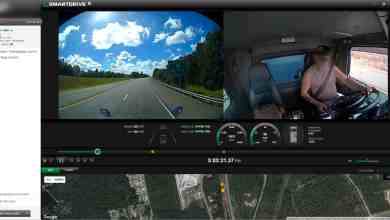
One of the primary problems plaguing the conventional freight industry today is the lack of affordable track-and-trace providers in the market that can provide real-time visibility to shipments. FreightTracer, a startup from Texas, is providing its customers real-time visibility into all their shipments – anytime and anywhere across any carrier.
The second largest e-commerce player in China has sealed the deal and will deploy the first automatic delivery vans to operate on the mainland. JD.com has confirmed the partnership deal made with Chinese automobile manufacturers Dongfeng Motor Corporation and Shanghai-based SAIC Maxus, China Daily reports.
After first acknowledging it was a developing a fuel-cell powered heavy-duty truck in the spring, Toyota is now set to unveil its Project Portal truck to the public through a demonstration program at the Port of Los Angeles that starts Oct. 23.
While the Federal Motor Carriers Safety Administration (FMCSA) has issued an exemption to the electronic logging device (ELD) rule for certain rental vehicles, the exemption has opened up several questions, including whether there is a potential loophole in the rule.
The Federal Motor Carrier Safety Administration (FMCSA) has granted a waiver to the Truck Renting and Leasing Association (TRALA) that will exempt all commercial rental vehicles from the electronic logging device (ELD) rule for drivers using a “property carrying commercial motor vehicles (CMVs) rented for 8 days or less.”
With the freight marketplace widening exponentially every year, the growing communication divide in the community is also significantly felt. Fr8Hub, a digital freight marketplace startup is looking to improve peer-to-peer interaction by creating transparency and injecting efficiency in freight hauling.
In the rush to develop autonomous, long-haul trucks (and trains) that could double productivity – driving for 24 hours a day with no need for rest – it may turn out that the competition for freight may really be in the sky.