




Container ship owner sees more potential in niche trade
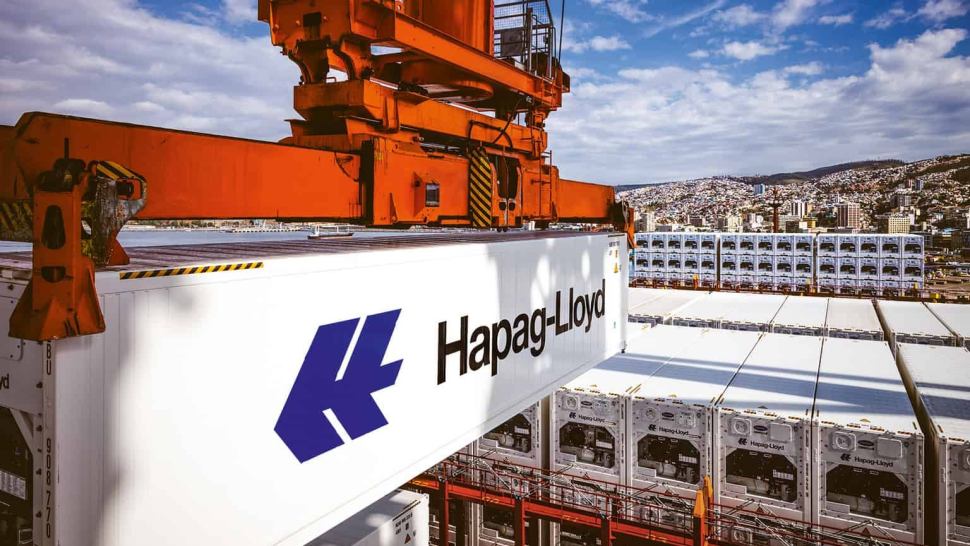
Hapag-Lloyd plans to add more refrigerated containers to its fleet, citing ongoing growth in the perishable items trade.
The fifth largest ocean carrier by capacity says it ordered 11,100 reefer containers, which will be added to its existing fleet of 91,000 reefer boxes now through this December.
Including the latest order, the Hamburg-based carrier has grown its reefer container fleet 29% since 2015. Along with adding 11,700 reefer containers through the UASC acquisition, the company added another 7,700 reefer boxes last year.
Clemens Holz, who heads the company’s reefer products, says the order stems from “increasing demand from clients to transport temperature sensitive goods,” such as food products and high-value pharmaceuticals.
Two thousand of the new 40’ containers are equipped with technology to slow down the ripening process and to extend the shelf life of fruits and vegetables.
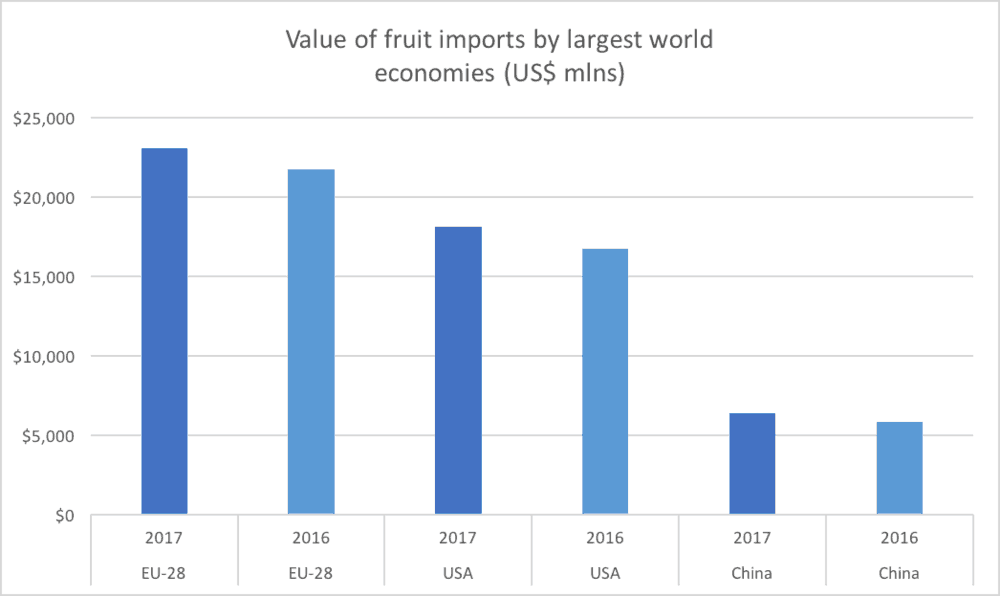
The value of fresh produce trades has been growing among the world’s leading economies. The U.S. saw 8% growth in fruit imports to $18 billion last year, according to UN Comtrade Data. China’s fruit imports grew 9% to $6.4 billion.
Maritime consultants Drewry said in a report earlier this month that seaborne reefer trade overall posted a 5% in 2017, reaching 124 million tonnes, an acceleration of the 3.6% growth seen in the trade over the previous decade.
More of the growth is going to refrigerated containers and away from specialized refrigerated containerships, with Drewry estimating the containerised reefer traffic rose 8% in 2017.
Despite additional production of refrigerated containers, Drewry says the supply of such boxes remains tight, particularly as carriers are reluctant to position empty reefer boxes far from ports.
Ocean carriers are also seeing better rates for refrigerated freight as those rates rose 3% in the last eighteen months versus a 14% decline in dry container rates.
“This demonstrates that despite broader weakness in the container shipping market, reefer rates have held up, rewarding those carriers that have chosen to invest in the cargo segment,” Drewry said.
But growth in the fresh produce trade may weaken due to inclement weather having affected crops and the potential impact of U.S. and Chinese tariffs.
Brokerage Compliance Symposium
The day before F3. Every compliance issue you face - fraud exposure, carrier liability, FMCSA rules, cargo theft, insurance gaps - navigated by attorneys and operators defining best practices in a changing industry.
F3 Awards Dinner
The night before F3. FreightTech100 companies honored. FreightTech 25 and Shipper of Choice winners revealed live. Cocktail reception into dinner and live music - 300 industry leaders in one purpose-built room.
F3: Future of Freight Festival
Industry-defining keynotes, rapid-fire technology demos, and industry leaders networking in experiences across Chattanooga - plus the inaugural F3 Awards Dinner featuring the FreightTech and Shipper of Choice reveals.
The day before F3. Every compliance issue you face - fraud exposure, carrier liability, FMCSA rules, cargo theft, insurance gaps - navigated by attorneys and operators defining best practices in a changing industry.
The Signal at Chattanooga Choo Choo • Chattanooga, TN Register NowThe night before F3. FreightTech100 companies honored. FreightTech 25 and Shipper of Choice winners revealed live. Cocktail reception into dinner and live music - 300 industry leaders in one purpose-built room.
The Signal at Chattanooga Choo Choo • Chattanooga, TN Register NowIndustry-defining keynotes, rapid-fire technology demos, and industry leaders networking in experiences across Chattanooga - plus the inaugural F3 Awards Dinner featuring the FreightTech and Shipper of Choice reveals.
The Signal at Chattanooga Choo Choo • Chattanooga, TN Register Now