Brake problems don’t start at the roadside—they start in the yard with poor maintenance. One of the most overlooked pieces of a truck’s braking system is the slack adjuster. Many small fleets and drivers either ignore it completely or, worse, adjust it at the wrong time. The result is uneven braking, premature wear, out-of-service violations, and higher accident risk. Here’s the truth: slack adjusters aren’t just about keeping your brakes in spec. They’re about keeping your trucks safe, your CSA score clean, and your margins intact.
The key is knowing when slack adjusters actually need adjustment, how to check them correctly, and how to avoid the costly mistake of “fixing” a problem that isn’t there.
Understanding What Slack Adjusters Do
Before you grab a wrench, you need to understand the role slack adjusters play. On air-braked trucks and trailers, slack adjusters link the brake chamber pushrod to the S-cam. When you press the brake pedal, air pressure pushes the diaphragm inside the chamber, extending the pushrod. The slack adjuster converts that push into rotation, which applies the brake shoes against the drum.
Without slack adjusters, your brakes wouldn’t function. But the adjuster’s job isn’t just movement—it also compensates for brake shoe wear. As linings wear down, the slack adjuster maintains the correct clearance between the shoe and drum. That’s why they exist: to keep braking consistent as components wear over time.
Here’s where most carriers get tripped up. There are two types of slack adjusters:
- Manual slack adjusters – Older style, require physical adjustments on a routine basis.
- Automatic slack adjusters (ASA) – The industry standard today, designed to self-adjust during normal braking.
And here’s the part many folks miss: if you have automatic slack adjusters, you should almost never need to manually adjust them. If you do, you’re treating a symptom, not the root problem.
The Danger of “Phantom Adjustments”
Too many drivers and mechanics think they’re helping by tightening an automatic slack adjuster every time they see extra pushrod travel. The problem is, ASAs are designed to self-correct. If they’re out of adjustment, it usually means something else is wrong—worn cams, bent brackets, weak return springs, or improper installation.
By manually adjusting an ASA, you’re covering up the defect. The brakes may look in spec for a week, but the underlying issue keeps getting worse until it fails. That’s how trucks end up with smoking drums on the highway or failing a roadside brake inspection.
Bottom line: If you have ASAs, the only time you adjust them manually is after they’re installed or replaced. If they’re constantly out of adjustment, you’ve got a mechanical problem that needs fixing, not a quick wrench turn
How to Check Slack Adjusters the Right Way
Whether you’re running manuals or ASAs, checking pushrod travel is a non-negotiable part of your inspection routine. Here’s how to do it correctly:
- Chock the wheels – Never start without securing the truck. Brakes are powerful, and safety comes first.
- Release the parking brake – Pushrods must move freely.
- Apply 90–100 PSI air pressure – Use the brake pedal or a helper to achieve full application pressure.
- Measure pushrod travel – Use a brake stroke gauge or ruler. Measure how far the pushrod extends from the chamber face at full application.
FMCSA limits pushrod travel depending on chamber size and type. For example:
- Type 30 chamber, short stroke → max travel 2 inches
- Type 30 chamber, long stroke → max travel 2.5 inches
If your pushrod travel exceeds those limits, the brake is out of adjustment.
Here’s the critical piece: If you’ve got manual adjusters, this is the time to reset them. If you’ve got ASAs, this is the time to troubleshoot why self-adjustment isn’t happening. Don’t just crank the bolt and call it good.

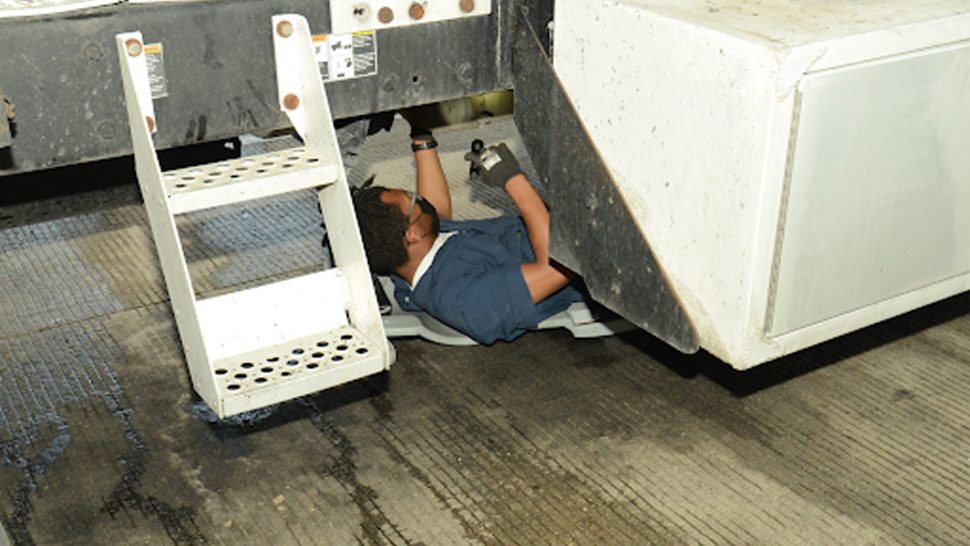
(Photo: ARES Tool. Manual slack adjusters require precise adjustment — one full turn too far and you’ve compromised braking performance. Knowing when and how to adjust safely can be the difference between passing inspection and getting parked.)
How to Adjust Manual Slack Adjusters
For fleets still running manual slack adjusters, adjustment is part of normal preventive maintenance. Here’s the correct procedure:
- Rotate the adjusting bolt clockwise until the brake shoes contact the drum and you feel resistance.
- Back the bolt off a quarter to half turn to set proper clearance.
- Recheck pushrod travel with a full brake application to ensure you’re back within FMCSA limits.
Never leave a manual adjuster tightened all the way down. That creates constant brake drag, which overheats drums, cracks linings, and wastes fuel. The goal is proper clearance—not a locked-up brake.
When Automatic Slack Adjusters Need Attention
If your fleet is newer, you’re almost certainly running ASAs. In that case, the question is not “how often should I adjust them?” but “why aren’t they adjusting themselves?” Common causes include:
- Improper initial installation or setup
- Worn cam bushings or rollers preventing movement
- Weak return springs in the foundation brake
- Drivers not applying enough full-pressure brake applications during operation
The fix here is not a wrench. It’s for inspection and repair. If you’re finding an ASA constantly out of spec, replace it and correct the root cause. Treating ASAs like manuals is what leads to roadside violations—and those violations hit your CSA score hard.
Building Slack Adjuster Checks Into Your Maintenance System
Slack adjusters are one of the top violations during CVSA Roadcheck every single year. That means DOT inspectors are looking for them, and carriers who ignore them pay the price in fines, downtime, and reputation.
Here’s how to systemize it:
- Pre-trip and post-trip inspections – Train drivers to physically tug on slack adjusters. If they can move more than an inch by hand (with brakes released), that’s a red flag.
- Quarterly PMs – Have mechanics measure pushrod travel on every axle. Document it.
- ELD maintenance reminders – Set up intervals inside your ELD for brake checks tied to mileage or time, just like oil changes.
Documentation is key. If you ever face litigation after a brake-related accident, being able to pull service records that prove you checked pushrod travel and corrected it saves you in court.
The Cost of Getting It Wrong
Brakes are the last system you want to gamble with. Misadjusted slack adjusters don’t just create out-of-service violations. They can create real accidents. Uneven brakes mean some axles do all the work while others barely engage. That’s how you get longer stopping distances, jackknifes, or trailer swings.
Financially, the cost adds up fast:
- Roadside OOS fine: hundreds of dollars per truck
- Tow bill: $1,000+
- Emergency brake repair: $2,000+ depending on damage
- CSA severity points: damage your safety profile for two years
- Accident liability: potentially millions
All because someone ignored—or misadjusted—a slack adjuster.
The Right Mindset Around Slack Adjusters
The fleets that run safest and most profitable don’t wait for DOT to tell them their brakes are out of adjustment. They catch it in the yard, fix it at the shop, and track it in their records. That mindset separates professional carriers from operators running on luck.
Slack adjusters aren’t complicated, but they require respect. Manuals need consistent attention. Automatics need troubleshooting, not shortcuts. And both need documentation.
Final Word
Slack adjusters are small components that carry big weight in your operation. Treat them wrong, and you’ll pay in downtime, fines, or worse, an accident. Treat them right, and they quietly keep your brakes in spec, your CSA scores clean, and your drivers safe.
Here’s the bottom line: If you’re running manuals, adjust them correctly and consistently. If you’re running automatics, don’t fall into the trap of constant manual tweaks—find the root problem and fix it. And no matter what you run, build slack adjuster checks into your pre-trips, PMs, and ELD reminders so nothing slips through the cracks.
In trucking, the small details separate the carriers who survive from the ones who scale. Slack adjusters may look small, but if you respect them, they’ll protect your entire business.
Brokerage Compliance Symposium
The day before F3. Every compliance issue you face - fraud exposure, carrier liability, FMCSA rules, cargo theft, insurance gaps - navigated by attorneys and operators defining best practices in a changing industry.
F3 Awards Dinner
The night before F3. FreightTech100 companies honored. FreightTech 25 and Shipper of Choice winners revealed live. Cocktail reception into dinner and live music - 300 industry leaders in one purpose-built room.
F3: Future of Freight Festival
Industry-defining keynotes, rapid-fire technology demos, and industry leaders networking in experiences across Chattanooga - plus the inaugural F3 Awards Dinner featuring the FreightTech and Shipper of Choice reveals.
The day before F3. Every compliance issue you face - fraud exposure, carrier liability, FMCSA rules, cargo theft, insurance gaps - navigated by attorneys and operators defining best practices in a changing industry.
The Signal at Chattanooga Choo Choo • Chattanooga, TN Register NowThe night before F3. FreightTech100 companies honored. FreightTech 25 and Shipper of Choice winners revealed live. Cocktail reception into dinner and live music - 300 industry leaders in one purpose-built room.
The Signal at Chattanooga Choo Choo • Chattanooga, TN Register NowIndustry-defining keynotes, rapid-fire technology demos, and industry leaders networking in experiences across Chattanooga - plus the inaugural F3 Awards Dinner featuring the FreightTech and Shipper of Choice reveals.
The Signal at Chattanooga Choo Choo • Chattanooga, TN Register Now