Trucking congestion costs hit record $94.6B

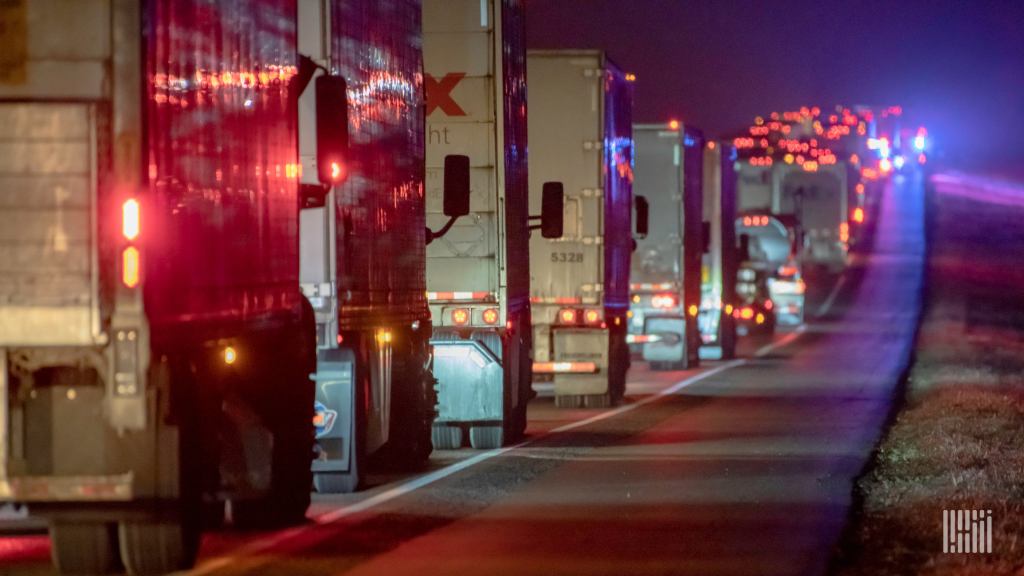
Congestion cost trucking companies a record $94.6 billion in 2021, according to a new study published by the American Transportation Research Institute, with Nevada, Louisiana, Georgia and California seeing the biggest rate increases from a 2016 baseline.

“Whether it is recurring congestion or incident-related, the result is reduced capacity and a slowdown in vehicle speeds, which adds time to a trip,” stated ATRI, a nonprofit trucking research group, in its first congestion study update since 2018.

“These delays increase the trucking industry’s operational costs. Traffic congestion increases direct industry costs such as driver compensation, fuel, and repair and maintenance. It also generates indirect and/or societal costs such as supply chain disruptions, inefficient use of fuel and diminished air quality.”

ATRI’s 2021 congestion costs — based on the cost-per-hour to operate a truck, average truck highway speeds and the most recent truck volume data — were 22.4% higher than 2020’s and 27% higher than the 2016 baseline. During that same five-year period, the Consumer Price Index, a measure of inflation, increased 12.9%, ATRI noted.
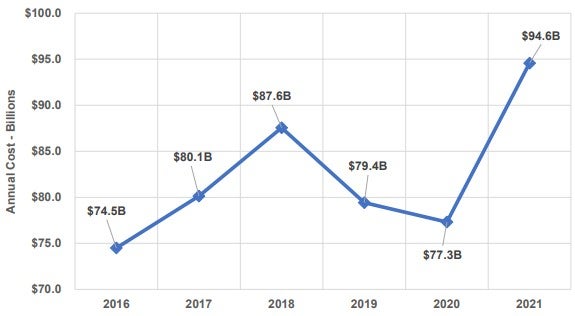

Cost of congestion, 2016-2021. Source: ATRI

“Thus, congestion costs for trucks rose at more than twice the rate of the CPI as a result of increased industry costs, congested roadways and a record high national truck VMT [vehicle miles traveled] in 2021.”

Rapidly increasing diesel prices between 2020 and 2021, along with increases in trucking rates and volumes, were significant contributing factors to the record-high cost of congestion, the group stated.

The four most populous states — California, Texas, Florida and New York, respectively — also had the highest congestion costs, ranging from $4.9 billion for New York to $9 billion for California in 2021.

But Nevada, Louisiana and Georgia saw the highest percentage increases compared with 2016, at 117.2%, 83.3% and 81.3%, respectively. California was fourth, with congestion costs there increasing 77.9%. Alaska had the lowest state-wide congestion costs ($62 million), while Alaska, Wyoming, and Hawaii had the largest percent decreases since 2016 (20%, 18.2%, and 9.4%, respectively).

The study pointed out that when the overall congestion cost is distributed across the country’s registered tractor-trailers, the average annual cost per truck is $6,824 — equal to 3% of the average annual revenue generated per truck in the truckload sector in 2021, according to ATRI.
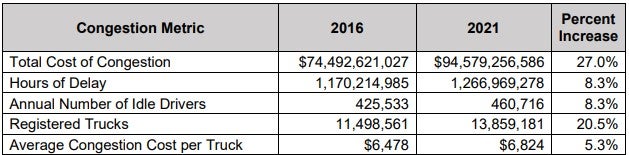

Cost of congestion statistics, 2016 vs. 2021. Source: ATRI

The group plans to update the study annually, making it a tool to help Congress gauge the need for infrastructure investments.

“While the federal fuel taxes have not been raised since 1993 and most states have been forced to dramatically reduce infrastructure spending relative to needs, the 117th U.S. Congress did pass a landmark infrastructure spending bill that generates more than $350 billion dollars in dedicated transportation spending,” according to the study.

“By the end of Year 2 of the five-year IIJA [Infrastructure Investment and Jobs Act] program, transportation projects totaling more than $74 billion had been awarded or announced, ostensibly focused on congestion reduction, road safety and/or freight transportation priorities.”
Click for more FreightWaves articles by John Gallagher.

Landstar sees continuation of soft freight market in Q4

Broker Landstar System told analysts on a conference call Thursday that freight volumes are likely to stay sub-seasonal through the fourth quarter. The company reported an in-line third-quarter result Wednesday after the market closed but its fourth-quarter outlook was light of expectations.

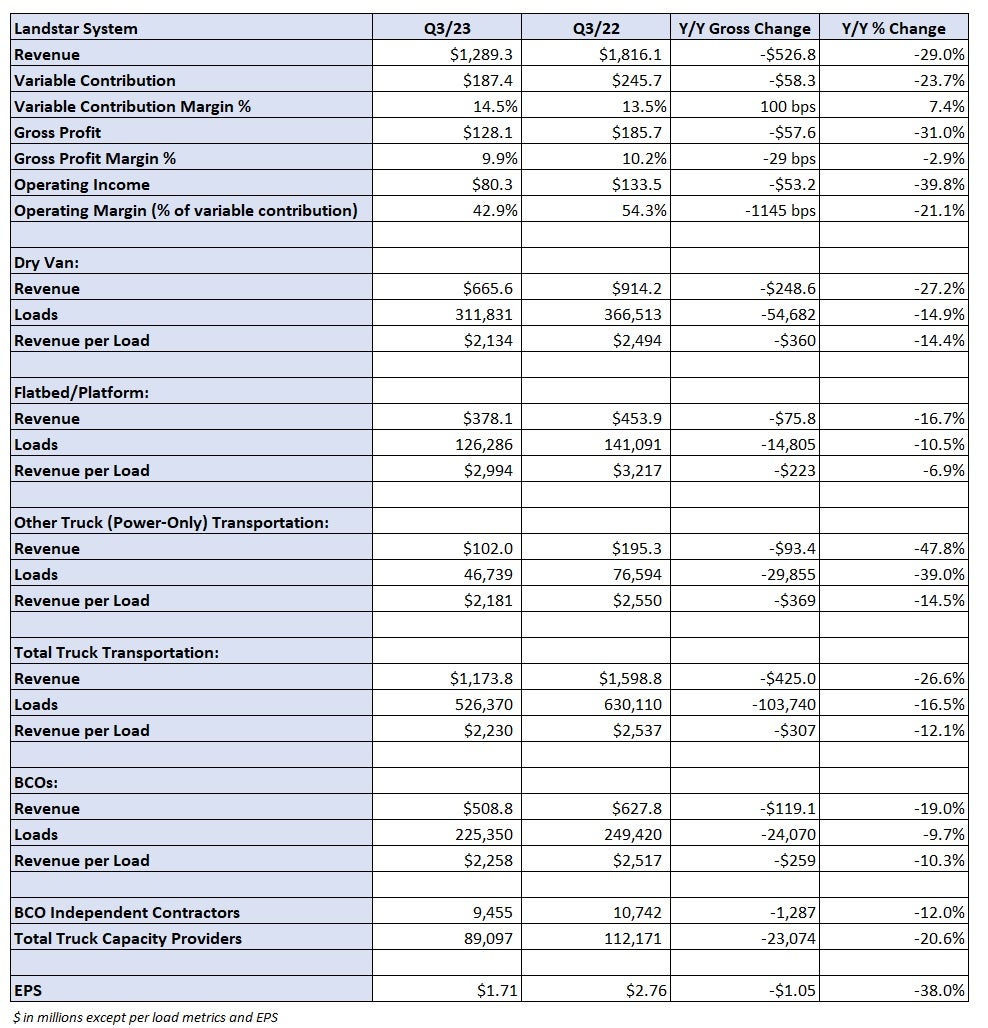
Landstar (NASDAQ: LSTR) reported third-quarter earnings per share of $1.71, in line with the consensus estimate but $1.05 lower year over year (y/y). The company reported a 29% y/y decline in total revenue to $1.289 billion. Both results were near the middle of management’s guidance ranges.

Total truck transportation revenue was off 27% y/y as loads fell 17% and revenue per load was down 12%. Landstar saw modest degradation in trends when compared to the second quarter. Loads were down 6% sequentially and revenue per load was off just slightly.

“Lackluster demand, driven by continued weakness in the U.S. manufacturing sector and the ongoing impact of an inflation-challenged consumer goods sector, plus the continuation of a loose truck capacity market drove Landstar’s truck revenue per load and volumes in the 2023 third quarter below prior year levels,” Jim Gattoni, president and CEO, stated in a news release.

The company’s guidance for the fourth quarter was worse than expected. Loads hauled by truck are underperforming seasonality so far in October, with revenue per load “reasonably in-line with these historical, pre-pandemic sequential patterns,” Gattoni continued.  

The company is calling for fourth-quarter revenue of $1.225 billion to $1.275 billion, which was lower than the consensus estimate of $1.37 billion at the time of the print. Loads hauled by truck are expected to decline 20% to 22% y/y, and revenue per load is expected to decline 6% to 8%. The guidance assumes a muted peak season and accounts for one fewer operating week in the 2023 fourth quarter than in the same period last year.

Gattoni said it may be next summer, or eight full quarters into a downturn, before revenue per load inflects positively y/y. On the July call, he was leaning closer to a six-quarter downturn. He noted the spread between contract and spot rates continues to hover around 40 cents and hasn’t changed much over the last eight months. He says until it narrows, or freight demand turns meaningfully positive, he doesn’t expect shippers to come back to the spot market.

Landstar’s quarterly revenue peaked in the second quarter of 2022, five quarters ago.

At the midpoint of the ranges, the new guidance implies loads will be 5% lower than in the third quarter but revenue per load will increase 1.5% sequentially. Gattoni said volumes have only been modestly impacted so far by work stoppages across the auto sector.

Fourth-quarter EPS is forecast to a range of $1.60 to $1.70, which was below the $1.84 consensus estimate.

Table: Landstar’s key performance indicators

Total truck capacity on Landstar’s platform fell 9% from the second quarter to fewer than 90,000 providers. Trucks provided by the company’s business capacity owners were 3% lower sequentially.

The truck count among BCOs has fallen back to lows last seen in the early days of the pandemic and may not snap back until the economy turns. The group normally weathers downturns better than other operators but management said the extended length of the current freight recession has possibly purged some from the industry. During the quarter, BCOs saw a 10% decline in revenue per mile, which only slightly outperformed the broader metric on Landstar’s platform.

Variable contribution, or revenue less purchased transportation and commissions, fell 24% y/y to $187 million. The contribution margin improved 100 basis points to 14.5% as purchased transportation expenses as a percentage of revenue declined 150 bps. Also, management called out a favorable mix shift toward BCOs as a contributor.

The company has generated $304 million in cash flow from operations year to date, which is 30% lower than the same period last year. It reduced its debt-to-capital ratio 400 bps y/y to 7% during the quarter.

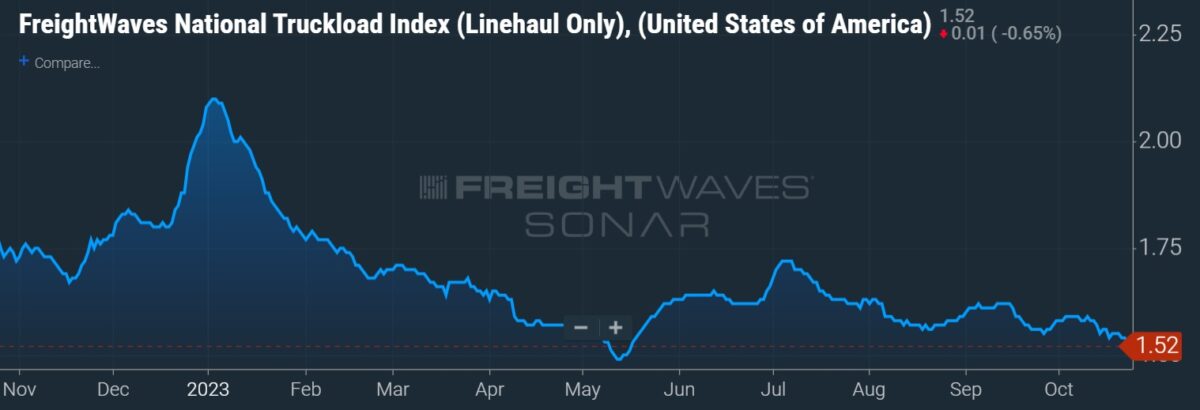
Chart: (SONAR: NTIL.USA). The National Truckload Index (linehaul only – NTIL) is based on an average of booked spot dry van loads from 250,000 lanes. The NTIL is a seven-day moving average of linehaul spot rates excluding fuel. Spot rates are still 14% lower y/y. To learn more about FreightWaves SONAR, click here.

More FreightWaves articles by Todd Maiden

Canadian Pacific Kansas City sees Q3 net income fall 12%

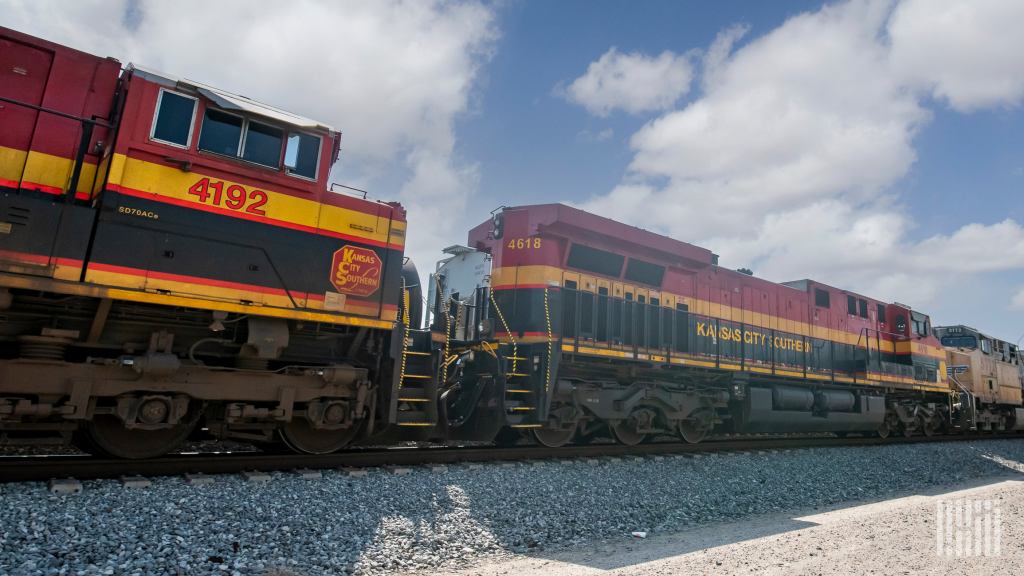
A freight train locomotive with Kansas City Southern emblazoned on the side.

A 44% increase in combined revenue in the third quarter was not enough to offset higher expenses at Canadian Pacific Kansas City.

The railway reported net profit of CA$780 million (US$565 million) in the third quarter of 2023, down 12% year-over-year (y/y) from CA$891 million. Diluted earnings per share in the third quarter was US$0.84, compared with US$0.96 y/y. All figures except earnings per share are in Canadian dollars.

Overall revenue totaled CA$3.3 billion in the third quarter, compared with CA$2.3 billion y/y. The third-quarter 2023 revenue figure represents the financial results of a combined CP and Kansas City Southern against CP’s results alone in the third quarter of 2022. If calculating what a combined CP and KCS financial result would look like for the third quarter of 2022, revenue would be down 4%.

Operating expenses were CA$2.2 billion, compared with nearly CA$1.4 billion.

“We are now more than six months into the CPKC story, and I am pleased with the progress we continue to make in unlocking the value of this unrivaled truly North American network,” CPKC (NYSE: CP) President and CEO Keith Creel said in a Thursday release. Creel was referring to the merger between Canadian Pacific and Kansas City Southern last March. “While we encountered challenges this quarter due to a softer macro-economic environment and external labor disruptions, we remain focused on safely delivering for our customers across this powerful franchise.”

“Economic headwinds and other near-term challenges, including the Port of Vancouver strike, have weighed on volumes more than we anticipated; therefore, we are adjusting our near-term guidance accordingly,” Creel continued. “Our enthusiasm for this combination and the long-term value it will produce remains unchanged as we stay focused on executing CPKC’s unique and undeniable growth opportunities.”

Subscribe to FreightWaves’ e-newsletters and get the latest insights on freight right in your inbox.

Click here for more FreightWaves articles by Joanna Marsh.

UPS acquires reverse logistics company Happy Returns

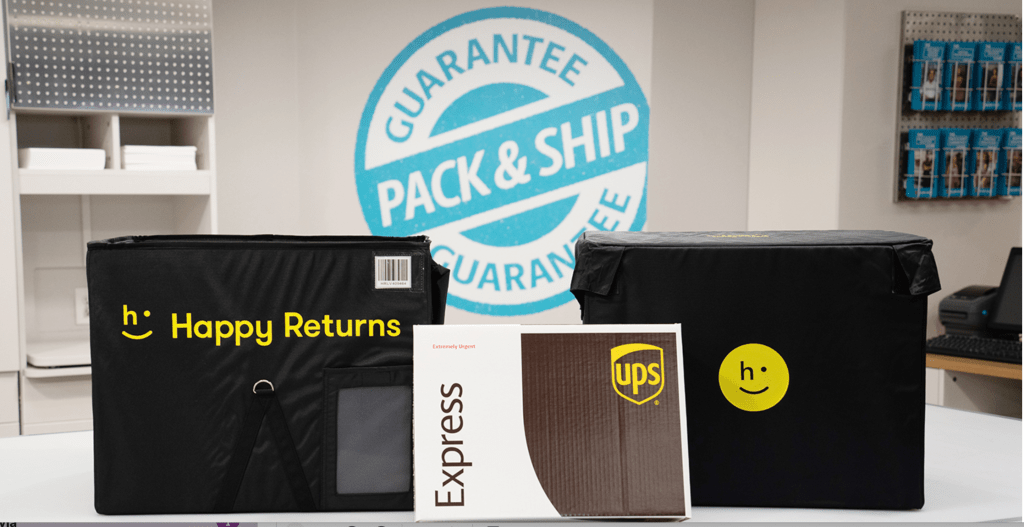
Just in time for the peak season’s reverse logistics cycle, UPS Inc. (NYSE: UPS) said late Wednesday that it acquired Happy Returns, a returns management software company, from PayPal Holdings Inc. (NASDAQ: PYPL) for an undisclosed sum.

The transaction is set to close during the fourth quarter of 2023, ahead of the peak season’s returns period, which typically starts after Christmas and runs through mid-January. UPS said it will attempt to scale the service to as many locations as possible by the end of the year, a spokesman said.

Founded in 2015 and based in Los Angeles, Happy Returns specializes in no-box, no-label returns. It works with about 800 merchant consumers to facilitate the returns process. UPS will pick up and deliver all returned items.

The transaction expands UPS’ footprint in the fast-growing online returns segment. Demand for returns management solutions has increased along with e-commerce activity. Online returns is a different and more complex process than the traditional return-to-store transaction because there is no fixed store location to accept returned items. In addition, consumers increasingly order multiples of the same product, decide to keep one item and return the rest.

“We know that returns have long frustrated shoppers and retailers looking for quick and easy solutions,” UPS CEO Carol B. Tomé said in a statement announcing the deal. She said that box- and label-free returns will eventually be available at more than 12,000 U.S. drop-off points.

Rush Enterprises keeps momentum in softening Class 8 aftermarket

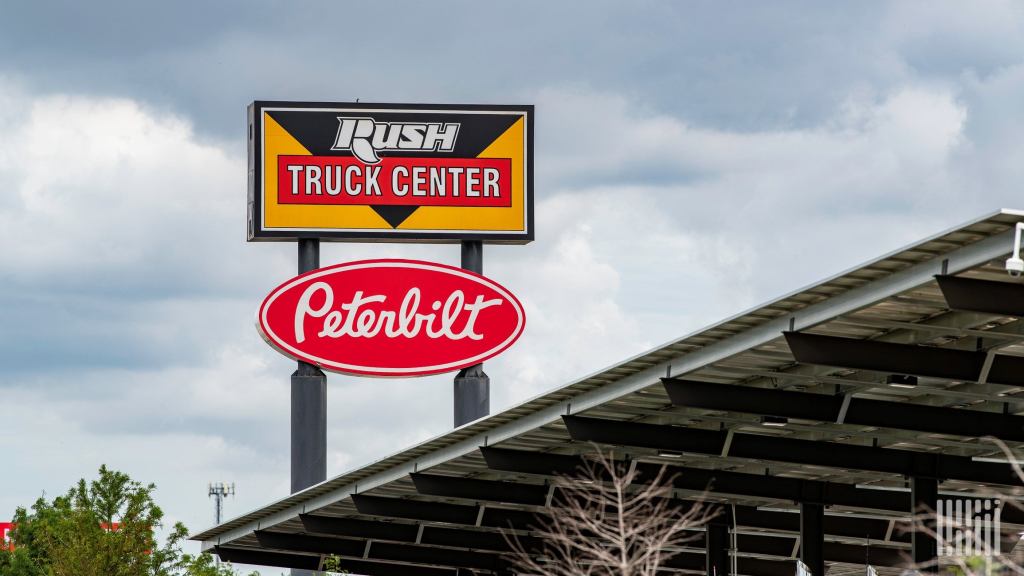
Rush Enterprises signage

High interest rates and low freight rates slowed the growth of Class 8 aftermarket sales at Rush Enterprises in the third quarter. But the nation’s largest network of truck dealerships found plenty of offsets to support strong overall results.

Class 8 truck sales rose 3% compared with a year ago, a period of severe constraint as OEMs began to meet pent-up demand that mushroomed during the pandemic.

“Our over-the-road customers … are being negatively impacted by high interest rates, and low freight rates,” said W.M. “Rusty” Rush, CEO, company chairman and president. “These conditions, along with rising fuel prices, which are especially difficult for small carriers to navigate, [escalated] in the third quarter and slowed aftermarket growth across the industry.” 

Rush sold 4,326 new Class 8 trucks, mostly Peterbilt and Navistar International models. That accounted for 6.1% of the U.S. market and 2.1% of the new Canadian market.

The company sold 3,244 new Class 4 through 7 medium-duty commercial vehicles in Q3, up 0.7% compared to the third quarter of 2022. That represented 4.8% of the U.S. and 2.3% of Canada’s Class 5 through 7 new commercial vehicle market.

‘Operating within the confines of truck allocation’

Increased production helps, but some body companies lag in completing upfits of medium-duty trucks, Rush said.

“In the third quarter, we were still operating within the confines of truck allocation. But new truck production continued to improve, resulting in significantly shorter lead times for new truck purchases,” Rush said.

Strong demand in the refuse, public sector, wholesale and energy segments offset flattening over-the-highway Class 8 aftermarket revenues. Used truck pricing and demand will likely remain slack as values continue to decline at an accelerated rate. The rate of decline decreased in Q3. 

“We are well positioned to strategically manage our inventory and pricing to get through these challenges,” Rush said. The company capped its purchase of used trucks in February, preferring to wait for prices to rebound.

Though slowing, aftermarket products and services accounted for approximately 59% of the company’s gross profits in Q3. Parts, service and collision center revenues totaled $643.6 million, up 3.5% compared to the third quarter of 2022.

Overall, Rush reported gross revenues of $1.98 billion, a 6.2% increase from gross revenues of $1.86 billion in the year-ago quarter. Q3 net income was $80.3 million, or 96 cents per diluted share, compared to net income of $90.4 million, or $1.06 a year earlier.

Class 8 aftermarket pressure may worsen

The pressure on the Class 8 aftermarket business may worsen before it improves.

“Moving forward, we expect that aftermarket revenues will continue to be negatively impacted by economic conditions affecting over-the-road customers, and we also believe that the industry may experience some deflation with respect to the prices of certain commodity parts,” Rush said in a news release.

The Q3 absorption ratio of 132.8% compared to 136.2% a year ago. Absorption ratio reflects how much operating cost is covered by fixed operations such as service, aftermarket parts and collision repairs. Anything above a 100% absorption ratio becomes profit.

Rush Enterprises plans 3:2 stock split following strong Q2

Falling used truck prices push largest dealership network to sidelines

Parts sales drive Q1 profits at Rush Enterprises

Click for more FreightWaves articles by Alan Adler.

North American peak inventory levels balanced, DHL unit CEO says

North American manufacturers and retailers hold sufficient in-stock inventory heading into the peak-season cycle, the CEO of North America for contract logistics giant DHL Supply Chain said Wednesday.

In a phone interview, Scott Sureddin said his customers have the “right amount of inventory” to manage peak volumes without facing the risk of stockouts or overordering. Sureddin added that the market for warehouse space in the U.S. and Canada remains “tight.” Rent increases, which have been a fact of life for warehouse users for years, have abated somewhat, he added.

Sureddin said the DHL unit expects this year’s peak activity to be similar to last year’s. DHL Supply Chain’s customers, which cover many big brands across multiple industries, are forecasting higher revenues on flat year-over-year volumes. That is a function of higher inflation leading to increases in selling prices, as well as changes in product mix, he said.

“In all, we’re looking at a balanced inventory picture” heading into peak, Sureddin said.

Based in Westerville, Ohio, DHL Supply Chain operates 529 sites covering 161 million square feet. The company also builds 5 million to 7 million square feet per year through an in-house real estate operation. E-commerce accounts for between 20% and 25% of its volumes, Sureddin said.

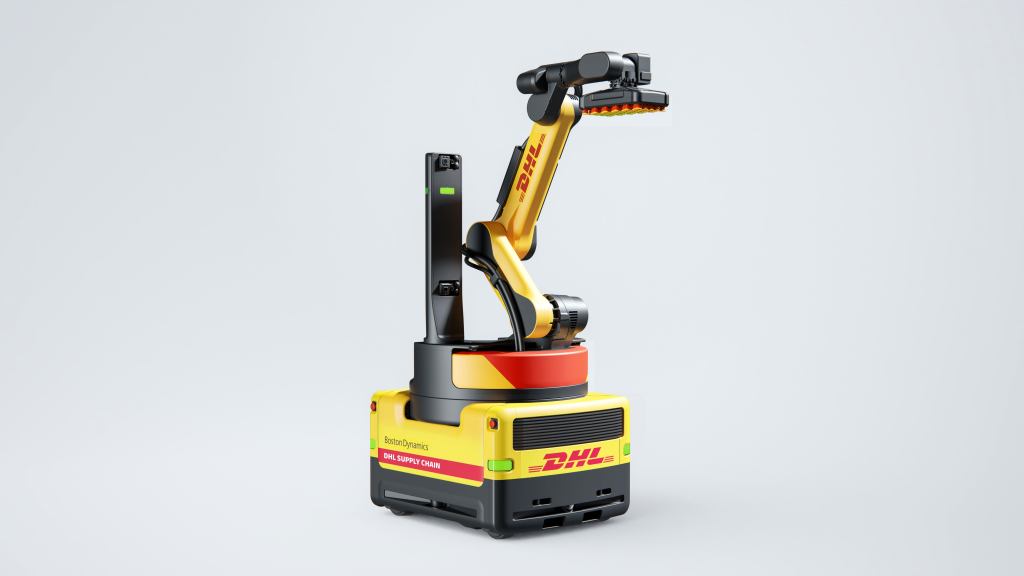
DHL Supply Chain expects to add about 8,000 seasonal workers to accompany 52,000 year-round employees. It also expects to bring on 700 collaborative robots — known as cobots — to join the 1,500 robots used year-round. The robots typically work along with humans in the warehouse.

Unlike the past three peak seasons when warehouse labor availability was tight, labor markets have stabilized heading into the 2023-24 cycle, Sureddin said. The company’s application flow is up 40%, and it is receiving more applicants for jobs than it has in recent years. “The labor market has stabilized,” he said.

Workers can expect base salaries that are comparable to wages that prevailed at the beginning of 2023 when the DHL unit raised wages, Sureddin said. Workers will also be eligible for seasonal incentives as they have in past peaks.

Carter signed polarizing anti-rebating bill into law in 1979

FreightWaves Classics is sponsored by Old Dominion Freight Line — Helping the World Keep Promises. Learn more here.

FreightWaves explores the archives of American Shipper’s nearly 70-year-old collection of shipping and maritime publications to showcase interesting freight stories of long ago.

In this week’s edition, from the July 1979 issue, FreightWaves looks at President Jimmy Carter’s signature on a bill that was long awaited by the Federal Maritime Commission but was considered a defeat for state and justice departments. 

President shifts position to sign anti-rebating bill

President Carter on June 19 gave the Federal Maritime Commission something it has been wanting for a long time — his signature on an anti-rebating bill.

The President’s action represents a major turn-about from last Fall when he pocket vetoed essentially the same legislation. The enactment of the new anti-rebating law, officially called the “Shipping Act Amendments of 1979,” also represents a major maritime policy defeat for both the State and Justice Departments whose opposition to the legislation is well known.

The Commission will now be armed with authority to deal with rebating and other malpractices in the U.S. foreign trades since the new law gives FMC power to suspend rates of ocean carriers who refuse to produce documents requested by the agency.

Daschbach Comments

FMC Chairman Richard J. Daschbach obviously was pleased by the President’s decision:

“I am very pleased and gratified by the action taken by President Carter and the Congress in enacting the new anti-rebating law,” the FMC chairman said. “I believe that this new law will prove invaluable in helping the Commission to restore stability and equity to U.S. ocean commerce, and that enactment of this law should help eliminate existing disparity in our ability to conduct anti-rebating investigations and when necessary, apply anti-rebating sanctions to U.S. and foreign flag carriers alike. The Commission will be developing rules promptly for the implementation of this valuable new law.”

Meanwhile, American Shipper has learned from a highly-reliable source that a group of American flag steamship lines have gathered evidence that hard cash rebating has been resumed by at least two foreign steamship lines. The group of U.S. carriers will turn this evidence over to FMC within one month for action under the new law.

Johnston’s role 

It is understood the President’s Interagency Maritime Task Force Chairman William B. Johnston and Seafarers’ International Union (SIU) President Paul Hall played a major role (at the White House level) in the successful outcome of the legislation.

Although the bill had solid votes in both the Senate and House, most observers were caught by surprise over the President’s signing of the bill. The bill passed both houses of Congress recently by a voice vote, which was essentially a repeat of last year, when the President vetoed the legislation upon the urging of the State and Justice Departments due to the fact that international discussions involving rebating were on the threshold at that time. (For coverage, see the December, 1978 issue of American Shipper, pages 12 and 13.)

Statute’s provisions

Essentially the bill gives the Commission tariff suspension authority over carriers refusing to comply with subpoena or discovery requests issued by FMC in connection with a rebating investigation; substantially hikes civil penalties for violations of the statute; and requires certifications from U.S. and foreign lines forwarders, plus shippers attesting to company policies and efforts to outlaw rebating.

The new law increases malpractice penalties from $5,000 per violation to $25,000 maximum, tariff transgression fines from $1,000 per day to $5,000 per day. For rebating violations, the fines have been increased from $1,000 per day to a maximum of $25,000 per shipment. Furthermore, the statute slaps a maximum $50,000 fine per shipment on carriers continuing to transport freight under a suspended tariff.

The President’s action also drew praise from House Merchant Marine and Fisheries Committee Chairman John M. Murphy (D-NY).

Murphy viewed the new law as “an essential timber in the framework of legislation which we must build if we are to solve the problem and deficiencies of the 1916 Shipping Act and develop a coherent national maritime policy.”

Continuing, Murphy said: “The practice of rebating, where carriers offer secret kick-backs to attract more cargo for their ships, has been virtually impossible to curb when the wrongdoers are operators of foreign flag vessels. Since rebating transactions generally take place overseas, it is essential that documents providing evidence of these practices be made available to the Federal Maritime Commission (FMC). Unfortunately, foreign governments have seen fit to block their nationals from releasing this information.

“For the first time, foreign flag ocean carriers will be required to comply with Commission subpoenas and discovery orders or face exclusion from our trades. We will see an end to the rank discrimination against U.S. flag carriers.”

FreightWaves Classics articles look at various aspects of the transportation industry’s history. Click here to subscribe to our newsletter!

Have a topic you want us to cover? Email bjaekel@www.freightwaves.com.

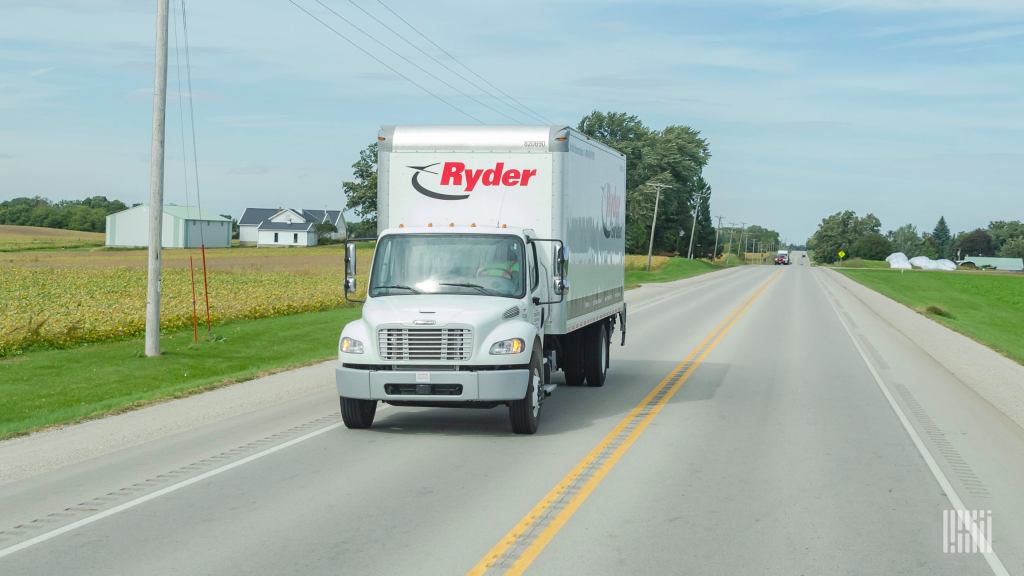
Ryder CEO sees freight market nearing ‘bottom’

Ryder System Inc.’s third-quarter net income declined 35% year over year (y/y) compared to the same period in 2022, as demand for rental trucks and fleet management softened.

The Miami-based company announced its third-quarter earnings before the market opened Wednesday.

“As we see things that continue to decline, the freight cycle is probably nearing a bottom here over the next quarter or two,” Chairman and CEO Robert Sanchez said later during a call with analysts. “We’re assuming that the market will remain soft, probably to the middle of next year, and then as we get into the back half of next year, we would expect things to start to come back up.”

Ryder (NYSE: R) posted net income of $161 million, or $3.47 a share, during the third quarter, down from $246 million, or $4.82 a share, in the same year-ago period.

During the third quarter, Ryder posted total revenue of $2.9 billion and adjusted earnings per share of $3.58, missing analysts’ estimates of $3.01 billion but beating the EPS prediction of $3.22.

“We do have [market] visibility across a lot of customers, and this quarter, we saw continued softness with transports in apparel and retail, which still seems to be relatively soft, and housing, things like furniture, and housing support-type products are down,” Sanchez said. “But we do still see strengths, and we did see strength in the consumer packaged goods sector. In automotive, we saw automotive production really strong in the quarter. We saw strengths in industrial industries, a little bit of a mixed bag, but the industrial customers that we have still saw some good strength.”

The leasing, fleet management, transportation and supply chain solutions provider increased its full-year 2023 outlook for adjusted earnings per share of $12.60 to $12.85, up from $12.20 to $12.70.

Ryder also adjusted its full-year return-on-equity forecast to 18% to 19%, up from 17% to 19%. The company’s full-year forecast for net cash-from-continuing-operations is $2.5 billion; and its adjusted free-cash-flow forecast for the full-year is $100 million.

Ryder’s flagship Fleet Management Solutions segment saw revenue during the third quarter decrease 6% on a y/y basis to $1.48 billion. Revenue for the company’s Supply Chain Solutions declined 1.6% y/y to $1.19 billion, and the Dedicated Transportation Solutions segment slipped 1.5% y/y in Q3 to $448 million.

Despite declining revenue across the company’s three operating segments, Sanchez said “all three business segments achieved EBITDA [earnings before interest, taxes, depreciation and amortization] margins for the second consecutive quarter.”

“Our enhanced asset management playbook is enabling us to generate higher earnings in each phase of the cycle,” Sanchez said.

Over the past several years, Ryder has shifted its revenue mix toward its supply chain and dedicated segments, with 55% of 2023 revenue expected to be from the two asset-light businesses, compared to 44% in 2018, Sanchez said.

During the third quarter, Ryder sold 6,500 used vehicles, compared to 5,000 during the same quarter in 2022, but posted lower gains due to a 30% and 31% decrease in used truck and tractor pricing, respectively, partially offset by higher volumes.

Sanchez also touted Ryder’s recent acquisition of Impact Fulfillment Services Holdings LLC, a contract packaging, manufacturing and warehousing services company with operations in 15 states.

“The transaction is set to add contract packaging and manufacturing capabilities that complement our existing suite of port-to-door logistics services, allowing us to expand with existing customers while adding new brands to our extensive customer base,” Sanchez said.

Ryder’s board of directors also recently authorized two share repurchase programs aimed at returning equity to its shareholders.

Ryder System Inc.Q3/23Q3/22Y/Y% Change
Total revenue$2.9B$3B(4%)
Fleet Management Solutions$1.48B$1.58B(6%)
Supply Chain Solutions$1.19B$1.21B(1.6%)
Dedicated Transportation Solutions$448M$455M(1.5%)
Adjusted earnings per share$3.58$4.45(21%)
Information provided by Ryder System Inc.

Click for more FreightWaves articles by Noi Mahoney.

More articles by Noi Mahoney

Borderlands: Cargo theft trends changing as supply chains shift to border regions

Texas DPS ends truck safety inspections after $1.9B impact

Tesla’s electric vehicle factory in Mexico could be delayed

CargoX consortium leads development of Uganda’s trade facilitation platform

Document transfer solutions provider CargoX announced it has been chosen to support Uganda’s Presidential Advisory Committee on Exports and Industrial Development (PACEID) as it looks to build out a platform to service the country’s export growth.

PACEID reported in late August that it had signed a memorandum of understanding with technology supporters to launch its trade facilitation platform TradeXchange. 

In Tuesday’s announcement, a technology consortium including Technology Associates and CargoX (TA-CargoX) explained the platform would be built off of CargoX’s blockchain document transfer solution.

“We are pleased to work with CargoX, who already does work in [the Common Market for Eastern and Southern Africa (COMESA)] and many other parts of the world, to bring fresh thinking on how to gather, build and utilize data for our exports from Uganda. Our target of [$6 billion] in five years would be difficult to attain without more [work on] our hard infrastructure as well as the soft one in digital performance,” said Odrek Rwabwogo, chairman of PACEID.

This is CargoX’s second sizable partnership aimed at bringing more efficient import and export practices to global markets.

In March 2022, the company announced a long-term extension of its partnership with the Egyptian government to continue providing blockchain technology to the country’s customs facilitation platform, the National Single Window for Foreign Trade Facilitation (NAFEZA).

With CargoX’s assistance, NAFEZA condensed over 26 cargo-related government systems into one, reducing customs documentation from 18 to six. This strategy is part of Egypt’s 2030 Vision aimed at improving technology across economic, social and environmental sectors in the country. 

Since implementing NAFEZA, import compliance costs have dropped from $600 to under $165 and cargo release times have improved from 29 days to under nine days, according to CargoX.

With its experience providing these solutions to help nations improve their economic goals, CargoX expressed its conviction in helping Uganda build a more efficient trade platform.

“With proven experience working with more than 110,000 companies worldwide and CargoX processing more than 4.8 million electronic documents to date, we are confident that this will position Uganda at the vanguard of global trading nations, demonstrating their commitment to technological innovation and business transparency. Uganda, renowned for its high-quality goods, will now set a precedent in digital trade processes for other countries to emulate,” said Igor Jakomin, deputy chief executive officer of CargoX.


CargoX proof of concept showcases interoperability for global trade eBOLs

CargoX to provide blockchain FreightTech to former TradeLens users

Q&A: CargoX COO sees TradeLens’ failure as learning opportunity

Convoy sold; theft of 2 million dimes; escalating truck insurance – WTT

https://youtu.be/w9an62iNBdc

On today’s episode of WHAT THE TRUCK?!? Dooner is talking to the newly married Rachel Premack. She’s talking about the final days of Convoy, how it was able to raise money so fast, if it found a buyer and if it’s the first big domino to fall for digital freight brokerages.

Carriers all over are complaining about the rapidly escalating cost of insurance. Reliance Partners’ Andrew Haun talks about what’s driving the cost increases, how to mitigate your exposure and when to switch providers.

FreightWaves’ Alan Adler has the story on Nikola clawing back $165 million from founder Trevor Milton. We’ll also get into why Proterra failed and if Hyliion has a future.

FreightWaves’ Justin Martin brings a trucker’s perspective on a dime heist as well as a vodka and Red Bull train heist in Tennessee, RVs parking in truck spots, a Cruise shutdown in California and more.

Plus, the massive amount of brokerages opened during the pandemic are starting to fall off, trucking’s sea of capacity and disturbing safety training videos

Watch on YouTube

Visit our sponsor

Subscribe to the WTT newsletter

Apple Podcasts

Spotify

More FreightWaves Podcasts