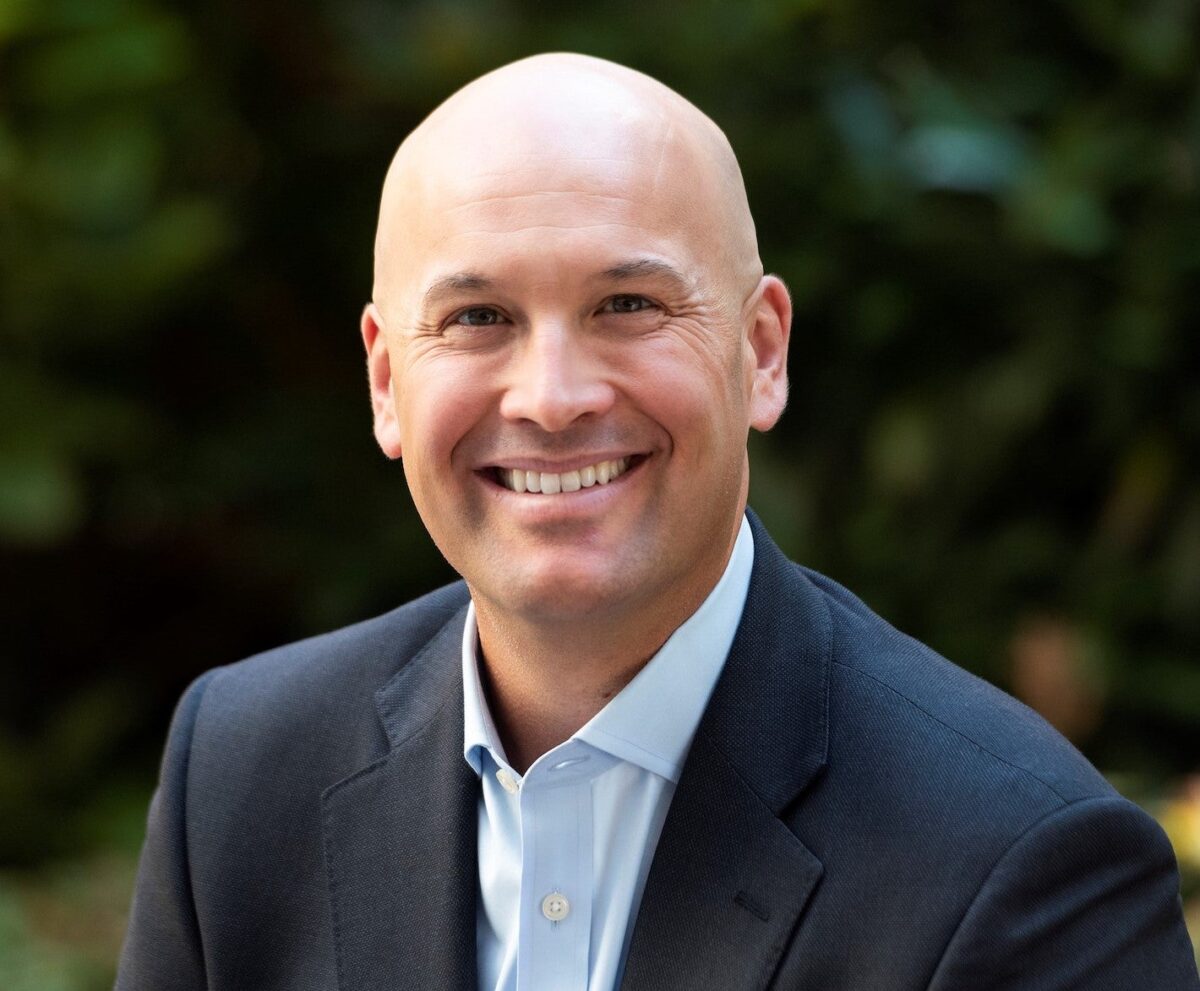
FreightWaves takes silver in 2 categories in Azbee Awards
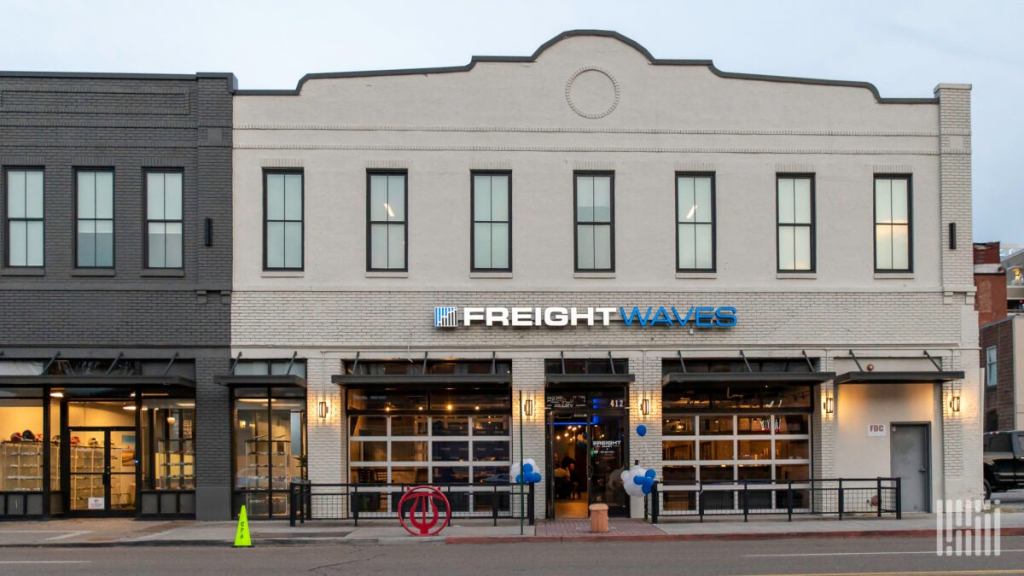
FreightWaves earned silver in two categories of the 2024 Regional Azbee Awards in the Southeast from the American Society of Business Publication Editors (ASBPE).
Finance Editor Todd Maiden and former Editorial Director Rachel Premack’s coverage of the demise of less-than-truckload carrier Yellow Corp. received Regional Silver for Online Breaking News Coverage. Additionally, FreightWaves’ ELD: Five Years Later series on the fifth anniversary of the electronic logging device mandate took Regional Silver. Senior Editors Clarissa Hawes and John Gallagher, Premack, and former Detroit Bureau Chief Alan Adler all contributed to the series.
Thirty-four awards in total were given in the Southeast region.
The ASBPE is a membership community dedicated to editorial excellence. It was founded in 1964 and known then as the American Society of Business Press Editors. The annual Azbee Awards of Excellence are highly regarded accolades that celebrate the best in editorial, design and online achievement. The ASBPE National Board of Directors as well as volunteer committees are responsible for the programming.
FreightWaves’ coverage of Yellow spanned numerous breaking news articles, as the end of one of the nation’s largest trucking companies rocked the industry. More than 30 articles have been published in real time on the bankruptcy and the fallout from it since last summer, and news continues to arise.
“I’m honored to be recognized for breaking news coverage,” said Maiden. “Thank you to our editorial team for the around-the-clock help.”
The ELD: Five Years Later series was sparked by continued polarizing debates over the technology and mandate. Articles looking back at the disruptions it may have caused and what the Federal Motor Carrier Safety Administration could do to improve that, as well as investigative looks into ELD fraud and how the mandate would work with autonomous trucks were published in succession last April.
Federal regulators began enforcing the mandate on April 1, 2018.
“When the FMCSA’s ELD mandate took effect in trucking companies that were using approved Automatic On-Board Recording Devices (AOBRDS), it was not welcomed by many truck drivers,” Hawes said. “Our team of journalists, who cover different areas of the trucking industry, took an in-depth look into how ELDs are impacting drivers, highway safety and how some ELD providers are skirting the hours-of-service regulations to drive more hours in a day.”
“I’m very thankful. It’s great to have our hard work recognized by business publishing editors,” added Gallagher.
1 dead after driver rammed stolen semitruck into driver’s license office
A driver crashed a stolen semitruck into a Texas public safety office that housed a driver’s license center Friday morning, leaving one person dead and others injured, law enforcement said.
Clenard Parker, 42, of Chappell Hill is accused of stealing the truck and intentionally ramming it into a driver’s license office in Brenham, a city nearly halfway between Austin and Houston. Parker had been denied his CDL on Thursday, officials said at a news conference Friday afternoon. It is unclear why he was denied a CDL or the origin of the stolen truck.
Law enforcement was pursuing Parker when he rammed the vehicle into the building, crashing into the waiting and office area and injuring 13 people and killing one person, said Texas Highway Patrol Sgt. Jason Ruiz. The victims weren’t identified.
Parker had reversed the truck and planned to crash into the building again when he was apprehended by law enforcement, Brenham Mayor Atwood Kenjura said. Kenjura said officials told him that if the driver had slammed into the building from a different angle, it would have collapsed the office.
“This is a day that you don’t think is going to happen,” said State Sen. Lois Kolkhorst, who represents the area. “We’ve taken our children to get their driver’s licenses there. I’ve gotten my driver’s license there. It’s a place of public service.”
Parker was taken into custody and transported to the Washington County Jail. It is unclear if he has an attorney.
Grille guards crucial to reduce downtime and towable accidents, protect profitability
Keeping trucks on the road is paramount for carriers. A company’s profitability – and an individual driver’s paycheck – is largely determined by the number of miles driven in a given day. Crashes on the highway or even in parking lots often lead to unexpected maintenance and downtime, significantly impacting profits.
Incidents that cause front-end damage often lead to towable accidents and costly, time-consuming repairs because these accidents compromise several different components of the truck, including complex radar sensors.
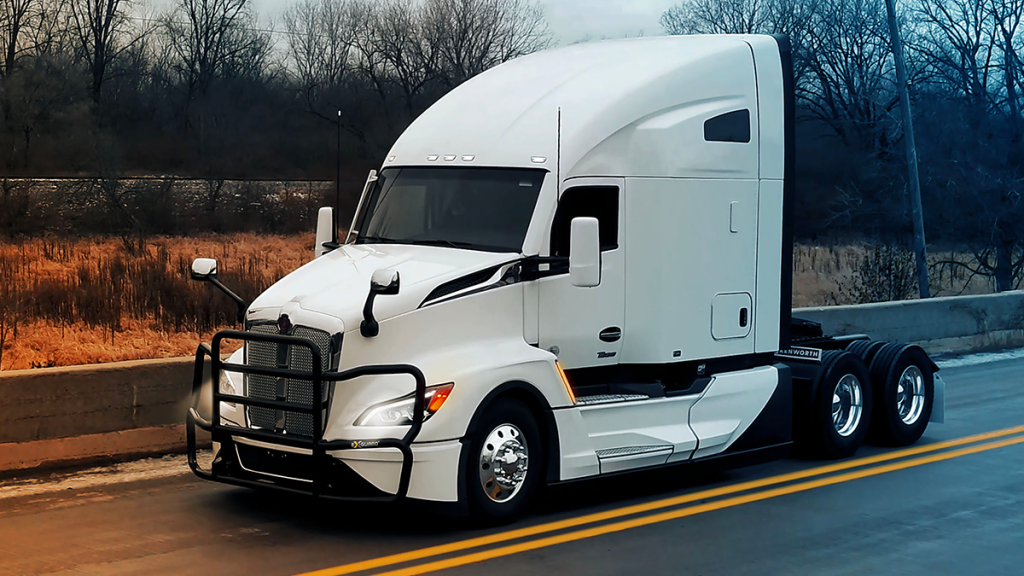
Fortunately, high-quality aftermarket grille guards – like those offered by Ex-Guard – protect trucks from damage from some of the most common front-end threats, including animal strikes and debris left in the roadway. Without the protection, an ill-timed deer crossing, sudden wheel-off or a blindly backing big-rig could result in days of downtime and lost revenue. With a guard, a driver can keep moving and complete their shipment undeterred. “We have major fleet customers that have seen an 80% reduction in towable accidents on the portions of their fleets that have grille guards,” notes Ex-Guard General Manager, Ryan Holt.
“Ex-Guard’s product is a welcomed addition to Werner’s equipment and we’ve seen significant enhancements to our fleet,” said Ben Murphy, vice president of maintenance and equipment resources at Werner. “The augmentation has positively impacted the safety of our fleet while increasing uptime and decreasing parts and labor costs. These benefits have been invaluable to Werner’s day-to-day operations.”
Trucking company Prime, Inc. also installs Ex-Guards on all its owned and leased trucks, providing an additional layer of protection to help keep its equipment – and drivers – on the road.
Chris Holtmeyer, director of fleet maintenance at Prime, noted that downtime for team trucks, specifically, can become a serious issue. With multiple trucks in these situations, lost wages and downtime can easily add up to thousands of dollars a day.
In addition to the financial burden associated with lost revenue, front-end collision work itself tends to be costly. For example, hitting a deer or even a stationary object without a guard can easily damage a truck’s hood, headlights, bumper, grille and radar assembly. Repairing or replacing several parts at one time can quickly add up and diminish a carrier’s bottom line, especially when the expenses are unexpected.
“Some of the radar components on a truck cost thousands of dollars. If you damage or replace those parts, it can cost even more,” Holtmeyer said. “More expensive electronics and body panels lead to more downtime waiting on parts, as they can take a few days to ship and a few more to assemble.”
With Ex-Guard grille guards, Prime has been able to significantly reduce the occurrence of front-end damage, therefore cutting downtime and increasing profitability.
According to Holtmeyer, the carrier’s drivers have become particularly fond of the equipment since it protects their paychecks. Prime’s maintenance team also appreciates the guards because it frees them up to work on other issues that come into the shop and largely prevents outsourcing for body work. Ultimately, everyone wins when trucks are more protected.
Ex-Guard offers products that work with all eight major semi-truck brands. This is no small feat in an environment rife with innovation.
Radar sensors, for example, have evolved significantly in recent years. An effective guard needs to work in conjunction with these radar sensors to prevent accidental activation, thus causing a truck’s brakes to lock up.
“As technology has changed, Ex-Guard has done a great job changing and adapting their product to work with the industry,” Holtmeyer said.
Ex-Guard actively works with radar manufacturers to ensure their guards work alongside collision mitigation systems – helping carriers reach their goals of fewer towable accidents and less downtime. Click here to learn more about Ex-Guard.
Borderlands Mexico: Carrier makes history using electric truck to haul cross-border freight
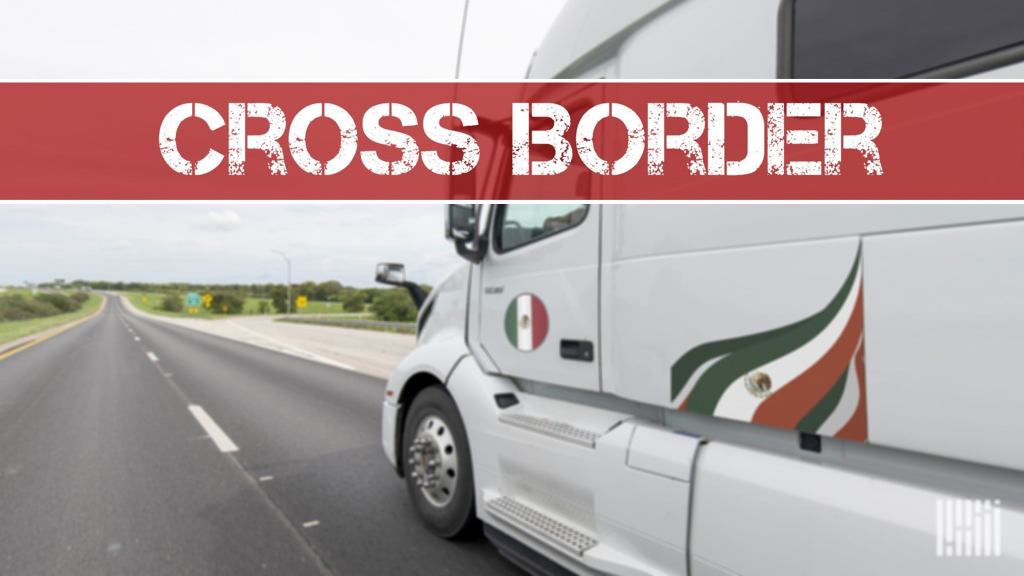
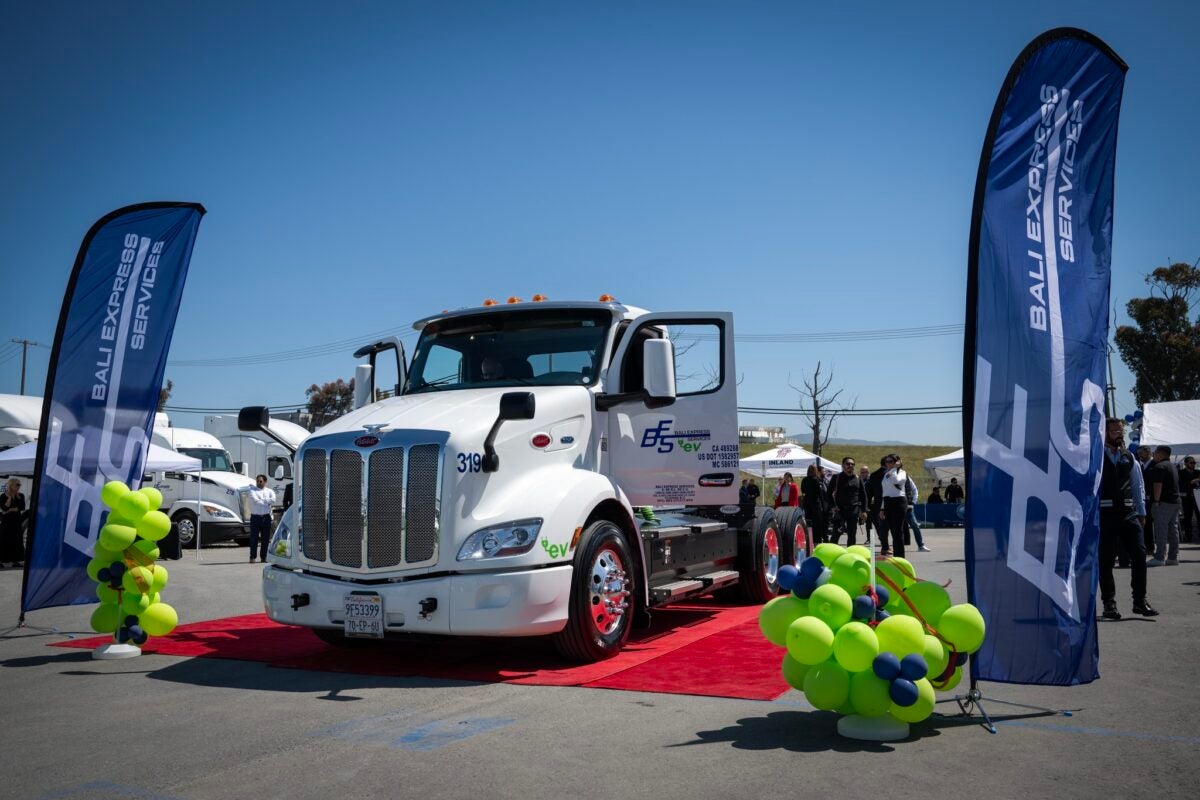
A California-based carrier made history Thursday using a Class 8 electric truck to haul freight between the U.S. and Mexico, a first-ever border crossing for a heavy-duty EV vehicle, officials said.
The electric truck from San Diego-based Bali Express made its maiden voyage carrying an unspecified load of goods into Mexico through the Otay Mesa Port of Entry, which connects Southern California to the Mexican city of Tijuana.
“By adding electric freight trucks, we are not only reducing our carbon footprint but also leading the way towards a more sustainable future for freight transportation on both sides of the border,” Juan Baez, owner of Bali Express, said in a news release.
San Diego-based Bali Express purchased 11 Peterbilt 579EV Class 8 trucks in September. (Photo: Courtesy)
The vehicle utilized one of the 3,600 charging stations installed by SDG&E in the region for use from EV passenger vehicles, along with medium- to heavy-duty electric freight trucks crossing the U.S.-Mexico border.
SDG&E is an energy delivery company serving communities in San Diego and Orange County.
“Today marks a historic milestone in our journey toward reducing emissions and paving the way for a cleaner energy future,” Caroline Winn, CEO at SDG&E, said in a statement. “This new electric corridor is a great example of how collaboration can create new and innovative ways to rethink how to propel our transportation systems towards electrification.”
The electric trucks being used by Bali Express are Class 8 Peterbilt Model 579EVs, which have a daily range of 150 miles per charge. Bali Express purchased 11 579EVs in September.
The electric chargers were partially funded by a $200,000 grant through the California Energy Commission’s Clean Transportation Program, which has provided more than $1 billion to alternative fuel and vehicle technology projects.
In 2022, the California Air Resources Board (CARB) approved a landmark plan to end the sale of gas-powered vehicles in the state by 2035.
Medium- and heavy-duty trucks are one of the largest transportation-related sources of greenhouse gas emissions every year, according to the Environmental Protection Agency. Commercial trucks accounted for about 23% of emissions from the transportation sector in 2021.
California has the largest number of electric trucks operating at port facilities in the U.S. CARB wants to require all new drayage trucks registered in the state (over 140,500 trucks) to be zero emission by the end of 2024, with full implementation of its plan to stop selling gas-powered vehicles by 2035.
TCA’s Heller: Trucking has adjusted to route diversions post-Baltimore
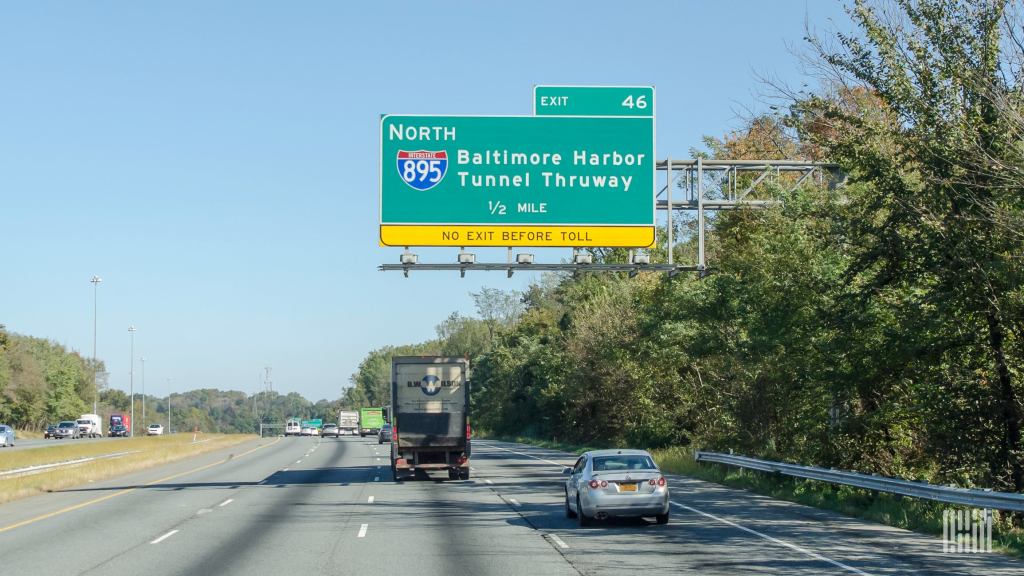
Members of the Truckload Carriers Association (TCA) have adjusted smoothly enough to the disruptions at the Port of Baltimore that a conference call among its members scheduled for Thursday — the latest in a series — was canceled because a great deal of initial concern among TCA members has disappeared.
“A lot of the shock we had was in the first two calls,” David Heller, the TCA’s senior vice president of government affairs, told FreightWaves when asked about the scheduled meeting. “We want to keep those lines of communication open, and we’ll continue to forward information to our membership as we go along.”
But for now, particularly with the Federal Motor Carrier Safety Administration’s recent waiver of some hours-of-service rules, Heller said he’s hearing from TCA members that they’ve adjusted to the diversions as a result of the port’s closure following the collapse of the Francis Scott Key Bridge on March 26.
With the port potentially reopening by the end of May, Heller said TCA’s members see “light at the end of the tunnel.” There’s a sense in the trucking community that has been servicing the port of Baltimore that “the worst of the worst is over.”
“One thing about our industry that has proven itself time and time again is the flexibility that can happen, which is what makes trucking so valuable in the first place and why it is the optimal mode of freight transportation in this country,” Heller said.
The change in the HOS regulation promulgated by FMCSA added two hours of allowable driving time to the 11 hours now permitted in a 14-hour on-duty day.
Heller said that move is adequate to compensate for additional time on the road, such as a drayage driver who remains based in Baltimore but needs to begin moving containers in and out of ports such as Philadelphia, New York/New Jersey or Norfolk, Virginia.
Asked why the HOS waiver wasn’t more sweeping, such as those often handed down by FMCSA to deal with hurricane cleanup and reconstruction, Heller noted that the two hours is equal to the “adverse conditions” provision in the HOS rule.
“It’s almost like putting the adverse driving conditions of the HOS regulations into effect in a more permanent way,” he said, while stressing that they clearly are not permanent. “Now, if you can claim adverse conditions, you can get an extra two hours, and lo and behold, I’ve given you two hours in the regulation.”
To illustrate how adverse conditions might work, Heller described something that might have occurred in the immediate wake of the bridge collapse: a gigantic traffic backup before travel patterns shifted to accommodate for the loss of the bridge. That sort of backup, Heller said, could be cited as an “adverse condition” that would get a driver an additional two hours of driving time.
Heller added that the reality of HOS is that the average driver racks up six-and-a-half to seven hours per day, so the additional two hours should be considered with that in mind.
The push for expanded hours of service did not come solely from the industry, Heller said. “FMCSA was very, very proactive in opening those avenues to get questions asked, which was great on their part,” he said, one of several instances during the interview when he praised the work of the agency.
“FMCSA is very open about getting aligned and setting up an avenue in which we can ask questions, and then they’ll search for answers,” Heller said.
Shifting traffic from Baltimore to other ports does create other issues, Heller said. For example, while companies servicing Baltimore need the same Transportation Worker Identification Credential card that is used in other ports such as New York/New Jersey, that latter port, which is likely to see a significant increase in traffic diverted from Baltimore, also has a SeaLink pass. The NY/NJ port describes it as its “uniform truck driver identification system,” and a drayage driver who works mostly out of Baltimore would not necessarily have one.
Heller said the NY/NJ port has been dedicating additional personnel to smoothing the process for Baltimore-based drivers to obtain that credential.
The views expressed here are solely those of the author and do not necessarily represent the views of FreightWaves or its affiliates.
The modern supply chain is a complex dance, with information flowing between numerous functions and disparate systems. Yet, all too often, this choreography is hampered by fragmented data trapped in silos, impeding visibility and hindering efficiency. To achieve true unification in the supply chain, a key factor emerges: data standardization. I attended multiple sessions on supply chain data standards at this week’s ASTM International event, and the message was loud and clear: We need more adoption and global harmonization of data standards in logistics. (See ASTM Supply Chain.)
Despite advancements in unified supply chain platforms (see Ushering in convergence: Unified supply chain platforms are key in 2024), these systems remain data-hungry. Unfortunately, the current landscape is marred by a lack of standardized data formats and definitions. While industries like health care and finance have established robust data standards, logistics continues to struggle. This fragmentation of data and standards often leads to errors and inconsistencies, making reliable decision-making a challenge. The inability to seamlessly exchange data necessitates manual data entry, increasing the risk of errors and wasting valuable resources.Data silos also create communication barriers among stakeholders, hindering collaboration and optimization efforts.
Regulations around the world are increasingly pushing for standardization. The EU Supply Chain Law and Deforestation Act, along with the Securities and Exchange Commission’s environmental, social and governance rules in the U.S., highlights the growing emphasis on sustainability and traceability. These regulations, coupled with initiatives like the UN/CITRAL Negotiable Cargo Document, are driving the need for standardized data exchange across the entire supply chain.
The European Union has emerged as a leader in supply chain digitization, with initiatives like the Mandatory Disclosure Regulation and the General Data Protection Regulation, as well as collaborations with organizations like the International Chamber of Commerce and the U.N. CEFACT. By examining these successful pilots, we can learn valuable lessons about fostering collaboration and prioritizing competing standards development efforts.
Data standardization is not just a regulatory necessity. It is the cornerstone of a data-driven supply chain. As everyone strives to leverage AI and automation, standardized data becomes crucial for accurate decision-making, efficient information management and ultimately, unlocking the true potential of data. This potential ensures consistency and accuracy of the data, minimizing errors and reducing the need for costly data cleaning. Seamless data exchange fosters collaboration and efficient information flow across departments, organizations and even continents. Standardized data enables automation, freeing up human resources for more strategic activities and streamlining processes across the entire supply chain. It further facilitates regulatory compliance and allows for personalized customer experiences.
The future of supply chains lies in collaboration and transparency. To achieve this vision, we need to break down data silos and build bridges through standardization. Several questions remain to make this future a reality. How can we make it easier for participants to access, understand and adopt the relevant standards? How can industry organizations streamline their efforts and prioritize standards for timely development by recognized standards development organizations? And finally, how can we encourage widespread adoption and implementation of these standards across the entire supply chain ecosystem?
By fostering collaboration and leveraging the lessons from other industries, we can unlock the true potential of data, drive efficiency, and build a more sustainable and resilient supply chain for the future.
Look for more articles from me every week on FreightWaves.com.
About the author
Bart De Muynck is an industry thought leader with over 30 years of supply chain and logistics experience. He has worked for major international companies, including EY, GE Capital, Penske Logistics and PepsiCo, as well as several tech companies. He also spent eight years as a vice president of research at Gartner and, most recently, served as chief industry officer at project44. He is a member of the Forbes Technology Council and CSCMP’s Executive Inner Circle.
Running on Ice: Cold chain solutions for pets
All thawed out
(Photo: LinkedIn)
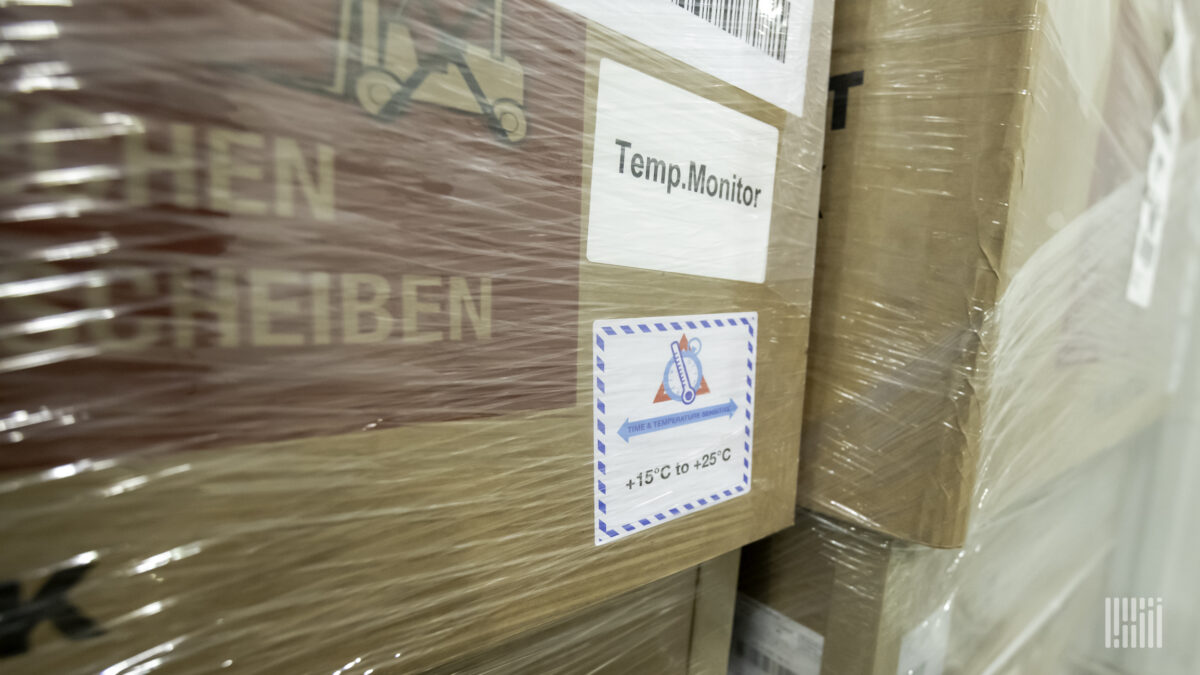
Hydropac has developed a solution to a problem that I had no idea existed. That problem is preserving and maintaining the freshness of pet food. As a longtime server of kibble to my dogs, I had no idea there were challenges with keeping refrigerated pet foods safe. I assumed it was a similar process to that of meal kit deliveries for humans.
The new Hydropac ice packs are changing the traditional ice pack model. These new packages use a two-layer material that is sealed on all four sides. The design allows for multiple internal pockets within each ice pack, which gives more precise control over dimensions and ensures consistent chilling throughout the container as the box moves in transport.
According to a Packaging Gateway article, the new advantages for these ice packs are “Enhanced insulation, extended cooling duration and superior leak resistance: these ice packs boast a burst strength exceeding 200kg.”
Temperature Checks
(Photo: Jim Allen/FreightWaves)
Moving into the acquisition side of the world, fulfillment provider Stord announced recently it has acquired ProPack Logistics to strengthen its temperature-controlled and last-mile shipping services. Through this acquisition, Stord will now be able to expand cross-border offerings between the U.S. and Canada.
The current Stord footprint consists of fulfillment centers in Atlanta; North Haven, Connecticut; Dallas; and Las Vegas and Reno, Nevada. This purchase establishes the company in Seattle, Salt Lake City and Nashville, Tennessee. It also includes two Canadian locations in Vancouver, British Columbia, and Mississauga, Ontario. This now gives Stord 1.6 million square feet of fulfillment centers.
CEO Sean Henry said in an article by FreightWaves’ Grace Sharkey, “E-commerce and omnichannel retail continue to evolve at an accelerated pace as consumer demands have incorporated habits from digital-only experiences during COVID into the broader retail environment. This has forced brands to embrace additional channels, geographies, and unique pre- and post-purchase experiences to meet consumers where they are and provide a world-class experience. … Stord is positioned to solve each of these challenges for brands, and do so in a way that allows them to sell more, save money and reduce headaches.”
Here’s to expansion up north. Welcome to the party, Canada.
Food and Drug
(Photo: Jim Allen/FreightWaves)
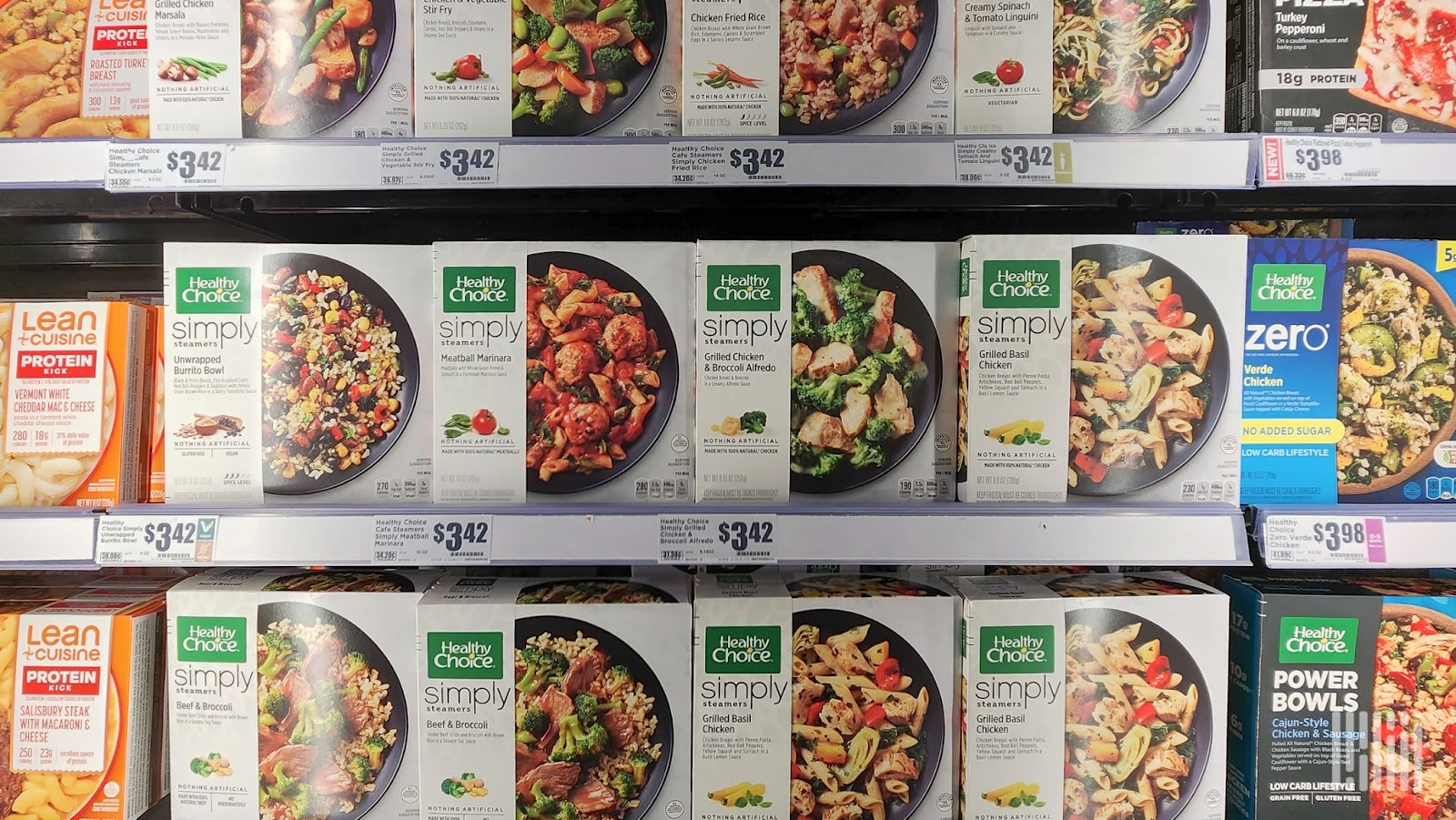
The U.S. frozen food industry was valued at $297 billion last year, a real quaint mom-and-pop operation. CPG manufacturer Conagra Brands Inc. is focusing on getting a larger piece of that pie as it makes frozen food a key part of its future.
Starting off strong at the beginning of the year, Conagara partnered with Dolly Parton to develop a line of retail food items that will soon include frozen foods, as well as refrigerated, grocery and snack products.
The heavy push into frozen comes as “sales within Conagra’s Refrigerated & Frozen segment fell 8.1% to $1.20 billion as price/mix decreased 4.8% and volume decreased 3.3%, but the decline in price/mix was mostly due to investments in the frozen food business. Conagra gained dollar share in several categories, including frozen sides, frozen single-serve meals, frozen breakfast and frozen seafood,” according to a Food Business Net article.
As the company looks for ways to expand and grow its ready-to-heat frozen food lineup, it brings hope that consumers will have a wider variety of options as well. However as a consumer I’d love to see some more affordable options in the frozen food space. Looking at you, frozen pizza consistently over $10.
Cold chain lanes
SONAR Tickers: ROTVI.MKE, ROTRI.MKE
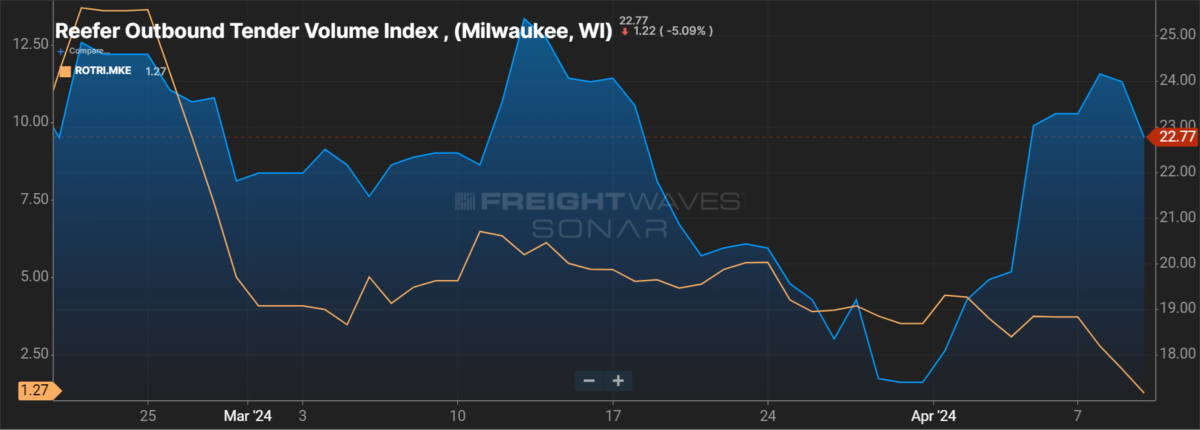
This week’s SONAR market is heading to the Upper Midwest: Milwaukee. Capacity in Milwaukee is loosening as both reefer outbound tender volumes and reefer outbound tender rejections are falling. Outbound volumes are on the decline but are still up 15.82% week over week. Rejections, on the other hand, have fallen from 3.64% on April 3 to 1.27% now, a 241-basis-point difference in seven days. When both volumes and rejection rates are falling, it opens up capacity in the market, in turn helping outbound tender lead times settle in at three days on average for freight coming out of the land of cheese.
Wanna chat in the cooler? Shoot me an email with comments, questions or story ideas at moconnell@www.freightwaves.com.
See you on the internet.
Mary
If this newsletter was forwarded to you, you must be pretty chill. Join the coolest community in freight and subscribe for more at www.freightwaves.com/subscribe.
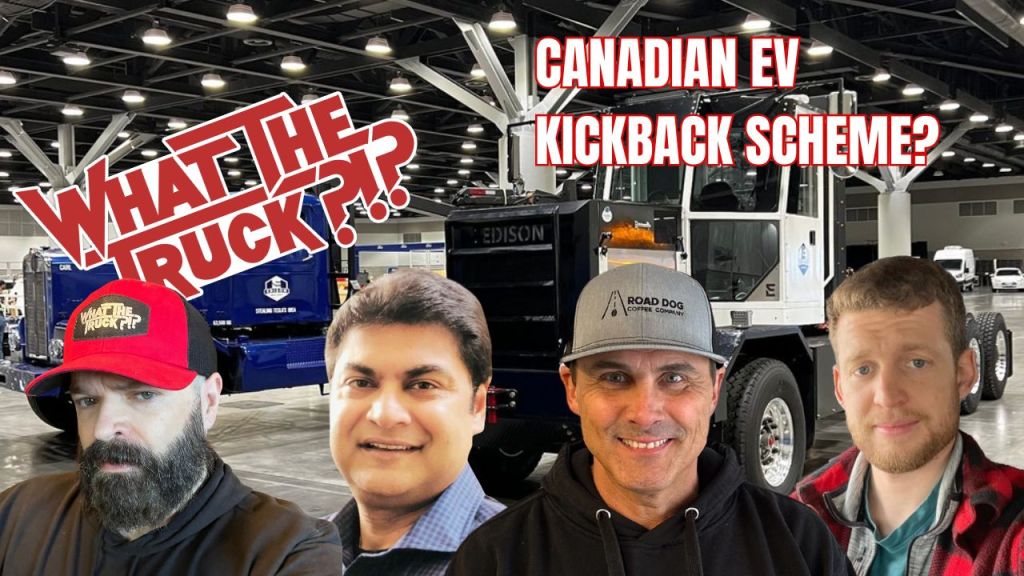
Is this EV truck company a victim of a Canadian grant kickback scheme? – WTT
On Episode 705 of WHAT THE TRUCK?!?, Dooner is talking to Edison Motors Ltd. CEO Chace Barber about the troubles facing his EV truck Topsy in Canada. After the company was recently denied a grant, Canadian opposition parties are demanding a probe into alleged government kickbacks. Barber shares his side of the story.
Road Dog Coffee Co. says it brews its coffee in tribute to America’s truckers. We’ll meet Road Dog’s founder, Spencer Squire, to taste test his beans and see if they’re roadworthy.
Roadz co-founder and COO Amit Jain shares why he believes AI will transform fleet management over the next decade.
Plus, over 1,300 layoffs hit logistics companies across the U.S.; fast food inflation; the Amish get it done; would you pay $75 at this scrapyard; and more.
Descartes: Container import volume trajectory is strong
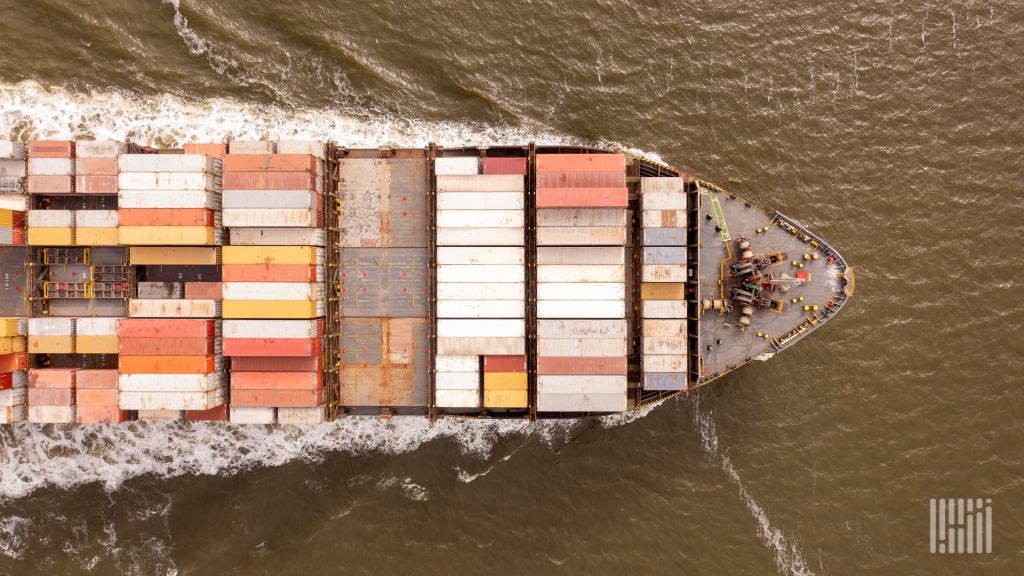
The container market continued to show strength in March as the pull forward ahead of the Lunar New Year continues to pay dividends at the ports.
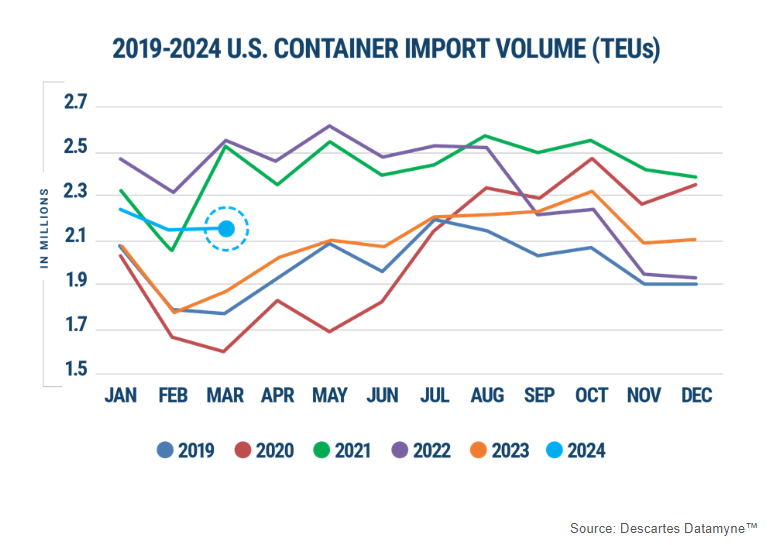
According to the monthly report by Descartes, U.S. container import volumes in March climbed by 0.4% from February and over 15% from March 2023. The year-over-year gains can be explained by the timing of the Lunar New Year: This year’s holiday occurred nearly three weeks later than in 2023.
Descartes reported that U.S. container import volumes in March totaled 2.145 million twenty-foot equivalent units during March, the third-highest March since 2019, trailing only the COVID-19 pandemic-induced surge in imports in 2021 and 2022.
The first half of the month experienced the strongest boost to imports. Descartes reported that total container imports in that period were over 22% higher than they were a year ago.
The Logistics Managers’ Index reported that inventory levels grew faster in the first half of March than the back half, lending credence to the growth in imports during the first half of the month.
Additionally, with the timing of the Lunar New Year later in February, the impacts started showing up domestically in the latter parts of March.
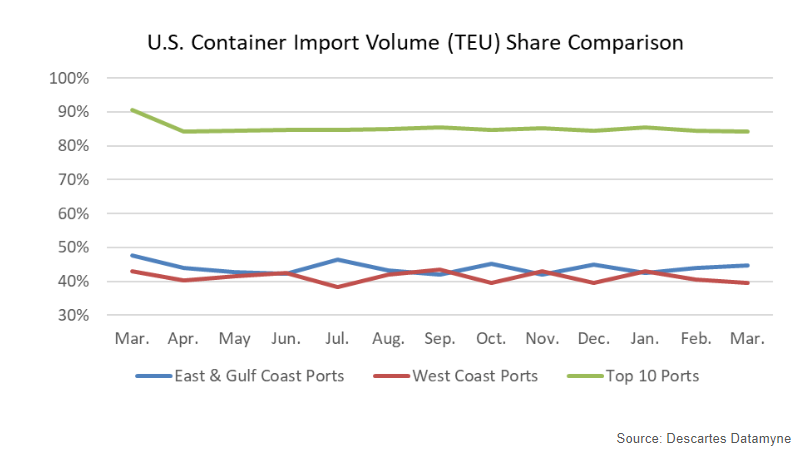
Despite talk of West Coast ports clawing back market share from East Coast ports due to challenges at the Panama Canal and ongoing labor negotiations with the United States Maritime Alliance (USMX) labor union, it has failed to materialize. In fact, according to the most recent Descartes report, the top five East Coast ports grew market share during March and now control over 44% of overall import market share.
The top 10 ports in total have lost share as a whole as supply chains have become more diversified the past few years. That continued in March. The total market share of container imports handled by the 10 largest ports in the country dipped by 0.3 percentage points month over month to 84.2%. This time last year, the 10 largest ports in the country handled over 90% of total import volume.
The ports where volume grew the most were actually on the West Coast, despite the top five ports relinquishing market share in March. The Ports of Oakland, California, and Tacoma, Washington, experienced the largest gains month over month, with imports growing by 6.6% and 18.9%, respectively.
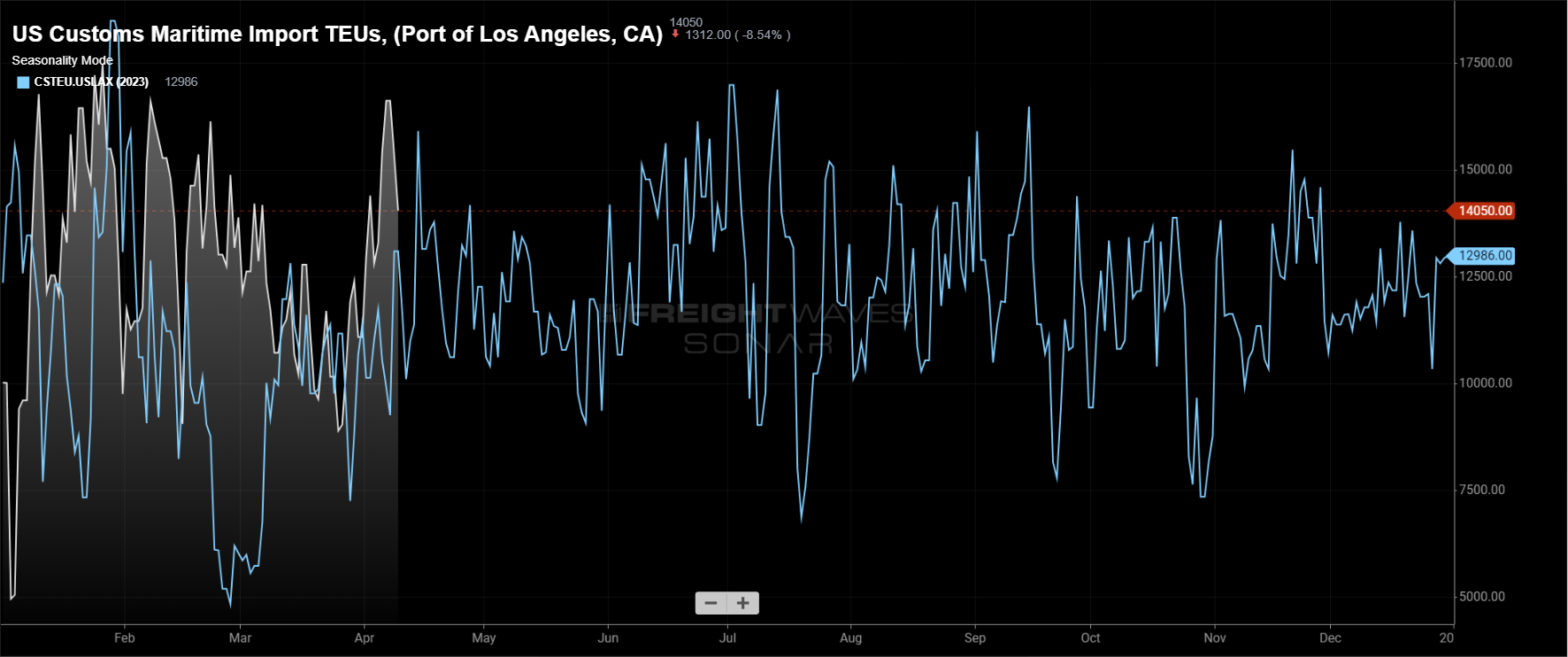
SONAR: U.S. Customs TEU imports at the Port of Los Angeles
The Port of Los Angeles saw import volumes decline by 7.8% m/m, as TEUs dropped by over 30,000 for the second consecutive month. While on a national basis the second half of the month was more challenging than the beginning, it was the opposite story at the Port of Los Angeles. The end of March and early April, imported TEUs reported by U.S. Customs and Border Protection highlight year-over-year growth after the Lunar New Year holiday-related lull in imports passed.
On the East Coast, it was more of a mixed bag. The Port of New York and New Jersey experienced growth of 4.5% m/m. Farther south, the ports of Norfolk, Virginia, and Charleston, South Carolina, saw import volumes grow by 5.6% and 4.9% m/m, respectively.
Descartes highlighted how the collapse of the Francis Scott Key Bridge in Baltimore at the end of the month did have an impact on overall import volumes. In total, the Port of Baltimore’s import volumes dropped by 15.7% m/m, according to the report.
What comes next?
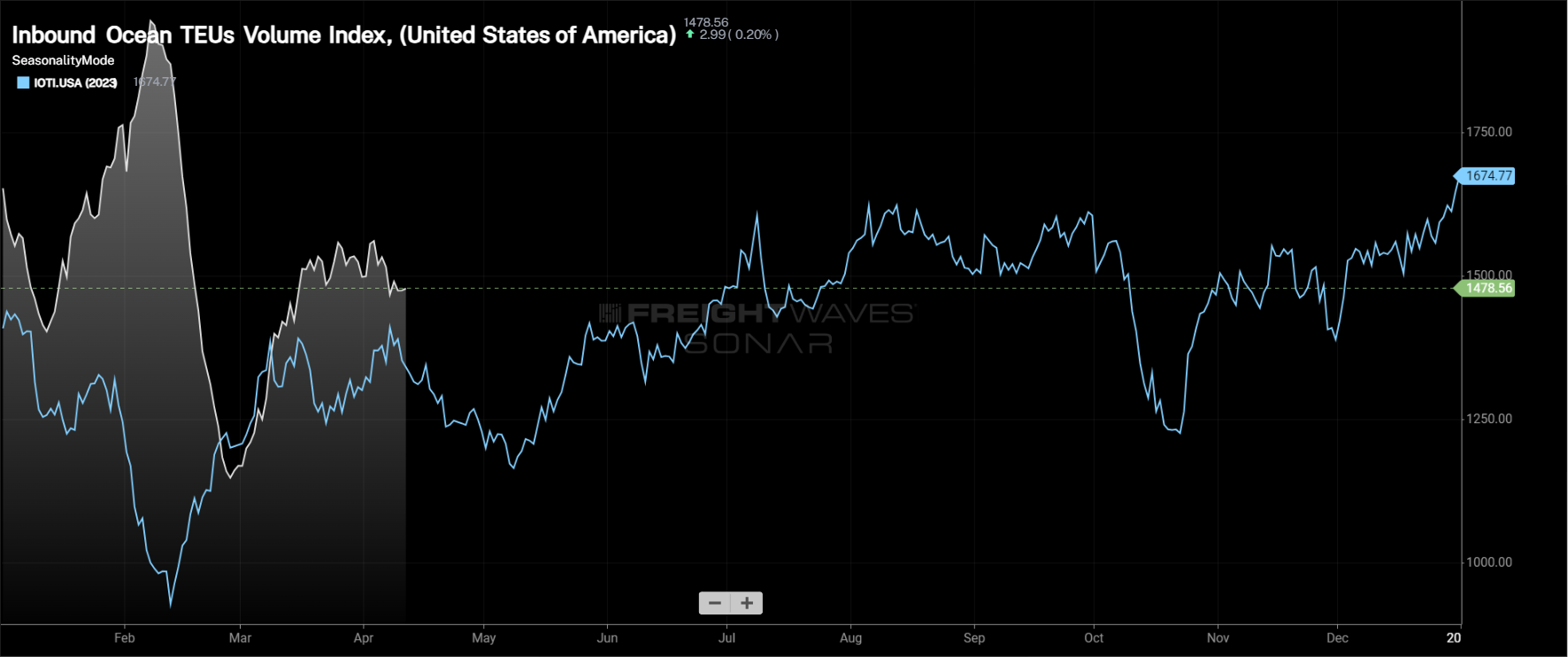
SONAR: Inbound Ocean TEUs Volume Index
The Inbound Ocean TEUs Volume Index, which measures the number of TEUs based on when the vessel departs overseas, recovered from the Lunar New Year, reaching near peak season 2023 levels. At present, the IOTI is 11% higher than it was this time last year. This continued strength compared to the prior year is an indication that import volume will continue on a positive growth trajectory.
Autonomous trucking may descend the rabbit hole of local politics
Autonomous trucking regulation is already a state-by-state issue. In California, it may soon embody the adage “All politics are local.” Advocates of driverless vehicles see passage of newly introduced legislation as a death knell for the technology.
After vetoing legislation last year that would have required a human driver in autonomous vehicles over 10,000 pounds, California Gov. Gavin Newsom may again have to choose between two of his main constituencies: Big Tech and organized labor.
2 bills equal double trouble for autonomous trucking
Two bills starting their journeys through the State Assembly and State Senate take undifferentiated aim at autonomous vehicles — robotaxis and autonomously driven commercial trucks.
Assembly Bill 2286 is practically a copy of AB316 passed by both legislative chambers in 2023 before being struck down by Newsom. Senate Bill 915 gives local municipalities more authority over autonomous regulations. Oversight for autonomous vehicles currently rests with the California Department of Motor Vehicles and the state Public Utilities Commission.
Both bills have vocal backing from the Teamsters union, which makes safety and job preservation its clarion calls.
Teamsters protests of autonomous vehicles without human drivers on board are frequent in California. (Photo: Teamsters)
“Gov. Newsom can continue to cower to Big Tech and put millions of good jobs in jeopardy, or he can grow a backbone and stand up for working people,” Lindsay Dougherty, Teamsters Western Region International vice president and secretary-treasurer of Teamsters Local 399, said in January.
“Either way, the Teamsters are not backing down from this fight.”
Teamsters protests of autonomous vehicles without human drivers on board are frequent in California. (Photo: Teamsters)
Latest autonomous vehicle battleground
These are the latest battles for the Autonomous Vehicle Industry Association (AVIA), which balances state and federal lobbying support with education about driverless vehicles. The feds focus on vehicle design, construction and performance. States regulate authorizing autonomous vehicles on their roads, as well as insurance, law enforcement and some other regulations.
“Industry can expect to be playing whack-a-mole on autonomous vehicle bans, at least until the federal government introduces a federal framework that creates guidelines around autonomous operations,” Dan Goff, Mountain View, California-based Kodiak Robotics director of external affairs, told me.
SB915 gets its first hearing Wednesday before the Senate Local Government Committee. If it passes there, its next stop is the Senate Transportation Committee at a future date.
“SB915 is not about making sure that local governments feel heard,” Jeff Farrah, AVIA chief executive officer, told me. “It is ultimately an effective ban on the technology because it requires that every locality pass an AV ordinance before an AV operates on their roads.”
SB915 passage would be de facto ban on autonomous trucks
Since no municipalities currently have such ordinances on their books, SB915’s passage would amount to a de facto ban.
“The idea that you have to go through an additional layer of complexity is outrageous,” Farrah said.
Jeff Farrah, chief executive officer of the Autonomous Vehicle Industry Association, says California Senate Bill 915 would create an effective ban on autonomous trucking in the state. (Photo: AVIA)
California has allowed autonomous vehicles weighing less than 10,000 pounds on its roads since the middle of the last decade. Rulemaking on heavy-duty commercial vehicles was just getting started last year when AB316 hijacked the process. Attention focused on the bill’s progression through the Assembly and the Senate.
The Teamsters said more than 90% of legislators favored AB316. Yet there was no attempt to override Newsom’s veto. Instead, Assembly Member Cecilia Aguiar-Curry submitted AB2286 in February.
“The autonomous trucking industry has cast this bill as a ban on technology when it explicitly states that testing and deployment will happen with a Human Safety Operator,” she said in a Feb. 13 Teamsters’ news release. “Using their logic, they’re the ones who support a ban. A ban on humans in trucks. A ban on working people’s ability to provide for their families and provide safe roadways for Californians.”
AVIA lines up SB915 opposition
In advance of next week’s SB915 hearing, the AVIA submitted a letter signed by 68 organizations, including most autonomous trucking developers, opposing the legislation.
“We need to make sure we’re making the case and assembling a broad coalition … vocalizing concerns over these really outlandish proposals,” Farrah said.
AVIA’s attempts to persuade the Teamsters that human- and robot-driven trucks can coexist have gone nowhere.
“We have so many demands on our freight ecosystem in this country that we need both AV trucks and we need truck drivers to meet all the demands that farmers and ranchers and manufacturers are placing on it,” Farrah said.
Goff said Kodiak sees recent accidents involving autonomous ride-hailing vehicles sweeping up driverless trucks in the Teamsters’ outrage over AV safety.
“The genuine challenges some companies in the robotaxi industry faced in 2023 presented an opening for organized labor to try and slow autonomous vehicle expansion,” he said.
Angst and mistrust of AVs that show up in public surveys like an annual pulse check by AAA reflect a lack of understanding and exposure, Farrah said. In cities like Phoenix where robotaxis have been in use for more than two years, public awareness, engagement and acceptance are high.
The AVIA’s “State of AV” report released Wednesday said AVs have driven nearly 70 million miles on public U.S. roads — equivalent to 293 round trips to the moon. CEOs of AVIA member companies said their biggest challenge is regulatory clarity around AVs.
State-by-state scorecard
Autonomous vehicles now are permitted to operate in 24 states. South Dakota Gov. Kristi Noem signed a bill in February to set up a regulatory framework for autonomous vehicles. Kentucky became the 25th state to allow driverless vehicles following the state legislature’s override of Gov. Andy Beshear veto of pro-autonomous legislation for a second straight year.
“From a policy perspective, it’s easy to focus on the daily riffraff,” Farrah said. “But if you take a step back and look at the last legislative session, you had eight proposals to require a human safety operator in an autonomous truck. All eight of those were defeated. This year, you have a similar amount introduced. None of them have gotten over the finish line at this point.”
Farrah didn’t directly respond when asked whether another Newsom veto would be required to save the day for autonomous vehicles in California.
Editor’s note: Corrects Farrah’s title to chief executive officer from executive director and updates with Kentucky legislature overriding gubernatorial veto of autonomous legislation.
Catching up with … Ali Javidan, Range Energy
Ali Javidan is moving the concept of electrified trailers forward with $23.5 million in new funding and plans for commercial pilots of the energy-saving technology by the end of the year.
Briefly noted …
After three lengthy United Auto Workers strikes in the last five years, Volvo Group is adding a new heavy-duty truck plant in Mexico.
The Mineta Transportation Institute says California could lose $1 billion a year in gasoline and diesel tax revenue through an electric vehicles push.
Though parent Traton Group favors battery-electric vehicles, German heavy-duty truck subsidiary MAN plans to produce 200 hydrogen combustion-enginel trucks as soon as 2025.
General Motors is bringing electric commercial delivery van maker BrightDrop back in-house as part of GM Evolve, ending its independence after three years.
BrightDrop electric delivery vans are now part of the General Motors Evolve division. (Photo: General Motors)
Data analytics provider Uptake has named Adam McElhinney, its former head of data sciences, as CEO.
Truck Tech Episode 62: Wabash smoothing the ups and downs of the trailer business cycle
Brent Yeagy has completely turned over the executive suite and taken some risks in remaking Wabash. With a stock price up 108% during that time, he appears to have succeeded so far.
That’s it for this week. Thanks for reading and watching. Click here to get Truck Tech via email on Fridays. And catch the latest in major events and hear from the top players on “Truck Tech” at 3 p.m. Wednesdays on the FreightWaves YouTube channel.Your feedback and suggestions are always welcome. Write to aadler@www.freightwaves.com.