




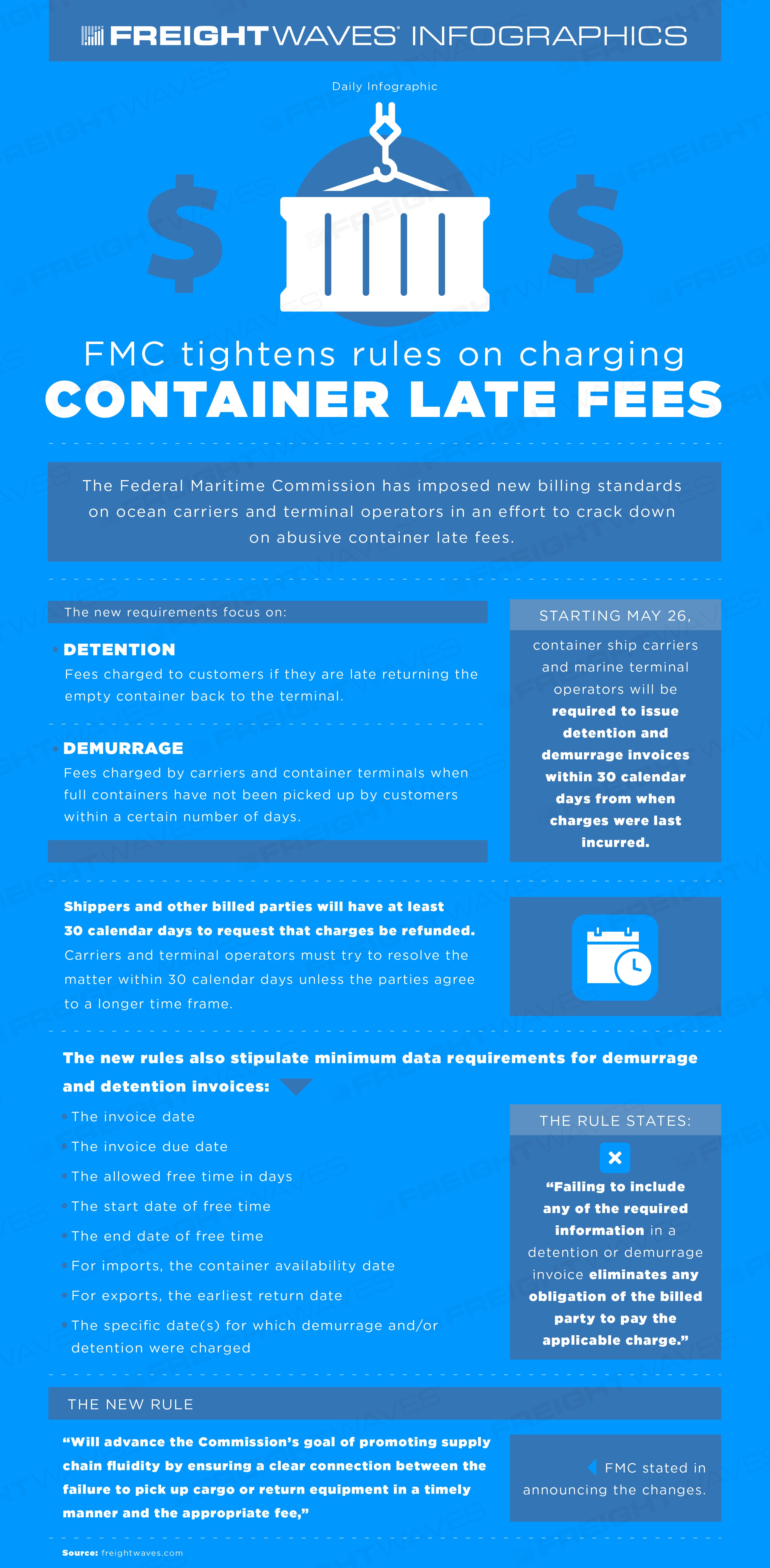
Daily Infographic: FMC tightens rules on charging container late fees

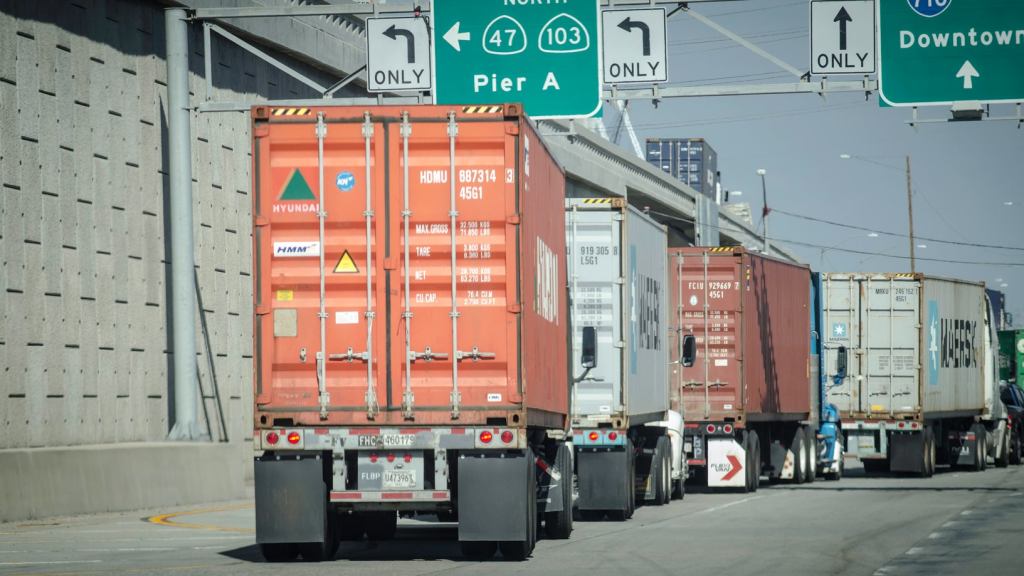
Federal regulators have relieved drayage truckers from late-fee bills associated with picking up and returning cargo containers, while inadvertently — and unfairly — shifting the burden onto shippers, a major shipper group contends.
The Federal Maritime Commission’s rule on demurrage and detention, issued last week, imposed new billing standards on ocean carriers and terminal operators in an effort to crack down on abusive container late fees, often to truckers as well as shippers.
But a simplified billing provision in the rule means drayage truck drivers can no longer be billed for demurrage and detention on cargo contracted between ocean carriers and their shippers, even if the trucker might have been responsible for the delay in picking up or returning the container to the port.
That burden — unless explicitly spelled out otherwise in an agreement — now seems to fall squarely on shippers, according to the National Industrial Transportation League, whose members could wind up having to pay more in administrative costs to manage the process.
Because truckers are not usually part of the ocean transportation contract, “it really seemed like [the FMC] wanted to carve the truckers out of the billing process, and the best way to do that was with this billing provision within the rule,” NITL general counsel and Thompson Hine LLP partner, Karyn Booth, told FreightWaves.
“But if the trucker knows they’re not going to pay demurrage and detention invoices — unless contractually obligated to do so with the shipper — the rule could reduce their incentive to do everything in their power to get the container out of the port, or return it, in a timely way?
“That’s where our members have concerns. They’re going to have to pay even when they’re not at fault for delays in picking up or returning containers, and will have to have contractual relationships that will allow them to get reimbursed. That’s the practical implication of this rule — shippers are going to have to look at their contracts carefully with their ocean carriers and truckers.”
NITL Executive Director Nancy O’Liddy pointed out that larger shippers have departments in place to deal with these types of contract changes. For smaller shippers, however, “I think they’re very distressed about this,” she said. “And their costs are going to go up, because they’re going to have to pay the invoice and then try and get reimbursed from the trucker if they’re not at fault.”
The American Trucking Associations’ Intermodal Motor Carriers Conference, which represents drayage carriers, praised the change as more accurately assessing invoicing responsibilities.
“The new rule will require ocean carriers to work directly with their customers, increasing incentives for faster dispute resolutions and bringing greater efficiency to the supply chain,” commented IMCC Executive Director Jonathan Eisen when the rule was announced.
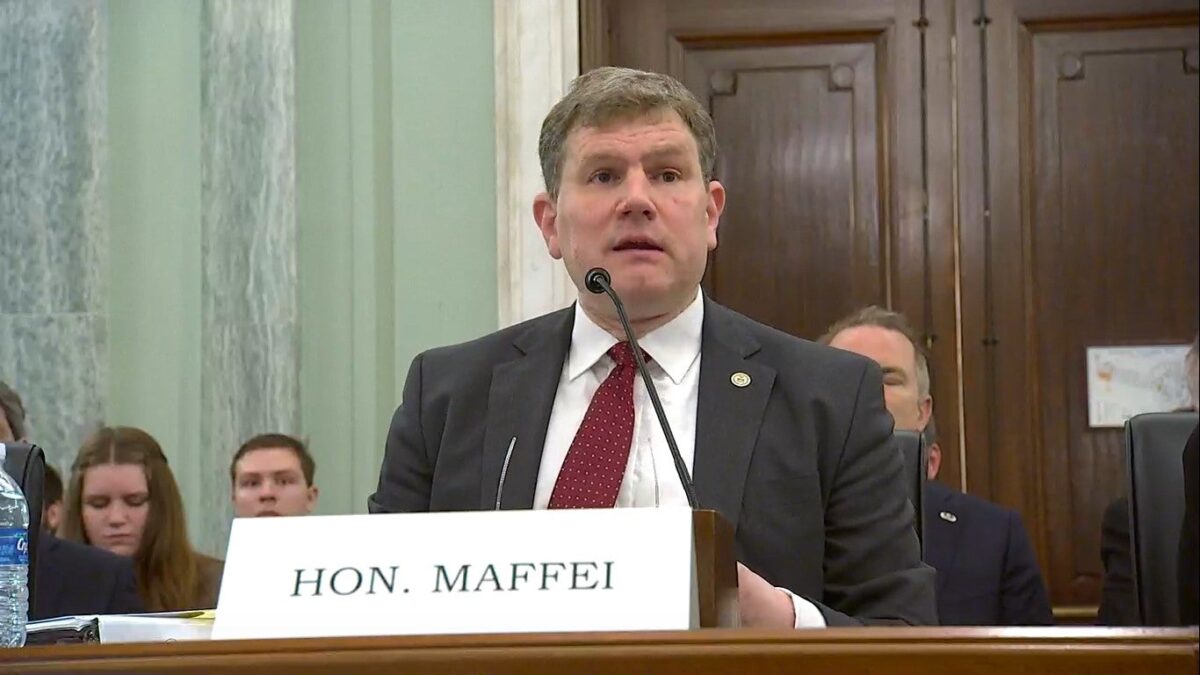
Testifying on Wednesday at a hearing to be reconfirmed as FMC chairman, Daniel Maffei told the Senate Commerce Committee that the new rule will help eliminate container late-fee billing abuses by ocean carriers.
“These fees are for the promotion of the movement of cargo. They’re not to pad the bottom line of an ocean shipping company,” Maffei said. “If they’re not used for [promoting cargo movement], they’re unreasonable, and we will do whatever it takes” to enforce the rule, he said.
However, Booth questioned whether the FMC’s “contract-based” billing provision, which places sole responsibility on the contracting shipper regardless of fault, will put the incentives for freight fluidity in the right place.
NITL, in contrast, favored a “conduct-based” rule that would have placed responsibility for demurrage and detention charges on the party affecting the timely pick up or return of containers.
“We’re going to have to wait and see whether or not this improves fluidity — we don’t know yet,” Booth said. “Because if you’re going to get the bill when you’re at fault, you’re going to check your conduct to avoid getting that bill. But this rule requires the bill to be the responsibility of the shipper no matter who’s at fault.”
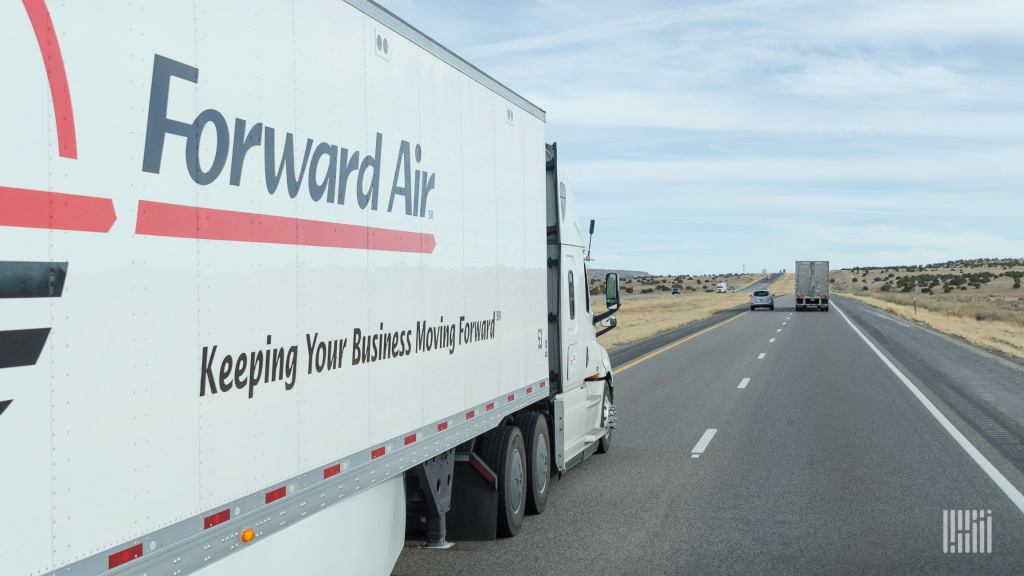
Forward Air missed fourth-quarter expectations Wednesday after the market closed, however, investors and analysts are likely more interested to hear updates on financial targets and the new management structure following the closing of a messy merger with Omni Logistics.
Forward (NASDAQ: FWRD) finally closed on the acquisition of Omni Logistics last month after it attempted to terminate the deal following legal challenges from shareholders. As it sought out of the transaction, Forward alleged Omni withheld data and provided unreliable financial projections while Omni maintained it acted in good faith and asked a Delaware court to force the deal to close. Shortly before the matter was to be settled at trial, the parties reached an agreement.
After the dust settled, the CEOs of both companies and several executives from Omni are no longer with the combined entity.
Forward reported adjusted earnings per share of 81 cents for the fourth quarter, which was 70 cents lower year over year (y/y) and 17 cents below the consensus estimate. A headline net loss from continuing operations of $14.7 million included deal-related costs and excluded results from Forward’s final-mile segment, which was sold to Hub Group (NASDAQ: HUBG) in December.
Some earnings forecasts from analysts, however, may not have taken into consideration the company’s lowered guidance range of 78 cents to 80 cents, which excluded final-mile results.
Consolidated revenue of $338 million was 16% lower y/y. Revenue from its expedited segment, which includes less-than-truckload operations, fell 5% to $279 million. Tonnage in the expedited segment increased 6% y/y as shipments fell 4% and weight per shipment was up 11%. Revenue per hundredweight, or yield, was down 8% y/y excluding fuel surcharges.
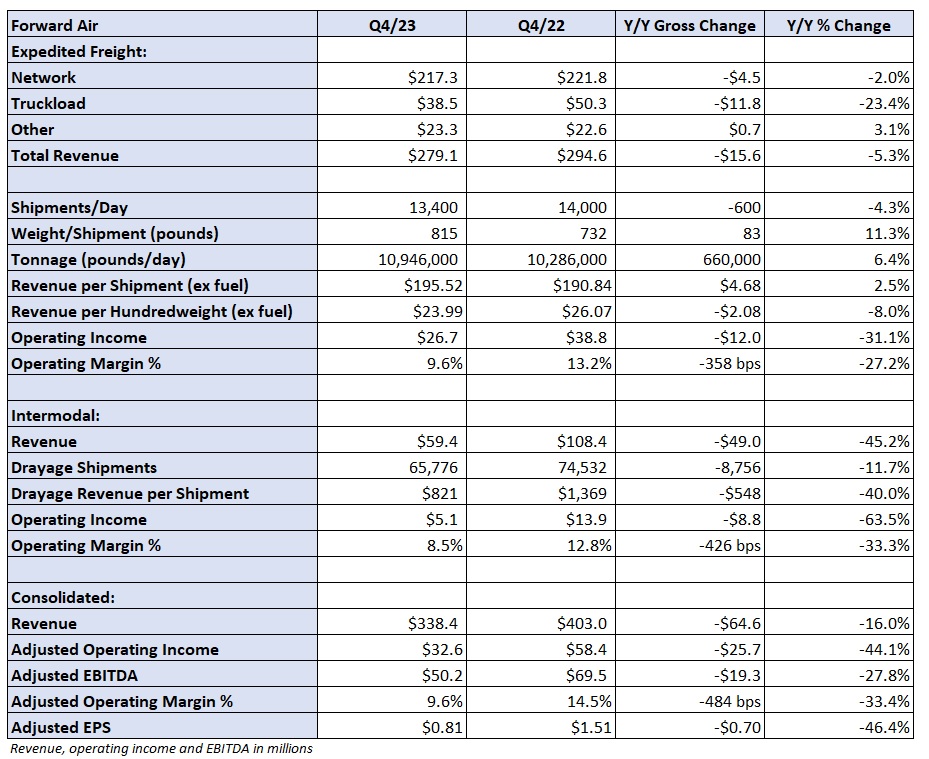
A concern with the merger was that the addition of freight forwarder Omni would force some of Forward’s other forwarding customers, which are competitors to Omni, to seek capacity elsewhere. However, Forward interim CEO Michael Hance said in a news release that “volumes from that channel remain strong.”
Hance is also the company’s chief legal officer and secretary. A search committee was formed to find a new CEO after former CEO Tom Schmitt’s departure earlier this month.
Few details were provided regarding the integration in the release but the company said it has already folded Omni’s linehaul operations into the Forward network.
“On January 25, 2024, we closed on the acquisition of Omni Logistics, positioning the combined entity to be the premier provider of choice for mission-critical freight transportation to a larger customer base with an expanded footprint,” Hance said. “As I have gotten to know our new teammates from Omni Logistics, it is clear to me that Forward and Omni share a common DNA focused on the delivery of excellent customer experience.”
The company announced it was temporarily discontinuing earnings guidance “due to the on-going integration of Omni Logistics, which we began executing on three weeks ago,” Forward Chief Financial Officer Rebecca Garbrick stated.
The company also suspended its 24-cent quarterly dividend while it attempts to lower leverage after issuing $1.8 billion in debt to fund the transaction.
Shares of FWRD were off 10.6% in after-hours trading Wednesday.
Forward will hold a call at 9 a.m. EST Thursday to discuss results with analysts.

A cluster of wildfires that began on Monday in the Texas Panhandle forced thousands to flee their homes, while also making travel difficult for truckers and motorists.
Texas authorities temporarily closed Highway 136 between the Borger and Amarillo Tuesday, but the roadway was reopened Wednesday.
Interstate 40 near Amarillo remains open, but authorities have urged motorists to avoid traveling through the roadway due to excessive smoke, as well as allowing emergency responders the space to work on controlling the fire.
The Smokehouse Creek Fire that started near the Texas town of Canadian on Monday is already one of the largest fires in state history, engulfing over 850,000 acres. The fire around Canadian was only 3% contained as of Wednesday afternoon, according to the Texas A&M Forest Service.
“Getting around the eastern flank of the Canadian Texas Wildfire! 2-27-24 We almost got boxed in! Prayers to all the affected families and first responders!” Chris Lockhart, a truck driver and social media content creator, posted on Facebook Tuesday.
Canadian resident Sam Ciaramitaro posted a video of tractor-trailers navigating the burning roadways out of the town on Tuesday.
“At least 30 homes in town burned to the ground,” he wrote. “Three displaced people staying here, most evacuated and don’t even know their homes are burned yet. It’s been a hell of a day.”
Texas A&M Forest Service said on Wednesday that the Smokehouse Creek Fire is part of an outbreak of about 15 wildfires in Texas. As of Wednesday afternoon, five of the wildfires, including Smokehouse Creek, were still active.
“Texas A&M Forest Service responded to 8 new requests for assistance from wildfires burning 4,044 acres across the state,” the agency said.
Officials have not determined what started the giant blaze. On Tuesday, Texas Gov. Greg Abbott issued a disaster declaration for 60 Texas counties.
Oklahoma Forestry Services said it was providing assistance in the fight against 32 uncontained fires across the state, with more than 30,000 acres burned as of Tuesday.
Several road closures were also reported by the Oklahoma Highway Patrol on Tuesday due to wildfires, including U.S.Route 283 and County Road 37 to State Highway 15. The road has since reopened.
Shifting supply chains boost trade in California-Baja mega-region
Trump-supporting truckers boycott loads to New York City
573 layoffs hit logistics firms in California, Illinois and Michigan
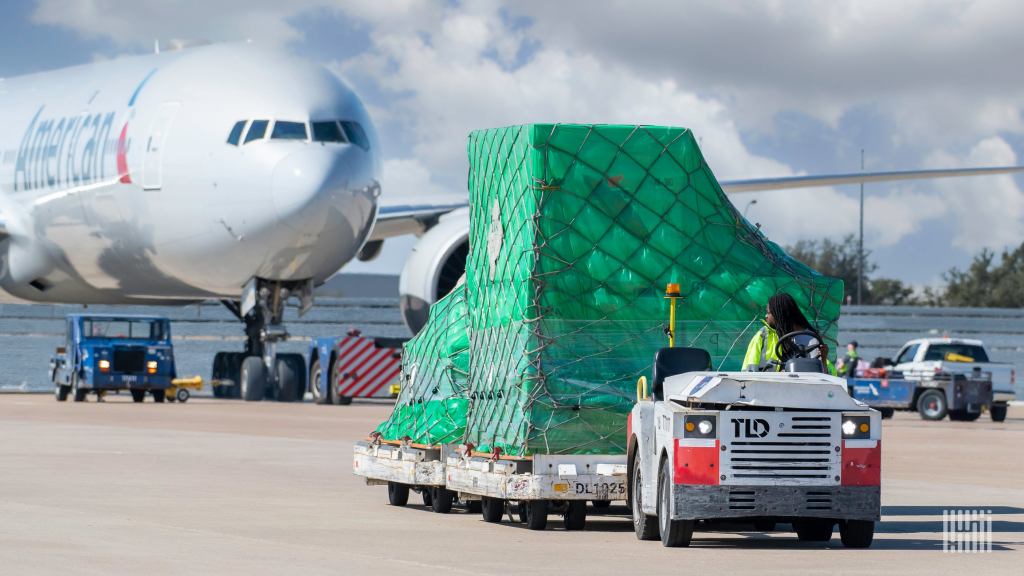
Freightos, a neutral sales platform for international air and ocean shipments, expects to make its first profit in the fourth quarter of 2026, company leadership said Monday after posting an adjusted loss of $19 million for 2023.
The results follow losses of $14.6 million and $12.4 million in 2022 and 2021, respectively. In July, Freightos laid off 13% of its staff, or about 50 people, and implemented other cost controls.
Jerusalem-based Freightos estimated it will narrow losses to about $14.5 million this year on revenue of about $23 million. But officials say growing interest in digital booking by carriers, freight forwarders and shippers, more variety of cargo types available to book, and a huge amount of latent demand will propel the FreightTech company into the future.
CEO and founder Zvi Schreiber said during a briefing for analysts that the total addressable market by value for air, ocean and final-mile shipments transacted on the short-term market is $600 million, with the vast majority of transactions still executed through email and phone calls. Up to $300 million of that shipment value has the potential to be offered on freight marketplaces, which translates to $10 billion in potential revenue for international freight marketplaces. Freightos makes money through a combination of flat fees and taking a small percentage of each transaction.
Freightos (NASDAQ: CRGO) operates a multiparty freight reservation platform where carriers sell their capacity and thousands of freight forwarders conduct real-time rate comparison, book space, make payments and manage shipments for immediate delivery in one place. The electronic booking system also enables forwarders to share pricing and service to their import and export customers through sister site WebCargo, which functions similarly to travel agency intermediaries Amadeus and Sabre in the passenger sector.
The FreightTech company brought in $20.3 million in revenue in 2023, an increase of 6% from the prior year, after breaking the threshold of 1 million transactions. The results were achieved despite a 2% drop in global cargo volumes last year. Most Freightos business is in the air cargo sector as ocean carriers have been slow to adopt e-booking.
Higher platform activity was offset by lower air and ocean rates, which reduced the value of Freightos’ cut from each transaction. Management’s guidance is for revenue to increase about 15% to $23 million and for transaction activity to grow about 30% during 2024. It projects gross booking value (freight transaction value plus Freightos fees) will rise about 22% to more than $800 million.
CFO Ran Shalev said targets for 2025 to 2030 are for transactions and core booking value to each grow 20% to 30% annually by adding buyers, sellers, more choices and transaction features. Freightos currently generates the bulk of revenue from its solutions business but expects fast-growing platform revenues to become the dominant revenue stream and drive annual revenue growth of 25% to 30%, with gross margins approaching 80% versus 58% today. By the end of the decade, Freightos anticipates it will achieve adjusted earnings, minus certain bookkeeping expenses, of 8% to 12% per year, “bringing us to profitability by the end of 2026 and leading for this to become a highly profitable company in the later years,” said Shalev.
Freightos also has a white-label offering to be the booking engine on forwarders’ own websites and sells subscriptions for data related to industry pricing and other trends.
The number of carriers selling through the Freightos system now stands at 47, after Japan Airlines and Virgin Atlantic Cargo joined WebCargo in recent weeks.
Freightos said it has several new avenues for growth, such as the recent feature allowing forwarders to obtain estimates for trucking costs from a U.S. airport to the final destination. The company expects to soon integrate the actual booking of these travel services into the platform alongside the airline bookings, similar to add-on services such as payments, insurance and customs brokerage that are now available on the platform.
Freightos last year also introduced interlining, where a customer books with one airline that purchases cargo service from a partner carrier, similar to code sharing in passenger air travel. It also launched Freightos Terminal, a dashboard with global air and ocean intelligence. The current disruption in Red Sea shipping has drawn interest in the Freightos data, including from manufacturers and retailers, said Schreiber.
The air cargo market has shown signs of improved demand in recent months, but excess capacity from passenger airlines may prevent carriers from significantly raising rates this year.
Freightos was listed on the Nasdaq exchange in January 2023 through a reverse IPO that raised $65 million. The stock is down 34.5% over the past 12 months at $2.94 per share. The companyhas $52 million in the bank to pursue its growth strategy and is focused on reducing cash burn, management said.
Competitors in e-booking for international freight include cargo.one, Cargo AI and Cargo Wise.
Israel-Hamas war impacts Freightos operations as losses persist
South American cargo airline joins Freightos e-booking platform
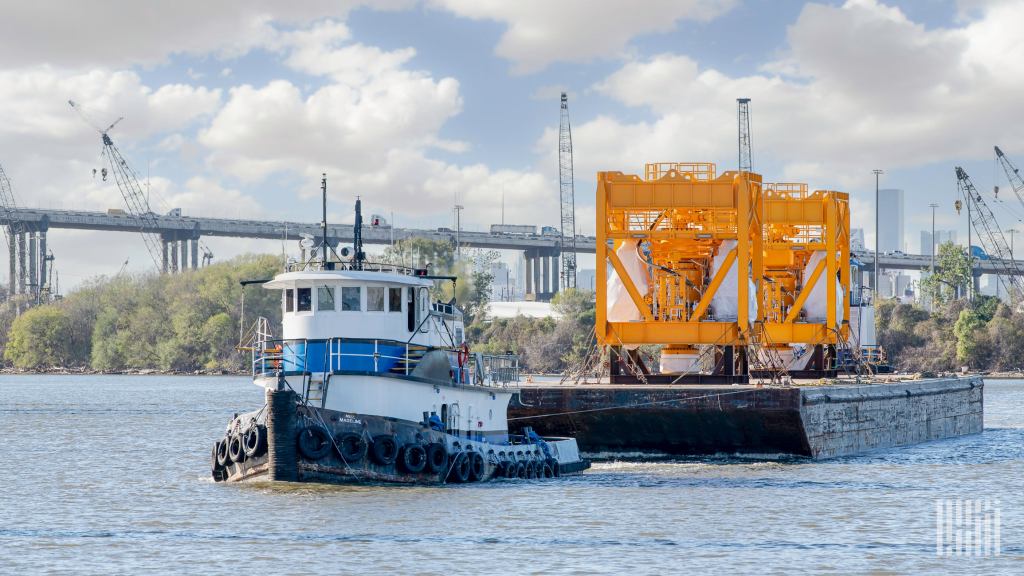
Marine logistics software provider OpenTug announced Friday it has raised $3.1 million in a seed round led by Entrada Ventures with participation by SpringTime Ventures and Stout Street Capital to enhance its technology, expand its sales initiatives and grow its network of United States marine operators.
Since its founding in 2019, the company has raised $3.15 million, including an initial seed round led by SeaChange Fund in 2023. Its most recent round has valued the company at $10.1 million, according to Pitchbook.
The company was founded by CEO Jason Aristides, COO Mike Baldwin, who previously worked at Amazon Web Services, and CTO Luciano de la Iglesia, who had worked for Microsoft as a data scientist.
In an interview with MarineLog, Aristides explained that in his work at logistics provider Foss and Curtin Maritime, he found the company was continuously moving empty barges past ports that could greatly use the capacity, but due to a lack of visibility, they did not realize the available capacity was nearby.
“No one knew of the opportunity or when there were 45,000-plus empty barge sailings while the U.S. was in a capacity crisis,” he told the media outlet.
With OpenTug, shippers can request quotes from the visible capacity, terminal operators can access more customers, and vessel operators can deliver a more modern booking experience while adding revenue from shippers they would have missed in the past.
| Funding details | OpenTug |
|---|---|
| Funding amount | $3.1 million |
| Funding round | Seed round |
| Lead investor | Entrada Ventures |
| Secondary investors | SpringTime Ventures, Stout Street Capital and undisclosed investors |
| Business goals for the round | Grow sales, expand network of operators and continue building out technology solutions |
| Total funding | $3.15 million |
| Current valuation | $10.1 million* |
According to a company blog post, OpenTug has access to over 40% of barge capacity within its platform.
Seattle-based OpenTug says that in 2023 it serviced over 3 million tons of marine cargo across 25,000 miles of United States marine highways.
The platform can be custom-branded and includes customer relationship management tools and API integrations, live chat and service tracking, bill management tools, reporting solutions, and customer dashboards. Shippers can filter is marketplace by commodity, capacity and port capabilities. They can book barge sailings or request quotes, compare quotes, communicate shipment details, and trace and track all on one platform, according to the company website.
Solvento pushing digitization with invoicing software, $53.5M in debt and new funding
Terminal raises $3.1M, wants to be the ‘Plaid of trucking’
Fillogic closes $13M Series A, grabs third spot on FreightTech 25

The settlement in the BNSF Railway biometrics case in Illinois that was announced in September now has a price tag: $75 million.
But the average payout to drivers and other logistics workers who were part of the class action against the railroad will be about $1,000 per person.
The class-action suit against the railroad that was filed in 2019 first resulted in a victory for the plaintiffs in October 2022 in U.S. District Court for the Northern District of Illinois. After a five-day jury trial, a judgment was handed down against BNSF (NYSE: BRK-A) for $228 million, saying that the railroad had violated the Biometric Information Privacy Act (BIPA) by recording data from drivers and workers obtained by “biometrically-enabled devices to verify … the identities of truck drivers when they entered BNSF’s Illinois facilities,” according to a history of the dispute in the settlement document.
But BNSF sought a new trial as a result of subsequent legal decisions regarding BIPA. That request was granted and the $228 million award was vacated.
The lead plaintiff in the case was a driver named Richard Rogers. In the initial suit and after the class was certified, the plaintiffs said the “identity verification devices were components in the automated gate systems at BNSF facilities in Illinois.” They relied on fingerprints and other biometric information.
“[Plaintiffs] alleged that the use of such devices in Illinois was subject to regulation by BIPA and that [BNSF] failed to obtain written consent from [the defendants] to collect or otherwise obtain their biometrics,” according to a summary of the case history in the settlement document.
That document, filed with the federal court Monday, revealed the $75 million price tag to end the litigation.
Negotiators for the two sides attempted to reach a settlement numerous times, and the instances with their dates are included in the settlement document. It was on Sept. 8, 2023, that they reached an agreement. That was just a few weeks before the retrial was to begin on Oct. 2. But the precise size of the settlement had not been reached at that time.
After legal fees and other costs are taken out of the settlement, the two parties agree that the average payout for each member of the class will be approximately $1,000. Legal fees are capped at 35% of the settlement fund of $75 million, plus “reasonable” costs.
In the settlement document, BNSF said it is no longer using the biometrics system that was at the heart of the legal dispute.
More articles by John Kingston
Deadline nears for filings as Werner seeks review of nuclear verdict
If truckers haul bread and cakes, is their business baking or trucking?
State of Freight takeaways: Is a weak February the bottom of the cycle?
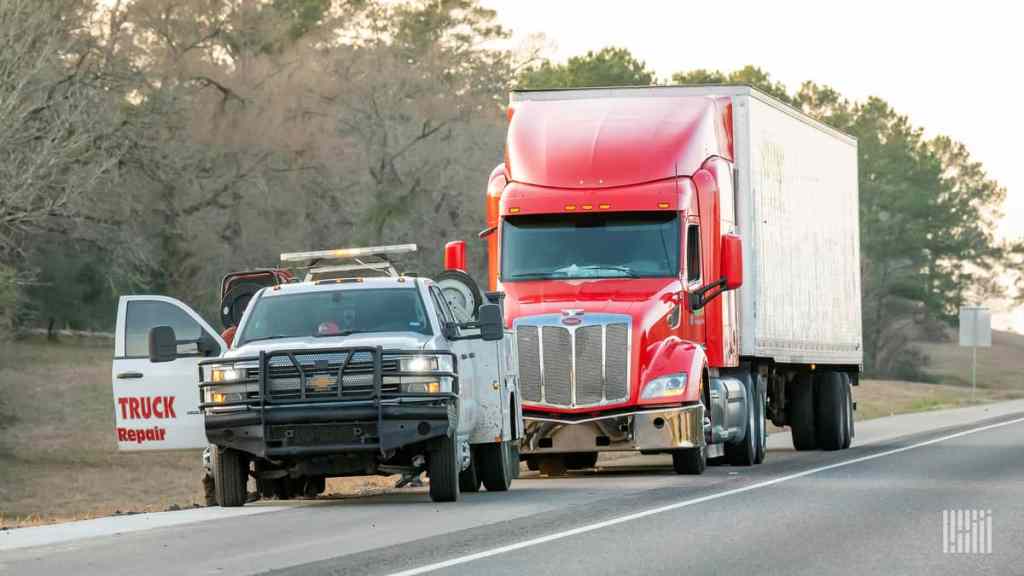

Carriers have faced a range of industry and economic challenges over the past couple of years, forcing many fleets to operate on razor-thin margins. For these companies, the unforeseen maintenance costs and downtime accompanying dead truck batteries could be enough to jeopardize their profitability.
To safeguard their companies against this risk, fleet leaders should be aware of the parasitic draw or the energy that drains from a truck battery when not in use. This is often the culprit behind dead truck batteries, especially during the colder months or after long periods of idling.
Many carriers accept the ramifications of this slow drain — including dead batteries — as a hazard of doing business, but it does not have to be that way. Fleets can access options to mitigate this issue.
“While at first blush, these small amounts of energy might not pose a significant threat to vehicle readiness, over a long enough time, they can prove disastrous for fleet efficiency and costly to your bottom line,” according to a recent PowerFilm Solar blog by Julia Stone.
In an economic environment where efficiency and cost-savings are top of mind, this seemingly slow-growing threat warrants action from carriers sooner rather than later. However, pinpointing and solving every source of parasitic drain is difficult. Instead, fleets should focus on mitigating risks by increasing available energy sources.
“Often, the culprit could be a worn wire that is nearly impossible to isolate amongst the dozens of other cables in your truck’s system,” Stone wrote. “To mitigate this parasitic draw, the simplest and least stressful solution is to pair that draw with the appropriate solar panel to cancel it out.”
In addition to reducing the risk of dead batteries, solar panels help carriers increase fuel efficiency, further safeguarding themselves against ongoing economic headwinds.
In 2019, a nationwide rail refrigeration fleet — which utilized Carrier Vector hybrid reefers — conducted a one million-gallon study to evaluate the impact of reefer solar panels on overall fuel usage, according to a PowerFilm Solar blog post by Kelly Junge.
During the study, a differential fuel meter was mounted on each truck’s fuel lines, and data was monitored via telematics. Loads were kept at either zero degrees or minus 5 degrees. The study lasted an entire year, ensuring data was collected from warm and cold months.
“The final result of the study was a 0.09 gallon/hour diesel savings with the addition of a 20-30W solar panel,” Junge said. “In addition, it was found that the diesel savings were more significant in the colder months (starting a cold diesel engine to charge a low-voltage battery can be inefficient).”
Ultimately, for every 24 hours a reefer truck runs a solar panel, the carrier stands to save over two gallons of diesel, according to Junge. That statistic suggests that reefer solar panels could pay for themselves within a few months.
When trucks have an additional energy source, like solar panels, it is also easier to engage other tools and devices to increase productivity and efficiency, further compounding the positive effects.
“Telematics can be a significant parasitic load on your reefer battery, especially for idle trailers that periodically sit over weekends,” Junge noted in a recent blog post. “It won’t be a question of if your reefer battery will be dead; it will be a question of when. A small 24W solar panel counteracts telematics loads and keeps the reefer battery healthy.”
All said the benefits of adding solar panels far outweigh the time and money associated with acquiring and installing the panels.
“Considering that a refrigeration technician can run $90/hour and losing a load can cost thousands of dollars, an inexpensive solar panel provides an outstanding return on investment for your fleet. The time and cost for a jump-start service call is too high not to have a solar panel on your truck, trailer, or reefer.”
Click here to learn more about PowerFilm Solar.

On episode 687 of WHAT THE TRUCK?!? Dooner is talking to Gather AI’s Sean Mitchell about the applicability of warehouse drones, AI, and software in optimizing operations. Gather AI’s software enables drones to fly autonomously through warehouses with no GPS or WiFi to photograph inventory stored in pallet locations. We’ll find out how the largest autonomous inventory management platform in the world works.
Couch.com founder and CEO Alex Back is an e-commerce veteran and a direct to consumer expert. He’s built a new platform that helps users select a couch. He’s talking about the future of AI in the furniture industry and e-commerce in general.
It’s all about chassis when Consolidated Chassis Management LLC’s Mike Wilson joins the show. We’ll learn about their South Atlantic Consolidated Chassis Pool. This innovative pool utilizes advanced technologies and industry expertise to optimize chassis utilization throughout the South Atlantic region.
FreightWave’s Alan Adler covers the electric and the eclectic. We’ll learn about Hyliion’s Karno generator; ideal use cases for electric vehicles; and renewable natural gas as a growing factor in Class 8 truck orders.
Plus, Kardashian gets double brokered; cooking in the cab controversy; spot rates slide; Cam Newton hits the logistics conference scene and more.
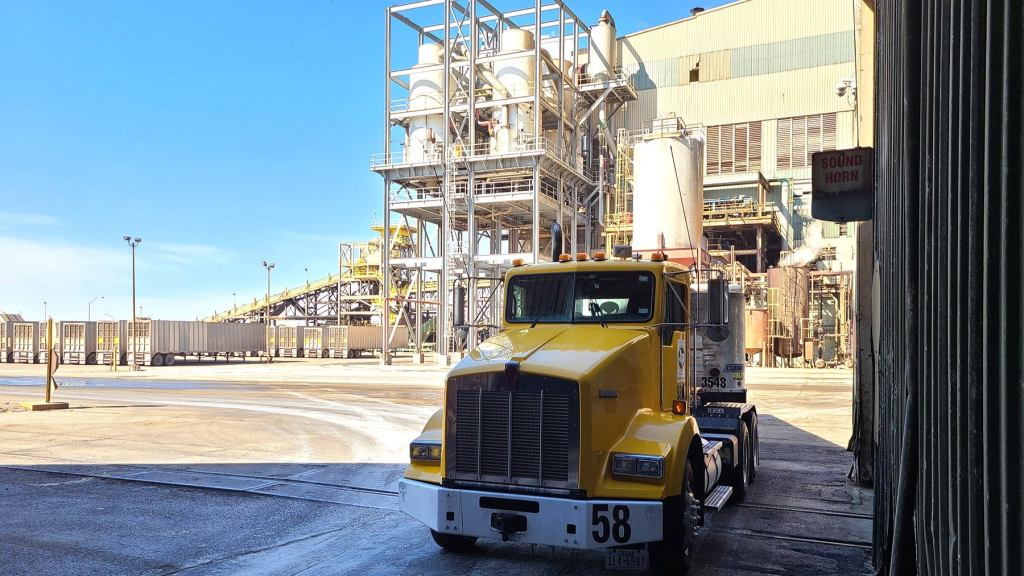
Rio Grande Valley Sugar Growers Inc. recently announced it is closing after 51 years in business, citing dwindling water for irrigation and an ongoing dispute with Mexico over water supplies.
The closure will result in layoffs of 435 employees, including 101 company truck drivers, for the sugar-growing operation and mill based in Santa Rosa, Texas. The mill’s closure will be finalized by April 29.
“This is to advise Rio Grande Valley Sugar Growers Inc., will permanently close its plant … due to a significant downturn in business resulting directly from the excessive heat and shortage of irrigation water affecting the Rio Grande Valley,” company officials said in a notice released Wednesday by the Texas Workforce Commission.
Santa Rosa is a small town about 247 miles south of San Antonio.
Rio Grande Valley Sugar Growers Inc. was a member-owned cooperative of more than 125 farmers that utilized more than 40,000 acres of South Texas farmland in the cultivation of sugarcane each year.
Board members for Rio Grande Valley Sugar Growers initially announced the mill’s shutdown in February, blaming drought conditions that have plagued Texas in recent years, as well as a long-running dispute with Mexico over water supplies.
“Agriculture in the Rio Grande Valley depends on adequate and reliable irrigation water deliveries,” the company said in a news release. “For over 30 years, farmers in South Texas have been battling with Mexico’s failure to comply with the provisions of the 1944 Water Treaty between the U.S. and Mexico that governs water sharing between the two nations on the Colorado River and the Lower Rio Grande.”
The mill produced more than 1.5 million tons of sugarcane per year, including 160,000 tons of raw sugar and 60,000 tons of blackstrap molasses, the company said. The mill also accounted for up to 11% of total gross revenues produced in the Rio Grande Valley’s agricultural sector every year.
The raw sugar was harvested from October to April and then transported by barge to Louisiana for refining via the Port of Harlingen in Harlingen, Texas, according to a 2022 study from Texas A&M University. The molasses from the mill was also sold for cattle feed.
Shifting supply chains boost trade in California-Baja mega-region
Trump-supporting truckers boycott loads to New York City
573 layoffs hit logistics firms in California, Illinois and Michigan