Contract logistics provider GXO Logistics Inc. reported adjusted fourth-quarter earnings of 70 cents per diluted share, just beating consensus estimates of 69 cents per share. The company also guided to a range of $2.70 to $2.90 per share for 2024, up from $2.59 in 2022, and said top-line growth will likely fall around the midpoint of a 2% to 5% range.
The Greenwich, Connecticut-based company (NYSE: GXO) posted fourth-quarter revenue of $2.6 billion, up from $2.5 billion in the 2022 quarter. Operating income rose to $87 million from $74 million, while net income increased to $73 million. Adjusted earnings before interest, taxes, depreciation and amortization fell to $193 million from $205 million.
For the year, revenue rose to $9.8 billion from $9 billion. Operating income rose to $318 million from $242 million, while net income increased to $229 million from $197 million.
The company said it ahd signed contracts in 2023 valued at more than $1 billion in annualized revenue. About 40% of that new business came from businesses looking to outsource their supply chain operations, GXO said.
For 2024, GXO guided to adjusted EBITDA of between $760 million and $790 million.
Company executives said that GXO’s continental Europe business has recovered from a slow 2023 start and is now doing well. GXO is starting to see a turnaround in its North American and U.K. operations coming off a sluggish fourth quarter. Businesses that were paring back inventories in late 2023 are poised to grow their orders this year, though most of the gains could be backloaded in the second half of the year, executives said.
Revenue growth projections for 2024 will likely not be driven by strong pricing trends, executives said. CFO Baris Oran said in a phone interview that lower inflation levels will result in more muted price increases for GXO customers. GXO has seen material declines in labor and equipment cost inflation since 2022, Oran said.
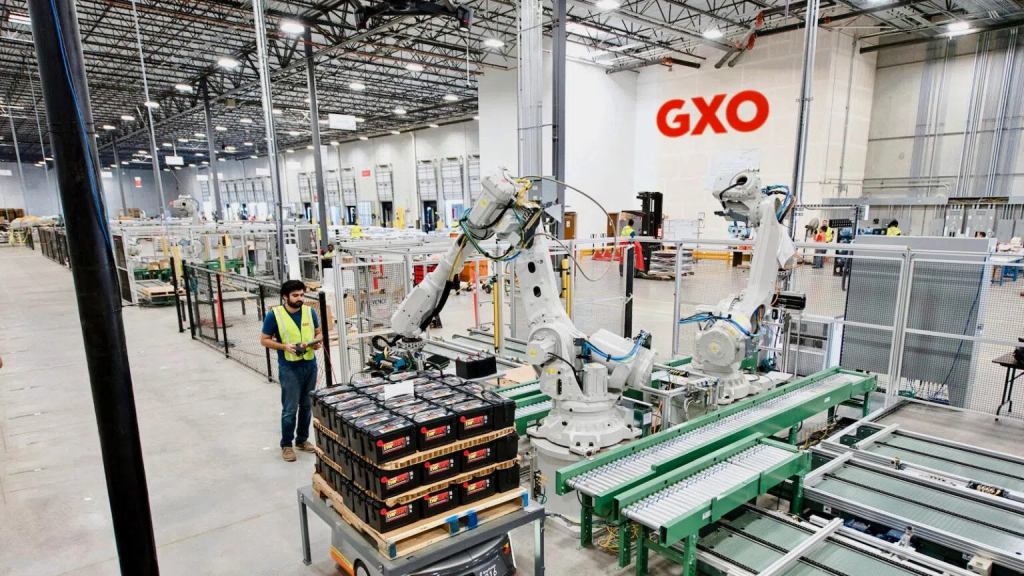
The bulk of 2024 revenue growth will be a second-half story, Oran added. Warehouse automation projects in the pipeline can take almost a year to complete depending on their complexity, and revenue is not generated until the project is live and operational, Oran said. Also, customers ramping up big order flows may start off small before growing into an optimal throughput.
Will Apple Vision Pro radically change logistics? – WTT
On episode 682 of WHAT THE TRUCK?!?, Dooner is joined by GateGo founder and CEO Adrian Garcia. Garcia recently purchased a pair of Apple Vision Pros and is here to tell us how they can apply to supply chain. We’ll also learn how GateGo is eliminating manual data entry and making your yard more efficient.
Zuum co-founder Mustafa Azizi predicts that 2024 will be a comeback year for the freight market. We’ll find out what he’s seeing out there and what he’s hearing on the street at the Stifel conference in Miami.
Metafora’s Chief Growth Officer Ryan Schreiber shares the importance of freight mix; what we can learn from RXO; and the buzz around AI.
Norton Transport VP Justin Scott talks about his company hitting the $100 million revenue milestone and their announcement of a major expansion in San Antonio. We’ll find out how they’re winning.
Plus, have you ever found love at a truckstop; Waymo attacked; plane crash in Naples; and more.
Pension liability claims against Yellow may take months to settle
The venue for deciding the fate of $7.2 billion in pension withdrawal liability claims against bankrupt Yellow Corp. will be decided on March 6, a Wednesday status hearing in a Delaware court determined.
Previous court filings have shown as many as 20 different multiemployer pension plans (MEPPs), including Central States Pension Funds, have laid claim to the estate. The MEPPs and Pension Benefit Guaranty Corp. (PBGC), a pension insurer that is overseeing roughly $80 billion in special financial assistance (SFA) allocated by the American Rescue Plan Act, have said the matter should be decided by arbitrators.
Yellow contends the claims should be litigated in bankruptcy court and that making it fight the claims in 20 different venues would leave the estate’s unsecured creditors footing the legal bills. However, counsel for Yellow said at the Wednesday hearing that there were just 11 MEPPs party to the claims.
A main point of contention has centered on the existence of unfunded vested benefits (UVBs).
PBGC said, within its authority granted by Congress, it enacted a rule that requires MEPPs to recognize the SFA distributions over time, meaning there are pension withdrawal liabilities in this case. It said doing otherwise would create a shortfall for pension funds as most employers would seek an early exit from the plans.
“If a plan immediately recognized the entire amount of SFA as an asset, its UVBs would immediately decline, and so too, generally, the prospective withdrawal liability of contributing employers,” the PBGC said in a January objection. “Contributing employers could withdraw immediately with vastly reduced withdrawal liability.”
However, the estate said the MEPPs are now fully funded and there are no UVBs, meaning there is no liability. It said even if there were valid claims, the amounts due are “far below $1 billion,” as the funds have submitted duplicate claims, didn’t apply relevant caps and didn’t discount the liabilities to present value.
The estate said the claims represent a “double recovery” for the MEPPs and a “windfall at the expense of shareholders,” which include taxpayers.
A separate filing showed that all secured creditors and holders of the estate’s bankruptcy financing have been repaid, using nearly $2 billion in proceeds from real estate auctions. The estate now has $300 million in cash and has started the process of settling unsecured claims.
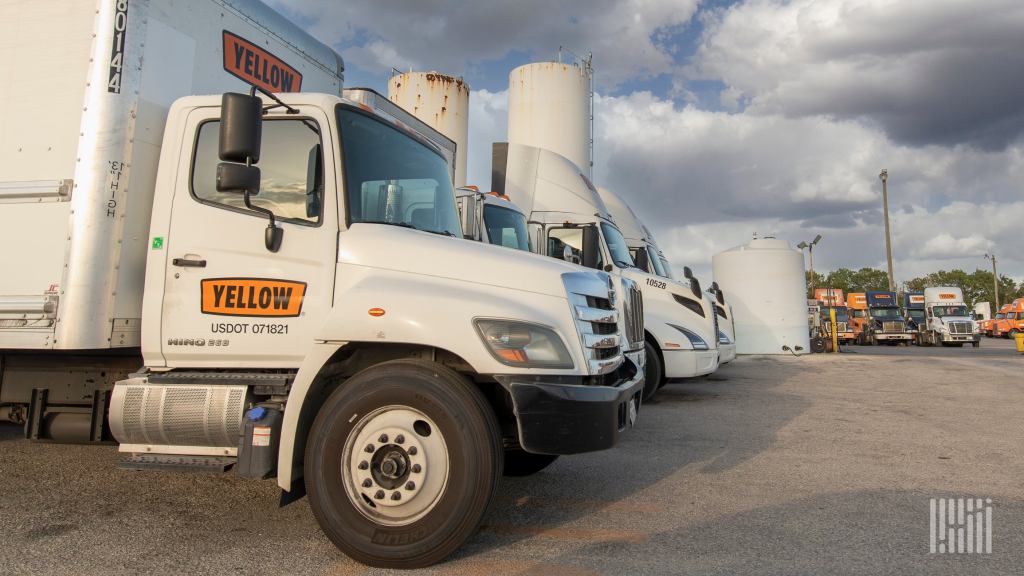
A Monday court document showed Knight-Swift Transportation (NYSE: KNX) will add an additional 10 terminals from the defunct less-than-truckload carrier’s portfolio. The leased properties are valued at $2.2 million and will complement the 15 terminals it acquired for $52 million at the first two auctions last year.
The company said on a Jan. 24 call discussing fourth-quarter earnings that it was eyeing the sites. In total, the carrier could add roughly 35 service centers in 2024 as it builds out a national terminal network after buying two regional carriers in 2021.
Yellow has also asked the court to allow it to assume 78 terminal leases of the 108 leased properties remaining in the portfolio. It said a marketing process of the locations suggests “hundreds of millions of dollars” in proceeds. It still has between 30 and 40 owned properties that it is trying to sell.
Yellow, PBGC and the MEPPs agreed on Wednesday to a court schedule for litigating the withdrawal liability claims. If the bankruptcy court decides to hear the case, a trial on the matter would take place in August.
Central States’ withdrawal claims total $4.8 billion. It received $35.8 billion as part of the government’s rescue plan.
FRA issues safety bulletin on rolling equipment after engineer’s death
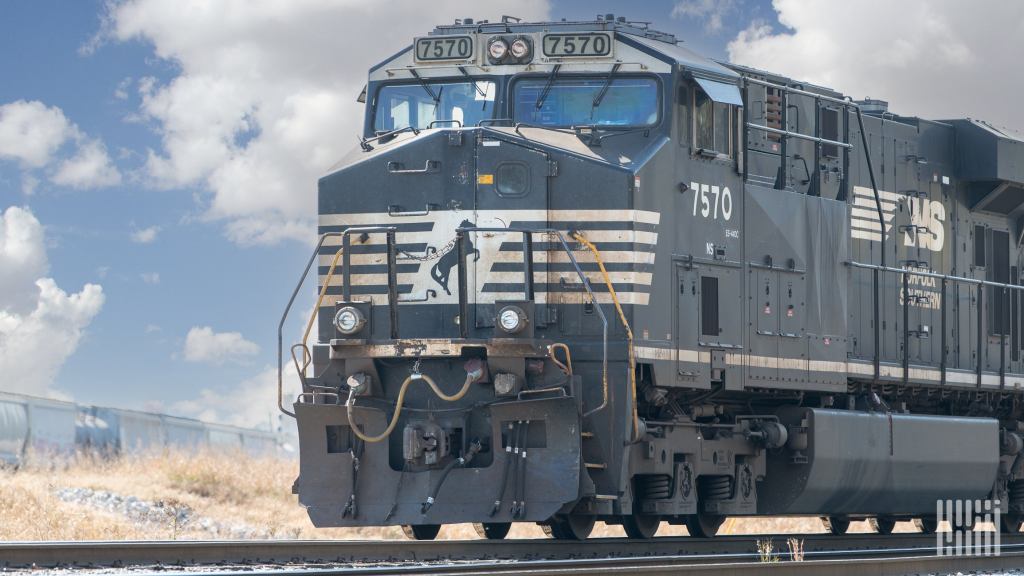
The Federal Railroad Administration is warning rail workers about the dangers of rolling equipment following the death of a Norfolk Southern worker last week in Alabama.
The incident happened just after 5 p.m. on Feb. 7 in Decatur, Alabama, when 55-year-old train engineer Chris Wilson, a 30-year veteran, died after several uncontrolled train cars crashed into his locomotive.
The cause is under investigation by the FRA and on-site investigators from the National Transportation Safety Board.
“At the time of the accident, [Wilson] was operating a locomotive on the east side of the yard and working with a conductor and brakeman to switch cars. Another crew was switching cars on the west side of the yard and had set out 35 cars. At some point, those 35 cars from the west side of the yard track rolled uncontrolled towards the east, colliding with the locomotive, occupied by the engineer, that was located on the east yard track switching lead. The collision ejected the engineer from the locomotive cab and the engineer succumbed to his injuries.”
Eddie Hall, national president of the Brotherhood of Locomotive Engineers and Trainmen, said the “tragic loss underscores the safety risks present in railroading, even in the controlled environment of a railyard.”
In its safety bulletin, the FRA said:
1. Employees should understand the importance of complying with railroad rules for securement of rolling equipment.
2. Railroads should provide employees adequate training on railroad operating rules and procedures for proper securement of rolling equipment.
3. Railroads should provide employees appropriate periodic oversight of compliance with railroad operating rules and procedures for proper securement of rolling equipment.
4. Railroads should empower employees to seek immediate clarification of any safety rule, including rules related to the securement of equipment.
5. Railroads should remind employees of the dangers associated with improperly secured rolling equipment.
Angela Chao, CEO of global shipping firm Foremost Group, dead at 50
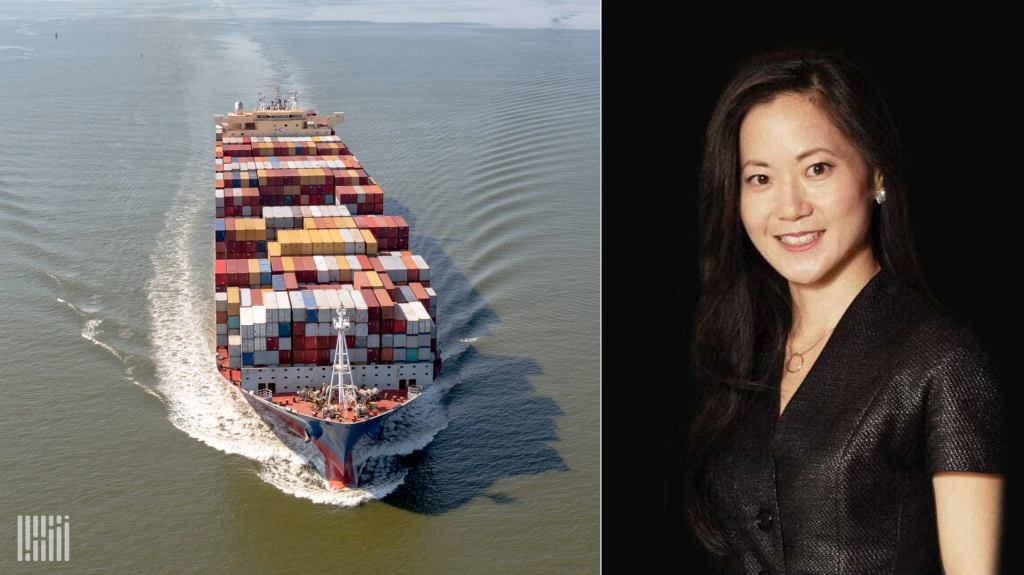
Angela Chao, the CEO of New York-based shipping company Foremost Group, has died in a car accident at the age of 50, according to a news release.
“It is with deep sadness that Foremost Group announces the passing of Angela Chao in a tragic car accident. Angela Chao was a formidable executive and shipping industry leader, as well as a proud and loving daughter, sister, aunt, wife and mother,” according to a statement from the Foremost Group published in MarineLog.
The Foremost Group did not elaborate on the details of her death in the news release.
Chao was the youngest daughter of the Foremost Group’s founder and honorary chairman, James S.C. Chao, and the sister of former Secretary of Transportation Elaine Chao, wife of U.S. Senate Minority Leader Mitch McConnell.
According to Angela Chao’s website, she earned an undergraduate degree from Harvard College and a graduate degree from Harvard Business School (HBS). While attending HBS, Chao wrote a case study on ocean carriers that is still part of the required curriculum for first-year HBS students, according to the Foremost Group.
Chao joined the Foremost Group in 1996, the firm her father, James, a former sea captain born in China, founded in New York in 1964. She became chair and CEO of the company in 2018.
The Foremost Group is a global dry bulk shipping company whose clients include Cargill Inc., Louis Dreyfus Commodities Rotterdam and NYK Line, according to the company. The Foremost Group has a fleet of 33 ships valued at $1.2 billion.
In a 2020 interview with FreightWaves, Chao discussed the effects the coronavirus pandemic could have on the global shipping industry.
In addition to serving as CEO of the Foremost Group, Chao served as a board member of the American Bureau of Shipping Council and the Massachusetts Maritime Academy’s International Maritime Business Department advisory board.
The U.S. Coast Guard Academy said in a post on X that Chao was “a trailblazer in the maritime industry and a true friend of the Academy.”
Chao lived in Austin, Texas.
Our deepest condolences are with the family of Angela Chao. Angela was a trailblazer in the maritime industry and a true friend of the Academy. Her grace, compassion and leadership will be remembered by all who knew her.
The Light Load: It’s a mad, mad, mad, mad supply chain world
Why do international supply chains suddenly feel like a reboot of “It’s a Mad, Mad, Mad, Mad World” or a blood sport version of “The Amazing Race”?
For those who haven’t witnessed the former, it’s a 1963 gargoyle of a movie. I say “witnessed” because you don’t exactly “watch” “It’s a Mad, Mad, Mad, Mad World.” You may like it. You may hate it. But you can only stare agape as it passes by. The film starred everybody — and I mean everybody — from Spencer Tracy to Ethel Merman to Mickey Rooney, with The Three Stooges thrown in for no apparent reason.
The plot centers around a dozen characters chasing a buried fortune in California, and the slapstick hijinks that ensue. Scarcely any mode of transportation goes untapped, including a biplane, a fire truck and a banana peel.
Which brings us to the current supply chain madcappery. Scads of stakeholders are jockeying desperately for the cheapest path to get everything from MyPillow to My Little Pony to Mylanta to global ports of choice before anybody else.
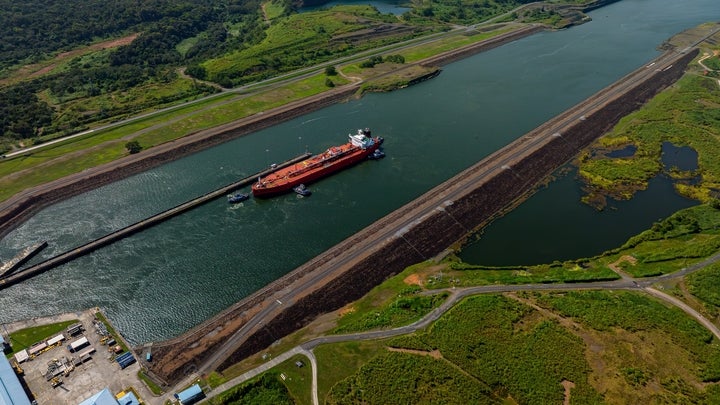
Take Panama. (Please.) Mother-in-law Nature has given this Central American linchpin an indefinite timeout. The Little Isthmus That Couldn’t is in the midst of a drought even by dry season standards, so the number of ships that can take the shortcut via the Panama Canal from the Pacific Ocean to the Caribbean Sea and thence to the Gulf of Mexico or the Atlantic is way down. Instead, the luckless mariners get to watch whales or sea turtles or something on an extended excursion down the western coast of South America and around Tierra del Fuego before doing an about-face like an Arctic tern and chugging up to Nova Scotia, Florida and all points in between.
This continent-size diversion has ocean carriers lounging in Jacuzzis full of unexpected, rate-driven cash and everybody else crying, “Holy schnikes! How much are those Nikes?!” (For the record, Tierra del Fuego means “Land of Fire.” That’s a funny name for a place where penguins roam, if you ask me.)
Not to be outdone are the latest aggravations courtesy of the always aggravating Middle East. Seeing ships trek nervously from the Red Sea to the Mediterranean or vice versa via the Suez Canal while dodging missile-lobbing, drone-happy Houthis in Houthiville is no fun for the average shipper whose wares stand a fair chance of being pirated. So, they get the pleasure of watching helplessly as the ships route far south around Africa’s Cape of Good Night I Hope This Doesn’t Get Any More Expensive.
Purported solutions to this fine kettle of corn draw reactions ranging from a solid “Maybe” to “Let’s not and say we did.”
I’m personally unpersuaded that an interpretive rain dance will do much good in Panama, but I’ll keep an open mind if they set it to decent music and promise not to pull the monotonously competent Riverdance crew out of whatever Irish crypt they’re wintering in.
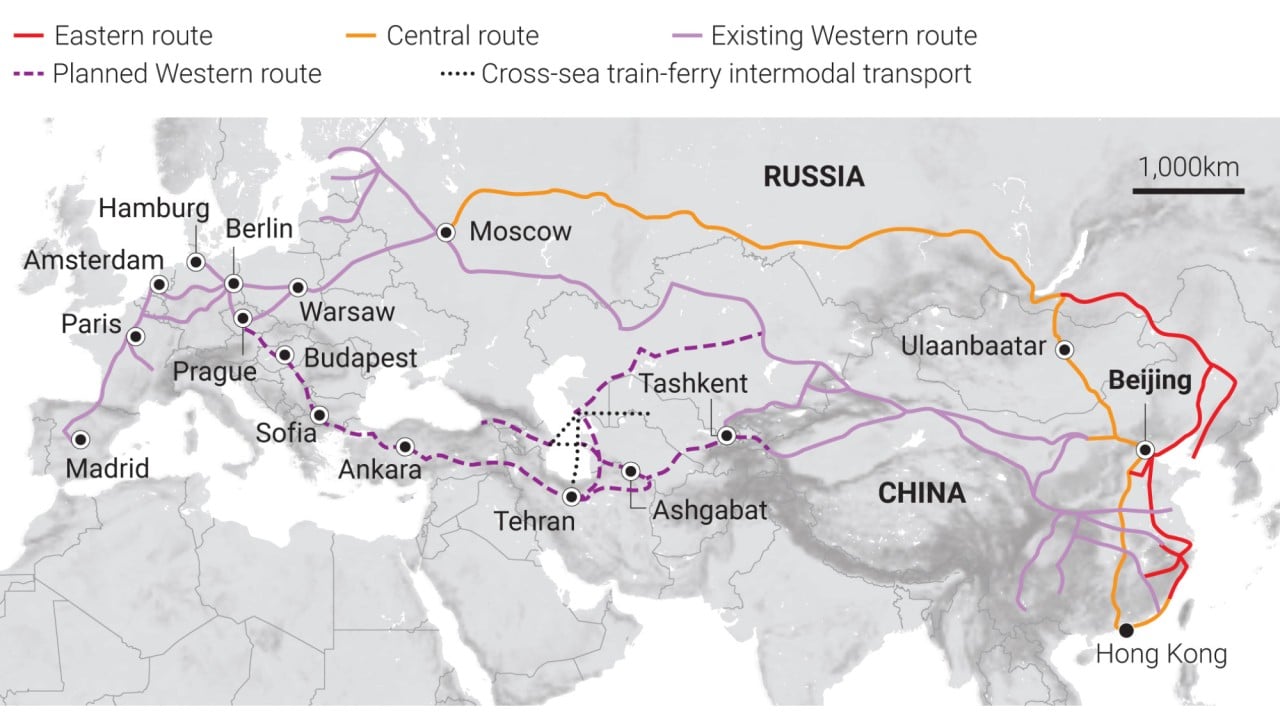
Also thinking outside the container box, Chinese shippers are trying to cut both the Suez and the Cape of Good Hope off at the pass by leaning on the China-Europe Railway Express. Marco Polo wasn’t available for comment, but this Beijing-to-Madrid odyssey is gaining traction, according to FreightWaves’ Michael Rudolph. More shippers are opting for the land route, where rates are at least competitive with what they pay for ocean transport on the spot market. Good on them if they can make it work.
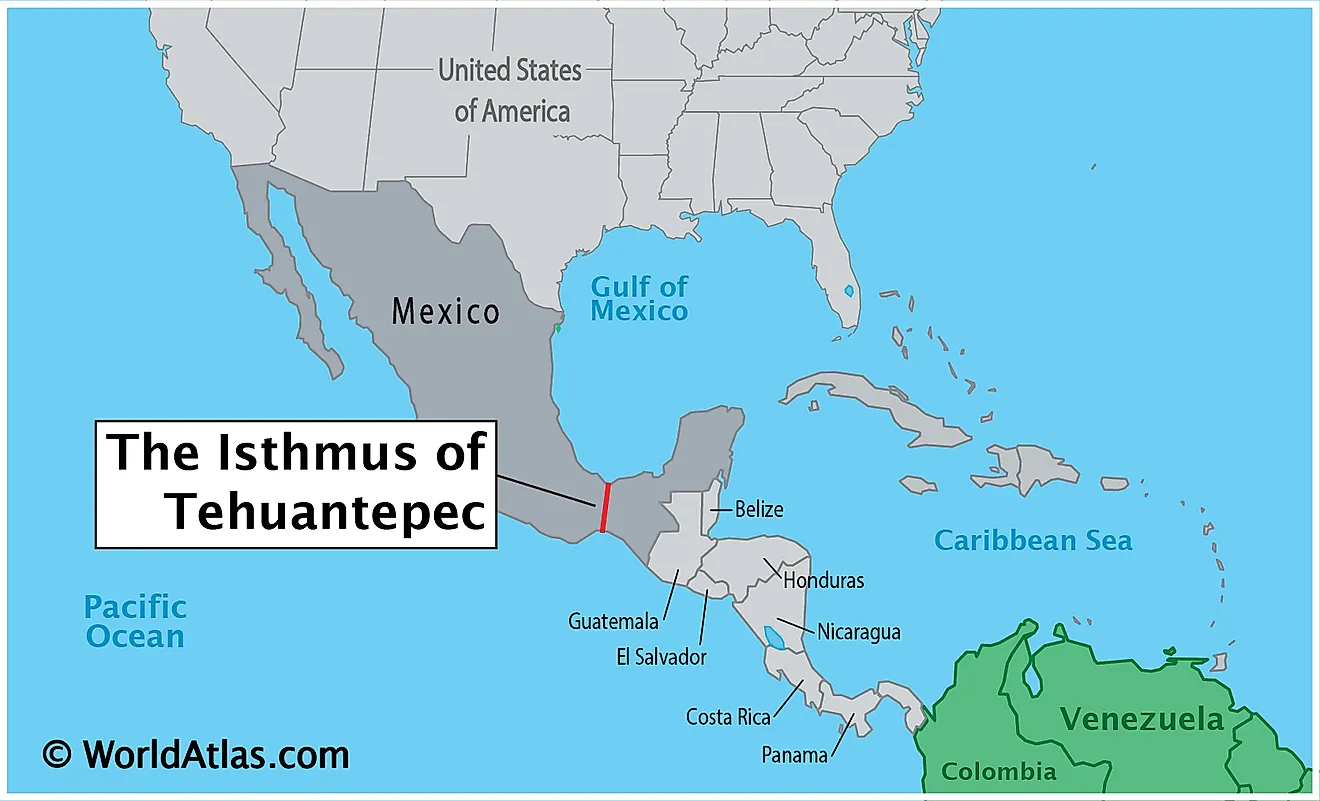
Meanwhile, striking while the iron and the weather are hot, opportunists in Mexico hope to drum up support for a 188-mile rail link across the skinniest part of their fair land between the Pacific and the Gulf of Mexico to thoughtfully relieve the burden on the Panama Canal.
But as FreightWaves’ Noi Mahoney reports, there are skeptics. And if they’re right, the Isthmus of Tehuantepec project could devolve into a $2.8 billion boondoggle — much like those fancy pants Chinese ghost cities that were as popular with actual humans as rug burn. And that’s before the inevitable cost overruns if they ever do in fact build the necessary infrastructure.
A suggestion: Hold off on investing in this Big Idea until it starts raining again in Panama. Then see how warm and buzzy it is.
The Light Load is an occasional look at the world of transportation and logistics through the eyes of an industry greenhorn.
Daily Infographic: The journey of a Valentine’s rose
To view more FreightWaves infographics, click here
Maersk had more cash than it knew what to do with — but not anymore
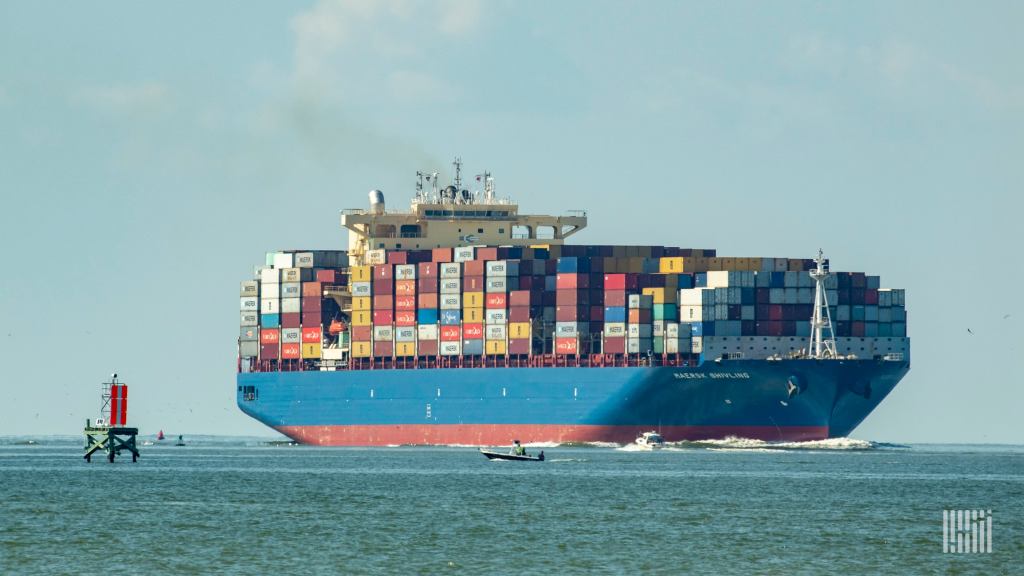
Last week, Maersk management announced that the company was suspending its share buyback program and cutting its dividend by 88%, signaling the end of an era when managing and deploying an enormous excess of capital was the top concern for the shipping line’s executive team. Maersk’s stock price dropped by approximately 16%. Now that the company’s pandemic-era bonanza is well and truly over, it’s time to take a retrospective look at how Maersk invested its cash when profits were pouring in by the billions.
During the pandemic when goods demand soared, transportation capacity tightened, and logistics infrastructure groaned under the strain of too much volume, transportation providers in all modes made hay while the sun was shining.
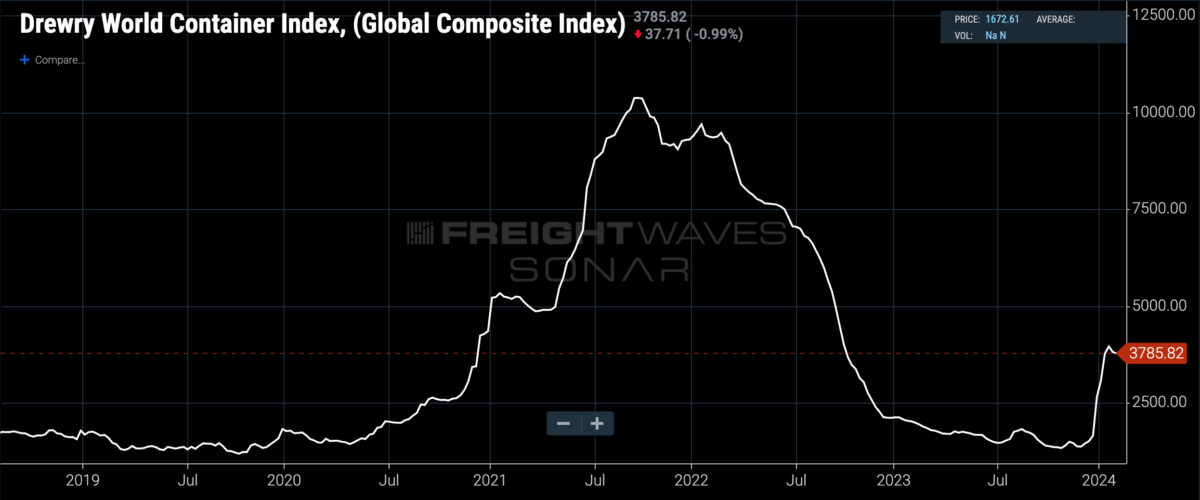
Maersk, the Danish container shipping giant and now the second-largest steamship line in the world, was no different: When trans-Pacific spot rates shot past $20,000 per forty-foot equivalent unit in some instances, Maersk raked in a windfall of historic proportions.
(The Drewry World Container Index – Global Composite rate, which averages major trade lanes to provide a single benchmark for container pricing. Chart: FreightWaves SONAR)
As container rates climbed, so did Maersk’s profits. For reference, in 2017, Maersk lost $1.1 billion; in 2018, a strong year for transportation, Maersk generated $3.2 billion in total profit. 2019 was a lean year, and Maersk lost $44 million. Then the pandemic hit. Profits in 2020 totaled $2.9 billion, a year that saw disruptions to operations including lockdowns, stranded ships and shuttered ports. In 2021, Maersk’s earnings jumped to $18 billion as it reaped a full year of high spot rates and repriced its contract business; in 2022, profits peaked at $29 billion. But then as demand receded, so did prices — quickly. Last year, Maersk generated $3.9 billion in earnings, and now the company says it’s worried about profitability.
Søren Skou, Maersk’s CEO from 2016 to 2022 (he had been CEO of Maersk Line since 2012), and then Vincent Clerc, chief executive officer from January 2023 on, were faced with a unique situation in the containership line’s history: how to invest tens of billions of dollars in excess profit productively to earn an acceptable return for shareholders. To put it mildly, this is not a situation that container line executives were accustomed to finding themselves in — as McKinsey has noted in its widely cited reports on the state of the container industry, the mode has been a net consumer of capital for decades.
Some back-of-the-envelope math puts a number on the scale of the problem. Let’s assume that 2018 was a standard pre-pandemic “good year” with approximately $3 billion in earnings. If Maersk had earned $3 billion per year in 2021 and 2022, profits would have totaled $6 billion for the two-year pandemic peak. In reality, profits totaled $47 billion, and subtracting the $6 billion we figured for “normal” good years, that equates to $41 billion in what we can call “excess” profits for the two-year period of 2021 and 2022.
Most executives in charge of an asset-heavy transportation provider would be tempted to burn through the money by buying more assets, grabbing more market share and building density on its most profitable, important lanes. The problem is that container shipping has been plagued by a structural glut of overcapacity for years. Larger containerships operate at a lower cost per twenty-foot equivalent unit and are more profitable to run, so smaller vessels tend to be replaced by larger ones.
But then there are the state-owned enterprises in Asia, like China Cosco, whose orderbook China’s government uses to stimulate its domestic shipbuilding industry and artificially subsidize its export economy. What makes sense for China — keeping its shipbuilders busy and making it cheap for manufacturers to export their goods — plays havoc with the global container market, which is composed of players who generally want to charge money for their services and earn a profit.
So the real dilemma for Maersk’s executives was a slight but significant variation on the earlier statement of the problem: How does the company deploy $41 billion in excess profits without increasing the size of its containership fleet? To be clear, this problem wasn’t unique to Maersk — all containership lines faced the same issue, albeit with cash hoards and fleets of different sizes.
The solution was threefold: Let cash balances rise, return cash to shareholders, and invest in large strategic acquisitions, particularly in inland logistics operations that enjoyed a historically higher margin profile than ocean container shipping.
First, the cash: From 2016 to 2020, Maersk carried approximately $3 billion-$4 billion in cash on its balance sheet, but it let its reserves run up to $12.1 billion in the first quarter of 2022, according to company filings.
At the same time, Maersk was shoveling cash back to its shareholders, far more than it ever had before. It announced a $12 billion stock buyback plan that equated to $3 billion per year from 2022 to 2025. Dividend expenses ramped dramatically: In 2020, Maersk paid out 7 cents per share, or approximately $520 million in dividends. The next year, in 2021, that number more than doubled to 16 cents per share, or $1.1 billion total. (Note that Maersk pays out its annual dividends in April, largely based on the prior year’s earnings.) In 2022 and 2023, dividend payments ballooned to $1.30 per share and $6.9 billion, and $2.20 per share and $10.9 billion, respectively.
For the two peak pandemic years, then, Maersk returned approximately $24 billion to shareholders in the form of stock buybacks and dividends, an explicit admission that the management team had no real way of generating an attractive, sustainable yield by investing the capital in the business.
In 2022, Maersk spent approximately $5.9 billion on three significant acquisitions. In May, Maersk paid $1.7 billion for Pilot Freight Services, a third-party logistics provider based in the United States with a large air cargo forwarding business and an extensive brokered truckload network that services freight at 87 stations and hubs in the U.S. The deal more than doubled Maersk’s inland logistics real estate footprint in the U.S. The next month, Maersk bought Senator International, a German air cargo forwarder, for $644 million. And then in August, Maersk leaned into the pandemic economy, acquiring LF Logistics, a Hong Kong-based e-commerce provider with 223 warehouses across Asia, for $3.6 billion.
The 2022 acquisitions fit well into Maersk’s overall strategy of pursuing market share as a global, mode-agnostic integrator of logistics services. Whether the deals were well timed or well priced is another matter: Note how “Logistics and Services” revenue at Maersk declined from its fourth-quarter 2022 peak of $4.18 billion to $3.54 billion in the fourth quarter of 2023. That decline was an inevitable result of falling freight rates across modes and geographies generally and to be expected. Yet it prompts questions about the wisdom of buying logistics assets at the very top of the market at peak valuation multiples, when both top-line revenues and profitability were set to fall precipitously.
The foregoing recap of Maersk’s pandemic finances should make it clear, though, that the company really had no choice but to buy aggressively in inland logistics when it had the cash and opportunity to do so. Price sensitivity was probably not its primary concern, although FreightWaves is aware of several other billion-dollar deals that Maersk shopped which ultimately fell through as freight market conditions deteriorated in 2022 and 2023.
Maersk’s stock price peaked at approximately $18.40 per share in January 2022 and has been cut in half since then: On Tuesday, shares were fetching $7.70 apiece on the Nasdaq Copenhagen exchange.
The company’s revenue and earnings trends have finally come full circle since the pandemic, but the story hasn’t completely played out. What remains to be seen is what kind of operating leverage and earnings lift Logistics and Services will provide to the bottom line once the freight market hits another cycle peak. If Skou’s bets pay off, Maersk’s earnings should reset at a higher level than before.
Cargo unit sale seals EU approval for Korean Air buy of Asiana
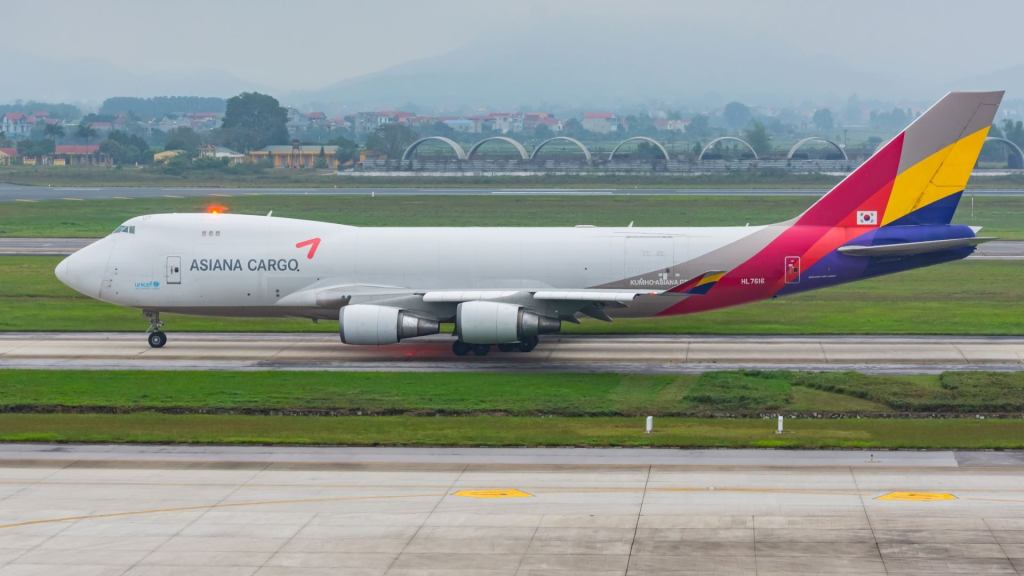
Korean Air is one step away from absorbing rival Asiana Airlines after the rivals agreed on Tuesday to European Commission merger conditions that Asiana divest its freighter business.
The last hurdle is the U.S. government, which reportedly objects to the deal because of concern the combined airline would dominate routes to the United States where the two carriers currently compete head-to-head for passenger and cargo traffic. The Biden administration believes a Korean takeover of Asiana would limit competition and leave certain supply chains too dependent on a single carrier.
Korean Air has 23 freighters in its fleet, including seven Boeing 747-8s and a dozen 777 aircraft. It is the world’s fifth-largest cargo carrier by volume and the third-largest carrier when express parcel carriers FedEx and UPS are excluded. Asiana operates 10 Boeing 747-400 freighters and one 767, according to Planespotters.
“Together, they would have been by far the largest carrier on these routes removing an important alternative for customers. Other competitors face regulatory and other barriers to expand their services and would have been unlikely to exert sufficient competitive pressure on the merged company. This would likely have led to increased prices or decreased quality for passengers and cargo customers,” the European Commission said in a news release.
The divestment includes freighter aircraft, airport slots, traffic rights, flight crew, and other employees, as well as customer cargo contracts, the EU’s executive body said. The airlines will need to appoint a financial advisory firm to oversee the divestment of Asiana’s all-cargo business, as well as initiate the bidding process and select a buyer. The European Commission must approve the selected buyer before the transaction can close. Once Korean Air completes the acquisition of Asiana Airlines, the actual cargo divestment process will take place.
The Commission said a suitable buyer “must be able, and have the incentive, to operate the divested businesses in a viable mannger to compete effectively with the merged company.”
The Loadstar recently reported that four South Korean low-cost carriers – Eastar Jet, Air Premia, Air Incheon and Jeju Air – had expressed interest to Korean Air, but they all lack experience operating a widebody fleet.
Korean Air announced its $1.35 billion bid for Asiana Airlines during the height of the pandemic in late 2020, when Asiana experienced financial trouble. Thirteen regulatory authorities have now given the Korean Air acquisition of Asiana the green light. Japan approved the merger on Jan. 30.
The European Union took just more than a year to consider Korean Air’s formal submission, which was preceded by two years of preliminary consultations.
The approval also requires Korean Air to provide support for a new airline that can serve four overlapping passenger routes between Korea and the EU.
Under the passenger commitments, T’way Air has been appointed as the solution for the designated European passenger routes. In the second half of the year, T’way Air will gradually initiate operations on the four routes: Seoul Incheon-Paris, Seoul Incheon-Rome, Seoul Incheon-Barcelona and Seoul Incheon-Frankfurt. Korean Air said it will provide comprehensive support to T’way Air.
Korean Air recently reported that cargo revenue for the fourth quarter fell 28.8% year over year.
FMCSA questioned on studies added to safety fitness rulemaking
WASHINGTON — A group of trade associations is warning federal regulators against including data the groups consider too old and irrelevant for use in developing a rule aimed at determining if a trucking company should stay in business.
In a joint filing with the Federal Motor Carrier Safety Administration, the 11 associations, which represent trucking companies, truck drivers, manufacturers and logistics companies, contend that six technology-related studies FMCSA recently added to its Safety Fitness Determination (SFD) advance notice of proposed rulemaking (ANPRM) are “befuddling” in the context of formulating new regulations affecting carrier safety fitness.
“The majority of the documents cited are dated and have no direct relevance to a new SFD, or to the agency’s previous notice of a possible reboot of its Safety Measurement System (SMS),” the group wrote in comments filed with FMCSA on Monday.
“Stakeholders do not object to the FMCSA’s consideration of technology to assist carriers in operating more safely and reducing highway fatalities. It is an entirely different question, though, whether unproven AI can be developed in sufficient quantity to create an SFD.
“The cost of the new data system, and of massaging enough data to be statistically relevant for over 95% of the regulated carriers that are extremely small and have less than five trucks, is an unsolved problem … for which there is no easy or cheap answer.”
In the ANPRM issued last year, FMCSA asked the trucking industry for feedback on whether it should look more favorably on carriers and owner-operators that adopt and use safety technologies — such as crash avoidance systems — in determining a safety rating for those carriers and drivers.
The Owner-Operator Independent Drivers Association has opposed that approach, asserting that small-business carriers would be at a disadvantage while only larger carriers and those that can afford to install new technologies would benefit.
“If these motor carriers are rewarded with better safety ratings, then smaller carriers would likely see their safety rating downgraded without any actual change in their safety performance,” OOIDA argued in its own comments filed on Monday. “Driver training, experience, and safety performance must still be valued over the mere installation of safety technologies.”
OOIDA, like the 11 associations in their joint filing, also pushed back on the studies FMCSA added to the docket which the agency may rely on for a formal proposed rule. OOIDA cited, among other things, a lack of demographic information, limited sample size and the age of the reports.
“We believe the studies contain various flaws that limit their findings,” OOIDA stated. “These reports should not be used as a basis to incorporate the adoption and use of safety technologies into the SFD methodology.”
Technology approach has supporters
But some safety groups disagree with OOIDA’s stance on incorporating technology into potential new rules to determine carrier safety and also do not oppose FMCSA considering the studies that were added to the docket.
The Institute for Safer Trucking, Road Safe America and the Safe Operating Speed Alliance commended FMCSA for its “proactive approach” of adding the research to the docket and for considering safety technology in SFD.
“When a carrier invests in active and preventative safety technologies like [intelligent speed assistance] and [automatic emergency braking], it underscores their commitment to preventing harm and operating safely,” the groups stated in comments filed with FMCSA.
“Encouraging the adoption of such proven technologies, some of which have yet to be required, through SFD recognition would help accelerate their widespread implementation and enhance road safety.”
The Alliance for Driver Safety & Security, a coalition known as the Trucking Alliance and whose members include large trucking companies, also fully supports using crash-avoidance technology in determining carrier safety scores.
“In fact, the Trucking Alliance supports the study of all peer-reviewed research regarding truck safety,” the group wrote in its comments. “This process can help develop a Safety Fitness Determination that more closely addresses the need for safety management in the industry.”