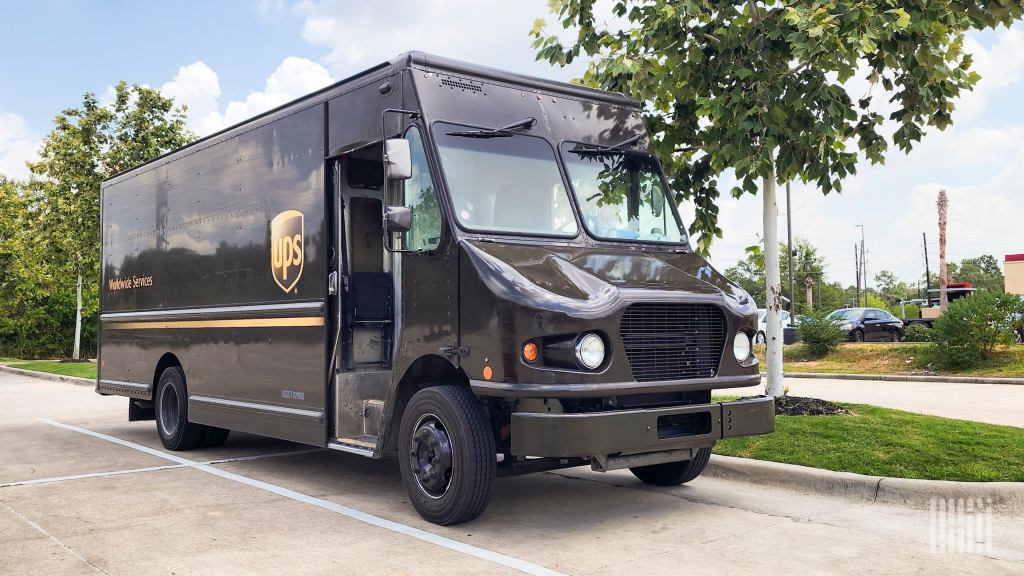
For the first 30 or so months of her tenure, UPS CEO Carol B. Tomé had the wind at her back. For the past year, however, a gale force storm has been blowing right at the company. The question is whether she can steer Big Brown through an environment bereft of tailwinds that may have spawned a false sense of security.
Several hundred people gathered in three border states Saturday to call for stricter immigration security, ending the cross-country “Take Our Border Back” convoy that traveled from Virginia to Texas last week.
Truckers across Mexico planned to go on strike Monday to protest rising cargo theft and violence against freight transporters on the country’s roadways.
Running on Ice: The fulfillment trend grows
All thawed out
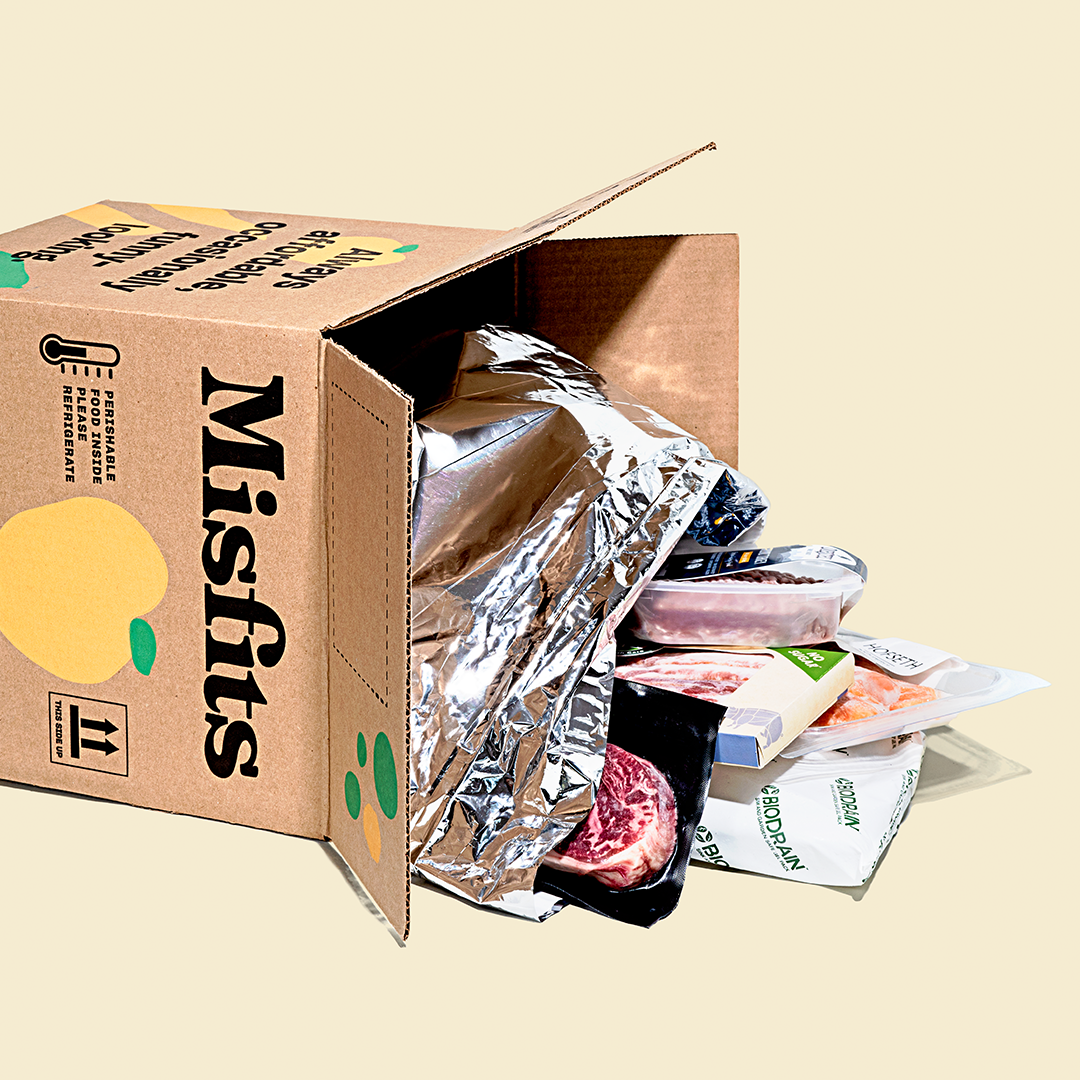
(Photo: Misfits Market)
Fulfillment for perishable goods seems to be the new trend for 2024. Misfits Market, a direct-to-consumer brand, is another company to launch its own fulfillment service. Previously, we had Grip’s announcement.
Fulfilled by Misfits, FBM for short, is a dedicated service for perishable brands to store, pick, pack, fulfill and deliver their products nationwide through Misfits’ logistics platform. There is a large need for fulfillment services for small-to-medium-size e-commerce perishable shippers. The jump from outgrowing a storefront to building or renting space in a multimillion-dollar warehouse is a massive one that has a large price tag that doesn’t work for those looking to scale up at a reasonable rate.
Abhi Ramesh, founder and CEO of Misfits Market, was quoted as saying, “At Misfits Market, we’re always looking for ways to reimagine the food system and eradicate food waste by finding value in places others don’t look.”
Temperature checks
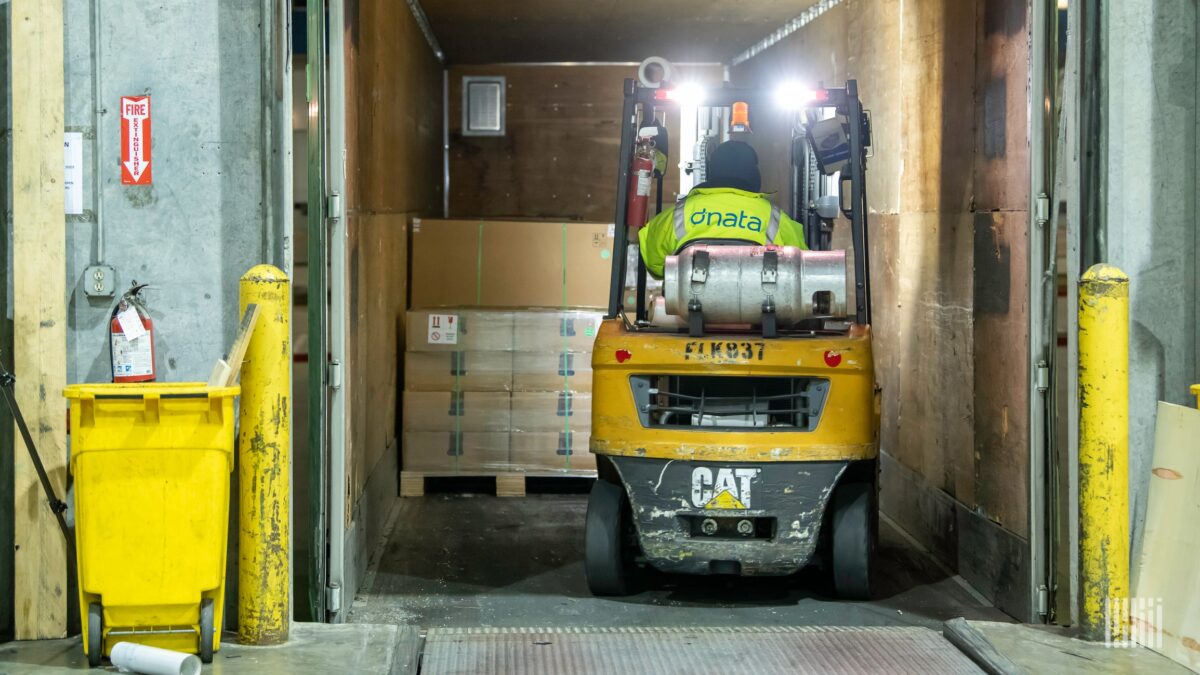
(Photo: Jim Allen/FreightWaves)
It’s 2024. We might be a few years off from the Jetsons’ world of flying cars and robot maids. However, through technological advancements, we are getting closer to that world daily. Making a jump in innovation is Interstate Cold Storage. It recently announced the purchase of two state-of-the-art lift trucks that are anticipated to streamline and optimize processes at its Columbus I facility in Ohio.
Don Chambers, director of operations at Interstate Cold Storage, emphasizes the significance of this investment, stating, “While the addition of these lift trucks may seem incremental, the impact is far-reaching. This advanced equipment allows us to handle products with heightened efficiency, meeting the dynamic demands of our customers and contributing to substantial operational dividends.”
Food and drugs
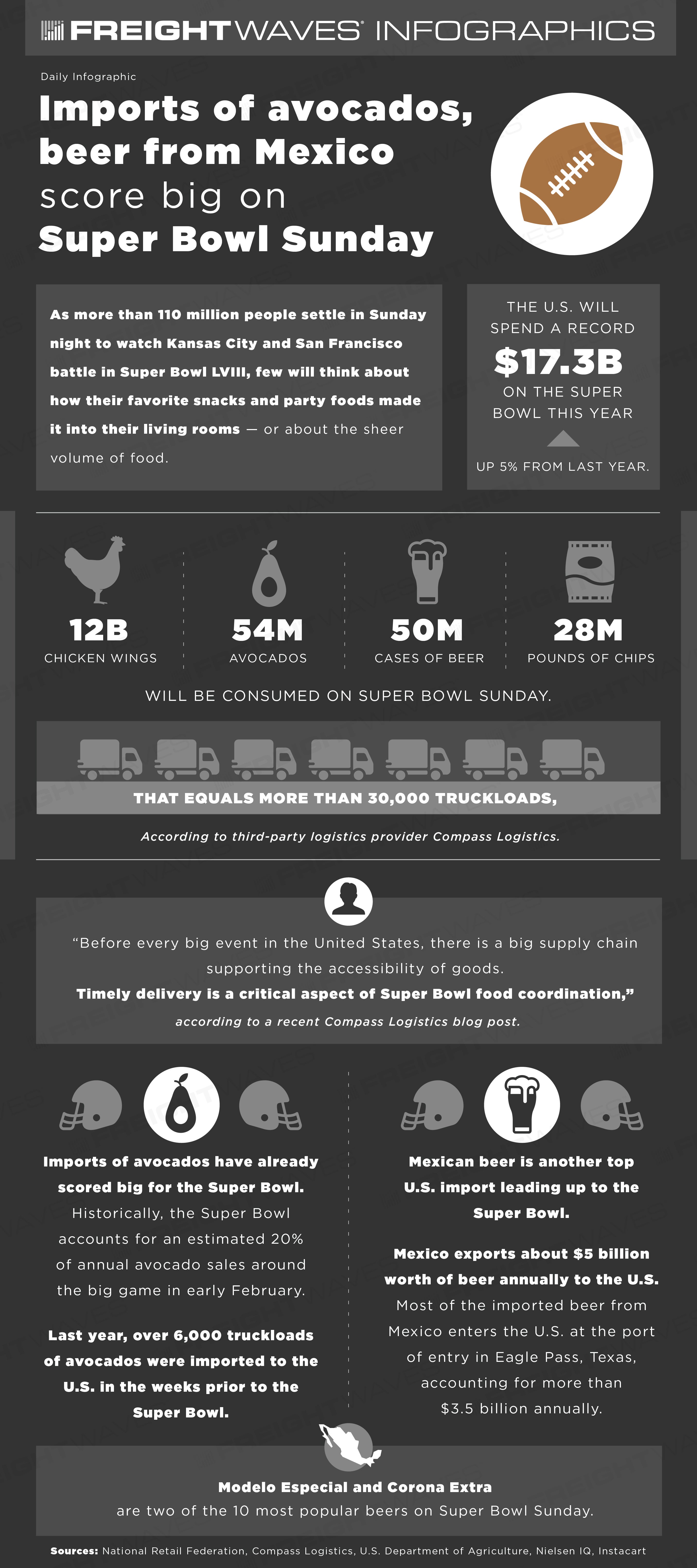
While the rest of the football world focuses on the two teams in varying shades of red chasing after each other, yours truly will be investigating every dip and providing a ranking of them. It’s a time-honored tradition, for the second-largest eating day of the year is Super Bowl Sunday. This year, Americans are expected to repeat the record-setting number of wings consumed last year, 1.45 billion pounds’ worth. The real hero of the Super Bowl, though, is the avocado. No party is complete without the one and only guacamole.
This year, according to the National Retail Federation, the U.S. will spend $17.3 billion on the Super Bowl, a 5% jump from 2023. For those who don’t consume avocado toast on the regular, the Super Bowl accounts for 20% of annual U.S. avocado sales. I think no matter who dances in the confetti, avocados are the real heroes of the Super Bowl.
Avocados are primarily shipped in reefer trailers, making late January and early February a tight time for the cross-border reefer market. Throw in the excessive beer that is imported for the big game and suddenly that cross-border reefer market is the saving grace of the slow freight market that comes every year in January and February.
Cold chain lanes
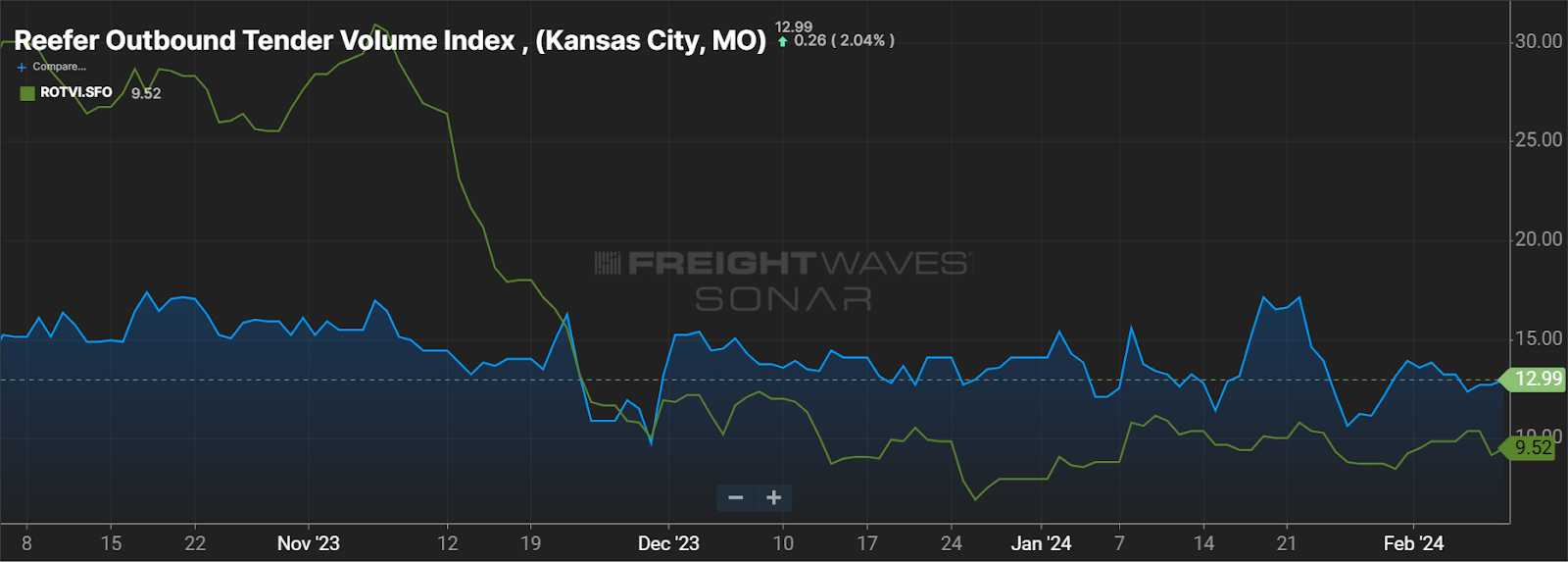
SONAR Tickers: ROTVI.MCI, ROTVI.SFO
This week’s SONAR chart is the Reefer Outbound Tender Volume Index for both Kansas City, Missouri, and San Francisco, the homes of the two teams vying for the Lombardi Trophy this weekend. Outbound tender volumes in San Francisco took a dive to end the year and have yet to bounce back to previous levels. This time of year is known for being quiet in the freight world, and that’s right on track in San Francisco. On the other hand, Kansas City has been wildly consistent in its freight volumes for the past few months, but this is the lowest volume KC has seen in the past three years.
Could it be a prediction of who will win this weekend? Probably not, but if the Chiefs play consistently and the 49ers are all over the place, then maybe freight markets can predict football games.
Wanna chat in the cooler? Shoot me an email with comments, questions or story ideas at moconnell@www.freightwaves.com.
See you on the internet.
Mary
If this newsletter was forwarded to you, you must be pretty chill. Join the coolest community in freight and subscribe for more at www.freightwaves.com/subscribe.
On episode 680 of WHAT THE TRUCK?!? Dooner is joined by CKE Restaurants’ John Brewer, who talks about the logistics behind Carl’s Jr.’s free burger day Super Bowl promotion.
Mutha Trucker News’ Alex Mai has built his own empire on social media. We’ll find out how he did it. Plus, does he think autonomous trucks are coming for your job?
Echo Global Logistics’ Mike Mobley talks about order optimization and how it reduces shipping costs.
Northland Trucking Risk Control’s Anthony Slamar shares how insurance views advanced driver assistance systems.
Plus, CSX vs semi; avocadoes win the Super Bowl; imports can’t cross Mexican border and more.
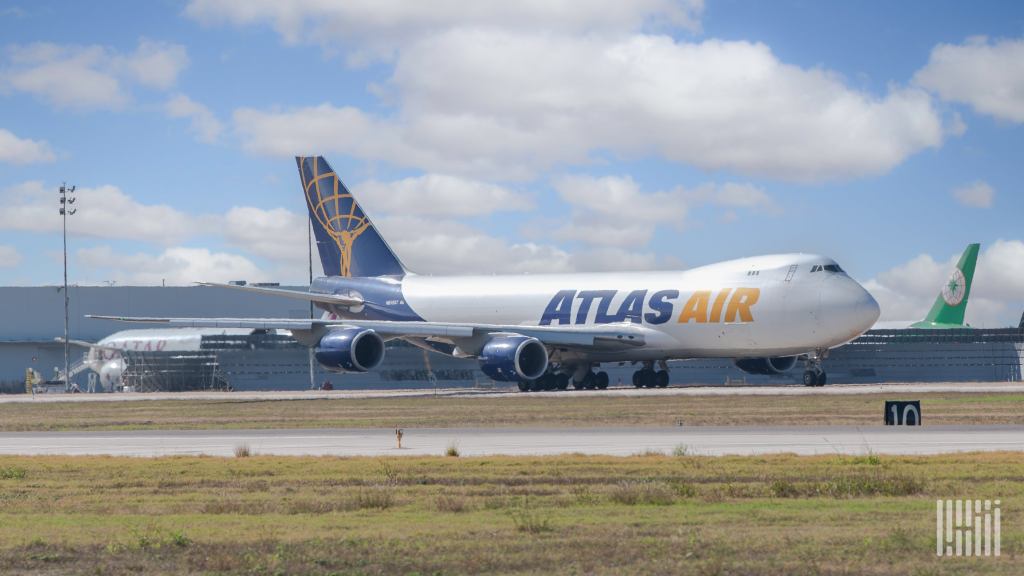
Atlas Air engine that caught fire in Miami had loose plug, NTSB says
A preliminary report released Friday by the National Transportation Safety Board shows that the engine on an Atlas Air 747-8 cargo jet that caught fire last month during takeoff from Miami International Airport was inspected four days before the incident.
The crew of Atlas Air flight 3885 received a warning signal on its cockpit display of a fire on the No. 2 engine while climbing past 3,000 feet en route to San Juan, Puerto Rico, on Jan. 18. The signal was followed by the fire bell sounding. The captain shut down the engine and discharged a bottle of fire suppressant located in the engine compartment, extinguishing the fire, and safely returned to Miami airport, according to the agency’s report.
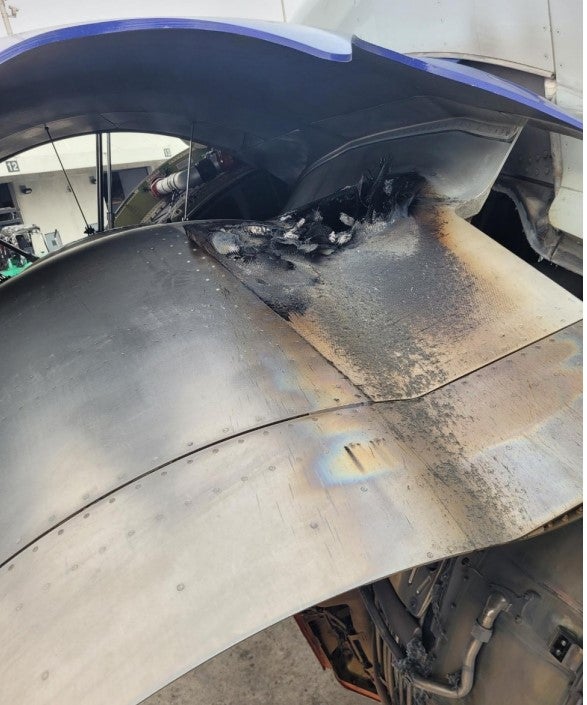
An inspection of the General Electric GEnx-2b67 engine revealed burn marks through part of the thrust reverser fan wall, but there was no evidence of an uncontained engine failure, the NTSB said.
Damaged engine on Atlas Air Boeing 747-8 freighter. (Photo: NTSB)
The combustor diffuser nozzle case port borescope plug was not secured in the case and was found loose in the engine cowling. That finding is potentially significant because records show a third-party vendor performed a borescope nozzle inspection four days earlier, on Jan. 14, that required the removal of a borescope plug. The technician performing the work and an inspector initialed a work card indicating the task was completed in accordance with the instructions in the maintenance manual.
A borescope is a tool that allows an engine’s condition to be examined by checking its internal components. It has a long, fiber-optic tube with a camera attached to one end that sends video back to a monitor.
The NTSB investigation is ongoing and a final report is expected in 12 to 14 months.
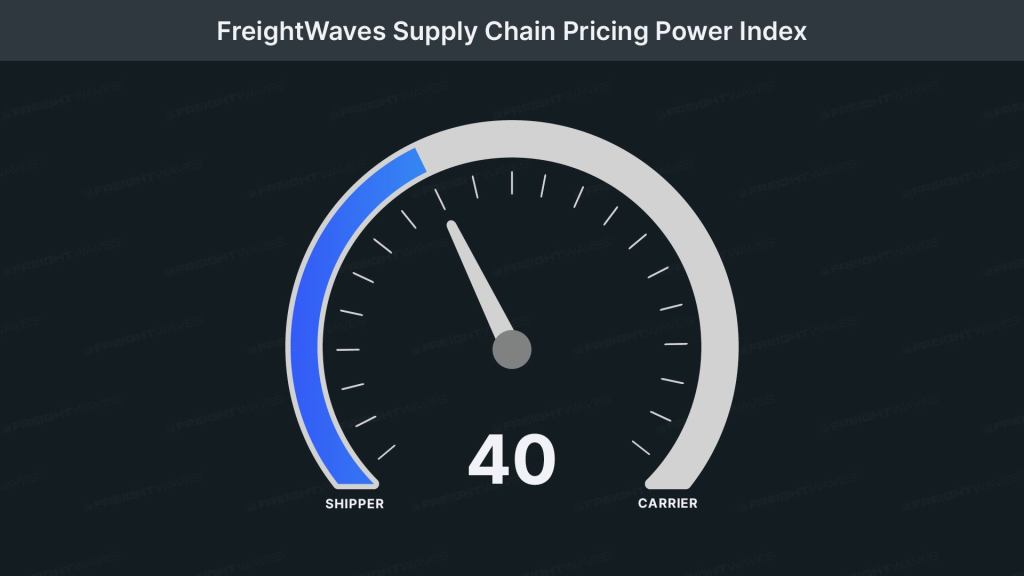
This week’s FreightWaves Supply Chain Pricing Power Index: 40 (Shippers)
Last week’s FreightWaves Supply Chain Pricing Power Index: 35 (Shippers)
Three-month FreightWaves Supply Chain Pricing Power Index Outlook: 40 (Shippers)
The FreightWaves Supply Chain Pricing Power Index uses the analytics and data in FreightWavesSONAR to analyze the market and estimate the negotiating power for rates between shippers and carriers.
This week’s Pricing Power Index is based on the following indicators:
A booming ‘quiet season’
By most metrics, freight markets are showing clear signs of a lasting recovery. Since the nature of this recovery tends to stoke controversy among industry analysts, it is well worth clarifying what the term does and does not entail. The current upturn (such as it is) implies growing distance from the market’s cycle low, which occurred in May 2023. Shippers’ demand was more or less stable in the back half of last year and continues to gain strength into 2024 thus far. In short, the early stages of this recovery are characterized by a rebalancing market, a return to normalcy after a four-year roller coaster of volatility.
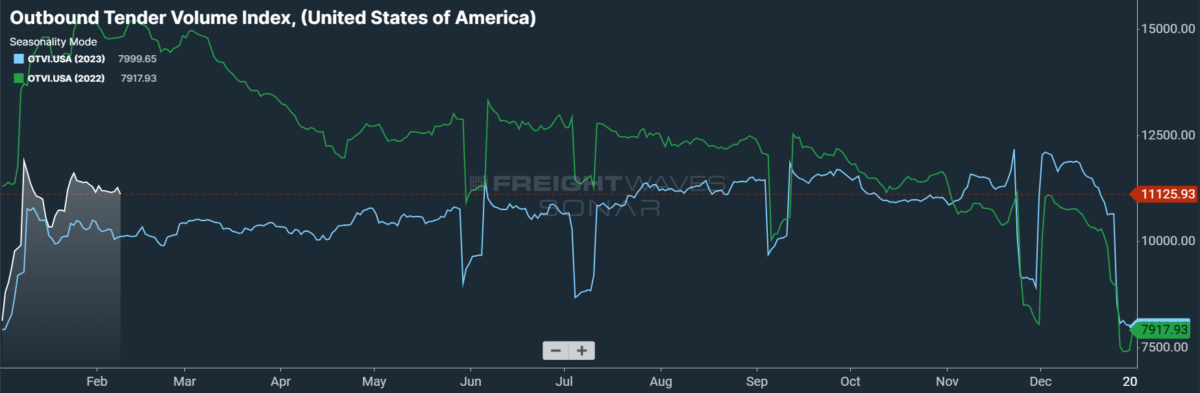
Tender volumes sustain momentum into February: SONAR: OTVI.USA: 2024 (white), 2023 (blue) and 2022 (green) To learn more about FreightWaves SONAR,click here.
This week, the Outbound Tender Volume Index (OTVI), which measures national freight demand by shippers’ requests for capacity, is down 1.72% week over week (w/w). On a year-over-year (y/y) basis, OTVI is up 5.54%, though such y/y comparisons can be colored by significant shifts in tender rejections. OTVI, which includes both accepted and rejected tenders, can be inflated by an uptick in the Outbound Tender Reject Index (OTRI).
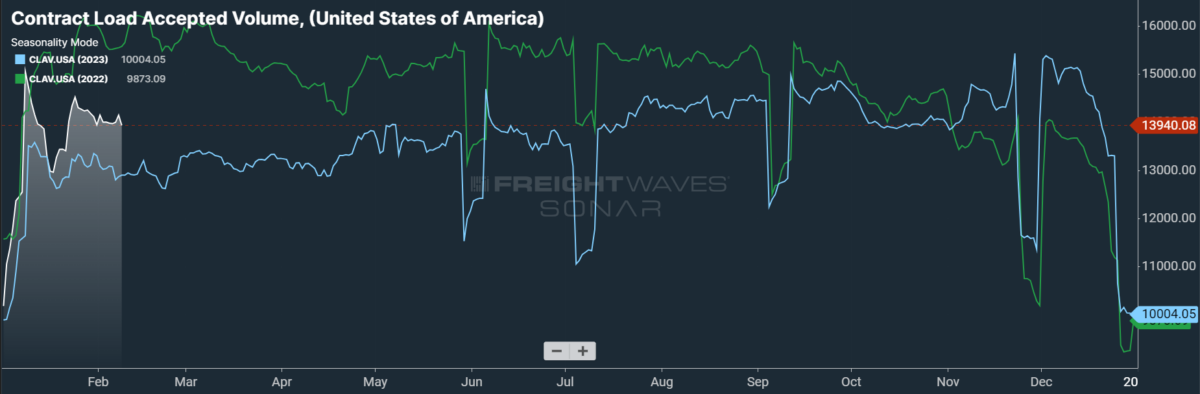
Accepted volumes are well above last year: SONAR: CLAV.USA: 2024 (white), 2023 (blue) and 2022 (green) To learn more about FreightWaves SONAR,click here.
Contract Load Accepted Volume (CLAV) is an index that measures accepted load volumes moving under contracted agreements. In short, it is similar to OTVI but without the rejected tenders. Looking at accepted tender volumes, we see a rise of 1.46% w/w as well as a fall of 3.78% y/y. This positive y/y difference implies that actual freight flow is recovering from this cycle’s bottom.
But what this recovery is not — at least, not presently — is immediate and rapid growth in freight demand that can satisfy the excess capacity lingering in the market. Some industry participants have had their expectations for growth shaped or reshaped by the historic rally seen throughout 2020-21. These expectations should be tempered, as they will almost certainly lead to disappointment otherwise.
The U.S. consumer has been remarkably resilient over the past two years, despite numerous indications that cautioned to the contrary. Whether consumers can continue to not only sustain but grow their spending on freight-intensive goods in 2024 is a risky bet to make. This risk is compounded by the potential for retaliation from the Federal Reserve, which could respond to a too-hot goods economy with further monetary tightening.
A broad economic recession, then, is the most obvious threat to recovery. In December, the total amount of consumer credit rose by a paltry $1.6 billion, 90% below consensus expectations of a $16 billion surge. Revolving credit (which includes credit card debt) was responsible for the lion’s share of this minor gain, rising by $1.1 billion in the month. This waning reliance on credit cards could be a bullish signal that consumers are interested in long-term financial health, if not for the fact that the personal saving rate also tumbled to a 12-month low of 3.7% in December — a level nearly half of its pre-pandemic average. Without excess spending or saving, it simply looks like the consumer is in a tight spot.
While the U.S. consumer has been known to pull a rabbit out of the hat before, there are other threats to this burgeoning recovery. The excess capacity that entered the industry during the gold rush of 2020-21 has — like the U.S. consumer — proved tenacious in remaining within the market. If this tenacity persists, it would delay if not disrupt a full recovery. Geopolitical powder kegs might also reignite inflation: Although the U.S. is relatively insulated from recent developments in the Red Sea, there is a nonzero possibility that discrete conflicts in the Middle East, Eastern Europe and (potentially) East Asia could coalesce and further jeopardize global trade.
By mode: Reefer demand has fallen quite a bit since late January, when it peaked off the back of severe winter storms that rocked much of the contiguous U.S. Reefers are used not only to insulate temperature-sensitive freight against sweltering heat in the summer, but also to protect goods from the winter cold. But as temps have stabilized above their 30-year average, the Reefer Outbound Tender Volume Index (ROTVI) is down 5.43% y/y. Still, ROTVI is up a slight 0.07% w/w, and it looks as though another round of cold weather is just around the corner.
Van volumes, meanwhile, have been more or less stable after recovering from mid-January’s mighty dip. The Van Outbound Tender Volume Index (VOTVI) is currently down 2.24% w/w but is up 10.21% y/y. A coming wave of imports from China should sustain truckload markets in Southern California and the surrounding region for some time, though the Lunar New Year celebrations will prove to be a headwind that takes effect in the next few weeks.
Slowly but surely
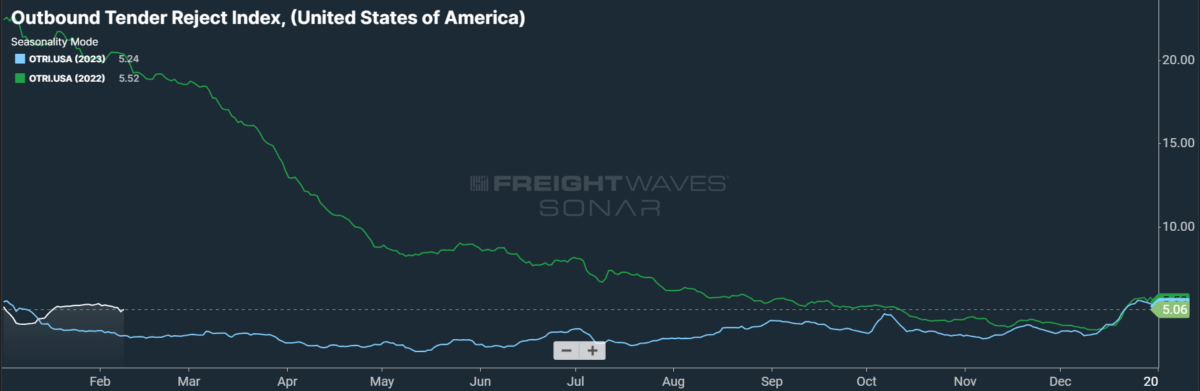
Aside from a brief and shallow dip on Wednesday, OTRI has remained above 5% since mid-January. A rising OTRI can be an inflationary force to spot rates if it tracks above (roughly) 7%, or if it makes rapid gains over a short period of time. While OTRI currently displays neither of these signals, it is a positive sign that excess capacity is indeed leaving the market.
OTRI reveals overabundance of capacity in the market: SONAR: OTRI.USA: 2024 (white), 2023 (blue) and 2022 (green) To learn more about FreightWaves SONAR, click here.
Over the past week, OTRI, which measures relative capacity in the market, fell to 5.06%, a change of 22 basis points from the week prior. OTRI is now 158 bps above year-ago levels, another point of optimism for 2024’s recovery.
Demand for new Class 8 trucks at the end of 2023 was softer than expected, as it seems that disruptions to production caused by the semiconductor supply crisis have finally ceased to be a major source of upward pressure. According to data from ACT Research, December saw orders fall 14% y/y to 26,350 trucks. This month capped off a year in which orders totaled 278,270 — enough to meet ACT Research’s replacement rate of 275,000 but down 7% from 2022’s banner year. Prices of used trucks also continued to moderate in Q4, with a 3-year-old truck going for an average of $67,000, or nearly half of what it cost in Q2 2022.
Hot and cold
Spot rates had an impressive rally at the end of January, thanks in large part to OTRI’s surprising tightness. Since then, however, rates have come off their peak but are still in line with early December’s high. If the aforementioned threat of severe winter storms does come to fruition in the coming weeks, it is more than likely that spot rates will rise accordingly.
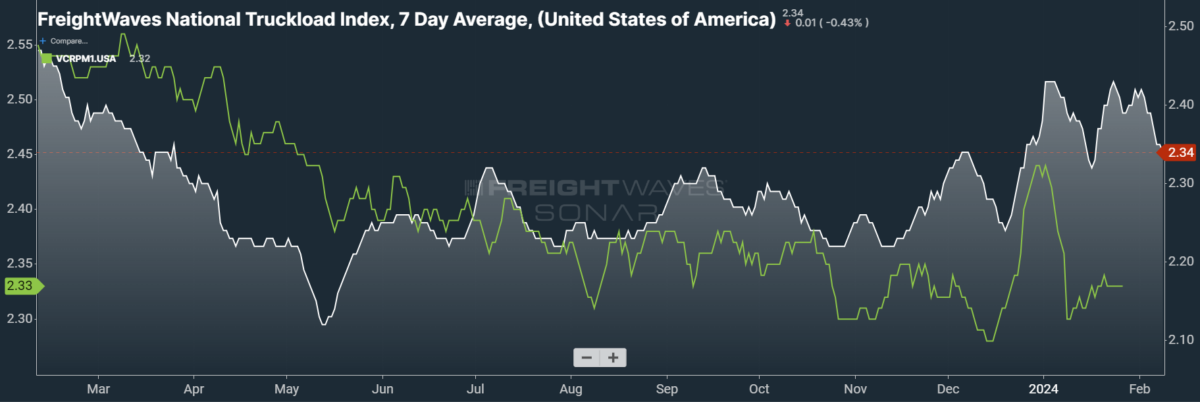
Contract rates quickly lose holiday gains: SONAR: National Truckload Index, 7-day average (white; right axis) and dry van contract rate (green; left axis). To learn more about FreightWaves SONAR, click here.
This week, the National Truckload Index (NTI) — which includes fuel surcharges and other accessorials — fell 8 cents per mile to $2.34. Sliding linehaul rates were wholly responsible for this week’s loss, as the linehaul variant of the NTI (NTIL) — which excludes fuel surcharges and other accessorials — fell 8 cents per mile to $1.73.
Contract rates, which are reported on a two-week delay, are stabilizing at the end of January after giving up all of their holiday gains. The quickness with which contract rates lost their holiday momentum is an early indication of the pricing power that shippers exercised in the ongoing bid cycle. For the time being, contract rates — which exclude fuel surcharges and other accessorials like the NTIL — are unchanged on a weekly basis at $2.33 per mile.
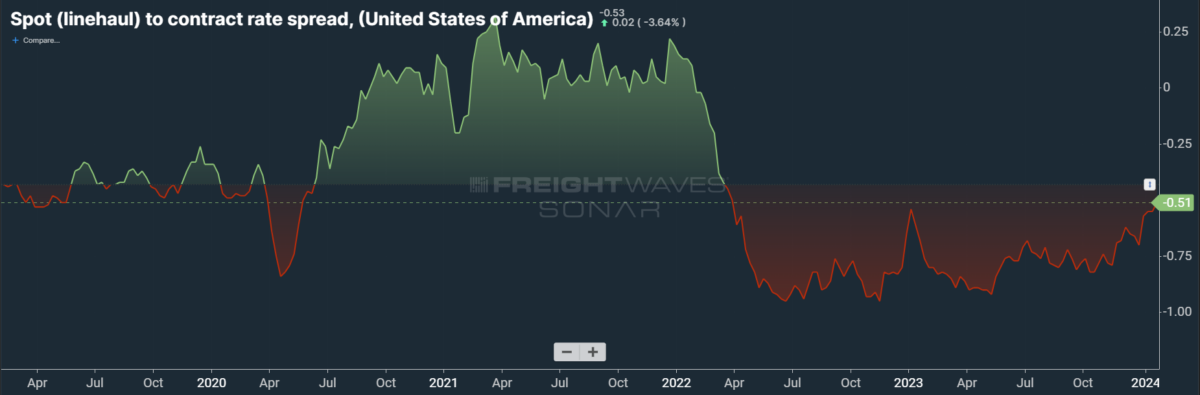
SONAR: RATES.USA To learn more about FreightWaves SONAR, click here.
The chart above shows the spread between the NTIL and dry van contract rates, revealing the index has fallen to all-time lows in the data set, which dates to early 2019. Throughout that year, contract rates exceeded spot rates, leading to a record number of bankruptcies in the space. Once COVID-19 spread, spot rates reacted quickly, rising to record highs seemingly weekly, while contract rates slowly crept higher throughout 2021.
Over the course of 2023, this spread averaged 10 cents lower than in 2022, indicating that contract rates had yet to come into balance with the market’s fundamentals of carriers’ supply and shippers’ demand. These lopsided fundamentals were more appropriately reflected in spot rates, which are highly reactive to shifting market conditions. As linehaul spot rates remain 51 cents below contract rates, marked signs of rebalancing are beginning to appear, though there is still room for contract rates to decline — or for spot rates to rise — in the first half of 2024.
TFI beats earnings estimates, US LTL a work in progress
Transport and logistics company TFI International Inc. posted fourth-quarter adjusted earnings of $1.71 per diluted share, a 4-cent-per-diluted-share beat from consensus estimates. Alain Bédard, the company’s chairman, president and CEO, told analysts that he expects full-year earnings per share to exceed $7 per diluted share on an organic basis, bettering 2023’s $6.18 per share but below 2022’s $8.02 per diluted share.
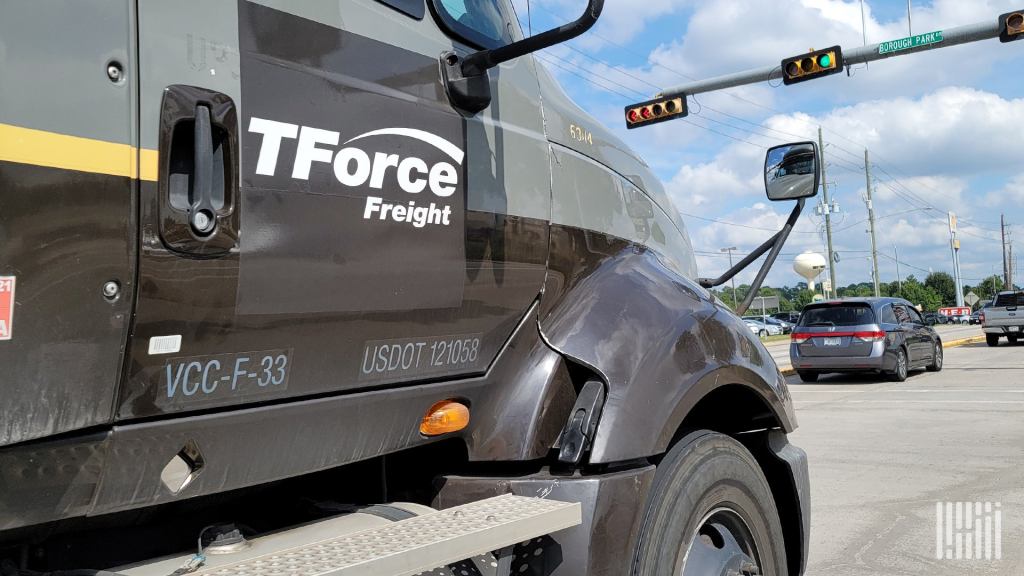
On an analyst call Friday morning, Bédard said the turnaround at Montreal-based TFI’s (NYSE: TFII) struggling U.S. LTL operation, TForce Freight, remains a work in progress but is improving. Operating ratio, the ratio of revenues to expenses, ended 2023 at 91%, a figure Bédard said will be unacceptable in 2024. He expected to reduce the OR to 88% by the end of the year, but those efficiencies will be a second-half story.
The unit expects to handle 24,000 to 25,000 shipments per day, well down from when TFI acquired it from UPS Inc. nearly three years ago. TForce Freight has culled as much unprofitable or marginally profitable freight as possible from its network, and 2024 will be a volume growth story, Bédard said.
TForce Freight reduced its cargo claims ratio in the quarter to 0.5%, down from 1.5% a year earlier, Bédard said. Still, the unit’s costs remain elevated, especially in billing, where too many errors lead to inefficiencies, he said.
Bédard also said TFI continues to explore a spinoff of its truckload business, an announcement made at the time it disclosed its offer for Daseke at the end of December. The Daseke acquisition is expected to close in the second quarter. TFI declined to give full-year guidance either in the communique announcing the quarterly and full-year results or on the analyst call. Bédard said the company will remain cautious ahead of the close of the Daseke deal but said he will provide more clarity on the balance of the year after the first quarter ends.
The executive said TFI performed well in the quarter given the weak operating environment that impacted three of its four business units. The one exception was the company’s logistics division, where revenue, operating income and net income jumped year over year. Otherwise, TFI’s LTL, truckload, and package and courier divisions posted year-on-year declines in revenue, operating and net income. Bédard said the macro environment remains challenging.
Is Amazon a distributor?
Another government agency zeros in on Amazon Marketplace
Most everyone who shops online buys from Amazon, but, presumably, few shoppers give much thought as to whether the products are being purchased from the retailer itself or one of the sellers on the Amazon Marketplace (AM). AM, which represents 60% of Amazon’s sales, is the portion of the e-commerce giant where Amazon facilitates sales of products owned by third parties without taking ownership of inventory. Unless shoppers receive the annoying “See All Buying Options” message (which they rarely care to see), it’s not clear if an item is being sold by a Marketplace seller. In September 2023, the Federal Trade Commission sued Amazon for illegally abusing monopoly power — the agency’s complaints largely centered around treatment of AM sellers, such as whether sellers should be required to use Amazon’s fulfillment centers and transportation network to qualify for Prime and “win the buy box.” I interviewed an expert on that topic in October who had mixed thoughts on the FTC’s complaint. I also recommend reading this Seattle Times article, which provides a summary and next steps.
Now, Amazon Marketplace is reportedly coming under fire from a different angle — this time from the U.S. Consumer Product Safety Commission, which is said to be working on an order to classify Amazon as a distributor. That’s important because it would make the online retailer responsible for the safety of products sold on Amazon Marketplace and would make the online retailer responsible for product recalls. Such an order would create additional compliance costs, and the retailer may have to more aggressively vet Marketplace sellers. An order could encourage Amazon to reduce its third-party seller ranks and scale back its product selection — that could help the more reputable sellers that would remain on Marketplace. An order would also likely have implications for other online marketplaces, such as eBay or Walmart Marketplace, a growing channel that is similar to Amazon’s third-party offering.
Any Amazon haters will enjoy the Amazon comments in this lecture from author Cory Doctorow. I can’t speak to his credibility — all I can say is that he does not exactly see the world through rose-colored glasses. The obvious counterpoints are: Most consumers love the convenience of Amazon, most U.S. households happily pay for Prime, Prime has a 91% satisfaction rate (what else is that high?), and it has a very low cancellation rate. If Amazon really is taking advantage of consumers, the public is too dumb to know it.
Rob Haddock describes why Coke aspires to be a Shipper of Choice
I recommend reading Rob Haddock’s (Group Director, Transportation Strategy at Coca-Cola North America) article on how to become, and why it pays to be, a Shipper of Choice. In short, he believes that many shippers do not fully appreciate the nuances of moving their freight — those can be idiosyncrasies related to their lanes and/or service requirements. But, carriers fully understand how less-tangible factors contribute to or detract from their bottom lines. To be a Shipper of Choice, beneficial cargo owners should take steps to help their carriers’ efficiency and compensate them for any inefficiencies. Here are a few of Haddock’s pieces of advice:
Don’t rely too heavily on rating tools. While rating tools provide a convenient gauge of market rates in a particular lane, they have important limitations and do not consider inefficiencies that may be inherent to serving the shipper in question.
Shippers must provide accurate volume projections — they are critical to optimize carriers’ drive time and reduce empty miles.
Shippers should maintain relationships with a set of core carriers and look to utilize those carriers at all points in the freight cycle. That will naturally lead to improved compliance with the added benefit that the carriers will fully grasp the shippers’ service requirements.
Intermodal contract rates to be lower y/y during the first half
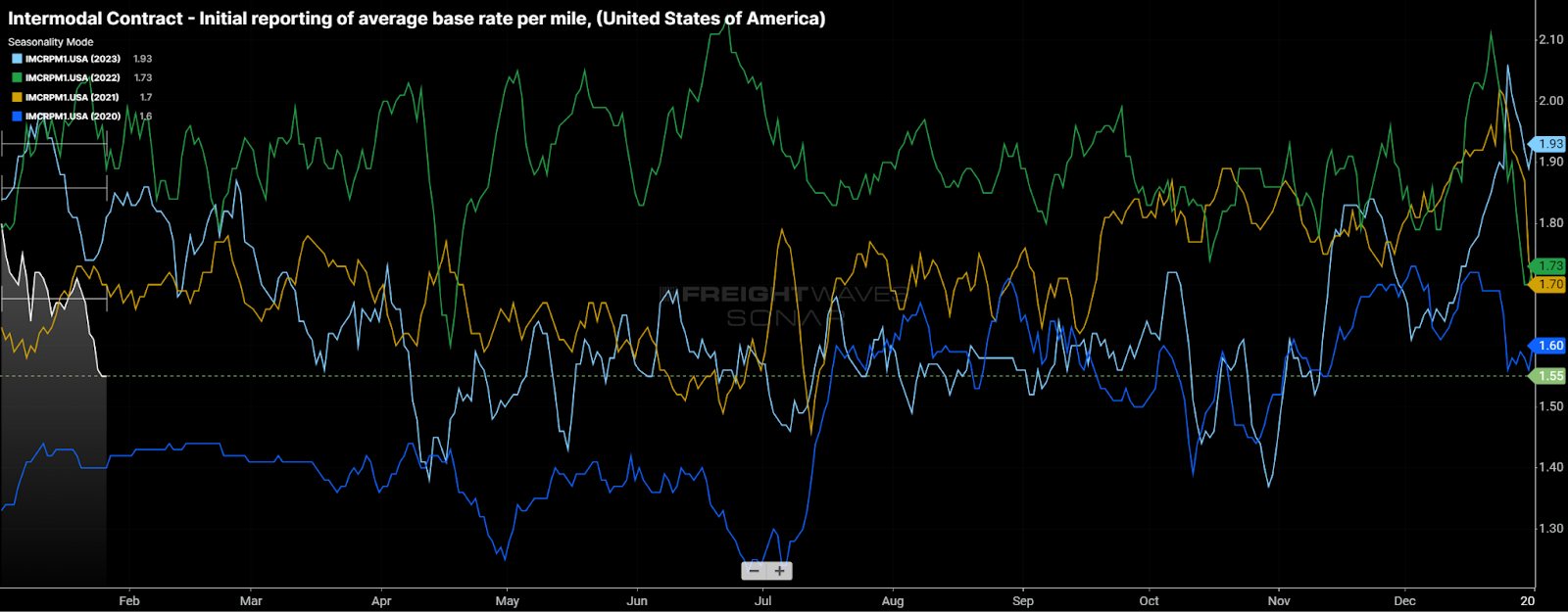
On their respective earnings calls, domestic intermodal providers J.B. Hunt and Hub Group told analysts to expect intermodal pricing to be down year over year in the first half of this year. That is consistent with the year-to-date data contained in SONAR via the IMCRPM1.USA ticker (shown above), which is an average of intermodal contract rates, excluding fuel surcharges. Year to date, SONAR shows average intermodal contract rates down 9% y/y and down 13% on a two-year stack versus 2022. Some intermodal carriers expect a turn in rates later this year — Hub Group’s management said it expects rates to be up slightly y/y in the second half. Progress toward meeting that expectation can be monitored in the same SONAR data set, which is a daily series on a two-week lag. Risks to positive intermodal rates in the second half include a truckload market that may remain loose, potential continued domestic container availability (a measure of domestic intermodal capacity) and potential rail service disruptions.
To subscribe to The Stockout, FreightWaves’ CPG and retail newsletter, click here or click here to see episodes of The Stockout show.
Computer issues paralyze trade between US and Mexico
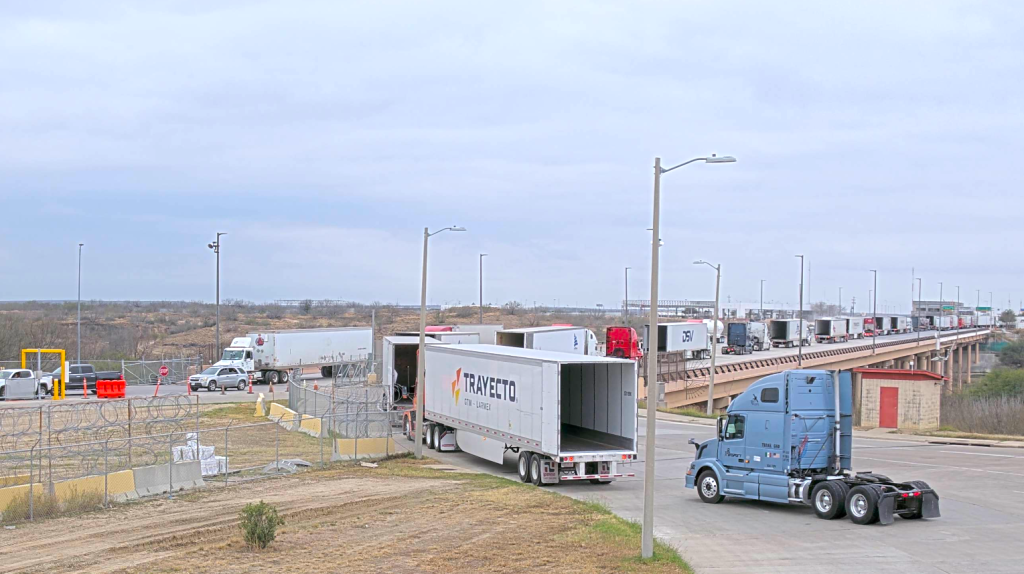
Delays from the customs system on Mexico’s side of the border have snarled commercial truck traffic the past several days at ports of entry in California and Texas.
Mexico’s National Customs Agency (ANAM) began reporting intermittent issues with its customs operating system at the border on Tuesday.
On Wednesday, ANAM suspended all operations at the bridge connecting Nuevo Laredo, Mexico, to the World Trade Bridge in Laredo, Texas. On average, the World Trade Bridge handles 16,000 to 18,000 trucks a day.
Traffic for cargo trucks heading into Mexico was also significantly affected by ANAM’s custom system failures at international crossings in Otay Mesa, California, as well as El Paso and Pharr, Texas.
Northbound trucks arriving from Mexico into the U.S. were not affected by the customs computer outages.
The World Trade Bridge was reopened Thursday morning by Mexican customs officials, who reported that the problem arose from computer software meant to validate import and export requests.
Trade officials said cargo traffic is slowly returning to normal at U.S.-Mexico crossings affected by system issues, but the backlog of freight waiting at the border has caused millions of dollars in lost revenue for the cross-border freight industry.
Israel Delgado, an official for Mexico’s National Chamber of Cargo Transportation, said the backlog of trucks has caused as much as $23 million a day in lost revenue for the trade industry.
“Commerce was paralyzed in Tijuana [just south of Otay Mesa port of entry] and all the ports for a day and a half,” Delgado told The Sun of Tijuana. “It’s had a serious impact on the economy and cargo transportation.”
Patty Hinojosa, vice president of Mexico sales and operations for CargoQuotes, said the delays have had a “big impact” on freight shipments.
CargoQuotes, based in Lee’s Summit, Missouri, is a full-service freight brokerage specializing in cross-border shipments.
“Big impact, we are two days behind on border crossings and that causes a chain reaction on final deliveries,” Hinojosa told FreightWaves.
Hydrogen’s newsy week skips over underlying challenges
News releases this week about Nikola’s fourth energy division president in less than two years, the company’s first Hyla-branded modular hydrogen fueler for fuel cell trucks, and Hyzon Motors’ development agreement for fuel cell refuse trucks skirted some underlying issues.
At the Port of Oakland, First Element Fuels (FEF) — which counts Nikola as a customer — offers heavy-duty hydrogen fill-ups to make round trips possible. FEF primarily focuses on fuel cell passenger cars, which need far less fuel than a heavy-duty tractor.
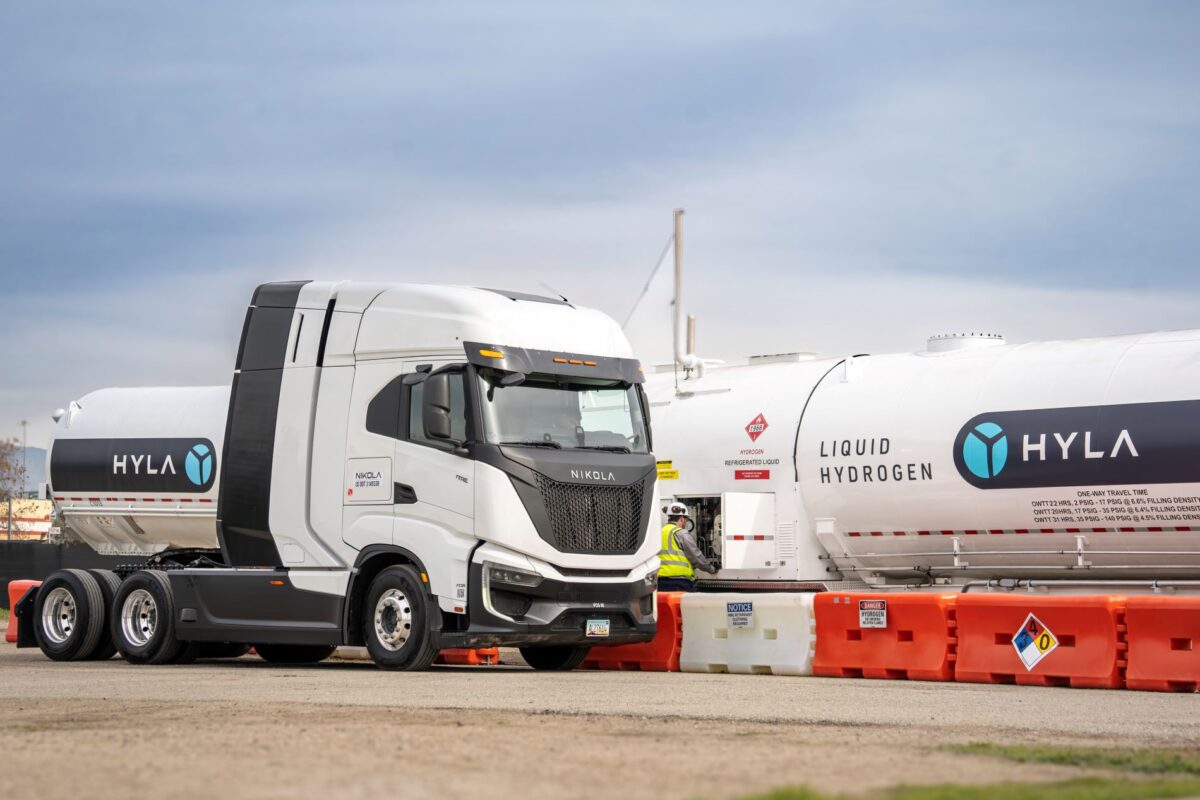
Nikola’s Hyla-branded hydrogen modular refueler in Ontario, California. (Photo: Nikola)
FEF expected 50,000 passenger vehicles — mostly Toyota Mirais and Hyundai Nexos — using OEM-prepaid fuel cards at its 85 hydrogen dispensers at 40 locations in California. Instead its total addressable market today is closer to 15,000 passenger vehicles.
Pivoting to truck charging kick-starts an infrastructure for the nascent transportation choice. Hyundai’s test fleet of 30 Xcient fuel cell trucks at the Port of Oakland refuels at the FEF station. While no longer a science experiment, hydrogen fuel cells are rife with challenges.
Pricing and maintenance questions
The price of hydrogen is a big hurdle. At up to $36 a kilogram — more than double its historic range of $14-$16kg — filling a truck could run $1,800. At current diesel prices around $4 a gallon, a fill-up is about a third of that.
No matter how much a fleet wants to improve sustainable trucking by substituting a fuel cell for a diesel-powered engine, no fuel surcharge comes close to making up for such an outlay.
Nikola enacted a hydrogen fuel cell truck fill up in this video announcing its first modular fueling station. (Video courtesy of Nikola)
In telling customers of the increase in August, FEF, branded as True Zero, blamed cost pressure on the hydrogen supply chain and low carbon credit values compared to historical levels. Nikola wouldn’t discuss current pricing other than to suggest some customer-specific fuel discounts.
It plans nine more Hyla outlets by midyear. They will be a combination of modular and permanent stations, customer-owned facilities, and partnerships with public truck stops.
Then, there are questions about reliability. According to reporting in CleanTechnica by Michael Barnard, a climate futurist, strategist and author — and hydrogen critic — fuel cells cost more to maintain than battery-electric vehicles. He cited studies showing about 80% up time for fuel cell buses, the first large vehicles to use them as far back as the beginning of the century.
Most fleets shy away from from fuel cells
That makes fuel cell trucks a nonstarter for fleets. Many already shy away because of the $450,000 upfront cost of a Nikola Tre FCEV. And that price covers just the truck — no fuel or maintenance as Nikola once planned to offer in a package for a single monthly price.
California offers enormous incentives for fuel cell trucks — for now. Some fleets are trying them, mostly in ones and twos. Vouchers assigned to dealers reduce their out-of-pocket risk. Yet many applications for California’s Hybrid and Zero-Emission Truck and Bus Voucher Incentive Project expire before they are used.
About the Nikola station
The Hyla outlet in Ontario, California, does not produce hydrogen on-site. The liquid hydrogen is trucked in by diesel-powered tractors once or twice a day depending on demand.
Using diesel trucks to haul the liquid hydrogen tanks is unavoidable given that the total count of battery-electric Class 8 trucks nationwide is about 1,000 out of a total population of 3.5 million. Nikola’s goal is to use zero-emission vehicles in the future.
Nonetheless, hauling hydrogen by smog-producing diesel diminishes the concept of an environmentally friendly hydrogen ecosystem. Since most hydrogen today is derived from petroleum-based natural gas, its well-to-wheel emissions profile is less than stellar.
Back in 2020, Nikola spent $30 million to purchase five hydrogen-producing electrolyzers from Norway’s Nel ASA. Originally, Nikola planned its first station to be in Arizona. The company negotiated special rates for solar power to make electricity for the electrolyzers. That plan is either shelved or dead because of the company’s persistent money troubles.
Nikola’s revolving door of energy presidents
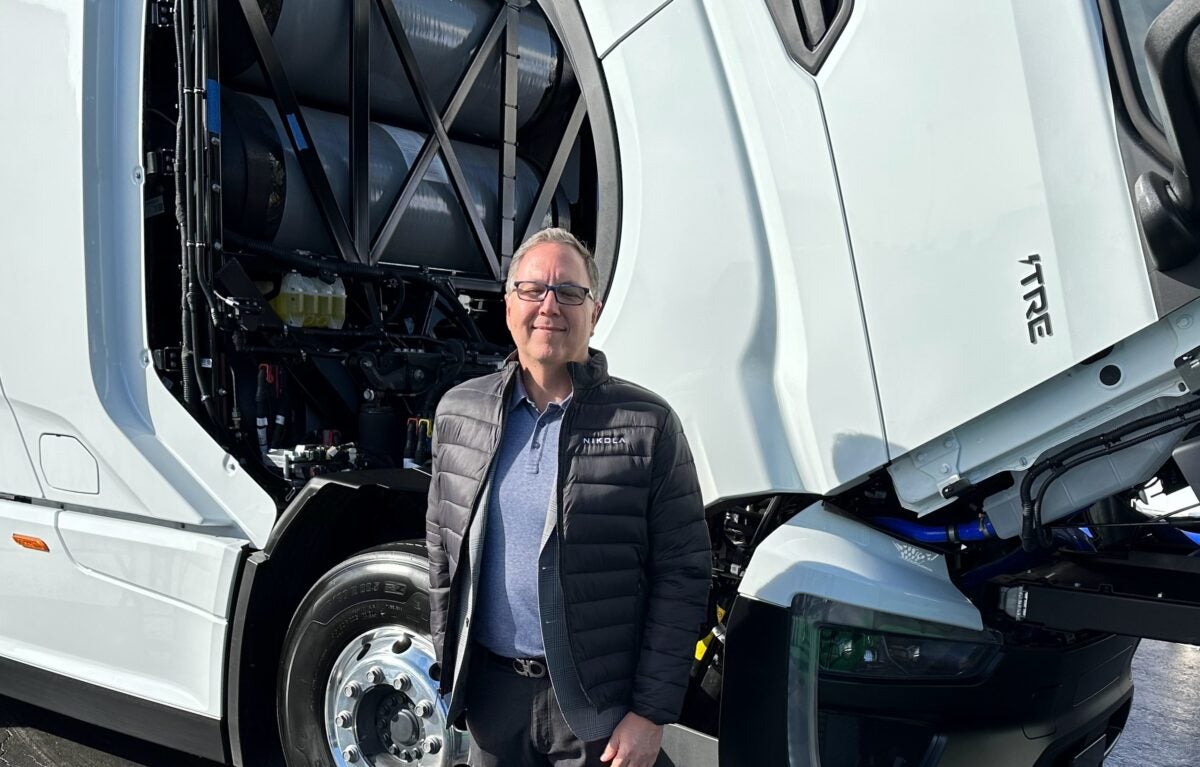
Nikola struggles keeping leadership for its energy division. Ole Hoefelmann is the latest to occupy the role. The former global head of Hyla’s infrastructure operations succeeded Joe Cappello, who served for less than six months.
Joe Cappello at the Nikola display at the Consumer Electronics Show in Las Vegas in January. He served less than six months as president of the energy division at Nikola. (Photo: Alan Adler/FreightWaves)
Hyzon Motors delivers fuel cell trucks and partners for refuse trucks
Hyzon Motors this week announced a joint development agreement with New Way Trucks to develop fuel cell-powered refuse trucks in North America . It is leveraging lessons from a test program in Australia.
The company delivered four Freightliner Cascadias upfit with its fuel cell system to Performance Food Group in December.
Hyzon CEO Parker Meeks told me he expects hydrogen prices to fall to around $7 per kilogram by the end of 2025. The current inflation, he told me, far exceeds the cost of making and distributing the fuel.
In the Truck Tech debut of “Five minutes with …” Hyzon Motors CEO Parker Meeks discusses his efforts to get Hyzon considered as a truck manufacturer for Inflation Reduction Act incentives despite contracting truck conversions to Fontaine Modifications.
Engine break: OEMs split over EPA’s Phase 3 emissions regulations
Three major powertrain and components suppliers and Ford Motor Co. think it’s time to stop quibbling over the Environmental Protection Agency’s proposed Phase 3 greenhouse gas regulations.
Cummins Inc., BorgWarner Inc. and Eaton Corp. are ready to meet carbon dioxide (CO2) standards for model-year 2027 heavy-duty vehicles that go beyond the current standards. The EPA also proposed an additional set of CO2 standards for heavy-duty vehicles that would begin to apply in model-year 2028.
The Engine Manufacturers Association (EMA) and a host of trucking OEMs are seeking to push out the start of regulations until 2030 or later.
‘Undermining regulatory certainty’
“This administration should not set the precedent that established standards can be changed from administration to administration, thus completely undermining regulatory certainty and stability and undermining manufacturers’ necessary multi-year investment plans,” EMA President Jed Mandel testified to the EPA last year.
The four companies on Tuesday called for stronger national heavy-duty pollution standards through an informal alliance called the Heavy-Duty Leadership Group.
Cummins and Ford previously split from other EMA members. In 2022, the EMA sued the California Air Resources Board (CARB) over providing insufficient lead time for truck and engine makers to meet new regulations effective this year.
EMA ultimately cut a deal with CARB that created the Clean Truck Partnership. It includes flexibility for manufacturers to meet emissions requirements while still reaching the state’s emission reduction and climate goals.
From PACT to ACT: Three legacy truck maker executives: John O’Leary, CEO of Daimler Truck North America; Mathias Carlbaum, CEO Of Navistar Inc.; and Peter Voorhoeve, president of Volvo Truck North America, will appear on a panel discussion in May at the Advanced Clean Transportation Expo in Las Vegas. The ACT Expo has become the industry’s premiere event as it transitions to a zero-emissions future. The three appeared in Washington, D.C., on Jan. 30 to promote Powering America’s Commercial Transportation (PACT), a joint effort to lobby for more government help in advancing electric infrastructure. (Photo: PACT)
Briefly noted …
TeraWatt Infrastructure is open for some electric truck charging business in Commerce, California, while it awaits its full 10-megawatt energy load.
ZF is investing $500 million in its Gray Court, South Carolina, manufacturing facility to make transmissions for traditional internal combustion engines and electric-mobility technologies for passenger cars and commercial vehicles.
Class 4 electric truck chassis maker Bollinger Motorsqualifies for clean vehicle credits of up to $40,000 per truck under the Inflation Reduction Act.
Einride is making 10 trips a day of emissions-free cross border beer deliveries between the Netherlands and Germany. (Photo: Einride)
Truck Tech No. 53: Carlton Rose on life after UPS and the future of Ree Automotive
Carlton Rose sifted the usable from the unworthy in electric truck offerings during a 43-year career at UPS. Now he chairs Ree Automotive, a high-tech electrification startup.
That’s it for this week. Click here to get Truck Tech via email on Fridays. And catch the latest in major events and hear from the top players on “Truck Tech” at 3 p.m. Wednesdays on the FreightWaves YouTube channel. Thanks for reading and watching. Your feedback and suggestions are always welcome. Write to aadler@www.freightwaves.com. Purchase discounted tickets today for the Future of Supply Chain June 4-5 in Atlanta.
Daily Infographic: Imports of avocados, beer from Mexico score big on Super Bowl Sunday
To view more FreightWaves infographics, click here