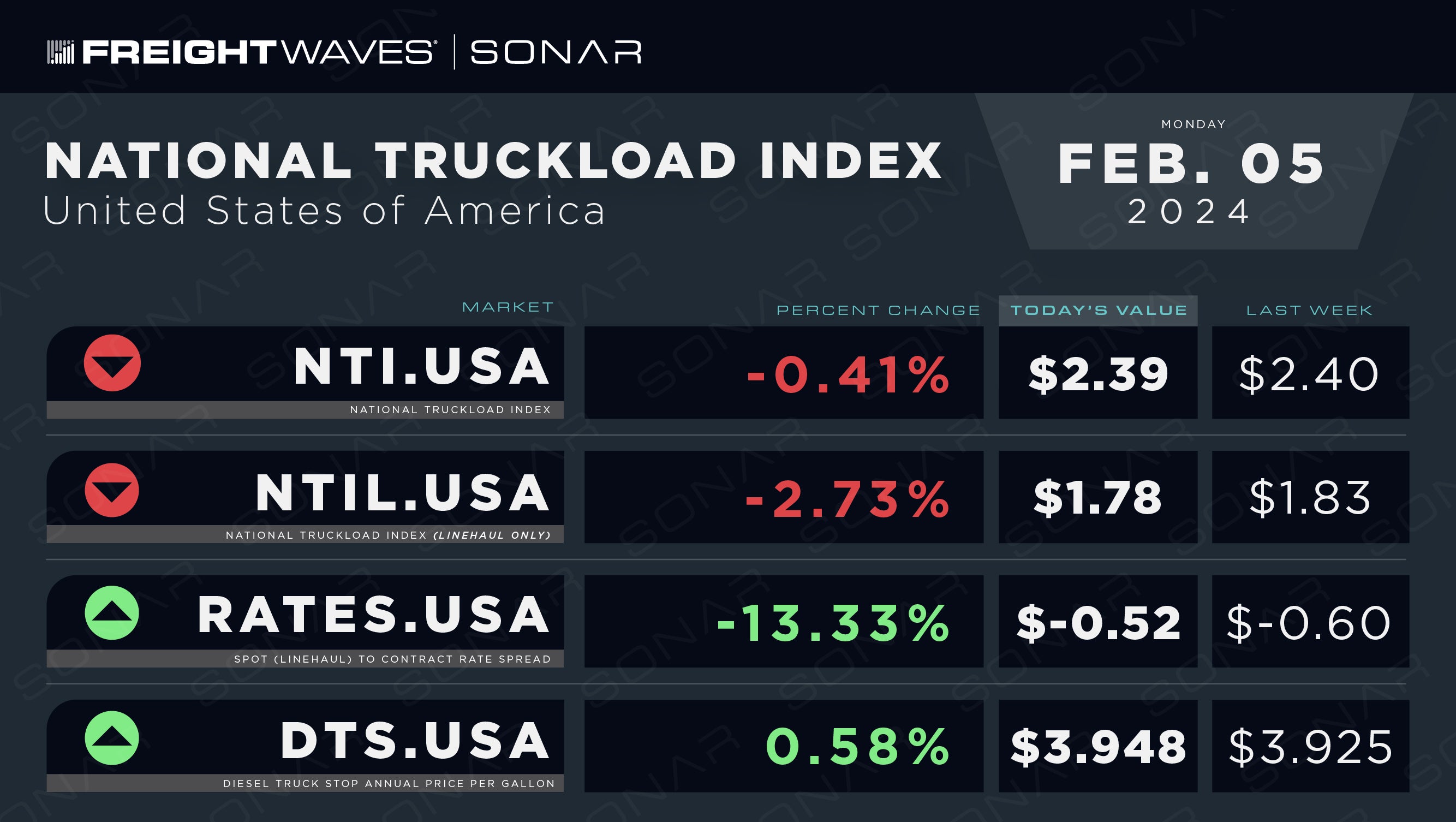
Weekly NTI Update: February 05, 2024


What’s the value in being a shipper of choice?
Why should customers care about the efficiency of a driver or the financial and operational health of a transportation provider? Those managing freight budgets get recognized for their financial acumen — not for being conscientious of dwell time, driver experiences, a carrier’s ability to cover overhead. Right?
Price may have been the primary goal of freight procurement and operational teams prior to 2018. But that’s changing. The 2024 Shipper of Choice awards will highlight those shippers that are ahead of the curve (you can nominate here).
The U.S. freight ecosystem is faced with an aging driver population. Timelines for adopting autonomous trucks continue to get pushed further into the future.
Every shipper or receiver shares a pool of drivers and the companies that manage them. It is in the ecosystem’s best interest to maximize the drivers’ efficiencies respectfully while helping to maintain trucking companies’ profitability.
I believe a Shipper of Choice strives to find the balance between service, costs and relationship management. Once they establish the right mix of each, they document how and why they operate with these guiding principles so the behaviors can be transferred across the perpetual rotation of transportation management teams.
Unfortunately, very few shipper transportation groups have tenure at the leadership level and without proven legacy operating documents, strategies and tactics are subject to change overnight, which can be challenging on relationships.

Let me explain the three circles. The sweet spot is achieved where they all overlap.
If you are a CPG shipper, you know the penalties for late delivery — fines deducted from invoices, with negative impacts on future sales volumes as buyers lose faith in the company’s delivery promise.
In a loose market, an overabundance of capacity might lead to “misbehaving.” But anyone with at least one freight cycle’s worth of experience knows how quickly market conditions can change. Shipper of Choice behaviors are a way of life, regardless of the market.
Tight markets have demonstrated that Shippers of Choice tend to get the capacity they need at the contracted rates while more difficult customers play “Go Fish” on the spot market.
Depending on your company’s sensitivity to being on time, or primary tender acceptance, and the ratio of transportation costs regarding the “cost of goods,” service may or may not play a big factor. Perpetual chaos and unreliable service might be an acceptable way of operating for some shippers. For many, it is not.
If the organization is tired of failing to achieve service promises, then a behavioral change is needed and will be more than welcomed by your customers and transportation providers.
Market intelligence tools are fantastic at capturing current lane rates with a set number of miles between X and Y, but every origin-destination pair is different (e.g. live vs. drops, flexible dock appointments, credible lane volume projections and so on).
In theory, a 500-mile shipment at $2.25 per mile should cost $1,125. But during the carriers’ pricing process, they have to layer in inefficiency costs, which at $75 per hour could tack on another $100 to $200 per load.
Additionally, if the volumes are wrong, then carriers are deadheading, or trying to find capacity above the contracted rate. If this surcharge was quantified, perhaps shippers would take a greater interest in reducing.
Shippers of Choice tend to have a good understanding of what they’re paying compared to the market, as well as what inefficiencies exist in those lanes where they’re operating above a tolerance level.
Lane volume projections are a critical component of a carrier pricing strategy as they try to connect lanes to create continuous moves or backhaul relationships. The more accurate the lane volumes, the better the opportunity to optimize a driver’s time while reducing empty miles.
Someday, carriers — enabled by technology — may be able to itemize the cost of a lane broken out between the miles driven, and the inefficiency penalty built in to absorb the waste. This visibility could inspire behavioral changes and even help justify a shipper’s investment in technology or infrastructure if there was a visible return on investment.
In the meantime, shippers should do their best to keep a driver moving while providing credible lane volumes. Carriers should continue to reward those shippers with capacity and acceptable rates.
Do you have a friend that you can always count on, good times and bad? This is the type of relationship behavior that a shipper should have with at least a few of their carrier partners.
Experience has proven these kinds of relationships to be highly beneficial for shippers. In bad times, they ensure capacity while keeping costs within percentages of the financial goal. In good times, they reduce the stress associated with trying to beat down prices to submarket levels.
The strongest relationships include business reviews, some as frequently as quarterly, which yield savings and service commitments for the shippers, while providing the carriers with assurances that volumes on certain lanes will continue to operate year over year.
Strategic carriers know your business. They know the quirks of the origin and destination pairs, and they price the lane rates accordingly. They may proactively come to a shipper in a soft market and lower their rates while rarely asking for rate increases in a tight market.
Strategic partner carriers are recognized during many shippers’ annual transportation summits, setting the bar for other carriers to follow if they want to move away from a transactional to strategic relationship.
Finally, relationships build trust. The shipper can trust a carrier will do everything possible to tender and deliver the load on time at the right price. For the carrier, consistent volumes with operators who also care about going the extra mile to ensure drivers feel respected and are kept moving.
It’s simple: it’s good business sense and it’s how we want our customers to treat us.
If you’re unsure how your carrier network might perceive your company, you should try to find out. Take some time to solicit nominations from them for the 2024 Shipper of Choice awards (you can encourage them to fill out the form at this link). You’re also welcome to nominate your own company, in which case, we ask participants to be honest when they answer.
If you don’t wind up making the Shipper of Choice list this year, it might be time for a behavioral change.


FreightWaves is proud to continue its tradition of honoring 25 distinguished shippers with its annual Shipper of Choice awards, sponsored by TriumphPay. This accolade celebrates companies that actively work toward simplifying and improving the freight transportation process for all stakeholders.
To be considered for this recognition, companies must first be nominated. We welcome nominations from anyone within the industry, allowing for an unlimited number of submissions per person, including self-nominations. To qualify, nominees must be shippers, defined simply as companies that transport their goods by land, sea or air.
Shippers can operate their own trucking fleets (like Walmart, for example) and still qualify for nomination. But companies that provide logistics services as their core business (like J.B. Hunt) do not.
Nominations will remain open until April 5, providing ample opportunity to recognize deserving companies. Click here to nominate a company for the 2024 Shipper of Choice award.
A Shipper of Choice is known for its effective collaboration with carrier partners to ensure the safe and timely delivery of goods. These companies adapt to the evolving landscape of the industry while maintaining a partnership-oriented approach. They address challenges such as driver detention, provide accessible facilities and streamline supply chain operations. Carriers favor shippers that offer flexible scheduling, maintain clean facilities and ensure fair handling of overages, shortages and damages (OS&D).
Industry veteran Rob Haddock shared his perspective on what makes a Shipper of Choice in a FreightWaves column.

The FreightWaves team, spearheaded by its research cohort, will review all nominations to select the top companies, eventually narrowing them down to the top 25.
This year, we’re excited to announce an enhancement to our selection methodology. Building on last year’s introduction of sector-specific detention time data, we will now incorporate facility review data into our evaluation. This advancement will help to further refine the selection process, ensuring the most deserving companies are recognized.
Feb. 5: Nominations for Shipper of Choice open
April 5: Nominations for Shipper of Choice close
June 5: Winners announced at Future of Supply Chain 2024
Don’t miss your chance to nominate a company for the 2024 Shipper of Choice award. Click here to make your submission.


Several hundred people gathered in three border states Saturday to call for stricter immigration security, ending the cross-country “Take Our Border Back” convoy that traveled from Virginia to Texas last week.
Convoy organizers and supporters initially said as many as 700,000 vehicles would take part in three separate rallies in Arizona, California and Texas, including truckers who took part in recent protest convoys in Washington, D.C., and Canada, according to U.S. Rep. Keith Self, R-Texas.
While hundreds of thousands of vehicles never materialized as the convoy moved across the country, about 100 passenger vehicles, recreational vehicles and trucks towing campers arrived in Texas, according to NBC News.
The Texas rally occurred at the Cornerstone Children’s Ranch in the town of Quemado, about 20 miles outside of Eagle Pass. The daylong event included musical performances, vendors and speakers who voiced their concerns about illegal immigration.
“The mission here is the border, that’s what we’re here for,” said Trenis Evans, one of the speakers at the Quemado rally.
At another “Take Our Border Back” rally Saturday in San Ysidro, California, convoy organizer Scotty Saks said the border is “a national security crisis.”
“We have a human trafficking problem on the border in proportions that we’ve never imagined,” Saks told a crowd of about 200 people, according to the New York Post.
The “Take Our Border Back” convoy also gathered for a rally in Yuma, Arizona.
The rallies were held amid a feud between Texas Gov. Greg Abbott and the Biden administration over border enforcement measures and jurisdictional authority.
The Texas National Guard seized control of Shelby Park in Eagle Pass several weeks ago, and erected a razor wire barrier around it, limiting U.S. Border Patrol’s access to the area.
On Sunday, Abbott held a news briefing in Shelby Park accompanied by 13 Republican governors to discuss border and immigration issues.
“A state can defend itself and its citizens to protect their safety from the imminent danger that we are facing, and from an invasion of millions of people coming from across the globe into our country who are unaccounted for whatsoever,” Abbott said.
Abbott also said he is expanding Operation Lone Star, the controversial border security initiative he launched in 2021. The operation has included deploying Texas National Guard members along the Mexico border, installing a floating barrier in the Rio Grande River and initiating safety inspections on commercial trucks arriving at ports of entry from Mexico.
“As we speak right now, the Texas National Guard is undertaking operations to expand this effort,” Abbott said. “We’re not going to contain ourselves just to this park, we are expanding to further areas to make sure that we will expand our level of deterrence and denial of illegal entry into the United States.”
FBI alleges Mexican cartel, Canadian truckers part of drug ring
4 things to know about the ‘Take Our Border Back’ convoy
Mexico’s truckers plan nationwide strike against cargo theft
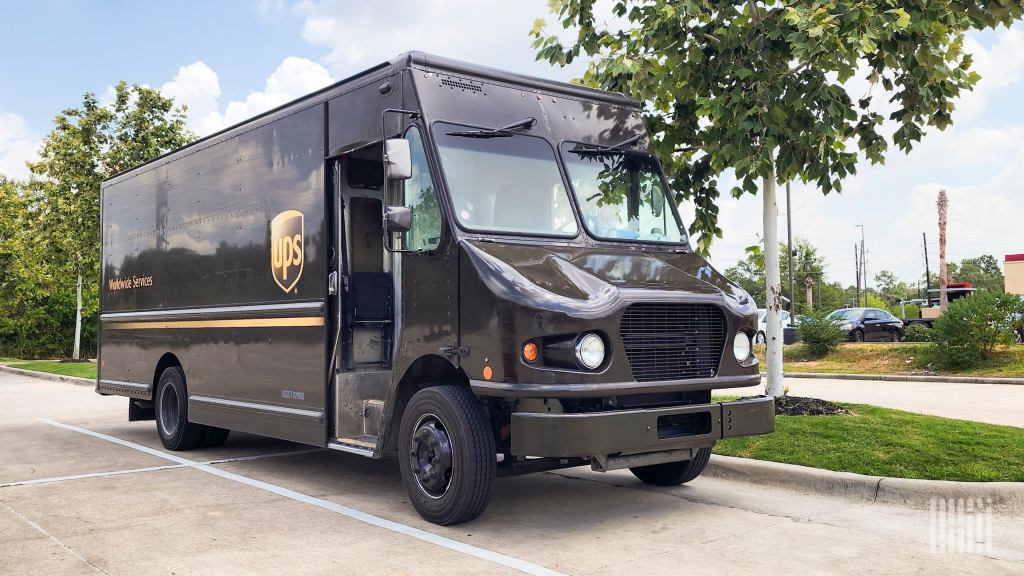
For the first 30 or so months of her tenure, UPS CEO Carol B. Tomé had the wind at her back. For the past year, however, a gale force storm has been blowing right at the company. The question is whether she can steer Big Brown through an environment bereft of tailwinds that may have spawned a false sense of security.
From mid-2020 to early 2023, UPS (NYSE: UPS) fired on all cylinders, propelled by massive and unsustainable spikes in delivery demand from the pandemic, fat rate and yield increases, big operating margins, unprecedented dividend hikes, and relatively muted competition. A legacy Teamsters contract that took effect in 2018 enabled UPS to sidestep much of the post-COVID labor cost inflation that hit its chief rival, FedEx Corp. (NYSE: FDX). Business was so good that UPS could afford to cap volumes from large enterprise customers, even telling them to look elsewhere for capacity.
Wall Street loved it. UPS shares, which traded at $103 a share in mid-February 2020, climbed to $224 in less than two years, a stunning ascent for a mature company in cyclical, low-margin businesses like transportation and logistics.
The second version bears no resemblance to the first. Volumes have reverted to the mean, receding to pre-pandemic levels. Flat demand and overcapacity has stripped UPS and other carriers of pricing power, a scenario that will likely extend through 2024 and beyond. Business that UPS may have turned away two years ago is now being heartily welcomed. “We’re now seeing UPS seek package volumes with a desperation unlike anything we’ve ever seen,” said Rob Martinez, founder and chairman of Shipware LLC, a parcel consultancy.
Other headwinds subsumed the prior tailwinds. A new Teamsters contract ratified last August burdened UPS with onerous cost increases in the pact’s first year. Amazon.com. Inc. (NASDAQ: AMZN), UPS’ largest customer, formed a stand-alone shipping service with designs on higher-margin small to midsize businesses that UPS covets. The U.S. Postal Service rolled out a two-to-five-day delivery service called Ground Advantage that competes with UPS on the ground. A bevy of last-mile providers sprang up to deliver low-priced goods moving through fast-growing Chinese retailers Shein and Temu. That means less business for UPS and other incumbents.
UPS’ results clearly indicate that parcel carriers are no longer able to influence demand for their services, said Satish Jindel, founder and president of ShipMatrix, a consultancy. “Gaining volume in a flat market requires lower prices to take market share from other carriers, and that is tough as those carriers will seek to protect their volume,” Jindel said.
UPS can gain volume and revenue but will need to sacrifice profit margin in the process, according to Jindel. UPS is “caught between a rock and a hard place, and this market dynamic will not ease for [the] next two or even three years,” he said.
Given this very different set of circumstances, Wall Street has taketh what it had previously giveth. As of Thursday, UPS shares traded at $142.41 a share.
UPS did not respond to a request for comment about this story.
The turbulence of the past three-and-a-half years may have come to a head on Tuesday when UPS released weak fourth-quarter results whose saving grace was that they were an improvement over the low-water mark of the third quarter. Every metric was down year over year. The first half of 2024 will also be subpar, especially the current quarter when labor costs remain elevated, industrywide volumes continue to be flat, and the company faces tougher comparisons from the 2023 quarter. In response, the company said it would eliminate 12,000 management and contract jobs, a move that could result in nearly 14% of all managerial jobs going away but could save about $1 billion in 2024 alone. (Ironically, FedEx almost a year to the day made management cuts that ended up being similar in size.)
Even the relentlessly optimistic Tomé could not spin the 2023 saga, calling it “unique, difficult and disappointing.” Earnings improvement will be a second-half story, the company said, as labor cost pressures ease, inflation in general continues to drop, and management cost reductions take effect. At projected volume gains hovering around 1%, a brighter outlook will likely not come from higher demand.
The projected staff cuts are not new news in the Tomé era; in the second half of 2020, more than 11,000 nonoperations middle management employees were offered voluntary separation packages. However, the cumulative effect of the multiyear reductions, while valid to the extent that it shrank executive bloat, has raised questions about the hollowing out of a management philosophy that set UPS apart from most organizations and played a key role in its vaunted operational execution. There are also concerns that the “better, not bigger” mantra that undergirded Tomé’s efficiency drive may have cut too much muscle along with the fat.
Josh Taylor, a former UPS executive who today monitors the company for Shipware as its senior director of professional services, said he’s heard about service concerns from a handful of UPS customers. “UPS’ service challenges could stem from its aggressive cost cutting,” Taylor said in an email. “In the past, UPS had planned redundancies to ensure excellent service despite the inevitable hiccups in the network.” Those backup systems have thinned out, he said.
In addition, UPS’ decision to eliminate money-back guarantees on ground deliveries at the start of the pandemic allowed it to reduce planned redundancies without worrying about the consequences of forking over millions of dollars in refunds, according to Taylor. At the same time, UPS’ operating teams “haven’t been given any wiggle room in their planned performance, so we’ve started to see sporadic corner-cutting measures like missed pickup scans,” he said.
According to one source, a former UPS sales executive, the company’s sales force is being “required to do more work than ever.” This includes filing daily reports on all sales-related activity and making a minimum of six in-person visits per day, the source said. “This is causing a strain on many in UPS’ sales force, which is less tenured than it has been in recent decades due to previous downsizing of many high-producing, knowledgeable, and tenured employees,” the source said.
The cuts have sparked more than a few social media missives from current and former UPS employees, a remarkable development for an organization where public dissent has historically been absent.
“There is a massive amount of culture and knowledge that has walked out the door over the last five years and the only people who seem to care are those that are no longer there for the firm,” Scott Lord, who spent more than 18 years at UPS, almost all in marketing director roles, wrote on LinkedIn. Lord now runs his own consulting firm.
Mike Mangeot, who retired from UPS after 30 years in various communications roles, was equally blunt, saying current leadership’s promise of a transformation that would spawn a better UPS “has not emerged.” Recent initiatives have “gutted a generation of good, productive employees who knew how to run” the company, Mangeot wrote on LinkedIn.
The cuts, according to Mangeot, should be focused on senior management at UPS’ Atlanta corporate headquarters. “There are layers of high-dollar presidents and vice presidents whose activities have little to do with running the daily business or achieving business goals,” he wrote on the platform.
Managed transportation provider Uber Freight announced on Monday that it has taken the first steps in activating an API technical standard produced by the Scheduling Standards Consortium (SSC) industry group. The group released its standards to the FreightTech industry on GitHub in October.
The need for an API scheduling standard stems from the recognition that fragmented processes, especially in transportation appointment scheduling, hinder the efforts of FreightTech companies seeking operational efficiency.
The Scheduling Standards Consortium (SSC) aims to collaborate with logistics providers, warehouse management solutions and transportation management systems to create a common API for sharing scheduling data.
By establishing these standards, the SSC seeks to facilitate innovation, making it easier for carriers, brokers and shippers to justify future investments. Emphasizing the importance of industry alignment on standards, the consortium aims to minimize operational friction and fragmentation, unlocking a more fluid and optimized market for shippers and carriers.
Uber Freight has officially implemented those standards into its proprietary transportation management system, allowing for automated scheduling across 1,500 facilities and distribution centers for 10 Fortune 500 companies in the consumer packaged goods industry.
“We do about 6 million appointments a year within those 1,500 locations that use our dock scheduler,” Natarajan Subbiah, Uber Freight’s executive vice president of product and data science, told FreightWaves.
Subbiah elaborated that the company has received excellent feedback from both the facilities and the carriers frequenting them daily.
“For carriers and brokers out there who are on the fence about investing time into helping build the API, our success should be a confidence booster,” he said. “Instantaneously, appointments can be scheduled and it saves the cost of having some human wait in a queue somewhere to manually book them. … Shippers are also seeing that because these loads can now be covered much earlier with more lead time, there is a lower cost from the carrier.”
Right now, Uber Freight’s API is not open publicly for scheduling at these sites, although the company plans to have that available by the second half of this year.
“The API is not fully done yet, but we are taking the bare minimum and testing it at this time. There are a few tweaks that we want to make and plan to launch it publicly by H2 of this year. That is when carriers outside of our network and not working with our brokerage will be able to access them [to set appointments],” Subbiah said.
The SSC is currently witnessing active participation in the development of these standards from a diverse range of companies, including Arrive Logistics, Blue Yonder, Coyote, DHL, e2open, Echo Global Logistics, J.B. Hunt 360, Lineage Logistics, One Network Enterprises, Oracle, Ryder, Mastery, Transportation Insight, Nolan Transportation Group and Worldwide Express. The consortium remains open to welcoming new members to further enhance its collaborative efforts.
GoodShip releases procurement scenario builder solution
FreightTech experts: 2024 is the year for laggards to catch up
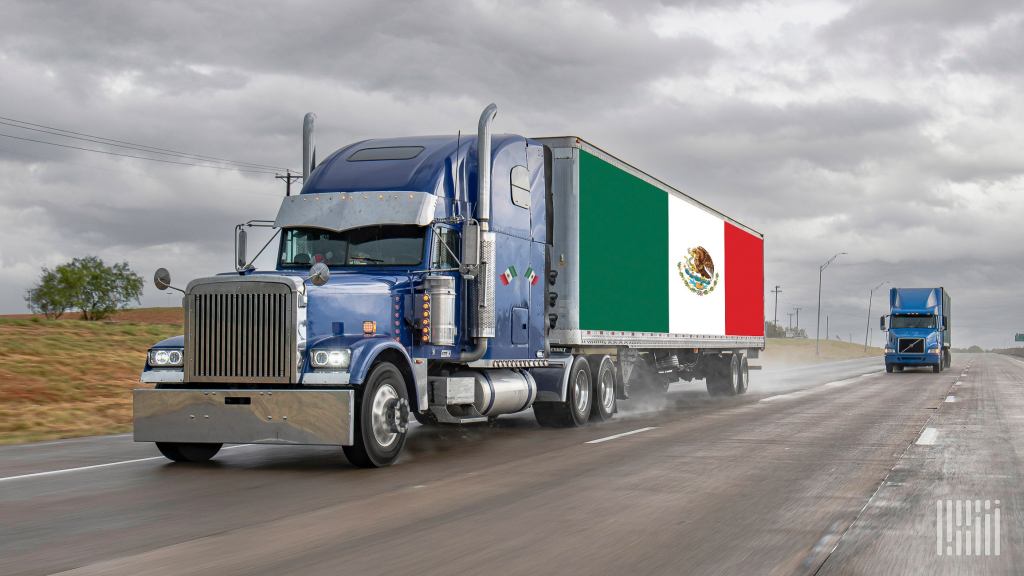
Borderlands is a weekly rundown of developments in the world of United States-Mexico cross-border trucking and trade. This week: Mexico’s truckers plan nationwide strike against cargo theft; EV maker Lucid expands its U.S. manufacturing facility; Grainger announces new distribution center near Houston; and supply chain services provider Kinaxis opens Dallas office.
Truckers across Mexico plan to go on strike Monday to protest rising cargo theft and violence against freight transporters on the country’s roadways.
The strike is set to begin around 7 a.m. Monday and could include thousands of drivers representing up to 15 trucking industry organizations, including members of the United Federal Drivers Association (ACFU), the Mexican Transport Alliance and the Mexican American Transport Federation.
Organizers said they are seeking more patrols from Mexico’s National Guard on roads with a high incidence of theft, tougher penalties against cargo thieves and more support for the families of truckers hurt or killed by thieves.
“Unfortunately, we had to come to the necessity of demonstrating,” David Munoz, national president of ACFU, said on the “Ciro Gomez Leyva in the Morning” show. “This cannot continue like this and we need answers from the government.”
In August, a nationwide strike by truck drivers belonging to the Mexican Alliance of Carrier Organizations (AMOTAC) and other organizations was postponed just days before it was set to begin after federal authorities promised to increase security measures on roadways.
One of the agreements reached by AMOTAC and authorities included Mexico’s National Guard meeting monthly with trucking officials to create enhanced safety measures to combat cargo theft. The National Guard oversees protection of Mexico’s highways.
While the National Guard promised to increase security, cargo theft has continued to plague truckers across the country.
Recent data from Mexico’s National Public Security System said cargo theft cases increased 4% year over year in 2023 to 9,181 incidents, including 7,862 cases that involved violence.
According to Mexico’s National Chamber of Cargo Transportation (CANACAR), at least 50 truck drivers have been killed on the country’s roads by cargo thieves since 2023.
Officials for CANACAR recently penned an open letter to Mexican President Andres Manuel Lopez Obrador asking him to meet with its members. CANACAR represents carriers totaling more than 500,000 truck drivers across the country.
“Beyond the official figures, the reality is that the number of crimes committed against cargo transportation hurts us daily and the most worrying thing is the violence that is committed with the crimes,” according to the letter. “We respectfully request a meeting … so that together we can reach a solution that allows us to travel with peace of mind and safety on the roads of Mexico.”
Along with the strike planned for Monday, other trucking protests have been occurring across Mexico in recent days. On Wednesday, members of AMOTAC and other trucking organizations held demonstrations on the Mexico-Queretaro federal highway to protest road insecurities.
The Mexico-Queretaro highway is one of the country’s busiest roadways and is used by commercial transporters traveling between Mexico and the U.S.
Electric vehicle maker Lucid Group Inc. recently announced the expansion of its Casa Grande plant about 47 miles south of Phoenix.
The expansion includes a 3 million-square-foot manufacturing facility and warehouse. Lucid will make its Gravity SUV at the plant with the aim of producing 90,000 vehicles a year, according to a news release.
“The expansion of our manufacturing footprint in Arizona is a significant milestone for the company, as we prepare for the next phase of Lucid’s growth,” CEO and CTO Peter Rawlinson said in a statement.
The expansion is scheduled to be completed by the end of the year.
California-based Lucid (NASDAQ: LCID) was founded in 2007. The company is a maker of luxury electric vehicles, including the $75,000 Lucid Air Pure.
Industrial supplier Grainger (NYSE: GWW) recently announced plans for a 1.2 million-square-foot distribution center in Hockley, Texas.
The facility will provide additional capacity for the company to continue delivering next-day orders to its customers, according to a news release. The facility is expected to create 400 jobs and open in 2026.
“Our customers want the right product, in the right place, in the right quantity, at the right time,” Rob Reynolds, senior vice president, branch and distribution operations, said in a statement. “Greater Houston is an ideal location because it’s geographically close to current and potential customers.”
The distribution center will house more than 250,000 industrial supply items, such as hand and power tools, heating, ventilation and air conditioning equipment, and more.
The center will be constructed on a 108-acre parcel of land in Hockley, about 37 miles northwest of Houston. Illinois-based Grainger operates more than 45 locations in Texas, including six branches in Houston.
Ottawa, Ontario-based Kinaxis announced the opening of an office in Dallas to help serve the company’s expanding U.S. customer base.
The Dallas location will serve as a centralized hub for Kinaxis’ employees and customers to meet, according to a news release.
“Dallas is recognized as a growing, centrally located region for technical and supply chain management talent,” Megan Paterson, Kinaxis’ COO, said in a statement. “Establishing a permanent hub in the U.S. is a critical part of our global footprint as businesses continue to adopt Kinaxis to manage supply chains in an increasingly complex environment.”
Founded in 1984, Kinaxis is a supply chain management and sales and operation planning software company.
FBI alleges Mexican cartel, Canadian truckers part of drug ring

The Centerville, South Dakota Post Office serves ZIP Code 57014. Photo by Jimmy Emerson, some rights reserved. Photo shared under the Creative Commons License.
Centerville Post Office
533 Broadway St
Centerville, SD 57014
Location at Google Maps
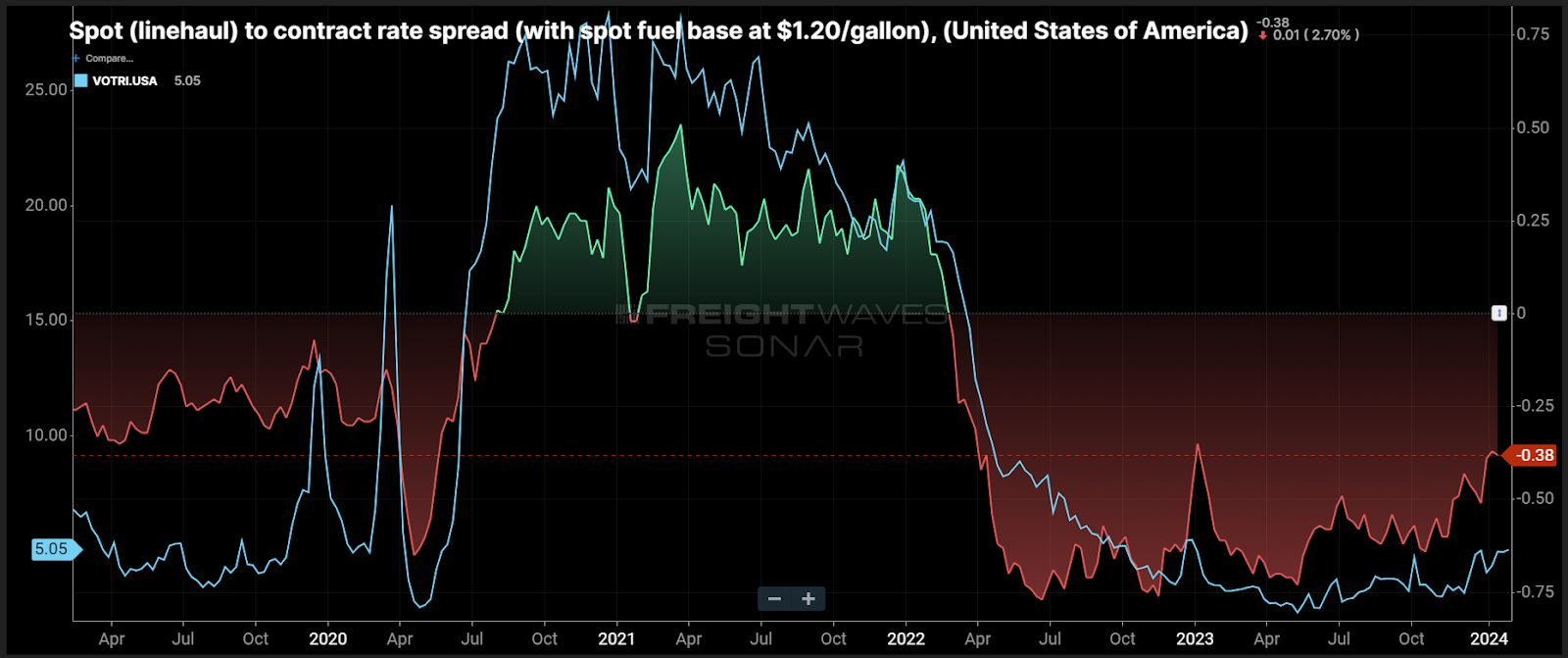
Chart of the Week: Spot to contract rate spread (excluding estimated fuel costs above $1.20/gal, Van Outbound Tender Rejection Index – USA SONAR: RATES12.USA, VOTRI.USA
The difference (spread) between dry van truckload spot and contract rates has risen to its most balanced level since the holiday season last year. While the weather has certainly played a role in the near term, there are long-term takeaways when we compare the spread to van tender rejection rates (VOTRI) — which are also on the rise.
Contract rates are based on an ongoing agreement between a shipper and a transportation service provider such as a carrier or a 3PL in which the service provider agrees to move freight in a given lane for a set rate if the provider has availability. These agreements tend to last for a year but can be shorter and longer.
Spot rates, just like many other commodities, are truckload rates negotiated on the spot and are not generally expected to be consistently adhered to by the requesting party. These are much more volatile and reflective of the current market conditions.
Spot rates tend to average lower than contract rates in most lanes as most of the volume tends to lean toward third-party providers or brokerages scouring the nation for relatively inexpensive capacity and carriers trying to find backhaul loads or freight that moves their trucks into an area where contract customers have freight.
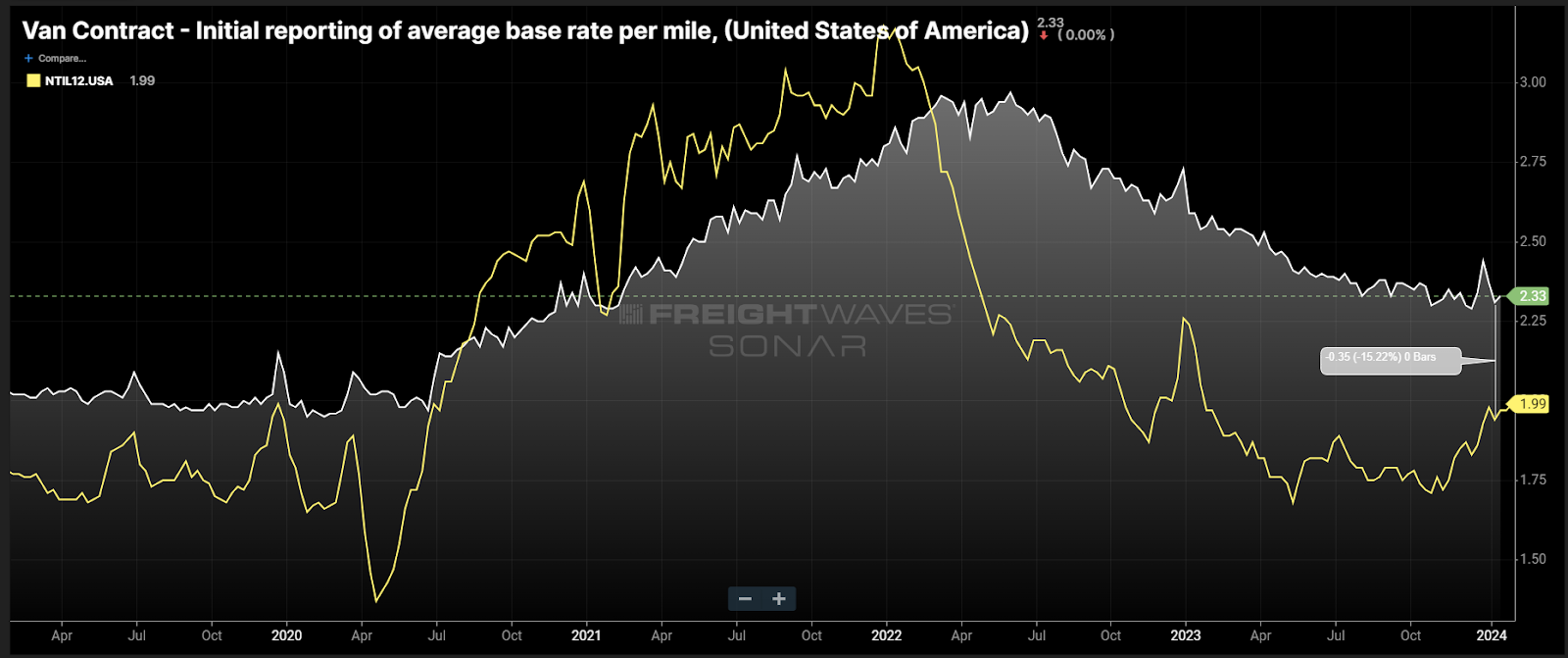
The rate spread, which is calculated by subtracting the average dry van contract rate from the average spot rate excluding estimated fuel costs comparable to a common surcharge, has been historically low for nearly two years. Spot rates have averaged roughly 60 cents per mile lower than contract since May 2022.
For context, spot rates were 22 cents higher from July 2020 to February of 2022 — the pandemic era. Spot rates averaged about 24 cents lower than contract in 2019.
This data point should be viewed more as an indicator of market conditions than at pure face value. The values of the spread are not applicable to every lane in the country, rather as more of an indicator of how aggressive companies have to be to find short-term and long-term truckload capacity.
When the spread value is negative, capacity is relatively easy to find. When it is positive, it is challenging.
The spot rate also tends to lead the contract rate in terms of movement, which can lead to short-term contractions around seasonal or temporary events like the weather that influence capacity’s availability. The current trend appears to have a combination of both long- and short-term influences.
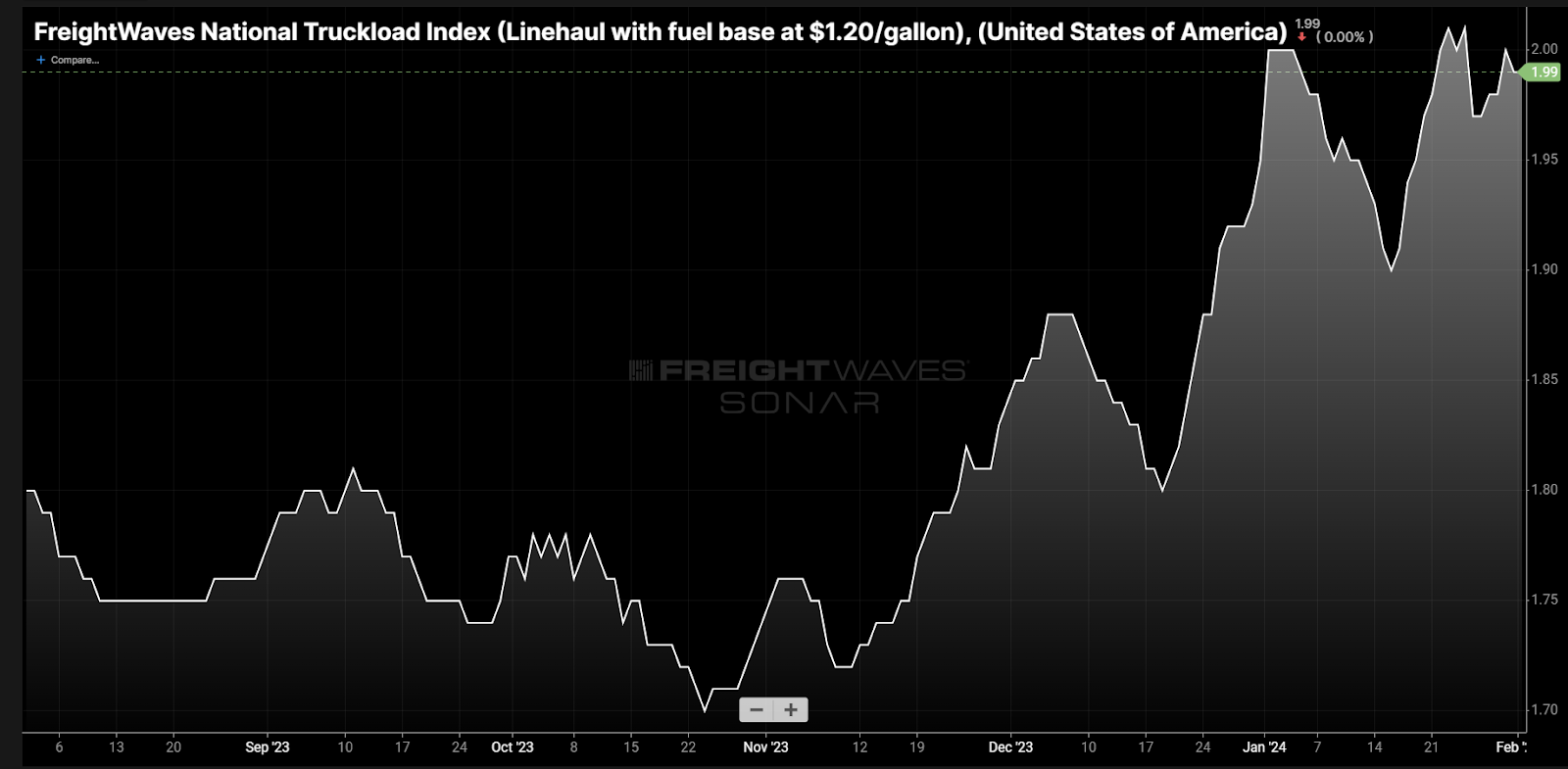
Spot rates increased around the holidays as they typically do but had not quite fallen back before winter weather pushed them higher once again.
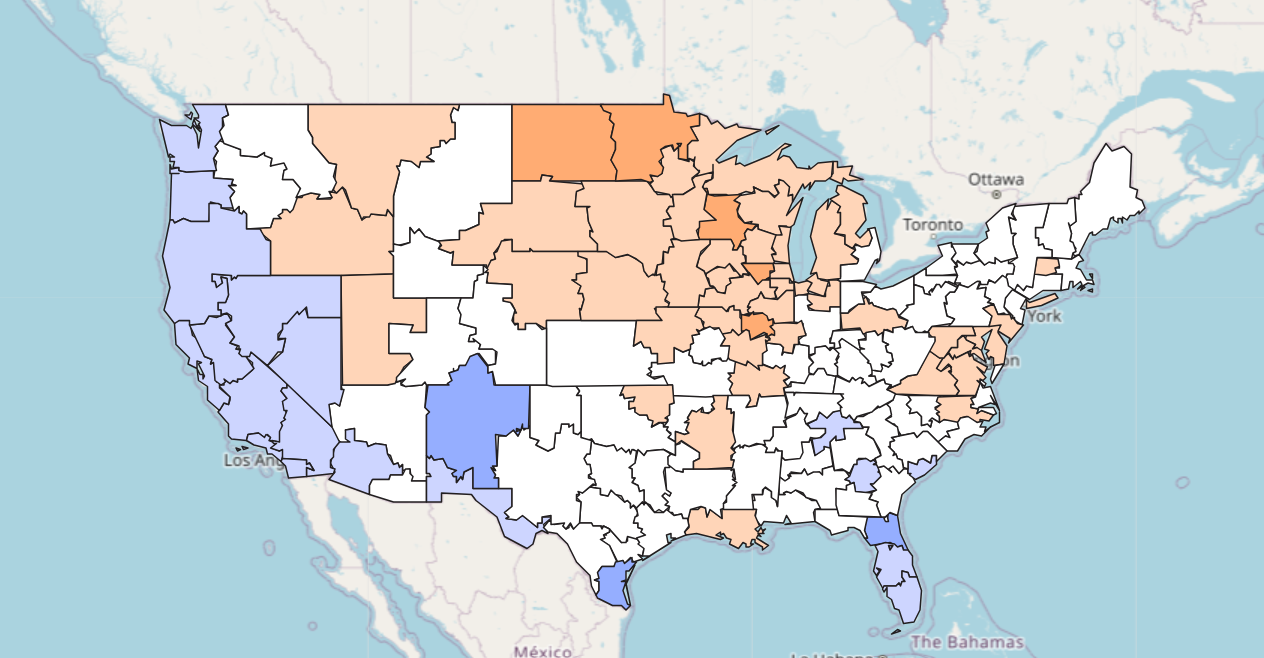
The above map shows markets where lanes were moving significantly higher (orange) or lower (blue) on a four-day rolling average as of Jan. 17. Looking into the background TRAC data that makes up the national average, most of the rate increases occurred in the Upper Midwest, where temperatures were in the negative degrees Fahrenheit.
Since then, spot rates have not retracted as quickly as some might have expected. Shippers having to play catch up and carriers’ networks being disrupted are the biggest issues with weather events. The length of time it has taken to recover may be a tell that the freight market is closer to supply-and-demand equilibrium than we think.
The FreightWaves Chart of the Week is a chart selection from SONAR that provides an interesting data point to describe the state of the freight markets. A chart is chosen from thousands of potential charts on SONAR to help participants visualize the freight market in real time. Each week a Market Expert will post a chart, along with commentary, live on the front page. After that, the Chart of the Week will be archived on FreightWaves.com for future reference.
SONAR aggregates data from hundreds of sources, presenting the data in charts and maps and providing commentary on what freight market experts want to know about the industry in real time.
The FreightWaves data science and product teams are releasing new datasets each week and enhancing the client experience.
To request a SONAR demo, click here.