FBI alleges Mexican cartel, Canadian truckers part of drug ring

U.S. authorities say 19 men have been indicted as part of a drug-smuggling operation that involved large quantities of narcotics moved from Mexico across the U.S. and Canada by long-haul truckers.

The cross-border investigation dubbed “Operation Dead Hand” by the FBI led to the arrest of Roberto Scoppa, a Montreal man alleged by authorities to be a large-scale Canadian trafficker and Italian Mafia figure.

Authorities also arrested Guramrit Sidhu, a resident of Brampton, Canada, also known as “King,” who is alleged to have orchestrated the purchase of hundreds of kilograms of drugs and hired a network of truck drivers to transport the drugs from California across the Canadian border.

“This conspiracy spanned three countries and involved drug suppliers connected to cartels in Mexico, drug distributors and brokers in Los Angeles, Canadian truck drivers and a network that exported drugs into Canada, and even an associate of the Italian Mafia in Montreal,” U.S. attorney Martin Estrada said at a news conference in Los Angeles on Tuesday.

Investigators believe the organized crime group used Canadian “handlers” and “dispatchers” who traveled from Canada to Los Angeles to arrange shipments, according to a news release.

The handlers allegedly coordinated the pickup and delivery of large shipments of cocaine and methamphetamine, which were loaded onto tractor-trailers headed for Canada. Large quantities of fentanyl were seized during the investigation, authorities said.

The transportation was coordinated by a network of drivers working with dozens of trucking companies. The truckers made numerous border crossings from the U.S. to Canada via the Detroit Windsor Tunnel, the Buffalo Peace Bridge and the Blue Water Bridge.

The indictments allege the drug organization moved approximately 845 kilograms (1,860 pounds) of methamphetamine, 951 kilograms (2,092 pounds) of cocaine, 20 kilograms (44 pounds) of fentanyl and 4 kilograms (nearly 9 pounds) of heroin. Over $900,000 in cash was seized during the investigation. The estimated wholesale value of the narcotics seized was $16 million to $28 million.

Authorities said 10 of the 19 named in the indictments have been arrested in recent days in cities that include Los Angeles and Sacramento, California; Miami; Odessa, Texas; and Montreal, Toronto and Calgary in Canada.

If convicted, each defendant could face maximum penalties ranging from 40 years to life in federal prison. Sidhu would face a mandatory minimum penalty of 20 years in prison.

More articles by Noi Mahoney

Nearshoring forecast to boost US-Mexico trade in 2024

Mexico aims to compete with Panama Canal by using cargo trains
Covenant Logistics predicts gradual freight market recovery

GoodShip releases procurement scenario builder solution

Procurement platform GoodShip unveiled Wednesday its most recent product update, introducing the innovative proprietary scenario builder. 

This feature empowers GoodShip’s shipper clientele to meticulously craft personalized constraints, facilitating a comprehensive assessment of prospective procurement outcomes. By aligning these insights with their supply chain objectives, clients can make optimal decisions, ensuring a strategic and informed approach to procurement.

GoodShip raises $5M to provide analytics to both shippers and carriers

In an interview with FreightWaves, co-founder and CEO Ryan Soskin explained that as GoodShip continued to land larger shipper customers, the company found more complex decisions came with their procurement decisions.

“Historically, shippers are going through a bunch of spreadsheets based on different procurement scenarios and it has become difficult to optimize those decisions,” Soskin said.

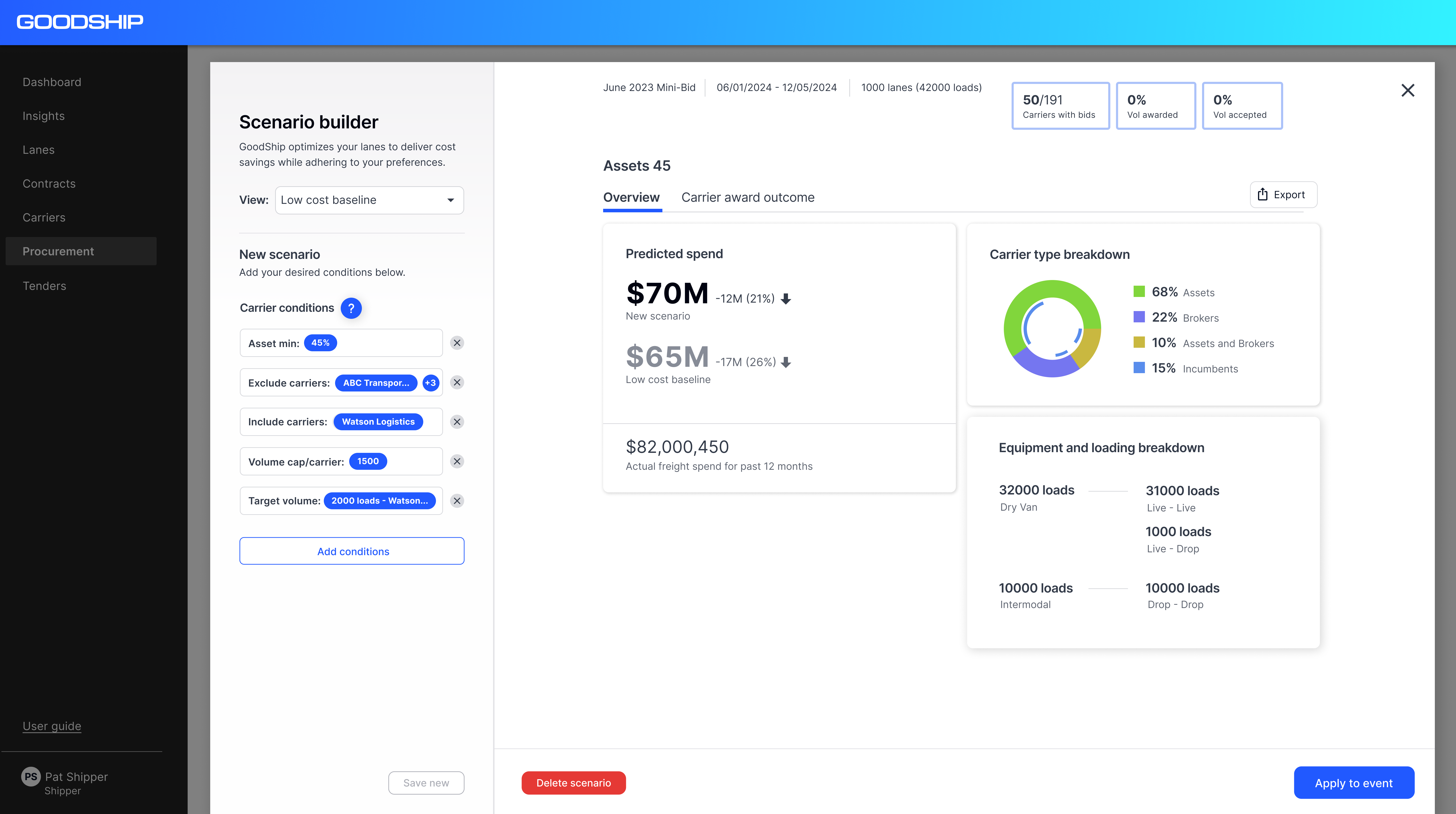
“Some may say, ‘We want at least 40% of our volume going to assets. … But we also don’t want to give a carrier more than 5% of our whole volume,’ for example. These are different real-world constraints that a shipper wants to apply to their events. We built a very robust scenario builder where shippers can utilize a clean user interface and apply these constraints. In the end, our complex mathematical models will showcase the lowest possible cost outcome with those parameters.”

Various carrier conditions shippers can utilize include a minimum asset amount, excluding and including carriers, performance minimums, volume caps, total spend, and many more.

Shippers can create these parameters, save them as “scenarios” and easily compare pricing within seconds to past freight spend based on those parameters.

GoodShip’s scenario builder. (Photo: GoodShip)

Soskin also expressed the importance of this update for carriers, giving them even more visibility into how a shipper is managing a bidding process that they are a part of. 

“We’ve gotten great feedback from carriers and their ability to see what they are signing up for and they are now putting forward pricing that they can actually honor and service at high levels,” he said.

Shippers currently leveraging this tool are experiencing success.

“GoodShip gives us all the tools and information we need to make quick, informed decisions when awarding freight and managing our network. … Whether it’s running a bid, initiating a renegotiation, or automating our carrier scorecards, GoodShip has eliminated many of the old, manual processes and software we used to rely on,” said Kevin Norris, senior logistics manager at Central Garden and Pet Company.


Vizion partners with Dun & Bradstreet on risk management offering

Project44 v. FourKites: The FreightTech case that questions Illinois defamation law

Echo partners with Navix to enhance freight bill auditing

FreightWaves Inc. divesting media arm to focus on high-frequency data offering

FreightWaves, the leading provider of global intelligence to the supply chain industry, has decided to divest its media business to focus exclusively on its high-frequency global intelligence data offering, SONAR

FreightWaves media is not going away and will remain in familiar hands. 

Craig Fuller, the founder and CEO of FreightWaves Inc., has acquired FreightWaves media and will be consolidating it with FLYING Media Group (FMG), a media platform that serves the aviation and marine industries. 

FreightWaves media will continue to cover global supply chain news and information, working closely with SONAR for data and market intelligence. A long-dated data licensing relationship will exist between the two entities, ensuring that FreightWaves media enjoys the richness of SONAR’s high-frequency data in FreightWaves’ editorial offerings. 

As part of the transaction, FLYING Media Group, the new parent of FreightWaves media, will be rebranded as Firecrown

All of the FreightWaves media assets and staff will move over to Firecrown but will retain their specific identities. This includes FreightWaves.com, FreightWavesTV and American Shipper, among others. The FreightWaves editorial staff will continue to focus on supply chain coverage, but there will be opportunities for topical collaboration between the supply chain, aviation and marine teams on topics that impact those industries, such as the economy, technology, regulation, fuel and energy prices, sustainability and industrial supply chains. 


Additionally, FreightWaves media will greatly benefit from Firecrown’s media infrastructure, while Firecrown will be able to tap into FreightWaves’ very robust video production and streaming capabilities for aviation and marine. Additional investments in media platforms and infrastructure that will directly benefit FreightWaves are planned by Firecrown. 

Firecrown is now the largest media publisher of aviation, marine and supply chain news and content. With more than 170 employees and more than 100 contributors, the Firecrown platform is the largest transportation publishing platform on the globe. 

Over the past three years, Firecrown has acquired 35 brands in the enthusiast category, including FLYING, AvBuyer, AVweb, Yachting, Sailing World, Salt Water Sportsman, Sport Fishing and Boating. 

FreightWaves is the first business-to-business (B2B) acquisition for Firecrown and will serve as a platform for additional B2B expansion. 

More than 60 employees that work on the FreightWaves media platform will transition to Firecrown. The editors and journalists who cover global supply chain news will continue to represent themselves under the FreightWaves banner. 

Firecrown is growing quickly. 

From less than $3 million in revenues in 2021, it is on a run rate to do more than $50 million in revenue and $8 million in income for 2024. 

In the coming months, FreightWaves Inc. will be rebranded as SONAR and become a pure-play SaaS business, offering high-frequency data for global supply chains. In recent months, SONAR has been successful in winning new business from large shippers, 3PLs, and hedge funds all interested in using SONAR’s price reporting tools and analytics. 

Fuller will continue to serve as CEO of SONAR, with a renewed focus on product and innovation. 

In commenting about the transaction and structure, Fuller stated: 

“SONAR has reached sufficient scale, which has enabled it to stand on its own, without the need of FreightWaves media behind it. Post transaction, SONAR will have a large balance sheet that will enable it to make significant investments in its data platform offerings, with a more narrow focus that only being a pure-play SaaS offering can bring.

“With a narrowed focus as a SaaS company, the SONAR team should be able to deliver accelerated product growth and new organizational initiatives, without the distraction of a media and SaaS business as part of the same enterprise.”

In recent weeks, FreightWaves and SONAR have taken many steps to prepare the entities for the new structure, including the elimination of certain roles that were more meaningful in a combined entity. Additionally, layers of corporate structure were also removed to simplify reporting and decision-making more common with smaller companies. 

The companies do not anticipate any additional job reductions in the future, and the various management teams are focused entirely on driving growth for their respective businesses.   

Following the transaction, SONAR is forecasted to be a $30 million software business and Firecrown a $50 million media business. Both firms have strong balance sheets and focused management teams. 

Additional information on Firecrown is available at Firecrown.com. Information about FreightWaves SONAR can be found at sonar.www.freightwaves.com

CtrlChain taking charge of logistics through smarter tech

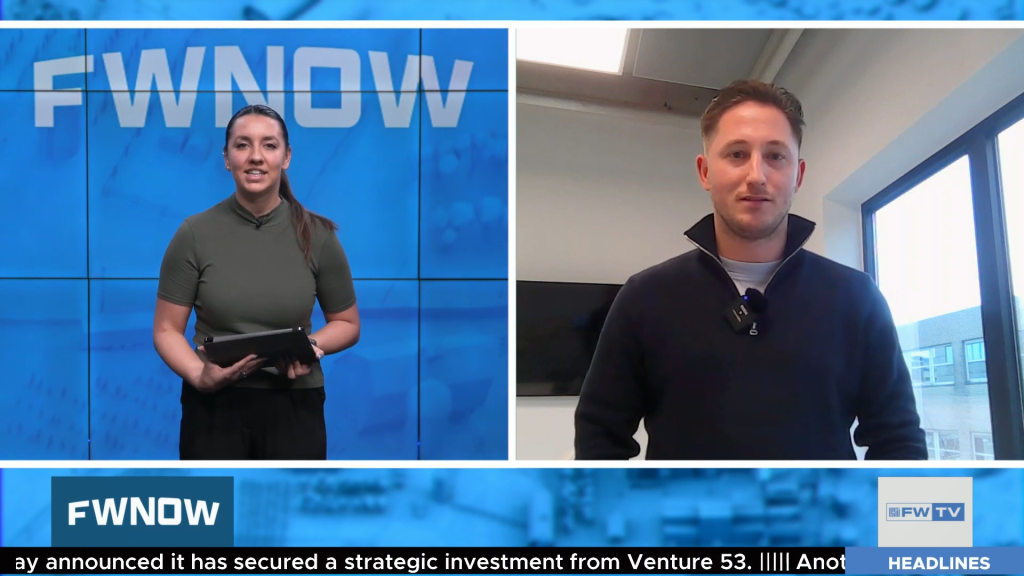
CtrlChain, FWNOW segment

Giovanni Gubbels, founder and CEO of logistics service provider CtrlChain, discusses the company’s recent rebranding from ChainCargo and what the new name represents.

ChainCargo started five years ago with the goal of reducing waste and inefficiencies in logistics management and supply chains through an automated logistics ecosystem. Recognizing the importance of data in achieving these goals, Gubbels steered the company to focus more on providing accurate, consistent data to customers to truly make an impact.

The new name, CtrlChain, better reflects the mission of automating logistics by using data to help companies gain more control and visibility into their logistics operations.

Many small carriers still rely on manual processes, like email and spreadsheets, for logistics management. CtrlChain aims to drive sustainability through better decision-making based on real-time and historical information by providing digitalisation tools and aggregating data across these fragmented supply chains.

Clients today expect more than just basic services — they want visibility into granular performance metrics to optimize operations. In the industry, carrier scorecards are commonly reviewed, but the underlying data is often overlooked. Even if a carrier arrives on time at a loading location, they might depart later than scheduled.

The real question is: why are there delays in departure? Another concern could be that a carrier leaves on time, but the truck’s temperature control is not set correctly. “It’s mainly about what the data is telling us and how we can work with it to improve our day-to-day operations for operational excellence,” Gubbels said.

Gubbels believes there is plenty of room for improvement in modernizing supply chain technology. He notes that 60% of carriers still depend on outdated tools like spreadsheets and email.

Gubbels also says collaboration will be key to making progress. The entire vision for CtrlChain is to collaborate across the industry to centralize and share data.

“Among our few big milestones coming up is one of the most important ones: our carrier TMS,” he said. “We are giving this away for free to carriers mainly to help them digitize and create the data that we’re missing to make those critical steps towards sustainability.”

By working together and combining knowledge, CtrlChain hopes to learn where the biggest data gaps currently lie. The company wants to educate small carriers by providing tools for transparency at no cost, exemplifying the cooperative spirit needed.

In 2024, CtrlChain is expanding into new markets and launching additional services centered around data and visibility. Enhancing sustainability and meeting stringent emissions regulations will only be possible through digitalization and transparency. Because of this, Gubbels urges players across the fragmented logistics sector to work together now. The time for action is short as sustainability deadlines approach.

“Looking forward to what is coming in regards to the new sustainability regulations — the 2030 deal, the 2050 deal — it’s time to speed up and embrace the data which is available and make sure that collaboratively we’re going to generate more,” Gubbels said.

With sustainability benchmarks looming and increased environmental consciousness among consumers, supply chain improvements will require an all-hands-on-deck effort. CtrlChain aims to lead the charge into a more efficient, tech-enabled future — where sharing vital data fuels better decision-making industrywide.

To learn more about CtrlChain, visit its website.

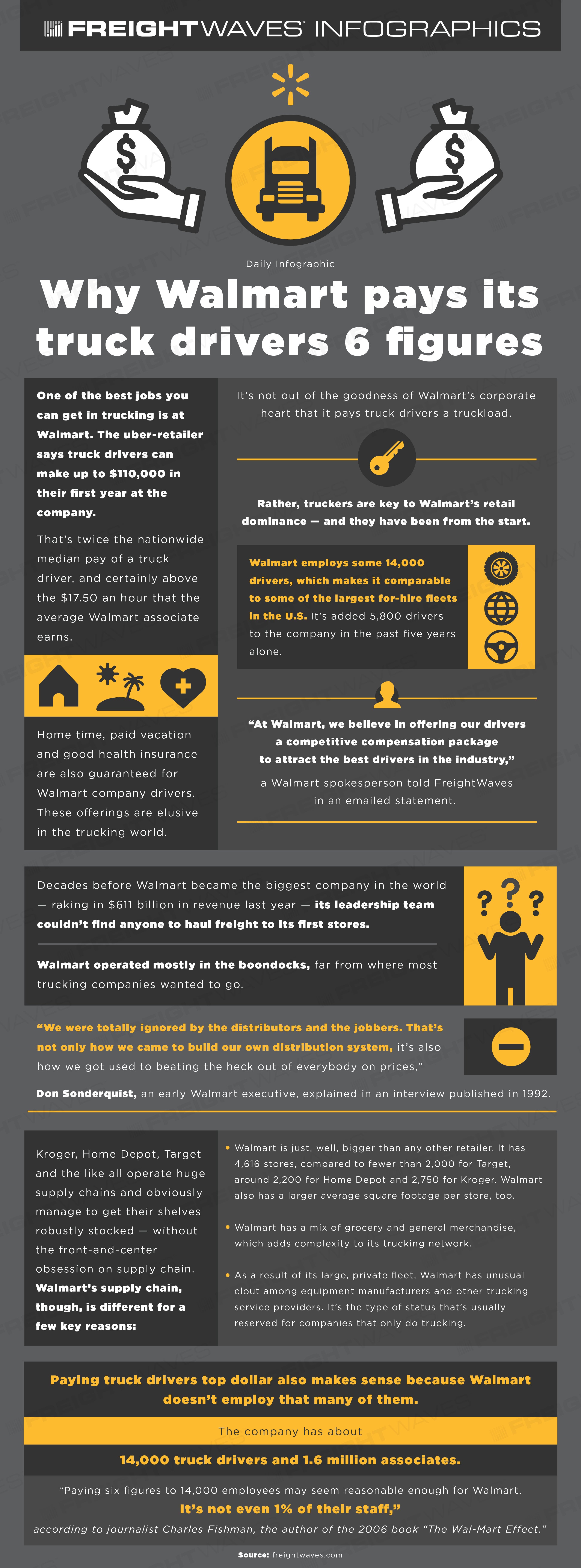
Daily Infographic: Why Walmart pays its truck drivers 6 figures


To view more FreightWaves infographics, click here

Roadrunner adds more lanes; coverage now includes Toronto, Montreal

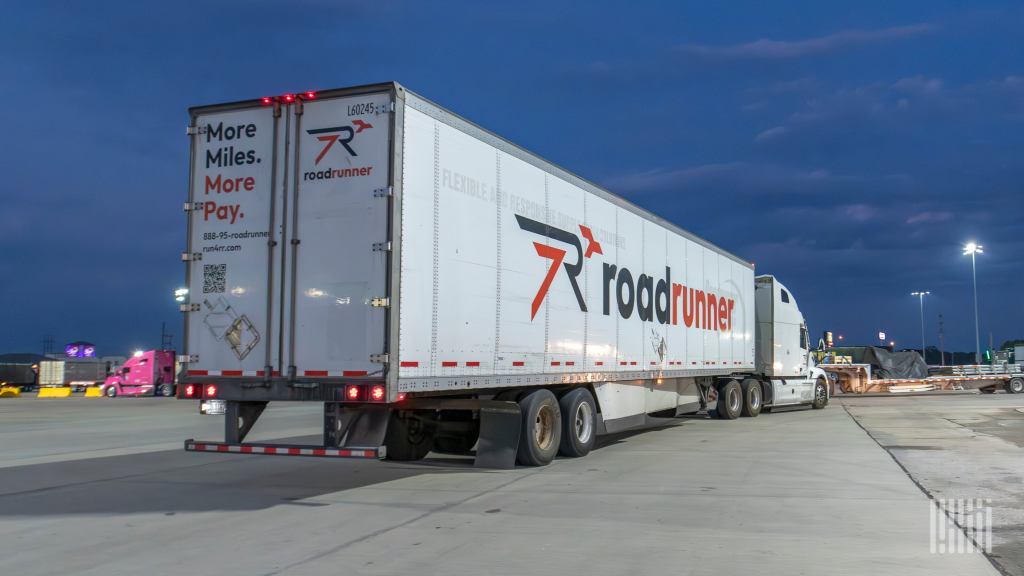
A Roadrunner rig at a truckstop

Less-than-truckload provider Roadrunner said Wednesday it has added 135 lanes to its service map, which now includes Canada. The Chicago-based, asset-light long-haul operator said the expansion is its largest in five years.

The highlights from the latest additions to the map include service into Portland, Oregon and to Toronto and Montreal via Detroit. Other lanes include Texas to Denver, Tennessee to Denver, and points from the Northeast into locations spanning from Indianapolis to Nashville, Tennessee, among others.

“Our customers are noticing our steady expansion of solutions providing direct freight connectivity over long distances with minimal or no rehandling,” said Chris Jamroz, executive chairman and CEO, in reference to winning an industry innovation award. “Expanding our cross-border footprint constitutes yet another significant step in Roadrunner’s journey.”

Last year, Roadrunner (OTC: RRTS) announced multiple lane additions as well as one-day service between Southern California and Chicago for shipments dispatched on Fridays. The company also launched a delivery guarantee program, waiving the total cost of a shipment when day-specific delivery times go unmet.

Roadrunner focuses on long-haul, metro-to-metro LTL transportation. Its network includes more than 40 terminals in major markets. The company completed a financial restructuring three years ago, working to expand its network and improve delivery times since.

“This is yet another piece of our strategic plan to grow our Smart Network,” said Phil Thalheim, head of linehaul analytics. “We constantly analyze our data to find out where it makes the most sense to add coverage. We look forward to serving our neighbors to the north.”

More FreightWaves articles by Todd Maiden

4 things to know about the ‘Take Our Border Back’ convoy heading to Mexico border

Amid a border standoff between the Biden administration and Republican Texas Gov. Greg Abbott, a convoy of trucks and other vehicles are heading to several border cities with the goal of rallying against illegal immigration.

Organizers of the “Take Our Border Back” convoy recently announced they are setting off from Virginia Beach, Virginia, to travel to several areas along the U.S.-Mexico border in Arizona, California and Texas. 

The goal for the rallies scheduled for Saturday is to call attention to “open southern borders,” according to a news release.

Here are four takeaways on the convoy:  

Take Our Border Back convoy gets underway

The Take Our Border Back convoy set out Monday for areas along the U.S.-Mexico border, where they will hold three separate rallies on Saturday in Quemado, Texas; Yuma, Arizona; and San Ysidro, California.

Their goal, the group claims, is to “send a message to all city, state, federal politicians and immigration officials,” who they say are enabling illegal immigrants into the U.S. 

A Jan. 12 news release put out by the group called on any active and retired law enforcement and military veterans, elected officials, business owners, ranchers, truckers, bikers and other “law abiding, freedom-loving Americans” to join the movement. 

Convoy organizers include retired military officer, hosts of radio and TV shows

Some of the organizers behind Take Our Border Back include Pete Chambers, a retired Army lieutenant colonel; Scotty Saks and Mark Istratoff of Sovereign Radio; and Kim Yeater, host of the “Take Your Power Back Show.”

Chambers and other organizers have said the convoy is intended to send a message to the Biden administration over immigration and border issues.

“What this is going to do is it could bring light to the situation,” Chambers recently said on Tucker Carlson’s X show.

Other organizers have referred to the convoy as “God’s army.”

“God’s army is rising up,” Yeater said on the planning recent convoy call, according to Vice. “We all have been chosen for this time.”

Convoy officials did not return a request for comment from FreightWaves.

Convoy predicted to see 700,000 vehicles participating

U.S. Rep. Keith Self, R-Texas, recently told Fox Business that as many as 700,000 vehicles could take part in the convoy heading to Arizona, California and Texas.

Self, who has been promoting the convoy, said “the people that have organized this are the same people who went from California to Washington, D.C., with the truckers. I understand we are going to be joined by Canadian truckers.”

While organizers and backers of the convoy have estimated that hundreds of thousands of vehicles will take part in the initiative, so far only about a few dozen vehicles have reportedly joined the group as it travels across the country, according to Vice.

Organizers said they have been in contact with local law enforcement along the convoy routes and in the rally locations. The locations for the Arizona and California rallies haven’t been posted yet.

The Texas rally will take place in the municipality of Quemado, about a 25-minute drive from Eagle Pass, at the Children’s Cornerstone Ranch.

Biden administration and Texas Gov. Abbott clash over border

The Take Our Border Back convoy will be arriving in Texas amid a feud between Abbott and the Biden administration over border enforcement measures and who has jurisdictional authority. 

Several weeks ago, the Texas National Guard seized control of Shelby Park in Eagle Pass, and erected a razor wire barrier around it, limiting U.S. Border Patrol’s access to the area.

On Jan. 12, a migrant woman and her two children drowned in the Rio Grande River as they were attempting to cross from Mexico into the U.S. through the area around Shelby Park. 

Border Patrol officials said they were prevented from helping the woman and children by agents with Operation Lone Star, the Texas border security initiative, according to NPR

The Texas Military Department, which oversees Operation Lone Star, said it was not responsible for the deaths because the three migrants had already drowned by the time it received the request for access to the park from Border Patrol.

The Supreme Court recently ruled that the federal government can remove Texas’ razor wire barriers in the area. Texas authorities have said they will not stop putting up razor wire even after the Supreme Court ruling, according to The Hill.

More articles by Noi Mahoney

Nearshoring forecast to boost US-Mexico trade in 2024

Mexico aims to compete with Panama Canal by using cargo trains
Covenant Logistics predicts gradual freight market recovery

Feds charge Massachusetts state troopers in alleged CDL bribery scheme

Federal investigators have charged two current and two former Massachusetts State Police (MSP) troopers, along with two others, alleging the six traded favors in exchange for giving passing scores to certain applicants in a fraudulent commercial driver’s license (CDL) scheme.

According to the 74-count indictment, active members of the MSP’s Commercial Driver’s Licensing unit, including Sgt. Gary Cederquist, 58, of Stoughton, Massachusetts, and Trooper Joel Rogers, 54, of Bridgewater, were arrested Tuesday and were scheduled to appear in federal court in Boston later that day.

Retired MSP Troopers Calvin Butner, 63, of Halifax, and Perry Mendes, 63, of Wareham, were each arrested Monday in Florida. 

Scott Camara, 42, of Rehoboth, and Eric Mathison, 47, of Boston, were also arrested Tuesday and appeared in federal court before being released. Both were named as friends of Cederquist in the indictment.

Court documents state that Camara worked for a truck-driving school in Brockton, Massachusetts, and Mathison worked for a spring water company with warehouses in the state. 

Another individual, identified in court records as the “friend conspirator,” was also a friend of Cederquist and worked for a construction management and general contracting firm in Nashua, New Hampshire. 

“As set forth in the indictment, the defendants allegedly displayed no regard for the public safety consequences of allowing people who didn’t pass the test to have a CDL and operate commercial trucks,” Acting U.S. Attorney for Massachusetts Joshua Levy said at a press conference Tuesday.

According to the 75-page indictment, Levy said the defendants allegedly joked about “golden treatments and golden handshakes, referring to giving guarantee passes to certain CDL applicants, regardless of how they did on test.”

“In one text, defendant Butner, a Massachusetts State Trooper, allegedly talks about an applicant who is performing required maneuvers and he described him as ‘a mess’ and [Butner] said that the applicant owes Cederquist ‘Prime Rib’ for passing the test,” Levy said. 

The individuals were indicted on three counts of conspiracy to falsify records; three counts of conspiracy to commit extortion; three counts of extortion; six counts of honest services mail fraud; 31 counts of falsification of records; 27 counts of false statements; and one count of perjury.

According to Levy, more than two dozen drivers allegedly received CDLs who did not pass the test or did not take the test in exchange for bribes.

The indictment states that Cederquist allegedly received a new driveway, valued at $10,000, a $1,900 snowblower and a $750 granite post and mailbox in exchange for passing drivers on their Class A CDL skills tests, which are mandated by the Federal Motor Carrier Safety Administration, to drive a tractor-trailer. 

All CDL recipients identified as not passing the CDL skills test have been reported to the Massachusetts Registry of Motor Vehicles, the U.S. attorney’s office said in a statement

This is a developing story.

Do you have a news tip to share? Send me an email or message me @cage_writer on X, formerly known as Twitter. Your name will not be used without your permission.

Ex-Slync CEO Chris Kirchner guilty of wire fraud, money laundering

Tech battle: Samsara sues Motive Technologies for patent infringement, false advertising

Click for more articles by Clarissa Hawes. 

Link Logistics adds 59 properties valued at $2B in 2023

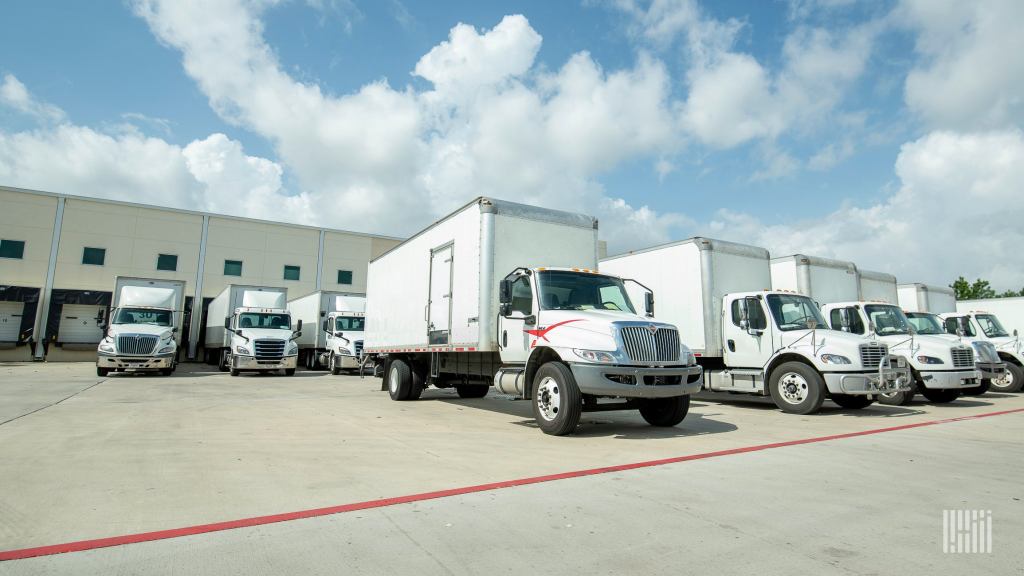
Box trucks at a warehouse

Logistics real estate operator Link Logistics grew its portfolio again in the fourth quarter, saying demand for last-mile locations remains steady.

The company inked 805 leases (new and renewing), which comprised 23.4 million square feet of space in the quarter compared to 18.5 million in the year-ago quarter. It signed leases representing 86 million square feet in total during 2023 compared to 78.5 million in 2022.

Its real estate portfolio was 96.2% leased on a same-store basis in the fourth quarter, which was 20 basis points lower than in the third quarter. Blended cash leasing spreads — a comparison of new rents to expiring rents — were 55.6%, which was 140 bps lower than the third quarter and 790 bps lower year over year.

“Our infill-focused portfolio strategy continued to yield strong results, powered by sustained e-commerce strength and onshoring tailwinds,” said CEO Luke Petherbridge. “We are committed to investing in exceptional logistics real estate and remain focused on maximizing value for our customers.”

Link Logistics holds the largest U.S.-only logistics real estate portfolio with 539 million square feet of space, including developments. It currently has 14.6 million square feet under construction. During the fourth quarter, it disposed of 3.1 million square feet of space, which generated $558.6 million in gross proceeds.

The company added $2 billion in assets — 59 logistics facilities in major U.S. distribution markets totaling 12.5 million square feet — during 2023.

“As we mark five years since our founding, I could not be prouder of our talented team and the scalable platform we have built, which position us well for future growth,” Petherbridge said.

More FreightWaves articles by Todd Maiden:

3 trucking majors combine to advance electric infrastructure

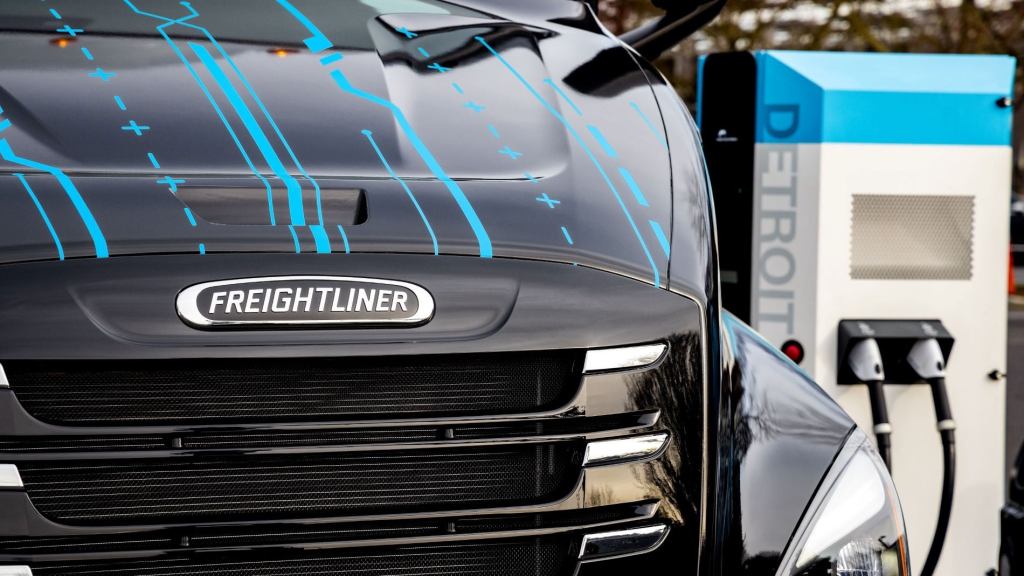
Freightliner eCascadia at charger

Three of the nation’s largest medium- and heavy-duty truck makers snagged the apropos acronym PACT to advance electric truck infrastructure.

Powering America’s Commercial Transportation intends to address the mismatch between battery-electric vehicle availability and inadequate zero-emissions vehicle (ZEV) infrastructure.

PACT was established by Daimler Truck North America (DTNA), Navistar Inc. and Volvo Group North America. They collectively represent about 70% of new M/HD [medium-heavy duty truck sales in the U.S. Paccar Inc. holds most of the rest of the market share. It is not participating in the lobbying effort.

‘Critical to meeting our nation’s climate goals’

“Decarbonizing the commercial transportation sector — the fleets that keep America moving — is critical to meeting our nation’s climate goals,” John O’Leary, DTNA president and CEO, said in a news release. “But the transition to zero-emission vehicles is stalling without the deployment of the needed charging infrastructure.”

Coalition membership is open to all interested stakeholders, including other OEMs, infrastructure developers, electric utilities and grid operators.

Besides the truck makers, founding members include EV charging solutions provider ABB E-mobility, infrastructure engineering firm Burns & McDonnell, the Greenlane joint venture committing $650 million to build M/HD infrastructure, J.B. Hunt Transport Inc., real estate investment trust Prologis Inc., and electric infrastructure startup Voltera.

California drives manufacturing and fleet purchasing decisions

Transportation electrification largely focuses on light-duty passenger vehicles, whose sales are growing but much more slowly than expected. California regulations aimed at eliminating diesel trucks from the state’s roadways by 2040 drive manufacturing and fleet purchasing decisions. Ten states have adopted forms of California mandates.

Faster development and deployment of reliable and accessible ZEV infrastructure to power the nation’s commercial transportation fleet require a lot of money, electrical grid upgrades and dedicated charging equipment. According to the International Council on Clean Transportation, nearly 600,000 chargers would support a projected 1.1 million class 4-8 M/HD ZEVs anticipated to be deployed by 2030. That would consume 140,000 megawatt-hours of electricity per day. That’s equivalent to the daily energy used by 4.9 million American homes.

“Through PACT, we aim to accelerate this infrastructure buildout so that fleets can adopt ZEVs at scale and we can all benefit from impactful emissions reductions as quickly as possible,” O’Leary said.

PACT will help sort out and educate on the complex transition, said Stephen Roy, chairman of Volvo Group North America and president of Mack Trucks.

Paccar takes a pass

Paccar, which has not joined the coalition, does not see infrastructure development as a business priority.

“We really don’t view that as our value add,” John Rich, Paccar chief technology officer, told FreightWaves earlier this month. “We offer turnkey solutions to our customers for their sites that need the ability to charge a truck. Our value add is to supply great equipment, support our customers, and keep them on the road and have superior uptime.

“It’s how we contribute to the system today. It’s how we will contribute to an electrified, zero-carbon world in supporting that customer. We are not an electric utility. We are not an electric infrastructure supplier.”

By contrast, Daimler is a partner with BlackRock and NewEra Energy in Greenlane, which plans public M/HD charging infrastructure on the East and West coasts and in Texas. DTNA also operates a 5-megawatt Electric Island charging facility with Portland General Electric near the truckmaker’s Oregon headquarters.

Editor’s note: Corrects figures from the American Council on Clean Transportation, per PACT on Feb. 9.

Electric trucks should shake off setbacks in 2024

California Dems lobby DOT for $700M electric truck charging project

Daimler Truck, Blackrock and NextEra Energy’s $650M bet on electric infrastructure

Click for more FreightWaves articles by Alan Adler.