White Paper: Attention all businesses looking to streamline data management processes!
Are you ready for the ultimate data management solution? evolv Data Loader – highly reliable, efficient, and easy-to-use – will transform your data management game forever.
Bad data = bad planning
Do you want to improve data quality whilst reducing administration and increasing efficiency? evolv Data Loader has been designed specifically for Oracle Transportation Management (OTM) to allow business users to quickly import and export data into OTM. Meaning you don’t need to spend time manually combining data sources, validating, preparing CSVs and loading in the correct structure and order.
Why wait? Download this brochure now and discover how you can streamline your data management and improve OTM results withevolv Data Loader. Don’t miss out on this opportunity to revolutionize your data management game – get started with evolv Data Loader today!
A fond farewell to (almost) 5 years of MODES
Dearest MODESians,
Well, this is it. Today is my last day at FreightWaves and my final edition of MODES … for a little while. I’m starting a new job outside of journalism in February and won’t be able to continue the MODES newsletter there. (At least for the time being.)
MODES has published on Tiny Letter, Substack and Business Insider, but its most stable and loving home has been at FreightWaves. I launched the newsletter in 2019 as a young lady living in Chicago. I brought it over to FreightWaves in 2022. Today, I sunset it. We almost got to five years of MODES — almost!
Since I began reporting on trucking in 2018, I’ve met hundreds of fascinating people — truck drivers, CEOs, brokers, cargo pilots, railroad conductors, professors. The job has taken me everywhere from a flower farm in Colombia to a man camp in the Arctic Circle to a Coca-Cola loading dock in the Bronx. I’ve gotten the chance to talk logistics on PBS NewsHour, Bloomberg Odd Lots, NPR, BBC World Service, NBC News, ABC News, and even French and Australian television channels. Reporting on logistics is hard work, but it’s not nearly as challenging as being in logistics. My stories wouldn’t be possible without you — the reader! — enjoying what I put out there and sending me emails on what I should report on next. (I even appreciate your hate mail. I’m still sorry about that time I used a European cabover truck instead of an American big rig on a story six years ago.)
I’m confident this won’t be the last article I ever publish. But if you’re ever feeling nostalgic for the salad days of MODES, here are some of the greatest hits.
Thank you for sharing your stories with me and reading my work. Thank you for all that you do to keep America’s freight moving.
And keep on reading FreightWaves!
Farewell for now,
Rachel
Daily Infographic: European cargo airline Cargolux launches aerial firefighting unit
To view more FreightWaves infographics, click here
Borderlands: Continental AG announces $90M manufacturing facility in Mexico
Borderlands is a weekly rundown of developments in the world of United States-Mexico cross-border trucking and trade. This week: Continental AG announces $90M manufacturing facility in Mexico; 3PL Outerspace opens fulfillment operations in Arizona; South Texas border logistics park announces expansion; and CBP seizes tramadol at Laredo’s World Trade Bridge.
Continental AG announces $90M manufacturing facility in Mexico
German tire and industrial parts manufacturing giant Continental AG announced it is investing $90 million in a hydraulic hose factory in Mexico.
The facility will initially create 200 jobs and be located in the west-central Mexican city of Aguascalientes.
It will be the company’s largest plant in the country once completed, according to a news release. Construction of the 914,932-square-foot factory is scheduled to be finished by the end of 2025.
“Strengthening our industry business in the Americas region is a focus for us,” Philip Nelles, a member of Continental’s board for its ContiTech operating sector, said in a statement. “This investment is our answer to the demand and growth of the hydraulic hose market in the region and underlines our strategic approach to become the innovation leader and full range supplier for hydraulic hoses.”
Continental officials also said the factory will help the company expand its hydraulics business into industries such as agriculture, mining, construction, manufacturing and energy.
“The hydraulic market is the largest hose and fittings market segment in our region,” Andreas Gerstenberger, Continental’s head of industrial solutions Americas, said in a statement. “With our new plant in Mexico, we will double our capacity in this field and address current and new customers in multiple industries.”
The facility will be Continental’s second in Aguascalientes and 22nd plant in Mexico. Continental’s operations in the country employ more than 23,000 people who produce and develop automotive components, rubber products and tires that are exported globally.
In 2022, Continental invested around $200 million in the Mexican state of Guanajuato to open a tire factory and expand capacity at an existing plant, according to Reuters.
3PL Outerspace opens fulfillment operations in Arizona
Third-party logistics operator Outerspace announced it has opened a warehouse in Phoenix, the company’s first facility in the southwestern U.S.
The 389,000-square-foot facility helps Outerspace establish bicoastal fulfillment opportunities for the company’s e-commerce clients, according to a news release.
“Over the past year, we’ve been laser-focused on growing our footprint to better serve our clients’ needs,” Ricky Choi, CEO and co-founder, said in a statement. “From starting Outerspace in a 1,500 square foot room, to now offering our clients more than a million square feet of warehouse space, this expansion is a major milestone.”
Carlstadt, New Jersey-based Outerspace was founded in 2019. The company offers fulfillment solutions across the U.S. with four facilities in New Jersey, Pennsylvania and Arizona.
South Texas border logistics park announces expansion
The new facility will be near the Pharr-Reynosa International Bridge and include 36-inch clearance heights for tractor-trailers, as well as dock doors, a truck court for trailer storage and a secured truck parking area. The building is scheduled to be completed in June.
“Warehouse space is sorely needed in the Pharr-McAllen market and we hope to be able to fill some of that need,” Nick Dyer, principal at Ocotillo Capital Partners, the park’s developer, said in a statement. “We recognize that cross-border trade is a major part of the growth story of the Rio Grande Valley and we feel privileged to be able to contribute to that growth.”
CBP seizes tramadol at Laredo’s World Trade Bridge
U.S. Customs and Border Protection (CBP) officers recently found 159 pounds of tramadol in a tractor-trailer arriving from Mexico in Laredo, Texas.
On Jan. 18 at the World Trade Bridge cargo area, CBP officers were searching the trailer, according to a news release, when they found six boxes containing tramadol, an opioid analgesic medication often prescribed for pain relief.
Border agents found tramadol at the World Trade Bridge on Jan. 18. (Photo: CBP)
“This drug bust is a prime example of the efficient targeting strategies utilized in the cargo environment to help disrupt the illicit smuggling of this highly addictive opioid into our communities,” Laredo CBP Port Director Alberto Flores said in a statement.
CBP seized the tramadol and turned the case over to Homeland Security Investigations.
Chart of the Week: Inbound Ocean TEUs Index, Outbound Tender Volume Index – USA SONAR: IOTI.USA, OTVI.USA
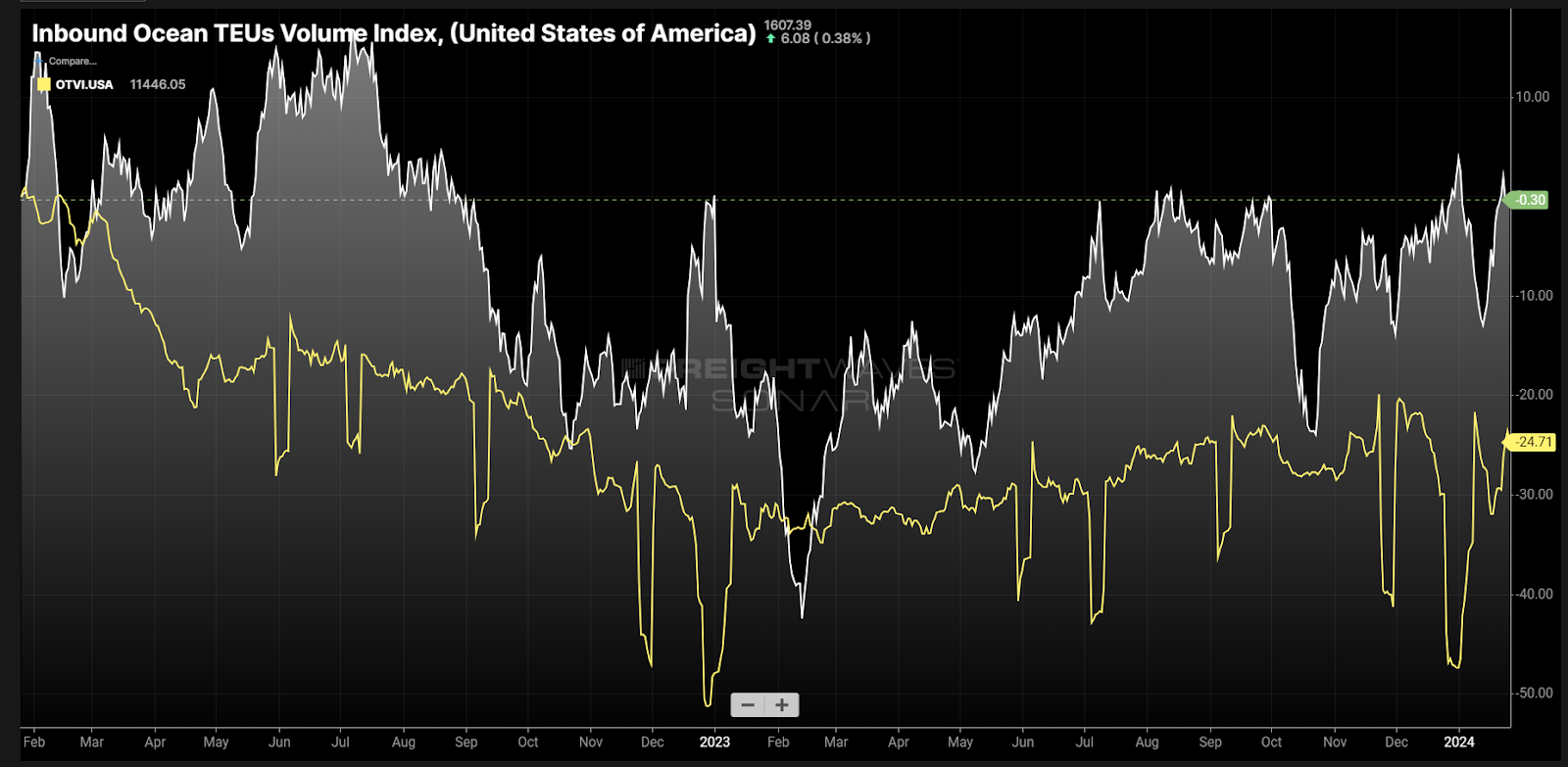
Import demand based on bookings of twenty-foot equivalent units heading into the U.S.
(IOTI) remains down compared to two years ago, but only slightly. Truckload tender volumes (OTVI) are down roughly 25% compared to the same period in 2022. These two figures are effective indicators of goods demand in the U.S. This is the perspective of deterioration that many businesses are still coping with even as GDP figures seem strong.
Many sectors of the economy are still adjusting to the fallout from the pandemic-era hypergrowth, making an annual figure less representative of their experience. Transportation has been one of the most significantly impacted.
Inflation-adjusted real GDP growth once again seemed to surprise to the upside with a 3.1% annual growth figure in the fourth quarter of 2023. Many companies did not feel this historically strong growth as they have in the past. It all has to do with adaptation and perspective.
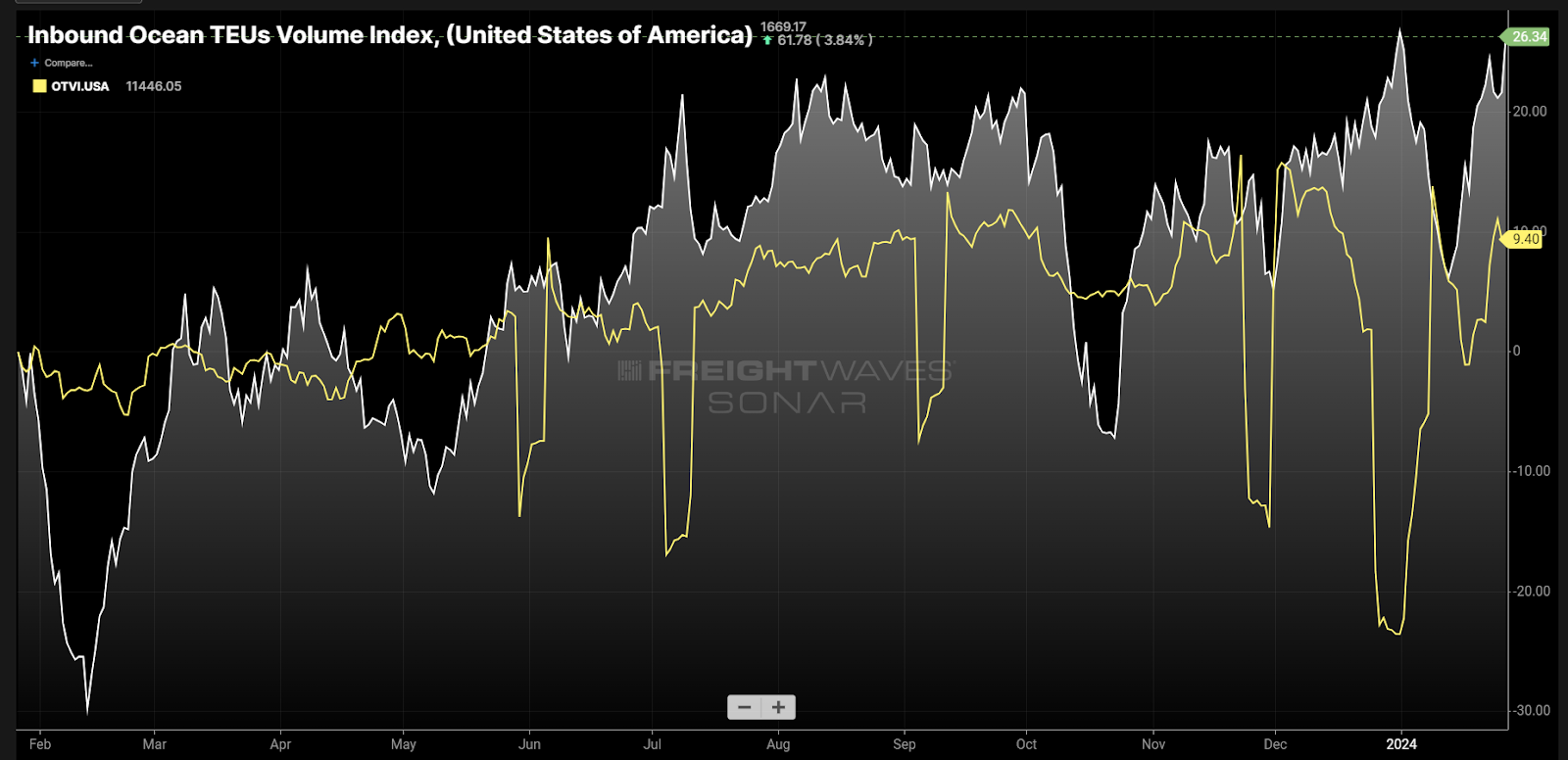
Looking at the same data over the past year the IOTI is up 26% and the OTVI is up 9.4% year over year, somewhat validating the GDP figure. So why are so many companies still struggling?
For transportation the answer is simple — oversupply. Not just standard oversupply, but capacity growth in nearly direct proportion to the demand growth in 2020-21.
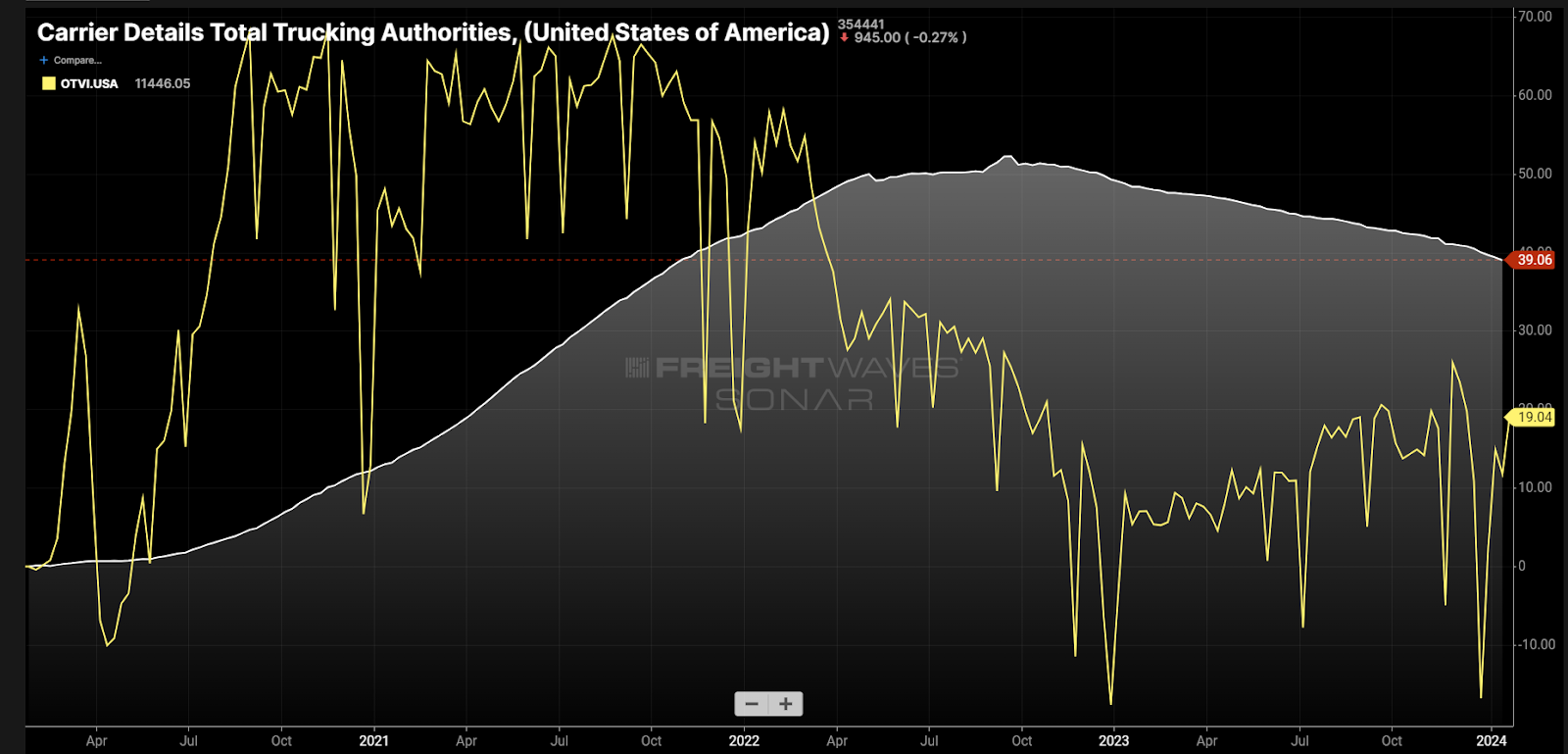
Trucking operating authorities grew about 33% from January 2015 to January 2020. From June 2020 to June 2022, authorities grew 50%, nearly quintupling the previous five-year annual growth rate. Demand is down about 30% from 2021 highs.
This is analogous with many other industries that overbuilt or overadjusted their infrastructure to pandemic conditions. Solutions were created for temporary problems that no longer needed the same level of attention. Demand forecasts in many cases remain broken due to the noise created by one of the biggest black swan events in modern times.
In short, infrastructure — which in this case includes jobs and processes — changes much slower than demand, which has become less understood.
Yin and yang
The uneven distribution of positive and negative experiences has also helped make this economic environment so confusing. The services sector, which typically represents the majority of the GDP figure, had a booming 2022 as “revenge travel” hit. Subsequently, spending on goods waned.
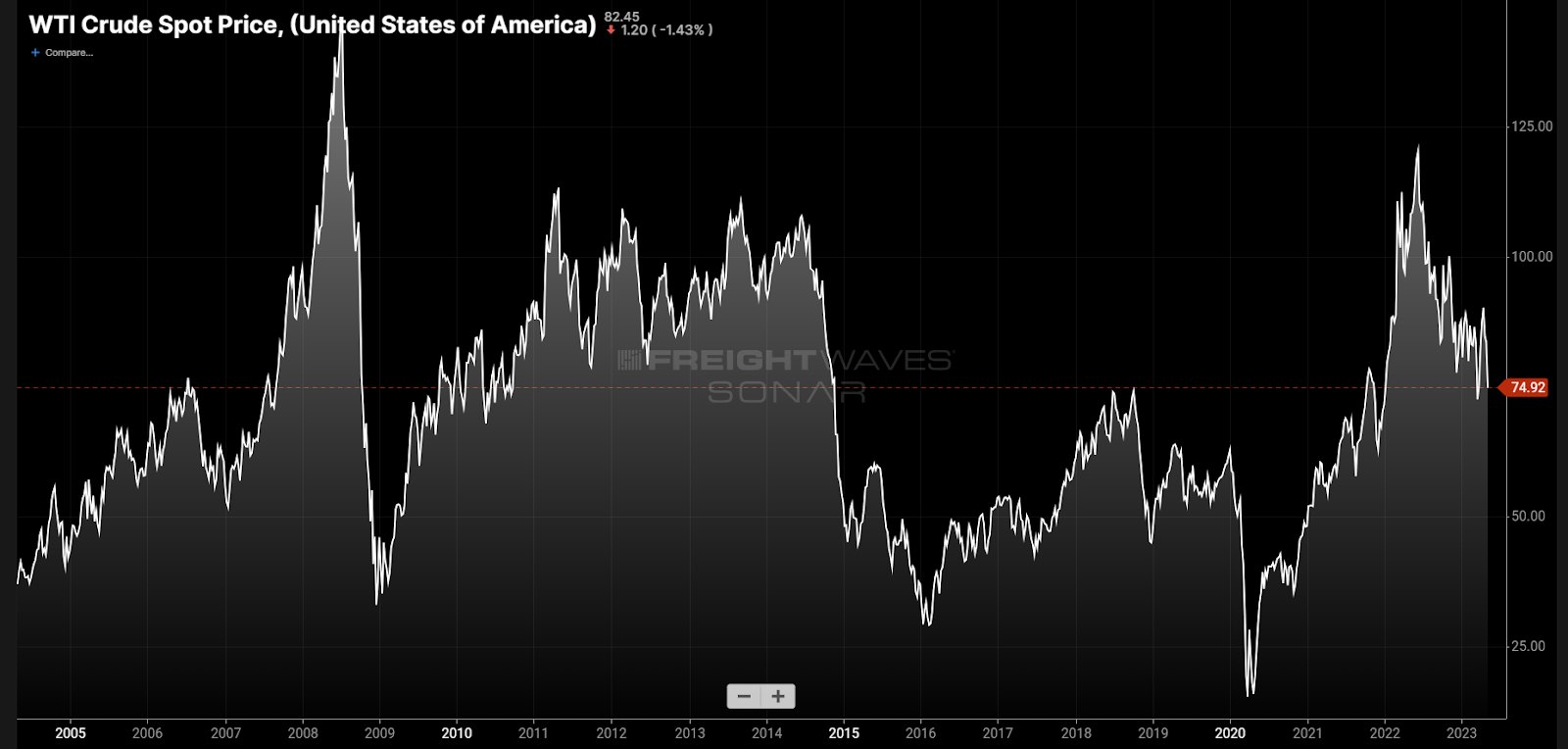
The automotive and energy sectors also felt a lagging response as their demand waned in 2020-21 but returned in force once people were set free. Recall the futures price for barrels of crude went negative in April 2020. The West Texas Intermediate crude spot price averaged just under $40 in 2020. It has averaged above $90 since 2022.
Before the pandemic, many of these sectors had well-defined relationships, which for the moment have been broken.
The positive takeaway is that the economy does appear to be stabilizing, though many sectors are still in distress. The steady demand growth over the past year in imports and truckload volumes bodes well for most sectors in 2024. The U.S. economy is driven by a healthy consumer.
Import bookings are a strong leading indicator as orders are placed weeks in front of expected fulfillment. Their weakness is in how long the goods stay in warehouses, but combined with tender volumes, that answer can be derived from how effectively that demand has been anticipated.
About the Chart of the Week
The FreightWaves Chart of the Week is a chart selection from SONAR that provides an interesting data point to describe the state of the freight markets. A chart is chosen from thousands of potential charts on SONAR to help participants visualize the freight market in real time. Each week a Market Expert will post a chart, along with commentary, live on the front page. After that, the Chart of the Week will be archived on FreightWaves.com for future reference.
SONAR aggregates data from hundreds of sources, presenting the data in charts and maps and providing commentary on what freight market experts want to know about the industry in real time.
The FreightWaves data science and product teams are releasing new datasets each week and enhancing the client experience.
Volvo Group reports strong Q4 results but caution for 2024
Sweden’s Volvo Group reported a 10% increase in fourth-quarter sales and mostly positive financial metrics for Q4 and 2023. But the truck, bus and construction equipment maker suggested softening sales this year as pent-up pandemic demand has largely been met.
Volvo posted net income of $1.16 billion, or 59 cents per diluted share, in the final three months of 2023, up 80.6% compared with $641.4 million, or 31 cents, in the same period a year earlier.
For the full year 2023, Volvo increased net sales by almost 80 billion Swedish kronor (SEK) ($7.65 billion) to SEK 553 billion. Adjusted operating income of SEK 77.6 billion compared to SEK 50.5 billion in 2022 for an adjusted operating margin of 14% compared to 10.7% a year earlier.
“Coming into 2024, the market is moving from high demand to a more normal replacement-driven market,” CEO Martin Lundstedt told analysts on a conference call.
Deliveries rose, orders fell
Volvo’s global truck deliveries rose by 4% to 65,625 in Q4. Orders fell 9% to 49,347 units.
A six-week strike by the United Auto Workers at Mack Trucks resulted in 9% fewer deliveries than a year earlier. Mack orders soared 72% during the October-December period.
Sibling Volvo Trucks North America reported 31,013 orders, down 17% from 37,210 units in Q4 2022. Deliveries rose 2% to 39,964 compared to 39,128.
Fleets have largely absorbed the pent-up demand that characterized 2022 and 2023, the company said. Lead times, particularly in Europe, have returned to more normal levels.
Electric truck slowdown
Bookings for fully electric trucks in Q4 declined by 7% to 1,090 vehicles. Deliveries increased by 127% to 1,285 vehicles.
“The underlying electric demand is good, and we have high quotation levels across regions,” Lundstedt said. “At the same time, we experienced [some] hesitation to take in new orders from the customer side. There is a little bit of wait-and-see mode that we think is rather natural.”
In the U.S. the Advanced Clean Fleets rule in California planned for Jan. 1 implementation was delayed by legal wrangling. That may give some fleets pause on timing a transition to electric trucks that are two to three times more expensive than conventional diesel-powered models.
“It will not only be a straight line,” Lundstedt said. “But we see that this transformation has just started.”
Preparing for long-term electric truck growth
Volvo is preparing for the long-term growth in electric vehicles toward its goal of eliminating 100% of fossil fuel-powered trucks by 2040. It paid $210 million to purchase the battery-making assets of Proterra Powered out of Proterra Inc.’s bankruptcy during Q4.
“This is the first step in creating a battery value chain for the group in North America,” Lundstedt said. “But it also adds on to the group’s overall battery capabilities.” Volvo expects the deal to close this quarter.
With all Volvo truck factories in Europe in serial production of electric trucks, the company can adjust to a mixed-model assembly between conventional and electric trucks.
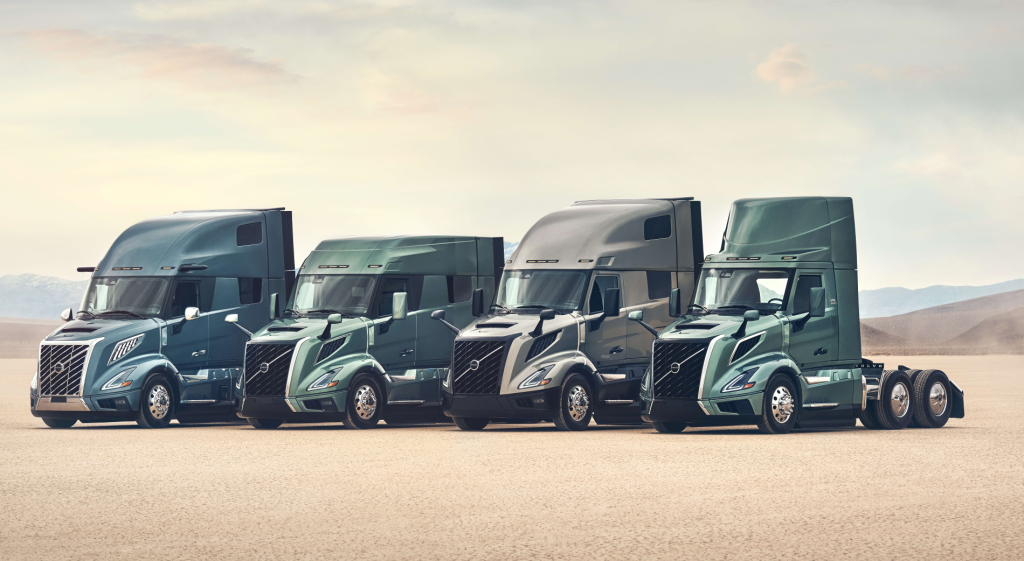
Volvo earlier this week revealed a new four-model VNL lineup that goes into production in the third quarter this year in Virginia. The truck’s platform, six years in development, will be the basis of future trucks globally, including an autonomous-ready redundant chassis.
The Gothenburg-based company’s board proposed an ordinary dividend of SEK 7.50 a share and an extra dividend of SEK 10.50 a share.
Mega-warehouse facility leasing slowed in 2023, CBRE says
Slowing demand for industrial and logistics warehousing space resulted in fewer industrial mega-leases of 1 million square feet or more in 2023, according to a report released Friday by CBRE Group Inc. (NYSE: CBRE), a real estate services firm.
The number of big-box warehouse lease signings fell to 43 in 2023 from a record 63 in 2022, as economic uncertainty and changing inventory management practices weighed on demand for mega-facilities, according to CBRE data.
Traditional retailers and wholesalers — which had been leasing industrial space at a rapid clip — signed 30 of the largest 100 leases last year, down from 53 the year prior. Still, this category represented the largest number of top leases, according to CBRE data.
Meanwhile, 3PLs responded to continued e-commerce growth by signing 29 of the top 100 leases in 2023, up from 11 in 2022, CBRE said.
“Throughout the pandemic and shortly thereafter, many occupiers were forced to shift from a ‘just-in-time’ to a ‘just-in-case’ inventory management approach. This helped boost demand for warehouse space,” said John Morris, president of Americas Industrial & Logistics for CBRE.
Demand remains historically strong, Morris said. “However, we do not expect as many mega industrial leases in the near and mid-term as we saw in 2022,” he said.
Top markets for mega-leases included the Interstates 78 and 81 corridor in central Pennsylvania, California’s Inland Empire, Chicago, Dallas-Fort Worth, Memphis, Tennessee, and Savannah, Georgia. The I-78/I-81 corridor posted the most mega-facility leases in 2023 with 17.
This solution instantly turns diesels into hybrids; dock tech; is Gord real? – WTT
On episode 674 of WHAT THE TRUCK?!?, Dooner is talking to Revoy founder Ian Rust about their new device that instantly turns any diesel truck into a hybrid.
Fresh off his appearance on Tucker Carlson’s show, Gord Magill stops by to talk about how he got the opportunity, Canadian trucking protests and whether he’s actually a real person.
Conduit co-founder Conrad Lilleness talks about building a docktech company hellbent on driving warehouse efficiency.
MAKA Logistics’ Rob Liss talks rail, intermodal, Loyola’s supply chain program and the power of playing Scrabble.
Plus, slushy trend goes viral; James Reed’s big move to Walmart; and more.
Flexport plans to lay off 20% of workforce, say insiders
Global supply chain solutions provider Flexport may be contemplating another round of layoffs in the coming weeks, according to sources familiar with the matter.
Initially reported Friday by business publication The Information, insiders disclosed that the company is considering a workforce reduction of approximately 20%, potentially affecting close to 500 employees.
FreightWaves contacted Flexport for a statement, but it had not responded as of publication deadline.
In October, Flexport performed its second 2023 layoff, letting go of nearly 20% of its staff at the time, or approximately 600 employees.
CEO Ryan Petersen attributed the earlier layoffs to overspending and said he is determined to restore profitability by the end of 2024, primarily through the growth of the core forwarding business.
The company also laid off 700 employees in January 2023.
Last Friday, Flexport secured a $260 million investment from e-commerce giant Shopify, providing a significant boost after a challenging freight period.
Petersen announced the funding via X (formerly Twitter), stating that Shopify provided the funds “on an uncapped convertible note.”
The move follows Flexport’s acquisition of Shopify’s logistics arm in the previous year, marking the company’s expansion into e-commerce fulfillment and last-mile delivery.
As part of the earlier deal, Shopify gained a 13% equity stake in Flexport and a seat on its board. The recent funding builds on the close collaboration between the two companies, with Shopify having previously invested in Flexport during a 2022 funding round.
Hello, and welcome to the coolest community in freight! Here you’ll find the latest information on warehouse news, tech developments and all things reefer madness-related. I’m your controller of the thermostat, Mary O’Connell. Thanks for having me!
All thawed out
(Photo: Jim Allen/FreightWaves)
Cold chain tech provider Grip has moved into the fulfillment space. The new addition of fulfillment services now provides customers with a turnkey solution. The fulfillment centers are going to be in Texas, Florida, New Jersey and California. That combined with Grip’s technology can give shippers the best carrier, service, refrigerant, packaging and route for each shipment in its network.
CEO and co-founder Juan Meisel said in a news release, “Most brands still ship their products the same way they have for decades, but there’s a better way. Perishable [direct-to-consumer] brands need a logistics partner who can provide them with a world-class dynamic shipping solution that allows them to better serve their customers and increase margins.”
As shippers continue to look for ways to reduce costs and waste and to improve efficiency, solutions that are all-in-one stand to be around for a long time.
Temperature checks
(Photo: Jim Allen/Freightwaves)
Illinois-based CJ Logistics America is opening a new cold storage warehouse in Gainesville, Georgia. The project is being led by RL Cold, a leader in the cold storage development industry. The facility will be 270,000 square feet, almost as big as the average Ikea for comparison. Since the warehouse is smack in the middle of the poultry production capital of the world, it’s likely going to be full of chicken in various forms: flash frozen, fresh, etc.
CJ Logistics America CEO Kevin Coleman said in a news release: “This new warehouse, coupled with our integrated transportation solutions, will significantly expand our cold storage presence in the Southeast so we can offer the companies we work with a reliable logistics center in the heart of the nation’s protein production region.”
Within the large warehouse is a U.S. Department of Agriculture office and inspection room, making all the imports and exports from the future Northeast Georgia Inland Port much easier to process.
Food and drugs
(Photo: Ben & Jerry’s)
Coming to a freezer near you is Ben & Jerry’s newest flavor. The combination of sweet and salty meet in the new PB S’more flavor. As someone who loves s’mores and peanut butter, I’ll be in the ice cream aisle stocking up. What an honor that the announcement was timed around National Peanut Butter Day on Wednesday.
Product developer José Ureña said in a news release: “As we were developing the flavor, we were inspired by an internal team tasting — a ‘s’moregasbord’ if you will — of all the ways we like to enjoy our own s’mores. The combinations are limitless, but we think fans will enjoy this interpretation!”
If s’mores and peanut butter isn’t your vibe, Ben & Jerry’s also has a new Impretzively Fudge, a chocolate ice cream with chunks of chocolate-covered pretzels.
Cold chain lanes
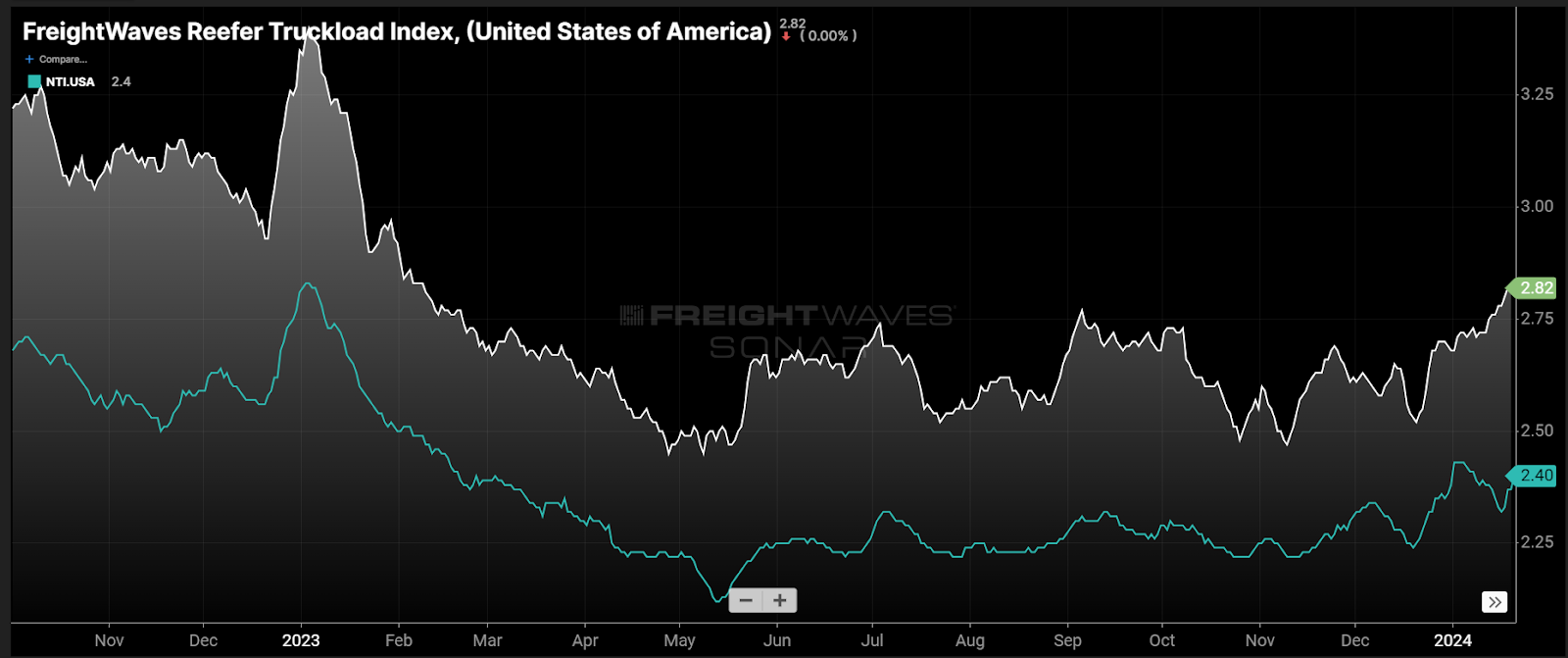
(SONAR Tickers: RTI.USA, NTI.USA)
The National Reefer Truckload Index (RTI), which measures the average spot rate for refrigerated or temperature-controlled freight based on TRAC consortium data, has increased nearly 4% to start the year. Reefer rates can increase this time of year but typically settle by the middle of the month. The dry van counterpart, the NTI, has been on the rise over the past six days after falling as it typically does from its holiday highs.
The weather appears to have had some influence here as Arctic air hit the Eastern half of the country. The reefer rates could be getting a boost from the temperature-controlled aspect of the sector as the trailers are also used to protect freight from freezing in the winter months. The extreme cold may be disproportionately affecting refrigerated capacity as it also appears to have hit its market earlier than the non-temperature-controlled side. Higher temperatures are forecast for most of the country through the rest of the month, which should reverse the trend.