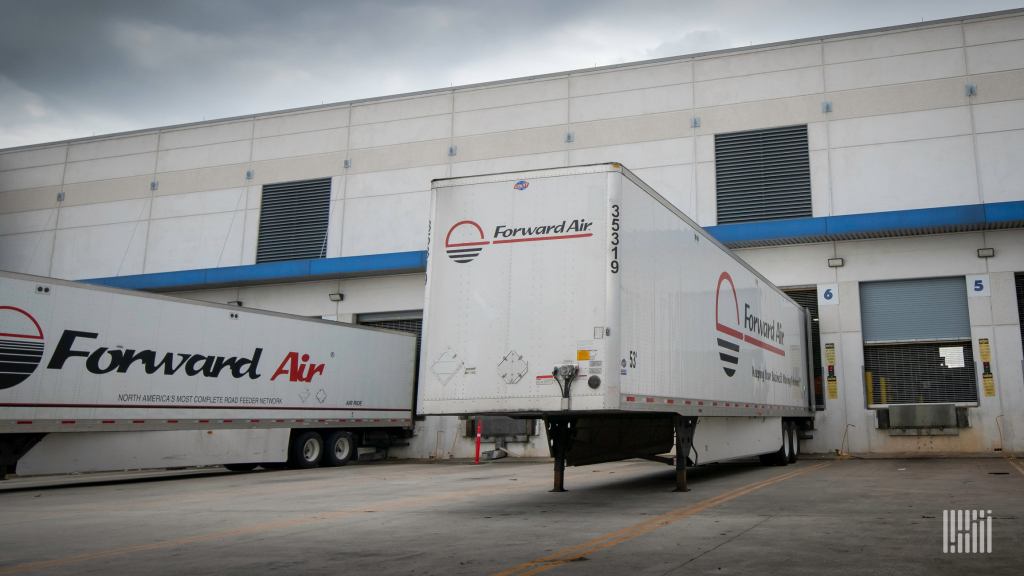
A news release said the deal, which likely closed at a total purchase price of $2.1 billion, is expected to create a “category leader in the expedited LTL market.” The initial price tag of $3.2 billion and the structure of the deal, which didn’t require a vote from stockholders ahead of closing, drew the ire of some of the company’s investors.
Shareholders were also concerned with the debt load Forward would inherit in the transaction and the potential shift in control to Omni’s stakeholders, which include private equity firms Ridgemont Equity Partners and EVE Partners. The collective group will end up holding a 35% stake in Forward (NASDAQ: FWRD) as well as four board seats, and Omni’s CEO will now be the president of the combined company.
The deal’s structure also requires Omni’s stakeholders to vote in favor of board-chosen directors in future elections, which some shareholders said will keep the current power structure in place regardless of performance. However, Forward said it would provide more details on its management structure and revamped board, as well as financial targets, when it reports fourth-quarter results next month.
Existing Forward shareholders will still have a say in the matter.
They will be asked to convert the nonvoting preferred shares allocated to Omni as part of the transaction to common, voting shares. However, failure to do so would result in the preferred shares receiving a hefty dividend.
Following criticism from shareholders, Forward attempted to exit the transaction. It alleged Omni had breached the deal agreement by not providing timely disclosure of requested financial information and that it had also misrepresented financial projections.
A trial that was due to start last Friday was delayed for inclement weather. On Monday, a courtroom filled with witnesses and onlookers learned that the two parties had come to terms before opening arguments commenced.
The amended deal terms showed the cash portion was reduced from $150 million to $20 million with the equity distribution being cut from 37.7% to 35%.
More than three months have passed since the transaction was expected to close, and more than five months have passed since it was first announced. Even with the litigation and public back-and-forth, Forward said “significant integration planning” has already occurred and that it’s “confident in its ability to deliver significant strategic and financial benefits from the transaction, including substantial revenue and cost synergies and operational efficiencies.”
“Together, we are now uniquely positioned to be the premier provider of choice in high-quality freight transportation to a larger customer base with an expanded domestic footprint,” Forward Chairman and CEO Tom Schmitt said.
Shares of FWRD are off 57% since the deal was announced on Aug. 10. The decline includes an 8.6% drop since Monday when investors learned the transaction would proceed.
Former Polar Air Cargo exec pleads guilty to wire fraud
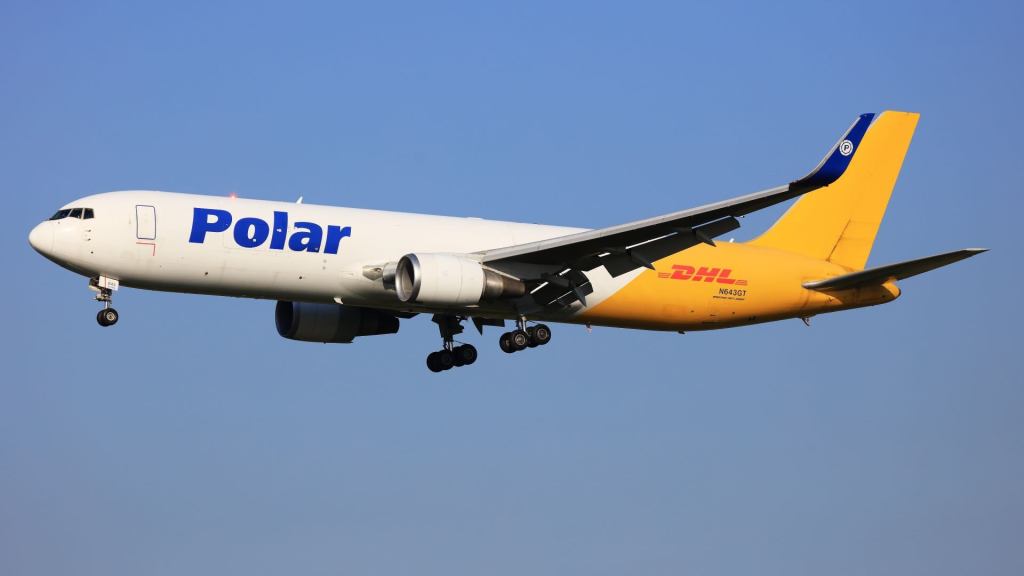
A former vice president at Polar Air Cargo pleaded guilty last week to participating in a scheme to defraud the company of $52 million for more than a decade. Six of nine individuals charged in the plot have presented guilty pleas so far.
Polar Air Cargo is a joint venture between privately held Atlas Air Worldwide and DHL Express. According to aircraft database Planespotters.net, the airline has a fleet of 15 large Boeing cargo jets: six 747-8s, two 767-300s and seven 777s.
Carlton Llewellyn, 55, who was in charge of operations systems performance and quality, pleaded guilty last week to one count of wire fraud in the U.S. District Court for the Southern District of New York, federal prosecutors announced. The count carries a maximum sentence of five years in prison. He also agreed to forfeit $348,000 and repay Polar nearly $306,000.
He is scheduled to be sentenced on May 7.
Llewellyn and three other executives were charged with accepting kickbacks from a small group of customers and vendors in exchange for favorable contracts, priority cargo loading, favorable shipping rates and enrollment in incentive programs.
The Polar executives also allegedly concealed ownership positions in certain service providers and received ownership distributions based, in large part, on revenue derived from contracts with Polar — contracts that had been secured and, often, renewed largely due to the recommendations of the executives.
Co-conspirator Robert Schirmer, senior director of customer service for the Americas at Polar, pleaded guilty in October and is scheduled to be sentenced on Feb. 13. As part of the deal, Schirmer agreed to forfeit more than $938,000 in stolen gains and repay Polar $9.3 million.
Marten’s net income drops by more than half from a year earlier
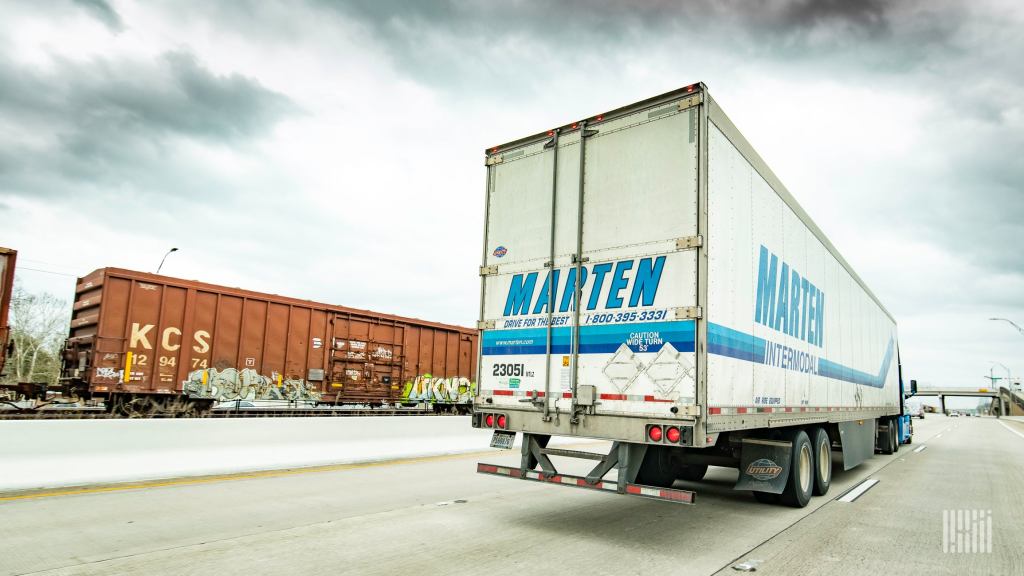
Truckload carrier Marten Transport saw its fourth-quarter net income decline by more than half from the corresponding quarter of 2022. The financial report reflected about what one would expect from a truckload carrier in the middle of a freight recession.
Revenue was down across the board at the company. At Marten’s Truckload division, operating revenue dropped 13.6%. In its Dedicated operations, the slide was 17.5%. Intermodal suffered a 35.7% decrease in operating revenue.
And even though expenses were down 12.8%, it wasn’t enough to stop net income at Marten from declining to a per-share number of 15 cents from 31 cents a year ago.
In the company’s prepared statement accompanying its earnings — Marten (NASDAQ: MRTN) does not do an earnings call with analysts — Executive Chairman Randolph Marten suggested that the company felt strong enough about the market going forward to hold the line on prices.
“We remain focused on both minimizing the freight market’s impact on our operations, and investing in and positioning our operations to capitalize on profitable organic growth opportunities as the market moves toward equilibrium from its current recessionary late stages — with fair compensation for our premium services,” Marten said in the statement. “Accordingly, we have not agreed to any rate reductions since last August.”
The expense picture at Marten, though down overall, had a few negatives that were enough for Randolph Marten to point them out in his statement.
The insurance and claims line in the earnings statement rose to $15.2 million from $12.4 million a year earlier. “Our higher insurance and claims and health insurance expense and less revenue equipment gains reduced our operating income by $4.8 million, or 4.4 cents per diluted share, from this year’s third quarter,” Marten said.
The company’s earnings along with its note about higher insurance costs comes a day after Knight-Swift also cited insurance as a key factor in its fiscal performance, which recorded a net loss. However, the Knight-Swift insurance woes were in an insurance business the company is in the process of exiting.
Other expenses were held in check. Salaries and wages were $91.3 million, down from $104.7 million a year ago. Purchased transportation fell to $47.3 million from $60.6 million.
On a broader freight market basis, Marten said of the conditions facing the company: “This quarter’s earnings were heavily pressured by the freight market recession’s weak demand and oversupply, inflationary operating costs, and cumulative impact of decreased freight rates leading to freight network disruptions.”
Operating ratios throughout the company reflected the weak market. The OR in Truckload net of fuel deteriorated to 97.4% from 87.6%. For Dedicated, the slide was less dramatic, weakening to 88.1% from 85.4%. Intermodal dropped to 98.1% from 96.8%; brokerage came in at 91% after being at 88.5% a year ago.
Sequentially, Marten mostly was weaker but not dramatically. The OR for Truckload in the third quarter was 97.2%, slightly better than the fourth quarter. Dedicated’s drop to 88.1% came from a third-quarter number of 86.4%. Intermodal did significantly better, moving into the black at 98.1% after being at 105.9% in the third quarter. Brokerage’s 91% performance was down from 89.7%.
Overall, Marten had an OR of 93.2%, compared to 87.8% a year earlier. A quarter earlier, the consolidated OR was 92.8%.
Marten’s stock performance is not showing a clear trend. In the past month, it’s down about 2.9%. For the 52 weeks, it’s a decline of about 8%. But for the past three months, Marten stock is up about 13.1%.
According to SeekingAlpha, the 15-cents-per-share net income figure for the company was off projections by 3 cents. Revenue of $268.22 million fell short of consensus projections by $3.4 million.
American Airlines misses out on cargo’s fourth-quarter bounce
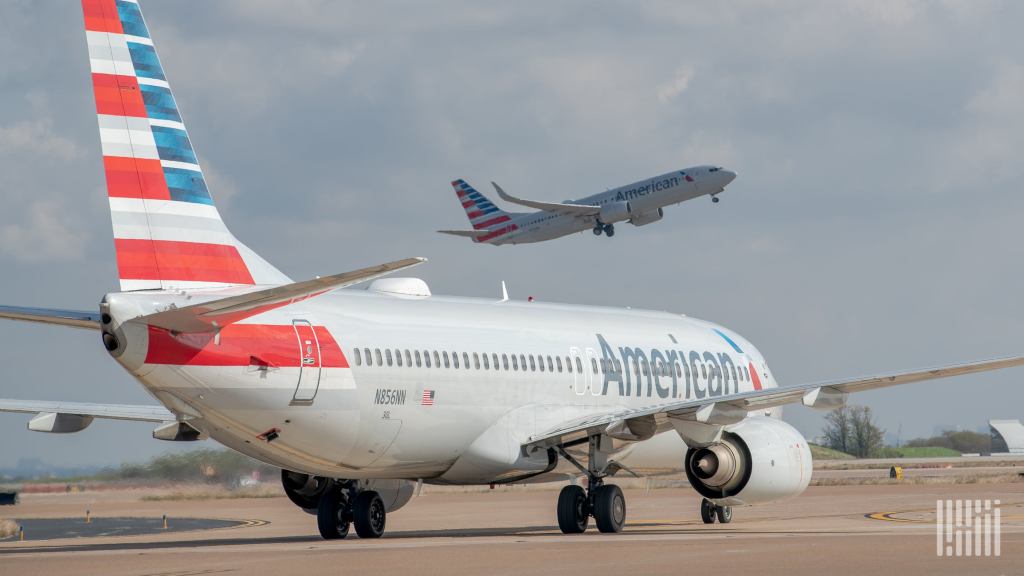
American Airlines (NASDAQ: AAL), unlike its peers, didn’t experience a bump in cargo business during the peak shipping season that ended in mid-December.
Cargo revenue was $199 million during the fourth quarter, a 24.2% decline from the same period in 2022, the Fort Worth, Texas-based carrier said in its earnings report released Thursday.
The sales total was only $6 million more than during the third quarter and $2 million above second-quarter receipts for what is normally the busiest and most profitable period for the air logistics sector as companies rush goods to stores for the holiday shopping season and to meet year-end financial targets. In fact, American Airlines’ highest quarterly revenue in 2023 was during the first quarter.
American collected $812 million in cargo revenue for the full year, down 34% year over year.
It said cargo-ton-miles, a measure of cargo volume by distance transported, increased 9.5% during the quarter to 501 million. That indicates the top-line number was hurt by lower rates even though American was able to operate with more aircraft as it restored more international service following the COVID crisis. American said in its filing that unit yield fell 31% to just under 40 cents. Full-year yield decreased 29% to 44 cents.
Results were roughly on par with the airline’s primary competitors: United Airlines and Delta Air Lines.
Delta (NYSE: DAL) reported cargo revenue slid 24% to $188 million for the fourth quarter. For the year, Delta Cargo recorded $723 million in revenue, down 31% year over year. United (NASDAQ: UAL) was the best performer among the big U.S. international carriers, with cargo revenue shrinking 14.8% to $402 million during the fourth quarter. Cargo revenue for the full year was $1.5 billion, down 31%. United’s cargo-ton-miles increased 16.9% during the fourth quarter.
Demand for air shipping service turned positive in September for the first time in nearly 18 months and continued to increase through the end of the year, culminating in 9% growth year over year in December. High inflation, more consumer spending on services, the end of supply chain bottlenecks and an overhang in retail inventories kept air cargo volumes in contraction territory for most of 2023. A burst in e-commerce orders from China and new releases of electronic gadgets fueled the late surge in air shipments. Analysts estimate air cargo volumes for 2023 will register 3.5% less than in 2022.
Overall, American Airlines finished the year with lower profits of $19 million compared to $803 million a year earlier. Factoring out one-time charges for implementing a new contract with mainline pilots and taxes related to debt extinguishment, American had a profit of $192 million. The company had forecast it would break even in the fourth quarter.
American said revenue dipped 1% to $13 billion, with strong international passenger demand offsetting a slowdown on the passenger side and fueling its profit guidance for 2024.
Mexico aims to compete with Panama Canal by using cargo trains
With drought at the Panama Canal and conflicts in the Red Sea and other global shipping lanes disrupting trade, officials in Mexico predict a golden opportunity for the country’s $2.8 billion Isthmus of Tehuantepec’s Interoceanic Corridor (CIIT) project.
The initiative is converting the isthmus in southern Mexico, which represents the shortest distance between the Gulf of Mexico and the Pacific Ocean in the country, into a 188-mile rail corridor that could handle up to 1.4 million twenty-foot equivalent units annually by 2033.
The project could transform the Isthmus of Tehuantepec into a hub for global trade, Mexican authorities said.
“The Isthmus of Tehuantepec dry corridor offers a promising alternative to traditional routes like the Panama and Suez Canals,” Oliver Contla, the trade and economy director for the Mexican Embassy in Germany, recently blogged on LinkedIn. “By leveraging its geographic advantage, Mexico has the potential to become a major logistics hub, serving not only North America but the global economy.”
Contla said investments in technology will be key to the CIIT project’s viability.
“The success of the project critically depends on the implementation of cutting-edge technology at the ports of Coatzacoalcos and Salina Cruz, as well as on the railways,” Contla said. “This technology must be capable of handling and transporting an immense volume of containers efficiently, ensuring seamless movement between the ports. Achieving this goal requires collaboration between the government and the private sector.”
While Mexican authorities are bullish on the CIIT’s prospects, global logistics operators said they are skeptical it could ever replace or even compete with the Panama Canal, which handles about 14,000 vessels and 8 million TEUs annually.
“The challenge really is that the Panama Canal is about 50 miles long, and the railroad to get from the Pacific to the Gulf is around 200 miles, so it’s a much longer track,” Pawan Joshi, executive vice president of products and strategy at e2open, told FreightWaves. “Another challenge — how many containers can [the railroad] move? It’s also about the ports on either end, whether they’re able to unload those containers; do they have the appropriate infrastructure?”
Austin, Texas-based e2open is a supply chain software provider. e2open’s cloud-native global platform for supply chains connects more than 480,000 manufacturing, logistics, channel and distribution partners in multienterprise networks tracking over 15 billion transactions annually.
Joshi said the CIIT project could offer another option when global disruptions or droughts interrupt trade flows.
“At the least it provides an alternative and I think a lot of companies are looking to that,” Joshi said. “The Canadian Pacific Kansas City Southern railroad is looking to start to invest some money on the Panama side to build more infrastructure and provide an alternative.”
Joshi said for the CIIT project to become a viable complement to the Panama Canal, Mexico, the U.S. and other countries need to cooperate and invest in technology, infrastructure and planning in the region.
“I think there has to be coordination, not just with the Panama Canal authorities or the Mexican railroad authorities. I think there should also be cooperation between the origin and destination ports and the ocean liners,” Joshi said. “It’s important for countries like China and the U.S. to make sure that trade routes continue to operate and it’s profitable to the companies on either side of the nations.”
Joshi also said more cooperation between shippers and global port facilities could benefit shipping and transportation lanes around the world.
“If I can take 10%, 15% or 20% of the traffic that is going through the Panama Canal headed to Houston and actually move it intermodal using rail, by docking the ship in Long Beach and moving it over rail car, then all of a sudden, the viability of the Port of Houston starts changing,” Joshi said. “There’s a lot of cooperation that is needed and coordination that is needed. I have a strong belief that if all the stakeholders come together, you will come up with a much better solution and a much more efficient, faster, effective and much more profitable solution for everyone.”
Longtime Walmart partner DroneUp has joined a select group of drone delivery firms with expanded permissions from the Federal Aviation Administration.
The drone delivery and logistics company announced Jan. 18 that the regulator has approved it for flight beyond the visual line of sight (BVLOS) of the operator, making it one of a handful of companies with a BVLOS waiver for medical deliveries.
“Securing BVLOS approval is a testament to our dedication to safety and innovation,” said DroneUp CEO Tom Walker. “We have some significant technologies coming out of stealth this year, which when combined with BVLOS, will unlock commercial scalability that the industry and our customers have been eagerly awaiting.”
For safety reasons, the FAA requires drone flights to be visually monitored by the operator. However, the agency occasionally awards waivers that enable BVLOS flights with certain restrictions, such as visual observers (VOs) stationed along the route.
A handful of firms — including another medical drone delivery company, Zipline — advanced past that stage in September, receiving FAA approval to remove VOs as well. DroneUp’s Part 107 waiver requires one or more VOs to monitor for other aircraft in the airspace within 2 square miles of the drone. But they won’t need to maintain a visual on the drone itself.
“Our ability to fly BVLOS propels us into the next level of using drone technology, undoubtedly enhancing the efficiency of medical deliveries, ensuring that crucial supplies reach healthcare facilities and patients promptly,” said John Vernon, chief technology officer of DroneUp.
DroneUp said its waiver allows it to immediately begin flying BVLOS for Riverside Health System, a customer with facilities spread throughout Virginia. According to the company, the approval will also clear a path for BVLOS deployments across the country with new and existing customers.
Two other Walmart drone delivery partners — Zipline and Wing, the drone delivery arm of Google parent Alphabet — have similarly expanded their BVLOS permissions as the massive retailer scales its network.
Wing is one of the first drone delivery firms to leverage what the FAA calls a summary grant. Essentially, these are streamlined authorizations for “copycat” companies with similar infrastructure, aircraft and technology to those that have already been approved. Wing, for example, piggybacked off of Zipline’s BVLOS waiver.
Zipline, UPS Flight Forward, Phoenix Air Unmanned and uAvionix were the four firms in the FAA’s initial cohort of BVLOS recipients named last year. The agency carefully selected each company to open summary grants to a variety of industries. Zipline’s waiver, for example, provides a framework for BVLOS medical drone delivery, while UPS Flight Forward’s does the same for parcel drone delivery.
DroneUp — like Zipline, Wing and other waiver recipients — says its approval could substantially reduce operational costs by cutting down on required human resources. The authorization could also expand the firm’s operations. Humans will no longer be required to visually observe its drones, creating the potential for longer routes.
Waivers such as DroneUp’s will help the FAA learn more about BVLOS operations as the regulator works to develop a final BVLOS rule. So far, the agency has convened a committee of industry stakeholders and studied its final recommendations. But there is still no firm timeline for an official set of industrywide BVLOS regulations.
In lieu of a final rule, expect the FAA to continue issuing BVLOS waivers and summary grants, which will give certain communities a glimpse of what drone delivery may look like at scale. DroneUp and Walmart currently fly out of 36 hubs in seven states.
Insurance woes weigh down Knight-Swift earnings
Insurance woes weigh down Knight-Swift earnings
(Source: Knight-Swift)
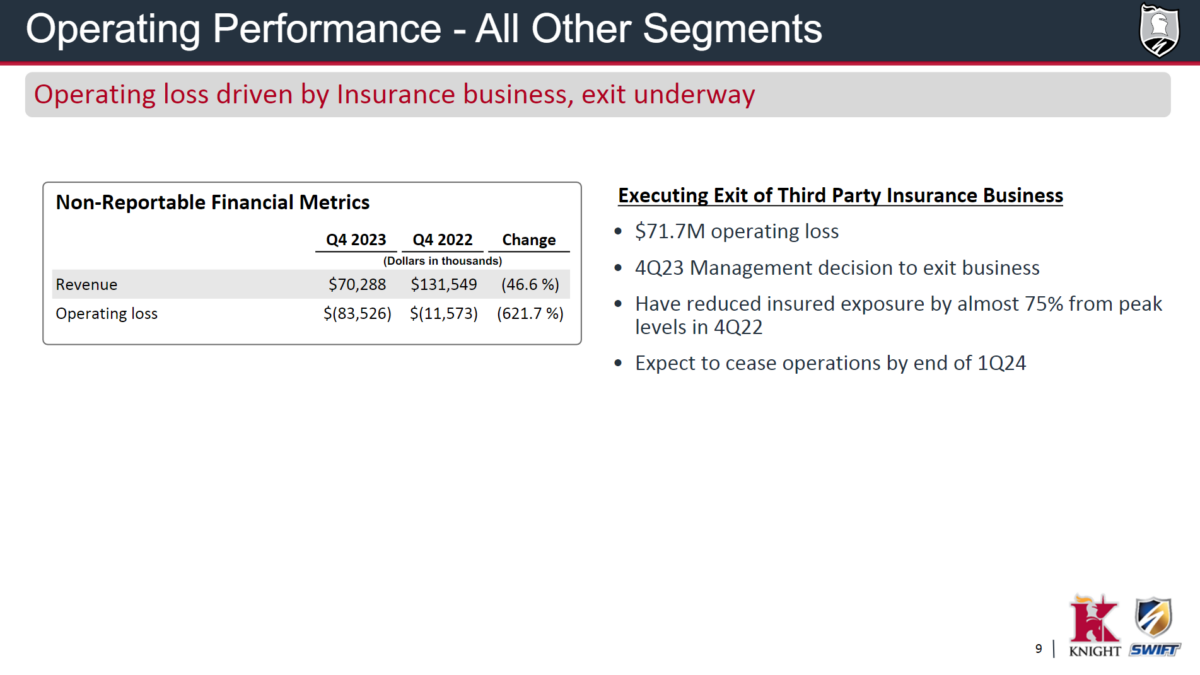
Q4 earnings are in for Knight-Swift, which recorded a $71.7M operating loss from its third-party insurance business.
This might be a future business school case study on risk management. Back in 2021, Knight-Swift launched Iron Truck Services. The press release described it as “an organization that brings together services essential to transportation carriers and includes insurance, equipment maintenance, fuel purchasing, and truck sales and rentals. Iron Truck Services provides affordable solutions to truckload carriers by leveraging the scale and infrastructure of the nation’s largest carrier, Knight-Swift.”
One of those offerings was Iron Insurance, which the release said, “provides auto, general, and cargo liability insurance, as well as physical damage insurance options at affordable rates. All policies are supported by risk management services that promote safe operational practices for policyholders.”
Back in 2021, there was unprecedented growth in small fleets and there was a financial incentive and opportunity for large fleets to try to get extra revenue while utilizing their extensive footprint of maintenance shops and nationwide roadside networks. But a flood of new entrants, many with little experience in either trucking or owning a business, means a higher likelihood for accidents and claims.
Changing freight market conditions caused that same truckload capacity to exit the market and create a smaller pool of carriers to insure. The warning signs were observable in July 2023 when Knight-Swift released its Q2 results. FreightWaves’ Todd Maiden wrote, “a loss in its third-party insurance business, versus the prior outlook for a profit, is a 45-cent hit to the original outlook.”
By the time Q3 rolled around, the losses continued to add up. Maiden wrote, “The number did include a $15.9 million operating loss in its third-party insurance business, which amounted to 8 cents using a normalized tax rate.”
Noting the attention, the company released a statement in a Q3 8-K filing, saying, “It will take some time for these changes in the insurance business to fully materialize in the results, but we are making progress raising premiums and improving the quality of risk as we work to mitigate volatility.”
Fast forward to Q4, and the company reported a third-party insurance-related loss of $71.7 million. What looked like an opportunity on paper turned into a drag on earnings in execution. Now with Q4 in the books, the company looks to exit and cease operations for third-party insurance by the end of Q1 2024.
Reading tea leaves with Covenant Logistics’ Q4 results
(Source: Covenant Logistics Group)
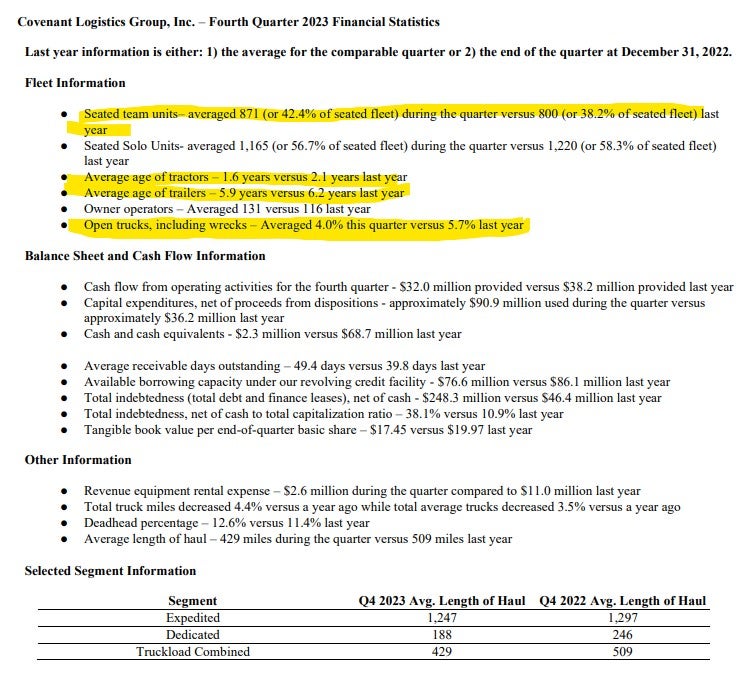
It’s earnings season! Looking at Covenant Logistics Group’s Q4 data, there are some cool tidbits that might explain broader truckload market changes.
Below are some indicators that stood out to me, as well as my notes on each:
Easier access to drivers in equipment improved seated team percentage and lowered the average age of tractors/trailers. Healthy Class 8 tractor data for most of 2023 supports the thesis that fleets were able to shed older assets and replace them with newer assets. 2024 might be a toss-up since public for-hire fleets should have a smaller backlog of older equipment and it should be back to business as usual for their Class 8 capex plans.
Open truck data is rarely seen in earnings, but it is as close to a working tractor percentage as you’ll find. Improvement suggests easier-to-reseat drivers and repair units in shops.
Covenant truckload is a split between teams and dedicated. Expedited has better margins, but there are challenges for dedicated trucks via higher deadhead percentage paired with lower length of haul. That could be from internal customer truckload network changes where lower length of haul equals lower transportation costs.
The biggest warning signs for trucking in 2024 will be watching cash flow. Average receivable days outstanding rose to 49.4 days in Q4 2023 compared to 39.8 days in Q4 2022. This means to me potential for higher debt load as carriers cover the gap until they get paid.
Evolution of cybersecurity in the supply chain with Antwan Banks
(Source: FreightWaves)
On Tuesday, FreightWaves interviewed Antwan Banks, director of enterprise security at the National Motor Freight Traffic Association (NMFTA), about recent trends in cybersecurity and their impacts on the supply chain. Before working at the NMFTA, Banks was the director of cybersecurity for the Metropolitan Atlanta Rapid Transit Authority for nine years in addition to being a veteran of Operation Desert Storm. He contrasted his cybersecurity experiences in the military and civilian roles, highlighting how private business, while light-years behind military cybersecurity, is catching up as state and nonstate actors target their systems for vulnerabilities.
When examining cybersecurity risks for motor carriers, one major challenge Banks noted was to highlight their “crown jewels” or most important systems or data to prioritize and protect. Until recently, many carriers failed to view their freight systems and data as sensitive enough to warrant extra protection compared to military or health care systems, which contain sensitive data about health or capabilities. NMFTA recently wrote how hacks and ransomware attacks targeting carriers in the past few years served as a wake-up call to executives.
For carriers that don’t have a cybersecurity plan, Banks notes a good first step is to schedule a tabletop exercise to simulate how your company will react and what steps it will take if an attack occurs. Afterward, create a plan and response for a “too-late situation” if proactive steps fail. Finally, Banks highlights the importance of adequate backup plans to restore key systems if they are taken offline or held for ransom. One challenge Banks noted was that many hackers target backup systems, so extra attention should be given to ensure the backup works and is not compromised.
FreightWaves SONAR spotlight: Rising rejection rates a possible bright sign for carriers
(Source: FreightWaves SONAR)
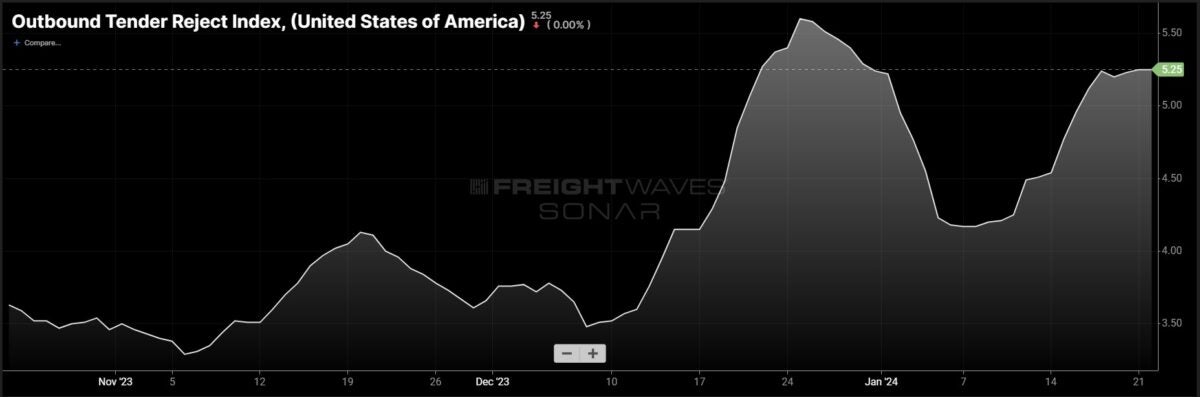
Summary: Nationwide outbound tender rejection rates continue to climb as winter weather paired with truckload capacity exits provides a boost to carrier pricing power. In addition to changes in truckload supply, higher outbound tender volumes, atypical of seasonal expectations, are boosting truckload demand. Outbound tender volumes are up 646.53 points or 6.12% week over week (w/w) from 10,571.4 points on Jan. 15 to 11,217.93 points.
Outbound tender rejection rates rose 48 basis points in the past week from 4.77% on Jan. 15 to 5.25%. Examining rejection rates by equipment type, there were increases across the board. Van rejection rates climbed 46 bps w/w, reefer rose 151 bps w/w, and flatbed rejection rates increased 111 bps w/w. For carriers not hauling dry van freight, tender rejection rates continue to suggest greater pricing power, as rejected load tenders slowly matriculate into the spot market.
The climb in tender rejection rates corresponds with an increase in spot market rates for van and reefer loads. The seven-day average NTI spot rate for dry van rose 9 cents per mile all-in from $2.33 on Jan. 15 to $2.42 per mile. The FreightWaves Reefer Truckload Index (RTI.USA) rose 6 cents per mile w/w from $2.78 per mile on Jan. 15 to $2.84 per mile all-in. In spite of elevated rejection rates, the flatbed segment saw spot rates fall 10 cents per mile all-in w/w from $2.91 on Jan. 15 to $2.81.
Like the content? Subscribe to the newsletter here.
The market is shifting; shippers and carriers should prepare
It’s no secret that COVID had an enormous economic impact in 2020 and the years succeeding, especially on the logistics industry. 2020 saw carriers bursting at the seams and shipping rates higher than ever, creating a favorable market for carriers.
As shipping volumes and COVID-induced spikes started to decline, however, carriers were left with a lot of excess capacity, leading to diminishing rates at the same time fuel costs were spiking following Russia’s invasion of Ukraine. This created a market shift in favor of shippers.
Over the past six months and as we enter into 2024, the market continues to favor shippers, especially as people are taking advantage of brick-and-mortar stores again.
“With the pendulum swing, shippers now have the power to renegotiate their agreements. They have the power to bring on additional regional carriers whereas before they might’ve been stuck,” said Caleb Nelson, co-founder and Chief Growth Officer at Sifted. “We’re seeing carriers be a lot more flexible now than they have ever been.”
In October 2023, FreightWaves founder and CEO Craig Fuller wrote that the U.S. trucking market could be a year and a half away from capacity balancing with demand. The rate of carrier exits has increased since then, but the point remains: There are few indications that the market turn is imminent.
Fuller also noted that while an increase in rates is possible as a result of anticipation, many analysts, including those at FreightWaves, don’t foresee rates changing until the second quarter of 2024 at the earliest. Until then, the market will continue to weed out those carriers and brokers that don’t have a strong enough strategy or balance sheet to weather the tight margins.
With the looming risk of another market shift, Nelson has advice for both carriers and shippers moving into 2024.
Shippers: Take action; don’t get left behind
If shippers don’t reevaluate over the coming months, they might not have a better chance for a couple of years.
Nelson calls all shippers to evaluate and take action. This favorable market has pushed many to already be rethinking how they do business, with some leveraging tools and technology, developing and nurturing new partnerships, and expanding distribution. These decisions have led many shippers to superior growth strategies and better preparedness for the future.
“Shippers often don’t make changes to their shipping until they start to feel pain,” Nelson said. “So it’s a very unique situation to see this because right now shippers aren’t feeling [a ton] of pain. Regardless, now is the time to be evaluating carrier partnerships because they are more open and willing to work with [shippers] than I’ve seen in the last three years.”
By most metrics, shippers have the upper hand right now. If they haven’t already, they need to take the necessary steps toward fully understanding their data, evaluate what is and isn’t working, and determine areas of weakness.
“If I was a shipper, one of the top things I’d be looking at in my data is my total spend that is being allocated to accessorial fees. Carriers have done a really good job at maximizing their profitability through how much they’re charging for fees,” Nelson said.
Traditionally, shipping contracts are negotiated once every two to three years. However, Nelson strongly encourages shippers to renegotiate contracts now, before the market turns and carriers regain pricing power.
Armed with this information, shippers should have meaningful conversations with their current carrier partners and be open to expanding their network and making a parcel carrier diversification plan.
What exactly is in it for shippers? In a recent Sifted webinar, “Parcel Carrier Diversification Tips and Tools,” Nelson described carrier diversification as a faster and more cost-effective way to reach customers, reduce overall costs and mitigate risk.
To hear more about parcel carrier diversification, view the full webinar here.
“Shippers: Be open to creating ‘swim lanes’ within carrier partnerships. Too often, I see a shipper single source all of their volume with the big-name carriers only,” he said. “Now is a great time for them to create swim lanes. Divide that business up and get creative with those carriers.”
Carriers: Get more volume; stay flexible and negotiate in 2024
Shippers currently have leverage, but after this year carriers are likely to become beneficiaries of more pricing power for the next couple years.
Therefore, current flexibility from carriers can help them to gain an advantage over other carriers in future negotiations. It’s time for carriers to be open to conversations around growth and partnerships and create open lines of communication with new and prospective customers.
Many carriers are already having these conversations.
“There are a lot of great regional carriers that are growing at a fast clip, and they’re opening new ZIP codes, having conversations around volume and being willing to try to find a match in that swim lane,” he added.
According to Nelson, this post-COVID carrier capacity is not going anywhere at this time.Therefore, open communication makes all the sense in the world for a carrier right now.
Onward and upward: Look to the data
Those that have access to the most data have the advantage, according to Nelson. “There’s just a lot of things you can do if you have access to the right data and the right technology,” he said.
With that, the last few years have been cause for a shift from the way shippers and brands manage their parcel spend and how they find cost savings. Traditionally, shippers have pushed for a more consultancy-based model around negotiating contracts and embedded service guarantees within these contracts as a way to save money.
Sifted is a logistics intelligence company. It aims to empower shippers to do all the things they’ve used consultants for in the past, to “sift through your data” in order to improve their contracts and operations.
The company’s software provides daily insight into shipping costs and performance. Parcel shippers can compare carriers side by side, track specific KPIs, model out different scenarios, change box sizes, evaluate spend, etc.
“I think we’re really good at understanding the game plan and what the market conditions look like in real time through our software,” Nelson said. “A lot of shippers spend time trying to go through their data when they just need software that [can do that for them]. That’s what Sifted does really well.”
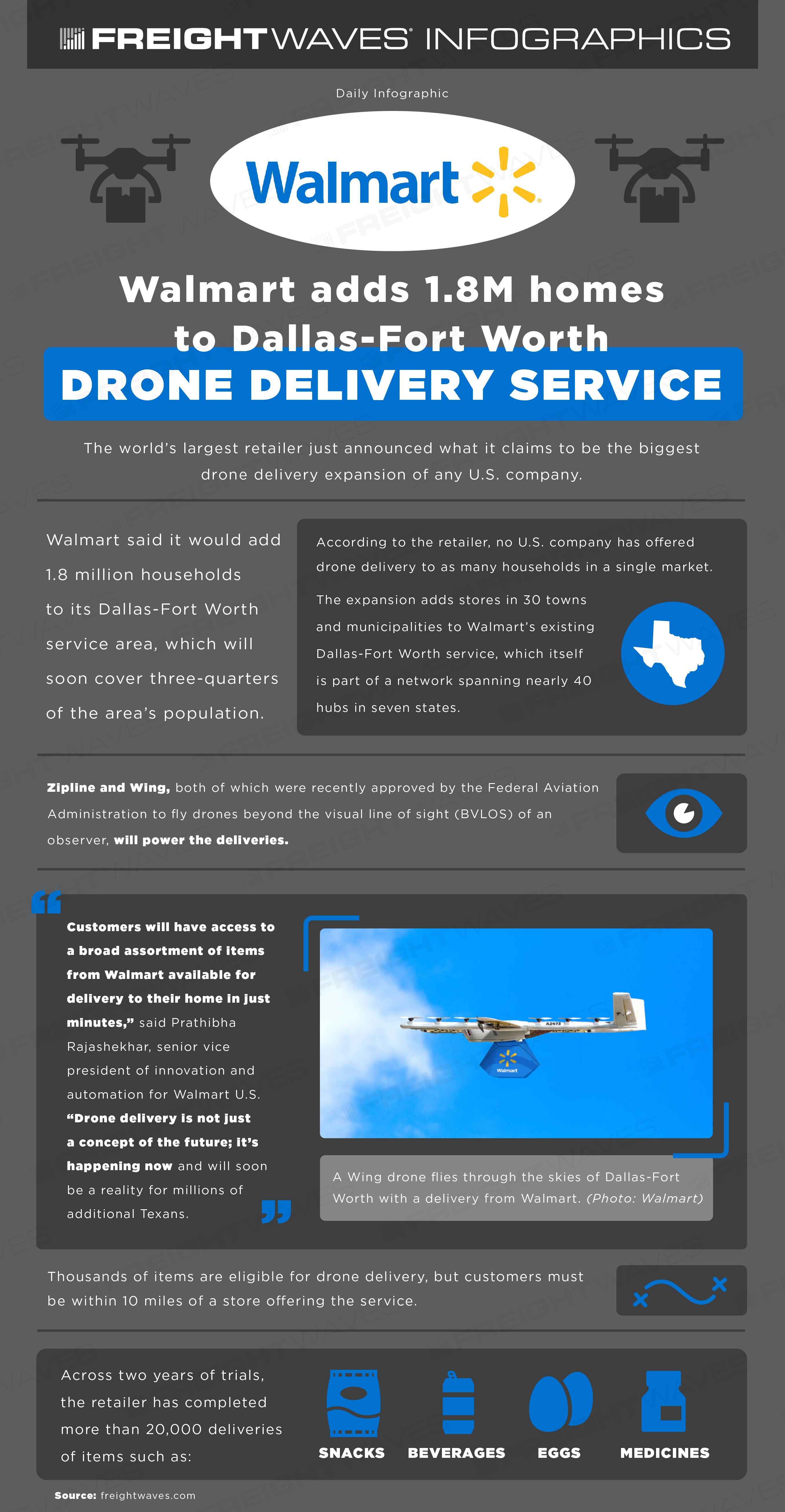
Daily Infographic: Walmart adds 1.8M homes to Dallas-Fort Worth drone delivery service
To view more FreightWaves infographics, click here
Sea-air routes gain as bypass option for Red Sea shipping delays
As major container shipping lines consistently bypass the Red Sea to avoid the threat of rebel missile attacks, air cargo volumes are finally getting a boost. Preliminary data now backs anecdotal reports a month ago of businesses shifting some Asia exports for Europe and North America to air transport as a way of avoiding delays.
Until mid-January, there were few hard signs the airfreight sector was picking off cargo normally booked on ocean vessels transiting the Suez Canal. One option getting more attention is a hybrid sea-air mode, which offers faster transit than ocean shipping at a lower cost than pure airfreight.
Shipping prices have skyrocketed following the Red Sea attacks. Ocean freight rates per forty-foot equivalent unit from China to Europe were up 282% to more than $4,700 since Dec. 1, as of Jan. 19, according to Freightos. Global box rates are significantly higher than pre-COVID levels and continue to climb. The Freightos Baltic Daily Index hit $3,410 on Monday, a 145% spike since the start of the year. And spot rates from Asia to the Mediterranean are 160% higher than a month ago at $6,500 FEU. Even shippers booking space at contract rates are paying more as ocean carriers add emergency surcharges to invoices.
After a normal slump in demand following the holiday shipping rush, which crested in mid-December, airfreight volumes jumped by nearly 25% week over week. Over a two-week timeframe to start the year regional volumes increased 12% and 17%, respectively, from the Asia Pacific and Middle East/South Asia to Europe, according to World ACD. The increases were about 10 points more than the same two-week period in January 2023.
Global air cargo demand currently is up about 3% year over year, led by a 6% gain for Asia exports, continuing the positive trend that began in September and reversed an 18-month softening in airfreight demand — a byproduct of inflation, excess inventories and fewer logistics bottlenecks.
The International Air Transport Association said cargo traffic, which is calculated with a distance multiplier, climbed 8.3% in November, the strongest y/y growth in almost two years. The trade group’s numbers were directionally consistent with earlier figures from private data providers that showed air cargo demand increased 5% during the month.
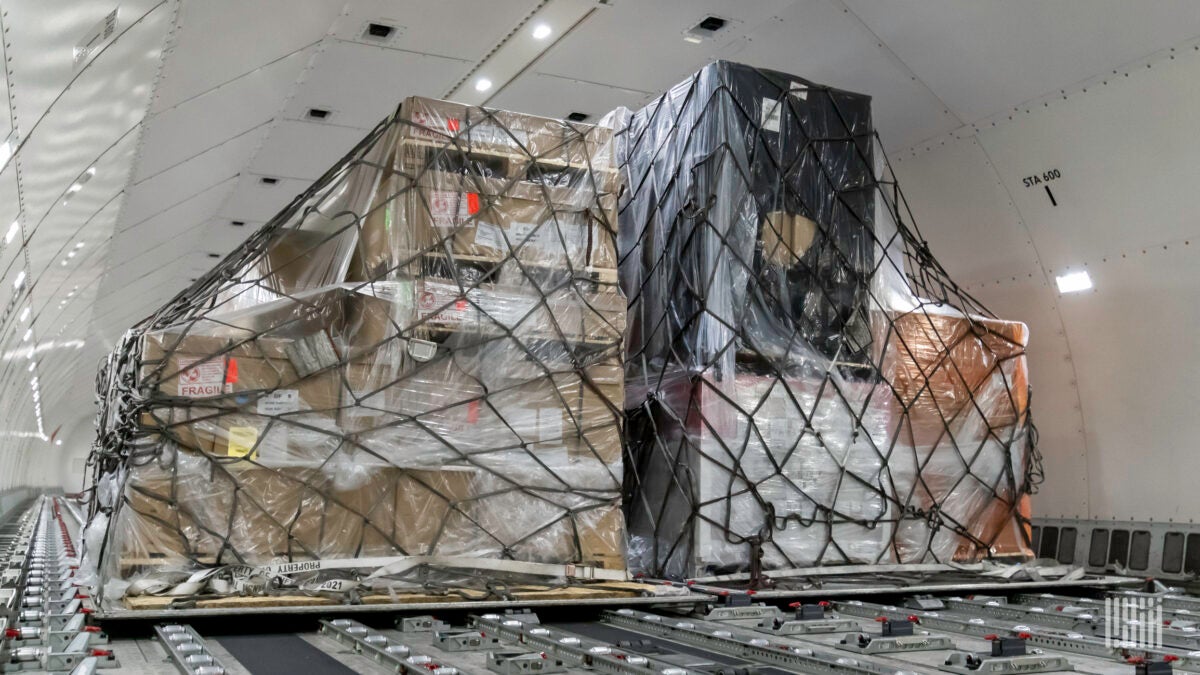
Pallets of cargo on board a Boeing 777 freighter. (Photo: Jim Allen/FreightWaves)
December was even stronger, with 9% y/y growth boosting spot rates to their highest level in nine months and catapulting the air logistics sector into 2024, according to benchmarking agency Xeneta. Entering 2024, capacity is about the same as 2019 but demand remains 8% lower than before the pandemic. Rates are about 40% higher than pre-COVID levels, mostly because of increased jet fuel and operating costs.
IATA said cargo yields increased 8.9% during the final two months of 2023, an indication that airlines were able to fill their aircraft better.
It should be noted that the comparison comes against a low baseline in 2022, with much of the growth concentrated on a few major trade lanes and driven by e-commerce shipments as consumers opted to buy discount goods online for their Christmas gifts.
IATA predicts cargo demand will rise 4% to 5% year over year after contracting about 3.8% in 2023, but with capacity expected to increase 6% to 7%. Others predict predict slightly slower growth in both categories. As passenger airlines, primarily in China, reintroduce more flights, the outlook is for yields to drop a further 21% on top of last year’s 32% decline. However, IATA’s forecast came before the Red Sea attacks on shipping were fully understood, and the situation there could easily cause volumes to grow more than expected.
Sea-air alternative to Suez Canal route
The longer the Red Sea risk lasts, the more likely shippers are to divert a portion of their Asia orders from ocean to air carriers. Carriers’ need for vessels to move shipments a longer distance around the tip of Africa is soaking up some capacity and driving up ocean rates. Longer voyages mean vessel schedules for ports are out of sync, creating pockets of congestion in Northern Europe. Carriers may opt to skip some port calls to keep vessels on schedule. And repositioning empty containers back to Asia is taking longer, creating a container shortage at origin and slowing the ability of manufacturers to load the next outbound shipments.
Beyond those considerations, cargo owners need to evaluate the impact on their working capital if they have to increase inventory by several weeks to make up for slower delivery times. Although airfreight can be 13 to 15 times more expensive than ocean shipping, retailers and manufacturers may find it cheaper to move goods by air than to invest in extra inventory.
Tesla, Volvo Cars and Suzuki Motor Corp. have suspended some European vehicle production because of delivery delays associated with the Red Sea situation, while Stellantis said it has used limited airfreight to get around bottlenecks, according to multiple news outlets. France-based food producer Danone said it would turn to airfreight if the chaos in the Red Sea lasted for more than two or three months, the Financial Times reported.
“With every manufacturing company, there’s a tendency to reach immediately for the airfreight lever unless you’ve got an adult in the room who says, ‘When do you need this by? … Before you pull the airfreight lever, maybe you should ask yourself, Is there a rail option? Is there a sea-air option? Is there a deferred air option?’ said Bjorn Vang Jensen, executive director for international transport at engine manufacture Cummins on the latest Freight Buyers’ Club podcast.
Analysis from Xeneta shows that a sea-air combination from China to Europe via Los Angeles could be a better option than traditional alternatives. It is only 2.6 times the pure ocean rate from China ($1.33 vs. 0.52/kilogram), with a transit time that is five days shorter than a traditional sea-air routing through Dubai. A Dubai sea-air transit currently costs $1.61/kg — just over three times the price of pure ocean freight — and is three weeks shorter than ocean only.
The potential increased demand in the sea-air mode could push Dubai-to-European air cargo spot rates above pre-pandemic levels, according to the market analytics firm. Demand on the route already increased 11% in the two weeks ending Jan. 7 compared to the prior two weeks. In normal years, that period usually experiences double-digit volume declines.
Vang Jensen predicted the knock-on effects of the Red Sea shock will impact supply chains through midsummer, at the very least. Even after the Israel-Hamas war and Houthi rebel attacks stop, container ships and equipment will be in the wrong places and it will take three months to reposition them and restore transport networks back to normal.
Rates have been slower to respond to the Red Sea situation than volumes. TAC Index, which tracks the cost of shipping goods by air, published data showing airfreight rates are now 29% lower than the same period a year ago after dipping since the start of the year and then leveling out the week up to Jan. 22. The delta had closed to 15% in mid-December as positive demand in the final months took the edge off a difficult 2023, before slightly softening.
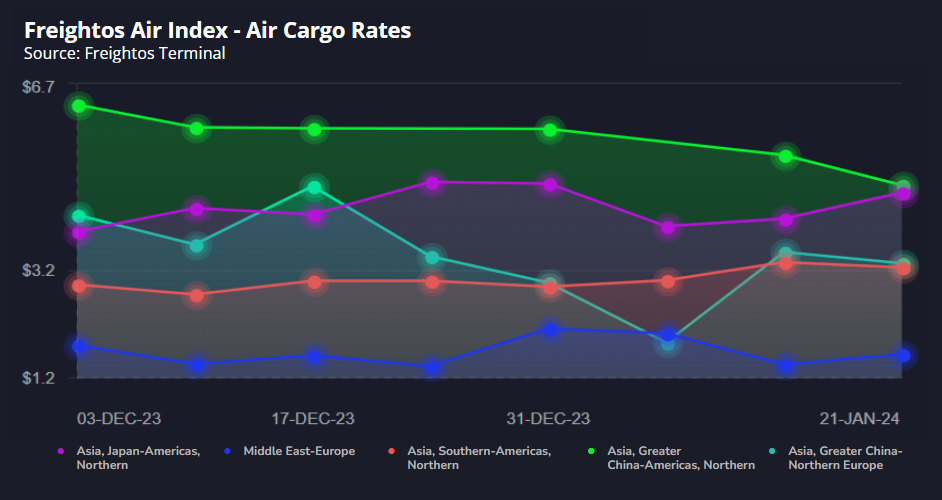
The Freightos Air Index registered a 6% weekly decline in rates, to $3.34/kg, from China to Northern Europe. Rates from China to North America are down 10% week over week to $4.84/kg.
But there are harbingers of firmer pricing in what is normally a slow period. While air cargo rates out of China have sagged since the start of the year, prices from South Asia to North America have increased 12% and rates from the Middle East — a key transshipment point for sea-air options — climbed 13% last week.
Xeneta, another data provider, on Friday said air cargo volumes from Vietnam to Europe — a major trade route for apparel — soared 62% in the week ending Jan. 14. The demand grew 12% on a y/y basis and was 6% greater than in the peak week in October. Airfreight rates on the corridor moved up 10% from the prior week because of extra pressure on capacity.
Rates are also being boosted by the pull forward in shipments in anticipation of Chinese factories closing for the Lunar New Year holiday that begins Feb. 10, experts say.
As the market moves back toward post-pandemic equilibrium, more businesses committed to longer fixed-rate contracts during the last quarter of 2023, Xeneta said. Contracts of six months or more signed with logistics providers or airlines accounted for 73% of total contracts. Shippers are less interested in one-month contracts that are subject to the upward trend in market rates for immediate transactions.
2024 outlook
Although 2024 is shaping up as a better year for air logistics players, there is plenty of uncertainty about the direction of the global economy and retailers’ purchasing behavior. Retailers have completed post-pandemic inventory destocking, but merchandisers are unsure whether consumer strength is ebbing and are cautious about placing overseas merchandise orders. With better tools for tracking consumer demand, many retailers are returning to just-in-time replenishment.
Meanwhile, economists say the full effects of tighter borrowing conditions have yet to fully spread through the global economy even as central banks have mostly stopped raising interest rates. Fitch Ratings is forecasting U.S. growth to fall from a likely 2.5% in 2023 to 1.2% this year, as consumer spending moderates from the pandemic peak and the labor market loosens. China’s economic growth will also fall below 5%, while Europe’s economy is expected to stagnate, especially with Germany hovering near recession.
The World Bank said it expects U.S. growth to decelerate to 1.6% this year and the global economy to go from 2.6% to 2.4%.
Manufacturing in key regions, like Europe, the U.S., China and parts of Northeast Asia,is still slow.
Bruce Chan, senior logistics analyst at Stifel, summed up his guess for the year this way: “IATA forecasts call for approximately 20% y/y declines in global air cargo pricing. Our inclination is that rate declines won’t be quite that bad, but they will likely still be squarely negative as passenger capacity continues to filter into the market. Based on what we see today, a return to annual air cargo rate growth probably won’t happen until 2025, but there is a lot that can happen in that timeframe.”