Less-than-truckload carrier Pitt Ohio announced it has expanded its next-day service in and out of New England, a Monday news release said.
The Pittsburgh-based carrier, which primarily provides regional service in the Northeast, mid-Atlantic and Midwest, said the new service will now be offered out of three more terminals. The company said its previous standard offering from service centers in Maryland and Philadelphia had delivery windows as long as three days. Roughly half of its 25 terminals now have 24-hour service in the region.
“This expansion of next-day shipping lanes to New England for our customers in the Maryland and southeastern [Pennsylvania] markets delivers on our commitment to providing customers with the most convenient and efficient shipping options possible,” stated Geoff Muessig, Pitt Ohio’s chief marketing officer.
The service in the region builds on recent lane additions from terminals in Pennsylvania, New Jersey and New York. It is working with sister company Ross Express to execute the deliveries.
“Ross Express and PITT OHIO both have proven track records and the advanced logistics networks for consistent, on-time delivery,” said Ross Express’ President Steve Brown. “We are excited to continue to provide reliable, next day delivery to and from the New England states for PITT OHIO customers.”
Pitt Ohio generated more than $900 million in revenue last year with over 3,500 employees. In addition to LTL service, it offers expedited, dedicated and truckload transportation as well as transloading and warehousing services.
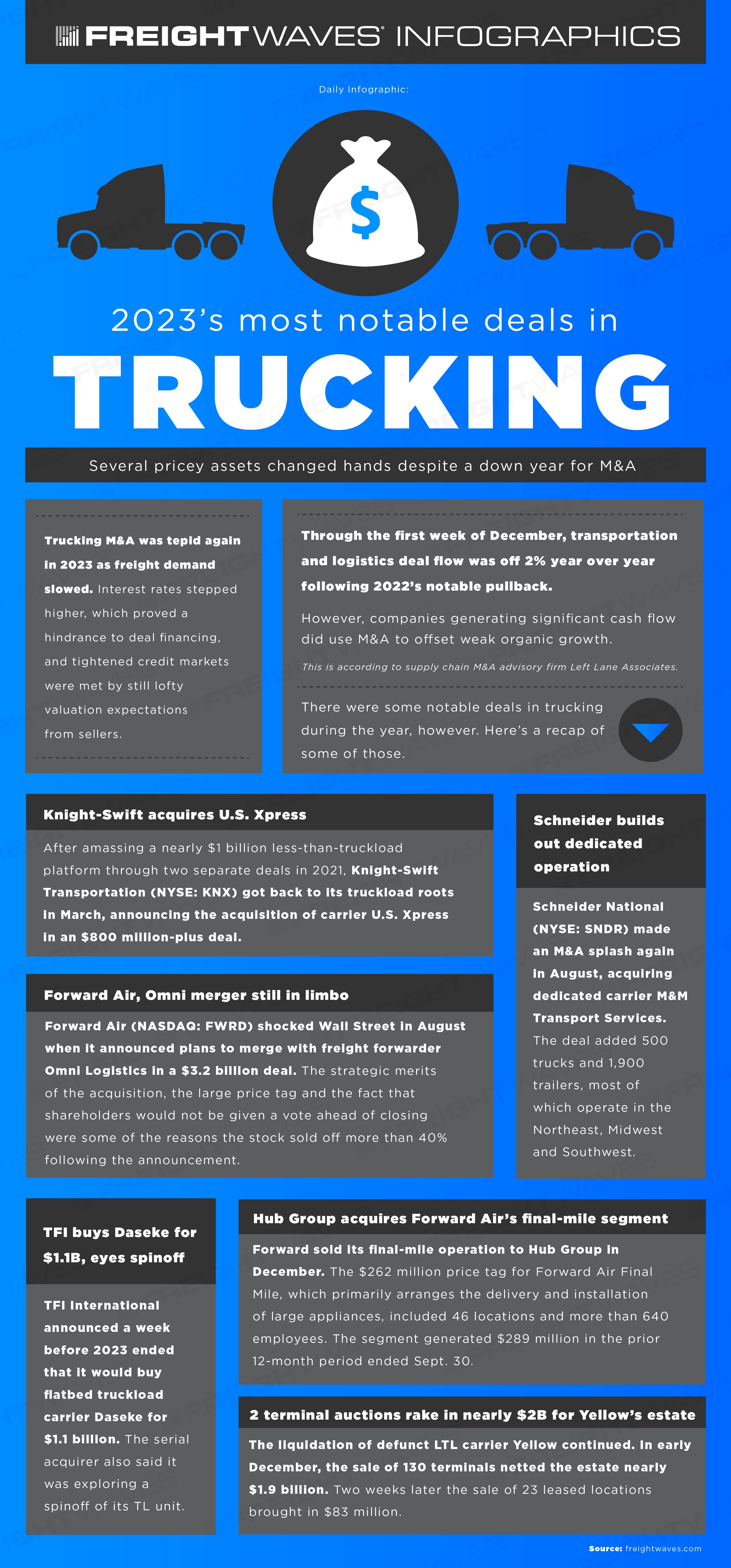
Daily Infographic: 2023’s most notable deals in trucking
To view more FreightWaves infographics, click here
December imports surprisingly high amid Panama, Suez Canal woes
With all the headlines on trade disruptions, you might have expected U.S. imports to fall in December. They didn’t, according to new data from Descartes.
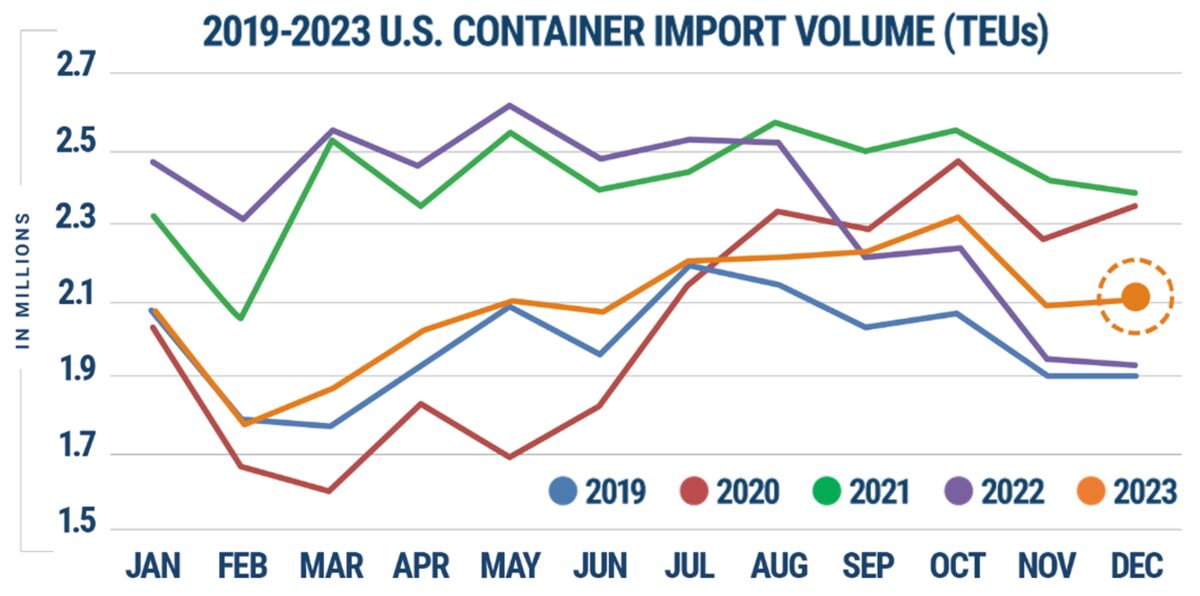
The U.S. imported 2,107,012 twenty-foot equivalent units of containerized goods in December, up 0.4% from November and up 9.2% year on year, said Descartes (NYSE: DSGX) on Monday.
(Chart: Descartes based on data from Descartes Datamyne)
December is traditionally slow from a seasonal perspective — and there was another headwind this year.
Container vessels that traditionally used the Panama Canal to bring Asian goods to East and Gulf Coast ports switched to the Suez Canal. Those ships then rerouted from the Suez Canal to longer voyages around the Cape of Good Hope, with diversions starting in late November and accelerating in recent weeks.
Intuitively, this should have led to some pressure on U.S. import volumes in December, with weakness centered on East and Gulf Coast ports, as had been the case in November.
Descartes’ data did not follow the script.
Counterintuitive West Coast weakness
Instead, it points to continued import strength in December versus November, driven by higher volumes to East and Gulf Coast ports, with these ports sequentially outperforming those on the West Coast.
According to Descartes data — which is derived from U.S. Customs filings and differs from official port data — imports to Houston, Texas, jumped 37,865 TEUs, or 29.5%, in December versus November.
East Coast ports also saw month-on-month gains: an increase of 16,612 TEUs (5.1%) in New York/New Jersey; 6,207 TEUs (6.3%) in Charleston, South Carolina; 5,451 TEUs (2.6%) in Savannah, Georgia; and 4,619 TEUs (11.3%) in Baltimore, Maryland.
In contrast, Descartes data shows December imports to Long Beach, California, down 29,635 TEUs or 8.5% in December versus November; imports to Los Angeles down 20,578 TEUs or 5.3%; and imports to Tacoma, Washington down 16,759 TEUs or 26%.
Top West Coast ports saw their share of total imports fall to 39.7% (versus 43.1% in November), while the top East/Gulf Coast ports’ share rose to 44.9% (versus 42% in November). The coastal balance swung eastward last month.
2023 handily tops pre-COVID imports
The full-year U.S. import tally ended strong, despite all the dire predictions in the first half of this year.
American consumers spent more in the post-COVID period on services, but they also kept spending on goods, supporting inbound containerized volumes.
Full-year imports came in at 24,959,664 TEUs, according to Descartes. Compared to pre-COVID years, 2023 topped 2019 by 4.6%, 2018 by 3.8% and 2017 by 11.5%.
(Chart: FreightWaves based on data from Descartes Datamyne)
FedEx braces for 50% cut in Postal Service air contract
FedEx Corp. expects its air express unit will lose half of its business with the U.S. Postal Service when an existing contract expires, making more pilots expendable, FreightWaves has learned.
The Postal Service three years ago began shifting a large amount of volume from air to ground transportation to reduce red ink and become more competitive. Declining postal volumes have been a significant drag on FedEx Express’ recent performance, company officials publicly acknowledge.
Postal delivery at 29 daytime cities where FedEx flies domestically is in jeopardy of being eliminated at the end of the government’s fiscal year, Pat DiMento, FedEx’s vice president of flight operations and training, warned in a recent meeting with a group of supervisory pilots.
“If I were to bet, I think we lose 50% of our daytime flying,” he said in an unauthorized recording reviewed by FreightWaves.
The loss of a substantial portion of Postal Service work means FedEx (NYSE: FDX) will have 200 to 300 more excess pilots by October, said the flight operations chief. The cargo airline plans to lower guaranteed flight hours for pilots and offer early retirement packages because it already has hundreds of surplus pilots with the shipping market in a prolonged downturn.
The Postal Service has also revealed plans to diversify its mix of air carriers.
The drop in postal traffic contributed to a 6% decline in revenue for the Express unit, which is struggling with lower profits. Express volumes were down more than 10% for three consecutive quarters through last February and then shrank at single-digit levels for the remainder of 2023.
The U.S. Postal Service is diverting most regional and long-haul mail transport to its own trucks or contract motor carriers. (Photo: Jim Allen/FreightWaves)
FedEx’s relationship with the Postal Service dates back to 2001. Since 2013, it has provided domestic and international air transportation for numerous postal products, including Priority Mail. FedEx has been the largest provider of air transportation capacity to the Postal Service for 20 consecutive years, according to data compiled by David Hendel, a transportation attorney at Culhane Meadows.
FedEx’s revenue from its Postal Service contract in the fiscal year ending Sept. 30, 2022, fell $236 million to $1.9 billion and is expected to decrease again in Hendel’s next list. The contract previously generated annual revenue of at least $2 billion. The $236 million revenue loss is equivalent to how much the 10th-largest transportation supplier to the Postal Service makes.
Management is working with the Postal Service to renew the existing contract, which is barely profitable, DiMento said. Minimum service requirements under the contract leave FedEx contractually committed to providing expensive plane capacity to relatively low-yielding parcel volume.
DiMento said the long-term postal contract led to network inefficiencies as FedEx tried to accommodate increases in mail volumes while priority flying at night stayed the same. A route from Raleigh, North Carolina, to the Memphis, Tennessee, global hub, for example, might only require a small jet, but FedEx would upsize to a larger freighter because that met the daytime mail requirement.
“Now we’re flying an Airbus on both routes, and unfortunately that Airbus is now half empty going to Memphis every night. And it got us completely out of whack. They expected the priority stuff to keep up with the postal and it just didn’t happen. And all of our gauge was being driven by the dayside instead of the nightside,” DiMento told the airline employees.
DiMento said he thought FedEx would lose the Postal Service business in 2022 and now hopes to retain half of it. The more routes FedEx operates under the contract, the better profit it can generate.
“The problem is that the current FedEx Express line-haul network is designed to support historically high USPS volume that is going away, and that USPS revenue subsidizes the operational cost of overall FedEx lift operations here in the U.S.,” said Dean Maciuba, a managing partner at Crossroads Parcel Consulting, on LinkedIn.
FedEx has previously said the USPS contract will need to be revised for it to consider renewal. The company on Monday provided the following statement: “We appreciate the relationship we have enjoyed with the United States Postal Service for the past 22 years. Like any other customer relationship, we are focused on ensuring it continues to make good business sense for both parties as we each realign our networks for the future.”
TD Cowen equity analyst Helane Becker predicted in a client note that FedEx will walk away from the postal business when the contract expires if it can’t renew at better margins.
Borderlands: Cargo insurance can boost cross-border operators’ business
Borderlands is a weekly rundown of developments in the world of United States-Mexico cross-border trucking and trade. This week: Cargo insurance can boost cross-border operators’ business; Ryder System leases logistics center near Dallas–Fort Worth; Paccar Inc. announces $50M investment in Mexico truck factory; and thefts from cargo trains in Mexico rose in September.
Cargo insurance can boost cross-border operators’ business
Despite the prevalence of cargo theft and trucking accidents in Mexico, cross-border business remains a lucrative market for brokers, carriers and shippers.
An increased focus on bringing supply chains back to North America helped Mexico replace China as the top U.S. trading partner in 2023. Mexico has been the top U.S. trading partner since the beginning of the year, reporting $656 billion in two-way trade from January through November, according to the U.S. Census Bureau.
Even with almost 70% of the trade between Mexico and the U.S. taking place through trucking, the market for cross-border cargo insurance can be confusing for many, according to Mark Vickers, executive vice president and head of international logistics at Reliance Partners.
Vickers said large carriers dedicate a significant amount of their capacity to shipper-specific cross-border contracts.
“They win these contracts due to a number of factors, but paramount is their linehaul rate, cross-border risk management strategy and insurance, and volume of asset allocation,” Vickers said.
Cross-border shippers often prefer to work with a carrier that can provide them 100 trucks a week as opposed to smaller carriers, according to Vickers.
“These large carriers are then able to get preferential terms on their Mexican cargo insurance because of the volume they are moving, and because of the static nature of their risk management,” Vickers said. “This makes it difficult for a small to medium-sized broker or carrier to compete against the big dogs. Cargo insurance rates in Mexico will be much better for a large carrier that has standardization in their risk management than for a broker that is attempting to move a single spot shipment or for a carrier that is moving a lower volume. However, we are seeing brokerages and smaller carriers get awarded business when they are proactively offering Mexican cargo insurance and are spotlighting their risk management protocols if their rates are in line.”
Chattanooga, Tennessee-based Reliance Partners is a trucking insurance provider with nine locations nationwide. Vickers joined Reliance Partners in 2021 after the company acquired Borderless Coverage, which he founded in 2018.
He started Borderless Coverage because many large shippers were asking for an all-risk cargo insurance solution in Mexico.
“I was at Total Quality Logistics for almost eight years before I started Borderless Coverage, and during my time there I was handling a lot of expedited inbound and outbound shipments from Laredo, Texas,” Vickers said. “All of these shippers in this industry, they’re using me for brokerage services domestically and then they started to say, ‘Hey, you’re doing a great job handling all of our expedited shipments. Can you also start handling our Mexican business?’”
Liability insurance is not required in Mexico. However, when the shipper does not declare the value of the merchandise, the liability is limited to $90.52. Given the extremely low limit, pursuit of liability actions is uncommon in Mexico, Vickers said.
“What I needed as a freight broker and what my shippers were asking for 10 to 12 years ago was a product they could layer on top of their global policy and/or self-insurance program (that typically carries a deductible of $100,000), which covers theft and has a deductible of $5,000 or less,” Vickers said. “Borderless Coverage does just that and forces shippers, brokers and carriers to work together better in a siloed cross-border supply chain.”
With more global manufacturers moving parts or all of their supply chains to Mexico, Vickers said small and medium-size brokers and carriers need to understand all the insurance options they have for loads moving through the country.
“Cargo insurance in Mexico is now much more accessible, more cost-effective, and now being requested by over 30% of U.S. based cross-border shippers,” he said. “It’s more cost-effective because logistics firms are using it at over 500% more than it was being used prior to the pandemic, prior to the implementation of the United States-Mexico-Canada Agreement (trade pact) and the ongoing U.S.-China trade war, which accounts for much of the reasons behind the supply chain congestion that has resulted in nearshoring to Mexico.”
As more cross-border freight moves between the two countries, cargo theft continues to be an issue in Mexico. Reliance Partners has launched its Mexico Cargo Hijacking Data Portal, where shippers, carriers and brokers can see some of the latest trends across Mexico.
There were 6,030 incidents of cargo theft across Mexico between January and September 2023, an 8% year-over-year increase from the same period in 2022, according to Reliance Partners.
In November, Mexico’s National Association of Vehicle Tracking and Protection Companies recorded 306 cargo theft cases across the country, averaging more than 10 a day.
In August, the Mexican Alliance of Carrier Organizations threatened to go on strike if federal and state authorities did not implement more protective measures across roadways, which they agreed to before the work stoppage took place.
Vickers said federal and state authorities in Mexico still need to do more.
“The government needs to get more involved; that’s why there was almost a very large strike in Mexico from drivers because of the violent hijackings, and the government wasn’t doing anything at all to help that,” he said. “They need to take a more aggressive stance on cargo theft.”
Ryder System leases logistics center near Dallas-Fort Worth
Ryder System Inc. has leased a 234,475-square-foot industrial space in Haltom City, Texas.
The space is in the recently constructed Northmark Commerce Center, a Class A facility that includes 32-foot clearance heights, single- and multi-tenant functionalities, cross-dock configurations, 56 dock doors, 132 parking spaces, 19 off-dock trailer stalls, and a secured drop lot with 104 additional trailer stalls.
Miami-based Ryder (NYSE: R) is a leasing, fleet management, transportation and supply chain solutions provider.
Haltom City is between Dallas and Fort Worth and in close proximity to AllianceTexas, a 27,000-acre, master-planned industrial, mixed-use and residential development.
The Northmark Commerce Center was also recently sold to an institutional buyer, according to the Newmark Group, which handled the sale. Details of the buyer and transaction were not disclosed.
“With its prime last-mile location in the coveted North Fort Worth industrial submarket, Northmark presented an exceptional investment opportunity,” Newmark Vice Chairman Dustin Volz said in a news release.
Ryder System Inc. has leased a 234,475-square-foot industrial space in Haltom City, Texas. (Photo: Jim Allen/FreightWaves)
Paccar Inc. announces $50M investment in Mexico truck factory
Paccar Inc. is investing $50 million at its Kenworth Mexicana truck manufacturing facility in Mexicali, Mexico, according to a news release.
The investment will be allocated to a new testing facility for electric, diesel and natural gas vehicle engines, as well as additional administrative offices, and expansion and remodeling of the facility’s cafeteria. The plant employs 3,500 workers.
Paccar (Nasdaq: PCAR) produces Class 5 through Class 8 Kenworth and Peterbilt trucks at the 590,000-square-foot Kenworth Mexicana plant. In 2022, the plant produced 15,500 vehicles that were exported mainly to the U.S. and Canada.
Mexicali is in northern Mexico, directly across the U.S.-Mexico border from Calexico, California.
Thefts from cargo trains in Mexico rose in September
Disproportionate shipping rate increases resulting from the Red Sea attacks further incentivize shippers to bring freight into the U.S. West Coast from Asia, as a pandemic-era pattern of shipping to Eastern ports continues to unwind.
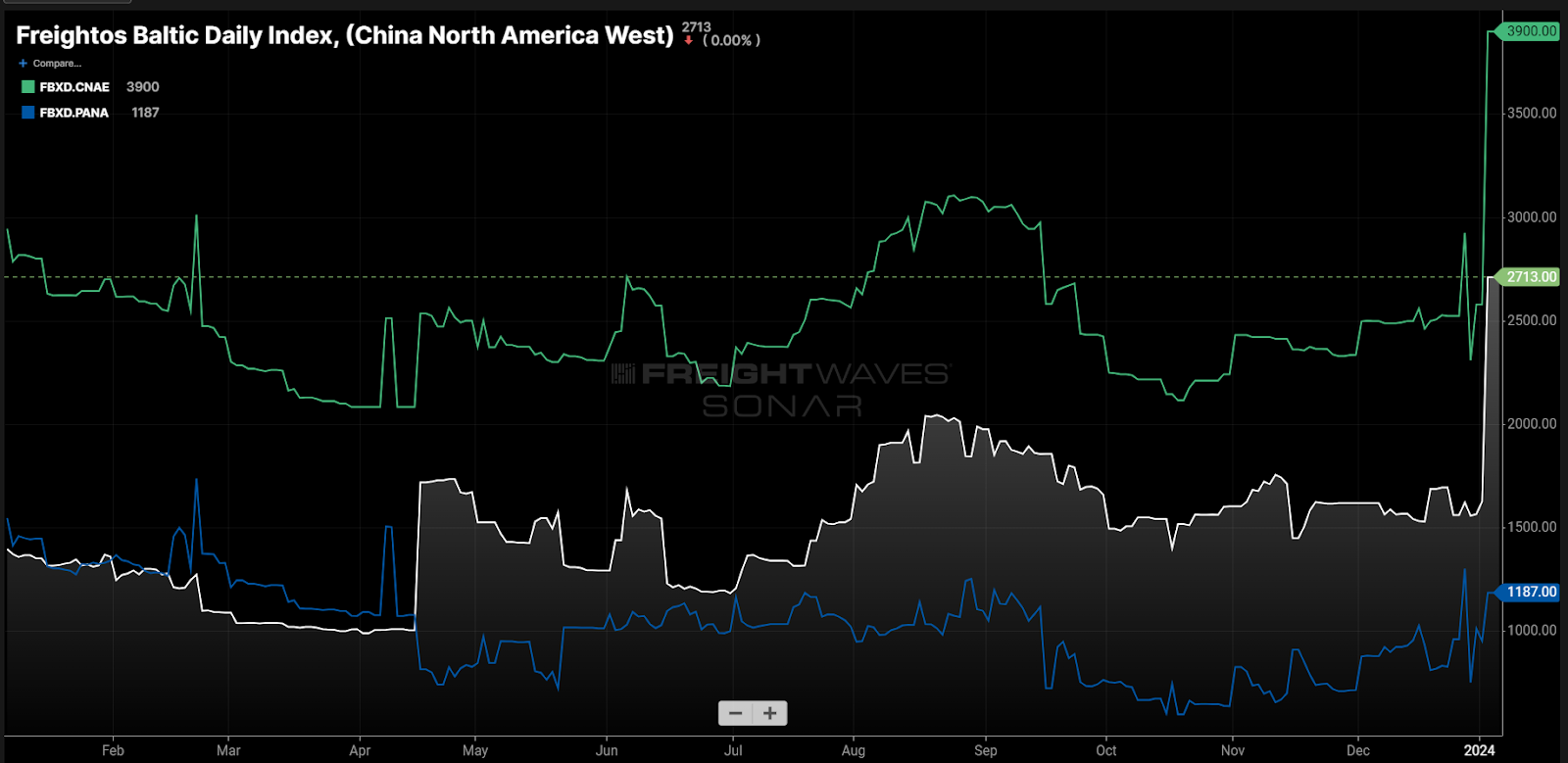
Spot rates for 40-foot equivalent containers moving on the ocean from China to North America’s east and west coasts spiked, according to the Freightos Baltic Exchange indices, to start the year. The conflict in the Middle East is now impacting nearly all global shipping lanes. Inbound east coast rates increased more than those to the west, increasing the “Panama Spread” back over $1,100.
The Panama Spread measures the difference between maritime container shipping rates from China to the North American east and west coasts. More positive figures indicate a stronger monetary incentive to ship to the west coast.
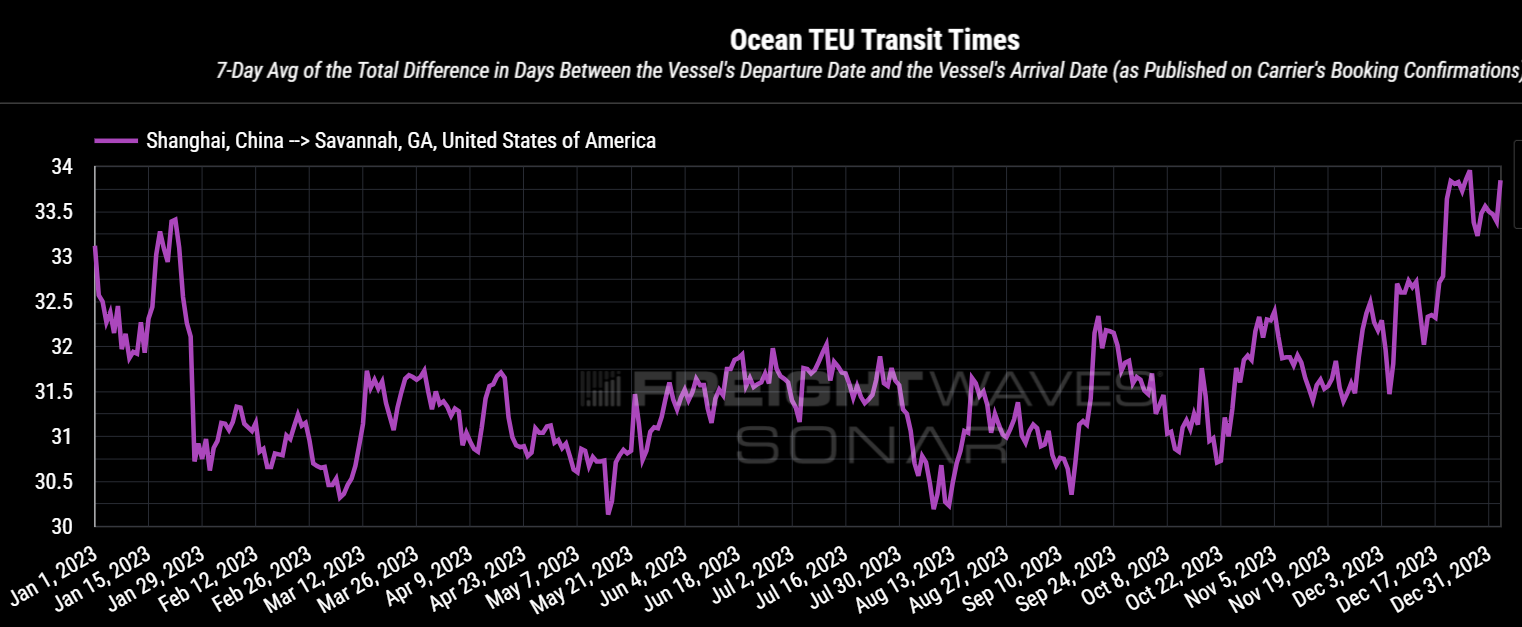
Transit times from Shanghai to the Savannah, Georgia, port have increased nearly 2.5 days since October, according to SONAR’s Container Atlas, as canal capacity was limited due to a lack of water.
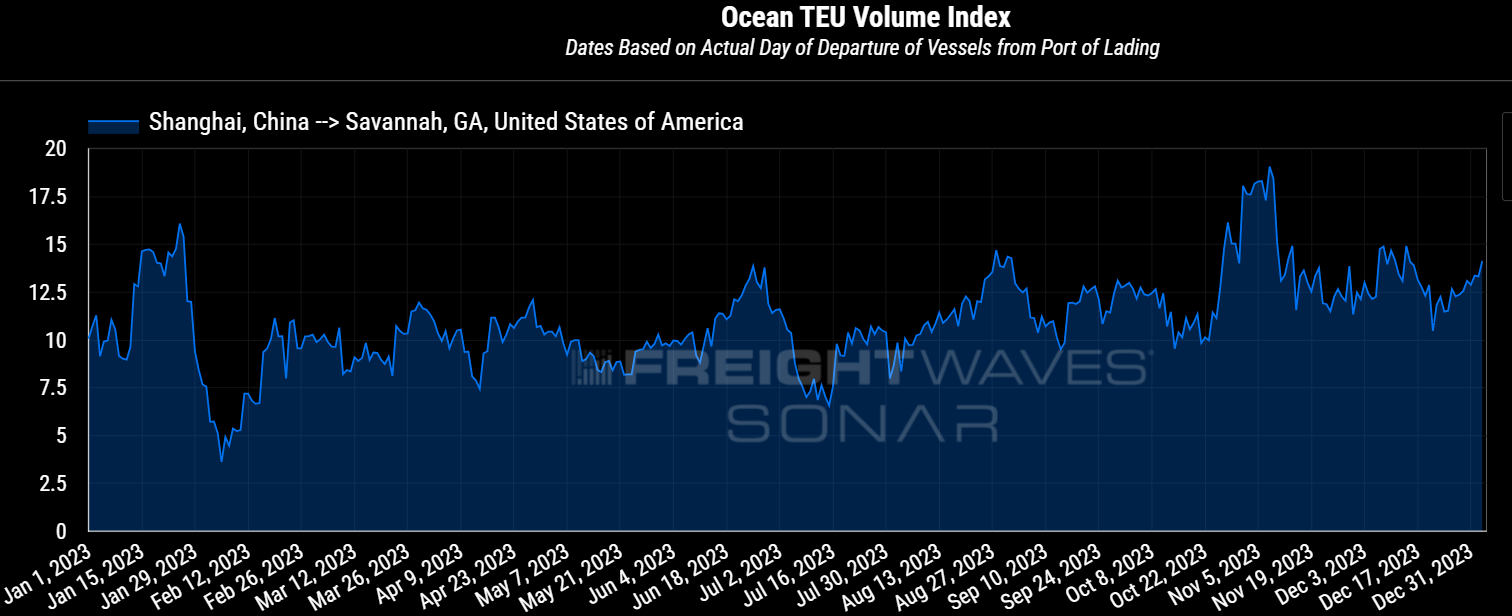
So far demand does not appear to be impacted by the increasing service. Booking volumes in the Shanghai-to-Savannah lane are up since the restrictions were placed on the canal. Time will tell if the rate increases will persist and erode demand.
U.S. import demand has increased at a sustainable rate over the past year as inventories appear to have right-sized, increasing the need for more consistent replenishment.
A surprisingly robust consumer has also contributed to stronger-than-expected import demand.
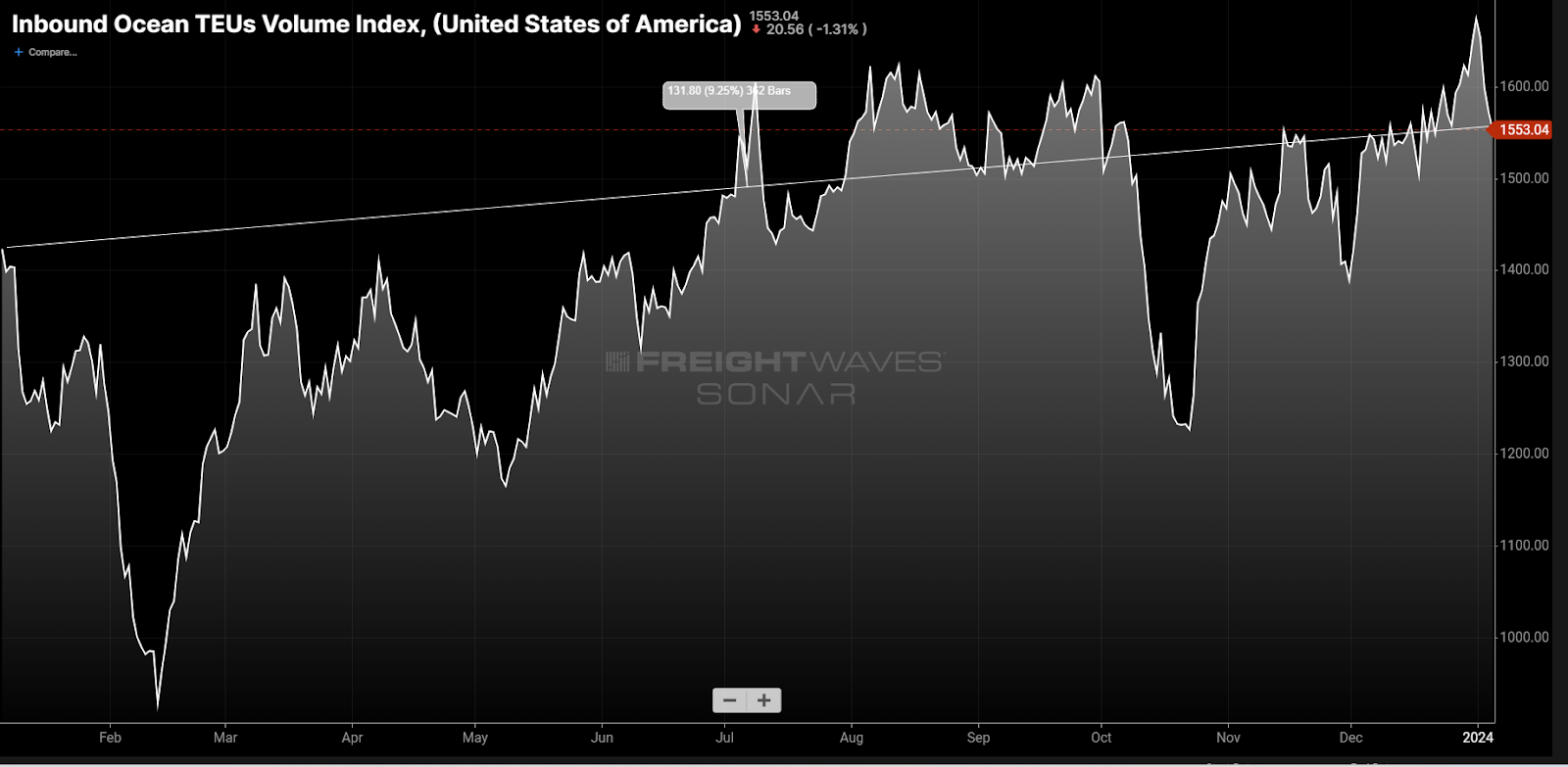
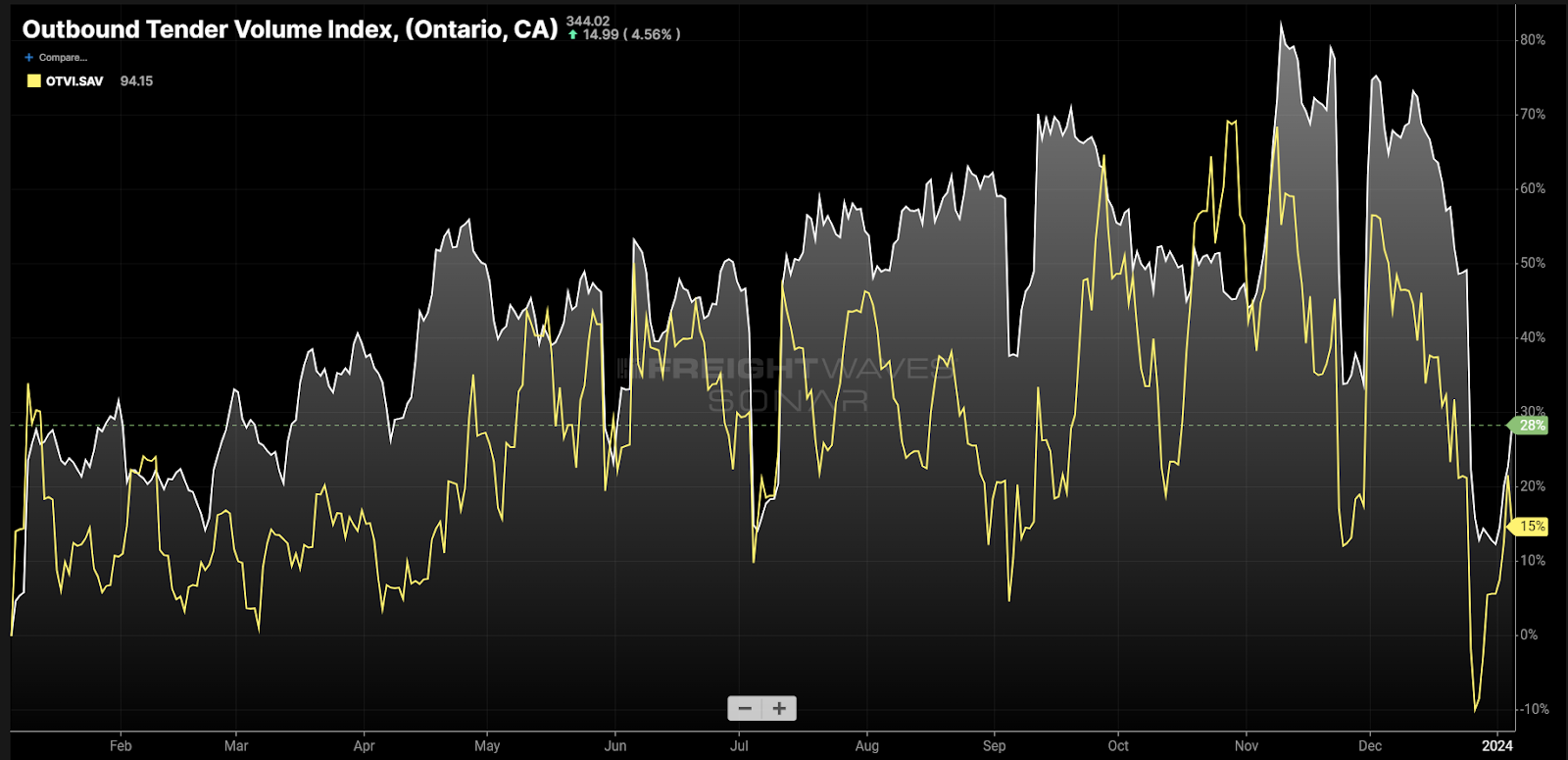
It is difficult to tell with any precision how much influence the increased transit times and cost differentials have had on domestic freight. Tender volumes out of two of the country’s most import-dependent markets — Ontario, California, out West and Savannah in the East—have increased over the past year, with the Western market growing more than the Eastern one.
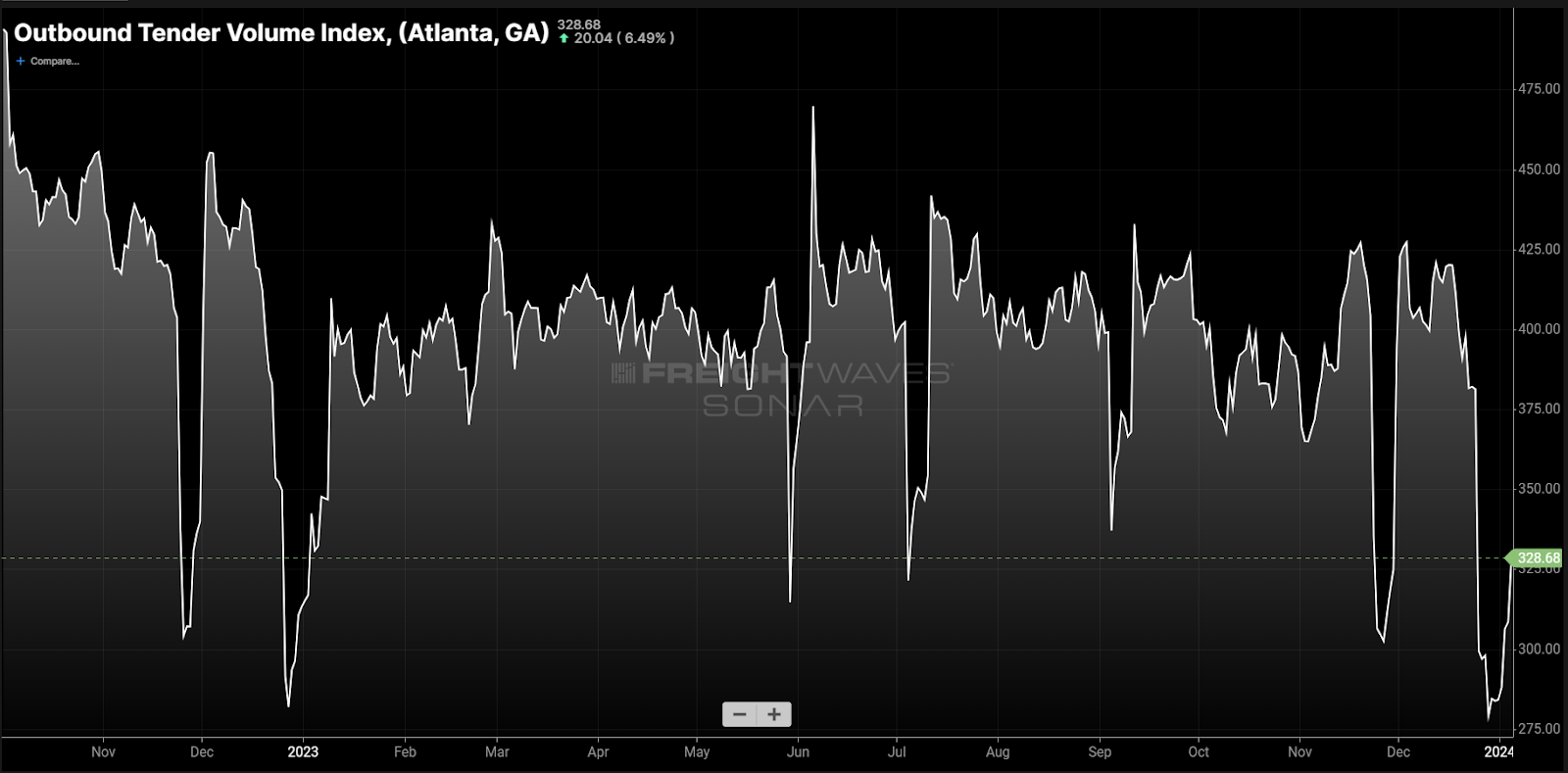
The Atlanta market — the second-largest outbound freight market in the country, with strong ties to Savannah — has not grown, with tender volumes contracting from an annual perspective.
The Southern California freight markets tend to slow in January and February before ramping in the spring and peaking around September.
Freight attrition will be difficult to recognize at this point as the domestic truckload market remains heavily oversupplied with capacity, but many are expecting that to change later in the year.
The Los Angeles-area markets were the bottleneck for many supply chains during the pandemic. At the bare minimum, recent events are pushing more volume to the West, which could manifest more significantly later this year.
About the Chart of the Week
The FreightWaves Chart of the Week is a chart selection from SONAR that provides an interesting data point to describe the state of the freight markets. A chart is chosen from thousands of potential charts on SONAR to help participants visualize the freight market in real time. Each week a Market Expert will post a chart, along with commentary, live on the front page. After that, the Chart of the Week will be archived on FreightWaves.com for future reference.
SONAR aggregates data from hundreds of sources, presenting the data in charts and maps and providing commentary on what freight market experts want to know about the industry in real time.
The FreightWaves data science and product teams are releasing new datasets each week and enhancing the client experience.
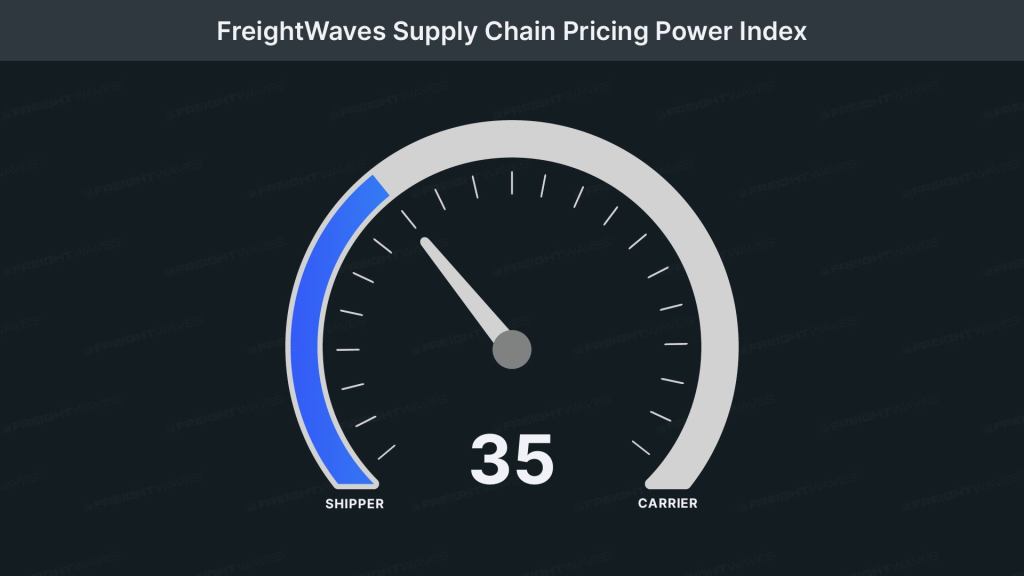
This week’s FreightWaves Supply Chain Pricing Power Index: 35 (Shippers)
Last week’s FreightWaves Supply Chain Pricing Power Index:35 (Shippers)
Three-month FreightWaves Supply Chain Pricing Power Index Outlook: 35 (Shippers)
The FreightWaves Supply Chain Pricing Power Index uses the analytics and data in FreightWavesSONAR to analyze the market and estimate the negotiating power for rates between shippers and carriers.
This week’s Pricing Power Index is based on the following indicators:
Bulls in the US shop
Freight demand was muted during December’s final week, though what remained was above the levels of 2020 and 2022 alike. Unfortunately, this relative bright spot did not translate into market dynamics shifting — even temporarily — into carriers’ favor, as tender rejections and spot rates trended noticeably below 2022. As will be discussed below, spot rates did eventually see a boost at the start of the new year, albeit one that was unable to meet FreightWaves’ prior forecasts.
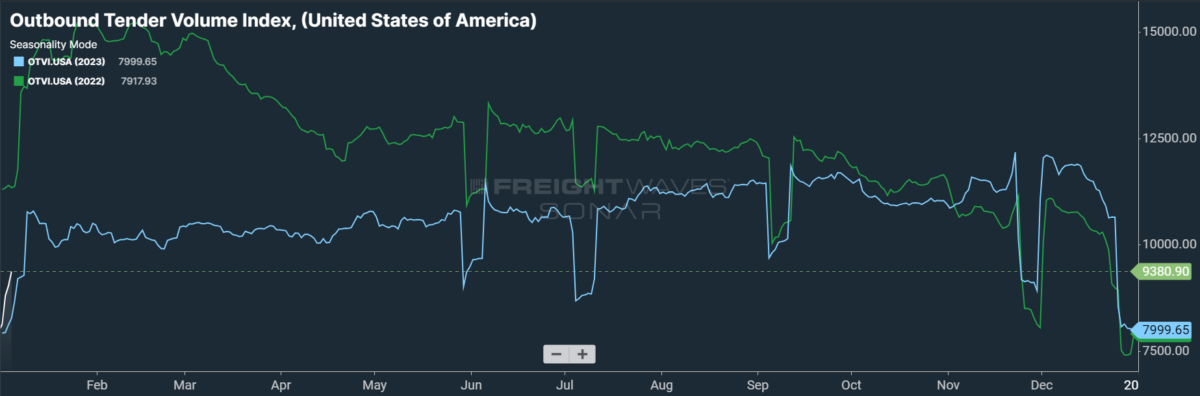
Tender volumes see a quick recovery from the holiday lull: SONAR: OTVI.USA: 2024 (white), 2023 (blue) and 2022 (green) To learn more about FreightWaves SONAR,click here.
The Outbound Tender Volume Index (OTVI), which measures national freight demand by shippers’ requests for capacity, is down 14.2% on a two-week basis as holiday noise devalues comps made against last week’s data. On a year-over-year (y/y) basis, OTVI is up 8%, though such y/y comparisons can be colored by significant shifts in tender rejections. OTVI, which includes both accepted and rejected tenders, can be inflated by an uptick in the Outbound Tender Reject Index (OTRI).
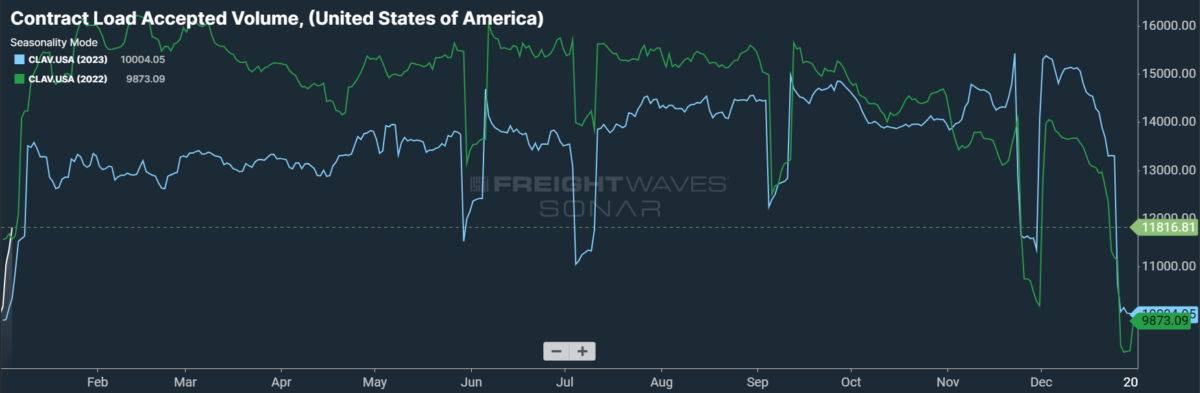
Accepted volumes are edging out past two years: SONAR: CLAV.USA: 2024 (white), 2023 (blue) and 2022 (green) To learn more about FreightWaves SONAR,click here.
Contract Load Accepted Volume is an index that measures accepted load volumes moving under contracted agreements. In short, it is similar to OTVI but without the rejected tenders. Looking at accepted tender volumes, we see a dip of 18.2% on a two-week basis and a rise of 12% y/y. This narrowing y/y difference implies that actual freight flow is recovering from this cycle’s bottom.
The calls are coming in for 2024, with most of them bullish on both the freight market and the broader economy. Prologis boldly forecast a reversal of the freight recession that will see “double-digit growth in port and truck traffic.” Container ports in Southern California are likely to be the first to benefit from this expected reversal, as import volumes are predicted to outpace pre-pandemic levels. With transit limited along the Panama Canal, which is suffering from water shortages, and the Suez Canal, rattled by recent attacks on container ships in the Red Sea, Southern California is one of the few destinations that are relatively problem-free.
That said, U.S. ocean imports will almost certainly languish during China’s annual celebration of Lunar New Year, which will commence on Feb. 10. But the influence of Chinese customs and laws on domestic freight demand is set to weaken as the Inflation Reduction Act tempts manufacturers with billions of dollars in tax credits to reshore operations stateside. While the growing trend of reshoring and nearshoring manufacturing plants will take years to transform the domestic freight landscape, the early stages of the movement are already having a positive effect on cross-border trade with Mexico.
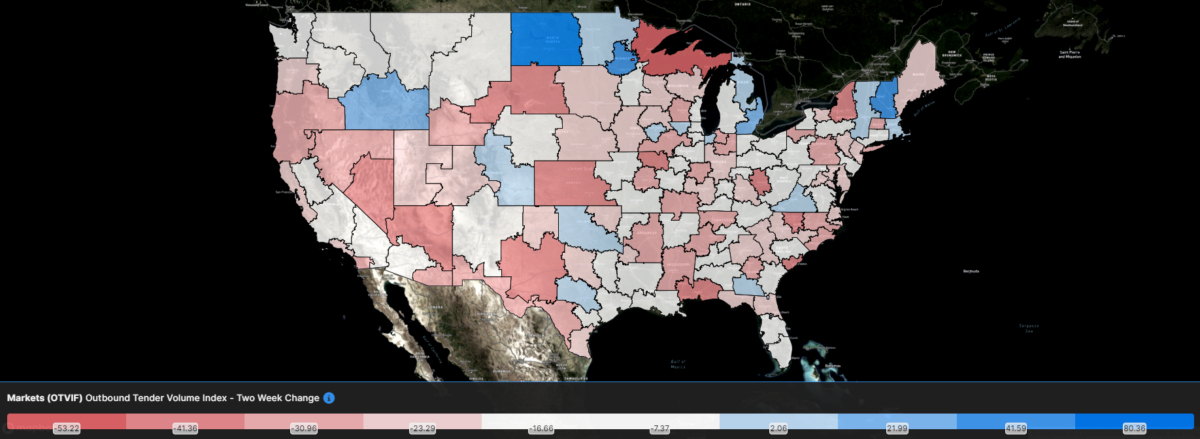
Large markets are slow to wake up from holiday slumber: SONAR: Outbound Tender Volume Index – Two Week Change (OTVIF). To learn more about FreightWaves SONAR, click here.
Of the 135 total markets, only 18 reported increases in tender volumes on a two-week basis, with the strongest performances mostly confined to small or seasonally active markets.
Living in interesting times
With OPEC+ showing a growing number of fractures among its member states, U.S. oil production has become the most significant determinant of global crude prices. Despite already defying expectations in 2023 and finding itself as the highest-volume oil producer in history, the stage is set for the U.S. to ramp up its output in the coming year. In a quarterly survey of top U.S. oil executives, large and small firms alike said that increasing production was their No. 1 priority in 2024 — albeit in different ways, as larger firms mainly target asset acquisition while smaller ones angle to make their operations more attractive to potential investors.
Energy prices should be all but invulnerable to an upward shock this winter (a huge relief for incumbents in an election year), and so consumers will find themselves with slightly heavier wallets going forward. Not only does this outcome bear positively on the near-term health of the broader economy, but it also invites the possibility for goods demand that is stronger than expected.
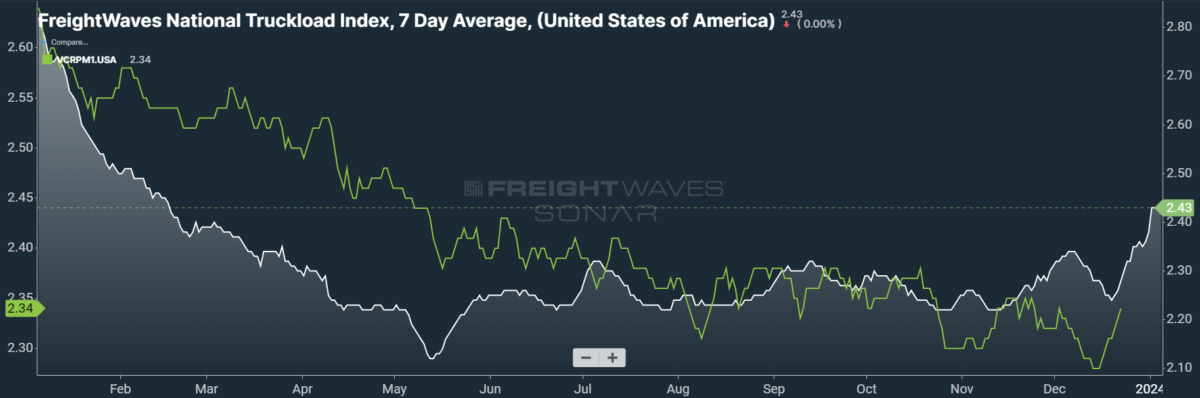
Spot rates get delayed bump from seasonal tightness: SONAR: National Truckload Index, 7-day average (white; right axis) and dry van contract rate (green; left axis). To learn more about FreightWaves SONAR, click here.
This week, the National Truckload Index (NTI) — which includes fuel surcharges and other accessorials — rose 7 cents per mile to $2.43. That this rally came practically at the beginning of the new year is somewhat unusual, as the NTI typically peaks closer to Christmas. Falling diesel prices partially offset the holiday surge in linehaul rates, with the linehaul variant of the NTI (NTIL) — which excludes fuel surcharges and other accessorials — rising 8 cents per mile week over week (w/w) to $1.81.
Contract rates, which are reported on a two-week delay, found their yearly low in mid-December at a reading of $2.28 per mile. While contract rates have been rising since, their upward momentum is likely to dissipate entirely at the start of 2024. The current bid season will be shippers’ final chance to exercise the full extent of their pricing power, as the industry’s recovery should be at an appreciable stage by Q4 2024. For the time being, contract rates — which exclude fuel surcharges and other accessorials like the NTIL — are up 6 cents per mile w/w at $2.34.
SONAR: RATES.USA To learn more about FreightWaves SONAR, click here.
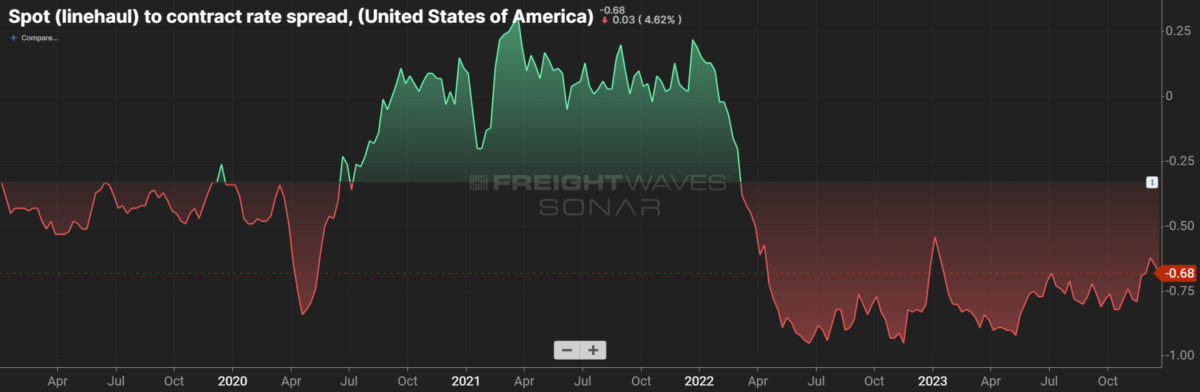
The chart above shows the spread between the NTIL and dry van contract rates, revealing the index has fallen to all-time lows in the data set, which dates to early 2019. Throughout that year, contract rates exceeded spot rates, leading to a record number of bankruptcies in the space. Once COVID-19 spread, spot rates reacted quickly, rising to record highs seemingly weekly, while contract rates slowly crept higher throughout 2021.
Over the course of 2023, this spread averaged 10 cents lower than in 2022, indicating that contract rates had yet to come into balance with the market’s fundamentals of carriers’ supply and shippers’ demand. These lopsided fundamentals were more appropriately reflected in spot rates, which are highly reactive to shifting market conditions. As linehaul spot rates remain 68 cents below contract rates, there is plenty of room for contract rates to decline — or for spot rates to rise — in the first half of 2024.
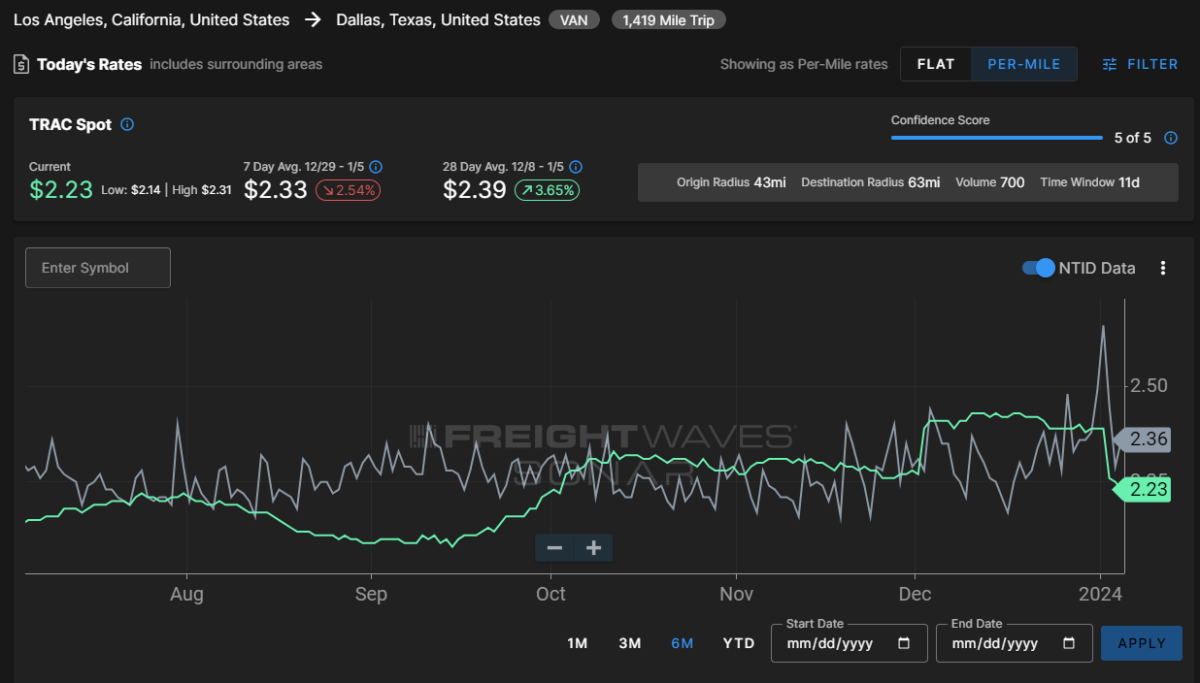
SONAR: FreightWaves TRAC rate from Los Angeles to Dallas. To learn more about FreightWaves TRAC, click here.
The FreightWaves Trusted Rate Assessment Consortium (TRAC) spot rate from Los Angeles to Dallas, arguably one of the densest freight lanes in the country, quickly lost its holiday gains. Over the past week, the TRAC rate fell 17 cents per mile w/w to $2.23 — albeit falling from 2023’s high. The daily NTI (NTID), which has risen to $2.36, is again outpacing rates along this lane.
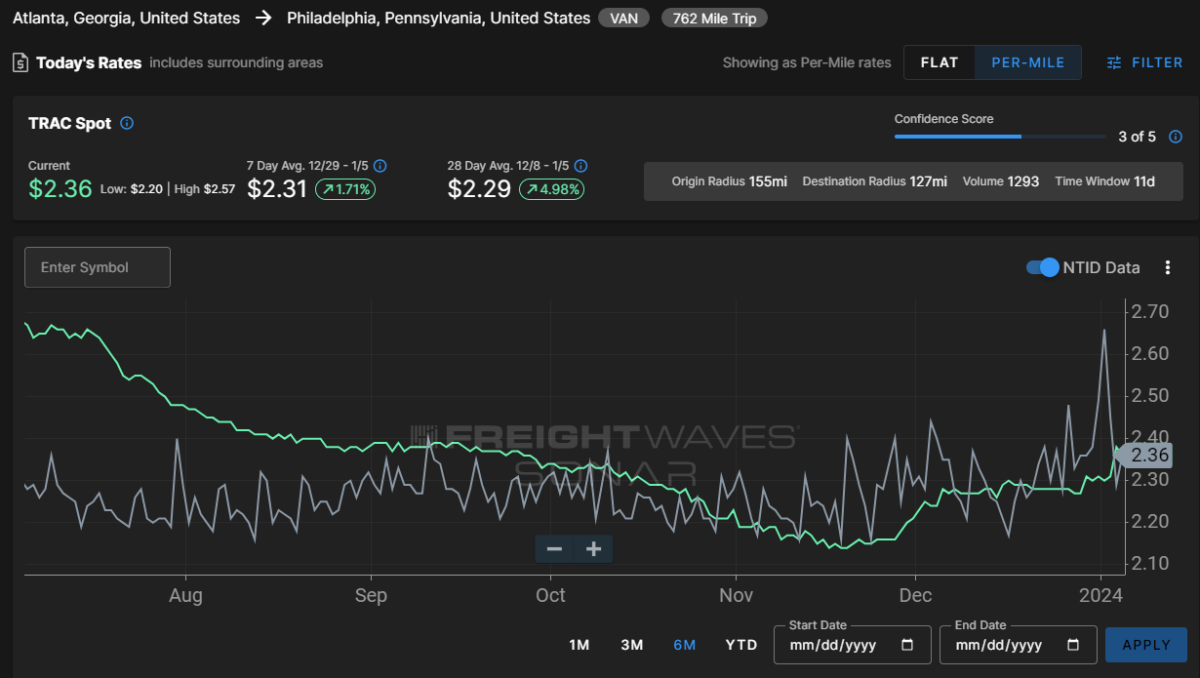
SONAR: FreightWaves TRAC rate from Atlanta to Philadelphia. To learn more about FreightWaves TRAC, click here.
On the East Coast, especially out of Atlanta, rates are acting in line with the national average, benefiting from a delayed boost that has yet to find its ceiling. The FreightWaves TRAC rate from Atlanta to Philadelphia rose 9 cents per mile w/w to $2.36. After plateauing well above the national average during the summer, rates along this lane declined sharply at the end of July, lacking any positive momentum until recently.
Conflict at sea and your freight; state of rates; is 2024 the year of autonomy? – WTT
On today’s episode of WHAT THE TRUCK?!? Dooner is talking to gCaptain’s John Konrad V about the escalating conflict in the Red Sea and how it is already impacting freight.
FreightWaves market expert Donny Gilbert breaks down the trucking data driving rates. Capacity is leaving the market at an accelerated pace but is it helping rates?
The Road to Autonomy’s Grayson Brulte talks about this year in autonomous trucking. What advancements are we seeing, who is viable and will this be the year autonomous trucks take off?
Reliance Partners’ Jessie Merritt represents the Tennessee Trucking Association. She shares what it’s got planned this year and talks about its growing Young Professionals Council.
Plus, a missing cat goes for the long haul; why you shouldn’t take your 30 at the fuel island; German farmers strike back; and why everyone wants a Stanley water bottle.
Running on Ice: Big changes for middle-mile food supply chains
In this edition: More states take advantage of food-resiliency grants; thermal energy storage as a service hits the market; and KFC has a wrap for everyone.
Hello, and welcome to the coolest community in freight! Here you’ll find the latest information on warehouse news, tech developments and all things reefer madness-related. I’m your controller of the thermostat, Mary O’Connell. Thanks for having me!
All thawed out
(Photo: Shutterstock)
Oklahoma has already capitalized on the U.S. Department of Agriculture Marketing Service’s grant. Now other states are following its lead, most recently South Carolina. The South Carolina Department of Agriculture found that the public had several priorities for the grants. The grants are part of the Resilient Food System Infrastructure Program, which supports expanding capacity for processing, transporting, wholesaling and distributing locally and regionally produced food products, including specialty crops.
“Strengthening the middle of the food supply chain in South Carolina will provide stronger markets for local farmers, increase stability for consumers and help ensure a strong future of agriculture in the state,” Hugh Weathers, South Carolina commissioner of agriculture, said in a news release.
South Carolina’s projects with the grant money will increase local producers’ abilities to process, aggregate and distribute products through the construction, expansion or modernization of cold and dry storage facilities; increase processing capacity, creating new distribution channels; and purchase and/or modernize equipment, packaging, food safety and labor needs for the middle of the food supply chain.
Temperature checks
(Photo: Jim Allen/FreightWaves)
Onsite Utility Services Capital has created a dedicated fund for thermal energy storage as a service for cold storage facilities. Onsite utilizes a synthetic phase change material that can store thermal energy down to minus 40 degrees Fahrenheit. The entire system qualifies for a 30% solar investment tax credit and an additional 10% for domestic content under the Inflation Reduction Act.
Onsite CEO Fritz Kreiss said in a news release, “Thermal Energy Storage can decrease a facility’s energy consumption by up to 40% by efficiently capturing and storing thermal energy during off peak hours and releasing the stored cold energy during the daytime allowing the chiller to not run during peak hours of operation. … We are launching Thermal Energy Storage-as-a-Service to save energy and reduce the carbon footprint for cold storage facilities. Removing the CapEx barrier means more cold storage facilities can achieve their carbon and energy reduction goals while retaining their capital for the company’s primary focus.”
Food and drugs
(Photo: Kentucky Fried Chicken)
Who’s back? KFC heard the cries of the people and is doubling down on the two for $5 wrap combo by adding new wraps to the lineup. The newbies are honey BBQ and spicy mac and cheese (not to be confused with the mac and cheese wrap that came out in November). The classic and spicy slaw chicken wraps are staying the same. Users of the KFC app could find themselves with some free wraps if they play their cards right.
Nick Chavez, chief marketing officer of KFC U.S., was quoted in a news release as saying, “No beef … KFC is THE destination for fried chicken wraps. We’re serving up bold new flavors and big deals to help curb the post-holiday blues and give your wallet a break.”
As someone who only loves KFC for its biscuits, some of these wraps look pretty good. I might have to give them a second chance.
Cold chain lanes
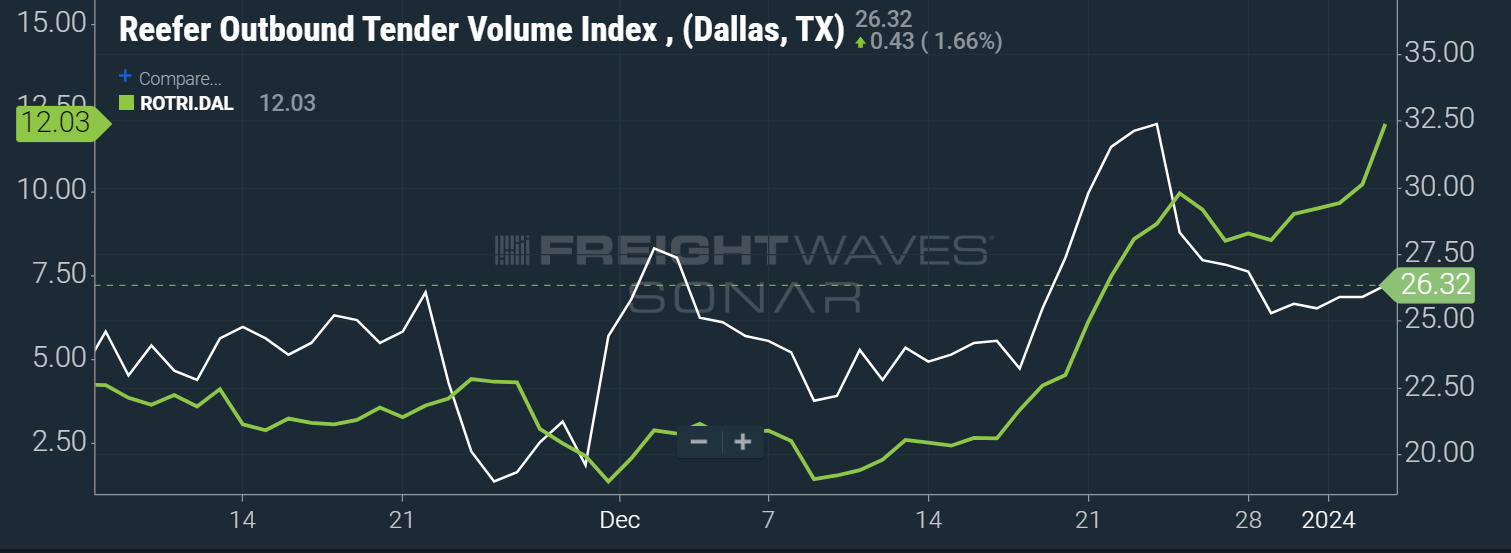
SONAR Tickers: ROTVI.DAL, ROTRI.DAL
This week’s SONAR reefer market is Dallas. Coming off the holiday, most major markets are seeing a slight increase in outbound tender volumes and outbound tender rejections across all modes of transportation, but nothing greater than rates seen in December. Dallas is proving to be the outlier. Reefer outbound tender volumes have started rising after peaking at Christmas but are still down 2.88% week over week as shippers slowly get back in business. Reefer rejections, on the other hand, shot up for the holidays and haven’t come back down yet, rising 349 basis points to come in at 12.03% rejections. For most markets the brief increase in rejections wouldn’t have much impact on spot rates, but Dallas continues to be the outlier as rates have not decreased. Expect elevated spot rates for a while out of Dallas — that is until ROTRI rates begin to drop.
Wanna chat in the cooler? Shoot me an email with comments, questions or story ideas at moconnell@www.freightwaves.com.
See you on the internet.
Mary
If this newsletter was forwarded to you, you must be pretty chill. Join the coolest community in freight and subscribe for more at www.freightwaves.com/subscribe.
Postal Service EV rollout off to shaky start
WASHINGTON — Stolen electric vehicle charging station equipment and office thefts at the U.S. Postal Service are troubling signs for agency watchdogs as the Postal Service begins moving toward electrifying its delivery fleet.
Concern about the thefts and the ability of the Postal Service to protect its assets appears in a new audit report published by the Postal Service’s Office of Inspector General (OIG).
“We found that management controls over the storage of charging stations … were not effective,” according to the OIG. “Specifically, facility management did not employ necessary physical safety measures designed to protect and deter the theft of Postal Service assets.”
Lax safeguards at a facility in Topeka, Kansas, led to two thefts valued at approximately $59,700 for stolen information technology assets such as computer monitors, printers and docking stations, along with $7,700 worth of stolen charging station equipment.
The thefts occurred in 2023 during the initial phase of the agency’s fleet replacement strategy, which includes acquiring 106,000 vehicles with deliveries expected through 2028.
Details of the plan, announced in 2022, include at least 66,000 battery electric delivery vehicles, including 45,000 purpose-built battery electric-powered Next Generation Delivery Vehicles (NGDVs) and 21,000 battery electric-powered commercial-off-the-shelf (COTS) vehicles. All NGDVs, with deliveries beginning in 2026, and COTS vehicles, with deliveries between 2026 and 2028, will be 100% electric.
To prepare for EV deployment, the agency awarded charging station contracts for the COTS vehicles to three suppliers in February 2023.
After initial testing, the Postal Service monitored charging station performance at the three locations, from May to July, to evaluate short-term reliability. The testing and monitoring phase of the charging stations was acceptable, according to the OIG.
“We found that the Postal Service conducted effective contract oversight … to verify that charging stations conformed to certain requirements identified in the contracts’ statements of work,” according to the report.
“In addition, we found the Postal Service effectively conducted performance monitoring to evaluate the charging stations’ short-term reliability. As a result of completing the testing, the Postal Service gave conditional acceptance to all three suppliers, with the stipulation that … issues identified during testing be resolved for full acceptance.”
The Postal Service is developing long-term performance monitoring plans, according to the OIG, which are not yet finalized. “As such, we were unable to evaluate or conclude on the overall reliability of the charging stations,” the audit noted. “Given the magnitude of the investment to deploy up to 41,500 charging stations to facilities throughout the delivery network, the choice to test and monitor their performance was prudent. Therefore, we will not be making any recommendations related to testing at this time.”
As for the asset thefts, the Postal Service began “corrective actions” with plans to address safeguards at its equipment storage facilities, according to the audit. However, until those safeguards are in place, “assets related to charging stations stored at the [Kansas facility] are considered at risk of theft,” the OIG warned.